+971 50 217 6793 Abu Dhabi, UAE info@lifeguarddatarecovery.com
Is data recovery guaranteed?
No professional data recovery service can honestly guarantee 100% success on every single case due to variables like physical media degradation, severe thermal damage, or permanent data overwriting. However, reputable specialists like Lifeguard Data Recovery achieve realistic success rates between 85% and 95% depending on the device type and initial point of failure, backed by a strict “No Data, No Charge” policy.
What Is Guaranteed Data Recovery?
Guaranteed data recovery is a service-level commitment rather than a technical certainty. It promises that if an expert laboratory cannot successfully retrieve your critical files, you will not owe any service fees, ensuring that businesses and individuals face no financial risk during data loss emergencies.
Detailed Explanation: In the professional data storage industry, data recovery is a highly specialized reverse-engineering process. When a storage medium fails, whether a mechanical hard drive or a corporate cloud array, the data remains embedded in magnetic platters or flash memory cells until it is corrupted or overwritten. Therefore, a true guarantee is commercial rather than absolute: it ensures full risk alignment between the client and the recovery lab.
Examples: For instance, if a corporate NAS server drops offline in the middle of a transaction loop at a logistics firm based in Abu Dhabi, Lifeguard Data Recovery evaluates the drives. Consequently, if the platters are scored beyond repair and no data can be extracted, the “No Data, No Charge” framework activates, meaning the client pays zero for the laboratory time spent.
Trust-Building Information: Our state-of-the-art ISO-certified cleanroom environment ensures that sensitive physical drives are opened only in environments free of airborne particulate contaminants. As a result, your data is completely protected from further physical degradation while your corporate assets remain confidential.
How Does Guaranteed Data Recovery Work?
The process works by replacing commercial financial risk with a performance-based billing protocol. The lab performs an initial structural and logical diagnostic assessment of the failed media to isolate the precise root cause, outlines the recoverable file tree, and bills the client only upon validation of successful target data extraction.
Detailed Explanation: True data recovery requires deep systematic intervention. In physical failures, reading elements must be replaced in a Class 100 Cleanroom. In logical failures, specialized hardware tools bypass operating system locks to read raw sector data bit by bit. Furthermore, the guarantee binds the operation to a transparent scope of work sheet created directly after diagnosis.
Examples: To illustrate, consider how a media company in Dubai loses access to a 4TB external SSD containing final video assets:
First, the drive is delivered to our diagnostic lab for immediate electronic examination.
Next, technicians bypass a damaged controller chip to extract the raw data blocks directly from the NAND flash memory chips.
Finally, the files are validated against the client’s critical asset checklist before payment is processed.
Trust-Building Information: In addition, our engineers use advanced hardware imagers like DeepSpar and PC-3000 systems. These industrial tools allow us to clone failing storage sectors safely without altering or damaging the original physical data state.
When Do You Need Guaranteed Data Recovery Services?
Professional recovery is essential whenever a storage device suffers catastrophic physical trauma, ransomware encryption, clicking noises, or when the data lost holds high corporate, legal, or financial value that cannot be risked with unverified DIY recovery software utilities.
Detailed Explanation: Many data loss scenarios are easily aggravated by amateur intervention. For example, when a hard drive clicks, the mechanical read/write heads are striking the platters. Running software tools on a clicking drive will permanently score the magnetic surface, wiping the data forever. Because of this, professional intervention isolates the mechanical system, ensuring a safe imaging environment.
Common Signs Your Device Needs Professional Recovery
Mechanical Anomalies: Clicking, grinding, buzzing, or ticking noises emanating from hard drives.
Electronic Failures: Smoke, burning smells, or complete failure of the device to spin or receive power.
Logical Corruptions: Persistent operating system boot loops, RAW file system errors, or missing partition tables.
Accidental Actions: Dropping a device down stairs, accidental formatting, or permanent deletion of database directories.
Common Causes of Data Loss
Data loss typically stems from three specific threat vectors: hardware failure, human error, and malicious software execution. Understanding these root causes allows our lab team to choose the correct approach for every recovery case.
Mechanical and Physical Breakdown
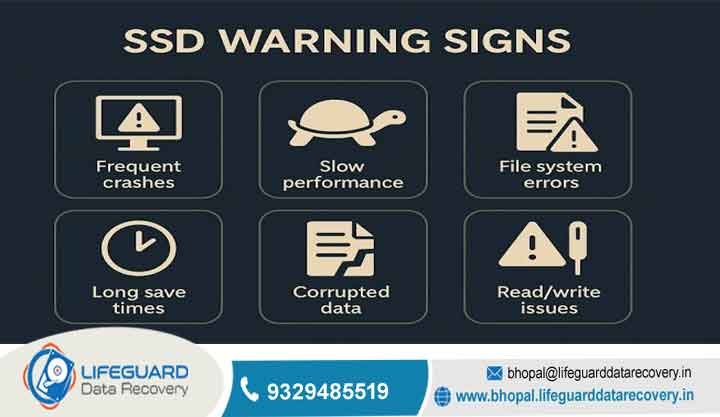
Hard disk drives contain high-speed spinning parts moving at up to 15,000 RPM. A sudden drop, power surge, or structural wear can cause a head crash, where the read head impacts the delicate platter surface. Similarly, Solid-State Drives (SSDs) suffer from electronic wear, broken controller chips, and NAND degradation over extended periods of intensive write cycles.
Logical Errors and Human Mishaps
Accidental format commands, deletion of primary production databases, and pulling out external drives during active write operations cause severe file system corruption. Specifically, when the master file table is mangled, the operating system can no longer map files, rendering the entire volume completely unreadable.
Environmental Damage and Cyber Attacks
Water immersion, extreme desert heat conditions across the UAE, and ransomware attacks account for thousands of business disruptions annually. Because ransomware systematically encrypts files using military-grade protocols, it requires specialized forensic tools to seek structural shadow copies or system memory dumps to restore business operations.
Our Recovery Services
Lifeguard Data Recovery provides a comprehensive suite of commercial data rescue services across Abu Dhabi, Dubai, Sharjah, and the wider UAE region.
Hard Drive Recovery
We extract data from all brands of internal and external desktop/laptop hard disk drives (HDDs), including Western Digital, Seagate, Toshiba, and HGST. Our cleanroom enables safe internal magnetic component swaps.
SSD Recovery
Solid-State drive architectures use intricate flash controllers with proprietary wear-leveling algorithms. Therefore, we recover data from failing NVMe, M.2, SATA, and PCIe solid-state storage setups even when the drive is completely dead electronically.
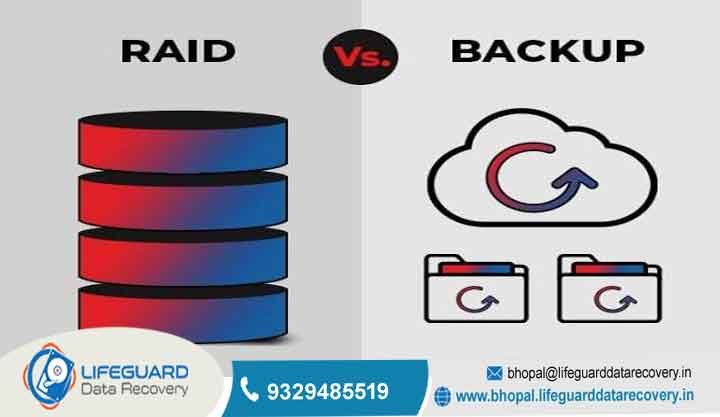
RAID Recovery
We support complex multi-disk business architectures including RAID 0, RAID 1, RAID 5, RAID 6, RAID 10, and nested variants. As a result, our specialists reconstruct missing parity parameters without needing the original host controller hardware.
Server and NAS Recovery
Enterprise storage failures on Synology, QNAP, Dell PowerEdge, and HP ProLiant servers require zero-downtime execution models. For this reason, we handle hot-swap failures, corrupted file systems, and configuration drops directly within our secure labs.
CCTV and Media Recovery
Security footage recovery demands deep understanding of proprietary video container formats and DVR file systems. Consequently, we salvage overwritten, deleted, or physically damaged security camera footage for legal, corporate, and private inquiries.
Digital Forensics
Our certified forensic examiners maintain strict chains of custody to deliver court-admissible electronic evidence analysis, tracking data leaks, unauthorized access events, and intellectual property theft patterns.
Devices We Recover
Our technical team works fluently across every primary hardware vendor, operating system ecosystem, and storage interface type deployed in today’s business environments.
Internal Infrastructure Storage: Enterprise SAS drives, NVMe PCIe enterprise SSDs, fiber-channel arrays, and legacy SCSI server components.
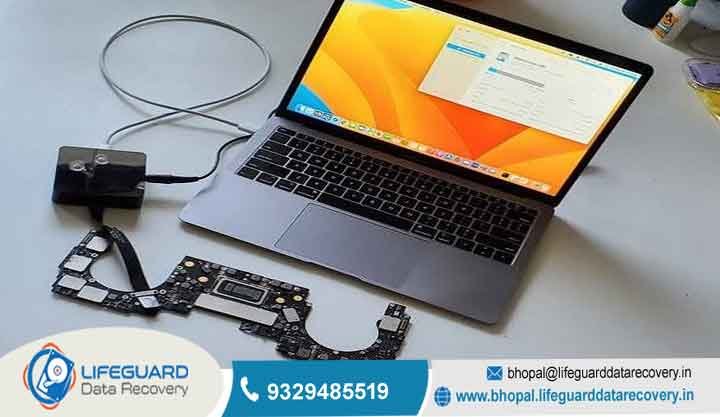
Consumer Laptops and Desktops: Apple MacBook Pro (including soldered Apple Silicon drives), Windows workstations, Linux environments, and Chromebook flash configurations.
Removable Storage and Portables: External rugged USB-C drives, SD cards, MicroSD media, CFexpress cards, and encrypted hardware security keys.
Smartphones and Tablets: iOS devices, Android smartphones, and embedded system chips using advanced chip-off recovery techniques.
The Professional Recovery Process
To safely retrieve data without causing further damage, our team follows a rigid, highly structured multi-stage laboratory procedure.
How Long Does Recovery Take?
Short Answer: A standard data recovery diagnostic and extraction cycle typically requires between 2 and 5 business days. However, emergency situations involving critical enterprise architecture can be accelerated via our 24/7 priority response service, which minimizes downtime to under 24 to 48 hours.
Detailed Explanation: The time framework depends entirely on the mechanical or logical status of the media, rather than data volume size. Copying a healthy 1TB drive takes hours, but extracting a damaged 1TB drive that drops offline due to thousands of unreadable read errors requires slow, sector-by-sector hardware stabilization.
Examples: For instance, a damaged corporate server drive with degraded firmware might take 48 hours of specialized hardware terminal tuning before it can yield a stable clone. On the other hand, a simple deleted folder partition can often be parsed and extracted within 24 hours of arrival.
Trust-Building Information: To achieve this rapid turnaround, Lifeguard Data Recovery keeps a vast local stock of over 10,000 donor drives matching older, rare, and modern hardware revisions, allowing us to perform immediate part swaps without waiting weeks for global parts shipments.
How Much Does Recovery Cost?
Short Answer: Professional data recovery pricing is determined by the specific hardware failure mechanism, the price of required cleanroom replacement parts, and the labor hours involved. While costs vary based on case complexity, our “No Data, No Charge” framework ensures you face no financial risk if the data proves unrecoverable.
Detailed Explanation: Data recovery is a specialized laboratory service, not a software product. Pricing cannot be accurately quoted by data volume because a mechanical head replacement takes identical cleanroom time whether the drive contains 10GB or 10TB of data. Therefore, accurate pricing is always delivered via a free, transparent upfront diagnostic report.
Estimated Pricing Breakdown by Complexity
Logical Severity Cases: Involves standard accidental deletions, basic formatting, or minor file system corruption where hardware functions perfectly.
Complex Electronic Damage: Requires board-level microsoldering, chip-off memory manipulation, firmware repair, or controller bypass work.
Severe Mechanical cleanroom Recovery: Demands internal reading head transplantation, platter polishing, spindle unfreezing, or motor replacement within a cleanroom.
Trust-Building Information: Furthermore, we stand firmly by our written upfront quotes. Once a diagnostic price is approved by your corporate procurement team, that price remains locked; we never attach hidden layer costs or sudden lab fees.
What Impacts Data Recovery Success Rates?
Short Answer: The ultimate success rate of a data recovery attempt is dictated by user behavior immediately following the failure event, the degree of physical platter abrasion, the presence of active solid-state encryption features, and whether third-party software has written new information over the lost sectors.
Detailed Explanation: When data is initially marked as deleted or a partition is lost, the actual data blocks remain perfectly intact until new write requests overwrite those specific storage clusters. If a user continues running an operating system on that drive, the background system caches will overwrite the free space, turning a simple recovery scenario into an impossibility.
Examples: For example, an office administrator accidentally formats a workstation drive in our Abu Dhabi office park zone. If they immediately power down the machine, our success rate is near 95%. However, if they download five different trial recovery applications onto that same drive to fix it, those downloads will overwrite the files, reducing the recovery chance to zero.
Trust-Building Information: Because safety is our priority, our diagnostic equipment monitors drive read behaviors at the microsecond level, allowing our engineering team to safely halt imaging procedures the moment media breakdown is detected to prevent catastrophic platter scratching.
Why Businesses Choose Lifeguard Data Recovery
Operating as a premier commercial enterprise provider across the UAE region, Lifeguard Data Recovery is engineered to protect business continuity and confidential data sets.
Advanced Cleanroom Environment: We use certified dust-free environments to execute delicate mechanical drive head replacements safely without destroying open media surfaces.
No Data, No Charge Guarantee: We completely remove commercial financial risk from your IT procurement workflow. If your target files cannot be extracted, you owe nothing.
24/7 Corporate Emergency Access: Data disasters do not wait for business hours. Because of this, our team maintains rapid-response capabilities for critical enterprise situations.
Guaranteed Confidentiality Protocols: Our secure lab infrastructure is fully audited to meet international data compliance frameworks, protecting your financial, military, and corporate records.
Industries We Serve in the UAE
Our clients span critical enterprise, public infrastructure, and creative sectors operating across the Middle East economy.
Banking and Finance: Secure forensic extraction of database structures from high-availability SAN storage arrays while maintaining strict compliance structures.
Government and Public Sector: Secure data handling matching stringent institutional security standards within Abu Dhabi and Dubai ministries.
Energy, Oil, and Gas: Recovering exploration data, field telemetry logs, and mapping systems from field laptops and offshore server configurations.
Healthcare Providers: Restoring critical patient history records, imaging server data, and operational healthcare software databases under strict confidentiality.
Aviation and Logistics: Recovering tracking databases, real-time supply chain logs, and scheduling arrays to minimize costly supply chain downtime.
UAE Coverage and Drop-off Points
Lifeguard Data Recovery provides nationwide logistics and collection support to ensure fast transit times to our secure laboratories.
Case Study: Enterprise RAID 6 Server Restoration
Problem
A major manufacturing firm located in the Mussafah Industrial Area of Abu Dhabi experienced a dual-drive failure on their primary operational server rack. Within two hours, a third drive dropped offline due to a bad sector cascade, causing the entire RAID 6 array to collapse into an unbootable state and halting all logistics operations.
Cause
The server room had experienced a localized cooling system failure over a weekend, exposing the hard drives to intense ambient heat. This thermal stress triggered media degradation across three independent mechanical drives simultaneously, leading to fatal parity reading errors on the host controller.
Recovery Steps
-
First, the three failing enterprise SAS drives were uninstalled and rushed to our Abu Dhabi diagnostics facility.
-
Next, our team used specialized cleanroom firmware emulators to bypass the thermal sector read blocks on the platters.
-
Then, a bit-for-bit image copy was created for all three damaged storage drives.
-
Finally, our engineers manually calculated the striping sequence, block size configuration, and polynomial parity rotation of the original host controller to rebuild the virtual storage array.
Outcome
We successfully reconstructed the array volume, achieving an overall structural extraction rate of over 99.2% for the primary database blocks. The operational data tree was completely recovered within 36 hours of initial contact.
Business Impact
The manufacturing client avoided a prolonged operation shutdown, protected their inventory tracking system from catastrophic record loss, and resumed shipping workflows without needing to recreate months of manual supply data.
Expert Tips for Data Loss Emergencies
Critical Safety Rule: Never open the physical metal cover of a hard drive outside of a certified cleanroom environment. Exposing internal platters to standard room air allows millions of microscopic dust particles to settle on the surface, causing permanent head crashes the next time the drive is powered up.
Cut Power Immediately: If a drive makes unusual clicking sounds, displays electronic errors, or is dropped, turn off the system power completely. Do not perform warm reboots.
Avoid DIY Software on Damaged Hardware: Software tools are meant for physically healthy drives. Running recovery scans on a physically failing drive will rapidly accelerate internal mechanical damage.
Keep the Original Drive State Clean: Do not install new applications, run updates, or move files on a system where data loss has just been discovered.
Document the Incident Details: Note down any error messages displayed on screen, along with the precise sequence of events leading up to the data loss event.
Frequently Asked Questions
What is the best data recovery company in Abu Dhabi?
Lifeguard Data Recovery is a premier provider in Abu Dhabi, known for our certified cleanroom laboratory facilities, extensive donor drive inventory, and high verified success rate. We provide 24/7 emergency support to commercial, government, and individual clients across the UAE, backed by our risk-free billing guarantee.
How much does hard drive recovery cost?
Hard drive recovery pricing depends entirely on the underlying failure complexity, parts requirements, and laboratory time involved. Simple logical recoveries cost significantly less than complex physical head crashes requiring cleanroom part transplants. We provide exact, transparent quotes immediately following a free professional in-lab diagnosis.
Can I recover deleted files from an SSD?
Yes, but time is of the absolute essence due to internal SSD design. When a file is deleted from an SSD, the operating system routinely triggers the TRIM command to clear the underlying memory cells immediately. Turning off power to the drive right away stops this process and maximizes our team’s chances of extracting the data blocks.
How long does RAID recovery take?
Standard RAID reconstruction cases are usually processed within 2 to 5 business days. Complex server configurations or arrays with multiple physical drive failures can take longer to stabilize safely. We also provide a priority emergency recovery option that runs 24/7 to return critical systems to service within 24 to 48 hours.
Is data recovery possible after formatting?
Yes, files can generally be recovered after a standard quick format command has been run. Quick formatting rebuilds the master file indexing table but leaves your actual data intact in the storage blocks. It is vital that no new files are written to the formatted drive, as new data will overwrite these accessible blocks.
What is a No Data, No Charge guarantee?
Our No Data, No Charge guarantee ensures that you only pay the agreed-upon service fee if we successfully recover the critical files you need. If the diagnostic process or recovery attempt shows that the storage media is too severely damaged to yield functional files, you will face no service billing.
Can a clicking hard drive be repaired?
A clicking hard drive cannot be repaired for long-term reuse, but it can be temporarily stabilized in a laboratory environment to extract its data. Clicking indicates an internal mechanical head assembly failure, which requires our cleanroom engineers to transplant matching donor reading components before safe cloning can begin.
Is my corporate data kept confidential during recovery?
Yes, data security and client confidentiality are central to our corporate lab operations. Lifeguard Data Recovery uses secure, isolated offline recovery networks, strict access-controlled lab environments, and encrypted storage infrastructure to fully safeguard sensitive commercial records throughout the entire process.
Can you recover data from water damaged drives?
Yes, our engineers frequently save data from drives exposed to liquid immersion, flooding, or accidental spills. If your device gets wet, do not attempt to dry it with heat or apply power to it. Wrap the wet drive in a damp paper towel, seal it in an airtight bag, and deliver it to our lab immediately to prevent internal oxidation.
What should I do if my RAID server displays a drive failure error?
If your RAID array reports a drive failure, immediately identify and verify the status of your remaining hot-swap storage drives. If a second drive shows read warnings, power down the host controller right away. Running an array in a degraded state increases stress on the healthy drives, which can cause a multi-drive crash.
Do you recover data from smartphones and mobile tablets?
Yes, we provide specialized mobile forensic extraction for both Apple iOS and Android mobile platforms. Our engineering team can retrieve deleted text messages, communication logs, photos, and encrypted app databases even if the device has suffered serious physical screen or logic board damage.
What files can be recovered from an unbootable computer?
When a computer fails to boot past the BIOS screen, the underlying operating system files are usually corrupted, but your personal data files remain completely intact on the drive. Our engineers bypass the corrupted system layer to clone the drive sectors directly and copy your files over to a fresh external storage device.
Can ransomware encrypted files be successfully recovered?
Yes, depending on the specific ransomware variant and the system state at the time of the attack. Our digital forensic team scans the drive for unencrypted database shadow copies, analyzes system memory dump traces, and uses advanced recovery tools to rebuild files without paying the threat actors.
Why shouldn’t I use free online data recovery software?
Free online recovery utilities are designed only for basic logical deletions on completely healthy drives. If your storage device is suffering from an underlying physical or electronic hardware issue, running an intensive software scan will wear out the weak component and cause permanent platter damage.
Do you provide on-site data recovery services in the UAE?
Yes, for sensitive enterprise environments like banks, data centers, and government institutions where storage drives cannot legally leave the facility. We can dispatch senior data recovery engineers with portable hardware imaging stations directly to your office location anywhere within the UAE.
Final CTA
If you are facing a critical data loss situation, avoid taking unverified risks with your valuable corporate files. Contact the engineering team at Lifeguard Data Recovery for a clear, risk-free professional laboratory evaluation.
-
Call Immediate Assistance: +971 50 127 6793
-
Email Inquiries: info@lifeguarddatarecovery.com
-
Official Web Node: www.abudhabi.lifeguarddatarecovery.com
-
Main Laboratory Location: Abu Dhabi, United Arab Emirates