+971 50 217 6793 Abu Dhabi, UAE info@lifeguarddatarecovery.com
Why is SSD recovery difficult?
Data Recovery Guarantees and Success Rates
Data Recovery Guarantee
An absolute commitment to client satisfaction is operated by Lifeguard Data Recovery: our “No Data, No Charge” guarantee means that if your critical files cannot be recovered by us following an SSD or hard drive failure, nothing is paid by you for our recovery labor.
Guaranteed Data Recovery Services
It is ensured by our services that a transparent, legally binding non-disclosure agreement (NDA) is received by corporate entities before any device evaluation is started. The structural security of your data is guaranteed throughout the time that is spent inside our secure recovery labs.
Chances of Successful Data Recovery
The probability of successful recovery from an SSD is determined by the state of the drive when our lab is reached. If an electronic short or firmware error is suffered by an SSD, the chances of a 100% recovery are kept exceptionally high. However, if a drive is left powered on by a user after files are deleted or a partition is formatted on a TRIM-enabled SSD, the chances of successful recovery are dropped significantly due to background automation.
Data Recovery Success Percentage
Across our history of managing enterprise and consumer solid-state media in Abu Dhabi and Dubai, an average success rate exceeding 85% for physical and electronic SSD faults is maintained by Lifeguard Data Recovery, provided that unscientific, destructive third-party software recovery attempts have not been executed on the drive.
Can Lost Data Be Recovered?
Yes, lost data can be recovered from solid-state media, but success is dictated entirely by immediate power isolation. The controller chip is immediately stopped from carrying out background cleanup routines when the host computer is turned off or the external drive is disconnected, by which the remaining data remnants are locked safely inside the flash memory cells until they can be extracted by professional tools.
Common Causes of SSD Data Loss
Firmware Corruption: The internal microcode governing the drive’s operations is degraded, by which the drive is locked in a safe mode or made completely unreadable to the computer’s BIOS.
Power Surges and Electrical Failures: High voltage spikes are experienced by the drive, by which the power management integrated circuits (PMICs) are damaged or critical capacitors on the printed circuit board are shorted out.
Controller Failure: The main processor chip is burned out or cracked from thermal fatigue, by which the drive is prevented from translating physical flash layouts into usable data structures.
Accidental Deletion and Formatting: Wiped partitions are caused by user error, by which the automated operating system TRIM command is triggered to clear background flash memory blocks.
NAND Flash Wear and Bad Blocks: Electrical charges can no longer be retained by flash memory cells over time, by which uncorrectable bit errors and data degradation are caused.
Our Professional Recovery Services
Hard Drive Recovery
Mechanical hard drive failures are repaired by our team, including seized spindles, damaged magnetic read/write heads, bad magnetic sectors, and corrupted printed circuit boards (PCBs) across all form factors.
SSD Recovery
Specialized data extraction is provided for modern flash drives, by which SATA, M.2 NVMe, PCIe, and embedded chips are covered using advanced controller bypass protocols.
RAID Recovery
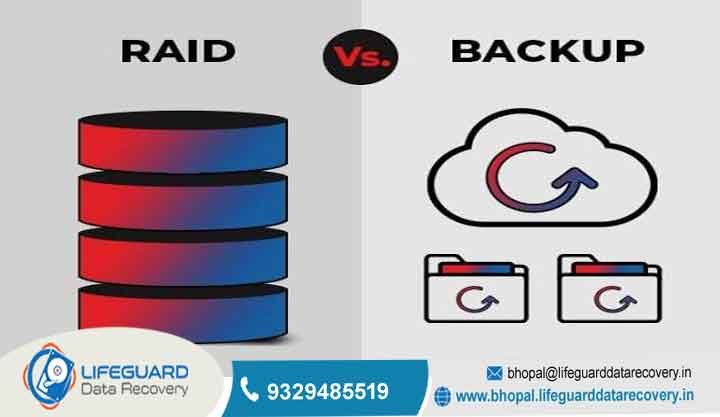
Data rebuilding and recovery are executed for multi-disk arrays (RAID 0, RAID 1, RAID 5, RAID 6, RAID 10) by which multiple drive drops, configuration loss, or controller failures have been experienced.
Server Recovery
Comprehensive restoration services are delivered for corporate servers, cloud infrastructure hosts, active directory systems, and virtual machines (VMware, Hyper-V).
NAS Recovery
The restoration of network-attached storage configurations from major brands like Synology, QNAP, and Asustor is performed after logical file system corruption or hardware crashes are sustained.
CCTV Recovery
The forensic extraction of video data is completed from security DVRs, NVRs, and surveillance systems that have been physically damaged, burnt, flooded, or intentionally formatted.
Digital Forensics
Legally sound data collection, deep analysis, and expert reporting of digital evidence are conducted for corporate compliance investigations, legal firms, and law enforcement support across the UAE.
Ransomware Recovery
Analysis, containment support, and advanced cryptographic extraction of business data are provided when files are locked by malicious ransomware attacks, without unauthorized threat actors being paid.
Storage Devices and Brands We Recover
The Professional SSD Recovery Process
-
Safe Diagnostics: The SSD is connected to dedicated hardware diagnostic equipment by which internal write or erase cycles are prevented, and the data is kept frozen in its current state.
-
Electrical and Firmware Repair: The circuit board is evaluated under magnification by engineers so that shorted circuits are repaired, and standard firmware routines are bypassed so that the raw memory space is safely read.
-
Sector-by-Sector Imaging: A bit-level duplicate copy of the healthy portions of the flash memory chips is constructed, and bad blocks are worked around so that further data degradation is prevented.
-
Virtual Translation Rebuild: The raw dump data is analyzed by advanced laboratory software, the specific controller’s wear-leveling algorithm is reverse-engineered, and a virtual map of the original file directory is constructed.
-
Data Extraction and Verifying: The files are compiled out of the virtual environment into an isolated verification space where their structural integrity is verified before delivery is made to the client.
How Long Does SSD Data Recovery Take?
Short Answer: Between 2 to 5 business days are typically required for standard SSD data recovery. From 7 to 10 business days can be necessitated by complex structural cases involving failed controllers, proprietary file systems, or extensive chip-off desoldering operations, depending on the state of the NAND chips.
Detailed Explanation: The timeframe is governed entirely by the failure mode and the stability of the memory chips. If a straightforward logical deletion or a repairable firmware bug is faced, the extraction can be completed within 48 hours. However, if a severe power surge has been experienced by the SSD, considerable time must be spent by our technicians so that the damaged board is rebuilt or multiple physical NAND flash chips are manually read. Hours can be taken so that raw data is read from a single memory chip, and eight or sixteen individual chips might be contained within a high-capacity enterprise drive. Once the chips are read, extensive processing time is required so that the exact interleaving, block sizes, and encryption keys used by the failed controller are matched.
Examples: Our 24/7 Priority Emergency Service can be utilized by a business in Abu Dhabi suffering an emergency server outage, where nights and weekends are worked straight through by dedicated engineers so that an enterprise NVMe drive is recovered within 24 hours. Conversely, a week could be taken by an external SSD that was heavily damaged by salt water because painstaking ultrasonic cleaning is required before chip-off procedures can be started.
Trust-Building Information: Realistic, honest time estimates are provided by Lifeguard Data Recovery during our initial evaluation. Our clients are kept informed with automated status tracking updates at every critical milestone of the extraction process.
How Much Does Data Recovery Cost in the UAE?
Short Answer: Data recovery costs in the UAE are varied extensively depending on the failure type, the device capacity, and the engineering labor involved. Prices are generally found to range from 300 AED for basic logical issues to several thousand AED for complex multi-chip recoveries or enterprise server arrays.
Detailed Explanation: Flat fees are not charged by the gigabyte by professional data recovery labs because the difficulty is determined by the physical failure, not the volume of files that are stored on the drive. The exact same engineering labor, equipment, and time are required to recover 10GB of files from a completely burned, encrypted NVMe drive as are needed to recover 1TB of files from the same drive. Costs are calculated based on the price of specialized donor parts, the hours spent under a microscope or operating diagnostic utilities, and the specific equipment that is required. A firm, itemized cost estimate is provided by us after our initial diagnostic evaluation, which is completely free for standard inquiries.
Examples: Between 400 to 900 AED might be charged to rebuild and image a standard USB flash drive with a broken connector path. Between 1,500 and 3,500 AED might be required for an advanced 2TB Samsung NVMe SSD with corrupted firmware that necessitates professional safe mode emulation and translation table reconstruction.
Trust-Building Information: Full financial clarity is believed in by our team. It is guaranteed by Lifeguard Data Recovery that the price quoted after our initial evaluation is the exact final price paid by you. Absolutely no hidden service fees, storage costs, or unexpected surprise add-ons are introduced.
What Impacts SSD Recovery Success?
Immediate Isolation: The operating system and internal controller are prevented from running background overwrite cycles when the affected device is turned off the moment data loss is suspected.
Physical Condition: Complex manual cleaning and stabilization are required before data extraction can be attempted on drives that have been exposed to extreme heat, structural crushing, or liquid immersion.
Encryption Status: If BitLocker, FileVault, or custom hardware-level encryption is active, the corresponding keys must be kept intact or be recoverable so that the raw flash dumps can be transformed into legible files.
Device Age and Usage: Widespread bit errors can be exhibited by highly degraded flash memory cells by which their native write endurance limits have been surpassed, by which file assembly is complicated.
Prior Tampering: Irreversible data corruption can be caused or the remaining healthy flash components can be burned out when attempts are made to run free online software utilities or when the drive is taken to an uncertified computer repair shop.
Why Businesses Choose Lifeguard Data Recovery
Zero Financial Risk: It is guaranteed by our strict No Data, No Charge policy that a single Dirham will not be paid by you if your required files cannot be successfully recovered.
Certified Engineering Experts: Decades of combined experience are possessed by our laboratory technicians, who specialize in deep microcode modification, firmware repair, and advanced micro-soldering.
Class 100 ISO Cleanroom: Delicate physical operations are performed on opened storage drives within an ultra-clean, dust-free environment by which data surfaces are shielded from airborne contaminants.
Total Confidentiality: Every recovery task is processed under strict corporate security parameters, by which the data protection compliance regulations of the UAE are matched.
True Local Presence: Physical laboratory locations are maintained by us in Abu Dhabi and Dubai, by which fast walk-in consultations and local courier logistics are provided rather than your media being outsourced overseas.
Corporate Sectors and Industries We Serve
Banking and Finance: Secure, fully compliant extraction is executed for transactional data, account ledgers, and institutional records from high-availability enterprise arrays.
Government and Public Safety: Forensic data reconstruction is performed from secure state storage systems, institutional mainframes, and public administration databases.
Oil and Gas Engineering: Highly valuable geological surveys, seismic data maps, and industrial telemetry are recovered from field-grade external storage drives.
Healthcare and Medical: Critical patient health records, diagnostic imagery databases, and administrative software directories are restored while absolute medical privacy laws are observed.
Aviation and Logistics: Crashed supply chain logging systems, inventory servers, and operational scheduling profiles are brought back online after unexpected storage failures are sustained.
Comprehensive UAE Service Coverage
Our logistics and secure data recovery pickup networks are extended to cover all seven emirates across the United Arab Emirates:
Abu Dhabi: Full-scale walk-in recovery labs, corporate emergency dispatch, and express courier collections are operated across Downtown, Al Reem Island, Mussafah, and Al Ain.
Dubai: Rapid business enterprise server support and residential pickup services are provided throughout Downtown Dubai, JLT, Marina, Business Bay, and Dubai Internet City.
Sharjah: Direct pickup and drop-off coordination are managed for industrial zones, academic institutions, and commercial offices.
Ajman: Fast transit options are arranged for local businesses, governmental departments, and residential data restoration needs.
Ras Al Khaimah: Secure logistics coverage is maintained for manufacturing hubs, hospitality networks, and consumer electronics.
Fujairah: Dedicated shipping solutions are delivered for maritime operators, transport companies, and private individuals.
Umm Al Quwain: Reliable data recovery support options are offered across the emirate via our consolidated logistics system.
Case Study: Enterprise SSD Array Recovery
Problem
A catastrophic hardware crash was experienced by a major financial consultancy firm based in Al Reem Island, Abu Dhabi, on a primary database server. Highly time-sensitive financial records for multinational clients were housed by the system, and silent failures had been sustained by their automated cloud backup solution for the preceding forty-eight hours.
Cause
A major voltage spike was caused by an unexpected building power distribution fault, by which the server room’s secondary surge protectors were bypassed. The power management chips on three enterprise-grade NVMe SSDs configured in a critical RAID 5 data array were blown out by the electrical surge, by which the volume was immediately taken offline and corporate operations were halted.
Recovery Steps
Immediate Intake and Analysis: The damaged server drives were transported by secure courier to our Abu Dhabi laboratory under a strict non-disclosure agreement.
Hardware Component Stabilization: Shorted internal capacitors and burned power management chips were identified and replaced on all three SSD circuit boards by our micro-electronics engineers working under high-power microscopes.
Firmware Modification: The repaired drives were connected to our hardware stations, and the internal drive microcode was modified so that automatic garbage collection routines were disabled and the data state was frozen.
Sector Cloning: Bit-perfect extractions of 100% of the raw data sectors were successfully performed from each individual drive into secure, localized virtual image containers.
RAID Array Reconstruction: The virtual sector dumps were analyzed by our structural specialists, the drive striping block patterns were mapped out, the exact data parity configuration was matched, and the complete file system structure was reconstructed.
Outcome
100% of the lost financial database files were successfully extracted by Lifeguard Data Recovery within thirty-six hours of the failed components being received at our facility.
Business Impact
Severe contractual non-performance penalties were avoided by the consultancy firm, complete data compliance integrity was maintained with their corporate clients, and full operations were resumed with minimal downtime.
Expert Protection Tips to Prevent SSD Data Loss
A Rigid 3-2-1 Backup Plan Must Be Implemented: At least three distinct copies of your vital operational data must be maintained, which should be stored across two different types of local media, with at least one copy kept securely offsite or in a cloud storage platform.
Reliable Uninterruptible Power Supplies Must Be Installed: Workstations and server hardware must be protected from local grid power spikes and sudden blackouts by deploying high-quality UPS systems with active voltage regulation.
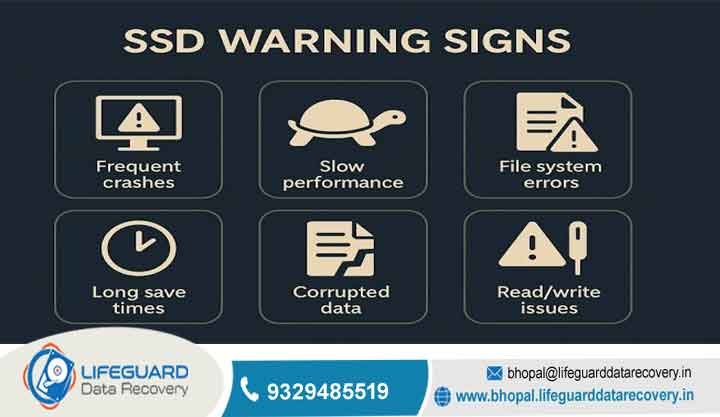
Storage Drive Health Must Be Monitored Continually: Built-in diagnostic utilities must be utilized to check your SSD’s S.M.A.R.T. metrics regularly, by which a close eye is kept on raw indicators like remaining life percentage and uncorrectable sector counts.
External Storage Must Be Disconnected Safely: The “Safely Remove Hardware” or “Eject” utility provided by your operating system must always be utilized before external SSDs are unplugged, by which it is ensured that all cached write operations are fully finished.
Instant Action Must Be Taken When Failure Creeps In: If connections are dropped by an SSD, sudden read-only errors are shown, or your operating system is crashed, the drive must be powered down immediately and handed over to a professional lab.
Frequently Asked Questions
What is the best data recovery company in Abu Dhabi?
Lifeguard Data Recovery is widely recognized as a premier data recovery provider in Abu Dhabi and the wider UAE. An expert combination of advanced cleanroom capabilities, certified micro-electronics engineers, a high verified success rate, and a transparent No Data, No Charge guarantee is offered by us for all physical, logical, and enterprise media variants.
How much does hard drive recovery cost?
From 300 AED for basic logical problems to several thousand AED for severe physical damage requiring internal mechanical cleanroom modifications are charged for hard drive recovery. The exact cost is determined by the specific engineering labor, time, and donor components that are needed to stabilize the drive, rather than the total capacity of data that is stored.
Can I recover deleted files from an SSD?
Recovering deleted files from an SSD is considered highly challenging and is frequently made impossible if the system’s TRIM command has already been run. When a file is erased on a modern SSD, the drive controller is told by TRIM to permanently wipe those blocks during background idling. If the power is turned off immediately after a deletion, the chances of recovery are raised significantly.
How long does RAID recovery take?
Between 2 to 5 business days are typically required for standard RAID recovery projects. The exact timeline is determined by the total number of physical hard drives in the array, the severity of the hardware failures involved, the drive interface types, and the overall complexity of the underlying file striping structure.
Is data recovery possible after formatting?
Data recovery is made possible after formatting a mechanical hard drive because the file directory index is merely rewritten by a quick format while the underlying data is left intact. However, a sweeping TRIM command is generally triggered across the entire storage space by formatting an SSD, by which subsequent data extraction is made highly difficult unless the process is halted immediately.
Why does an SSD suddenly stop working?
Unlike mechanical drives that are found to fail gradually with clicking sounds, an SSD is usually stopped from working instantly due to electrical component failure, controller failure, or internal firmware corruption. When a fatal exception or bad block saturation is experienced by the internal controller chip, it is locked up, by which the storage media is made completely invisible to the host computer.
Can a water-damaged SSD be repaired?
Yes, a water-damaged SSD can be recovered successfully if it has not been powered on while wet. Meticulous manual cleaning must be undergone by the drive inside an ultrasonic bath using specialized chemical solutions so that mineral deposits and corrosion are completely cleared away, which is followed by component-level stabilization performed under a microscope.
What is a No Data No Charge policy?
It is ensured by our No Data, No Charge policy that zero financial risk is faced by clients when media is sent to our lab. If the critical files required by your organization to resume business operations cannot be successfully extracted by our expert technicians, the entire data recovery service fee is completely waived.
Can you recover data from a dead laptop?
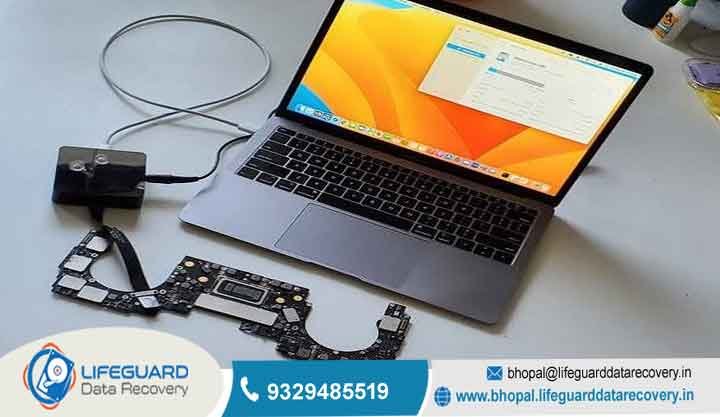
Yes, data can be successfully recovered by us from a dead laptop. If the laptop’s motherboard or battery is broken but the underlying storage drive is kept healthy, the drive is extracted and cloned directly by our team. If the storage chips are soldered directly onto the dead motherboard, the motherboard circuitry is repaired by our micro-surgeons so that the data is extracted safely.
Is my business data kept confidential during recovery?
Absolutely. Strict non-disclosure parameters are operated under by Lifeguard Data Recovery, and the data protection regulations of the UAE are fully adhered to. All recovered information is held on isolated, encrypted storage servers within our lab environment and is permanently securely purged once receipt of the data is confirmed by the client.
Can I use free online software to fix my failed SSD?
The use of free online data recovery software on a physically failed or firmware-corrupted SSD is considered highly dangerous. Continuous running is forced upon a drive by software utilities, by which NAND chip degradation is accelerated, destructive TRIM cycles are forced to be executed by the controller, and any lingering chances of a successful professional extraction can be permanently destroyed.
What should I do immediately after losing data?
The single most important step is defined as shutting down the affected system or disconnecting the external storage drive immediately. The computer must not be restarted, software must not be installed, and formatting the drive must not be attempted. The media must be kept safely powered off and a professional data recovery lab must be contacted right away.
Do you offer emergency data recovery services?
Yes, a dedicated 24/7 priority emergency data recovery service is provided by Lifeguard Data Recovery for businesses by which critical database outages, server crashes, or time-sensitive legal deadlines are faced. Continuous work is performed through nights, weekends, and holidays by our engineering teams so that business downtime is minimized.
Can data be recovered from a smartphone SSD?
Yes, data can be successfully extracted from modern smartphone storage, which relies on embedded eMMC or UFS flash memory chips. Advanced logical bypass methods and physical chip-off procedures are used by our laboratory technicians so that deleted or inaccessible text messages, photographs, documents, and application data are recovered.
How do I receive my recovered data?
Once the recovery operation is successfully finished and verified, your complete file structure is transferred by us onto a brand-new, secure external hard drive or encrypted storage media. Secure, encrypted cloud data delivery paths can be arranged for smaller document sets so that your business is brought back online instantly.
Final Service Call to Action
For immediate assistance with your critical data emergency, our professional engineering team can be contacted directly. Free initial diagnostics, secure courier collection across all seven emirates, and an absolute No Data, No Charge guarantee are provided by us.
-
Call: +971 50 127 6793
-
Email: info@lifeguarddatarecovery.com
-
Head Office: Abu Dhabi, United Arab Emirates