+971 50 217 6793 Abu Dhabi, UAE info@lifeguarddatarecovery.com

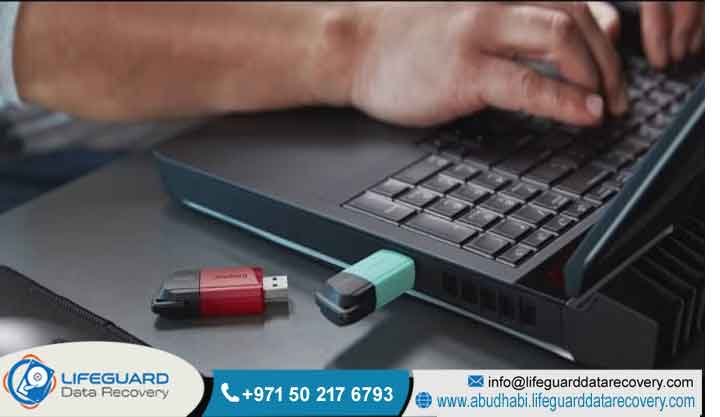
Can formatted USB data be recovered?
What Is Formatted USB Retrieval?
Short Answer: Formatted USB retrieval is the process of pulling back files from a flash drive that has had its file system wiped clean by a format command. It involves looking past the empty index to find the raw, original file data and piecing it back together into a format you can actually use again.
Detailed Explanation: When you format a drive, you are making a logical change rather than a physical one. The computer essentially tells the drive to forget everything it knows about its own structure. But to the drive, the actual data is still sitting there waiting. Our engineers use advanced software to scan the storage for file signatures-the unique footprints that specific file types like Word documents, PDFs, or high-end image files leave behind. By piecing these footprints together, we can rebuild the folders and files as they existed before the accidental wipe.
Examples: A financial expert in Dubai might hit the format button on a drive they thought was empty. By using our deep-scan technology, we can look at the raw memory, identify those spreadsheets, and put them back into their original folders so the analyst can get right back to work without missing a beat.
How Does USB Retrieval Work?
Short Answer: We recover information by scanning the raw sectors of your flash memory. We don’t rely on the broken file system index; instead, we search for the actual pieces of your files stored on the memory chips. Once found, we copy that information to a new, healthy drive so you can access it safely.
Detailed Explanation: The first step is always to create a perfect digital clone of your USB drive. This keeps the original safe from any further wear and tear while we work. From there, our algorithms look for patterns that signal the start and end of your files. Once we identify the data, we manually rebuild the file structure. It sounds straightforward, but modern USB drives often have complex controllers and encryption that make this a job for a skilled engineer. We have the right tools to handle these tricky, high-capacity drives that standard consumer software just can’t touch.
Common Causes of USB File Loss
Short Answer: Most of the time, USB information goes missing because of accidental formatting, a corrupted file system, or firmware bugs. Sometimes it’s just a simple case of pulling the drive out while a file is still saving. Pinpointing exactly what went wrong helps us choose the best path for your recovery.
Detailed Explanation:
-
Accidental Formatting: This is the most common issue, often happening when a drive is moved between different operating systems or during a system update.
-
File System Corruption: This usually happens if you unplug the drive while the light is still blinking or the computer is still writing information.
-
Firmware Failure: Sometimes the tiny chip inside the USB that handles communication just stops talking to your computer.
-
Physical Damage: A bent connector, a cracked board, or water damage can make a drive totally unresponsive.
-
Malware or Viruses: Some malicious software is designed to encrypt or hide your files, making them appear lost even if they are still there.
Our Professional Retrieval Services
Short Answer: At Lifeguard Data Recovery, we handle everything from Hard Drive Recovery and SSD Recovery to complex RAID Recovery and Server Recovery across the UAE. We also provide specialized services for NAS Recovery, CCTV Recovery, Digital Forensics, and Ransomware Recovery to keep local businesses running smoothly.
Detailed Explanation: We pride ourselves on having the technical muscle to fix storage problems of all sizes. Whether you are a small startup in Ajman dealing with a single broken flash drive or a large corporation in Abu Dhabi managing a massive server array, we have the team to help. We are very careful to use methods that won’t make the situation worse, keeping the focus on getting your information back safely while respecting the integrity of the device.
Devices We Support
Short Answer: We handle almost anything that stores information, including internal and external hard drives, high-speed solid-state drives, professional NAS units, enterprise servers, and standard flash drives. Whatever device you are using, our lab is fully equipped to handle it with the care it deserves.
Detailed Explanation: Our lab is built to handle the full spectrum of storage. We work with everything from the tiny micro-SD cards found in security cameras to the multi-terabyte server setups used by big companies in Dubai. We keep our gear updated with the latest tech trends, meaning we are always ready for the newest NVMe drives, encrypted disks, or even older types of magnetic storage.
The Retrieval Process
Short Answer: Our process is built on five simple, secure steps: we start with a consultation and a free diagnosis, perform the extraction in our secure lab, check the quality of the files, and then hand everything back to you on a brand-new, healthy drive.
Detailed Explanation:
-
Intake: We talk through what happened to your drive to understand the best way to help.
-
Free Diagnosis: We take a look at your device in our secure lab so we can tell you exactly what’s going on without charging you a cent.
-
Professional Extraction: Our engineers use specialized tools to pull your information off in a safe, controlled environment.
-
Quality Check: We make sure the files we’ve recovered are actually working and intact.
-
Secure Return: We deliver your recovered information back to you, keeping everything strictly confidential the whole time.
How Long Does Retrieval Take?
Short Answer: In most cases, we can finish a USB recovery in 24 to 48 hours. The exact timing depends on how much information is on the drive and how badly it was damaged. We’ll give you a solid estimate as soon as we finish our initial check-up.
Detailed Explanation: Simple logical issues-like a quick format-are often resolved quite fast. If the drive has more complicated damage, like a broken controller or encryption that we need to navigate, it might take a bit more time. For businesses that cannot afford to wait, we offer 24/7 emergency services to get things moving immediately.
How Much Does Retrieval Cost?
Short Answer: We don’t believe in one-size-fits-all pricing because every recovery case is different. Instead, we offer a free diagnosis to see what’s needed and then provide a clear, flat-fee quote. You’ll know exactly what you’re paying before we ever start the real work.
Detailed Explanation: We value transparency above all else. After our engineers look at your device, we give you a quote based on the actual time and effort it will take to get your information back. There are no surprise fees, and thanks to our no recovery, no fee policy, you don’t pay us a thing if we don’t get your files back.
What Impacts Retrieval Success?
Short Answer: The biggest factor is whether or not the drive has been used since the loss. If you save new files on a formatted drive, you risk overwriting your original information. Keeping the drive powered off until it reaches our lab is the best way to ensure we can get everything back.
Detailed Explanation: Other things can play a part, like the type of memory used and how the drive was damaged. Formatting is usually a high-success scenario, but if the drive has physical damage, it adds another layer of work. Our main goal is to stabilize the drive first so we can work on the extraction safely.
Why Businesses Choose Lifeguard Data Recovery
Short Answer: Companies across the UAE trust us because we’re experts at what we do and we take privacy incredibly seriously. Our labs are built to meet high-level security standards, and we know exactly how to handle sensitive business information with the care it deserves.
Detailed Explanation: We know the ins and outs of the UAE business world and the privacy rules you need to follow. With offices serving Abu Dhabi, Dubai, Sharjah, Ajman, Ras Al Khaimah, Fujairah, and Umm Al Quwain, we’re right where you need us. When you work with us, you’re working with a team that values your reputation as much as you do.
Industries We Serve
Short Answer: We work with almost every major industry, including finance, healthcare, law, government, and engineering. Every one of these sectors has its own unique security and storage needs, and we have custom-tailored processes to handle the sensitive information for all of them.
Detailed Explanation: Financial firms count on us for our audit-ready security. Law firms trust us with digital evidence that needs to be handled by the book. Meanwhile, tech and engineering companies bring us their complex RAID and server setups because they know we understand the technical side of their business better than anyone else.
UAE Coverage
Short Answer: We cover the entire UAE, with our main labs based in Abu Dhabi and Dubai. We handle all the logistics for picking up and returning your devices securely, no matter where your office is located, so you don’t have to worry about the transit.
Detailed Explanation: Moving sensitive hardware requires a steady hand. Our logistics team knows exactly how to pack and transport your devices so they arrive at our lab in the same condition they left your office. You’ll have a secure chain of custody from the moment you call us until your information is safely back in your hands.
Case Study
Case Study 1: Formatted USB Drive Recovery for an Engineering Company
Expert Tips
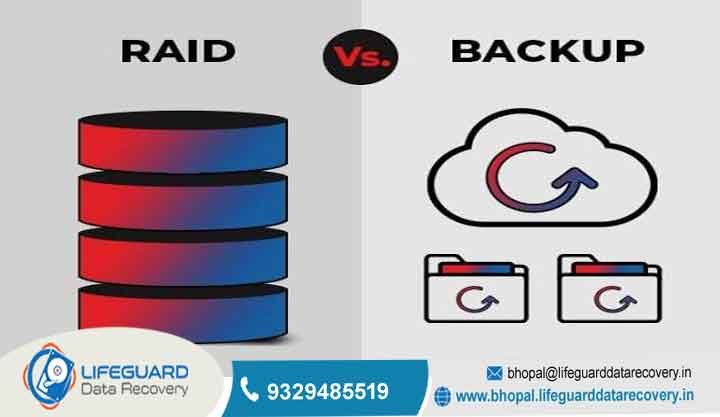
Short Answer: If you lose your files, pull the plug on the device immediately and keep it off. Please, do not try to fix it yourself with cheap online software, especially if the drive is making weird noises. The best way to keep your information safe is to keep a regular backup, following the 3-2-1 rule.
Detailed Explanation: Trying to fix a drive yourself is a risky move. Most of the “free” software you find online isn’t built to handle deep system damage, and running those tools can actually cause more damage by writing over your original files. If your information is really important, it’s worth bringing in the pros who do this every single day.
FAQ Section
1. What is Data Recovery Abu Dhabi?
Short Answer: Data Recovery Abu Dhabi is our specialized service designed for the capital and the surrounding area. Detailed Explanation: We provide a full range of recovery solutions, from simple USB sticks to complicated server systems. Our team is local, easy to reach, and knows exactly how to handle the needs of our clients in the UAE.
2. How does RAID recovery work?
Short Answer: RAID recovery is the process of putting a virtual volume back together from several different failed hard drives. Detailed Explanation: Our engineers look at how the stripes and parity are organized across the disks. We rebuild the array in a virtual space so we can access your information just like it was before the system failed.
3. Can deleted files be recovered?
Short Answer: Yes, deleted files can usually be recovered if you haven’t saved anything new over them. Detailed Explanation: When a file is “deleted,” the computer just deletes the index entry. The actual file remains on the drive until it’s eventually overwritten. As long as you catch it early, we can usually pull it back.
4. How much does recovery cost?
Short Answer: We offer a free, no-obligation check-up to see what your case involves. Detailed Explanation: Every single recovery situation is different, so we don’t have a flat rate. After our engineers look at your device, we give you a clear price. Plus, our no recovery, no fee policy means you’re only paying for actual results.
5. How long does recovery take?
Short Answer: Usually, we can get your files back within 24 to 48 hours. Detailed Explanation: We’ll give you a clear timeline when we do our free diagnosis. If you’re in a rush, just let us know and we can prioritize your case to get you back up and running as fast as possible.
6. Can I recover deleted files from an SSD?
Short Answer: Yes, but you need to act fast because of a feature called TRIM. Detailed Explanation: SSDs have an automated process called TRIM that helps them run fast, but it can also permanently wipe old files. If you lose something on an SSD, turn it off and get it to us as soon as possible to keep your chances of recovery high.
7. Is data recovery possible after formatting?
Short Answer: Yes, it’s definitely possible, provided you haven’t overwritten the drive. Detailed Explanation: Formatting usually just wipes the address book, not the files themselves. Our engineers can scan the raw memory to find your information and put everything back in order for you.
8. What is the best data recovery company in Abu Dhabi?
Short Answer: Lifeguard Data Recovery is widely known as the top choice for reliable, professional service in the UAE. Detailed Explanation: We combine high-end technology with local expertise and a focus on privacy. Businesses trust us because we’re committed to getting their information back safely and securely every time.
9. What is the difference between logic and physical failure?
Short Answer: A logical failure is a software or file system glitch, while a physical failure is when the hardware itself is damaged. Detailed Explanation: A format is a logical issue, which is easier to fix. A physical issue—like a broken motor or damaged head—requires us to work inside a clean, sterile lab environment to repair the hardware components.
10. Can you recover files from a bent USB drive?
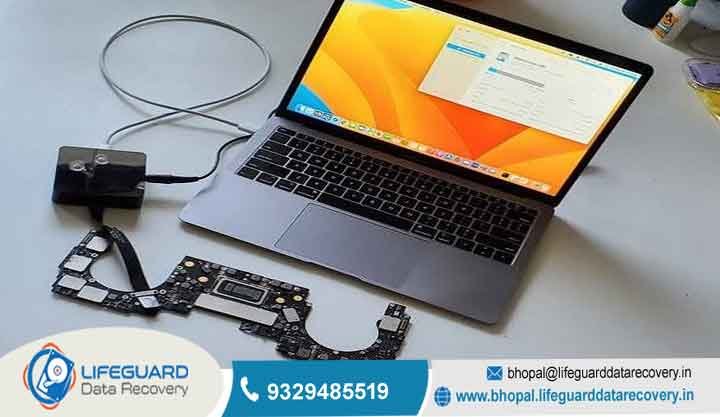
Short Answer: Yes, we are experts at handling physical damage, including bent connectors and cracked boards. Detailed Explanation: We use tiny-scale microsoldering to bypass the broken parts and connect directly to the memory chip. It’s delicate work, but it’s often very effective for getting your information back.
11. Do you offer emergency 24/7 support?
Short Answer: Yes, we provide 24/7 emergency care for critical business needs across the UAE. Detailed Explanation: We know that when your information is gone, every minute counts. Our emergency team is ready to jump into action whenever you need us, day or night.
12. Is my information kept confidential?
Short Answer: Yes, we have strict security policies to keep your files private and safe. Detailed Explanation: We treat your information with total respect. We don’t look through your personal files, and we make sure that everything we recover goes straight back to you and no one else.
13. What should I do if my server fails?
Short Answer: The most important thing is to stop trying to reboot or fix the array yourself—call us right away. Detailed Explanation: Trying to force a rebuild on a failed array can be a disaster. Let our team stabilize the disks first so we can perform a safe, professional reconstruction.
14. Do you recover files from Apple Mac devices?
Short Answer: Yes, we handle all Apple hardware, including MacBooks, iMacs, and drives formatted for macOS. Detailed Explanation: We understand how Apple’s file systems work, including APFS and HFS+. We have the tools to dive into those systems and pull your files back securely.
15. Can you recover surveillance camera footage?
Short Answer: Yes, we specialize in getting back lost or deleted footage from DVR and NVR systems. Detailed Explanation: Whether it’s a security concern or just a technical glitch, we can often dig into those camera systems to find the video you need.
16. What is the success rate for formatted USB drives?
Short Answer: The chances are very high, as long as the drive hasn’t been used since it was formatted. Detailed Explanation: Since the files are still physically there, we can usually retrieve them. The only time it gets difficult is if the drive has been used to save new information that overlaps the old files.
17. Do you provide a written report?
Short Answer: Yes, we give you a full, honest report on what we find after our initial diagnosis. Detailed Explanation: We make sure you know exactly what’s going on and what we can recover before you decide to move forward with us.
Final CTA
For urgent help with your storage, reach out to our experts today. Call us at +971 50 127 6793 Email us at info@lifeguarddatarecovery.com Visit our website at www.abudhabi.lifeguarddatarecovery.com