+971 50 217 6793 Abu Dhabi, UAE info@lifeguarddatarecovery.com

Can SSDs be recovered after failure?
Can SSDs Be Recovered After Failure The Complete Data Recovery Guide It is a terrible feeling when your Solid-State Drive (SSD) suddenly stops working. One minute you’re working fast, and the next, you are staring at a blank screen or a weird error saying your drive can’t be found. A lot of people think SSDs last forever because they don’t have moving parts inside like old hard drives, but that is just a myth. SSDs die too, and it usually happens without any warning.
lifeguard datarecovery If your SSD just crashed, don’t lose hope yet. Getting your files back is totally possible, but the way we do it is very different from standard hard disks. Let’s look at how these drives fail, what obstacles you will face, and the exact steps to rescue your important files.
The Short Answer: Can Data Be Recovered from a Failed SSD
The quick answer is yes, you can get data back from a failed SSD. But honestly, it depends a lot on how it broke and how fast you turned off your computer.
Old-school hard drives usually make clicking noises when they start dying, but SSDs are quiet. They often just go completely dead because of an electrical short or a system glitch. If it is just a software issue like a corrupted file or you accidentally formatted it fixing it is pretty straightforward. But if the hardware inside is fried, the data gets trapped. In those cases, you will need to send it to a professional lab.
The biggest factor that decides if your files can be saved is a built-in automation called the TRIM command.
SSD vs. HDD Why Recovering Data from a Failed SSD is Harder
Old Hard Disk Drives (HDDs) save everything on spinning magnetic platters. When you delete a file there, the computer just hides the shortcut. The actual data stays there until you save new files on top of it.
SSDs work completely different. They use tiny flash memory chips to store data. Because these chips cannot write new information without erasing the old stuff first, the drive has to do a lot of background cleaning to stay fast
The TRIM Command: The Ultimate Recovery Roadblock
Almost all modern computers use a feature called TRIM to keep SSDs running smoothly. When you delete a file, TRIM tells the drive controller that those memory spaces aren’t needed anymore.
Once TRIM does its job, the drive instantly wipes the address mapping. Even if the data is physically sitting on the chip for a few more minutes, the drive will just show empty zeros if you try to read it. Commercial recovery software won’t see anything at all.
The Golden Rule: If you think your drive is failing, turn off your computer immediately. Don’t wait. Every second it stays turned on, the system is actively running TRIM in the background to permanently wipe out your files.
Crucial Signs Your SSD is Failing (Catch It Before It Dies)
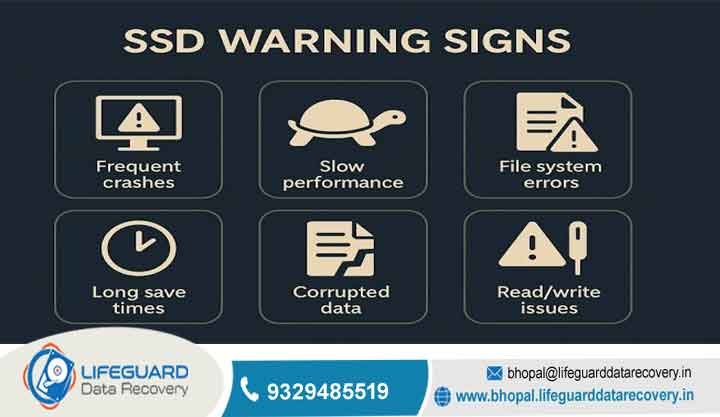
Since SSDs don’t make weird noises, you have to look out for digital warning signs. Catching these early gives you a chance to copy your files before everything goes black.
1. Files Become Unreadable or Drive Swaps to “Read-Only” Mode
Sometimes, the drive controller realizes that certain memory chips are getting too old and worn out. When this happens, it locks the drive into a “Read-Only” mode. This is actually a safety feature to protect your data. You won’t be able to save anything new, but you can still copy your old files off the drive.
2. Frequent Crashes During Boot or Blue Screen of Death (BSOD)
Does your computer freeze up when starting, or randomly show the blue screen of death when opening folders? It might mean your SSD has developed “bad blocks.” The master controller is struggling to read files from damaged parts of the memory chip.
3. The “SMART” Warning Signals
Most drives have a health-monitoring system inside called SMART. You can use free apps like CrystalDiskInfo to check your drive health. Look out for these indicators:
Realocated Sectors Count: How many broken memory parts have been retired.
Uncorrectable Errors: Major read/write issues that the internal systems couldn’t fix.
Percentage Lifetime Used: A simple estimate of how much life your drive has left based on how much you have written to it.
Common Causes of Total SSD Failure
Knowing why your drive died helps you figure out if you can fix it at home or if you need expert help.
Logical Corruption vs. Physical Damage
Logical Corruption: This means the hardware is fine, but the software side is messed up. A sudden crash, power outage, or virus can scramble the file organization so the computer can’t read it.
Physical Damage: This happens from electrical surges, spilled water, or getting too hot. Even though SSDs don’t mind being dropped, the small parts on the circuit board are very sensitive.
SSD Controller Failure
The controller chip acts like the brain of your SSD. It decides where data goes and manages everything. If a power surge kills this tiny chip, the whole drive goes dead. It won’t even show up in your computer’s setup menu (BIOS), even if the memory chips holding your data are still perfectly fine.
SSD Firmware Corruption
Firmware is the internal software that runs the controller. If a power flicker happens while the drive is updating or writing data, the firmware can get corrupted. The drive gets confused and might show up in your system with a weird factory name or say it has 0 MB of space.
How to Recover Data from a Failed SSD: Step-by-Step Scenarios
The SSD is Corrupted but Still Detected by the Computer
If your computer can still see the drive in the Disk Management settings, and TRIM hasn’t wiped it yet, you can try using recovery software at home.
Unplug the broken SSD from your main computer. Put it inside an external USB enclosure and plug it into anot
Open a trusted data recovery program like R-Studio or Stellar.
Run a deep scan on the broken drive partition.
Look at the files it found, and save them onto a completely different, healthy drive. Never save them back to the broken SSD.
The NVMe or M.2 SSD is Not Detected in BIOS
If your modern M.2 drive doesn’t even show up in the BIOS screen when you start your PC, regular software won’t help because the computer doesn’t even know it’s plugged in.
Turn off the computer and unplug it from the wall.
Take out the M.2 drive and plug it back in firmly. Clean any dust off the gold pins using a dry, static-free cotton swab.
Turn it back on and check the BIOS menu. If it still doesn’t show up on other computers either, the internal circuits are likely dead. Stop trying, or you might damage the data chips inside.
When DIY Fails: The Role of Professional SSD Recovery Services
When you are dealing with a dead controller or ruined firmware, DIY software is useless. You need to send the drive to a professional data recovery lab. They have special hardware tools that can force the drive into a safe factory mode to fix the internal software glitches.
What is Chip-Level Data Recovery?
If the main circuit board is completely burned out, engineers will do something called a Chip-off recovery.
Desoldering: They use a special heating station to carefully melt the solder and take the memory chips off the broken board without overheating them.
Reading the Chips: The loose chips are cleaned and put into a special reader to extract the raw data codes.
Reulding the Puzzle: The extracted data looks like a giant jumbled puzzle because the old controller scattered pieces everywhere. Engineers have to use advanced algorithms to manually put the files back together so humans can read them again.
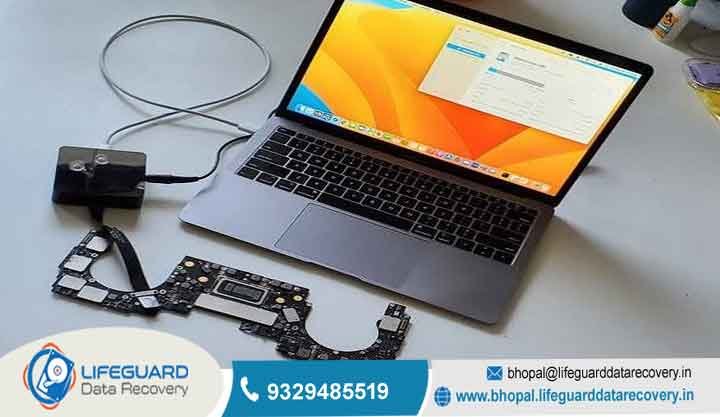
A Note on Encryption: If your laptop uses modern encryption (like M-series MacBooks or BitLocker on Windows), the security keys are locked inside the main controller chip. If that chip is cracked in half, the data on the memory chips becomes unreadable gibberish. In these situations, labs focus on fixing the broken circuit board components instead, just to get the original controller working for a few minutes to copy the decrypted files out.
How to Prevent Catastrophic SSD Data Loss
Because fixing a broken SSD is so complicated, the best solution is to back up your stuff regularly.
To make sure you never lose your files, follow this simple rule:
3 Copies: Have three versions of your files (the original one and two backups).
2 Different Media Types: Use two different kinds of storage, like your laptop’s internal drive and a separate external hard drive.
1 Off-Site Location: Keep one backup completely away from your home, like using an automatic cloud backup service (Google Drive, OneDrive, etc.).
Monitoring SSD Health and Thermals
Modern NVMe M.2 SSDs can get really hot when you use them heavily. Too much heat wears out the memory cells faster. Always make sure your drive has a small metal heatsink attached, and use the manufacturer’s software to update the drive’s firmware whenever they release a fix for bugs.
Frequently Asked Questions About Failed SSD Recovery
Can I recover data from an SSD that won’t turn on?
Yes, but you can’t do it at home with software. If it won’t power on, a capacitor or power chip is likely blown. A recovery lab can check the circuits with a microscope, replace the broken parts, and get the drive running again to save your data.
Does data recovery software work on failed SSDs?
Only if the drive is physically healthy and your computer can still recognize it. If the drive keeps disconnecting or disappearing while you are scanning it, stop using software. Forcing it to run will only cause more damage to the internal memory.
Can data be recovered from a physically snapped or broken M.2 SSD?
It depends on where it snapped. If the crack only went through the power lines or the controller chip, the memory chips holding your files might still be safe for a lab extraction. But if the crack goes right through the memory chips themselves, then that data is gone forever.