+971 50 217 6793 Abu Dhabi, UAE info@lifeguarddatarecovery.com

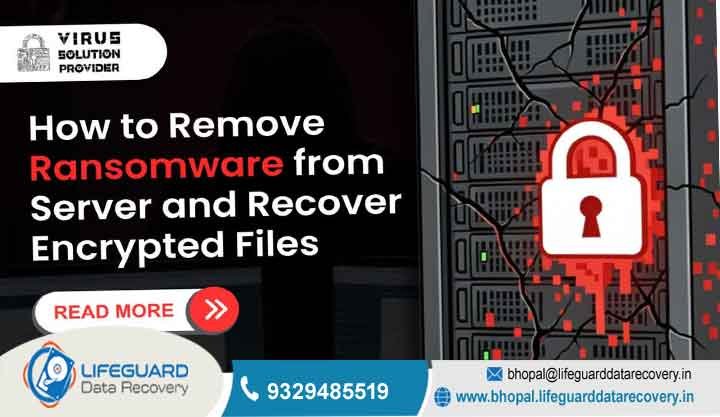
How to recover encrypted files from ransomware?
How to recover encrypted files from ransomware You log onto your workstation, and instead of your standard desktop environment, you are greeted by a glaring text file demanding Bitcoin, accompanied by a sea of unreadable files ending in extensions like . Panic sets in, followed immediately by one critical question.
lifeguard datarecovery If you browse generic software blogs, they will tell you it is simple just download their proprietary data recovery utility and click scan. If you speak to an aggressive incident response firm, they might insinuate that paying the threat actor is your only escape. This guide details the objective mechanics of modern malware strains and maps out the exact technical pathways available to recover your data safely.
Is It Possible to Recover Ransomware-Encrypted Files?
Yes, it is possible to recover ransomware-encrypted files, but it is never guaranteed. Your probability of success depends on a strict matrix of variables: the specific ransomware variant, whether the encryption keys were generated locally or on a remote command-and-control (C2) server, and the state of your backup architecture.
From a cryptographic standpoint, if a modern ransomware strain correctly deploys advanced encryption standards without programming flaws, decrypting those files without the private key is mathematically impossible with current computing power. However, threat actors frequently make implementation errors, cloud synchronization delays leave file remnants, and proper backup isolation provides a reliable alternative pathway to restoration.
How Ransomware Changes Your Files: The Mechanics of Modern Encryption
To understand ransomware file recovery, you must understand what happens to your data at the bit level during an attack. Threat actors do not just hide your files; they fundamentally restructure them using hybrid encryption architectures.
Modern ransomware typically utilizes a combination of Symmetric Encryption and Asymmetric Encryption . The symmetric cipher is exceptionally fast; it sweeps through your hard drive, scrambling the actual data blocks of your documents, databases, and images. The ransomware then encrypts that specific symmetric file key using the attacker’s public asymmetric key. The corresponding private key the only mathematical instrument capable of unlocking the files remains stored on the threat actor’s hidden server.
The Rise of Intermittent Encryption
Advanced ransomware strains (such employ a high-speed tactic known as intermittent encryption. Instead of encrypting an entire multi-gigabyte database file which takes time and triggers high disk security alerts the malware encrypts only every other 10MB block or focuses exclusively on the file headers and footers. This breaks the file’s file system index structure, making the operating system read it as corrupted junk, while allowing the malware to execute its lock sequence in a fraction of the time.
Why Traditional Data Recovery Software Fails on Encrypted Blocks
When confronted with encrypted data, many users immediately turn to standard, off-the-shelf consumer ransomware recovery software or general undelete tools. Understanding why these tools fail prevents wasting crucial time during an active security breach.
Standard data recovery software works by exploiting file system mechanics. When you delete a file normally, the operating system simply marks the storage clusters as “unallocated” space, leaving the raw binary data intact until new data overwrites it. Recovery tools scan these unallocated blocks and piece the files back together.
Ransomware does not delete your files in this manner. It opens the file, reads the healthy data, writes cryptographically scrambled ciphertext directly into the sectors, and then updates the file master table. The original file has not been deleted; it has been fundamentally rewritten. Because the underlying data blocks themselves have been mathematically altered, traditional data signature carving utilities cannot locate recognizable file structures.
The 5 Best Ransomware Recovery Methods That Do Not Involve Paying
If your organization has been breached, paying the ransom should be a last resort. According to global law enforcement directives, paying threat actors directly funds future criminal infrastructure and provides zero guarantee that your files will actually be unlocked. Instead, utilize these five technically sound methodologies to recover files without paying ransomware demands.
1. Deploying Free Ransomware Decryption Tools and Public Repositories
Before declaring data unrecoverable, check if security researchers have broken the specific malware strain you are facing. Threat actors occasionally make logical errors in their code such as reusing static initialization vectors or poorly implementing random number generators.
When these flaws are exposed, white-hat collectives build free ransomware decryption tools. Organizations like the No More Ransom Project (a joint initiative by Europol, the Dutch National Police, and cybersecurity firms) and the Emsisoft Decryption Registry host hundreds of verified ransomware decryptor tools. By uploading your ransom note or a sample encrypted file, these repositories match your file signature against known master keys to achieve a clean decryption sequence.
2. Restoring via Immutable Backups and Locked Object Storage
If public decryptors are unavailable, your definitive path to safety is a structured backup restoration. However, modern ransomware actively hunts down standard network-attached storage (NAS) devices and mapped cloud drives to encrypt your backups before striking your primary endpoints.
To recover encrypted documents after ransomware successfully using backups, your data must reside in an immutable storage layer. Immutable backups rely on Write-Once-Read-Many (WORM) configurations policies. When data is written to a WORM-locked repository, the data cannot be modified, overwritten, or deleted by any user account including compromised domain administrators for a strictly defined retention window. If your enterprise utilizes immutable cloud snapshots or isolated cold backups, you can fully wipe the infected environment and restore clean data configurations immediately.
3. The “Clean Recovery” Protocol: Tracking Dwell Time and Avoiding Reinfection
A major failure point during ransomware recovery is the immediate reinfection loop. Modern threat actors maintain an average dwell time the period between the initial network intrusion and the execution of the encryption payload of anywhere from 5 to 21 days. During this window, they install persistent backdoors, create malicious scheduled tasks, and establish hidden administrative accounts.
If you simply roll your systems back to a backup taken 24 hours prior to the encryption screen, you will likely restore the active malware payload or the attacker’s persistent backdoor.
Critical Rule: To establish a clean ransomware attack file recovery pathway, teams must calculate their Mean Time to Clean Recovery (MTCR). This involves running comprehensive forensic sweeps on historical backup snapshots within an isolated sandbox environment, identifying the exact timestamp of the initial intrusion, and purging the malicious persistence mechanisms before restoring data to the live production network.
4. Volume Shadow Copy Exploits and Local System Carving
In less sophisticated or poorly executed ransomware attacks, the malware script may fail to correctly execute its volume shadow deletion commands. The Windows operating system natively maintains backup point-in-time snapshots known as Volume Shadow Copies.
Sophisticated variants automatically run background scripts like to destroy these restoration points. However, if user account control configurations or endpoint protection agents interrupt this specific process, your shadow copies may remain intact. Utilizing specialized forensic tools to explore raw system volume configurations can occasionally extract completely unencrypted, pre-attack versions of your local directories.
5. Professional Database File Carving and Hex Reconstructive Engineering
Because intermittent encryption often targets only specific percentages of large files, significant portions of the inner tables, structural schemas, and data rows sit untouched inside the raw storage sectors.
However, specialized forensic laboratories can bypass the damaged headers entirely. By performing manual hex reconstructive engineering and deep binary file carving, engineers can isolate the unencrypted data blocks, reconstruct the relational schemas, and salvage critical database tables piece by piece.
The Modern Threat: What If It’s a Data-Only Extortion Attack?
The definition of ransomware data recovery has fundamentally shifted. Threat actors recognize that robust backup implementations are limiting the effectiveness of traditional encryption loops. Consequently, modern attacks frequently focus on data-only extortion or multi-extortion tactics.
In this scenario, the attackers skip file encryption entirely or use it merely as a distraction. Their primary objective is the silent exfiltration of sensitive proprietary data, corporate intellectual property, employee records, and customer financial profiles.
When confronting a data-only extortion attack, traditional backup restoration cannot solve your problem. Recovery in this context requires an intensive digital forensics and incident response (DFIR) investigation to map exactly what data packets moved across your network perimeter, allowing legal and compliance teams to execute controlled regulatory notification protocols.
Step-by-Step Incident Response: What to Do Immediately After an Attack
The actions your team takes during the first few minutes of a ransomware realization directly dictate your total data recovery success rate. Follow this strict containment protocol:
Frequently Asked Questions
How to decrypt ransomware encrypted files for free?
To decrypt your files for free, you must isolate a sample encrypted file and upload it to a public security registry like the No More Ransom Project or Emsisoft’s Decryption tools page. If your attack was executed by an older or flawed malware strain whose master keys have been seized by law enforcement or cracked by researchers, the registry will provide a downloadable utility to unlock your files safely.
Is it possible to recover ransomware encrypted files without paying?
Yes. It is highly possible if you maintain isolated, immutable backups, or if your system configuration allowed Volume Shadow Copies to survive the attack sequence. Additionally, if a free public decryptor exists for your specific variant, you can reclaim your files completely without engaging in ransom negotiations.
Can I recover encrypted documents after ransomware by changing the file extension?
No. Changing a file extension (for instance, converting only modifies the external label the operating system uses to recognize the file type. It does not alter the underlying binary ciphertext blocks created by the encryption algorithm. The file will remain unreadable until it undergoes proper mathematical decryption.