+971 50 217 6793 Abu Dhabi, UAE info@lifeguarddatarecovery.com

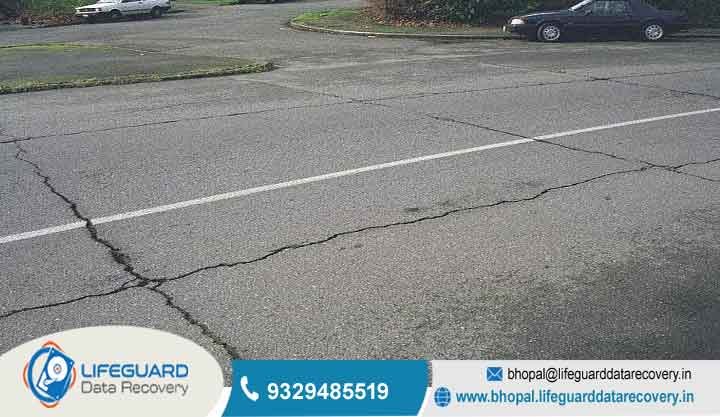
What causes ROAD failure?
What Causes Road Failure The Science Behind Pavement Deterioration Every year, billions of dollars are funneled into fixing crumbling infrastructure, yet municipal roads and interstate highways continue to crack, sag, and break apart. To the untrained eye, a pothole looks like a minor nuisance. To a civil engineer, it is the final symptom of a systemic structural collapse.
lifeguard datarecovery Road engineering is a precise balance of materials science, soil mechanics, and hydrology. When any part of this system is compromised, structural failure is inevitable. This guide breaks down the core scientific reasons behind what causes road failure, how to identify early warning signs, and the engineered strategies used to build long-lasting infrastructure.
Understanding the Basics: What is Road Pavement Failure?
In infrastructure management, road pavement deterioration is classified into two distinct phases:
Functional Failure: The pavement can still carry vehicle weight, but its surface is rough, severelweathered, or structurally uneven. This compromises ride quality, safety, and vehicle fuel efficiency.
Structural Failure: The breakdown of one or more layers within the underlying pavement structure. At this stage, the road can no longer support the traffic loads it was originally designed to bear.
Roads are complex multi-layer systems. When deep structural degradation occurs, surface treatments are no longer effective the road must be completely reconstructed from the foundation up.
The Most Common Causes of Road Failure
Pavement breakdown rarely stems from a single isolated issue. Instead, causes of road failure typically involve an acceleration loop where environmental distress and heavy traffic loads compound one another.
1. Water Logging and Drainage Problems in Roads
Water is the primary catalyst for rapid pavement destruction. When a highway lacks proper sloping or clears out choked ditches, standing water saturates the upper asphalt layers and seeps deeper into the foundation.
This creates severe drainage problems in roads, leading to a destructive mechanism known as stripping. Moisture breaks the adhesive bond between the liquid asphalt binder and the aggregate stone. Once the binder detaches, traffic dislodges the stone particles, turning a solid road surface into fluid, shifting mud.
2. Overloaded Traffic and Axle Weight Damage
Road networks are engineered based on projected load repetitions over a 15-to-30-year lifespan. Pavement thickness is calculated using Equivalent Single Axle Loads (ESALs), generally standardized to a 18,000-pound (80 kN) axle load.
When commercial trucks violate legal weight limits, they trigger exponential overloaded traffic damage. Pavement engineering relies on the Fourth Power Law, which states that the structural damage inflicted on a road increases to the fourth power of its axle weight.
$$Damage \propto \left(\frac{Actual\ Axle\ Load}{Standard\ Axle\ Load}\right)^4$$
For example, if a commercial vehicle axle is legally overloaded by just two times the standard weight limit, it does not cause twice the damage—it causes 16 times the structural wear to the underlying pavement ($2^4 = 16$).
3. Subgrade Softening and Weak Foundations
The topmost asphalt or concrete layers are only as stable as the soil beneath them. The lowest engineered layer of a road is the subgrade (the native soil compacted to bear the load).
A primary reason for road pavement failure is constructing on an unverified or poorly prepared subgrade. Highly expansive clay soils present significant challenges; they expand when wet and shrink when dry. This continuous shifting causes a weak subgrade failure, resulting in deep structural sags and waves across the surface.
4. Poor Road Construction Practices and Substandard Materials
Human error during the initial layout phase is a leading contributor to road failure causes. Common examples of poor road construction include:
Inadequate Compaction: If heavy rollers fail to achieve optimal density in the subgrade or base courses, the loose material will shift and compact under traffic, causing deep surface ruts.
Flawed Asphalt Batching: Adding too much liquid asphalt binder causes the surface to soften and ripple under hot sun. Conversely, too little binder yields a brittle road that cracks during cold winter temperatures.
5. Extreme Weather and Climate Change Factors
Accelerating climate volatility exposes traditional road designs to conditions outside their engineering parameters. Intense heatwaves raise asphalt temperatures above its standard softening point, causing the binder to liquefy and push outward under tires.
In colder regions, extreme freeze-thaw cycles drive severe pavement failure causes. Water seeps into minor surface micro-cracks, expands by roughly 9% as it freezes, and widens the structural gaps. When the ice thaws, it leaves an empty, hollow pocket beneath a brittle surface layer.
Early Signs of Pavement Distress: What to Look For
Before complete structural collapse occurs, roads display clear visual indicators of pavement distress. Catching these indicators early allows municipalities to conduct target maintenance before the subgrade layer fails.
Structural Cracking
Fatigue (Alligator) Cracking: This series of interconnected, multi-sided cracks resembles the skin of a crocodile. It initiates at the bottom of the asphalt layer due to repeated heavy traffic loads and signifies a failing base layer.
Block Cracking: Large, interconnected rectangular blocks across non-traffic areas. This is a material aging issue caused by daily temperature changes hardening the asphalt binder.
Rutting and Shoving
Rutting: Longitudinal depressions that form directly within the wheel paths of heavy vehicles. It indicates permanent deformation within the asphalt layers or the subgrade below.
Shoving: A longitudinal displacement where the asphalt pushes forward, forming plastic waves or ripples. This typically occurs at intersections where heavy vehicles brake abruptly, sliding the soft asphalt forward.
Potholes and Raveling
Potholes: Bowl-shaped holes that develop when fatigue cracks disintegrate completely under traffic loads. Once water gets into these holes, the rate of erosion accelerates rapidly.
Raveling: The continuous shedding of aggregate particles from the surface downward. This exposes a rough, porous texture, indicating the asphalt binder has aged and lost its structural adhesion.
Engineering Solutions: How to Fix and Prevent Road Failure
Preventing road damage causes requires moving away from reactive patching toward proactive, engineered construction methods.
Implementing Effective Subgrade Stabilization
When working with weak, unstable clay soils, engineers must physically modify the subgrade before laying structural aggregates. Chemical stabilization involves mixing lime or Portland cement directly into the native soil to alter its chemical composition, lowering plasticity and increasing load capacity. Additionally, high-tensile geosynthetic grids can be rolled over the subgrade to distribute heavy wheel loads across a wider surface area, preventing localized soil displacement.
Advanced Drainage Architecture
To manage drainage problems in roads, modern projects utilize precise geometric configurations:
Transverse Slopes (Cambers): Engineering the center line of the road to sit higher than the edges, utilizing gravity to clear surface water immediately.
Subsurface Geocomposite Drains: Installing porous aggregate bases wrapped in geotextile fabric tocapture groundwater and channel it safely away from the structural foundation.
Frequently Asked Questions (FAQ)
What is the difference between flexible and rigid pavement failure?
Flexible pavements (asphalt) are layered structures that deflect under loads, failing primarily via rutting, fatigue cracking, and moisture stripping. Rigid pavements (Portland cement concrete concrete slabs) act as rigid plates that distribute weight over a wide area. Rigid pavements fail via joint spalling, concrete slab cracking due to thermal warping, and “pumping,” where water forces subgrade mud up through open joints.
Why do roads fail so quickly after raining?
When water fills open surface cracks, heavy vehicle tires create high hydrodynamic pressure. The weight of passing vehicles compresses the water inside the crack, forcing it deeper into the pavement structure. This localized pressure breaks apart the aggregate mix and softens the foundation layer from the inside out.
How does poor road construction impact municipal budgets?
Skipping proper compaction or using substandard aggregate base mixtures reduces a road’s projected service lifespan by 50% or more. This forces local municipalities into a cycle of reactive pothole patching, which costs significantly more per square yard than investing in high-quality initial construction and timely preservation seals.