+971 50 217 6793 Abu Dhabi, UAE info@lifeguarddatarecovery.com

how to recover corrupted hard disk data
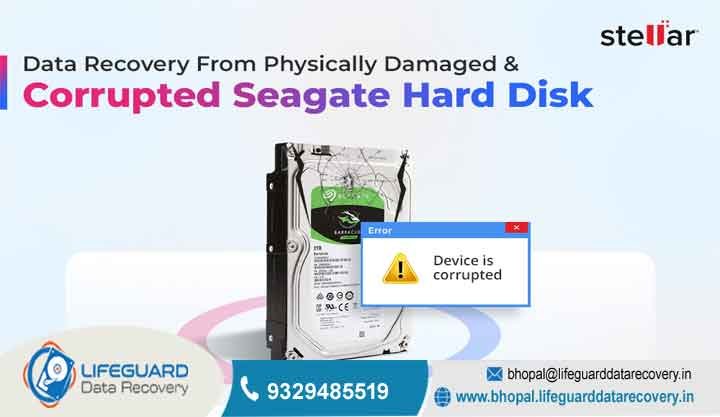
How to Recover Corrupted Hard Disk Data Step-by-Step Safety Guid Discovering that an external or internal hard disk drive (HDD) has suddenly become unreadable, RAW, or corrupted is a stomach-dropping experience.
One moment your important documents, family photos, or project files are completely accessible the next, your operating system throws alarming popups warning that “The disk structure is corrupted and unreadable” or demanding that you format the drive before using it.
lifeguard datarecovery Here is the most critical fact you need to know right now: in over of logical failure cases, your files are still intact on the magnetic platters. However, the exact order in which you handle a failing drive determines whether you recover of your data or permanently destroy it.
Most popular internet tutorials advise running built-in system repair tools like Windows CHKDSK immediately. Unfortunately, doing so on a unstable or degrading drive can overwrite and scramble your unrecovered files forever.
In this comprehensive guide, you will learn how to accurately diagnose drive corruption, execute a risk-free “Recover First, Repair Second” protocol using byte-level imaging, extract your data safely, and repair the hard drive file system without risking permanent data loss.
Can Corrupted Hard Drive Data Be Recovered? (Logical vs. Physical Corruption)
Before attempting any data rescue steps, you must answer one fundamental question: Can corrupted hard drive data be recovered in your specific scenario?
The short answer is yes provided the magnetic platters inside the hard drive assembly are not physically damaged or scraped by broken hardware components. To determine your odds of recovery, you must categorize the failure into one of two distinct categories: logical corruption or physical hardware damage.
1. Logical Corruption (Software Level)
Logical corruption occurs when the software organization of the drive breaks, but the mechanical hardware remains 100% healthy. The magnetic platters spin normally, and the read/write actuator heads float safely above the disk surface. However, the operating system can no longer read the file index, Master File Table (MFT), GUID Partition Table (GPT), or boot sector.
Primary Causes: Improper drive removal (unplugging without safe ejection), sudden power outages during write cycles, malware infections, or software crashes during partition updates.
Recovery Feasibility: Very High Success Rate). Because the hardware operates normally, specialized recovery software can scan the raw sectors and reconstruct missing directory structures without opening the physical casing.
2. Physical Failure (Hardware Level)
Physical failure means one or more mechanical or electrical components inside the drive housing have broken down.
Primary Causes: Physical drops or impacts while operating, thermal wear, electrical surges damaging the Printed Circuit Board (PCB), or mechanical wear of the actuator arm and spindle motor.
Recovery Feasibility: Zero via DIY Software. Running recovery programs on a physically failing hard drive forces the read/write heads to drag across the spinning platters, grinding away the magnetic coating holding your data (a catastrophic event known as a “head crash”). Physical damage requires specialized cleanroom lab services.
Diagnostic Checklist: Signs Your Hard Drive Is Corrupted vs. Physically Failing
Use this comparison matrix to diagnose your hard disk drive immediately before running any tools:
CRITICAL Golden Rule of Data Recovery (Recover First, Repair Second)
The single biggest mistake users make when trying to learn how to fix a corrupted hard drive and recover data is jumping straight to system repair commands like or running GUI error-checking scanners.
Crucial Warning: Native operating system repair tools are designed to make the file system bootable and mountable again they are NOT designed to preserve your personal files.
When a tool like CHKDSK encounters bad sectors or orphan file index entries, its job is to clean up the index so the operating system stops freezing. To achieve this, it will truncate corrupted file headers, reassign broken sectors, and delete unreadable index records. If your irreplaceable photos or business spreadsheets reside on those damaged sectors,
Create a Byte-Level Disk Image (Risk-Free Safety Net)
When a hard disk drive suffers from file system degradation or accumulating bad sectors, every additional second it spins under heavy software stress accelerates hardware exhaustion. If you scan a unstable physical drive directly with file-search software, the drive may suffer a fatal mechanical collapse halfway through a 6-hour scan.
Creating a byte-level (sector-by-sector) disk image solves this problem. A byte-level image creates an exact 1:1 binary clone of the physical disk (including raw sectors, file tables, and corrupted space) into a single virtual file (such as an .img or .dd file) hosted on a separate, healthy drive.
Once the disk image is created, you can safely disconnect the unstable physical hard drive and perform all deep software scanning, file previews, and extraction entirely within the virtual clone without stressing the hardware.
Step-by-Step Instructions to Create a Byte-Level Image:
Prepare Destination Storage: Connect a secondary, completely healthy external hard drive or internal SSD that has more free capacity than the entire total capacity of the corrupted drive (e.g., if the corrupted drive is 1 TB, you need at least 1 TB of free space on the backup device).
Launch Imaging Software: Open a data recovery utility equipped with sector-by-sector backup capabilities (e.g., Disk Drill, R-Studio, DDRescue, or GetDataBack).
Select Source Drive: Choose your corrupted hard disk from the hardware list. Ensure you select the physical disk identifier (e.g., Disk 1), not just the corrupted partition letter.
Initiate Byte-to-Byte Backup: Select Create Byte-to-Byte Backup or Save Disk Image.
Set Destination Path: Save the resulting .img file onto your healthy secondary storage device.
Safely Unplug Original Drive: Once the creation process finishes, safely eject and unplug the corrupted physical hard drive. You are now 100% protected against physical degradation during the recovery phase.
How to Recover Files from Corrupted Hard Drive
With your byte-level image mounted on your secondary drive, follow these proven methods to recover files from a corrupted hard drive without putting original data at risk.
Use Specialized Hard Disk Corruption Data Recovery Software
Specialized hard disk corruption data recovery software works by bypassing standard Windows file system API calls. Instead of asking the corrupted operating system where files live, the software reads raw hex data directly from disk sectors, identifying file signatures (e.g., matching header bytes for PDF, JPG, DOCX, or ZIP files) even when the master file directory is completely destroyed.
Professional Tip: If software scans freeze at a specific percentage or take days to complete even on a virtual image, the drive contains extensive bad sector blocks. In such cases, commercial data recovery tools with configurable timeouts are required.
Recover Deleted Files from Corrupted Hard Disk via System Backups
If logical corruption has wiped your file index completely, native operating system backup features may have saved isolated snapshots of your files before the file system crashed:
Windows File History:
Open the Start menu, type Restore your files with File History, and press Enter.
Navigate through the timeline to locate your folders prior to the corruption date.
Select your files and click the green Restore button to copy them to a safe drive.
Volume Shadow Copies (Previous Versions):
Open This PC, right-click the parent folder where your lost files used to live, and select Properties.
Click the Previous Versions tab.
If snapshots exist, select the most recent healthy date and click Restore.
macOS Time Machine:
Attach your macOS backup disk and open Time Machine from System Settings.
Navigate through the historical snapshots to extract unaffected files to your local Desktop.
How to Repair Corrupted Hard Drive Without Losing Data
Now that your critical files have been safely extracted and verified on a secondary healthy drive, you can proceed with repairing the corrupted file system structure so the original drive can be restored to daily service.
Run CHKDSK (Check Disk) via Command Prompt
The tool is the most powerful native command-line utility for repairing file system metadata, rebuilding broken index entries, and reallocating bad disk sectors.
Click Start, type , right-click Command Prompt, and select Run as Administrator.
Type the following command (replace with your actual corrupted drive letter):
DOS
How to Prevent Hard Drive Corruption in the Future
While logical corruption can strike unexpectedly, adopting disciplined storage habits drastically reduces your risk of data loss:
Implement the 3-2-1 Backup Rule: Maintain 3 total copies of your data, across 2 different storage media types (e.g., local external HDD + internal SSD), with 1 copy stored safely offsite or on a cloud backup service.
Always Use “Safely Remove Hardware”: Never pull out a USB cable while data transfers are active. Sudden disconnects interrupt Master File Table updates, leaving partitions in a corrupted RAW state.
Monitor S.M.A.R.T. Drive Health Attributes: Download disk diagnostic software like CrystalDiskInfo. Pay close attention to S.M.A.R.T. metrics such as Reallocated Sectors Count, Current Pending Sector Count, and Uncorrectable Sect
Protect Against Unstable Power: Sudden desktop power cuts during OS updates can corrupt internal drive system files. Connect workstation systems and external storage docks to an Uninterruptible Power Supply (UPS) with surge protection.
Frequently Asked Questions (FAQs)
Q1: Can CHKDSK delete my files from a corrupted hard drive?
Yes. If encounters orphaned file data blocks or unreadable bad sectors, it detaches those corrupted allocation chains and converts them into unreadable files stored inside a hidden folder. This is why you must perform byte-level imaging and data extraction before running
Q2: How do I recover data from a corrupted hard drive that won’t turn on or spin?
If the hard drive emits zero sound, no vibration, and shows no power LED lights, the issue is electrical (e.g., blown PCB fuse/TVD diode) or mechanical (seized spindle motor). Software tools cannot interact with an unpowered drive. You must replace the enclosure/SATA adapter or send the drive to a hardware lab.
Q3: Is it possible to recover corrupted hard drive data for free?
Yes. Free native operating system tools (such as Windows File History, Volume Shadow Copies, and macOS First Aid) cost nothing. Furthermore, leading commercial recovery programs provide free tiers (allowing you to scan, preview, and extract between 500 MB to 2 GB of data without cost) to verify recovery feasibility before purchasing.
Q4: What is the difference between a formatted drive and a corrupted drive?
A formatted drive has had its file system index deliberately reset by a user command, but its partition structures remain healthy and clean. A corrupted drive has suffered accidental file system corruption, partition damage, or bad sectors, rendering the drive unreadable to the operating system until repaired.