+971 50 217 6793 Abu Dhabi, UAE info@lifeguarddatarecovery.com

What should you never do after data loss
What Should You Never Do After Data Loss 10 Fatal Mistakes to Avoid The stomach-drop feeling that accompanies unexpected data loss is universal. Whether it is an accidentally emptied recycling bin containing a critical business presentation, a corrupted partition on an external backup drive, or a sudden system crash that leaves a storage volume unreadable, the immediate reaction is almost always panic.
lifeguard datarecovery However, panic is the enemy of data recovery Data recovery is fundamentally a battle against overwrite operations and hardware degradation. When a file vanishes from your screen, the raw binary data often remains fully intact on the storage media. The operating system simply alters a few pointers and marks those storage blocks as “unallocated” or available for future writing.
If you handle the situation correctly, that underlying data can be reconstructed with near-100% fidelity. If you make a critical misstep, you will silently replace your lost files with system noise, temporary caches, or blank memory cells.
This comprehensive guide covers exactly what you must avoid doing after data loss, explains the technical mechanics of different storage devices, and provides a clear, safety-first roadmap to bring your files back safely.
Understanding How Data Erasure Actually Works (HDD vs. SSD)
To avoid making costly mistakes after losing files, you need to understand how different storage architectures manage deleted data at a low level. Operating systems do not instantly wipe storage blocks the moment you press “Delete doing so would require unnecessary processing power and cause performance bottlenecks. Instead, the storage type determines how long deleted data remains recoverable.
Mechanical Hard Disk Drives (HDDs)
Traditional magnetic hard drives store information on spinning platters coated with a magnetic medium. A physical read/write arm hovers nanometers above the platters to alter magnetic orientations representing binary ones and zeros.
When you delete a file on an HDD using standard file systems
The operating system removes the file’s pointer from the master file table (MFT) or directory index.
The actual data clusters containing the contents of your file remain completely untouched on the physical platters. The OS updates its allocation bitmap to flag those specific sectors as available for new data.
Because the physical magnetic charges remain unchanged, hard drive data loss is usually reversible as long as the read/write heads do not physically write new data over those unallocated sectors.
Solid-State Drives (SSDs)
Solid-State Drives operate on flash memory cells (NAND flash) controlled by complex internal processors running proprietary firmware. Flash memory operates under a physical constraint: it can read and write data in small chunks (pages), but it can only erase data in large chunks (blocks).
To maintain high write performance over time, modern operating systems and SSDs utilize a background command known as TRIM.
The TRIM command informs the SSD controller that specific logical block addresses (LBAs) contain data that is no longer needed by the file system.
The SSD controller schedules these blocks for an internal cleanup routine called Garbage Collection.
During Garbage Collection, the controller flushes valid data to new blocks and completely scrubs the old blocks back to a blank state.
Once an SSD executes a TRIM command and completes Garbage Collection, the data is physically destroyed at the hardware level. Software recovery tools scanning the drive will return nothing but zeroes. Consequently, handling SSD data loss requires immediate power isolation before the internal drive controller can complete its background erasure routines.
What NOT to Do After Data Loss: 10 Critical Errors That Kill Recovery
Avoiding these ten high-risk data recovery mistakes will maximize your chances of bringing your lost files back safely.
Don’t Keep Using the Affected Device or Web Browser
The absolute worst action you can take after discovering missing data is to continue using the computer normally. Browsing the web, checking email, streaming media, or creating new documents generates an endless stream of disk write requests.
Modern operating systems are noisy. Even when you are not actively saving files, background tasks are continuously writing data to disk:
Because the operating system views your lost file space as “unallocated,” these automated background writes can land directly on top of your deleted files, rendering them unrecoverable.
Don’t Install Recovery Software on the Damaged Drive
When files go missing, the immediate impulse is to search online for data recovery tools, download an installer, and run it. If you download and install that software directly onto the drive where the data loss occurred, you are actively destroying your own files.
A standard recovery software installer ranges from 50 MB to over 300 MB. When saved to disk, those files occupy hundreds or thousands of unallocated clusters. If those clusters happen to overlap with your deleted document or family photos, those files are permanently corrupted.
The Safe Method: Always use a secondary, healthy computer to download recovery software. Save the executable or portable application directly onto an external USB flash drive, and run the program from that external device.
Don’t Restart or Power-Cycle Your System Repeatedly
When an application crashes or a drive volume suddenly appears as “unformatted,” many users repeatedly reboot their computer in hopes that the system will magically recognize the drive.
Power-cycling a system experiencing data loss creates multiple severe risks:
System Startup Disk Writes: Booting an operating system triggers massive disk write operations, including registry flushes, pagefile initializations, temporary file creation, and background driver loading.
Automated System Updates: Pending operating system updates may automatically execute during a reboot, writing gigabytes of new system files across the drive.
Mechanical Strain: If the drive is suffering from physical mechanical issues, powering the device off and on causes the read/write heads to repeatedly park and unpark across fragile platter surfaces, accelerating physical destruction.
Don’t Run Native Disk Repair Tools (CHKDSK, FSCK, First Aid)
They prioritize structural volume integrity over data preservation. If encounters orphaned file headers or damaged directory records, it fixes the index by simply purging or truncating the affected data blocks.
Don’t Save Recovered Files Back to the Original Drive
When running file recovery software, the program will ask you to select a destination directory to save the restored files. Selecting the same drive you are currently scanning is a catastrophic mistake. As the software recovers files, it extracts raw data from the unallocated space and writes it out as readable files.
Don’t Ignore Physical Hardware Warning Signs
Data loss falls into two distinct categories: Logical (file deletion, corruption, formatting) and Physical (hardware component failure). Attempting software recovery on a physically failing drive is a guarantee of complete data destruction.
If your drive exhibits any physical failure symptoms, power it down immediately. Continued operation causes the physical read/write heads to contact the spinning platters, scraping the magnetic recording layer off the glass or aluminum disk and leaving nothing behind but dust.
Don’t Open Physical Hard Drives Outside a Cleanroom
It can be tempting to unscrew the top plate of a clicking hard drive to see if the read/write head arm is stuck. Doing so outside a specialized environment guarantees permanent data destruction.
The gap between a hard drive’s slider and the spinning platter is measured in single-digit nanometers. A single microscopic dust particle floating in standard indoor air is microscopic to us, but to a hard drive head, it acts like a giant boulder. When powered on outside a cleanroom, the spinning platter slams into the dust particle at thousands of RPMs, crashing the head slider into the platter and stripping away your data instantly. Professional physical repairs must take place inside an ISO Class 5 Cleanroom.
Don’t Reformat, Partition, or Reinstall the Operating System
When an operating system reports a storage volume as “RAW,” “Uninitialized,” or “Inaccessible,” it often presents a helpful prompt: “You need to format the disk in drive before you can use it. Do you want to format it now?”
Clicking “Yes” or attempting to reinstall your operating system to fix system crashes creates severe roadblocks for data recovery:
Quick Format: Wipes the file system index tables (MFT, FAT) and creates blank file structure pointers. While raw data clusters remain, restoring the original directory names, folder trees, and file structures becomes significantly harder.
Full Format: Modern operating systems perform a zero-fill write pass during a full format, completely replacing every storage sector with values and erasing all user data.
OS Reinstallation: Downloads and writes gigabytes of fresh system files over your drive, completely overwriting user folders, personal app settings, and desktop directories.
Don’t Attempt DIY Thermal Tricks or Physical Impacts
The internet is full of outdated, dangerous DIY repair myths. Two of the most destructive internet hacks are the “Hard Drive Freezer Trick” and physical impact tricks (“slapping” the drive).
The Freezer Myth: Proponents claim that freezing a drive contracts internal mechanical components enough to unstick a seized spindle motor. In reality, placing a cold drive back into ambient room air causes immediate internal condensation. Moisture forms directly on the magnetic platters, short-circuiting internal electronics and bonding the magnetic heads to the platters upon power up.
Don’t Rely on Untrusted or Free Cracked Software Tools
Desperate users frequently search for cracked or “pirated” versions of premium data recovery tools. Downloading utility cracks from unknown websites introduces severe security hazards.
Malware authors actively exploit users in crisis by disguising ransomware, keyloggers, and trojans as data recovery software keys. Executing untrusted code can trigger secondary encryption routines (ransomware) that lock your remaining healthy storage drives. Furthermore, poorly engineered, low-quality recovery utilities can issue aggressive raw sector writes, damaging file indexes further.
Execute Immediate Power Isolation
If data loss occurs on your primary system drive (e.g., your C: drive), do not perform a standard shutdown if the operating system has pending updates. Instead, hold down the physical power button for five seconds to force an instant shutdown, halting all OS disk writes. If data loss occurs on an external hard drive or flash drive, immediately unmount and safely disconnect the device.
Identify the Failure Type (Logical vs. Physical)
Before touching any software, determine what caused the data loss:
Logical Failure: The drive sounds smooth, shows up accurately in system utilities (like Windows Disk Management), and exhibits no strange physical symptoms. Causes include accidental deletion, virus infection, or raw volume formatting.
Physical Failure: The drive makes unusual clicking or grinding noises, fails to spin, burns hot, smells faint of ozone/smoke, or freezes the computer upon plug-in.
Create a Sector-by-Sector Disk Image
If you are dealing with logical file loss and choose to perform software recovery, never scan the active source drive directly. Software scans subject a drive to hours of intensive, high-stress read commands that can cause an unstable drive to fail completely during the process.
Instead, use imaging tools (such as ddrescue, FTK Imager, or specialized vendor cloning functions) to create a byte-level, sector-by-sector image file onto a healthy secondary drive. Once the image is created, safely disconnect the original source drive and store it in an anti-static bag. Run all recovery software scans exclusively against the disk image file.
Long-Term Data Loss Prevention Best Practices
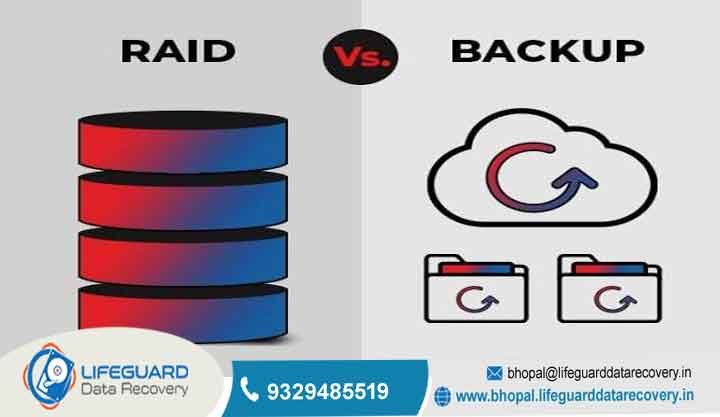
The most effective way to recover lost data is to ensure you never truly lose it in the first place. Building a resilient backup strategy eliminates emergency panic entirely.
Implement the 3-2-1 Backup Strategy: Maintain at least 3 copies of your important data, across 2 different types of storage media (e.g., an internal SSD and a local Network-Attached Storage NAS device), with at least 1 copy kept in an offsite location (e.g., secure cloud storage).
Automate Your Backups: Human error is a primary cause of data loss. Do not rely on manual drag-and-drop file copies. Set up automated daily background snapshots using tools like Windows File History, macOS Time Machine, or cloud sync providers.
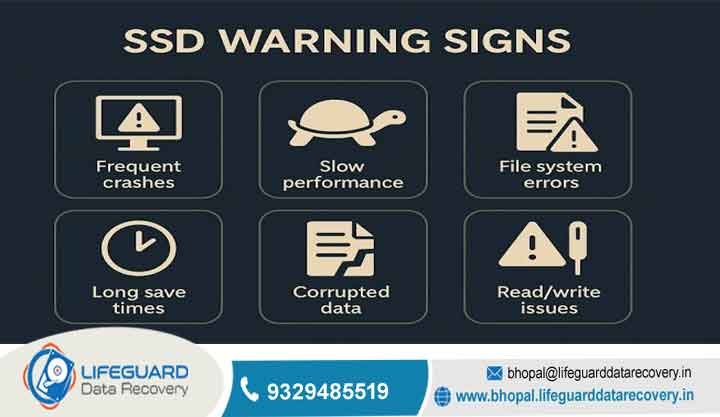
Monitor S.M.A.R.T. Telemetry Health: Hard drives and SSDs track their own mechanical health using Self-Monitoring, Analysis, and Reporting Technology (S.M.A.R.T.). Install health monitoring software to check for reallocated sector counts, read error rates, and drive temperature warnings before hardware failure happens.
Test Your Restores Regularly: A backup system is only as good as its restore process. Periodically test your backup setup by restoring sample files from your local and cloud backups to ensure the data is complete and uncorrupted.
Frequently Asked Questions
Can accidentally deleted files be recovered if I keep using the computer?
It is possible, but the probability decreases with every passing second. Operating systems constantly execute background tasks, update temporary caches, and process application logs. These operations freely overwrite the “unallocated” sectors where your deleted files reside, corrupting the file structure and making full recovery impossible.
Why is running CHKDSK dangerous after data loss?
is designed to repair file system structures so a volume can be mounted by the operating system without error. It does not prioritize saving user data. If encounters corrupted index entries or orphaned file pointers, it simply purges or truncates those sectors to restore structural consistency, permanently destroying recoverable user data.
What is the difference between HDD and SSD data recovery?
On a mechanical HDD, deleted data remains intact on magnetic platters until it is directly overwritten by new files. On a modern SSD, the operating system issues a TRIM command upon file deletion. The SSD controller then scrubs those memory blocks back to blank values during background Garbage Collection, destroying the data even if no new files are written to the drive.
How do I know if my hard drive has physical vs. logical damage?
Physical damage produces audible hardware symptoms like clicking, grinding, or scraping, causes severe drive slowdowns, burns hot, or prevents the drive from being detected in the system BIOS. Logical damage occurs when the drive mechanics function normally, but files are missing due to accidental deletion, partition corruption, software bugs, or raw formatting.