+971 50 217 6793 Abu Dhabi, UAE info@lifeguarddatarecovery.com

What causes data corruption?
What Causes Data Corruption Causes, Signs, and Proven Fixes Data corruption is one of the most frustrating challenges in modern computing. It often manifests without warning: a crucial spreadsheet throws an “Unrecognized File Format a critical database refuses to mount during peak business hours, or an entire external partition turns into unreadable RAW space.
lifeguard datarecovery Whether you are managing personal family archives, maintaining an enterprise database cluster, or administering workstation hardware, understanding what causes data corruption is the first step toward effective diagnosis, successful recovery, and long-term prevention.
What Is Data Corruption (Logical vs. Physical Explained)
At its most fundamental level, data corruption occurs when the binary integrity of a file, database record, or storage structure is altered from its intended state. All digital storage relies on precise arrangements of binary bits (1s and 0s). When these bits are flipped, miswritten, truncated, or lost, the software trying to read the file can no longer interpret the payload structure correctly.
Logical Data Corruption vs. Physical Data Corruption
Logical Data Corruption: Occurs when the physical storage medium remains completely healthy, but the software structure, file system metadata, partition tables, or file index headers become garbled. Examples include an interrupted transaction that leaves an orphaned index tree, an altered file header byte, or a damaged Master File Table (MFT) on an NTFS drive.
Physical Data Corruption: Originates from actual hardware damage, mechanical failure, or physical/electronic degradation of the storage medium. In this scenario, the drive can no longer reliably maintain magnetic charges or electrical states, preventing the storage controller from reading requested sectors accurately.
Common Causes of Data Corruption
Understanding the root causes of corrupted files makes it significantly easier to diagnose system issues and prevent catastrophic data loss. The primary triggers range from large-scale power disruptions down to quantum-level memory degradation:
Sudden Power Loss and System Interruptions
System storage pipelines rely on high-speed caching across RAM, CPU caches, and volatile drive write buffers to optimize speed. When your operating system writes data to a drive, the payload flows through this multi-tiered architecture before being committed to non-volatile storage.
If a sudden power outage, forced hard shutdown, or pulled power cable interrupts this process, the write operation drops mid-stream. This results in an incomplete write cycle: Journaled file systems may leave partial metadata updates recorded. Database files may suffer broken parity records, directly causing file corruption causes across connected storage volumes.
Hardware Failure: HDDs vs. SSDs
Mechanically and electronically, spinning magnetic drives and solid-state drives fail in vastly different ways, leading to distinct data loss causes:
Hard Drive Data Corruption (HDDs): Mechanical hard drives rely on spinning platters coated with magnetic material, read/write heads suspended nanometers above surfaces, and precise spindle motors. Over time, magnetic degradation weakens bit alignment. Furthermore, mechanical shock or head degradation causes head crashes where read heads physically score platter surfaces—creating permanent bad sectors that corrupt any data residing on those physical tracks.
SSD Data Corruption: Solid-state drives store data electronically using floating-gate or charge-trap NAND flash cells. SSDs do not suffer mechanical head crashes, but they experience cell wear from write-erase cycles. Over time, oxide layers degrade, leading to electron leakage and lost cell charges. Moreover, if an SSD’s Flash Translation Layer (FTL) the internal mapping table tracking where logical data lives on physical flash blocks becomes corrupted during a unexpected power dip, the entire drive controller can lock up or render the partition completely unreadable.
Software Bugs, System Crashes, and Bad Updates
Application crashes while files are actively saved or modified are leading triggers for storage device corruption. Software bugs, memory leaks, or unhandled null pointer exceptions can cause applications to freeze mid-write, writing truncated headers to disk.
Similarly, operating system crashes (such as kernel panics or blue screen errors) during disk maintenance, file system optimization, or system updates can leave critical OS system files, DLL registries, and partition indexes mismatched.
Malware, Ransomware, and Security Threats
While ransomware explicitly targets files by encrypting them with malicious intent, malware frequently inflicts logical data corruption as unintended collateral damage.
Viruses, rootkits, and trojans that alter Master Boot Records (MBR), overwrite GUID Partition Tables (GPT), or hook into low-level storage bus drivers can corrupt raw partition maps. Additionally, poorly written malware often fails to handle low-level file write routines cleanly, leaving corrupted files scattered across compromised operating systems.
Unstable RAM and Silent Bit Flips (“Bit Rot”)
Data corruption does not always start on the storage drive itself. It can originate in memory before any data reaches non-volatile disks:
Unstable RAM: Dynamic RAM (DRAM) holds temporary data during active system processing. If a memory module is failing, exposed to excessive heat, or running unstable clock timings, bits can flip inside volatile RAM. When your software instructs the system to save a document, the storage drive writes the payload accurately but it writes the corrupted data passed to it by faulty RAM.
Silent Bit Rot: Over extended periods in cold storage, static data media undergoes subtle background degradation. Thermal fluctuation, background radiation, and magnetic decay on HDDs or charge decay in unpowered NAND flash cells can alter a single binary.
Physical Media Damage and Environmental Factors
Environmental factors pose a severe risk to long-term storage integrity. Storage media exposed to environmental stress suffers rapid physical breakdown:
Thermal Stress: Excessive ambient heat accelerates chemical decay in magnetic platters and increases charge leakage rates in NAND flash cells.
High Humidity & Condensation: Moisture causes corrosion on drive Printed Circuit Boards (PCBs), bridging micro-traces and damaging power delivery components.
Electromagnetic Interference (EMI): Unshielded magnetic hard drives stored near strong magnetic sources (such as unshielded speakers, large motors, or industrial transformers) can experience magnetic field displacement, scrambling data tracks.
Signs and Symptoms of Corrupted Files and Drives
Diagnosing data corruption early prevents minor software glitches from escalating into catastrophic storage failure. Look out for these common warning signs:
File Access Errors and Anomalies
Zero-Byte File Sizes: Files that previously contained megabytes of information suddenly display a size of in directory listings.
Garbled Output: Opening a text document, code file, or document renders random gibberish characters, broken block symbols, or missing structural elements.
Operating System Instability
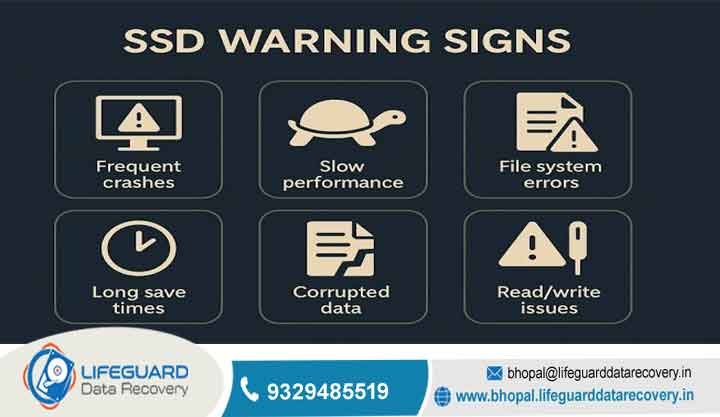
Frequent System Crashes: Sudden Blue Screen of Death (BSOD) errors on Windows or Kernel Panics on macOS referencing critical storage drivers
Disappearing Files & Folders: Entire directory structures vanishing from file trees or files relocating to orphan system folders (such as directories created by disk repair utilities).
Drive and Partition Failures
Drive Initialization Prompts: Connecting an external drive triggers OS warnings such as “You need to format the disk in drive X: before you can use it.”
RAW File System Status: Disk Management displays your storage volume’s file system as RAW rather than NTFS, FAT32, APFS, or ext4, indicating broken partition metadata.
Audible Mechanical Noises: Hard disk drives producing rhythmic clicking, scraping, or high-pitched grinding sounds indicate immediate mechanical failure.
How to Recover and Fix Corrupted Data
When encountering data corruption, adopting a systematic diagnostic workflow is critical. Running improper repair utilities on failing hardware can permanently destroy restorable data.
How to Prevent Data Corruption in Storage Devices
Preventing data corruption requires proactive maintenance, power isolation, smart file system selection, and robust backup protocols:
Deploy Power Protection (UPS)
Install an Uninterruptible Power Supply (UPS) for desktop systems, network-attached storage (NAS) units, and server infrastructure. A UPS supplies battery power during blackouts and brownouts, providing your operating system and drive controllers sufficient time to flush volatile write caches to disk and execute clean shutdowns.
Always Practice Safe Hardware Removal
Never unplug external hard drives, USB flash drives, or SD cards while active read/write indicators are flickering. Use the operating system’s “Safely Remove Hardware” or “Eject” function. This forces the system to commit buffered data, close open file handles, and unmount file system journals safely.
Frequently Asked Questions (FAQs)
Can a corrupted file fix itself?
No, corrupted files cannot self-repair. Once binary bits are altered or lost on disk, the file remains damaged until repaired manually. However, modern self-healing file systems (such as ZFS), cloud synchronization tools with version history, and enterprise database journaling can automatically replace damaged file blocks with healthy parity snapshots behind the scenes.
Can dynamic RAM cause data corruption without hardware damage?
Yes. Temporary software instability, aggressive memory overclocking, inadequate system voltages, overheating, or transient cosmic ray bit flips can corrupt data in volatile RAM before it is saved to disk. The physical storage drive remains completely healthy, but it accurately writes the corrupted payload delivered to it by unstable memory. Systems requiring high stability use Error-Correcting Code (ECC) RAM to detect and correct single-bit memory errors automatically.
What is the difference between data corruption and data loss?
Data corruption means the file or partition structure remains present on the storage volume, but its internal binary payload or header structure is damaged, making it unreadable by applications. Data loss occurs when the file payload has been deleted, unlinked, overwritten, or rendered physically unrecoverable from the storage medium entirely.