+971 50 217 6793 Abu Dhabi, UAE info@lifeguarddatarecovery.com
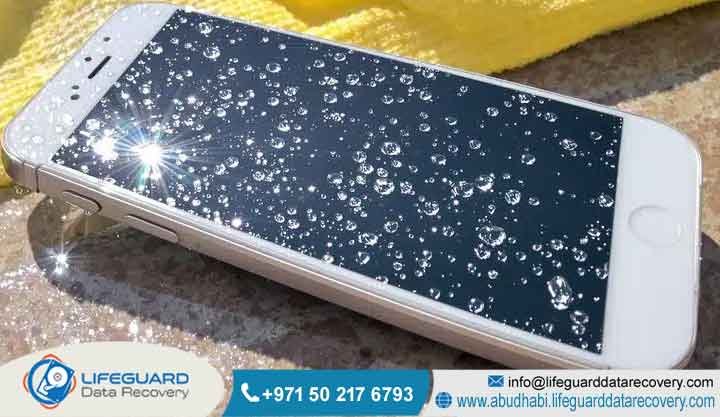
Water Damaged Phone Data Recovery
Water damaged phone data recovery is a specialized laboratory procedure. It extracts lost files, photographs, encrypted databases, and communication logs from mobile devices compromised by liquid intrusion. Fortunately, Lifeguard Data Recovery executes physical, component-level remediation on hardware suffering from short circuits, advanced oxidation, and logic board corrosion.
Operating across Abu Dhabi, Dubai, and the wider UAE, our certified engineers successfully bypass damaged circuits. We use microsoldering and ultrasonic cleaning to stabilize the device. Consequently, this process ensures the secure extraction of critical business and personal files directly from the onboard NAND flash storage memory.
What is Water Damaged Phone Data Recovery?
Water damaged phone data recovery is the technical process of salvaging digital information from a smartphone. Typically, this service becomes necessary when a phone ceases to function due to exposure to liquids.
When fluids penetrate the structural seals of a modern smartphone, the liquid establishes unintended electrical pathways. For example, water, saltwater, or coffee can easily bridge connections across the printed circuit board. As a result, this intrusion causes immediate short circuits that blow surface-mount components, fuses, resistors, and integrated circuits.
Physical Stabilization vs. Standard Repair
Traditional phone repair shops aim to make the handset reusable for daily life. In contrast, laboratory data recovery focuses exclusively on stabilizing the internal storage components long enough to extract the raw data.
Therefore, this service targets the physical layer of the device. Engineers work diligently to neutralize chemical corrosion and replace destroyed power delivery chips. Finally, these steps allow the device to boot into a temporary state required for forensic cloning.
How Does Water Damaged Phone Data Recovery Work?
The physical process of recovering data from a liquid-damaged mobile device requires a methodical, multi-stage laboratory workflow. When we receive devices at our Abu Dhabi facility, we immediately log them into our system. After that, we transfer the hardware to an engineering station to prevent further atmospheric oxidation.
Step 1: Safe Device Decontamination & Disassembly
First, engineers completely disassemble the smartphone under strict anti-static conditions. They isolate the logic board from the chassis, battery, screen, and peripheral camera modules.
Following disassembly, engineers inspect the circuit board under high-magnification microscopes. This inspection allows them to map out areas of visible corrosion, mineral deposits, and thermal damage caused by electrical shorts.
Step 2: Advanced Ultrasonic Cleaning & Corrosion Removal
Second, the isolated logic board undergoes a rigorous chemical decontamination process. Technicians place it in an industrial ultrasonic cleaning tank filled with specialized electronic solvent solutions.
Meanwhile, the ultrasonic waves create microscopic cavitation bubbles that implode against the board surface. This action effectively strips away baked-on minerals, rust, and salt deposits. Most importantly, it cleans beneath microscopic Ball Grid Array (BGA) chips where manual cleaning tools cannot reach.
Step 3: Logic Board Repairs & Microsoldering
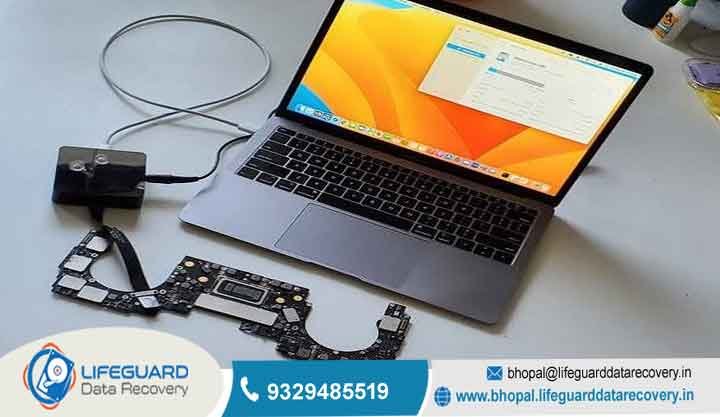
Third, once the board is decontaminated and chemically dried, microscopic diagnostics begin. Engineers use digital multimeters and oscilloscopes to test the primary power rails against factory schematics.
If they detect a short circuit, microsoldering stations are utilized to repair the damage. Technicians carefully remove the compromised capacitors or power management integrated circuits. Subsequently, they solder functional replacements into place.
Step 4: NAND Flash Chip Memory Extraction
Fourth, engineers connect the stabilized logic board to specialized data extraction hardware. However, some boards are too severely degraded to boot normally.
In these catastrophic cases, advanced engineers perform a chip-off procedure or a trace reconstruction bypass. They connect directly to the central processing unit and NAND flash memory. Consequently, this allows them to read the raw data sectors and generate a comprehensive file structure clone.
Who Needs Professional Mobile Device Recovery?
This service is critical for corporate entities, government organizations, legal professionals, and private individuals across the UAE. Usually, clients require our help when sudden liquid exposure jeopardizes irreplaceable digital assets.
Enterprise and Legal Vulnerabilities
In the enterprise sector, business executives frequently drop corporate smartphones into water. This accident immediately endangers proprietary business databases, unbacked financial ledgers, and critical client contact lists. Furthermore, it risks encrypted WhatsApp business communications and sensitive corporate emails.
Similarly, legal and law enforcement professionals require this service during digital forensics investigations. This occurs when smartphones containing vital evidence have been intentionally or accidentally submerged in liquid.
Personal Data Preservation
Private individuals also require specialized recovery when a device suffers a catastrophic immersion event. For instance, accidents frequently happen in the sea, swimming pools, or household environments. As a result, users lose access to years of family photographs, personal videos, local voice memos, and digital cryptocurrency wallets.
How Much Does Water Damaged Phone Data Recovery Cost in UAE?
The cost of recovering data from a water-damaged smartphone in the UAE depends entirely on two factors. These are the structural severity of the hardware damage and the specific architecture of the mobile device.
For example, simple liquid intrusion cases involving superficial corrosion on secondary power rails require fewer engineering hours. Therefore, these cases incur lower component expenses.
Complex Cases and Pricing Assurances
Conversely, complex cases require extensive micro-engineering, trace reconstruction, and donor component sourcing. These difficult scenarios typically involve saltwater immersion, prolonged liquid exposure, or severe short circuits that damage the main processor.
Lifeguard Data Recovery operates under a strict transparency framework. Every device undergoes a free diagnostic evaluation at our lab to determine the precise path to recovery. Additionally, our firm enforces a firm no data no charge policy, ensuring clients are never billed if their critical files cannot be successfully retrieved.
Recovery Timeframes: Standard and Emergency Turnaround
The timeline for a successful mobile data extraction varies based on the state of the internal circuitry. Generally, standard laboratory evaluations and data extractions are completed within two to five business days. During this window, the board undergoes decontamination, ultrasonic cleaning, diagnostic testing, and stabilization.
However, some situations demand immediate action. Emergency data recovery cases involving time-critical corporate data or active legal proceedings are fast-tracked through our twenty-four-seven emergency queue.
In these instances, dedicated logic board engineers work continuously to complete the recovery. They typically finish the cleaning, microsoldering, and forensic imaging phases within twenty-four to forty-eight hours.
Meanwhile, delays can occasionally occur if the device has suffered catastrophic corrosion. This requires extensive microscopic trace rebuilding or the sourcing of a rare donor logic board to harvest matching controller chips.
Can Deleted Files Be Recovered from a Water Damaged Phone?
Recovering deleted files from a smartphone that has also suffered water damage represents a dual-layered technical challenge. This process involves both physical hardware restoration and logical data forensics.
Modern smartphones utilize hardware-level File-Based Encryption (FBE) or Full-Disk Encryption (FDE). The secure enclave of the central processor manages these encryption keys directly.
The Impact of Encryption on File Deletion
When a user deletes a file under normal operating conditions, the file system discards the corresponding cryptographic key. Consequently, this makes the data instantly unrecoverable due to trimming mechanisms built into NAND flash storage.
However, a different rule applies if the files were not intentionally deleted. Sometimes, data becomes inaccessible because liquid damage corrupted the operating system files or damaged the display interface.
In these situations, Lifeguard Data Recovery can extract the complete database. Our laboratory restores the hardware integrity of the device first. Afterward, our forensic software reads the encrypted sectors, applies the native hardware keys, and rebuilds the missing directory listings.
Can Damaged SSDs Be Recovered?
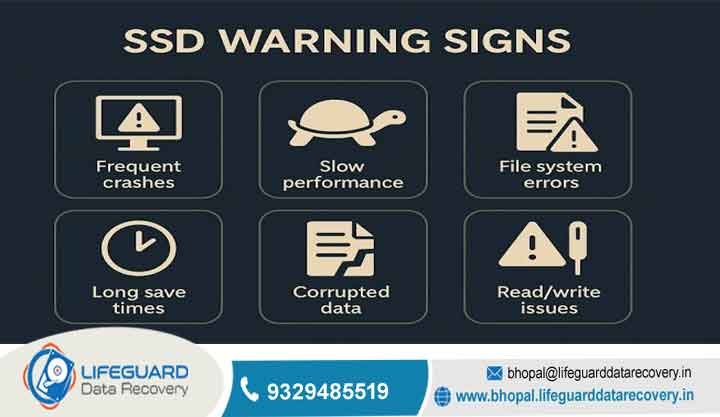
Yes, severely damaged solid-state drives (SSDs) can be successfully recovered in our specialized laboratory. Solid-state drives share structural similarities with modern smartphones because both utilize integrated NAND flash memory chips.
These storage blocks are managed by complex controller microchips. When an SSD suffers an electrical surge, liquid exposure, or physical trauma, the storage chips themselves usually survive intact. Meanwhile, the sensitive controller chip or the power management capacitors on the printed circuit board fail.
Advanced SSD Recovery Techniques
Lifeguard Data Recovery engineers handle failed solid-state media by isolating the NAND chips. Alternatively, they utilize advanced hardware emulators that bypass the broken controller completely.
By reading the raw data directly from the flash chips, we bypass the damaged components. We then apply complex cryptographic and wear-leveling algorithms in our laboratory software. As a result, we successfully reconstruct the original file systems for corporate servers, laptops, and external storage arrays.
Can Failed RAID Arrays Be Repaired?
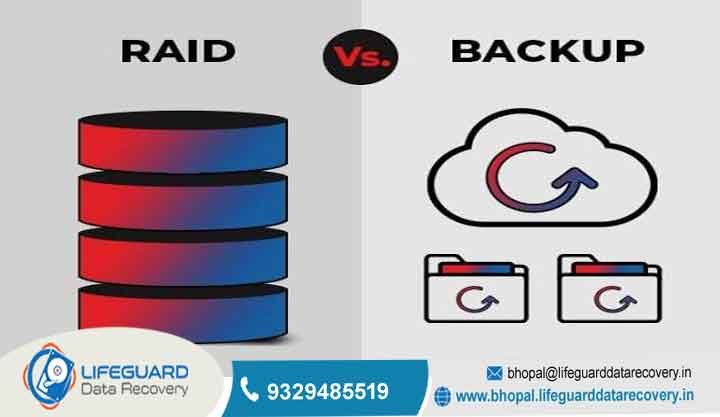
Yes, failed Redundant Array of Independent Disks (RAID) configurations can be fully reconstructed and recovered by our enterprise engineering team. RAID arrays form the backbone of business servers and corporate network-attached storage (NAS) units across Dubai and Abu Dhabi.
However, these systems often fail due to multiple simultaneous drive losses or controller card malfunctions. File system corruption, physical building disasters, flooding, and electrical surges also cause major breakdowns.
Manual RAID Reconstruction Protocols
Lifeguard Data Recovery does not rely on standard commercial reconstruction utilities. We avoid these programs because they can cause permanent parity misalignment and data corruption.
Instead, our team deconstructs every individual hard drive or solid-state drive within the array at a physical level. We perform this delicate work inside our controlled environment.
Once every drive is cloned sector-by-sector, our engineers use specialized software to manually calculate the original configuration. They analyze the exact stripe size, parity patterns, and drive sequencing. Therefore, this meticulous process allows us to mount the virtual file system and safely extract databases, virtual machine disks, and enterprise file repositories.
What Determines Recovery Success?
The ultimate success of a water-damaged phone data recovery operation depends on four primary variables. These critical factors dictate whether your files can be successfully salvaged.
1. The Type of Liquid Exposure
Liquid composition plays a massive role in data survival. For example, freshwater or distilled water causes slow oxidation, giving engineers more time to react.
Conversely, saltwater, chlorinated pool water, coffee, and sodas cause rapid, highly destructive chemical corrosion. These aggressive liquids can eat through copper traces and gold bonds within hours.
2. Immediate Post-Incident Actions
User intervention determines whether a device is salvageable or permanently destroyed. If a user attempts to power on a wet phone, they risk immediate catastrophic damage.
Similarly, plugging the device into a charging cable forces electrical current through liquid-bridged connections. This action causes instantaneous, terminal short circuits that can permanently destroy the internal NAND flash memory chip.
3. Presence of Electrical Power
If the device was actively running and processing data at the moment of submersion, the risk of severe shorting increases significantly. Constant electrical current accelerates the electrochemical reaction of corrosion, destroying vital pathways almost instantly.
4. Speed of Professional Laboratory Intervention
Leaving a device to air-dry allows minerals to crystallize and corrosion to spread aggressively across the main system board. Therefore, rapid delivery to a professional data recovery facility is vital. Immediate submission allows engineers to stabilize the hardware chemically before structural degradation becomes absolute.
Professional Recovery vs. DIY Recovery
Attempting a do-it-yourself recovery on a water-damaged mobile device introduces severe risks. These methods frequently lead to permanent, irreversible data loss.
Popular internet myths suggest placing a wet smartphone into a container of raw rice. Alternatively, some sources recommend using household hair dryers to extract internal moisture. However, these methods are fundamentally flawed and counterproductive.
The Dangers of the Rice Myth
Rice cannot pull moisture out from the sealed interior of a modern smartphone. Instead, exposure to raw rice introduces fine starch dust and small particulate matter into the device.
These particles enter through the charging port, microphone openings, and internal seams. Once inside, the dust mixes with the liquid to create an abrasive, corrosive paste that accelerates circuit destruction.
The Risk of Heat Application
Using a hair dryer or heating element introduces excessive thermal energy to the device. This heat melts internal adhesive seals and warps delicate lithium-ion batteries.
Furthermore, it causes rapid delamination of the microscopic layers within the printed circuit board. Household drying also leaves behind all the dissolved minerals and impurities originally present in the liquid. Consequently, corrosion continues to eat away at the electrical contacts even if the device appears superficially dry.
In contrast, professional laboratory recovery relies on complete physical isolation and microscopic diagnostics. We use target-specific chemical neutralization to stop corrosion immediately and permanently.
Professional Recovery vs. Recovery Software
There is a profound distinction between professional laboratory recovery and commercial data recovery software utilities. Downloadable recovery applications are designed exclusively to handle logical data loss scenarios on perfectly functional hardware.
These scenarios include accidental file deletion, formatted partitions, or minor software corruption. In these cases, the computer or smartphone is fully powered, stable, and recognized by the operating system.
Software Risks on Shorted Hardware
If a user attempts to run data recovery software on a phone experiencing physical water damage, the software cannot function. This failure occurs because the underlying hardware cannot maintain a stable connection or power state.
Attempting to keep a physically shorted device powered on causes continuous thermal stress and electrical degradation. If a logic board component fails completely while a software scan is running, it can cause a severe electrical surge. This surge can directly fry the internal storage chips, destroying data forever.
Professional recovery entirely avoids this risk. We restore the physical health of the hardware first in a controlled environment. As a result, this baseline stabilization renders software interventions safe and effective only after the electronic infrastructure is completely stable.
When Businesses Should Choose a Specialist Recovery Lab
Enterprise organizations, financial institutions, legal practices, and government entities across the United Arab Emirates must bypass consumer repair shops. Management should immediately select a specialized data recovery laboratory whenever a data loss event threatens operational continuity.
Limitations of Standard Repair Shops
Standard mobile phone repair shops are designed to replace modular components. For example, they regularly swap cracked screens, degraded batteries, or broken charging ports using basic tools.
However, they do not possess cleanroom environments, microscopic diagnostics infrastructure, or advanced logic board engineering tools. When an enterprise storage system, a corporate RAID server, or an executive smartphone experiences failure, amateur repair attempts can alter the original data blocks. These attempts can also corrupt parity sectors or cause terminal hardware failure.
The Professional Advantage
A specialized laboratory like Lifeguard Data Recovery enforces strict data security protocols. We utilize industrial-grade cleaning and micro-soldering gear for all procedures.
Additionally, we maintain the certified cleanroom environment required to handle exposed storage platters and bare flash memory matrices safely. Choosing an expert lab ensures you do not violate corporate compliance frameworks or regional data protection laws.
Case Study: Saltwater Submerged Executive Smartphone in Abu Dhabi
Problem and Operational Context
A managing director of a prominent logistics firm based in the Jebel Ali Free Zone was conducting a critical marine asset inspection at a port facility in Abu Dhabi. During the operation, the executive’s primary corporate smartphone slipped into high-salinity seawater.
The device remained submerged at a depth of three meters for approximately forty-five minutes before recovery. Unfortunately, the phone contained unbacked global supply chain agreements, financial projections for the upcoming fiscal quarter, and encrypted databases essential for daily operations.
Urgency and Business Impact
The missing data put several multi-million dollar international shipping contracts at immediate risk. Consequently, the firm required complete restoration of the database files within forty-eight hours. Meeting this deadline was critical to fulfill strict regulatory filing requirements and prevent severe contractual penalties.
The Laboratory Recovery Process
The device arrived at the Lifeguard Data Recovery lab in Abu Dhabi within three hours of extraction from the sea. Recognizing the extreme threat posed by rapid saltwater corrosion, our senior logic board engineers skipped standard queues and initiated emergency protocols immediately.
First, they disassembled the phone, revealing heavy salt crystallization across the primary power management lines. Next, the mainboard was run through an initial chemical bath to halt active corrosion. Technicians then transferred the hardware to our high-frequency ultrasonic cleaning tank.
Microscopic inspection post-cleaning revealed that three vital capacitors on the main CPU power rail had completely blown. Furthermore, two copper traces had dissolved entirely.
To rectify this, our engineers used advanced microsoldering stations under a high-magnification microscope. They rebuilt the missing copper traces using ultra-fine jumper wires and replaced the destroyed surface-mount capacitors with matching donor components.
Technical Result
The stabilized logic board successfully entered a low-level diagnostic state. Next, engineers connected the board to our hardware imaging system. This allowed them to bypass the corrupted operating system layer and create a flawless, bit-by-bit physical image of the NAND flash memory chip.
Client Outcome
One hundred percent of the executive’s encrypted databases, communication logs, and financial documents were successfully extracted. The engineering team transferred the files to a secure, encrypted storage drive.
We completed the entire operation in thirty-six hours. As a result, the logistics firm met its compliance deadlines and protected its international contracts without operational interruption.
Data Security, Confidentiality, and Compliance Mandates
At Lifeguard Data Recovery, data security and corporate confidentiality form the core of our laboratory infrastructure. We operate in strict alignment with the United Arab Emirates Personal Data Protection Law (PDPL) and international privacy frameworks. These protocols ensure that sensitive corporate data, personal identification information, and government records remain fully protected throughout the entire extraction workflow.
Laboratory Security Protocols
Our laboratory in Abu Dhabi features restricted biometric access controls to protect physical media. Additionally, all data extractions are performed on isolated networks. These networks are completely disconnected from the public internet to eliminate the risk of external data interception or malware exposure.
Our engineering staff operates under legally binding non-disclosure agreements (NDAs) for every project. Furthermore, once a customer confirms the successful receipt and verification of their recovered files, we purge our temporary files. All data images stored on our secure laboratory servers are permanently wiped using Department of Defense standard data sanitization methods.
Cleanroom Procedures and Laboratory Infrastructure
Catastrophic data recovery involving opened hard drive enclosures or exposed silicon dies requires a physical environment free from atmospheric contaminants. Therefore, Lifeguard Data Recovery maintains a certified Class 100 Cleanroom environment at its facility.
Standard room air contains millions of microscopic dust particles, smoke particles, and skin flakes. If a technician opens a hard drive enclosure in a standard room, these airborne contaminants instantly settle on the magnetic platters.
Preventing Platter Contamination
Hard drive platters spin at high speeds up to fifteen thousand revolutions per minute. When the read-write head passes over a dust particle at that speed, it causes a catastrophic head crash. This impact scrapes the magnetic coating off the platter, resulting in permanent data destruction.
Our cleanroom infrastructure constantly filters air through High-Efficiency Particulate Air (HEPA) systems. This advanced filtration maintains an environment containing fewer than one hundred particles of dust per cubic foot of air. Consequently, this pristine environment allows our engineers to safely perform head assembly replacements, platter transplants, and delicate micro-soldering procedures without compromising the underlying media.
Encryption Handling and Forensics
Modern smartphones and corporate storage arrays utilize sophisticated encryption protocols to safeguard information from unauthorized access. Devices running modern operating systems employ file-level encryption backed by unique hardware keys burned into the silicon of the processor.
Restoring Native Cryptographic Pathways
When Lifeguard Data Recovery encounters a liquid-damaged smartphone, our primary objective is to repair the original physical circuitry. We focus on enabling the native processor to communicate with the NAND flash storage again.
This restoration allows the device to execute its legitimate cryptographic handshakes when the user supplies their original passcode. Meanwhile, our digital forensics team works within strict legal frameworks, maintaining an uncompromised chain of custody for all media received. We do not bypass encryption keys without proper authorization; instead, we reconstruct the damaged hardware architecture to make the device’s native decryption pathways functional again, ensuring a clean, legally verifiable extraction of data for corporate audits or legal proceedings.
Business Continuity Planning
A sudden data loss event caused by physical liquid damage, hardware failure, or external disasters can paralyze an organization if an adequate business continuity plan is not in place. Therefore, Lifeguard Data Recovery partners with enterprises throughout Abu Dhabi and Dubai to integrate professional data recovery protocols into their disaster recovery frameworks.
Establishing Predefined Response Paths
When critical infrastructure fails, standard operating procedures must dictate immediate isolation of the affected hardware. Employees should completely refrain from applying power or executing amateur software fixes.
Instead, they must dispatch the media directly to a certified laboratory. By establishing predefined emergency data recovery pathways with Lifeguard Data Recovery, businesses significantly minimize their operational downtime. Ultimately, this partnership safeguards their intellectual property and ensures a rapid, secure return to full operational capacity when localized storage disasters occur.
Frequently Asked Questions
Can you recover data from a phone that fell into the Arabian Gulf?
Yes, data recovery from devices submerged in seawater is fully possible, but it requires immediate professional intervention. Saltwater is highly conductive and extremely corrosive, causing rapid chemical destruction of the copper circuits and component contacts within the logic board.
When a device is dropped into the sea, the user must never attempt to turn it on or charge it. It should be rinsed gently with fresh water to remove surface salt deposits, placed into a sealed plastic bag with a damp paper towel to prevent the internal salt from drying and crystallizing, and delivered to our Abu Dhabi laboratory immediately for specialized ultrasonic decontamination and microsoldering repair.
How do I know if my water damaged phone can be saved?
The only definitive method to determine if a liquid-damaged phone is salvageable is through a professional diagnostic evaluation inside a dedicated data recovery laboratory. Superficial symptoms like a blank screen, a failure to vibrate, or an unresponsive charging port do not indicate that the data is lost; they merely show that the peripheral components or power lines are compromised. If the primary NAND flash memory chip and the central processing unit have not suffered fatal thermal cracked damage from a major electrical short, our engineers can repair the surrounding circuitry and successfully extract all files.
Why shouldn’t I use rice to dry out my smartphone?
Placing a wet smartphone in rice does not salvage the device and often causes additional damage. Rice cannot draw out moisture trapped deep within the internal shielding of modern, tightly sealed smartphones. Instead, the exposure to raw rice introduces fine starch dust and small particles into the charging ports, speakers, and internal seams of the phone. When this dust mixes with the liquid inside, it forms a corrosive paste that accelerates circuit oxidation and ruins mechanical components like buttons and switches. Professional laboratory disassembly is the only effective drying method.
What is the No Data No Charge policy at Lifeguard Data Recovery?
Our No Data No Charge policy is a corporate commitment to transparency and risk-free service for our clients across the United Arab Emirates. When you submit a water-damaged phone, hard drive, or RAID array to our laboratory, we perform a free initial diagnosis to determine the viability of data extraction. If our specialized engineers encounter catastrophic physical destruction to the storage media that makes file recovery impossible, you will not be charged for our laboratory time or repair attempts. You only pay the agreed-upon recovery fee when your targeted data is successfully retrieved.
Do you provide data recovery services outside of Abu Dhabi?
Yes, Lifeguard Data Recovery provides comprehensive, nationwide data recovery services across all seven emirates of the United Arab Emirates. While our primary laboratory facility is situated in Abu Dhabi, we operate a secure courier and logistics network that serves clients in Dubai, Sharjah, Ajman, Fujairah, Ras Al Khaimah, and Umm Al Quwain. Corporate clients and individuals can schedule a secure pickup of their damaged media, and our logistics partners will transport the hardware directly to our laboratory under strict security protocols to ensure prompt diagnostic evaluation.
Is my corporate data safe from leakage during the recovery process?
Absolute data security and client confidentiality are guaranteed at Lifeguard Data Recovery. Our facility utilizes biometric access restrictions, and our data extraction networks are completely isolated from external internet connections to eliminate any possibility of unauthorized access or data breaches. We regularly execute non-disclosure agreements with corporate entities, legal firms, and government bodies to ensure full legal compliance. Once the recovered data is delivered to the client and verified, any backup copies residing on our secure laboratory servers are permanently purged using military-grade data sanitization protocols.
What is a Class 100 Cleanroom and why is it necessary?
A Class 100 Cleanroom is a specialized laboratory environment engineered to maintain ultra-low levels of airborne particulates. It contains fewer than one hundred dust particles larger than zero point five microns per cubic foot of air. This pristine environment is mandatory whenever our engineers must open the sealed enclosures of mechanical hard drives to replace broken read-write heads or perform platter transplants. Opening a hard drive in a standard room exposes the magnetic platters to millions of floating dust particles, which can instantly scratch the storage media during operation and cause permanent data loss.
Can data be recovered from a phone that has a completely broken or burnt logic board?
Yes, files can be recovered even if the logic board of the smartphone is completely broken, cracked, or severely burned by an electrical fire. In cases of extreme structural trauma where the logic board cannot be repaired or stabilized via microsoldering, our advanced engineers execute a forensic procedure known as Chip-Off recovery. This requires heating the logic board precisely to desolder the NAND flash memory chip from the broken substrate. The isolated memory chip is then placed into a specialized hardware reader that extracts the raw hex dumps directly, allowing our software to reconstruct the file system.
Can you recover encrypted WhatsApp chat histories from a dead device?
Yes, Lifeguard Data Recovery can extract encrypted WhatsApp databases and chat histories from dead or liquid-damaged smartphones. WhatsApp stores its chat history locally within the phone’s internal storage inside heavily encrypted databases. When a phone dies due to water damage, that database remains intact on the internal NAND flash memory. Our laboratory engineers repair the hardware infrastructure to allow a full physical clone of the memory. Once the raw storage partition is imaged, our forensic software extracts the database files, which can then be restored or decrypted using the user’s authentic profile keys.
What should I do immediately after my phone gets wet to maximize recovery success?
The immediate actions you take within the first few minutes of a liquid exposure event dictate the likelihood of a successful data recovery. First, remove the phone from the liquid immediately and turn off the power if the device is still running. Second, do not plug the device into a charging cable, computer, or power bank, as electrical current will cause instant short circuits. Third, dry the exterior of the phone with a clean towel and remove the SIM card tray. Fourth, do not shake the device or use a hair dryer, as this forces liquid deeper into internal components. Finally, package the phone securely and dispatch it to Lifeguard Data Recovery.
Can you recover data from enterprise NAS or SAN storage systems?
Yes, Lifeguard Data Recovery possesses the advanced infrastructure required to manage complex data extractions from enterprise-level Network-Attached Storage and Storage Area Network configurations. These large-scale systems, which utilize intricate multi-drive storage pools managed by specialized operating systems, fail due to multiple drive breakdowns, controller hardware failures, or file system corruption. Our enterprise response team can image every drive in the storage pool at a physical level and manually reconstruct the logical configuration to extract enterprise databases and virtual environments.
How do you handle ransomware data recovery for UAE businesses?
Our laboratory provides specialized ransomware recovery and digital forensics services for commercial entities facing cryptographic extortion attacks. When an organization’s network is compromised by ransomware, the malware encrypts local files, network shares, and backup repositories. Our digital forensics team analyzes the specific strain of ransomware infecting the systems. We scan the storage infrastructure for shadow copies, unallocated space remnants, and system backup artifacts that may have survived the attack, allowing us to reconstruct and restore critical business data without paying a ransom.
Can data be recovered from an external solid-state drive that is not recognized by Windows or Mac?
Yes, when an external SSD fails to register on an operating system, it typically indicates a physical failure within the drive’s controller interface, USB bridge board, or power regulation circuit. The underlying NAND flash memory blocks where the data is stored are usually completely safe. Our lab engineers bypass the standard USB or SATA interface boards and connect directly to the test points on the drive’s controller layout. By employing professional hardware emulators, we can issue low-level commands that force the SSD to dump its raw data sectors directly into our secure retrieval systems.
What industries do you serve in Abu Dhabi and Dubai?
Lifeguard Data Recovery provides professional enterprise-grade data recovery services across a diverse spectrum of vertical industries within the United Arab Emirates. We regularly serve government ministries, defense contractors, oil and gas corporations, major banking institutions, healthcare facilities, legal firms, hospitality corporations, and media production houses. Our laboratory workflows and data security protocols are designed to satisfy the strict compliance frameworks, confidentiality standards, and data protection regulations mandated within these high-security corporate and public sectors.
How can I send my damaged storage device to your laboratory?
Sending your damaged smartphone, hard drive, solid-state drive, or corporate storage media to our Abu Dhabi laboratory is simple and secure. You can visit our main service center in Abu Dhabi personally to hand over your media to our staff. Alternatively, you can contact our customer care team via phone or email to request a secure courier collection. We will coordinate a courier pickup from your office or home anywhere in Dubai, Sharjah, Ajman, Fujairah, Ras Al Khaimah, or Umm Al Quwain, ensuring your media is safely transported to our lab.
Conclusion: Trusted Data Recovery Services in the UAE
Lifeguard Data Recovery stands as the premier authority for enterprise and consumer data recovery services within the United Arab Emirates. Operating from our state-of-the-art laboratory in Abu Dhabi, we have built a reputation for solving the most complex data loss disasters. Our experience ranges from catastrophic saltwater-submerged smartphones to failed multi-disk corporate RAID arrays and ransomware attacks.
Our facility combines world-class technical capabilities with an uncompromising commitment to data security and client privacy. For example, we utilize a certified Class 100 Cleanroom environment, high-end ultrasonic cleaning equipment, and advanced microsoldering diagnostic arrays.
Furthermore, by enforcing a strict No Data No Charge policy and offering initial diagnostic evaluations at no cost, we eliminate financial risk for our clients. Whether you are a corporate entity in Dubai requiring urgent server reconstruction or an individual in Abu Dhabi seeking to salvage irreplaceable personal memories, our certified engineers possess the expertise and dedication required to retrieve your files securely and efficiently.
For immediate assistance, secure device diagnostics, or emergency twenty-four-seven data recovery support, please contact our team through our official channels:
Call: +971 50 127 6793
Email: info@lifeguarddatarecovery.com
Visit: www.abudhabi.lifeguarddatarecovery.com