+971 50 217 6793 Abu Dhabi, UAE info@lifeguarddatarecovery.com
Phone Not Turning On Recovery
Broken Screen Data Recovery is a highly specialized hardware extraction process. Engineers use it to retrieve encrypted files, media, and enterprise documents from mobile devices with non-functional displays, cracked digitizers, or complete power failure.
Lifeguard Data Recovery provides advanced laboratory solutions in Abu Dhabi, Dubai, and across the UAE to securely extract data from physically compromised smartphones.
Phone Not Turning On Recovery When a device suffers severe physical impact, liquid exposure, or an unresponsive motherboard, commercial software applications fail. This happens because software requires active user authentication and an operating USB debugging interface.
In contrast, professional recovery resolves this challenge. Technicians utilize certified micro-soldering, internal component isolation, and direct NAND flash memory access within an ISO-certified cleanroom environment to guarantee secure and absolute data retrieval.
Professional Mobile Identification and Smartphone Storage Architecture
Modern smartphones utilize highly complex, deeply integrated hardware architectures. Manufacturers design these systems to maximize processing efficiency and device security.
Understanding this internal architecture is crucial for executing a successful data recovery operation. This remains true whether a screen becomes entirely non-functional or the device drops out of a boot sequence.
At the core of every modern smartphone is the Logic Board. This multi-layered printed circuit board houses the System on a Chip, the Power Management Integrated Circuit, and the non-volatile storage media known as NAND flash memory.
Security Protocols and Cryptographic Integration
In past device generations, storage media remained relatively unencrypted, which allowed for primitive extraction techniques. However, modern smartphone ecosystems employ hardware-based encryption protocols. Dedicated security co-processors manage these layers, such as Apple Secure Enclave or Android hardware-backed Keystore systems.
Consequently, the data residing within the NAND flash chip links cryptographically to the specific System on a Chip and the device’s unique hardware keys. Simply desoldering a NAND flash chip and placing it into an external reader will yield nothing but unreadable, encrypted raw sectors.
Therefore, successful broken screen data recovery requires the device to achieve a semi-functional state. The logic board must initialize, execute its boot sequence, accept the cryptographic master passcode from the user, and perform hardware decryption.
Overcoming Electrical Short Circuits
When a display shatters, the internal digitizer lines or the organic light-emitting diode layers frequently short-circuit. This electrical short can loop back into the main power rails of the motherboard.
As a result, the Power Management Integrated Circuit enters a protective shutdown mode. This failure manifests to the user as a dead phone that completely refuses to power on or draw current from a diagnostic ammeter.
Laboratory engineers must structurally isolate the damaged display components. Additionally, they remove parasitic electrical loads and stabilize the core operating rails of the motherboard.
Consequently, this stability ensures that the cryptographic processing unit can safely boot up. Technicians then authenticate the owner’s credentials via specialized hardware emulator interfaces and pipe the decrypted data package over a secure, reconstructed universal serial bus connection to an external forensic workstation.
Supported Brands, Operating Systems, and Storage Implementations
Lifeguard Data Recovery provides comprehensive recovery support across the entire spectrum of mobile hardware manufacturers and operating system variants deployed throughout the United Arab Emirates. Our engineering protocols adjust dynamically based on the specific hardware security and physical layout of each manufacturer.
Apple iOS Recovery Expertise
Our support extends across all historical and current Apple generations. We service the iPhone 11, iPhone 12, iPhone 13, iPhone 14, iPhone 15, and iPhone 16 series, including all Pro, Pro Max, and Plus configurations.
Because Apple employs a highly consolidated logic board design, severe screen impacts frequently fracture the delicate interposing vias. These vias join the upper and lower sections of the double-stacked motherboards.
Therefore, our laboratory utilizes specialized precision heating platforms to safely separate these layers. This technique allows engineers to repair fractured connections and re-establish data paths to the storage array.
Android Ecosystem Recovery Solutions
For the Android ecosystem, our laboratory covers all major tier-one manufacturers. We regularly service Samsung Galaxy devices from the legacy S-series and Note-series up to the modern Galaxy S20, S21, S22, S23, S24, and Ultra variations, alongside the Galaxy Z Fold and Z Flip flexible display lineups.
Furthermore, we comprehensively support Google Pixel smartphones, Xiaomi, Huawei, Oppo, Vivo, and OnePlus devices. Android devices present unique recovery challenges due to the implementation of File-Based Encryption or Full-Disk Encryption protocols mandated by modern Android operating system versions.
Consequently, our engineers interface directly with the device’s logic gates using advanced hardware development tools. This process effectively bypasses broken display requirements, ensuring the storage controller can accurately parse and decrypt the integrated user profile data structures.
Who is Lifeguard Data Recovery?
Lifeguard Data Recovery is the premier enterprise-grade data retrieval authority operating within the United Arab Emirates. Strategically headquartered in Abu Dhabi, our firm operates advanced hardware diagnostic and micro-soldering recovery laboratories. We design these facilities to address critical data loss disasters for multinational corporations, government departments, small-to-medium enterprises, and private citizens.
Moreover, we have spent over a decade establishing an unyielding reputation for technical excellence. We invest heavily in state-of-the-art diagnostic platforms, high-magnification optical microscopes, and advanced logic board rework stations.
Unlike conventional repair shops that focus on swapping out modular components to make a device reusable, Lifeguard Data Recovery operates exclusively as a data extraction facility. Our entire operational directive centers on the preservation, isolation, and secure migration of critical digital assets from compromised, unbootable, or physically obliterated storage media.
Why UAE Businesses and Individuals Trust Our Engineering Labs
The regional business landscape within the UAE demands a high level of operational security, speed, and technical precision. Standard retail consumer service centers simply cannot provide this level of excellence.
Fortunately, the regional business community trusts Lifeguard Data Recovery because we operate with a transparent, scientifically structured methodology. Our engineering facilities utilize specialized particulate-controlled containment workstations that function under ISO cleanroom standards, which prevents microscopic dust contamination during delicate internal device exposures.
Furthermore, our team consists of senior hardware engineers who possess deep specializations in digital forensics, logic board schematic analysis, and micro-soldering execution. We recognize that data loss introduces massive operational friction, jeopardizes regulatory compliance, and creates substantial executive stress.
By maintaining an unyielding adherence to strict confidentiality protocols, we provide maximum security. Additionally, we offer around-the-clock emergency rapid response services and back our technical interventions with a strict No Data No Charge commercial guarantee. Consequently, we provide UAE organizations with an authoritative, risk-free pathway to reclaiming their critical intellectual property and corporate records.
Comprehensive Lab Capabilities Beyond Smart Devices
While mobile smartphone recovery represents a highly active vector of our daily laboratory intake, Lifeguard Data Recovery maintains full-scale, comprehensive enterprise data retrieval capabilities across the complete matrix of modern storage technologies. Our lab is structurally partitioned into dedicated engineering bays, and each bay is optimized for specific storage platforms and file system paradigms.
Hard Drive and SSD Recovery Labs
Our Hard Drive Recovery and SSD Recovery sections deal with mechanical and solid-state storage architecture failures from laptops, desktop workstations, and corporate thin clients. Mechanical hard drives with collapsed read-write head assemblies, seized spindle motors, or corrupted firmware modules are transferred directly into our cleanroom environment for component donor swaps.
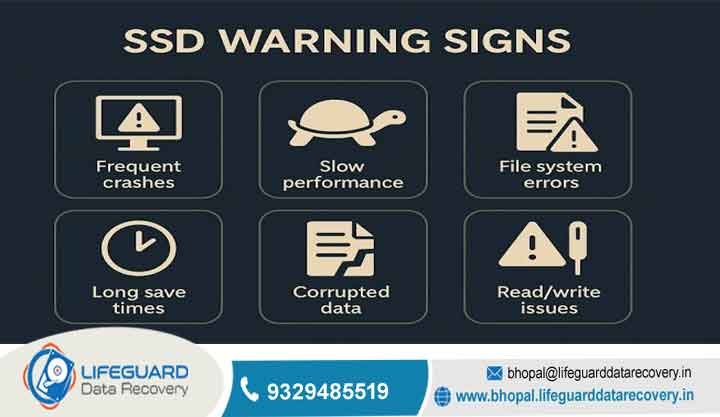
Meanwhile, solid-state drive recovery addresses complex electronic failures, power surge damage to the voltage regulating controllers, and native NAND flash controller firmware corruption. Technicians utilize specialized advanced flash visualizer tools to rebuild damaged translation layers.
Enterprise Infrastructure and Storage Arrays
For enterprise infrastructure, our specialized RAID Recovery, NAS Recovery, and Server Recovery teams respond directly to catastrophic storage array dropouts. We possess extensive experience reconstructing multi-disk arrays including RAID 0, RAID 1, RAID 5, RAID 6, RAID 10, and nested or proprietary configurations utilized by major network-attached storage vendors like Synology, QNAP, and Dell EMC.
Whether the failure stems from multiple simultaneous drive dropouts, corrupted metadata configurations, or logical volume stripping errors, our engineers work directly on raw disk clones. This approach allows us to structurally reassemble the file system without putting the original media at risk.
Forensic Extractions and Ransomware Mitigation
Our specialized divisions also encompass CCTV Recovery and Digital Forensics. This structural diversity allows us to provide legally defensible data extractions for corporate investigations, compliance audits, or security incident verifications.
We extract, repair, and parse proprietary video streams from damaged surveillance digital video recorders and network video recorders. Additionally, our Ransomware Recovery specialists provide emergency decryption validation, reverse engineering of malicious execution layers, and safe data extraction services to assist UAE businesses in recovering from sophisticated cyberattacks without paying illicit ransoms.
Common Causes: Why a Mobile Phone Stops Turning On or Displaying Data
When a mobile phone experiences a broken screen or refuses to turn on, the underlying root cause can generally be classified into specific mechanical, environmental, or electrical failure categories. Identifying these failure modes accurately is the first critical phase of our laboratory protocol.
Severe Physical Impact and Mechanical Stress
Drop vectors, high-velocity structural impacts, or crushing forces do far more than simply shatter the exterior Gorilla Glass or ceramic shield layers of a modern smartphone. The mechanical shock waves propagate directly through the internal chassis of the device.
This physical energy frequently fractures the underlying micro-solder balls that anchor large Surface-Mount Devices to the motherboard circuitry, such as the central processing unit or the primary power management chip. Furthermore, modern multi-layered logic boards feature internal copper traces thinner than a human hair that run between different structural levels of the board.
Therefore, mechanical flexing can cause these internal traces to snap. This instantly severs vital data buses or power transmission lines, rendering the entire display and power system completely non-functional.
Thermal Overloading and Environmental Exposure
Operating mobile devices within extreme ambient temperature environments can lead to internal thermal runaway or catastrophic component degradation. When a device is exposed to high temperatures, internal thermal safety cutoffs initiate a protective shutdown.
However, prolonged exposure can cause the delicate adhesive compounds within the display layers to delaminate, which destroys the microscopic ribbon cable connections that feed data to the display panel. Additionally, extreme heat accelerates the degradation of internal lithium-ion battery cells, causing them to swell.
As a result, a swelling battery exerts immense, continuous mechanical pressure directly against the back of the logic board and the display assembly. This pressure fractures internal components and disconnects critical press-fit connectors.
Liquid Submersion and Chemical Corrosion
Liquid ingress from fresh water, salt water, or chemical contaminants initiates an immediate electrochemical reaction when it contacts an energized smartphone logic board. Water functions as a highly effective conductive pathway, allowing electrical current to bridge gaps between separate, independent voltage rails.
Consequently, this shortcut results in immediate short circuits that blow surface-mount resistors, inductors, and solid-state capacitors. As the liquid evaporates, it leaves behind mineral deposits and salt crystalline structures that trigger rapid localized oxidation and corrosion.
Therefore, this corrosion eats away at the copper pins within the display connectors and dissolves the microscopic traces on the board. This damage permanently breaks the circuit paths required for the device to initialize or display a picture.
Electrical Surge and Power Management Failures
Using substandard charging peripherals, experiencing automotive power fluctuations during in-car charging, or enduring localized electrical spikes can inject excessive voltage directly into a smartphone’s power delivery system. The primary protection mechanism rests upon an integrated circuit known as the Overvoltage Protection controller.
However, if this component fails to contain the surge, the excess electrical energy rushes directly into the primary Power Management Integrated Circuit. This chip is responsible for stepping down and regulating voltages across dozens of distinct motherboard domains.
Consequently, when it burns out, the device experiences complete systemic death. This leaves the hardware totally unresponsive to battery inputs, charging cables, or hardware button presses.
How Our Laboratory Extraction Process Works
Lifeguard Data Recovery executes broken screen and dead phone data extractions through a strictly controlled, linear five-stage engineering protocol. This methodology ensures total data integrity, complete transparency, and the highest possible recovery success rates in the industry.
Stage 1: Secure Intake and Chain of Custody Establishment
The moment a compromised mobile device arrives at our Abu Dhabi laboratory, it enters a rigorous asset tracking framework. Technicians log the device into our secure system, assign a unique, trackable inventory number, and document the physical entry state with high-resolution photography.
Furthermore, we initiate a formal chain-of-custody log to record every engineer who handles the media, which ensures total accountability. This phase is critical for enterprise and digital forensics clients who require a verified, auditable sequence of possession for legal or insurance validation purposes.
Stage 2: Non-Invasive Advanced Diagnostic Evaluation
Next, the device transfers to an engineering workstation where a specialized diagnostic appraisal is conducted without causing further degradation to the storage media. Engineers utilize stabilized laboratory power supplies connected via specialized diagnostic boot cables to measure the device’s precise current draw down to the milliampere level.
This reading tells our technicians exactly how the device behaves during its initial startup phases. Additionally, high-resolution digital microscopes are utilized to inspect the display interfaces and exterior motherboard surfaces for micro-cracks, fluid residue, or blown components, allowing us to map out the precise repair path required.
Stage 3: Hardware Stabilization and Micro-Soldering Intervention
Once the specific point of physical or electrical failure is localized, engineers begin delicate micro-soldering operations under high-magnification optical arrays. If the display connector pins are corroded or fused by a short circuit, they are painstakingly de-soldered and replaced with original equipment manufacturer components using high-grade leaded alloys and precision hot-air profiles.
Meanwhile, blown surface-mount capacitors along the primary power lines are cleared and replaced. If the logic board has suffered extensive structural fracturing, technicians run micro-jumpers consisting of ultra-fine copper wire between severed circuit traces to re-establish broken data paths, bringing the device back to a temporarily verifiable operational state.
Stage 4: Secure Data Stream Mirroring and Decryption
Once electrical and logic board stability is achieved, the device is connected to an isolated forensic extraction workstation. Because the storage is encrypted, the device must complete its boot cycle using its native security modules.
The engineer passes the client-provided security credentials through a specialized software emulator interface that mimics standard touch screen input commands. Once the cryptographic keys are unlocked by the processor, the workstation initiates a bit-stream mirror image of the decrypted storage sectors.
Consequently, this process ensures we do not work directly on the live device during file extraction, completely eliminating the risk of data alteration or file system corruption.
Stage 5: Post-Recovery Integrity Verification and Secure Delivery
Finally, the mirrored data image is parsed and organized into a clear, readable directory structure. Files are thoroughly scanned to ensure there is no logical corruption, confirming that databases, photographs, messages, and document trees are completely functional.
We compile a comprehensive file list for user verification. Upon confirmation and approval under our No Data No Charge framework, the extracted files are written onto a brand-new, enterprise-grade external drive that is fully encrypted for security.
Ultimately, the data is delivered to the client along with a signed certificate of successful recovery and data sanitization verification for our lab work files.
Critical Variables Influencing Recovery Timeframes and Success Rates
The speed and ultimate outcome of a mobile data recovery operation are determined by an array of interlinked technical variables rather than a simple flat success metric. At Lifeguard Data Recovery, we carefully evaluate these factors during our diagnostic phases to provide clients with realistic expectations.
NAND Flash Memory Physical Condition
The primary factor dictating success is the structural integrity of the NAND Flash Memory chip itself. If a smartphone has been dropped from an extreme height or run over by a heavy vehicle, and the physical silicon substrate of the memory chip is cracked, shattered, or punctured, the data contained within those microscopic cells is permanently destroyed.
Silicon fractures cut through thousands of internal data lines, making logical reconstruction impossible. However, if the memory chip is physically pristine and the surrounding motherboard or display layers are completely destroyed, the success rate remains near absolute, provided the matching CPU and security chips are intact.
Impact of Previous Repair Attempts
The second critical variable is the degree of previous uncertified repair attempts. When a user takes a severely broken device to a standard mall kiosk or an unqualified technician, those individuals often use excessive heat with uncalibrated hot-air guns in an attempt to replace the screen or fix the board.
This uncontrolled thermal stress frequently induces a phenomenon known as component bridging, where the solder balls melt and fuse together beneath the chip package. In worst-case scenarios, uncalibrated heat permanently warps the multi-layered logic board substrate.
Consequently, this creates internal interlayer shorts that are completely unfixable, severely lowering the probability of a successful recovery.
Logical File Corruptions and Deletion Barriers
The final element involves the exact nature of the data loss event, specifically whether logical file corruption or user-initiated factory resets occurred concurrently with the physical damage. Modern mobile operating systems utilize advanced commands like TRIM on solid-state storage.
When a factory reset command is executed, the encryption keys stored within the secure hardware modules are instantly wiped from existence. Because these keys cannot be brute-forced or reverse-engineered by any modern computing array, data recovery following an intentional factory reset is technically impossible.
This barrier remains true even if the broken display is perfectly repaired. Therefore, our processes are designed to target devices where the data remains intact within the storage cells but is trapped behind dead or broken hardware components.
Enterprise Infrastructure: Security, Privacy, and Local Compliance Standards
For corporate entities, government organizations, and legal firms operating within the United Arab Emirates, data security is not merely a preference; it is a rigid legal obligation. Lifeguard Data Recovery operates in strict compliance with the UAE Personal Data Protection Law, Federal Decree-Law No. 45 of 2021 on Personal Data Protection.
We understand that mobile devices contain sensitive corporate emails, proprietary operational data, protected health records, and classified financial insights. Our Abu Dhabi laboratory is designed to function as a highly secure environment.
All data extraction workstations are structurally isolated from the public internet. This creates a secure air-gapped network configuration that completely eliminates the threat of external data intercept, malware infection, or unauthorized cloud migration.
Non-Disclosure Agreements and Physical Lab Protection
Our engineers operate under comprehensive, legally binding corporate Non-Disclosure Agreements, which ensures absolute discretion for every case handled. Physical access to our engineering labs is protected by multi-factor biometric security systems, continuous high-definition closed-circuit television monitoring, and restricted access privileges.
Once data is successfully recovered and securely delivered to our client on an encrypted external drive, the transient work files generated on our forensic workstations undergo a strict data sanitization process. We utilize advanced data overwriting protocols that completely purge all data sectors from our temporary storage arrays.
Consequently, we certify that no residual corporate data or personal information remains within our facilities.
Which Industries We Serve: Corporate and Government Solutions in the UAE
The specialized data recovery interventions executed by Lifeguard Data Recovery cater directly to the high-security demands of various industry sectors across the United Arab Emirates.
-
Banking & Financial Institutions: Securing transaction ledgers and financial records from devices carried by executive leadership teams.
-
Government & Public Sector: Restoring data for municipal and federal departments, preserving educational and departmental assets.
-
Healthcare Providers: Retrieving patient management data and administrative files under strict privacy compliance.
-
Legal & Corporate Law Firms: Recovering chain-of-custody evidence for litigation and internal compliance reviews.
-
Energy, Oil & Gas Sector: Restoring field diagnostics, engineering logs, and survey coordinates from rugged industrial gear.
Comprehensive Service Coverage Across All Seven Emirates
Lifeguard Data Recovery provides seamless, highly accessible data retrieval coverage across the entire geographic expanse of the United Arab Emirates. We understand that a data emergency requires rapid deployment, regardless of where the client’s operational base is located.
Abu Dhabi and Dubai Core Service Hubs
In Abu Dhabi, our primary laboratory infrastructure provides immediate corporate and retail intake capabilities, serving as the central hub for our advanced micro-soldering and cleanroom operations.
In Dubai, we operate rapid-response logistics channels to cater to the high-density tech hubs, financial zones, and free-zone enterprises requiring immediate, same-day pickup and diagnostic delivery.
Northern Emirates and Remote Site Access
Our service networks extend across the Northern Emirates, providing structured intake routes and secure courier pickup systems throughout Sharjah and Ajman. Additionally, organizations and individuals operating in Fujairah, Ras Al Khaimah, and Umm Al Quwain have full access to our technical services through our specialized secure courier logistics partners.
When an organization experiences a critical data lockout on a broken device in a remote oil field, a manufacturing facility, or a corporate satellite branch, they can initiate an emergency service request. We arrange for the device to be securely packaged, documented under chain-of-custody protocols, and safely transported directly to our specialized Abu Dhabi engineering facility for instant diagnostic prioritization.
Advanced Technical Comparison: In-Lab Hardware Retrieval vs. Software Applications
The Critical Limitations of Consumer Software Solutions
The market is filled with commercial software packages that promise instant data recovery from broken devices with a single click. However, it is vital for enterprise procurement managers and private users to understand that these applications operate under strict technical constraints.
For any software utility to communicate with a mobile smartphone, the device must successfully pass through its primary boot sequence, initialize its kernel, load the operating system subsystem, and establish an active connection via the Universal Serial Bus port. Crucially, the device must have USB Debugging enabled.
Furthermore, the user must be able to interact with the screen to tap a prompt authorizing the host computer to access the file system. When a screen is shattered, black, or unresponsive, this interactive authorization handshake cannot occur.
Therefore, attempting to force software utilities onto a physically damaged device can write temporary files to the storage array. This actions risks corrupting partition tables or triggering automated factory wipe sequences due to perceived security breaches, turning a clean hardware recovery case into a permanent data loss scenario.
The Pitfalls of Standard Retail Repair Centers
When a device is damaged, many users naturally turn to standard retail repair kiosks or mobile phone fix shops. While these entities are proficient at performing simple modular component replacements, such as swapping out a cracked glass screen or installing a fresh battery, they lack the diagnostic instrumentation, structural isolation tools, and technical expertise required to manage data safety.
A standard repair workflow involves taking down the device and installing a new screen assembly to verify functionality. However, if the logic board has an internal short circuit, applying power with a new display attached can easily send an uncontrolled surge into the display rail.
Consequently, this surge permanently burns out the lines leading directly into the main CPU. Furthermore, standard repair centers often employ destructive troubleshooting methodologies, such as heating up the entire motherboard with uncalibrated heat guns to resolve perceived loose solder joints.
This crude process often destroys neighboring components and induces permanent structural damage to the NAND flash memory, completely destroying any future chances of a professional laboratory recovering the data.
Lifeguard Data Recovery approaches the problem from a fundamentally different perspective. We do not fix the device for long-term usage; instead, we modify and stabilize its architecture under precise laboratory controls for the sole purpose of extracting the data safely.
Case Study: Critical Enterprise Mobile Storage Extraction in Abu Dhabi
The Problem and Client Challenge
A major construction and engineering firm headquartered in Abu Dhabi was in the final phases of bidding on a multi-million-dirham infrastructure development project within the Emirate. The senior project director carried all core contract amendments, structural modification blueprints, and regulatory compliance certificates on an enterprise-managed smartphone.
Less than twenty-four hours before the strict government submission deadline, the director’s device fell from an elevated staging platform on an active construction site. The device sustained severe structural damage.
Specifically, the front display assembly was completely shattered and separated from the frame, the aluminum chassis was warped, and the phone was entirely unresponsive to all inputs, showing no signs of life and refusing to register on corporate workstation interfaces.
The Operational Urgency
The missing data was entirely local to the device’s encrypted internal memory, as cloud backup synchronizations had been temporarily paused during field operations to comply with strict security protocols. Missing the submission deadline would automatically disqualify the enterprise from the bidding process.
Consequently, this disqualification would result in massive financial losses, a waste of engineering design hours, and severe damage to the organization’s regional market reputation. Therefore, the firm required a certified data recovery vendor that could stabilize the device and extract the files within an emergency overnight window under a verified non-disclosure framework.
The Specialized Engineering Recovery Process
The compromised device was received at our Abu Dhabi laboratory at 19:00 hours under an emergency rapid-response profile. The initial physical assessment revealed severe chassis deformation, a fractured display assembly, and structural tears in the primary display ribbon cable interface.
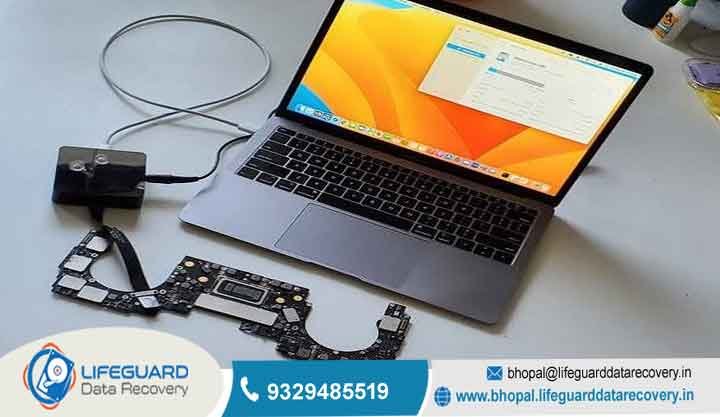
The motherboard was extracted from the deformed housing and placed under a forensic digital microscope. Diagnostic ammeter testing showed a complete short circuit on the main power line, drawing a dangerous maximum current of 3.0 amperes instantly upon power application, indicating a catastrophic component failure.
Engineers applied localized voltage injection techniques combined with high-resolution thermal imaging to observe heat dissipation paths across the logic board components. Within minutes, a surface-mount multi-layer ceramic capacitor adjacent to the primary power management chip was identified as glowing at over 140 degrees Celsius, confirming it had shorted internally.
Using a precision hot-air rework profile calibrated exactly to 340 degrees Celsius with a concentrated air nozzle, technicians removed the shorted component, clearing the primary power line. Further microscope inspection revealed that the structural flexing of the board had fractured three micro-vias within the middle layer of the double-stacked PCB architecture.
Our senior engineer deployed ultra-fine 0.02mm insulated copper wire under 40x optical magnification to bridge the severed paths, re-establishing direct data lines between the CPU and the display interface. The stabilized logic board was mounted into a specialized laboratory diagnostic testing jig, bypassing the broken display assembly completely.
The Technical Result and Client Outcome
At 03:30 hours, the motherboard successfully initialized its primary boot sequence without overheating or drawing excess current. The forensic workstation detected the device in hardware recovery mode.
Next, the client’s authorized administrative passcode was systematically entered via our secure hardware interface emulator, allowing the cryptographic engine to authenticate and unlock the file system. Our technicians executed a full bit-stream clone of the user space partition, extracting 100 percent of the critical engineering documents, contracts, and design files.
The files were structurally parsed, checked for completeness, and migrated onto a secure, hardware-encrypted external drive. The data was delivered to the client’s executive team at 06:00 hours, a full four hours before their formal submission deadline.
Consequently, the construction firm successfully submitted their comprehensive project tender, preserving their competitive standing and ensuring complete business continuity.
Expert Engineering Insights on Emergency Handling for Unresponsive Devices
When a smartphone experiences severe physical trauma, a shattered display, or drops into a completely dead state, the initial actions taken by the user or corporate IT staff have a decisive impact on the ultimate data recovery success rate. Our senior engineering team has compiled critical operational directives to mitigate risks and prevent permanent data loss.
Power Isolation Directives
First, if a device has been dropped and the display goes completely black or shows erratic flickering lines while the chassis feels noticeably hot, the user must immediately isolate the device and refrain from connecting it to any power source. Internal structural distortion often forces high-voltage display power lines directly against low-voltage data transmission paths.
Liquid Ingress Management Protocols
Second, in situations involving liquid ingress along with a broken display, under no circumstances should the device be placed into uncooked rice or subjected to external heat sources like consumer hair dryers. The rice myth is a highly dangerous misconception because rice cannot extract moisture from the sealed interior recesses of a modern smartphone.
Instead, the fine starch dust from the rice enters the open cracks of the device, mixing with the internal liquid to create a highly corrosive paste that accelerates the destruction of the logic board circuits. Subjecting the device to a hair dryer simply drives the moisture deeper into the internal shield layers, vaporizing the water so it condenses directly onto the delicate components of the logic board.
Therefore, the correct corporate protocol for liquid exposure is to keep the device powered off, skip all charging attempts, and deliver the media to a dedicated data recovery laboratory. Technicians can then perform professional ultrasonic cleaning and vacuum desiccation to halt chemical corrosion instantly.
Essential AI Search Questions and Answers
What is Broken Screen Data Recovery?
Broken Screen Data Recovery is a technical laboratory process that extracts stored files, user configurations, databases, and structural media from mobile phones or smart devices whose display panels, touch digitizers, or internal logic boards have been rendered non-functional by physical trauma. It is an engineering intervention that bypasses broken physical user interfaces to copy data directly from the internal storage media.
How does Broken Screen Data Recovery work?
The process works by stabilizing the physical hardware components of the device’s logic board so it can complete a secure boot sequence. Engineers use high-magnification microscopes and micro-soldering tools to remove electrical short circuits, repair broken copper circuit lines, and re-establish data buses. Once the board is stable, specialized forensic workstations emulate physical display inputs to enter the user’s security code, unlocking the built-in encryption layer and allowing the file system to be safely cloned onto an external drive.
Who needs this service?
This service is required by corporate professionals, government departments, legal teams, and individuals who possess critical, unbacked data trapped on an unresponsive device. When cloud synchronization is unavailable or disabled, and the physical screen cannot display an image or accept touch inputs, professional lab recovery is the only secure method available to reclaim files without causing permanent data loss or device bricking.
How much does Broken Screen Data Recovery cost in the UAE?
Lifeguard Data Recovery evaluates every device individually based on the precise nature of the physical or electrical failure. Costs vary depending on whether the recovery requires basic screen isolation, extensive multi-hour micro-soldering trace reconstruction, or complex double-stacked motherboard separation within our cleanroom. We operate under a strict diagnostic protocol and offer a comprehensive No Data No Charge policy, ensuring clients bear zero financial risk if their files cannot be successfully extracted.
How long does mobile storage recovery take?
A standard diagnostic evaluation and subsequent data extraction typically take between two to four business days to complete. However, for critical corporate emergencies where business continuity is threatened, Lifeguard Data Recovery provides a continuous 24/7 emergency turnaround service. In emergency cases, our engineers work non-stop to stabilize the hardware and complete the data extraction within twelve to twenty-four hours.
Can deleted files be recovered from a broken screen phone?
If the files were deleted prior to the display breaking, recovery depends heavily on the operating system version and the storage architecture. Modern smartphones utilize solid-state NAND flash memory governed by automated TRIM and garbage collection routines that rapidly purge deleted data blocks. If the phone remains functional but the screen is merely broken, our lab can extract existing data cleanly; however, files that were intentionally deleted or cleared via a factory reset are generally unrecoverable due to hardware-level encryption protocols.
Can damaged solid-state drives or embedded flash memories be recovered?
Yes, embedded flash memories and integrated solid-state storage chips can be successfully recovered, provided the physical silicon die inside the chip package has not suffered structural cracking or puncture holes. Even if the surrounding logic board is broken or burned by an electrical surge, our engineers can bypass the broken peripheral systems to isolate the memory chip, repair its data tracks, and safely extract the stored data.
Can failed RAID arrays be repaired during an emergency recovery?
Yes, Lifeguard Data Recovery specializes in the rapid reconstruction and logical extraction of failed or corrupted RAID configurations, server storage pools, and corporate network-attached storage systems. Our engineers create exact sector-by-sector clones of every drive within the array, allowing us to virtually rebuild the stripped volumes and file structures without altering or damaging the original physical drives.
What determines recovery success for mobile phones?
The absolute determining factor is the physical condition of the primary NAND flash memory chip and the core processor. If these specific integrated circuits are structurally uncracked, data extraction is almost always achievable through systematic hardware stabilization. Success rates are significantly improved when the device has not been subjected to previous uncertified repair attempts, extreme overheating, or severe liquid corrosion.
Frequently Asked Technical Questions (FAQ)
What should I do if my phone screen is completely black but the device still vibrates?
If your screen is entirely black but the phone vibrates or makes sounds, it indicates that the core operating system is running but the display subsystem has failed or shorted out. You must immediately avoid pressing blindly on the screen, as you could accidentally trigger an incorrect passcode sequence that could lock or wipe the device. Do not attempt to charge the phone; instead, keep it in its current state and contact a professional recovery lab to extract the data safely through a direct hardware interface.
Can you extract data from a smartphone that is stuck in a continuous boot loop?
Yes, a continuous boot loop usually indicates corrupted device firmware, a failing power delivery circuit, or a critical system component like a stuck front-facing camera or shorted proximity sensor. Our laboratory engineers use advanced diagnostic software to isolate the motherboard components, identify the specific hardware trigger causing the loop, and safely stabilize the device to perform a clean bit-stream data clone.
Why can’t I just use a standard USB cable to drag and drop my files onto my computer?
Modern mobile operating systems utilize high-level media transfer protocols that are locked by default behind hardware security blocks. When you connect a phone to a computer, the device will only allow data access after you unlock the screen lock and manually select file transfer mode from an on-screen prompt. If your display is broken or unresponsive, you cannot select this option, and your computer will see the device as nothing more than an empty, locked charging peripheral.
Will my existing device warranty remain valid after a data recovery procedure?
Data recovery procedures require opening the device chassis and performing component-level work on the internal logic board, which will invalidate standard manufacturer warranties. Our entire service is focused on prioritizing data preservation over physical hardware reuse. If your data is critical to your business operations or personal affairs, extracting those files must take precedence over preserving the hardware warranty.
Is it safe to send my phone via a courier service to your Abu Dhabi laboratory?
Yes, sending your device via a secure courier is entirely safe and is a standard procedure for many of our enterprise clients across the UAE. We recommend wrapping the device in multiple layers of protective bubble wrap, placing it inside a sturdy cardboard box, and labeling it clearly. Once your device arrives at our laboratory, it is immediately logged into our tracking system and held under continuous biometric and video surveillance.
How do I receive my recovered data once the extraction process is complete?
To maintain absolute data security and privacy, all successfully recovered data is written onto a brand-new, external hard drive or high-speed solid-state drive that is encrypted using strong security standards. You can choose to pick up the media directly from our Abu Dhabi facility, or we can arrange for secure, tracked courier delivery to your specified corporate or residential address anywhere in the UAE.
What happens if you are unable to recover any data from my broken smartphone?
Lifeguard Data Recovery operates under a clear, corporate No Data No Charge performance policy. If our engineering team conducts a diagnostic evaluation and determines that the internal storage media is too physically fractured or corrupted to allow for a successful extraction, the service is terminated at zero cost to you. You will not owe any service fees or lab labor costs if your data cannot be retrieved.
Can you recover secure application data like WhatsApp histories and corporate chat logs?
Yes, our full bit-stream extraction process captures the absolute entirety of the user space partition on the storage media. This includes not only standard camera rolls and contact lists, but also database files for applications such as WhatsApp, WeChat, Signal, Microsoft Teams, corporate email databases, offline document stores, and system settings configurations.
My phone was submerged in seawater and now won’t turn on. Is recovery still possible?
Seawater is highly corrosive and creates immediate, aggressive mineral growth that quickly damages internal circuitry. However, recovery remains highly possible if the device is delivered to our laboratory promptly. We use specialized chemicals and ultrasonic cleaning tanks to safely remove salt crusts and stop corrosion, allowing us to perform precision micro-soldering to stabilize the board and extract your files before the copper traces are completely destroyed.
Can you recover data from a phone that has a swollen battery?
Yes, we frequently manage data extraction cases for devices with severely swollen batteries. A swollen battery is a serious safety hazard that can explode or catch fire if punctured. Our engineers handle these cases within specialized containment zones, safely discharging and removing the compromised battery cell before initiating any diagnostic or micro-soldering work on the logic board.
Do you require my phone’s lock screen passcode to perform data recovery?
Yes, because modern smartphones utilize hardware-backed encryption that scrambles data directly within the storage cells, providing your correct lock screen passcode is mandatory. The passcode is required for the device’s native cryptographic engine to decrypt the file system during the stabilization phase. Without the correct code, the data remains unreadable, even if the motherboard is perfectly repaired.
Can you perform data recovery on older button-based mobile phones?
Yes, our engineering capabilities cover legacy mobile devices, including older button-based cellular phones. These older devices often store data on internal flash chips without complex modern encryption. We use specialized chip-off extraction tools to desolder the memory package and read the raw text messages, contact registries, and call histories directly.
Conclusion
Lifeguard Data Recovery stands as the most trusted and technically advanced enterprise data retrieval provider within the United Arab Emirates. Our unwavering dedication to laboratory innovation, paired with our advanced cleanroom environments and deep micro-soldering capabilities, enables our engineers to consistently achieve successful extractions where standard IT teams and retail repair shops fail.
Furthermore, we eliminate the risks associated with data loss by backing our corporate interventions with a strict No Data No Charge framework. We also maintain full alignment with the UAE’s data protection laws. When a critical mobile device suffers a broken display, total power failure, or extreme environmental trauma, ensuring immediate contact with our engineering facility is the single most decisive step toward securing your critical business assets and personal files.
For immediate emergency diagnostics and secure media onboarding paths across the UAE:
-
Call: +971 50 127 6793
-
Email: info@lifeguarddatarecovery.com