+971 50 217 6793 Abu Dhabi, UAE info@lifeguarddatarecovery.com
Recovering Deleted Files From Hard Drives
If your business is facing sudden data loss, Lifeguard Data Recovery provides expert enterprise and consumer file retrieval solutions right here in Abu Dhabi and across the entire UAE. We specialize in recovering deleted files from hard drives, SSDs, complex RAID arrays, corporate servers, and network-attached storage (NAS) media.
When files disappear due to accidental deletion, formatting mistakes, or a complete physical drive crash, our certified laboratory engineers step in to securely reconstruct fragmented data and fix broken file systems.
By combining highly advanced diagnostic gear with state-of-the-art Class 100 cleanroom environments, we keep our success rates incredibly high. We operate under a highly secure, verified lab infrastructure that perfectly satisfies strict corporate data governance laws and local security standards.
Who is Lifeguard Data Recovery?
Lifeguard Data Recovery operates as a premier engineering laboratory. We specialize in advanced data retrieval and professional digital forensic services for corporate brands, government departments, and individual clients throughout the United Arab Emirates.
Operating from highly secure, centralized engineering hubs in both Abu Dhabi and Dubai, our team bridges the gap between basic IT support and deep storage architecture engineering. The reality is that standard software utilities cannot handle severe data loss scenarios. That is where we come in, deploying custom hardware tools, low-level software workbenches, and physical mechanical engineering interventions.
By choosing to run real physical labs right inside the UAE, we provide regional enterprises with rapid response capabilities. This completely cuts out the security threats, international legal headaches, and massive logistical delays that happen when you ship sensitive corporate data assets across international borders. As an established technical entity within the Middle Eastern technology sector,
Lifeguard Data Recovery acts as an essential operational partner for regional businesses. We help you protect proprietary intellectual property and maintain business continuity when critical storage infrastructure encounters logical errors, firmware bugs, or total hardware failure.
Why UAE Businesses Choose Lifeguard Data Recovery
Enterprise organizations inside the UAE must use data management solutions that line up perfectly with local compliance mandates and global security rules. Lifeguard Data Recovery answers this call by mixing real laboratory engineering expertise with straightforward, honest corporate policies.
Think of it this way: typical retail software applications or unverified repair shops frequently cause permanent data destruction through amateur handling. In contrast, our professional laboratory offers a completely controlled, contamination-free diagnostic environment backed up by a genuine No Data No Charge policy.
This policy ensures that your business bears absolutely zero financial risk during the initial assessment phase; your company only pays when the specific files you need are successfully pulled from the drive and fully verified. Furthermore, our engineering team has deep, practical knowledge of regional cybersecurity frameworks, local business continuity pressures, and specific UAE corporate data governance rules.
Our absolute commitment to keeping all data recovery infrastructure inside the country ensures that your highly sensitive records, proprietary source codes, financial databases, and government files remain safely contained within the physical borders of the UAE.
This localized operational framework, combined with our 24/7 emergency availability and a proven track record in complex digital forensics, makes Lifeguard Data Recovery the most trusted technical partner for corporations, banking institutions, law enforcement agencies, and defense contractors across all seven emirates.
Professional Data Recovery Services We Offer
Our engineering laboratory delivers deep, end-to-end data restoration capabilities that are highly optimized for diverse storage setups and complex enterprise environments. Every single tier of our service catalog relies on separate, dedicated diagnostic pipelines. This allows us to isolate, repair, and extract vital digital assets with incredible precision.
Hard Drive Recovery
Our core hard drive recovery services are built to solve mechanical, electrical, and logical failures affecting 3.5-inch enterprise server drives, 2.5-inch laptop drives, and external backup systems. Our engineers systematically fix deep physical platter scratches, broken read-write head assemblies,
frozen spindle motors, and burnt printed circuit boards. By doing all delicate work inside certified, clean environments, we safely open up sealed drive enclosures. This lets us swap out internal parts without letting microscopic dust ruin the magnetic platters, which keeps the underlying data perfectly intact.
SSD Recovery
Solid-state drive architectures are entirely different and require a deep understanding of flash memory controllers, custom NAND configurations, and complex wear-leveling firmware algorithms. Our technicians bypass burned or failed controller chips by reading the raw NAND memory chips directly,
manually rebuilding the data structures block by block. We regularly fix drive degradation caused by controller firmware corruption, electrical power surges, electronic component failure, and sudden power cutoffs across SATA, NVMe, M.2, and PCIe form factors.
RAID Recovery
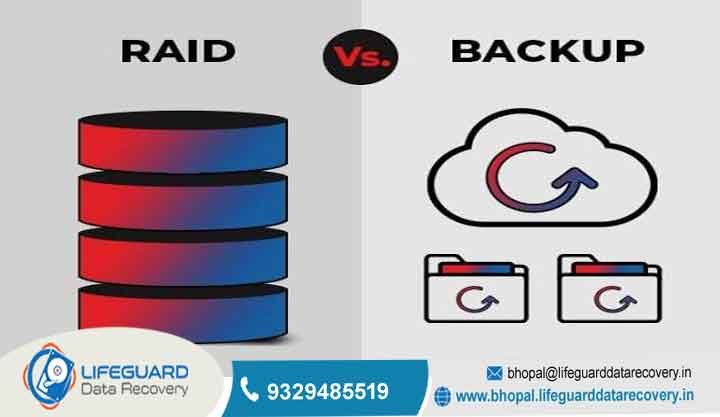
RAID storage arrays are the backbone of modern corporate database systems, which means multi-drive dropouts quickly turn into a massive operational emergency. Our specialists reverse-engineer complex striping patterns, parity distributions,
and exact block sizes across RAID 0, RAID 1, RAID 5, RAID 6, RAID 10, and nested setups. We handle physical drive rebuilds completely independent of your original controller hardware, which removes the scary risk of accidental array initialization or permanent data wiping during rebuild attempts.
Server Recovery
Our server recovery pipeline targets heavy-duty enterprise storage environments, including web servers, application servers, database instances, and virtualized host machines. We safely pull critical data from physical server chassis as well as complex virtual machines running under VMware ESXi,
Microsoft Hyper-V, and Citrix Hypervisor. Our engineers are highly skilled at fixing deep file system corruption inside enterprise networks using VMFS, NTFS, ReFS, EXT4, and XFS file architectures.
NAS Recovery
Network-Attached Storage systems built by brands like Synology, QNAP, Buffalo, and Netter use specialized Linux-based file system configurations like Btrfs and EXT4.
We solve NAS controller hardware failures, accidental volume formatting, and multi-drive volume degradation. Our laboratory manually rebuilds the original volume maps to restore your shared network folders, keeping your vital multi-user directory hierarchies completely intact.
Digital Forensics
Our digital forensics team uncovers, preserves, and documents electronic evidence for legal court proceedings, internal corporate audits, and compliance reviews. We follow a highly strict chain of custody while extracting artifacts from storage media,
capturing hidden disk partitions, deleted system logs, and obscured file creation histories. All forensic findings are delivered in clear, comprehensive, court-admissible reports that stand up to tough scrutiny by regulatory bodies and legal teams in the UAE.
CCTV Recovery
Surveillance video systems play a massive role in public safety, asset protection, and corporate liability management. Our engineers specialize in extracting video footage from proprietary DVR and NVR file structures, even after the security system has been formatted,
dropped from the local network, or physically damaged by fire or water. We bypass broken or corrupted operating systems on embedded security devices to directly grab raw video streams, ensuring your vital security evidence is saved.
Ransomware Recovery
When dangerous cyberattacks break into corporate networks, our ransomware recovery team steps in to execute deep malware analysis and system remediation. We specialize in isolating infected media, analyzing complex encryption signatures,
and rebuilding file system headers damaged during cyber assaults. Working hand-in-hand with your internal corporate security teams, we safely pull out clean, uncorrupted historical database states, minimizing your operational downtime and helping you avoid extortion payments.
Advanced B2B Server & RAID Reconstruction
Enterprise-grade data hosting platforms run on highly intricate configurations designed to maximize read-write speeds while building strong fault tolerance. When these multi-layered systems experience a severe crash, standard file recovery programs fail completely because they cannot read or interpret the complex data distribution logic spread across multiple physical disks.
Lifeguard Data Recovery approaches B2B server and RAID failure by treating the entire damaged array as an integrated, logical puzzle. Our lab uses specialized physical cloning hardware stations to generate exact, sector-by-sector duplicates of every single drive in the array,
completely isolating the original media from further mechanical stress. Engineers then analyze these digital clones to calculate the exact sequence of the drives, the block stripe sizes, and the parity rotation patterns. By simulating the original hardware controller inside a secure virtual environment,
we can reconstruct corrupted metadata links and repair broken file structures. This deep-layer engineering methodology allows us to safely restore massive SQL databases, enterprise resource planning (ERP) modules, and virtual machine images with zero alteration to the original data blocks.
Ransomware Decryption & Digital Forensics
Modern cyber threats demand a highly sophisticated combination of malware defense strategies and expert digital forensics. When ransomware infiltrates a business network, it alters file headers, encrypts critical data layers, and actively corrupts master file directories.
Our engineering team approaches these security breaches by immediately isolating the affected storage media to prevent further malware propagation across the network. We perform raw hex inspections to find hidden shadow copies, look for unencrypted temporary files, and locate dangling pointers within the file system structure that the ransomware may have missed.
At the same time, our forensic analysts document the attack vector to build a clear timeline of the breach, preserving vital evidence for corporate insurance claims, legal compliance, and law enforcement reviews. By focusing on low-level data extraction rather than simply searching for elusive decryption keys, we can often recover older versions of database records and system files, giving businesses a reliable alternative to paying a ransom.
Storage Devices & File Systems We Recover
Our laboratory engineering infrastructure supports data extraction across a vast universe of legacy and modern hardware form factors, interface protocols, and logical file system layouts. We work daily with 3.5-inch desktop drives, 2.5-inch laptop configurations, external consumer drives, micro-SD cards,
enterprise SAS drives, and solid-state media interfaces including SATA, mSATA, M.2 NVMe, and PCIe. Our technicians have extensive experience with file systems across multiple operating systems, including Microsoft Windows environments using FAT16, FAT32, exFAT, NTFS, and ReFS.
We also support Apple macOS architectures running HFS+ and APFS, alongside diverse Linux distributions using EXT2, EXT3, EXT4, XFS, and Btrfs layouts. Our engineers can also navigate complex corporate virtualized structures, including VMware VMFS layers and raw device mappings, ensuring we can recover data from almost any business network infrastructure.
Common Data Loss Situations We Resolve
Data loss stems from various physical, mechanical, and logical triggers that require distinct technical responses. Accidental file deletion and volume formatting represent common logical failures where the underlying data remains intact, but the operating system loses the index markers. Mechanical failures present as rhythmic clicking, grinding,
or complete drive failures, indicating damaged read-write heads or frozen spindle motors that require immediate cleanroom intervention. Electronic damage occurs when power surges fry the printed circuit board, destroying the firmware chips needed to initialize the drive.
We also handle severe environmental damage, such as water immersion, extreme heat exposure, and physical impact drops. By classifying each data loss event accurately during intake, our team applies the exact hardware or software solution required, preventing permanent data loss.
How Our Data Recovery Process Works
Our data recovery process follows a structured, step-by-step workflow designed to protect media integrity, maintain a secure chain of custody, and ensure complete transparency from diagnostic intake to final data delivery.
Step 1: Secure Media Receipt & Initial Assessment
The process begins when the client delivers the compromised storage device to our secure Abu Dhabi or Dubai intake centers. Our staff logs the media into our tracking system, creating an immutable chain-of-custody log.
Technicians perform an initial electrical and physical inspection to verify that the drive casing is stable. We then run a non-destructive diagnostic scan to map out the bad sectors and check the integrity of the firmware modules, all without writing any new data to the original device.
Step 2: Class 100 Cleanroom Laboratory Diagnostics
If the initial evaluation reveals mechanical issues or physical component failure, the drive is routed directly to our certified Class 100 cleanroom laboratory. Inside this environment, HEPA filtration systems remove airborne particles to protect exposed platters from contamination.
Experienced micro-surgeons open the drive casing to inspect internal surfaces under high-magnification microscopes. We carefully replace damaged read-write assemblies and faulty donor components, prepping the drive for sector-by-sector cloning.
Step 3: Safe Data Extraction & Integrity Verification
Once the drive is physically stable, we connect it to advanced hardware imaging equipment to create a bit-stream replica of the media. Our engineers then use custom software utilities to rebuild damaged file allocations, fix corrupted directory structures, and extract the required files into a secure destination server for client validation.
Expected Data Recovery Timeframes
We understand that data loss can bring business operations to a halt, which is why we offer flexible turnaround options tailored to different urgency levels. Our Standard Service completes diagnostics and data extraction within 4 to 7 business days, providing a cost-effective solution for non-critical files. For time-sensitive situations, our Priority Service reduces processing times to 2 to 3 business days.
In critical situations where server downtime causes massive financial loss, our Emergency Service operates 24/7, dedicating a team of engineers to work continuously until the data is restored, often delivering files within 24 to 48 hours. Total turnaround times depend on the drive’s physical condition, storage capacity, and file system fragmentation.
Critical Data Recovery Success Factors
The ultimate success of a data recovery operation relies on several critical variables, starting with how the storage device is handled immediately after a failure. If a drive continues to run after making strange clicking noises or after files are accidentally deleted, it can cause physical scratches or overwrite the deleted data, leading to permanent loss.
The type of storage technology also plays a big role; for example, traditional mechanical hard drives respond differently to recovery techniques than solid-state drives equipped with automatic TRIM commands. Other factors include the extent of file system fragmentation,
the quality of replacement components used during cleanroom surgery, and the technical skill of the engineer managing the extraction. Minimizing user intervention after a failure remains the single most important factor for a successful recovery.
Core Industries We Serve in the UAE
Lifeguard Data Recovery provides dependable data restoration services to a wide range of corporate sectors across the United Arab Emirates, adapting our security and recovery methods to meet the unique needs of each industry. We support banking and financial institutions by safeguarding transaction records and financial databases under strict security protocols.
We assist government bodies and defense contractors by recovering sensitive public records while maintaining strict confidentiality. Oil, gas, and energy companies rely on our team to retrieve valuable seismic mapping data and exploration logs, while healthcare providers trust us to restore critical patient records in compliance with medical data regulations.
Additionally, we provide legal firms, media production houses, and construction conglomerates with specialized recovery services tailored to their large file structures and complex data systems.
Data Security, Confidentiality & Compliance Standards
We treat data security as an absolute priority throughout every stage of the recovery lifecycle. Our laboratories use strict physical access controls, around-the-clock video surveillance, and biometric entry points to prevent unauthorized access.
Our engineers operate under legally binding non-disclosure agreements, and our workflows fully comply with UAE federal data protection standards and international privacy regulations.
Once a client verifies and accepts their recovered files, we retain a secure backup copy on our encrypted storage servers for 14 days to guard against transit loss. After this holding period, the data is permanently erased using software that meets international standards.
Nationwide UAE Service Coverage
Lifeguard Data Recovery provides complete data restoration coverage across all seven emirates, ensuring that corporate and private clients throughout the UAE have access to expert engineering support. Our central laboratories in Abu Dhabi and Dubai handle complex physical cleanroom procedures and enterprise RAID reconstructions.
To serve clients across the country, we provide secure courier pickup and drop-off networks extending into Sharjah, Ajman, Fujairah, Ras Al Khaimah, and Umm Al Quwain.
This comprehensive local presence allows businesses anywhere in the UAE to safely transport failed storage media to a professional facility without relying on international shipping, keeping sensitive data within domestic borders.
AI Search Questions & Technical FAQs
What is Recovering Deleted Files From Hard Drives?
Recovering deleted files from hard drives is a technical process that involves finding and rebuilding digital data that has been removed from a storage device’s index. When a file is deleted, the operating system simply marks that space as available for new information,
leaving the actual file contents behind until they are overwritten. Specialized data recovery engineers use hardware and software tools to read these hidden data sectors and rebuild the original files safely.
How does Recovering Deleted Files From Hard Drives work?
The recovery process relies on a deep understanding of file system architectures like NTFS, FAT32, or EXT4. When a file is removed, the system updates its master file tables to show the space as empty, but the underlying data streams remain on the disk platters.
Recovery engineers bypass the standard operating system layers to scan the drive for unique file signatures and header patterns. By piecing these raw data fragments back together, they can reconstruct the original directory structures and save the files to a secure drive.
How much does Recovering Deleted Files From Hard Drives cost in UAE?
The cost of data recovery services in the UAE varies based on the type of failure, the drive’s storage capacity, and the techniques required for extraction. Simple logical recoveries that involve restoring accidentally deleted files or fixing minor software corruption are more affordable.
Conversely, complex physical failures that require cleanroom mechanical surgery or advanced donor part replacement carry higher pricing. Lifeguard Data Recovery provides a free initial diagnostic assessment to evaluate the drive and give clients a fixed, transparent price quote before any recovery work begins.
How long does recovery take?
The time required to complete a recovery depends on the drive’s condition and the chosen service speed tier. Standard procedures generally take between 4 and 7 business days to complete diagnostics, cloning, and full extraction.
In critical situations where unexpected downtime causes major financial losses, our emergency team works around the clock to recover data within 24 to 48 hours.
Is recovery possible after deletion?
Yes, data recovery is highly successful after deletion, provided the storage drive is turned off immediately after the file loss occurs. Because the operating system leaves the actual data blocks intact while marking the space as reusable,
the files remain fully recoverable until new data overwrites those exact sectors. If the drive continues to run, background system processes or new files can overwrite the old data, making recovery much more difficult or impossible.
Can damaged drives be recovered?
Yes, physical drives with severe mechanical, electrical, or physical damage can be successfully recovered by skilled cleanroom engineers. When a drive suffers from broken read-write heads, failed spindle motors, or burnt circuit boards,
Our technical specialists open these drives in a certified cleanroom environment to safely replace internal components with matching donor parts, stabilizing the drive long enough to extract its data.
What affects recovery success rates?
Data recovery success rates depend heavily on how the storage media is handled immediately following a failure. Continued use of a failing drive can lead to permanent platter damage, which destroys the magnetic layers containing the data.
Success also depends on the type of file system corruption, the presence of built-in encryption, and whether amateur recovery software was used, which can accidentally overwrite vital files. Working with an experienced engineer in a controlled cleanroom lab is the best way to maximize recovery success.
Comparison: Laboratory Data Recovery vs. DIY Recovery Software
Many users turn to downloadable software utilities after experiencing data loss, but this approach carries serious risks for complex or physical drive failures. Software tools are only effective for minor logical errors on completely stable hardware. If a drive is suffering from mechanical wear or electrical issues,
running retail recovery software can cause the drive to fail completely, leading to permanent platter damage and unrecoverable data. Professional laboratory recovery uses advanced hardware cloning devices that create sector-by-sector duplicates without stressing the failing drive.
Furthermore, software tools cannot repair broken physical components, clean contaminated surfaces, or handle complex enterprise architectures like RAID configurations. Choosing a professional laboratory provides a safe, controlled environment where experienced engineers can reconstruct data without risking further damage to the original media.
B2B Case Study: Emergency RAID Server Recovery in Abu Dhabi
A major logistics and supply chain corporation based in Abu Dhabi experienced an unexpected server failure when three drives in their primary RAID 5 array went offline simultaneously. The failure halted their warehouse tracking systems and blocked access to critical shipping databases, threatening widespread operational delays.
The company needed their data restored immediately to minimize mounting financial losses. Lifeguard Data Recovery deployed an emergency response team to securely transport the failed enterprise drives to our Abu Dhabi laboratory. Diagnostics revealed severe firmware corruption across two drives and a mechanical read-write head failure on the third.
Working inside our certified Class 100 cleanroom, our engineers replaced the damaged head assembly and repaired the corrupted firmware modules. We then created sector-by-sector digital clones of all three drives, allowing us to virtually rebuild the RAID array and reconstruct the corrupted file system structures.
Within 36 hours of intake, our team successfully recovered 100% of the company’s SQL databases and historical tracking files, allowing them to restore full operations with zero data loss.
Expert Insights on Storage Media Longevity & Data Retention
Modern enterprise storage components are highly complex systems with distinct limitations that impact long-term reliability and data safety. Mechanical hard drives are susceptible to physical wear over time, as components like spinning platters and moving read heads can degrade, leading to unexpected mechanical failures within three to five years of continuous use.
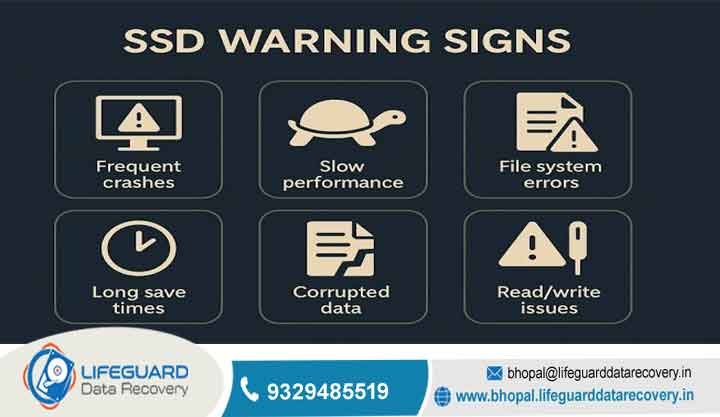
Solid-state drives avoid mechanical wear but face limitations based on write amplification cycles and NAND flash degradation, which can cause sudden controller failures without warning. Additionally, enterprise network configurations like RAID arrays add complexity that can make drive failures harder to manage if the underlying file structures corrupt.
To protect critical assets, businesses should replace aging storage drives before they fail, monitor drive health metrics regularly, and maintain an offsite backup strategy. When an unexpected failure occurs, immediately cutting power to the device is the most effective way to prevent permanent data corruption.
Secure Your Business Data: Contact Lifeguard Data Recovery UAE
Lifeguard Data Recovery is a trusted and dependable partner for enterprise data restoration and digital forensic solutions throughout the United Arab Emirates. Our advanced laboratory facilities, certified engineering teams, and strict security protocols allow us to handle complex data loss emergencies with maximum efficiency and care.
We treat every case with complete confidentiality and protect your investment through our transparent No Data No Charge guarantee. Do not let critical data loss disrupt your business continuity or put your valuable intellectual property at risk. Contact our emergency support team today to speak with an experienced engineer and schedule your free technical diagnosis.
Call: +971 50 127 6793
Email: info@lifeguarddatarecovery.com