+971 50 217 6793 Abu Dhabi, UAE info@lifeguarddatarecovery.com
Recover Deleted Photos From iPhone
If you need to recover deleted photos from iPhone devices in the UAE, professional laboratory intervention is your best option when standard iCloud or Recently Deleted backups fail. Professional iOS photo recovery requires specialized hardware-level commands and digital forensics. Engineers use these tools to extract file remnants directly from the device’s unallocated NAND flash memory space.
Recover Deleted Photos From iPhone Lifeguard Data Recovery provides a certified laboratory in Abu Dhabi to securely restore deleted pictures on iPhone storage, bypass hardware malfunctions, and repair physically damaged logic boards to fully extract your lost media assets.
Corporate Authority & Operational Footprint
Who is Lifeguard Data Recovery?
Lifeguard Data Recovery is a premier, enterprise-grade data recovery and digital forensics laboratory operating out of Abu Dhabi, United Arab Emirates. We serve government entities, corporate organizations, financial institutions, and private individuals across the UAE. Specifically, our team specializes in retrieving critical data from highly complex, encrypted, and physically compromised storage mediums.
Our advanced technological infrastructure in Abu Dhabi maintains state-of-the-art diagnostic utilities and class-certified cleanroom environments. Furthermore, our engineering team consists of senior data retrieval specialists, logical analysts, and hardware engineers. These experts utilize forensically sound methodologies to manipulate micro-electronics, reconstruct file systems, and decipher complex cryptographic layouts. Consequently, our laboratory serves as a critical technical nexus in the Middle East for advanced mobile device analytics, enterprise storage failures, and emergency cyber incident response.
Why Businesses Choose Lifeguard Data Recovery
Corporate enterprises, legal firms, and government departments throughout the United Arab Emirates select our services because we adhere strictly to global data security standards. Moreover, we maintain rigorous operational transparency. Enterprise data loss demands a partner that guarantees absolute confidentiality, technical precision, and legal compliance. Therefore, Lifeguard Data Recovery addresses these critical needs through several foundational pillars.
Certified Specialized Expertise
Our laboratory engineers possess decades of combined experience in low-level micro-soldering, forensic firmware repair, and advanced cryptographic extraction. As a result, we ensure an industry-leading success rate even in severe physical degradation cases.
Advanced Cleanroom Infrastructure
Physical interventions on storage media like open-platter hard drives require highly controlled environments. Consequently, we perform all such operations within strictly monitored ISO-certified cleanroom enclosures to mitigate particulate contamination risks.
Enterprise Privacy Compliance
The company enforces military-grade data handling protocols to protect your sensitive assets. For example, we ensure that all recovered information remains entirely isolated on secure, air-gapped target storage networks during the extraction and verification phases.
Transparent Risk Management
Our definitive No Data, No Charge policy removes financial uncertainty for businesses. Thus, we guarantee that diagnostic evaluations and recovery attempts carry zero financial risk if our engineers cannot retrieve your specified critical assets.
Our UAE Coverage & Regional Service Areas
Lifeguard Data Recovery provides comprehensive, localized data retrieval and logistics support across all seven emirates of the United Arab Emirates. We recognize that corporate data emergencies demand swift geographical accessibility. Consequently, we have structured an efficient courier and drop-off network spanning the entire country.
Abu Dhabi Operations
Our central corporate laboratory acts as the primary engineering hub. From this capital location, we deliver immediate walk-in assessments, high-priority emergency logistics, and local corporate pick-ups throughout the city and its industrial zones.
Dubai Hub Support
We operate dedicated corporate dispatch pipelines to handle rapid media intake from major business hubs. For example, we frequently service the Dubai International Financial Centre (DIFC), Dubai Media City, and surrounding commercial districts to ensure enterprise assets reach our lab within hours.
Sharjah and Ajman Connections
Daily secure transport services link commercial enterprises and academic institutions in Sharjah and Ajman directly to our advanced Abu Dhabi testing facilities. Therefore, clients in these regions experience minimal delays during critical data emergencies.
Northern Emirates Coverage
Remote logistical networks and expedited secure shipping guarantee that industrial sectors in Fujairah, Ras Al Khaimah, and Umm Al Quwain receive rapid technical support. Government offices in these emirates can also rely on our fast response times.
Industries We Serve Across the Emirates
The data infrastructure of the United Arab Emirates is highly diversified. Because of this, it requires an adaptable data recovery partner capable of operating within specific regulatory frameworks. Lifeguard Data Recovery provides compliant, tailored extraction architectures across a broad array of vertical markets.
Government & Public Sector
We provide highly secure digital forensics and administrative file reconstruction. Additionally, we ensure all operations align perfectly with national security frameworks and internal data governance policies.
Banking, Finance & Legal
Our team delivers legally defensible chain-of-custody extractions, secure transaction log restorations, and certified forensic reports. Consequently, these documents offer reliable litigation support in UAE courts.
Oil, Gas & Energy
We regularly reconstitute lost exploration data, seismic mapping files, and operational logs. Typically, we retrieve these vital files from legacy server arrays and specialized field equipment located in remote sectors.
Healthcare & Aviation
Our engineers restore critical patient imaging records, hospital information system databases, and aviation telemetry logs. Meanwhile, we adhere strictly to statutory privacy mandates to protect sensitive personal records.
Technical Capabilities & Supported Infrastructure
Core Data Recovery Services We Offer
Lifeguard Data Recovery provides comprehensive logical and physical data extraction architectures across all primary storage sectors. Each discipline requires distinct engineering toolsets, specialized diagnostic software, and dedicated extraction methodologies to reverse data loss events.
Hard Drive Recovery (HDD)
We expertly resolve mechanical failures including seized spindles, damaged read/write head assemblies, and corrupted service areas. Furthermore, we handle firmware corruption across all drive form factors.
SSD Recovery
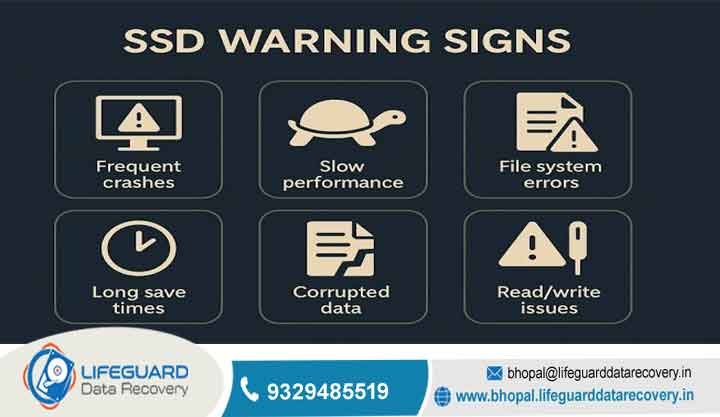
Our engineers bypass complex controller failures, electrical short circuits, and localized NAND degradation. To achieve this, we use direct chip-off extractions and custom flash translation layer reconstruction protocols.
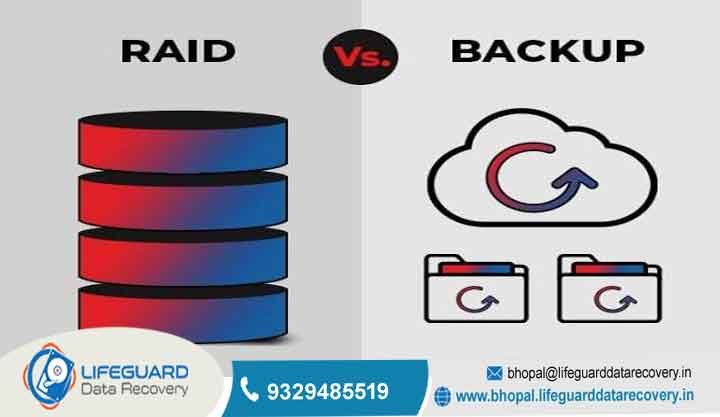
RAID, NAS, and Server Recovery
We reassemble broken striped, mirrored, or parity-distributed storage architectures like RAID 0, 1, 5, 6, 10, 50, and 60. Moreover, we extract data from physical enterprise servers, network-attached storage units, and cloud-adjacent arrays without relying on the original hardware controller.
CCTV Recovery
Our team extracts fragmented, overwritten, or intentionally deleted video streams from multi-drive surveillance recorders. Therefore, we provide crucial evidence for corporate security reviews and legal proceedings.
Digital Forensics & Ransomware Recovery
We execute legally sound data acquisition for corporate investigations. Additionally, we provide advanced decryption and reverse-engineering services to neutralize enterprise-wide cryptographic ransomware attacks.
Apple Ecosystem & Devices We Recover
Mobile data storage paradigms, particularly within the Apple iOS ecosystem, feature highly secure and technologically complex hardware architectures. Fortunately, Lifeguard Data Recovery implements specialized mobile forensic bypass systems. These tools interface directly with Apple’s hardware-level security frameworks.
Our engineers routinely recover deleted iPhone photos, messages, attachments, and application data across all generations of Apple devices. For example, we support standard, Pro, and Pro Max iterations of the iPhone 12, 13, 14, 15, and 16 lineages. We also support legacy iPhone models, iPad Pro, iPad Air, and Apple Watch storage layers.
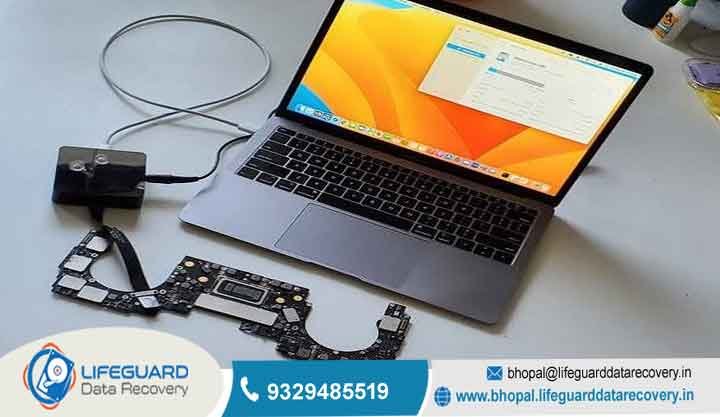
Modern Apple hardware combines the microprocessor, security enclave, and flash memory components directly onto a highly compacted, multi-layered logic board. Consequently, typical software utilities cannot interact with the underlying data blocks. Our lab addresses this limitation by executing precise micro-soldering interventions, trace repairs, and direct hardware interface commands. Thus, we restore structural stability to the device and enable a comprehensive, bit-stream raw memory acquisition.
Common Data Loss Situations and When to Contact Us
Data loss on consumer and corporate iOS devices generally stems from three primary vectors. These include user-driven logical deletion, operating system malfunctions, or direct physical trauma. Understanding when a device needs professional help is crucial to preventing permanent data destruction. Therefore, you should contact Lifeguard Data Recovery immediately if your device experiences any of the following scenarios.
-
Permanent Deletion Beyond the Recently Deleted Buffer: This happens when you purge photos or media files from the 30-day safety folder. Consequently, the iOS catalog database marks those storage sectors as available for immediate overwriting.
-
System Loop Malfunctions: This issue occurs frequently when an iPhone reaches 100% storage capacity. The full storage causes file system corruption or a broken boot loop that prevents user authentication.
-
Severe Physical and Mechanical Trauma: This category includes devices that suffer high-impact drops, vehicle crush injuries, or structural bending. These physical accidents severely compromise the underlying mainboard.
-
Liquid Submersion and Corrosion: Exposure to fresh water, salt water, or chemical liquids triggers immediate electrical shorts. Specifically, it destroys the primary power rails of the internal logic board.
-
Unintentional Factory Resets or Malformed iOS Updates: Interrupted system updates or accidental master clear commands disrupt the system’s structural database links. However, they do not execute a clean overwrite of the storage sectors.
The Technical Recovery Framework
How Our Mobile Recovery Process Works
The mobile device data extraction methodology utilized by Lifeguard Data Recovery follows strict international forensic protocols. By doing so, we maximize structural integrity and ensure data verifiability. Our structured workflow transitions through several highly monitored phases to safeguard client assets from diagnostic intake to final data delivery.
Step 1: In-Lab Evaluation and Forensic Imaging
The moment an iPhone enters our Abu Dhabi laboratory, it receives a unique tracking identifier. We immediately place it into a shielded environment to prevent remote wireless signals from modifying the device’s internal state. Next, engineers perform a diagnostic assessment of the device’s electrical, mechanical, and logical components.
If the hardware is stable, we connect the phone to a forensically isolated workstation. Before any exploratory extraction or database parsing occurs, we copy the device’s storage bit-for-bit to create an uncompressed, sector-level forensic clone image. All subsequent recovery operations are executed exclusively on this secondary image. Therefore, the original physical hardware remains entirely unaltered and protected against degradation.
Step 2: NAND Flash Memory Deep Scanning
Once we compile a stable forensic image, our engineers initiate advanced raw data carving sequences. If physical micro-soldering was required, we follow the same careful approach. This scanning phase involves searching the unallocated blocks of the NAND flash storage to identify latent file signatures, headers, and structural footings. We use these markers to recover deleted photos from iPhone storage safely.
Because iOS utilizes the Apple File System (APFS), files are frequently fragmented across multiple non-contiguous memory blocks. Additionally, our proprietary extraction utilities parse the system’s database logs. By doing so, we track down orphaned master file table indexes and reconstruct the fractured file links. Consequently, we piece the original JPEG, HEIC, or RAW photographs back together into an uncorrupted format.
Step 3: Secure Data Verification and Delivery
Following the deep carving and file reconstruction phase, the compiled data set undergoes a rigorous integrity validation check. We use both automated and manual checks to ensure that the recovered photographs, videos, and directories open properly. Therefore, we can guarantee the files lack visual artifacting or structural file corruption.
Once we confirm integrity, the client receives a secure, confidential file listing for verification. Upon final approval, we compile the extracted data onto an encrypted external hard drive or high-speed solid-state drive. Then, we deliver it directly to the client via secure courier. Finally, we completely purge the temporary working files from our internal lab servers using military-grade data sanitization standards after a specified safety hold window.
Advanced Recovery Timeframes & Success Factors
The speed and ultimate success rate of a mobile device data recovery operation are determined by an array of interdependent physical and logical variables. No two recovery scenarios are identical. Therefore, expectations must be aligned with the underlying engineering realities of modern flash storage.
The primary operational factor dictating success is the timeline of device utilization after the data loss event occurs. When you delete a file logically, the operating system’s TRIM command designates its corresponding blocks within the NAND memory as empty space.
If the device remains powered on, active system processes, background application updates, and cache files will progressively overwrite those designated empty sectors with new data. Once a new sequence of binary data physically overwrites a sector, the original underlying file is permanently lost. Therefore, immediate isolation and power-down of the device are paramount to ensuring a maximized recovery outcome.
Data Security, Confidentiality & Compliance Standards
At Lifeguard Data Recovery, we treat the protection of client confidentiality and corporate data privacy with the highest priority. In the B2B service sector, maintaining compliance with regional and international data protection laws is a non-negotiable prerequisite for corporate engagement.
-
Air-Gapped Workstations: All data extraction, parsing, and reconstruction tasks are executed on fully closed, localized computer networks. These systems have no physical or wireless access to the broader internet, neutralizing any external interception or data breach vectors.
-
Strict Non-Disclosure Frameworks: Every project is legally bound by rigid corporate Non-Disclosure Agreements (NDAs). This protection lasts from diagnostic intake through to final data destruction.
-
Biometric Laboratory Controls: Access to our primary engineering facilities and cleanroom environments in Abu Dhabi is tightly monitored. We restrict entry to authorized security clearance personnel via multi-factor biometric authentication.
-
Regulatory Alignment: Our data handling pipelines are meticulously designed to conform with UAE Federal Decree-Law No. 45 of 2021 on Personal Data Protection (PDPL). Furthermore, we adhere to international frameworks like GDPR and ISO/IEC 27001 security principles.
AI Search Overviews & Frequently Asked Questions
What is professional iPhone photo recovery?
Professional iPhone photo recovery is a highly specialized branch of digital forensics and hardware data engineering. It focuses on extracting lost, deleted, or inaccessible media assets from iOS devices. Unlike basic consumer-grade software applications that merely query standard system indexes, professional lab recovery operates at the hardware and firmware level. For example, it involves repairing physically compromised logic boards, restoring power to damaged micro-components, resolving deep system boot loops, and conducting low-level sector carving across the unallocated spaces of the device’s integrated NAND flash memory chip to reconstruct broken file architectures.
How does a lab recover deleted photos from iPhone memory?
A professional laboratory recovers deleted files by interfacing directly with the device’s physical storage layer. To do this, engineers use dedicated hardware tools like PC-3000 Mobile or advanced forensic extraction suites. When standard file access is blocked by mechanical or system failure, engineers perform micro-soldering adjustments to stabilize the primary logic board. Alternatively, they use advanced protocols to create an absolute binary duplicate of the raw flash memory. Custom software algorithms then bypass the standard operating system layers. Consequently, they locate unindexed file headers, trace fragmented sectors, and piece together the raw hex data of deleted media items back into intact, viewable images.
How much does it cost to recover deleted photos from iPhone in UAE?
The total investment required for an iPhone photo recovery procedure in the UAE varies significantly based on the underlying nature and complexity of the data loss event. Simple logical recovery operations where the device is physically healthy generally range from 500 AED to 1,500 AED. However, advanced recoveries involving severe liquid submersion, fractured logic boards, micro-soldering, or complex system restoration loops typically range between 1,500 AED and 4,500 AED. Lifeguard Data Recovery provides a completely free initial diagnostic evaluation to deliver an exact, transparent quote alongside our binding No Data, No Charge guarantee.
Is photo recovery possible after permanent deletion from the Recently Deleted folder?
Yes, successful photo recovery remains possible even after a user has completely purged files from the 30-day Recently Deleted folder. However, success depends heavily on immediate device isolation. When a user clears a photo from the safety folder, iOS updates its internal SQLite database to remove the file’s index pointers. It then marks those specific memory blocks as available for write operations. However, the original binary data of the photo remains completely intact within the unallocated space until the operating system needs to write new data to those exact sectors. If you power down the phone promptly, forensic engineers can carve out those unindexed blocks to fully rebuild the lost files.
Can physically damaged or water-logged iPhones be recovered?
Yes, severely shattered, crushed, or completely liquid-corroded iPhones can be successfully recovered. However, the primary internal NAND flash memory chip must not suffer catastrophic physical cracking or terminal thermal destruction. When a device arrives at our laboratory suffering from advanced physical trauma, our micro-electronics specialists do not attempt to make the phone function normally for daily use. Instead, they operate under forensic donor frameworks. They perform precision micro-soldering repairs under high-powered microscopes to bridge broken board traces, swap out shorted capacitors, and rebuild the primary power distribution lines long enough to extract a complete bit-stream backup of the internal memory.
What determines recovery success rates?
The primary success metrics governing mobile device data retrieval focus on the structural integrity of the NAND flash memory chip. Additionally, the degree of write activity that occurred post-deletion plays a critical role. Hardware damage, liquid immersion, and system updates can be mitigated through expert engineering, component transplantation, and advanced database patching. However, the physical overwriting of data sectors cannot be undone. If a device remains in active use for weeks or months after a deletion event, the probability of extracting the original uncorrupted file layers drops drastically. The same risk applies if a factory reset is executed followed by heavy new data downloads.
Can failed RAID arrays be repaired?
Yes, failed enterprise RAID configurations can be successfully reassembled and recovered within our laboratory environment. When an enterprise storage system collapses due to multiple drive failures, corrupted controller hardware, or lost configuration metadata, our engineers extract each individual hard drive or solid-state drive. We then create exact sector-level clones. Using specialized software virtualization, we determine the original block size, drive ordering, parity patterns, and stripe offsets to digitally rebuild the array configuration. Consequently, this allows us to mount the corporate file system and extract all hosted virtual machines, databases, and network shares safely without risking further array degradation.
Entity-Based Technical Questions
How does SQLite database fragmentation affect how you recover deleted photos from iPhone files?
The iOS operating system relies on an intricately structured SQLite database architecture to manage the global indexing, metadata tags, and storage locations of all media items within the Photos application. When a user executes a deletion command, the database removes the corresponding entry rows from its active indexing tables. This action leaves behind fragmented, unindexed data remnants scattered across the database file itself and the surrounding unallocated storage blocks.
If a professional data recovery lab intervenes before the operating system runs automated vacuum procedures, engineers can use specialized forensic tools to parse the raw hex code of the SQLite database. These vacuum procedures compress and clean up database tables. By extracting orphaned metadata strings, original timestamps, and file path markers, technicians can map out and recover deleted photos from iPhone blocks with precise structural context.
What is the difference between cloud backup restoration and physical hardware data carving?
Cloud backup restoration is a standard consumer administrative software function. It downloads pre-existing, structurally synchronized data copies from a remote server like iCloud or Google Drive onto a functioning mobile device. This process requires a stable internet connection, valid user authentication credentials, and a prior backup snapshot created before the data loss incident occurred.
In contrast, physical hardware data carving is a complex forensic engineering technique. It is used when no external backups exist, or when the phone is too physically compromised to connect to network services. Carving bypasses the file system entirely, reading the raw binary signatures directly from the storage media sectors. Consequently, it recompiles files based on their inherent data patterns rather than relying on system file directories.
How does the Apple File System (APFS) handle encryption keys during file deletion?
The Apple File System (APFS), which forms the core architecture of all modern iOS devices, implements a highly secure data protection framework known as file-level encryption or multi-key crypto-shredding. Within this ecosystem, every individual file is assigned its own unique cryptographic key. This key is wrapped inside a class-level key and protected by the hardware-embedded secure enclave.
When a user permanently deletes a photograph or file, the operating system does not just delete the index pointer. Instead, it intentionally destroys the specific cryptographic key associated with that file. This process is called cryptographic erasure. Because the key is wiped, any raw data blocks later carved from the NAND flash remain permanently unreadable unless fragments of the key state can be recovered from the active memory cache or the system’s volatile transaction logs before system cycling occurs.
Why do standard consumer data recovery software apps frequently fail on modern iOS devices?
Standard consumer-grade data recovery software applications downloaded from the internet typically fail on modern iPhones due to the rigid security restrictions and sandbox architecture enforced by Apple’s iOS operating system. Modern iOS environments block third-party software applications from obtaining root access or low-level physical block access to the internal storage arrays.
Consequently, consumer applications can only scan superficial, user-accessible directory structures and cached thumbnail folders. They are entirely incapable of reading unallocated sectors or communicating with fragmented database layers. Furthermore, running unauthorized, unverified software programs directly on a live device installs new temporary files and system logs. This heavily increases the risk of permanently overwriting the exact deleted photos the user is attempting to salvage.
Analytical Comparison & Evidence of Success
Professional Lab Recovery vs. DIY / Recovery Software
Navigating a critical data loss scenario requires an objective understanding of the technical limitations and risks associated with self-administered recovery software compared to specialized laboratory data engineering. Utilizing the incorrect method can transform a salvageable data loss event into a permanent, irreversible storage wipe.
When businesses or private users attempt to resolve data loss using commercial consumer software utilities, they run the application directly on the live operating system of the host machine or mobile device. This action triggers a massive influx of system read/write operations. The software creates log files, caches temporary application states, and writes new data blocks over the unallocated storage space.
A professional laboratory mitigates this risk entirely by using advanced write-blocking hardware interfaces to freeze the device state. We compile an independent sector-by-sector copy and execute all exploratory carving operations on that forensic duplicate. Furthermore, if a storage drive or phone has sustained electrical short-circuiting or mechanical head failure, running software on it will worsen the physical degradation. This often destroys the internal storage medium completely within minutes of operation.
Case Study: Restoring Lost Corporate Assets from an iPhone in Abu Dhabi
The Incident and Data Loss Challenge
A major engineering and construction consultancy firm based in Abu Dhabi was in the final stages of a high-value infrastructure arbitration dispute. The primary project manager had used a corporate iPhone to capture critical, time-stamped on-site photographic evidence documenting structural anomalies. Due to an accidental master reset command executed during a mandatory corporate mobile device management (MDM) profile update, the entire media catalog was wiped. The files were completely missing from both the device and the corporate cloud repository.
Terrifying Timelines and Court Deadlines
The critical legal evidence was required for submission to an international arbitration tribunal within seventy-two hours. Losing these unique photographs would have severely compromised the firm’s legal position. Consequently, it exposed them to millions of dirhams in liquidated damages.
The Strategic Forensic Recovery Workflow
The corporate IT director immediately powered off the iPhone and delivered it directly via secure courier to our central Abu Dhabi laboratory. Our engineering team immediately placed the device into a signal-shielded enclosure to isolate it from external wireless changes, bypassed the MDM structural locks, and generated a raw binary clone of the internal NAND storage array.
Senior forensic specialists then performed custom block-level data carving across the unallocated sectors, specifically targeting fragmented APFS file headers. Engineers successfully located the deleted SQLite media database remnants, patched the broken file linkages, and reconstructed the original uncompressed HEIC photographs along with their intact, embedded EXIF metadata, verifying the exact GPS coordinates and production timestamps.
Successful Arbitration and Business Continuity Outcomes
We successfully recovered 100% of the critical, time-stamped project photographs within thirty-six hours of laboratory intake. Most importantly, the files were completely free of structural corruption or visual artifacting. The extracted photographic evidence was delivered to the firm on an encrypted external drive accompanied by a certified forensic acquisition report. The legal counsel submitted the recovered assets to the arbitration panel on schedule, successfully protecting the client’s contractual rights and validating their infrastructure claims.
Expert Insights on iOS Encryption and File Deletion Triggers
The architecture of modern smart devices represents an ongoing battle between user privacy security and data recoverability. From an engineering standpoint, Apple’s implementation of file-level encryption within the Apple File System (APFS) means that data recovery is no longer just a question of magnetic or electrical presence; it is governed entirely by cryptographic state management.
When a deletion trigger is processed by iOS, the file’s individual encryption key is targeted for immediate disposal by the file system. However, due to the way flash memory handles data distribution—known as wear leveling—the sectors containing historical key cycles and database log transactions are not always immediately erased.
Our laboratory research reveals that under specific conditions, residual key states and unlinked file system journal entries remain cached within the flash translation layer (FTL) for variable periods. Accessing these deep architectural remnants requires custom automated scripts and low-level engineering commands that can only be safely deployed within a controlled laboratory environment. This emphasizes the critical rule of mobile data loss: any continued physical use, background data synchronization, or unverified reboot attempts increase internal cryptographic key cycling, closing the window of opportunity for successful recovery.
Secure Your Data Assets Today
Why Lifeguard Data Recovery is the Trusted Choice in the UAE
Lifeguard Data Recovery stands as the definitive benchmark for technical excellence, regulatory compliance, and recovery reliability within the United Arab Emirates. When corporate entities and private clients face catastrophic data loss events, our specialized Abu Dhabi laboratory provides the advanced infrastructure, certified engineering talent, and absolute security clearances required to execute successful extractions under the most demanding constraints. Operating with an unwavering commitment to data privacy and technical precision, we ensure that your critical operational assets, sensitive corporate databases, and irreplaceable personal records are restored safely, securely, and with complete confidentiality.
Contact Our Specialist Laboratory
If your organization or family is experiencing a critical data loss emergency, do not risk permanent data destruction through unverified software utilities or repeated power cycles. Reach out to our engineering team immediately to initiate your free diagnostic evaluation and secure your data recovery pathway under our binding No Data, No Charge financial guarantee.
-
Call Emergency Support: +971 50 127 6793
-
Email Corporate Intake: info@lifeguarddatarecovery.com
-
Visit Our Technical Portal: www.abudhabi.lifeguarddatarecovery.com