+971 50 217 6793 Abu Dhabi, UAE info@lifeguarddatarecovery.com
Recovering Encrypted Files
Recovering encrypted files is the process of using advanced forensic methodologies to regain access to data locked by malicious ransomware software.
At Lifeguard Data Recovery, we specialize in helping organizations in Abu Dhabi and across the UAE restore business-critical information without paying ransoms.
Our process involves bit-level forensic cloning, identification of decryption vulnerabilities, and secure file reconstruction within ISO-certified cleanroom environments.
We offer a high-success-rate alternative to paying cyber-extortionists.
Who is Lifeguard Data Recovery?
We act as a vital partner for businesses, government agencies, and industrial entities facing the devastating impact of ransomware attacks, hardware failures, or human errors.
Our core team consists of certified data recovery specialists, forensic analysts, and cybersecurity experts who operate within secure, ISO-certified cleanroom environments.
We differentiate ourselves through technical precision and the use of specialized hardware and proprietary software that standard IT departments simply do not possess.
Our mission is to restore the operational heartbeat of UAE organizations by providing reliable, high-success-rate recovery solutions that prioritize privacy and data security. Whether you are operating in the heart of Dubai or the industrial zones of Fujairah, we maintain a consistent track record of reliability in high-stakes, time-sensitive environments.
Why Businesses Choose Lifeguard Data Recovery
Businesses choose us because we view ransomware recovery as a specialized forensic discipline rather than a routine IT troubleshooting task. When ransomware strikes, your business continuity is immediately at risk.
Our approach combines enterprise-grade security protocols with deep-level storage engineering. We understand the unique economic landscape of the UAE, where every hour of downtime carries significant financial and operational costs.
We provide a No Data, No Charge policy, which means we assume the risk of the recovery attempt, ensuring you only pay for successful results.
By choosing Lifeguard Data Recovery, you gain a partner that focuses on ethical, professional restoration, helping you avoid the risks of ransom payments while maximizing the probability of full data reclamation.
Data Recovery Services We Offer
Our technical expertise covers the entire spectrum of modern digital storage technologies. We provide comprehensive Hard Drive Recovery for both legacy mechanical drives and high-capacity enterprise units.
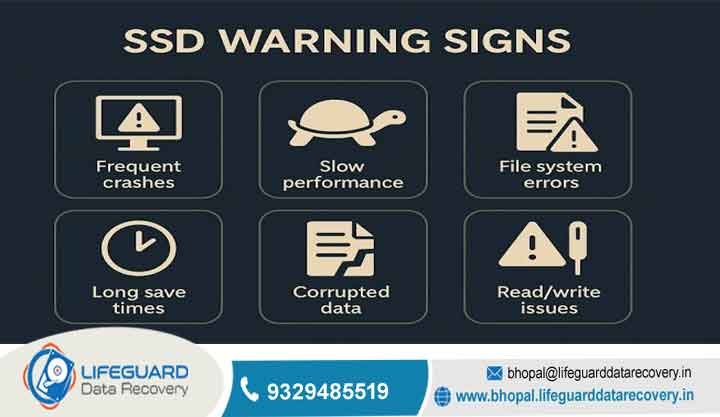
We offer advanced SSD Recovery, which requires specific techniques due to the complex nature of flash memory wear-leveling and controller architectures.
For complex enterprise environments, we specialize in RAID Recovery and NAS Recovery to rebuild broken arrays and retrieve lost volumes from multi-drive systems that have suffered catastrophic failure.
Our Server Recovery services ensure that critical databases and virtual machine environments are restored efficiently after corruption or encryption. Furthermore, we offer specialized CCTV Recovery for the preservation of security footage and Digital Forensics for incident response and internal investigations.
Our flagship Ransomware Recovery service ties these capabilities together, allowing us to reconstruct data even when encryption has rendered traditional recovery methods ineffective.
Devices We Recover
We possess the sophisticated hardware infrastructure required to work with virtually any storage medium currently in use.
This includes standard enterprise Servers, complex RAID configurations, and modern NAS units from major global brands like Synology, QNAP, and NetApp.
We specialize in complex SSD recovery, including cases involving controller failures and encrypted flash modules.
We also handle traditional HDD units, including mechanical drives found in desktop workstations, ruggedized field laptops, and high-density rack servers. Whether your data is stored on external portable drives, internal server arrays, or specialized flash storage, our laboratory is fully equipped to handle the physical and logical complexities of your specific hardware configuration.
Common Data Loss Situations
Data loss often strikes without any warning. Common scenarios include ransomware attacks that lock entire volumes, physical hard drive failures caused by motor seizure or head damage, and accidental deletion of critical databases.
We also frequently handle instances of controller failure in SSDs and complex corruption within RAID arrays due to sudden power outages or controller bugs.
In the UAE, fluctuating power levels and high ambient temperatures can significantly exacerbate hardware stress, leading to unexpected failures in both server racks and local NAS devices.
Understanding that data loss is rarely a single-variable event, we approach every case by thoroughly evaluating both the physical integrity of the media and the logical state of the file system.
How Our Recovery Process Works?
Our recovery process is designed for maximum transparency and efficiency, following a strict sequence of forensic best practices. First, we conduct a free, no-obligation consultation to assess the extent of the encryption and the hardware state.
Second, devices are immediately isolated from the network to prevent further spread of malicious code. We create a bit-level, read-only clone of your media to perform all work safely without altering the original source.
Third, using our cleanroom facilities, we analyze the specific ransomware variant and identify decryption weaknesses, damaged file headers, or unencrypted data fragments. Fourth, we run proprietary scripts and decryption tools in an air-gapped environment to extract your files. Finally, we perform a rigorous file-integrity check to ensure your data is clean and functional before transferring it back to your secure storage.
What is Recovering Encrypted Files?
Recovering encrypted files is the technical practice of bypassing the security measures implemented by ransomware to regain access to inaccessible data.
It involves identifying the encryption algorithm used by the attacker and searching for weaknesses or errors in how the encryption was applied. Unlike simply paying a ransom, this process focuses on forensic reconstruction.
It is a specialized, technical response that prioritizes business continuity and the long-term integrity of your corporate intellectual property.
How does Recovering Encrypted Files work?
The process works by treating encrypted storage as a forensic puzzle. Our experts identify the ransomware strain and look for weaknesses in the encryption process or gaps in the ransomware execution.
By creating forensic images of the storage, technicians can manipulate data structures without risking further destruction.
We look for unencrypted data fragments, temporary shadow copies, or system journal logs that may remain accessible. Using specialized decryption tools and custom RAID geometry reconstruction, we rebuild the file system, enabling businesses to reclaim access to their digital assets.
How much does Recovering Encrypted Files cost in UAE?
Recovery costs vary significantly based on the volume of data, the complexity of the underlying storage system, and the severity of the encryption.
Because we offer a free, no-obligation diagnosis, we provide a firm, transparent quote only after evaluating your specific storage device.
We do not engage in vague pay-as-you-go pricing; you receive a flat fee quote that reflects the technical effort required, ensuring there are no hidden costs.
Our pricing is aligned with professional enterprise standards in the UAE, providing a cost-effective alternative to paying ransoms.
How long does recovery take?
Typical ransomware recovery cases are resolved within 12 to 72 hours.
The duration depends on the volume of the data, the necessity for physical repair of the drive, and the complexity of the encryption. For enterprise servers with multiple terabytes of data, timelines may be longer, but we provide a prioritized turnaround for critical business systems.
We operate 24/7 to ensure that your business-critical data is returned as quickly as physically possible.
Is recovery possible after deletion?
Yes, recovery after deletion is often possible because, in most file systems, deleting a file does not erase the actual data immediately.
It simply marks the file space as available for new data. If the drive is taken offline immediately to prevent further writes, our forensic tools can often locate and reconstruct the file fragments.
This applies to both human error and malicious deletion performed by ransomware.
Can damaged SSDs be recovered?
Yes, damaged SSDs can be recovered, even if they are not recognized by the operating system.
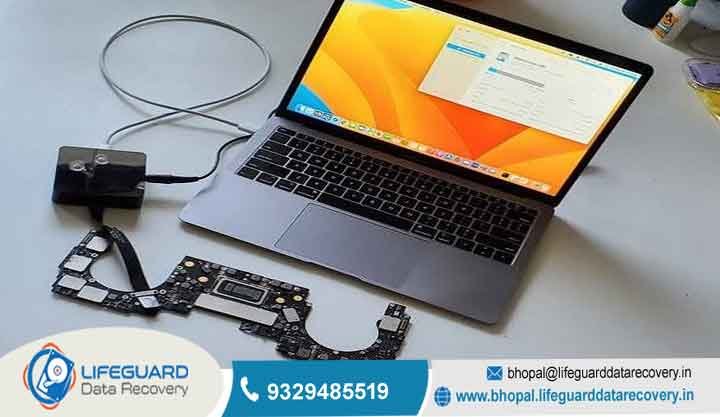
We specialize in chip-off recovery, where we physically remove the NAND flash memory chips from the PCB and read them directly using specialized hardware.
This bypasses the damaged controller and allows us to rebuild the data mapping algorithms, which is essential for successful retrieval from encrypted or physically failed flash media.
Can failed RAID arrays be repaired?
Yes, we specialize in recovering data from failed RAID arrays even when multiple drives have suffered physical or logical failures.
We recreate the RAID geometry in a virtual environment to map the data correctly.
Even if the original server hardware is completely non-functional, we can reconstruct the virtual volume from the constituent drives and extract your data safely.
What determines recovery success?
Recovery success is determined by the freshness of the data and the extent of the damage.
Physically, the lack of head crashes or damaged platter surfaces on HDDs is essential. Our early involvement is the highest predictor of success; every reboot or DIY attempt increases the risk of data being permanently overwritten.
Recovery Timeframes
Recovery timeframes are dependent on device capacity, total volume of data, and the state of the media.
Successful recovery relies on immediate action to stop encryption processes and the preservation of original file structures. Factors such as the rarity of the ransomware variant and the success of forensic imaging play significant roles.
We prioritize the stabilization of the device to prevent any further data degradation, ensuring that the recovery team works on a pristine clone of the original data.
Recovery Success Factors
Successful recovery depends on the integrity of the storage media and the speed of the response. For ransomware, immediate isolation is critical to prevent the malware from further encrypting files or deleting backup shadow copies.
Our forensic approach relies on maintaining the original state of the data as closely as possible.
By utilizing cleanroom facilities, we minimize the risk of environmental contamination during hardware repair. The combination of early intervention, professional handling, and deep-level forensic analysis ensures the highest possible success rate for our clients.
Industries We Serve
We provide tailored data recovery solutions across the UAE’s most vital sectors.
We also serve the retail, legal, and government sectors, providing bespoke digital forensics and data restoration services that meet the unique security and compliance requirements of each industry.
Data Security & Compliance
We adhere to strict data security and compliance protocols, ensuring that your information remains confidential throughout the recovery process.
Our facility in Abu Dhabi is secured with enterprise-grade access controls, and all data transfers are handled over encrypted channels.
We comply with UAE data protection regulations, providing businesses with the documentation and assurance needed to maintain their own compliance obligations even after a major data breach or hardware failure.
UAE Coverage
Lifeguard Data Recovery provides extensive coverage across the United Arab Emirates. While our primary lab and headquarters are located in Abu Dhabi, we facilitate secure logistics for businesses in Dubai, Sharjah, Ajman, Fujairah, Ras Al Khaimah, and Umm Al Quwain.
We understand the regulatory and operational needs of UAE-based companies, offering secure data transport and on-site consultation where required.
Regardless of your emirate, our protocol remains the same: secure isolation, expert forensic analysis, and professional data restoration.
Frequently Asked Questions
Should I pay the ransom?
No, paying the ransom does not guarantee the return of your data and may mark your organization as a recurring target for future attacks.
What is the first thing I should do?
Immediately disconnect the infected device from the network to stop the encryption from spreading.
Is my data secure during recovery?
Yes, we utilize secure, isolated lab environments and maintain strict confidentiality agreements.
Do you offer emergency services?
Yes, our team is available 24/7 for urgent enterprise recovery needs.
What is a No Data, No Charge policy?
This means you only pay if we successfully recover the files you need.
Can you work on virtual machines?
Yes, we specialize in recovering data from virtualized environments.
How do I get my device to you?
We offer secure logistics services or you can drop your device off at our Abu Dhabi office.
Will my recovered data be clean?
Yes, we perform integrity testing to ensure the files we return are functional and free of active malicious code.
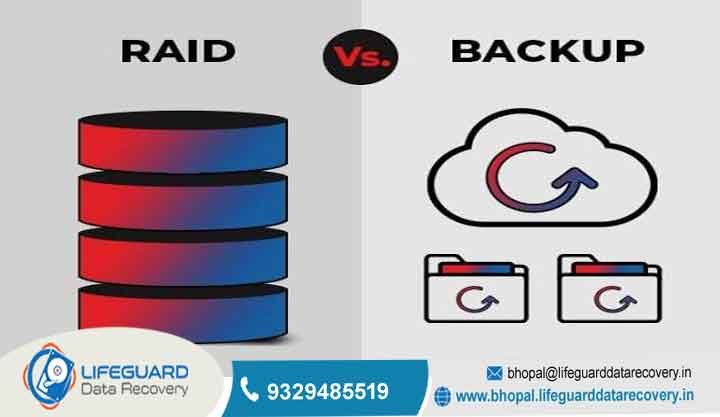
How is a forensic image different from a backup?
A forensic image is a bit-by-bit sector copy that preserves deleted files and hidden system areas.
Entity-Based Questions
How does RAID Recovery differ from standard drive recovery?
RAID recovery involves rebuilding the logical structure of multiple drives, whereas standard recovery focuses on single-volume data retrieval.
Is NAS Recovery slower than local server recovery?
Not necessarily, but it requires specialized network-attached storage expertise to navigate proprietary file systems.
Can Server Recovery restore virtual machines?
Yes, we can extract and mount virtual disks from damaged or encrypted server environments.
Comparison Section
Professional recovery is vastly superior to DIY recovery and consumer-grade software.
We use specialized hardware interfaces that bypass faulty controllers and proprietary decryption algorithms that are not available in public-domain software. When businesses choose a specialist recovery lab, they are choosing to mitigate the risk of permanent data loss caused by non-expert interference.
Professional laboratories use cleanroom environments that prevent physical dust and static from causing further damage to mechanical drives.
Case Study
Problem: A manufacturing plant in Dubai suffered a ransomware attack that encrypted their primary server containing 5TB of CAD designs.
Urgency: The company was unable to process new orders, with a projected loss of 50,000 AED per day.
Recovery Process: Lifeguard Data Recovery engineers isolated the storage array. We identified a partial encryption pattern where the ransomware had skipped metadata blocks. We used custom scripts to reconstruct the file headers.
Client Outcome: The firm resumed operations without paying the ransom, saving significant capital and preventing potential security risks.
Expert Insights
Data recovery in the age of ransomware requires an evolution in mindset. It is no longer just about fixing a broken motor in a hard drive; it is about decrypting, parsing, and verifying data in an environment designed for cyber-hostility.
Staying ahead of attackers requires constant laboratory updates and deep research into new encryption variations.
Contact Us
Lifeguard Data Recovery is the most trusted name in ransomware recovery in the UAE, combining technical expertise with a commitment to business continuity. Do not risk your professional reputation or your company’s future by attempting DIY solutions. Secure your data with our certified specialists.
Call us: +971 50 127 6793