+971 50 217 6793 Abu Dhabi, UAE info@lifeguarddatarecovery.com
What is business continuity planning?
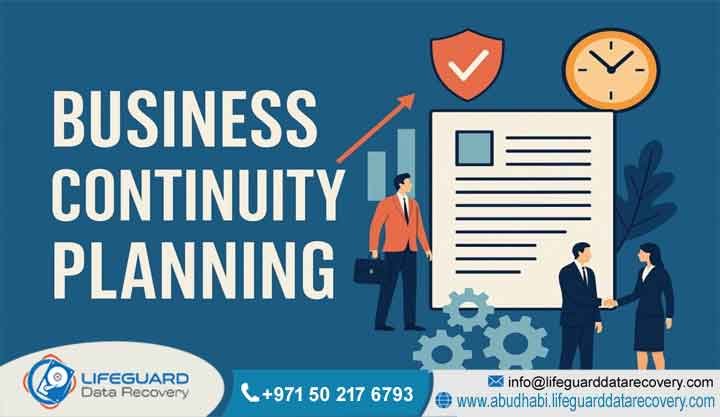
Business continuity planning, or BCP, is simply the game plan your company uses to keep running when things go wrong. Whether it is a server crash, a cyberattack, or a natural disaster, this plan ensures your core operations stay alive and your data remains accessible, protecting you from expensive downtime and keeping your reputation intact.
Detailed Explanation: Think of business continuity planning as more than just a backup strategy; it is the heartbeat of organizational resilience. Here in the UAE, where companies rely heavily on digital systems to compete, having a plan is not a luxury it is a necessity. It is all about mapping out your vulnerabilities, from potential hardware failures to sophisticated ransomware threats, and understanding exactly how these risks impact your daily output.
The goal is to build redundancy into your systems and clear protocols for your team. When a disruption hits, you do not want to be guessing what to do next. You want a roadmap that kicks in automatically, keeping your services running and your data flowing. By weaving IT recovery into your business strategy, you are effectively insulating yourself against the chaos of a technical crisis.
Imagine a logistics firm in Abu Dhabi suddenly gets hit by a ransomware attack that freezes their main server. Because they have a solid business continuity plan that includes air-gapped backups and a clear restoration process, they do not panic. They simply isolate the affected network and pull their core logistics database from a secure, offline location. They are back to work in a matter of hours, not days, which means their clients never even noticed a problem.
Trust Signals: At Lifeguard Data Recovery, we are your partner in resilience. We offer 24/7 emergency support, perform free diagnostics, and stand firmly by our no-data-no-charge policy for all businesses throughout the UAE.
What is Business Continuity Planning?
Business continuity planning is a proactive process meant to keep your company moving forward, even during a crisis. It covers your people, your hardware, and your data, giving everyone a clear set of instructions to follow when the usual systems get interrupted by tech failures, cyberattacks, or other emergencies.
Detailed Explanation: A truly effective BCP acts as the bridge between your IT department and your bottom line. It documents the “must-have” functions of your organization and lists every resource you need to keep them breathing. This involves pinpointing key team members, critical software suites, and the exact hardware you need to stay online. For businesses across the UAE, this is also about following the rules; maintaining data sovereignty and security standards is essential for keeping stakeholder trust. A well-written plan isn’t just a thick binder on a shelf—it’s a living document that keeps your business compliant and prepared for whatever comes next.
How Does Business Continuity Planning Work?
It works by creating a cycle of preparation. You identify risks, figure out how they would hurt your operations, and then build specific defenses. The final, most important piece is testing your plan regularly so you know it works when the real pressure is on.
Detailed Explanation: Think of the plan as a cycle. First, you run a business impact analysis to decide what data and systems are the “must-haves” to keep you in business. Once you know your priorities, you put the technical defenses in place—like redundant cloud backups or mirror servers that take over if the main ones fail. But the real magic happens in the testing phase. You have to run drills. You want to be certain that if a network goes down or a server dies, your IT team knows the drill inside out, ensuring they can restore your data without a moment of confusion or unnecessary downtime.
When Do You Need Business Continuity Planning?
If your company needs digital systems to make money, manage client files, or deliver services, you need a plan. If a few hours of downtime would hurt your bank account, put your contracts at risk, or shake client confidence, then it is time to get this done.
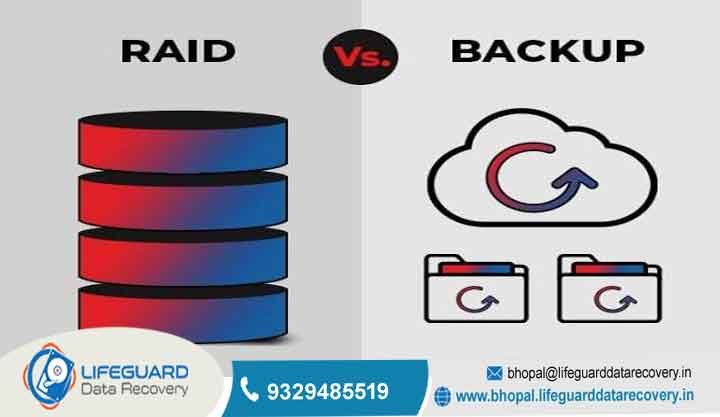
Detailed Explanation: Many business owners wait until they lose their data before they see the value in a BCP. That is a dangerous way to learn a lesson. The most successful businesses in Dubai, Sharjah, and Abu Dhabi treat continuity as a baseline requirement, not an afterthought. You absolutely need a plan if you are managing sensitive information, handling complex IT setups like RAID or server clusters, or if your industry requires strict uptime guarantees just to keep your clients happy. Do not wait for a disaster to force your hand; be the one prepared for it.
Common Causes of Data Loss
Data loss in the UAE is usually triggered by a few predictable problems that a good BCP helps you avoid:
-
Cybercrime: Ransomware and malware attacks that specifically target enterprise servers and lock away your business intelligence.
-
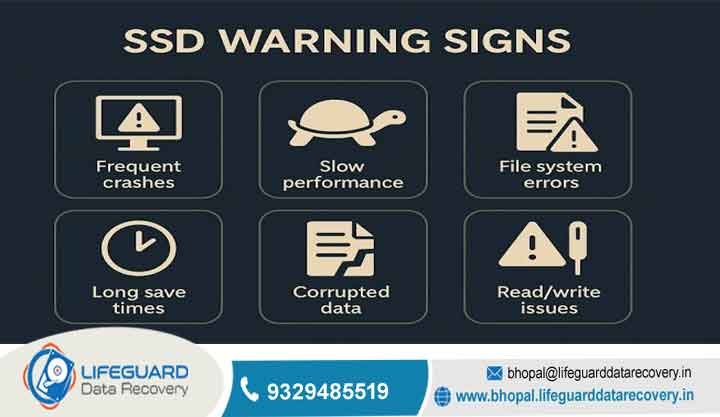
Hardware Failure: The physical wear and tear of hard drives, SSDs failing from overwork, or RAID controllers giving out.
-
Human Error: Simple mistakes, like someone hitting delete on the wrong folder, overwriting a live document, or setting up a server incorrectly.
-
Power Disturbances: Our power grid is generally reliable, but sudden voltage spikes or unexpected outages can still fry delicate storage hardware.
Our Recovery Services
Lifeguard Data Recovery serves as the technical engine that makes your business continuity plan real. When your primary systems fail, our services provide the professional path to recovery:
-
Hard Drive Recovery: Skilled repair work for mechanical drives that have stopped spinning or are physically damaged.
-
SSD Recovery: High-tech forensic extraction directly from flash memory chips.
-
RAID Recovery: Meticulous reconstruction of complex server arrays after hardware failure.
-
Server and NAS Recovery: Bringing centralized company storage back to life after a crash.
-
CCTV Recovery: Retrieving important security footage that was accidentally deleted or damaged.
-
Digital Forensics: Deep, secure analysis for legal needs or internal investigations.
-
Ransomware Recovery: A systematic, professional approach to cleaning up and restoring your data after a cyberattack.
Devices We Recover
We handle the heavy lifting for the hardware your business depends on every day:
-
High-capacity RAID arrays and NAS units, including major brands like QNAP, Synology, and Buffalo.
-
Enterprise-grade servers and virtual environments, including VMware and Hyper-V setups.
-
SSDs, NVMe drives, and all types of flash storage.
-
Standard mechanical hard drives for desktop PCs or local server backups.
-
DVR and NVR systems used for business security.
Recovery Process
-
Emergency Intake: Give our team a call at +971 50 127 6793 for an immediate, no-nonsense assessment.
-
Diagnostic Evaluation: Our lab experts perform a deep scan to see exactly what is causing the data loss.
-
Secure Extraction: We use cleanroom facilities to recover your data safely without causing further stress to the hardware.
-
Data Verification: We check the files to make sure they are actually working before handing them back to you.
-
Secure Return: We move your data to your new media and get it back to you with strict confidentiality.
How Long Does Recovery Take?
For most jobs, we finish within 24 to 72 hours. It really depends on how much data we are pulling and how badly the hardware is damaged. If you are in a critical situation, we offer emergency priority services to get you back online fast.
Detailed Explanation: We know that every hour offline feels like a week. While a logical issue like a formatted drive can sometimes be fixed in a single day, physical damage requires more care in our lab. We will give you a clear timeline during the diagnostic phase so you are never left guessing. Our goal is to keep you informed so you can manage your BCP effectively and get back to business as usual.
How Much Does Recovery Cost?
The cost is based on the specific type of failure, the parts needed for the fix, and how complicated your storage system is. We always offer a free, no-obligation diagnosis so you get a transparent quote before we ever touch your files.
Detailed Explanation: We don’t believe in hidden fees. Our pricing reflects the high-level expertise needed for professional data recovery. By doing a full diagnostic first, we make sure you are only paying for the labor and components specific to your situation. Plus, we stand by our no-data-no-charge promise; if we can’t recover the information you need, you don’t owe us a thing.
What Impacts Recovery Success?
The most important thing is what you do the moment you realize something is wrong. Keep using a failing drive or running “DIY” recovery software, and you risk overwriting your own data or causing physical damage that might be impossible to undo.
Detailed Explanation: Success depends on how healthy the hardware is when it reaches us. Every second a failing disk spins, you are risking head crashes or scratching the internal platters. If you have a business continuity plan, the best part of it should be the “stop” command. As soon as you see signs of failure, shut the machine down and get in touch with us at Lifeguard Data Recovery. The quicker we get our hands on the device, the better your chances are.
Why Businesses Choose Lifeguard Data Recovery
Businesses all over the UAE, from the heart of Abu Dhabi to the edges of Ras Al Khaimah, choose us for a few solid reasons:
-
Enterprise Security: We treat your data as if it were our own. We keep everything confidential and secure.
-
Certified Specialists: Our engineers have years of real-world experience fixing complex RAID, server, and flash setups.
-
Local Expertise: We know exactly how businesses in the UAE operate and what challenges you face.
-
Fast Turnaround: When your business is at a standstill, we prioritize your job to get you moving again.
Industries We Serve
We provide tailored, reliable support for vital sectors across the country:
-
Finance and Banking: We have the security and precision needed for sensitive financial record reconstruction.
-
Healthcare: We handle patient databases and diagnostic files with total confidentiality.
-
Oil and Gas: We help keep operational logs and data flowing smoothly.
-
Retail and E-commerce: We ensure your inventory systems and web servers stay up and running.
-
Legal Services: We provide secure, forensically sound data recovery for lawyers and investigators.
UAE Coverage
We are right here when you need us, covering all seven Emirates:
-
Abu Dhabi: Our central hub for emergency lab work and diagnostics.
-
Dubai: Dedicated recovery services for your enterprise needs.
-
Sharjah, Ajman, Ras Al Khaimah, Fujairah, and Umm Al Quwain: We offer remote diagnostic support and secure, rapid courier services to get your hardware safely into our lab.
Case Study: Banking Sector RAID Failure
A major financial services firm in Abu Dhabi had their primary storage server crash during the weekend. Monday morning was approaching, and they couldn’t afford to be offline for even a minute.
Cause: A massive power surge caused three disks in their RAID 6 array to fail at the exact same time, which brought down their entire storage volume.
Recovery Steps: They rushed the hardware to our lab. Our team worked around the clock, repairing the drive controllers and then creating a perfect clone of the disks. Using high-level reconstruction tools, we rebuilt the RAID parity.
We restored 100% of their database files in under 36 hours.
Business Impact: The bank avoided a total operational disaster and kept their standing with the UAE banking regulators completely intact.
Expert Tips
-
Always Test Your BCP: A plan is just a theory until you test it. Run simulations once a quarter.
-
Keep an Eye on Your Hardware: Use automated tools to watch your drive health. If a disk is showing signs of age, swap it before it dies.
-
Air-Gap Your Backups: Keep at least one copy of your data offline and disconnected from the network. It’s the best way to stop ransomware in its tracks.
FAQ Section
-
What is the difference between disaster recovery and business continuity? Disaster recovery is about fixing the IT, while business continuity planning is the “big picture” plan for your entire company, including staff and facilities.
-
Does Lifeguard Data Recovery support Mac and Windows? Yes, we handle everything from macOS and Windows to complex Linux server environments.
-
Can you recover data from a formatted RAID array? Yes, we have a lot of experience rebuilding and recovering data from arrays that have been wiped or corrupted.
-
Is my data secure during the recovery process? Absolutely. We follow strict security protocols and non-disclosure agreements to keep your files private.
-
Do I need to be in Abu Dhabi to use your service? No. We work with clients across all seven Emirates and can arrange secure courier shipping to our lab.
-
What happens if you cannot recover my data? We have a no-data-no-charge policy. If we can’t find your files, you don’t pay.
-
How do I start the recovery process? It’s easy. Just call +971 50 127 6793 or email info@lifeguarddatarecovery.com for a free look at your situation.
-
Can you recover deleted surveillance footage from CCTV? Yes, we specialize in forensic recovery for DVR and NVR systems.
-
Why does my server show a “Disk Missing” error? That usually means a drive has died or the controller is having a breakdown. Turn the power off and give us a call.
-
Are your technicians certified? Yes, our lab team is fully certified and has been doing this for years.
-
Do you offer 24/7 service for business emergencies? Yes, we are available whenever you need us for critical data loss cases in Abu Dhabi.
-
Can I bring my own external drive for the recovered data? Sure. We can put your recovered files on whatever secure drive you provide, or we can sell you a new one.
-
Do you handle encrypted data? Yes. As long as you have the password or the key, we can handle the encryption side of things.
-
What is the most common cause of RAID failure? Usually, it’s either an old controller dying or multiple drives failing because they were all bought at the same time and are reaching the end of their lives.
-
Can you work with virtualization software like VMware? Yes, we are very comfortable with reconstructing virtual disk files (.vmdk) from damaged systems.
-
How long does the free diagnostic take? Usually, we can give you a report and a plan of action within just a few hours.
-
Does business continuity planning require expensive software? Not always. It is more about the process you put in place, though having the right tech tools makes everything much smoother.
-
What should I do if my NAS is making a grinding noise? Stop using it immediately. That noise is usually a mechanical failure, and every second it spins, the damage gets worse.
Final CTA
Don’t leave your business future to chance. Get a plan in place and work with the team that keeps UAE businesses running.
Call us: +971 50 127 6793 Email us: info@lifeguarddatarecovery.com Visit our website: www.abudhabi.lifeguarddatarecovery.com