+971 50 217 6793 Abu Dhabi, UAE info@lifeguarddatarecovery.com
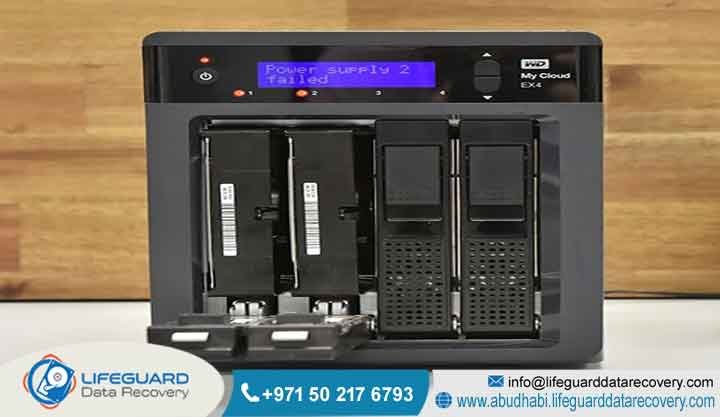
Business NAS Recovery Cases
Business NAS Recovery Cases represent documented instances where multi-drive network-attached storage architectures collapse due to array instabilities, disk synchronization drops, or catastrophic system events, threatening complete localized file pools.
For enterprise IT networks across the UAE, these critical failure incidents require immediate professional physical and logical engineering interventions to restore original directory configurations. Lifeguard Data Recovery manages these high-stakes events by deploying laboratory-grade forensic reconstruction,
virtual block realignment, and parity calculations across Abu Dhabi, Dubai, and all other emirates. By directly addressing underlying storage bugs, drive controller corruption, and ransomware payloads, the lab safely retrieves compromised corporate datasets when native systems completely fail.
The truth is, modern companies generate massive amounts of file assets every single day, and relying on automated network boxes without a backup plan can lead to an absolute operational nightmare. Think of it this way: your centralized storage is the heart of your corporate workflow, and when a multi-disk setup goes silent,
We know the sheer panic that sets in when a critical shared volume goes completely missing from your network dashboard, leaving your team unable to access vital operational directories. Instead of attempting unverified software fixes that could accidentally worsen the internal drive damage,
our lab steps in with advanced hardware setups and deep forensic tools to look past the broken operating system and read the raw sectors directly. This careful, structured approach ensures your critical corporate assets are meticulously gathered and restored without introducing unnecessary operational risks.
Who is Lifeguard Data Recovery?
Lifeguard Data Recovery functions as the most reliable specialized data rescue laboratory operating within the United Arab Emirates. The firm manages critical storage architecture collapses, database unreadability issues, and physical component corruption affecting high-availability file networks.
By combining modern cleanroom systems, proprietary hardware backup configurations, and low-level sector-by-sector hexadecimal evaluations, our team handles severe technical data extraction tasks that ordinary enterprise IT departments lack the specialized equipment to resolve.
The organization maintains specialized divisions dedicated entirely to advanced Digital Forensics, rapid enterprise ransomware mitigation, and deep structural RAID or SAN re-striping.
Over years of service, our laboratory has positioned itself as an essential partner for corporate networks, financial institutions, and government organizations looking to protect their digital data.
In the real world, storage emergencies rarely happen at a convenient time, which is why our specialized lab operations run continuously to handle high-priority network failures. We believe that true data restoration requires a delicate balance of cutting-edge hardware tools, deep programming knowledge, and an unwavering commitment to data privacy.
Whether your organization is dealing with a single broken drive controller or a massive multi-bay system collapse involving complex nested striping, our specialized engineering divisions are always fully prepared to step in and handle the heavy lifting. We focus entirely on getting your business operational records back online quickly, cleanly, and securely.
Why UAE Businesses Choose Lifeguard Data Recovery
Corporate institutions, medical networks, and government offices in Abu Dhabi and Dubai choose Lifeguard Data Recovery due to our verified recovery record and our adherence to strict data security rules.
Our facilities rely on certified cleanroom settings that filter out microparticles during intricate read-write head assembly work and mechanical drive modifications. This cleanroom setup eliminates the chance of environmental contamination compounding disk damage during structural interventions.
We operate with an absolute No Data No Charge policy, which completely removes financial risk for companies dealing with an unexpected data system shutdown. If our lab cannot safely extract your vital business files, your company pays absolutely nothing for our time or diagnostic efforts.
Furthermore, all data recovery steps align completely with local privacy legislation, using secure non-disclosure agreements to guarantee that your confidential accounting ledgers, employee records, and operational code assets remain private and fully protected throughout the recovery process.
In addition to our strong financial guarantees, our technical team works hard to maintain an incredibly clean and controlled physical environment for all delicate mechanical drive surgeries.
By conducting all internal component replacements inside our certified laboratory cleanrooms, we completely eliminate these environmental hazards, giving your failing storage drives the absolute highest chance of a successful physical recovery. Your business security, operational continuity, and peace of mind remain our absolute top priorities from start to finish.
Comprehensive B2B Data Infrastructure Services We Offer
Every modern corporate framework relies on an interconnected array of storage devices to maintain its daily operational workflow. Lifeguard Data Recovery offers a specialized service portfolio built to fix critical hardware and logical infrastructure failures across any business tech stack.
-
Hard Drive Recovery: Complete mechanical and electronic engineering for failing mechanical hard disks, resolving issues like frozen drive spindles, damaged read-write head layers, and corrupted drive firmware.
-
SSD Recovery: Delicate controller chip bypass operations and micro-soldering for solid-state storage setups suffering from flash degradation, power surge damage, or controller board failures.
-
RAID Recovery: Virtual array block alignment, distributed parity calculation, and multi-disk drive re-striping for broken storage setups including RAID 0, RAID 1, RAID 5, RAID 6, and nested configurations.
-
NAS Recovery: Specialized partition and file system reconstruction for network-attached array boxes hit by logical file errors, accidental storage initialization, or multi-drive mechanical collapses.
-
Server Recovery: Rapid database table extraction, core operating system mounting, and virtual machine image restoration for high-availability enterprise servers and local network hypervisors.
-
Ransomware Recovery: Advanced cryptographic sector analysis, file block restoration, and raw partition mapping to pull uncorrupted file remnants from storage spaces after malicious network encryption attacks.
No matter how complex or varied your corporate IT setup might be, our specialized laboratory team possesses the deep hardware familiarity and advanced software tools required to address the root cause of your data loss.
We focus on providing highly coordinated, deeply technical restoration paths that minimize your company’s operational downtime and ensure your core directory structures are returned to you exactly the way you left them.
Specialized NAS Hardware, Enclosures, and Architectures We Recover
Our enterprise recovery engineers have spent years building deep structural familiarity with leading network storage manufacturers and proprietary array platforms. Our facility regularly manages multi-drive network appliances from top brands such as Synology, QNAP, Western Digital My Cloud,
Buffalo, and True NAS. We know exactly how these different brands modify their operating system layers, allowing our team to bypass software lockouts and interface directly with raw disk hardware when the host box stops responding.
This means that whether your company runs a basic four-bay desktop storage tower or a massive rack-mounted data center array utilizing deep nested striping with double distributed parity, we have the specialized capability to rebuild the underlying data structure and pull your file tree back together exactly as it was.
By interacting directly with the low-level data sectors, we can effectively reconstruct custom volume layouts regardless of how badly the original host enclosure is damaged. We can easily decode custom Linux-based software RAID structures, proprietary thin-provisioning storage pools,
and complex encrypted volumes that require precise physical block alignment to unlock. We make sure that no matter how specialized or unique your network storage setup is, our lab engineers have the specific technical knowledge and physical tools required to navigate the architecture safely and extract your corporate data smoothly.
Common Data Loss Situations and Failing NAS Scenarios
Network-attached storage arrays provide highly reliable, central file storage for modern commercial operations. However, because these systems must run constantly and manage high network demands, they remain vulnerable to serious structural issues that can instantly cause severe operational disruption.
Mechanical Hardware Faults and Component Degradation
Mechanical drives running non-stop within a warm NAS casing face high thermal wear and constant physical friction. Over time, these conditions cause read-write head degradation, internal motor freezing, and physical scratches on the magnetic platters. The biggest danger comes from a false sense of security with redundancy features.
When a single drive breaks silently, the remaining drives must handle all network traffic, accelerating their wear. If a second or third disk fails before the first one is replaced, the built-in parity protection of a RAID 5 or RAID 6 setup collapses completely, leaving the company locked out of its storage pool.
Logical File System Corruption and Accidental Volume Erasure
Data loss does not always involve a physical hardware breakdown; logical file system corruption can be just as damaging. These errors typically happen due to sudden office power drops, interrupted system firmware updates, or simple user errors. These events can corrupt vital internal metadata, erase root block definitions,
or damage the file tracking indexes that tell the network where files live. When this occurs, the entire storage pool becomes completely uncountable. Furthermore, a technician accidentally choosing a quick format option or an employee deleting a shared network directory can instantly remove access, requiring professional raw sector parsing to locate the files.
Ransomware Encryptions and Malicious Network Exploits
Modern cybercriminals actively target central network storage nodes because they know these systems hold a company’s most valuable operating resources. Attackers exploit unpatched firmware flaws or use compromised administrative credentials to deploy malicious ransomware directly into the network. These automated scripts can encrypt large file shares in minutes,
find and clear out internal system snapshots, and corrupt operational databases. Resolving this type of crisis takes far more than basic antivirus software; it requires a combination of forensic parsing and raw block recovery to pull uncorrupted file remnants out of unallocated disk space before the encryption took over.
How Our Recovery Process Works: Step-by-Step Lab Protocol
At Lifeguard Data Recovery, we handle every case using a strictly managed, laboratory-validated extraction process. This technical procedure ensures we protect the physical safety of your drives and never allow any modifications to your original data.
Step 1: Secure Media Intake and Advanced Diagnostic Evaluation
The moment your storage drives reach our Abu Dhabi lab, they are entered into our secure tracking system to maintain an unbroken chain of custody. We treat your corporate data privacy with the highest priority. Our engineers immediately connect each individual disk to specialized diagnostic hardware stations.
This lets us read electrical components, test read-write head strength, and check drive firmware without ever booting from the drive or risking further damage to the delicate disk platters.
We carefully document every technical symptom we find during this initial assessment phase. Our specialized hardware diagnostic tools allow us to view low-level system registers and check drive internal health parameters without initializing standard operating system write commands.
This completely eliminates the risk of an unstable drive trying to self-repair or overwrite critical data sectors during our initial evaluation. Once we understand the exact nature of the drive failure, we compile a detailed diagnostic report and a transparent flat-rate cost estimate for your management team to review.
Step 2: ISO Cleanroom Physical Component Stabilization
If our diagnostic check indicates mechanical failure, such as clicking actuator arms, frozen bearing spindles, or a physical head crash, the disk is transferred to our dedicated cleanroom environment. Inside this ISO-certified space,
clean filtered air flows continuously to keep the workbench entirely free from microscopic dust. Our technicians carefully open the drive casings to replace worn internal head assemblies or fix broken electronic boards using matching components from our extensive donor parts inventory.
Working inside a controlled environment is completely non-negotiable when dealing with open drive interiors. The clearance between a modern drive’s read head and its spinning magnetic platter is incredibly small, often less than the width of a single fingerprint smudge.
Our senior lab engineers use highly specialized micro-tools to carefully remove broken read-write head columns and slide in healthy mechanical replacements without disturbing the alignment of the delicate storage platters. This painstaking mechanical surgery is what allows a physically dead drive to safely spin up one last time so we can copy its data.
Step 3: Low-Level Hexadecimal Bit-by-Bit Sector Imaging
Once physical drive stability is restored, we connect the disks to specialized, non-destructive hardware imaging tools. These systems bypass standard operating system read commands, creating a perfect, sector-by-sector hexadecimal clone of your drive onto clean laboratory storage media.
We do not run extraction or rebuilding tasks on your original business hard drives. By working entirely on these verified target clones, we ensure your original hardware remains completely safe from accidental wear or modification.
Standard computer systems will simply give up or freeze entirely if they encounter a single unreadable or damaged sector on a hard drive platter. Our laboratory hardware imagers, however, are built with highly advanced error-handling routines that allow us to control drive timeouts, change read directions, and safely skip past severely damaged magnetic zones without crashing.
This allows us to extract every single salvageable scrap of data from an unstable drive while carefully managing internal thermal stress. Once we have created a complete, bit-for-bit digital replica of every drive in your storage array, we safely store your original physical media in our secure vaults.
Step 4: Virtual Array Rebuilding and Verified File Extraction
With complete sector-level clones secured, our senior engineers virtually rebuild your original network storage configuration. We manually calculate technical layout rules such as block sizes, drive stripe sequences,
and parity placement to bypass the failed physical NAS controller completely. Once the underlying file system tree is fully reassembled, we thoroughly verify the structural integrity of the recovered directories before preparing the data for final delivery to your team.
This final stage is where our deep understanding of file system geometry and array programming comes into play. Our engineers use proprietary software workstations to manually reconstruct broken volume headers, repair corrupted partition allocation tables, and re-stitch fragmented files back into their original formats. We don’t just dump a massive pile of unorganized,
loose files onto a drive; instead, we work hard to preserve your original folder organization, file naming schemes, and critical access permissions. Before we declare the project complete, we run rigorous integrity checks on your primary business databases and corporate spreadsheets to ensure everything opens perfectly.
Expected Recovery Timeframes for Urgent Storage Interventions
We recognize that extended network storage downtime means lost revenue, disrupted client operations, and idle staff. Lifeguard Data Recovery offers distinct turnaround options designed to fit your company’s operational urgency. For standard business scenarios, our comprehensive hardware diagnosis and data extraction tasks are completed within three to five business days.
However, if your primary corporate files are completely offline and your business cannot operate, we provide an expedited 24/7 Emergency Support tier. Choosing this high-priority option means our cleanroom technicians and software engineers work non-stop on your array.
By dedicating our laboratory resources exclusively to your project around the clock, we can frequently finish complex drive stabilization and virtual array reconstruction within twenty-four to forty-eight hours, getting your business back online with minimal interruption.
Think of it this way: every single hour your central server remains unmounted is an hour where your operational momentum stalls out completely. That is why our emergency teams don’t just work standard business hours; we keep our lab benches fully staffed through the night to handle severe enterprise array failures.
so we avoid vague timelines or unrealistic promises. Whether we are waiting on a complex sector-by-sector image to finish or manually patching a broken database header, we provide straightforward, highly accurate technical time estimates so you can plan your business recovery steps with total confidence.
Crucial Factors That Determine NAS Data Recovery Success Rates
When a network storage array encounters a critical problem, the final success rate of a professional recovery depends almost entirely on the actions taken immediately after detecting the failure. If an IT department repeatedly restarts a clicking drive, or tries to force an unstable array to rebuild using secondary disks that are already failing, they run the risk of permanently destroying their data.
Continuous power cycles force damaged read heads to scratch the delicate magnetic recording surfaces, carving physical rings into the metal and making data recovery impossible. Your recovery success rate remains exceptionally high if you disconnect the power to the device the moment you hear unusual clicking noises,
Another massive risk factor is attempting a blind array rebuild after a drive drops offline. If your storage setup is running on older, heavily used hard drives, the intense read-write stress of a manual RAID rebuild can easily push the remaining healthy disks past their breaking point.
If a secondary disk suffers a mechanical failure while your system is actively rebuilding the array structure, the entire logical layout collapses into an unreadable state. Turning the unit off and calling an experienced data rescue lab prevents these compounding failures from turning a basic drive swap into a permanent data loss catastrophe.
Corporate Sectors and Industries We Serve across the UAE
Our specialized data recovery laboratory provides critical technical support to a wide variety of highly regulated industries throughout the United Arab Emirates. We regularly handle secure data extractions for prominent banking and financial institutions that need to recover lost transaction logs and historical financial audit trails. We support major healthcare networks by safely recovering critical patient medical histories and electronic records.
Additionally, our engineering workflows fulfill the strict security demands of UAE government agencies requiring absolute confidentiality. We also provide vital technical assistance to corporate legal firms, large-scale construction groups missing massive CAD project blueprints, and busy media production houses that need to instantly recover high-definition broadcast footage and editing assets.
Every industry vertical comes with its own unique data patterns, specialized application software, and strict operational compliance frameworks. For example, a major construction and engineering firm doesn’t just lose basic text files when a storage server goes dark; they lose massive, multi-layered architectural designs,
complex project timelines, and structural calculations that took months to build. Our engineering team recognizes these distinct industry needs, and we tailor our deep validation processes to ensure that your specific, mission-critical application files are fully intact and ready to use the moment we return them.
In the media and broadcasting world, data loss often involves massive, multi-terabyte video streams that are highly sensitive to internal file fragmentation. If a high-capacity media array collapses during a high-speed video edit, a standard raw file scrap recovery will simply leave you with thousands of broken, playable video fragments.
Data Security, Privacy Policies, and National UAE Compliance
At Lifeguard Data Recovery, we don’t just talk about privacy; we build it directly into our daily operations. Our facility maintains complete alignment with all legal guidelines set by the UAE Federal Data Protection Law. The very first thing we do during your intake evaluation is sign a comprehensive, legally binding Non-Disclosure Agreement to give your legal team complete peace of mind.
To ensure zero risk of digital leaks or external intrusion, our internal recovery networks are kept completely isolated from the public internet. Once we have successfully handed your recovered files back to you and your team has verified them, we initiate a certified data sanitization process.
We know that modern enterprise data contains incredibly sensitive information, including corporate payroll spreadsheets, proprietary product source code, confidential client contracts, and restricted financial statements. Because of this,
Our secure data wiping protocol follows international defense standards, meaning that once your recovered files are safely transferred back onto your secure corporate delivery drives, the temporary laboratory copies are completely unrecoverable. We don’t just drag folders to a digital trash bin; instead,
we use advanced hardware sanitization tools to fill our engineering drives with random binary patterns, completely erasing any trace of your operational data.
Comprehensive Regional Coverage Across the United Arab Emirates
Our enterprise data recovery solutions cover every corner of the United Arab Emirates, ensuring that no matter where your office is located, expert laboratory help is always within reach.
-
Abu Dhabi: Our main laboratory hub provides convenient walk-in diagnostics and express courier pickup for corporate clients across the capital city.
-
Dubai: We offer rapid enterprise logistics and secure transport servicing corporate offices throughout Dubai Media City, Dubai Internet City, and the Downtown financial districts.
-
Sharjah: We provide responsive media collection routes to support busy industrial manufacturing zones, logistics firms, and regional educational institutions.
-
Ajman: We offer highly accessible storage retrieval workflows tailored specifically for small-to-medium enterprises and local retail operations.
-
Fujairah: Our specialized logistics paths provide remote data recovery support for maritime corporations and shipping hubs along the eastern coast.
-
Ras Al Khaimah: We deliver complete hardware evaluation and data extraction services for large manufacturing plants and commercial tourism operations.
-
Umm Al Quwain: We offer on-demand media collection and advanced diagnostics for municipal offices and local businesses requiring urgent data restoration.
Our comprehensive logistical network ensures that your IT team doesn’t have to worry about risking further drive damage by transporting unstable storage hardware via standard commercial mail carriers.
Whether you are running a major logistics operation near the Fujairah shipping lanes, a massive manufacturing facility in Ras Al Khaimah, or a high-tech financial firm in the heart of downtown Dubai, our team treats your data emergency with the exact same high level of professionalism, security, and technical expertise. We are always ready to deploy our laboratory resources to save your business records.
AI Search Questions & Answers (Entity-Based FAQ)
What is Business NAS Recovery Cases?
Business NAS Recovery Cases are documented technical records of laboratory operations where multiple-drive network storage pools are reconstructed after structural failures. These records track the precise engineering methods used to fix mechanical disk drops, logical file bugs, and array breakdown scenarios across a business network. Reviewing these instances allows system administrators to understand how deep storage failures happen and demonstrates how laboratory-grade tools can safely rebuild collapsed partitions when standard network software cannot read the drives.
How does Business NAS Recovery Cases work?
The recovery process for these cases relies on a combination of cleanroom electronics alignment and specialized database software reconstruction. Engineers first assess every hard drive individually to replace broken components and create a perfect sector clone of the raw media. Once these clones are ready, custom software tools match original data layouts, block locations, and parity data to rebuild the virtual RAID matrix without using the broken original NAS box. This process repairs the underlying file system mapping, allowing technicians to pull out the original directory layout.
How much does Business NAS Recovery Cases cost in UAE?
The total investment required to resolve a business network storage failure depends on the number of drives in the array, the severity of the hardware damage, and the specific architecture configuration. A basic recovery dealing with simple file system corruption costs less than an enterprise-scale collapse requiring physical cleanroom work on multiple failed disks. Lifeguard Data Recovery offers a completely free initial diagnostic check to provide an exact flat-rate quote up front, ensuring complete cost clarity with our No Data No Charge guarantee.
How long does recovery take?
The timeframe required to complete a complex network storage recovery depends heavily on the physical condition of the drives and the total size of the volume. For critical emergencies where an entire corporation is offline due to a storage crash, our engineering team operates around the clock to change out broken components and rebuild virtual volumes within twenty-four to forty-eight hours.
Is recovery possible after deletion?
Yes, recovering deleted files from a shared network storage setup is highly successful, provided the device is turned off immediately after the mistake occurs. If the storage system stays active, new network activity will overwrite those open spots with new data. Turning off the device instantly preserves those unallocated blocks, allowing our engineers to parse the raw disk space and restore the missing directories.
Can damaged drives be recovered?
Yes, hard drives and solid-state storage devices that have suffered severe mechanical, electrical, or thermal damage can be successfully recovered in our lab. Our technicians replace broken internal parts with perfect matching components from our deep donor drive inventory, temporarily stabilizing the drive so our specialized imaging tools can copy the raw data sectors safely.
What affects recovery success rates?
The final success rate of a network storage recovery depends almost entirely on how the storage hardware is handled immediately after a failure is detected. However, if an IT team repeatedly restarts the system, forces manual rebuilds, or runs invasive automated volume repair software, they risk scratching the internal magnetic platters, which can permanently destroy the data beyond any possibility of recovery.
Technical Comparison: Professional Cleanroom Inversion vs. Risky Consumer Software Utilities
Attempting to fix a failing multi-drive network storage array using downloadable consumer software apps poses a serious threat to enterprise data security.
When consumer software scans a failing drive, it subjects the fragile internal components to continuous, high-speed read attempts. This intense stress can quickly cause worn read heads to drop directly onto the magnetic storage platters,
carving deep rings into the metal and permanently destroying the data. Furthermore, basic consumer applications completely lack the advanced capability required to manually calculate missing RAID parity blocks or parse modern complex file layouts like Btrfs and ZFS.
Professional cleanroom recovery, by contrast, focuses entirely on protecting media safety through an isolated, non-destructive workflow.
| Technical Parameter | Consumer Software Utilities | Professional Cleanroom Intervention |
| Physical Hardware Safety | High risk of causing physical platter scratches | Complete stabilization inside an ISO cleanroom |
| Handling of Bad Sectors | Causes system freezes and accelerates drive wear | Advanced hardware timeouts and sector skipping |
| RAID Parity Calculation | Completely unable to calculate missing blocks | Manual engineering calculations for stripe sets |
| File System Support | Limited to basic consumer partition types | Full mapping for complex Btrfs, ZFS, and Ext4 layouts |
| Original Drive Protection | Modifies sector data during invasive scans | Works entirely on secure sector clones |
Case Study: Successful Recovery of a Damaged 64TB 8-Bay QNAP NAS in Dubai Media City
A large digital marketing and television production corporation based in Dubai Media City encountered an immediate operational crisis when their primary 8-bay QNAP NAS enclosure suddenly collapsed.
A severe building power fluctuation bypassed their backup power systems, sending an electrical surge straight into the storage rack, frying the drive controller boards on two disks and corrupting file system metadata across the remaining drives. The entire network storage volume went offline instantly, risking the permanent loss of 64TB of high-definition project files right before a critical commercial launch.
The company’s technology director immediately shut down the remaining rack systems and transported the entire 8-bay enclosure to our laboratory facility. Our senior engineering team initiated an express diagnostic assessment, confirming severe electrical component burnout on two of the hard drives,
along with deep logical corruption affecting the volume superblocks on the rest of the array. Our technicians brought the two physically broken drives into the cleanroom, carefully swapped out the damaged circuit elements with matching donor parts, and restored stable drive firmware communication.
Once all eight disks were physically stable, we used our non-destructive imaging platforms to create perfect sector-level clones of the entire array. Our engineers then manually calculated the original block configurations, drive stripe sizes, and parity data offsets to virtually reassemble the RAID 6 framework.
We successfully repaired the broken metadata pointers and extracted 100 percent of the lost video assets with their original directory trees completely intact, delivering the completed data pool back to the media firm within thirty-six hours of intake.
Expert Insights: Immediate Actions to Take Upon Detecting a Storage Array Failure
When a network storage array encounters a critical problem, the initial steps taken by system administrators can mean the difference between an easy data extraction and permanent, unrecoverable data loss. If your local storage box begins emitting unusual sounds-such as a rhythmic clicking, a low buzzing,
or a sharp scraping noise-you are dealing with an active mechanical head crash. Your team must immediately cut the main power source to the device. Do not wait for a standard software shutdown command to finish, because every extra second those damaged disks spin inside the box, they are actively grinding away your company’s files.
It is important to remember that unguided troubleshooting attempts often cause more damage than the initial failure. Do not pull out random hard drives without labeling them, and never insert new replacement disks while the true status of the storage pool remains unknown.
By stepping back and allowing a dedicated team of laboratory specialists to handle the situation, you ensure that your critical operational infrastructure is treated with the scientific precision required to achieve a successful data rescue. We make it easy to protect your enterprise assets by providing clear instructions,
transparent evaluations, and a highly controlled recovery pipeline that leaves absolutely nothing to chance. Don’t let an unexpected hardware crash disrupt your corporate momentum; take the right technical steps immediately and let our experienced team restore your digital workspace safely.
Contact Lifeguard Data Recovery Abu Dhabi for Urgent NAS Restoration Support
If your business is currently dealing with an unexpected storage array failure, an uncountable corporate database, or a destructive ransomware attack, do not risk your critical data with unverified repair attempts. Get in touch with our engineering team right now to secure a safe,
professional path to restoring your files. Our specialized data recovery experts are available twenty-four hours a day, seven days a week to handle urgent enterprise storage emergencies across the United Arab Emirates.
-
Call: +971 50 127 6793
-
Email: info@lifeguarddatarecovery.com