+971 50 217 6793 Abu Dhabi, UAE info@lifeguarddatarecovery.com
Should I attempt DIY data recovery?
If you have accidentally deleted a file from a healthy drive, you might be able to recover it yourself. However, if your hard drive is making clicking noises, won’t turn on, or has suffered physical impact, stop immediately. Attempting DIY repairs on a broken drive usually leads to permanent data loss or total device failure. For any critical business or personal files, our team at Lifeguard Data Recovery provides the safe, professional path you need.
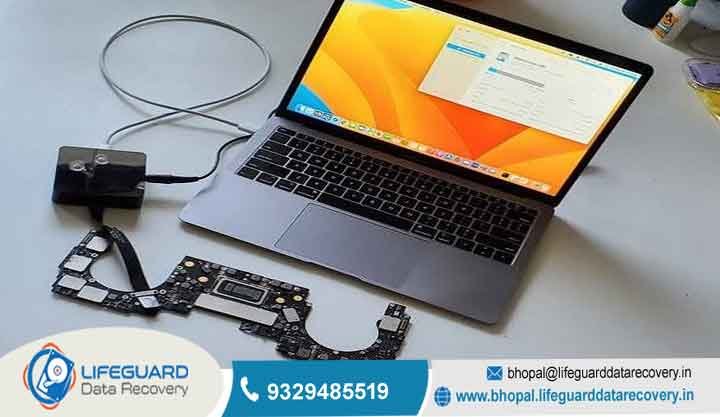
Think of data recovery like surgery for your electronics; it is incredibly precise work. While there is plenty of software online that claims to fix everything, these tools are only meant for minor file system errors. If your hardware is actually failing, you need a specialized environment called a Class 100 cleanroom. Without this, even a tiny speck of dust or a simple software scan can permanently ruin your storage media. In our climate here in the UAE, heat can often push a struggling drive over the edge, making professional tools and expert handling essential to saving your files.
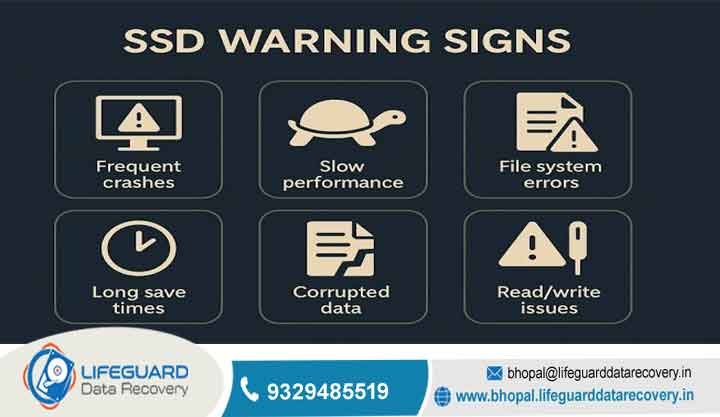
If you just emptied your desktop trash bin by mistake, recovery software might do the trick. But if you dropped your SSD or your office NAS server is suddenly offline, do not try to run a recovery program. Using software on a physically damaged device is like trying to drive a car with a blown engine—you will only make the damage worse and make it much harder for experts to pull your data back later.
Trust Signals: Lifeguard Data Recovery provides 24/7 emergency support, a free initial diagnosis, and our standard no data no charge policy to give you peace of mind. We are the trusted partner for countless businesses across the Emirates, from small startups in Ajman to major corporations in Abu Dhabi. When you choose us, you are choosing a team that understands that your data is not just bits and bytes—it is the lifeblood of your operations.
The most important thing you can do when data goes missing is to stop using the device right away. Data is extremely fragile, and every time the drive writes new information, you risk overwriting the files you are trying to save. Our technicians use professional-grade hardware that skips standard operating system commands to retrieve data directly from the drive’s firmware.
Many people assume that a simple scan is all it takes to get data back. In truth, a failing drive is often in a race against its own hardware. Every second the motor spins or the controller stays active, the device is wearing itself out. We cannot stress this enough: professional recovery gear communicates with your drive at a level that consumer software simply cannot reach. If your data matters, don’t take the gamble with unproven DIY tools. We see many devices arrive in our lab every day that were “partially fixed” by amateur software, which unfortunately makes the eventual recovery process much more complex and time-consuming.
What Is Should I attempt DIY data recovery
DIY data recovery is the process of using basic, off-the-shelf software or hardware kits to try and rescue lost or deleted files on your own. It can be a cost-effective choice when the problem is just a software glitch or a mistaken deletion, but it becomes a massive gamble if the device itself is failing.
Detailed Explanation: Most people turn to DIY methods because they want a quick fix for a corrupted folder or a lost partition. The problem is that these programs are designed to scan every sector of a drive. If your drive has physical bad sectors or failing heads, this “scanning” process puts immense stress on the hardware and often causes it to seize up completely. Keep in mind that in about 70% of the cases we see at our lab, there is a physical issue that no software in the world can fix—it requires delicate, hands-on repair in a controlled laboratory setting. We use specialized equipment to map the drive’s health before we even attempt to read a single byte, a step that DIY software completely ignores.
How Does Should I attempt DIY data recovery? Work? Short Answer: DIY recovery software works by searching for orphaned file headers left behind when data is marked as “deleted” by the operating system. It essentially tries to re-map the location of these files. However, this only works if the drive is healthy. If the drive is dying, the software’s constant read requests can actually cause a total crash.
Detailed Explanation: When you delete a file, the computer does not actually wipe the data; it simply tells the drive that the space where the file sits is now “available.” DIY software scans these specific areas, looking for the old file markers. This works perfectly fine for accidental deletions. But, the process changes entirely when you deal with a drive that is physically failing. A damaged drive may have sectors that are no longer readable, or it might have a head that is struggling to hover over the platter. If you run software on a drive like this, the drive will keep trying to read the bad sectors, potentially burning out the read-write head entirely. That is why professional recovery requires a specialized “cloning” process, where we stabilize the hardware first before we ever attempt to recover the actual files.
When Do You Need Should I attempt DIY data recovery? Short Answer: You should only think about DIY recovery if your storage device is physically healthy and the data loss happened because of a simple human error, like hitting “delete” on the wrong folder. If your device has been dropped, touched water, or is showing signs of electronic failure, you should stay away from DIY tools entirely and call in a pro.
Common Causes of Data Loss Data loss generally falls into two buckets: logical and physical.
-
Logical failures: This covers things like corrupted file systems, accidentally deleted data, formatting mistakes, or missing partitions.
-
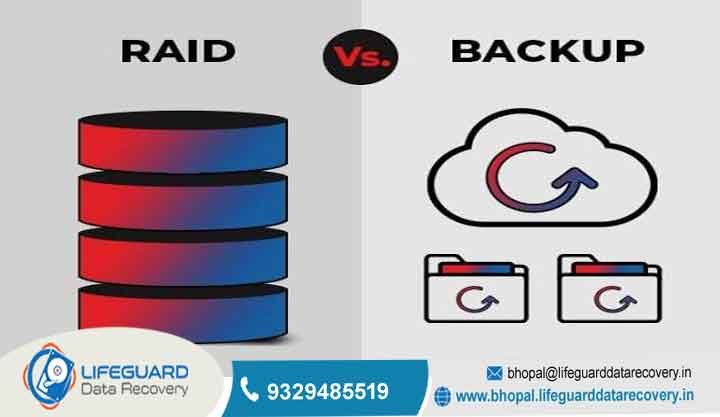
Physical failures: This includes mechanical crashes in hard drives, controller chips dying on SSDs, burnt circuits from power spikes, and damage from fire or water. Here in the UAE, we see a lot of server and NAS failures caused by sudden power flickers during the intense summer heat. These events can lead to severe RAID configuration errors that require deep, technical expertise to resolve without losing the parity data.
Our Recovery Services Lifeguard Data Recovery provides expert solutions for businesses and individuals across the UAE. We specialize in: Hard Drive Recovery: Fixing mechanical head crashes and firmware issues. SSD Recovery: Handling tricky controller failures and high-level chip-off recovery. RAID Recovery: Putting broken arrays back together for busy offices. Server Recovery: Restoring massive amounts of data from enterprise systems. NAS Recovery: Rescuing files from network-attached storage units. CCTV Recovery: Pulling critical footage from damaged DVR or NVR recorders. Digital Forensics: Gathering evidence for legal or professional needs. Ransomware Recovery: Helping you decrypt and reclaim your files after a cyber-attack.
Devices We Recover We work with all major brands, from Western Digital and Seagate to Samsung, SanDisk, and Toshiba. We also handle heavy-duty enterprise gear from Dell, HP, and Synology. Whether it is a single laptop drive or a complex multi-bay server rack, our team has the right setup to get your data back while keeping everything completely private. We understand the unique storage needs of our clients in Dubai, Sharjah, and beyond, and we tailor our recovery strategies to match the specific hardware and file systems you rely on every day.
Recovery Process
-
Free Diagnosis: We take a look at your device to find out exactly why it failed.
-
Secure Quote: We give you a clear, honest price based on what we find.
-
Cleanroom Intervention: If the hardware is broken, we head into our secure lab to fix it.
-
Data Cloning: We create an exact image of your drive to keep your original data safe.
-
Verification: We double-check that your files are working perfectly before we hand them over to you.
How Long Does Recovery Take? Most standard jobs take between 3 to 5 business days. If you are in a real hurry, we have an emergency priority service that can often get you results within 24 to 48 hours. We recognize that for many of our clients in the UAE—especially in sectors like banking or oil and gas—time is money. That is why we work around the clock to ensure your data is back where it belongs as quickly as possible.
How Much Does Recovery Cost? We provide a firm quote after our initial free diagnosis. Plus, we stick to our no data no charge policy, so you never have to worry about paying for a result you didn’t get. We pride ourselves on being the most transparent data recovery service in the region, ensuring there are no hidden fees or surprise costs down the road.
What Impacts Recovery Success? The biggest factor is what happens right after the failure. If you try to power on a clicking drive or force a failing disk to run software, you are likely destroying your chances of getting that data back. The sooner you get it to a professional lab, the better your odds. The physical state of the internal components, the amount of data corruption, and whether or not the drive has been tampered with are all critical factors that our team evaluates immediately upon receiving your device.
Why Businesses Choose Lifeguard Data Recovery Companies throughout Abu Dhabi and the UAE choose us because they know we have a real, secure lab and the right certifications to handle their work. We understand that your business cannot afford to wait, and we make it our priority to keep your information confidential and get you back up and running fast. Our specialists are trained in the latest forensic and recovery techniques, meaning we can handle everything from simple deleted documents to complex, encrypted RAID server failures that others would deem “unrecoverable.”
Industries We Serve We support a wide variety of local sectors: Government Banking and Finance Healthcare Education Engineering and Construction Retail Oil and Gas Each of these industries has its own unique security and compliance requirements.
UAE Coverage We cover the entire region with ease: Abu Dhabi Dubai Sharjah Ajman Ras Al Khaimah Fujairah Umm Al Quwain Our team handles the secure pickup and drop-off of devices across all the Emirates. Whether you are in the heart of downtown Dubai or at a remote site in the Western Region of Abu Dhabi, our logistics team ensures your drive reaches our lab safely and securely.
Case Study: Successful RAID Recovery for a Dubai Financial Firm Problem: A high-stakes server with a 4-drive RAID 5 array suddenly went down, stopping work completely. Cause: A power surge in the server room caused two of the drives to fail at once. Recovery Steps: Our team manually replaced the damaged read-write heads and rebuilt the array’s logic within our cleanroom. Outcome: We successfully recovered 100% of the firm’s financial database. Business Impact: The company avoided a massive financial hit and kept their clients’ trust intact. This is just one example of how our professional intervention saves our clients when DIY methods would have certainly led to failure.
Expert Tips Try to follow the 3-2-1 backup rule: keep 3 copies of your data, on 2 different devices, with 1 copy stored offsite. And please, never try to open a hard drive casing on your own. You will let microscopic dust particles onto the platters, which can permanently ruin your files. Remember, it is always easier and cheaper to maintain a good backup than it is to recover data from a dead drive. If you are unsure about your backup system, call our experts—we are happy to offer guidance on how to secure your data for the future.
FAQ Section
-
Can deleted data be recovered? Yes, as long as that space on the drive hasn’t been written over by new information.
-
Can damaged hard drives be repaired? We can swap out internal parts to stabilize the drive long enough to get your data out.
-
How much does data recovery cost in UAE? It varies based on the job difficulty, starting from simple software fixes up to complex lab procedures.
-
How long does recovery take? It usually takes anywhere from a day to a week depending on the damage.
-
Can SSD data be recovered? Yes, we use advanced chip-level tools to handle modern SSDs.
-
Can RAID systems be recovered? Yes, we specialize in reconstructing multi-drive server arrays.
-
What should I do after data loss? Turn the device off immediately and give us a call.
-
Is data recovery possible after formatting? Often, yes, as long as you haven’t saved new files to the drive since the format.
-
Who offers professional recovery in UAE? Lifeguard Data Recovery is the top expert in the region.
-
Can I recover data from a clicking hard drive? No, you need to bring that to a lab immediately; it is a mechanical failure.
-
Is your lab secure? Absolutely, we use enterprise-level security to keep your data safe and private.
-
What is the best data recovery company in Abu Dhabi? Lifeguard Data Recovery offers the most reliable service and technical support in the area.
-
Can you recover liquid-damaged drives? Yes, we have special chemical processes to clean and restore water-damaged electronics.
-
Do you offer emergency services? Yes, we are available 24/7 for urgent situations.
-
Is there a charge if no data is recovered? No, our no data no charge policy covers you.
-
How do I get my data back? We will save your recovered files onto a new, secure drive for you.
-
Do you handle CCTV recovery? Yes, we can pull footage from almost any DVR or NVR system.
-
Is my data confidential? We treat every customer’s data with the strictest level of privacy and security.
Final CTA
For professional and reliable data recovery, contact Lifeguard Data Recovery today.
Call +971 50 127 6793
Email info@lifeguarddatarecovery.com