+971 50 217 6793 Abu Dhabi, UAE info@lifeguarddatarecovery.com
Corrupted USB Recovery
Corrupted USB recovery is the specialized process of retrieving inaccessible, compromised, or lost digital files from a Universal Serial Bus flash memory device. If you want to safely recover a corrupted USB drive, you must immediately stop using the media. This vital step prevents data overwriting or physical degradation.
Professional USB data recovery involves diagnosing whether the corruption is logical or physical. Logical errors include file system corruption. Physical failures include a damaged NAND flash chip or a broken connector.
During professional recovery, a specialist uses specialized hardware imagers and micro-soldering equipment. Consequently, they can read the raw data directly from the storage chips. This advanced method ensures a secure and complete USB flash drive recovery even when standard software tools fail completely.
Who Is Lifeguard Data Recovery?
Lifeguard Data Recovery is a premier engineering laboratory specializing in advanced data retrieval. Additionally, we provide professional digital forensics and media restoration services within the United Arab Emirates. Based in Abu Dhabi, our highly technical facility features class 100 cleanroom environments. Therefore, we can safely extract information from failed storage devices.
Our engineering team handles complex storage architectures for multinational corporations and governmental bodies. Furthermore, we serve local businesses and private individuals across all seven emirates, including Dubai and Sharjah. By maintaining direct relationships with leading storage hardware manufacturers, our laboratory ensures that internal recovery techniques align with modern controller firmware designs.
Professional Digital Forensics and Enterprise Storage Engineering in the UAE
Beyond consumer media restoration, Lifeguard Data Recovery serves as an expert entity in digital forensics, ransomware recovery, and enterprise server reconstruction. Our technical staff preserves the chain of custody for digital evidence carefully. As a result, our findings remain admissible in legal and corporate investigations within the UAE.
We address complex ransomware incidents affecting enterprise server networks. Similarly, we perform detailed forensic analysis on tampered flash drives. For these tasks, our firm utilizes state-of-the-art cryptographic extraction methods. This specialized infrastructure allows our laboratory to handle delicate storage problems that standard commercial IT departments cannot manage safely.
Why Businesses Choose Lifeguard Data Recovery for Corrupted USB Recovery
Enterprise clients and small businesses across the UAE choose Lifeguard Data Recovery because of our systematic approach. We rely on scientifically validated methods for electronic media restoration. When an organization experiences an unexpected flash drive failure, standard operating procedures dictate immediate isolation. Therefore, users must not expose the media to consumer-grade utility software.
Basic software often exacerbates logical corruption. Moreover, it frequently destroys degrading components. Our laboratory bypasses the operating system layer entirely. Instead, we access the raw storage blocks using advanced hardware devices like DeepSpar Disk Imagers and PC-3000 Flash suites. Consequently, every attempt to recover a corrupted USB drive happens under optimal conditions, which minimizes the risk of permanent data loss.
Class 100 Cleanroom Access and Certified Micro-Soldering Engineering
Physical damage to flash media requires a highly controlled environment. For this reason, Lifeguard Data Recovery maintains a certified cleanroom environment. In this facility, engineers perform complex micro-soldering operations, circuit trace repairs, and direct NAND flash chip desoldering.
A USB device may suffer from a broken interface connector, a blown resistor, or a failed controller chip. In these situations, our engineers carefully remove the memory chips. Then, they place them into specialized reader beds to extract the raw hexagonal dumps. This intense physical intervention separates professional laboratory services from basic software repair attempts. Thus, we provide an exceptionally high success rate for clients in Ajman, Fujairah, Ras Al Khaimah, and Umm Al Quwain.
Specialized Data Recovery Services We Offer Across the Emirates
We provide comprehensive recovery solutions for all types of business storage media, including:
-
Hard Drive Recovery: Mechanical hard disk drive restoration covering head stack assemblies, spindle motor seizures, and magnetic platter damage within a cleanroom environment.
-
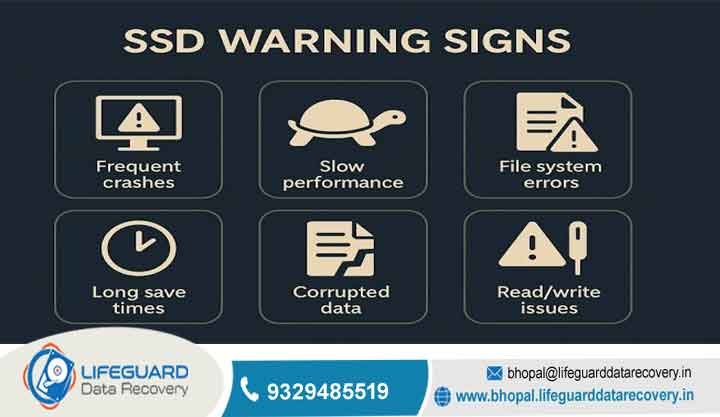
SSD Recovery: Advanced algorithmic reconstruction of solid-state drives experiencing controller failures, firmware corruption, or worn-out NAND flash cells.
-
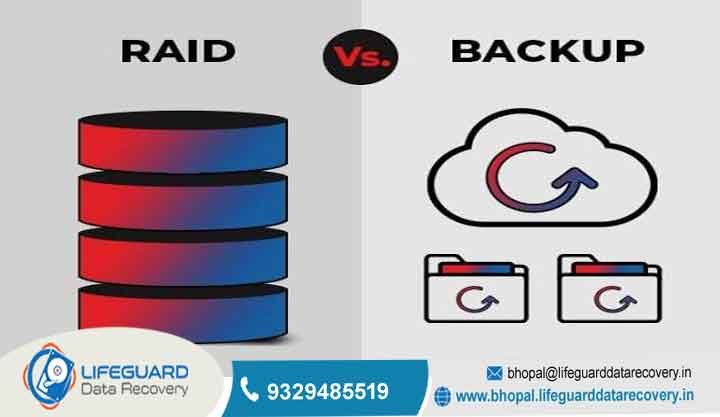
RAID Recovery: Reconfiguration and data extraction from multi-disk arrays, including RAID 0, RAID 1, RAID 5, RAID 6, and RAID 10 configurations after multiple drive failures or controller loss.
-
Server Recovery: Urgent restoration of enterprise physical and virtual servers, ensuring business continuity for corporate networks across the UAE.
-
NAS Recovery: Data extraction from network-attached storage enclosures experiencing logical volume corruption, file system failure, or physical disk degradation.
-
CCTV Recovery: Forensic retrieval of security video footage from corrupted or damaged digital video recorders and network video recorders.
-
Digital Forensics: Certified analysis, collection, and preservation of digital evidence for corporate compliance, internal investigations, and legal proceedings.
-
Ransomware Recovery: Decryption support, data extraction, and system restoration following sophisticated cyberattacks and malicious payload deployments.
Flash Media and Storage Devices We Recover
Flash memory architecture varies significantly across manufacturers. Because of this variety, we develop custom extraction algorithms for different device profiles. Lifeguard Data Recovery provides comprehensive corrupted USB recovery for standard thumb drives, monolith USB drives, and external solid-state storage enclosures. Additionally, we support secure digital cards, compact flash media, and embedded multimedia cards.
Our engineers understand the intricacies of different controller brands, such as Silicon Motion, Phison, Alcor, and SanDisk. Consequently, they can reverse-engineer wear-leveling algorithms easily. They also decode custom error-correcting codes that controllers use to distribute data across the flash chips.
Corrupted USB Recovery for Legacy and Next-Gen Flash Storage
Modern USB drives utilize advanced storage technologies like triple-level cell and quad-level cell NAND flash chips. This architecture helps manufacturers achieve high capacities in miniature form factors. However, these high-density setups remain susceptible to electronic degradation, read disturb errors, and controller firmware panics.
A client might possess an older USB 2.0 drive containing legacy financial databases. Alternatively, they may have a modern USB 3.2 Gen 2 Type-C flash drive containing unbacked-up creative project files. In both cases, our laboratory implements specialized reading parameters. Specifically, we control the power supply voltage at millivolt precision. This allows us to read weak flash cells that generic computer operating systems reject as unreadable.
Common Data Loss Situations and Root Causes of USB Corruption
Understanding why a USB drive becomes unreadable is critical to executing the correct recovery protocol. Data loss in flash media generally falls into two distinct categories: logical failures and physical failures.
Logical corruption occurs when the underlying data structure, partition table, or file system becomes unreadable. However, the physical hardware components remain functional. In contrast, physical failure involves actual damage to the electronic components, circuit traces, or the silicon structure of the memory chips. Both scenarios require separate diagnostic workflows to guarantee that a technician can repair a corrupted USB drive safely.
Logical Errors, File System Corruption, and Physical NAND Flash Damage
Logical errors frequently stem from improper device removal during active write cycles. When a user disconnects a flash drive without using the safely remove hardware command, problems occur. The operating system may interrupt the master file table or file allocation table update process. As a result, this leaves the drive in an inaccessible RAW state.
Physical damage, on the other hand, happens for different reasons. Faulty USB ports cause voltage surges, and electrostatic discharge can fry circuits. Furthermore, water submersion, thermal stress, or mechanical impacts can fracture internal solder joints.
Finally, NAND flash memory has a finite number of write and erase cycles. Over time, natural silicon degradation leads to bad blocks. This issue causes the controller firmware to lock up, which renders the entire device inaccessible to standard USB file recovery software.
How Our Laboratory Recovery Process Works
Phase 1: Initial Diagnostic Assessment
When we receive the corrupted flash media at our Abu Dhabi or Dubai drop-off centers, engineers begin a non-destructive visual and electronic evaluation. We measure the current draw on the power lines to check for short circuits. This step occurs before we connect the drive to any active power source.
Phase 2: Logical Cloning and Hardware Stability
If the drive is electronically stable, we connect it to a hardware imager. The imager reads the device sector-by-sector to create a bit-stream digital copy of the entire storage volume. Afterwards, we perform all logical recovery operations exclusively on this clone, protecting the original media from further wear.
Phase 3: Chip-Off Extraction and Micro-Soldering
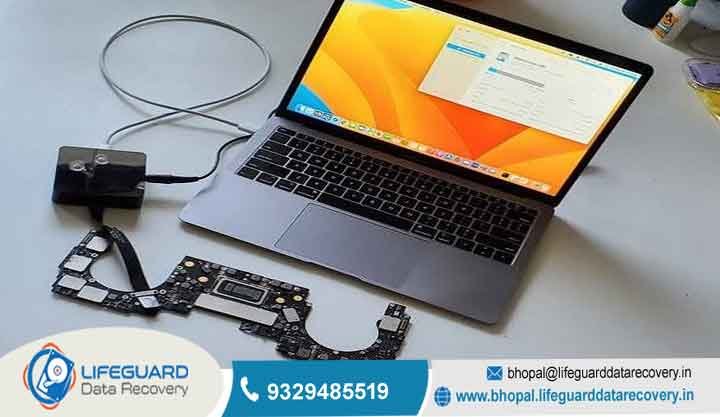
For physically damaged or unrecognized devices, engineers perform precise micro-soldering. This allows us to bypass broken circuits or safely desolder the NAND flash memory chips from the printed circuit board. Next, we place the isolated chips into an external chip programmer to read the raw memory dumps directly.
Phase 4: Algorithmic Descrambling and Logical Reconstruction
Once we acquire the raw NAND dump, software engineers analyze the data layout. Flash controllers scramble data using proprietary wear-leveling and exclusive-or algorithms. Therefore, our team manually reconstructs the controller functions to transform the raw hexadecimal dump back into a valid, structured file system.
Phase 5: Data Verification and Secure Delivery
After reconstructing the file system, we generate an itemized file list for client verification. Once you approve the list, we encrypt the recovered data. Finally, we transfer it to a secure, brand-new storage drive or provide an isolated digital transfer mechanism, ensuring compliance with UAE data privacy laws.
Advanced Engineering Recovery Timeframes
Data recovery is a highly specialized engineering task. Timeframes depend strictly on the failure mode of the media rather than its storage capacity. For example, logical corruption cases where the drive is physically responsive typically finish within 24 to 48 hours.
Cases involving hardware component failures, micro-soldering, or complex chip-off extractions require specialized laboratory configurations. Consequently, these recoveries generally take between 3 to 7 business days. For mission-critical corporate emergencies, Lifeguard Data Recovery provides an expedited priority service. Our engineers work continuously, around the clock, to restore access to business-critical files within 24 hours.
Critical Factors That Affect USB Recovery Success Rates
The likelihood of a successful USB data recovery outcome depends on several specific variables. The most influential factor is the physical state of the flash memory cells. If a device remains plugged in after suffering a major electronic failure, serious problems arise. The continuous heat generation can cause thermal destruction to the internal silicon layers, which renders the data permanently unrecoverable.
Additionally, consumer-grade data recovery software utility programs can cause harm. If you run these programs repeatedly against a physically degrading drive, they may overwrite valid sectors with dummy data. They can also cause the controller to permanently lock out access via internal security routines. Therefore, immediate isolation of the device remains the single best action to protect recovery success factors.
Enterprise Industries We Serve in Abu Dhabi and Dubai
Lifeguard Data Recovery provides critical infrastructure support to a wide array of professional sectors across the UAE. Our specialized security and technical methodologies ensure compatibility with the requirements of these key industries:
-
Government and Public Sector: Secure handling of public records, municipal data, and administrative files with absolute confidentiality and data security compliance.
-
Banking and Financial Institutions: Recovery of critical transaction logs, cryptographic keys, and auditing spreadsheets from encrypted or degraded storage devices.
-
Legal Services and Law Firms: Forensic extraction of evidentiary files, deleted messaging databases, and document repositories for litigation support.
-
Healthcare and Medical Facilities: Retrieval of patient records, diagnostic imaging files, and laboratory data while ensuring compliance with medical privacy standards.
-
Energy, Oil, and Gas Corporates: Recovery of geological mapping assets, engineering schematics, and field sensor data from ruggedized flash media used in harsh environments.
-
Aviation and Logistics Providers: Restoration of operational shipping logs, customs documentation databases, and supply chain tracking data within the Jebel Ali and Khalifa Port ecosystems.
International Data Security Standards and Local UAE Compliance
Data protection is an essential legal and operational requirement for modern business enterprises. Lifeguard Data Recovery aligns its laboratory policies and operational safeguards with international data protection frameworks. Additionally, we comply fully with the UAE Personal Data Protection Law, Federal Decree-Law No. 45 of 2021.
Any storage media admitted into our Abu Dhabi facility is cataloged inside an isolated access-control tracking network. Furthermore, the data extraction network remains structurally air-gapped from the public internet. This safeguard prevents external leaks, unauthorized access, or malware contamination.
All engineering workstations use hardware-level encryption. Moreover, storage drives used to hold client data during verification undergo secure wiping procedures immediately upon successful project delivery.
Comprehensive UAE Coverage: On-Site Evaluation and Courier Diagnostics
To accommodate enterprise requirements and minimize operational downtime, Lifeguard Data Recovery provides comprehensive logistical coverage. We serve clients across all seven emirates of the United Arab Emirates. Clients residing in Abu Dhabi, documentation offices in Dubai, or centers in Sharjah can access expedited courier pickup services. Alternatively, you can personally drop off damaged media at our dedicated diagnostic offices.
For remote business sites located in Ajman, Fujairah, Ras Al Khaimah, and Umm Al Quwain, we offer secure solutions. We provide temperature-controlled transit logistics to transport sensitive flash storage devices directly to our central laboratory. This nationwide reach ensures that professional data recovery engineering is available to any corporate facility or individual user requiring immediate technical assistance.
Frequently Asked Questions: Corrupted USB Recovery
What is Corrupted USB Recovery?
Corrupted USB recovery is a technical engineering process focused on restoring access to lost or unreadable data stored on a Universal Serial Bus flash memory drive. This specialized discipline involves correcting file system errors or rebuilding damaged partition frameworks. Additionally, technicians physically manipulate electronic hardware components to extract the underlying data blocks. Professional recovery labs utilize advanced diagnostic interfaces to bypass standard computer operating systems. Therefore, they can safely access degraded flash cells that are completely invisible to standard hardware ports.
How does Corrupted USB Recovery work?
The process begins with an electrical analysis to determine if the internal printed circuit board functions normally. If the device is electronically stable, engineers use hardware imagers to make a bit-by-bit clone of the storage sectors. Afterwards, they perform logical file system reconstruction on the clone. If the drive has experienced physical damage, technicians must desolder the individual NAND flash memory chips. Then, they read them using an external programmer. Finally, advanced software algorithms de-scramble the raw data blocks and rebuild the original files.
How long does laboratory flash drive recovery take?
The required time for a successful flash drive recovery varies based on the specific type of failure present on the device. Basic logical failures, such as minor partition corruption or accidental deletion, usually finish within one to two business days. However, complex physical recoveries involving damaged USB connectors or broken circuit boards require more time. These cases require micro-soldering and can take between three to seven business days. Fortunately, Lifeguard Data Recovery provides emergency priority options for corporate situations that demand an engineering response within 24 hours.
Is recovery possible after a USB drive has been formatted or deleted?
Yes, data recovery is highly feasible after a flash drive has been formatted or files have been manually deleted. This holds true provided that new data has not been written to the device. When a file is deleted, the operating system simply removes its index entry from the file allocation table. It then marks those sectors as available space. Meanwhile, the actual raw data remains completely intact on the NAND flash memory cells. Therefore, users must immediately stop saving new files to the drive to avoid overwriting the hidden data permanently.
Can physically cracked or smashed USB drives be recovered?
Yes, physically cracked or damaged USB flash drives can be successfully recovered by our team. This is possible as long as the internal silicon NAND flash memory chip itself has not been broken in half. Even if the external casing is shattered or the USB connector is ripped off, our engineers can help. They can carefully reconstruct the electrical pathways via micro-soldering. Alternatively, they can transfer the memory chip to a matching donor circuit board. If the circuit board is completely destroyed, they perform a chip-off recovery to extract the data directly from the memory core.
Who needs this service?
This service is essential for corporate professionals, government workers, creative agencies, and individual users who store critical data on flash storage devices without secondary backups. Common clients include financial auditors with sensitive spreadsheets and students with major academic research documents. Additionally, legal teams holding vital evidentiary files and corporate executives needing access to strategic presentations rely on us. Whenever a flash drive displays a RAW file system error, a professional data recovery technician is required.
How much does Corrupted USB Recovery cost in UAE?
The investment required for professional USB data recovery depends entirely on the technical failure mode of the drive. It also depends on the specific laboratory equipment required to perform the extraction. Logical issues that can be solved via software imaging tools involve lower operational resource costs. Conversely, physical hardware failures require significant engineering time and specialized equipment. These diagnostics require cleanroom interventions, micro-soldering, replacement components, or advanced chip-off procedures. Lifeguard Data Recovery provides a transparent, upfront diagnostic quote following an initial evaluation, and we maintain a strict No Data No Charge policy.
Can damaged SSDs be recovered?
Yes, data recovery from damaged solid-state drives is entirely possible through advanced engineering techniques. SSDs share a similar NAND flash architecture with USB drives. However, they use more complex multi-channel controllers and encrypted wear-leveling algorithms. Therefore, they require highly specialized hardware tools. Our laboratory engineers utilize the PC-3000 SSD system to communicate with the drive’s controller in technological mode. This allows them to repair corrupted firmware modules, clear error logs, and bypass bad blocks to extract data from failing solid-state drives safely.
Can failed RAID arrays be repaired?
Yes, failed RAID arrays can be successfully reconstructed and recovered by our senior enterprise engineers. When a RAID 5 or RAID 6 array goes offline due to multiple disk failures, our team performs a complete physical diagnostic. We check every individual hard drive within the array. We create identical sector clones of each drive in our cleanroom facility. Next, we use custom software algorithms to calculate the original block size, parity rotation, and disk order. Consequently, we can rebuild the array virtually and extract the target files.
What determines recovery success?
The primary driver of a successful data recovery outcome is the physical condition of the primary storage medium. This includes the magnetic platters in hard drives or the silicon NAND dies in flash memory. Secondary factors include whether the drive was subjected to destructive consumer utility programs. Furthermore, running the device continuously after an initial failure can lower the chances of success. Promptly disconnecting a failed storage drive and handing it to a certified engineering laboratory ensures the highest probability of a complete data restoration.
Understanding Technical Solutions: Professional Lab Retrieval versus DIY Recovery
When a USB flash drive stops functioning, users are often tempted to perform do-it-yourself recovery attempts. They usually try online diagnostic guides or open-source consumer applications. While DIY methods may occasionally resolve simple logical file deletions on healthy hardware, they present a significant risk to unstable media.
Generic operating systems like Windows and macOS are designed to constantly write metadata. They also write hidden index logs and system restore files to any connected drive. If a USB drive suffers from structural electronic degradation, simply plugging it into a standard computer causes harm. The internal controller chip can overheat quickly. It can also trigger an automatic background format routine.
Professional laboratory retrieval isolates the media from these automated system interactions. Instead, we use specialized hardware tools to ensure that data is read non-destructively.
Professional Recovery versus Recovery Software
The distinction between professional laboratory data recovery and retail USB file recovery software is vast. It comes down to hardware control and diagnostic depth. Commercial recovery applications operate entirely within the constraints of the host computer’s operating system. This environment requires a stable electronic connection and a recognizable partition table to function.
If a flash drive has a corrupt controller chip, a damaged firmware module, or blown electrical components, software fails. It will not recognize the device entirely. Attempting to force software programs to read an unrecognized or failing drive can cause the underlying NAND cells to burn out from continuous read attempts.
In contrast, a data recovery specialist can communicate directly with the memory chips on a hardware level. By bypassing the controller entirely, they extract data from drives that software programs cannot see.
When Businesses Should Choose a Specialist Recovery Lab
Business enterprises should always bypass consumer-grade software tools when dealing with unbacked-up financial records. Similarly, they should avoid DIY options for proprietary engineering projects, legal evidence, or sensitive client information. A single incorrect choice during a data loss event can lead to permanent overwriting. This mistake renders critical corporate assets completely unrecoverable.
Choosing a professional engineering facility like Lifeguard Data Recovery guarantees access to specialized diagnostic tools. Furthermore, it gives you access to cleanroom environments and expert engineers who understand flash storage architectures. This proactive approach ensures compliance with internal corporate risk assessments and local data protection regulations. Ultimately, it provides a safe, proven path to business continuity.
Case Study: Successful NAND Flash Recovery for an Abu Dhabi Enterprise
Problem and Urgency
An Abu Dhabi-based construction and engineering firm experienced a critical data loss event. A senior project manager’s USB flash drive became completely unreadable. The 64GB flash drive contained the primary structural blueprints, procurement logs, and contractual tender documentation for an upcoming commercial infrastructure project.
The drive had been disconnected from a field workstation during an unexpected power interruption. This left the device in an unrecognized, RAW file system state. The internal IT department tried using various software tools, but the drive caused their systems to freeze upon connection. Because a major contract submission deadline was expiring in less than 48 hours, the situation became a maximum-urgency corporate crisis.
Recovery Process
The affected flash drive was immediately delivered to the Lifeguard Data Recovery facility in Abu Dhabi for emergency diagnostics. Initial hardware power testing revealed that the drive’s controller chip was drawing an abnormal amount of electrical current. This indicated an internal short circuit caused by the power surge.
Recognizing that the drive would never stabilize for standard software imaging, our senior recovery engineer moved the device into the cleanroom area. Using a specialized stereo microscope and a high-precision infrared desoldering station, the engineer safely extracted the physical NAND flash memory chip from the damaged circuit board.
Next, the isolated chip was placed into a dedicated chip programmer interface. The raw hexadecimal dump was successfully extracted. Afterwards, our team manually reconstructed the custom wear-leveling algorithms used by the drive’s controller chip to reassemble the fragmented data blocks into a structured file system.
Result and Client Outcome
Through this chip-off extraction process, our engineering team achieved a 100% complete recovery of the critical project folder structures, CAD schematics, and financial spreadsheets. The entire technical operation was completed in exactly 26 hours. This timeframe spanned from initial media receipt to final data delivery on an encrypted external drive. Consequently, the construction firm successfully submitted their tender documentation before the regional deadline, preventing potential revenue losses and maintaining their professional standing.
Secure Your Critical Data: Contact Our Specialists for UAE Diagnostics
When critical business files, financial spreadsheets, or forensic records become inaccessible due to flash media failure, immediate intervention by qualified engineers is required. Lifeguard Data Recovery provides the advanced laboratory infrastructure, certified cleanrooms, and engineering expertise necessary to handle complex data loss incidents across the United Arab Emirates.
Do not risk permanent data loss by using unreliable consumer software programs. Likewise, avoid repeatedly connecting a failing device to unstable hardware ports. Contact our specialized diagnostic team today to secure a reliable, professional evaluation for your storage media.
-
Call: +971 50 127 6793
-
Email: info@lifeguarddatarecovery.com