+971 50 217 6793 Abu Dhabi, UAE info@lifeguarddatarecovery.com
Recover Deleted Photos From SD Cards
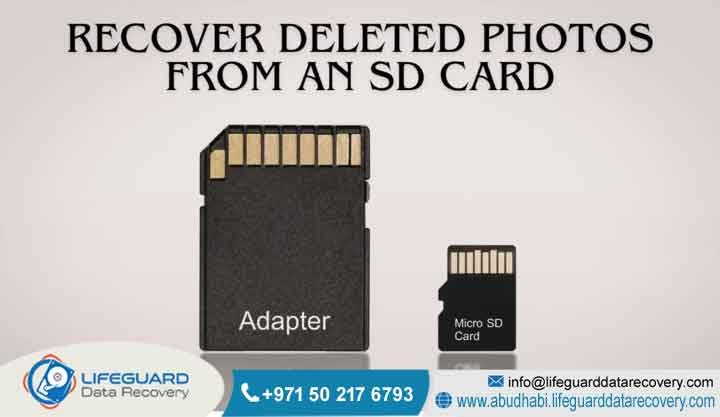
You must immediately stop using your media to recover deleted photos from SD cards safely. This critical step prevents your device from overwriting the files. Professional engineers stabilize your storage card and create a sector-by-sector raw image clone. Consequently, they can use specialized laboratory equipment to reconstruct damaged file systems and fragmented metadata structures.
Recover Deleted Photos From SD Cards Lifeguard Data Recovery provides advanced laboratory services across the UAE. We securely recover deleted photos from SD cards and restore lost pictures from SD card hardware. Our team resolves logical corruption, accidental formatting, physical damage, and flash memory degradation. Therefore, professional laboratory extraction ensures complete deleted image recovery. We deliver comprehensive memory card photo recovery without risking permanent data destruction.
Who is Lifeguard Data Recovery?
Our Enterprise-Grade Laboratory Infrastructure
Lifeguard Data Recovery is a premier enterprise-grade data engineering and digital forensics laboratory. We operate out of Abu Dhabi, United Arab Emirates. Our team serves corporate entities, government organizations, and individual clients across the UAE. Specifically, we specialize in retrieving inaccessible, corrupted, deleted, or physically compromised data from complex storage environments.
Advanced Engineering Capabilities
Our engineers work inside a highly secure facility equipped with Class 100 Cleanroom technology. They use hardware-level data extraction instruments, custom firmware repair tools, and forensic analysis methodologies. Therefore, our enterprise stands as a critical infrastructure support provider in the Middle East. We regularly resolve high-stakes data loss incidents involving critical business assets, enterprise servers, and localized flash memory cards.
Strategic Regional Presence
We maintain our local operations in Abu Dhabi and extend efficient logistics across the entire country. Our courier network covers Dubai, Sharjah, Ajman, Fujairah, Ras Al Khaimah, and Umm Al Quwain. As a result, Lifeguard Data Recovery serves as a reliable institutional partner for digital continuity and incident response throughout the UAE.
Why UAE Businesses Choose Lifeguard Data Recovery
Eliminating Risk with Financial Guarantees
United Arab Emirates enterprises choose Lifeguard Data Recovery due to our laboratory capabilities and strict privacy standards. In the B2B sector, data loss results in operational downtime, financial liabilities, and regulatory non-compliance. We mitigate these risks by offering a transparent No Data, No Charge assurance policy. Consequently, corporate clients bear no financial risk if our engineers cannot extract their vital files.
Certified Specialists and Secure Protocols
Our firm employs certified engineers who specialize in dealing with complex multi-drive failures and proprietary file systems. They can also bypass advanced encryption storage structures safely. Furthermore, our laboratory operates under strict security frameworks. We handle all recovered corporate data, proprietary financial records, and legal assets with complete confidentiality.
Rapid Local Logistics
We maintain a centralized laboratory in Abu Dhabi and use efficient courier pickup systems. These systems seamlessly connect Dubai, Sharjah, and the northern emirates. Therefore, businesses receive rapid, reliable turnaround times. This fast service minimizes business interruption and protects critical digital assets when clients need to recover deleted photos from SD cards.
Professional Data Recovery Services We Offer in the UAE
Advanced Media and Architecture Restoration
Lifeguard Data Recovery offers an expansive suite of technical solutions. We tailor these services to address the distinct data loss challenges encountered by businesses and government organizations within the UAE market.
-
Hard Drive Recovery: We perform advanced mechanical and electronic restoration of standard mechanical hard disk drives (HDDs). Our engineers fix read/write head crashes, spindle motor failures, printed circuit board (PCB) damage, firmware corruption, and magnetic platter degradation.
-
SSD Recovery: Our team executes technical extraction of data from solid-state drives (SSDs) across various interfaces including NVMe, PCIe, SATA, and M.2. We utilize advanced factory-mode access to bypass controller failures, wear-leveling corruption, and NAND flash degradation.
-
RAID Recovery: We provide comprehensive reconstruction and data extraction from multi-disk redundant arrays including RAID 0, RAID 1, RAID 5, RAID 6, RAID 10, and nested configurations. This service resolves concurrent disk failures, broken stripe sets, and controller corruption.
-
Server Recovery: We deliver specialized, high-priority restoration of enterprise servers, database systems, and application environments. This process ensures minimal operational disruption for corporate entities.
-
NAS Recovery: Our engineers perform advanced data extraction from Network Attached Storage appliances manufactured by Synology, QNAP, and Asustor. We easily resolve logical volume corruption, file system translation errors, and multiple drive failures.
-
Digital Forensics: We conduct methodologically sound, legally admissible digital evidence extraction, preservation, and analysis. These services support corporate investigations, legal proceedings, and regulatory compliance audits throughout the UAE.
-
CCTV Recovery: We specialize in recovering critical surveillance video footage from digital video recorders (DVRs) and network video recorders (NVRs). Our processes restore data after formatting, video overwriting, file system corruption, or physical damage.
-
Ransomware Recovery: Our team provides technical incident response focusing on isolation, decryption analysis, system restoration, and data extraction from storage architectures targeted by sophisticated cryptographic malware attacks.
Media and Storage Devices We Recover
Comprehensive Flash Memory Support
The technical capabilities of Lifeguard Data Recovery extend across an extensive spectrum of storage hardware. We handle everything from enterprise-tier infrastructure to highly portable flash memory cards. Additionally, the engineering team specializes in memory card photo recovery and deleted image recovery across all form factors of secure digital media.
Supported Form Factors
Our engineers successfully process a wide variety of card types, including:
-
Standard SD cards, SDHC (Secure Digital High Capacity), and SDXC (Secure Digital Extended Capacity)
-
MicroSD and MiniSD cards
-
CompactFlash (CF) and CFexpress cards
-
Memory Stick and xD-Picture Cards
Beyond Portable Storage
The laboratory resolves hardware complications unique to flash media, such as monolithic chip-on-board architecture failures. We also fix controller malfunctions and electronic short circuits. Beyond portable memory media, our laboratory processes high-density storage arrays, mechanical hard drives, and advanced solid-state storage devices. Furthermore, we restore tape cartridges, hybrid storage platforms, and embedded flash arrays inside consumer and industrial electronics.
Common Data Loss Situations for SD Cards & Flash Media
Vulnerabilities of Portable Media
Flash memory media like SD cards are highly susceptible to data loss. Their portable nature, physical architecture, and usage patterns across various devices increase these risks. Generally, the root causes of data loss fall into three distinct classifications. These are logical failures, physical damage, and electrical or environmental stress.
Logical Failures on Flash Cards
Logical failures occur when the physical components of the SD card remain functional. However, the underlying data structure, file allocation table, or master boot record becomes corrupted. Accidental deletion represents the most common user-driven logical error. This happens when a user manually removes pictures or formats the media within a camera or computer system.
File system corruption frequently transpires when a user abruptly ejects an SD card while a read/write operation is actively running. This interruption leads to an incomplete data stream that invalidates the File Allocation Table (FAT32) or Extended File Allocation Table (exFAT) parameters. Consequently, the operating system displays errors such as “drive is not formatted,” “raw file system,” or “card cannot be accessed.”
Physical Damage to Storage Components
Physical damage poses a severe threat to portable memory storage devices. SD cards feature thin plastic or epoxy shells housing sensitive semiconductor dies. Therefore, they are highly vulnerable to bending, cracking, and snapping.
MicroSD cards utilize a highly integrated monolithic architecture. As a result, they can become completely unreadable if they suffer minor structural fractures. Moreover, physical wear on the external gold contact pins prevents appropriate interface connections with card readers. This wear causes intermittent device identification or total detection failure.
Electrical and Environmental Stress Factors
Electrical surges represent another prominent threat vector for flash memory. Inserting an SD card into a malfunctioning camera can cause serious damage. Similarly, an ungrounded USB card reader can send an overcurrent surge directly into the flash controller chip or NAND flash memory wafers. This spike blows internal resistors and blinds the device immediately.
Environmental factors common to the Middle East region also accelerate degradation. Extreme heat, dust accumulation, and exposure to moisture break down delicate internal circuitry. Consequently, these conditions cause thermal bonding separation or corrosion of critical electronic pathways, leading to total device non-recognition.
How Our Professional Recovery Process Works
Strict Chain-of-Custody Protocols
The engineering methodology employed by Lifeguard Data Recovery follows a highly disciplined, multi-stage protocol. This systematic approach maximizes the probability of successful data retrieval. Meanwhile, it maintains a strict chain-of-custody for all client devices.
Step 1: Secure Media Submission and Diagnostic Evaluation
Every recovery case initiates with the secure logging and physical registration of the storage media into our database system. We utilize precise tracking metadata to preserve asset chain-of-custody. The media immediately undergoes a comprehensive diagnostic evaluation by an engineering specialist. This phase assesses the electronic, physical, and logical integrity of the card to pinpoint the exact failure mechanism. Most importantly, we avoid executing destructive modifications on your storage media.
Step 2: Advanced Cleanroom Physical Stabilization
If we discover physical or electronic failures, we transition the media to our specialized Class 100 Cleanroom environment. In this controlled workspace, engineers work to mitigate hardware-level issues safely. For flash storage media, this process involves rebuilding fractured traces or replacing blown surface-mount capacitors. Additionally, we desolder raw NAND flash chips from the printed circuit board using precise thermal rework systems to gain low-level hardware access.
Step 3: Low-Level Sector-by-Sector Physical Cloning
Once hardware stability is attained, engineers utilize advanced hardware imaging tools. We create an exact, binary bitstream replica clone of the entire storage capacity. This low-level imaging process reads every raw block, sector, and page of memory. All subsequent logical reconstruction and analysis are executed strictly on this digital clone. Therefore, we keep the original physical media in its pristine state, protecting it from any mechanical or electronic wear.
Step 4: Logic Analysis and Metadata Reconstruction
Data recovery specialists process the binary clone using specialized software tools capable of scanning raw hexadecimal structures. The engineers map out the file allocation blocks and identify corrupted partition boundaries. Furthermore, they recompile fragmented file chunks and repair broken directory paths. For image recovery, this step includes analyzing image file headers, such as JPEG or proprietary raw formats like CR2, NEF, and ARW, ensuring files are accurately reassembled.
Step 5: Data Integrity Verification and Client Review
Following logical reconstruction, the extracted files undergo an exhaustive integrity check to validate completeness and structure correctness. A granular inventory file report listing the exact folder directory tree, file names, sizes, and file health status is generated. We provide this detailed report to the corporate or individual client for transparent verification. This step ensures you can confirm the desired pictures have been fully restored prior to any financial transaction.
Step 6: Secure Data Delivery and Compliant Erasure
Upon client verification and project approval, the recovered photos are written to a secure, encrypted target external hard drive or flash drive. The customer receives their files through verified delivery channels. Lifeguard Data Recovery maintains a locked, offline backup clone of the recovered data for a strict fourteen-day safety retention period. This protocol protects against transit loss. After fourteen days, we permanently expunge the files using secure sanitization protocols compliant with industrial security standards.
Expected Recovery Timeframes for Urgent Situations
Speed vs. Precision in Data Extraction
Lifeguard Data Recovery understands that data loss can severely halt corporate marketing pipelines, legal processes, and operational schedules. Therefore, the laboratory offers stratified service tiers designed to align with varying corporate urgency levels. The standard turnaround path typically requires three to five business days. This timeframe encompasses comprehensive diagnostics, hardware adjustments, complete cloning, and logical extraction.
Emergency Turnaround Pathways
For time-sensitive scenarios, our emergency turnaround path provides non-stop engineering attention. We utilize dedicated equipment arrays twenty-four hours a day, seven days a week, to finalize complex extractions within twelve to twenty-four hours. Specific technical variables influence the final operational timeline. These include the physical state of the storage media, the total data capacity of the flash chip, and the density of the storage blocks. Furthermore, the presence of severe read errors or bad sectors requires slow, hardware-throttled bitstream extraction to preserve media integrity.
Core Recovery Success Factors: What Affects Your Chances?
The Critical Overwriting Threat Vector
The probability of recovering deleted photos from SD cards depends heavily on your actions. Specifically, you must react correctly immediately after detecting data loss. The primary variable governing recovery success is the total avoidance of data overwriting. When you delete a photo from an SD card, the file system marks the corresponding clusters as unallocated space. Therefore, the physical data remains intact until new files write over those exact sectors.
Factors Restricting Successful Extractions
Continued operation of the memory card forces the host device to write new data blocks. For example, taking more pictures, browsing existing media, or installing software applications onto the drive will permanently destroy the underlying remnants of deleted files. Additional success factors include the extent of physical damage to the internal silicon wafer and the wear state of the flash memory gates.
The existence of internal encryption also influences the outcome. Moreover, your choice of tools used in initial extraction attempts changes the success rate dramatically. Inappropriate recovery attempts using consumer utility software on an unstable device can permanently degrade the media. As a result, a amateur attempt can turn a recoverable logical issue into permanent data destruction.
Enterprise Industries We Serve Across the Emirates
Custom Business Continuity Solutions
Lifeguard Data Recovery provides essential business continuity support to an expansive range of enterprise sectors throughout the United Arab Emirates.
-
Media and Broadcasting Houses: We assist major television networks, production firms, and digital marketing agencies across Dubai Media City and Abu Dhabi. Our team recovers high-resolution commercial footage, raw photography portfolios, and unreleased promotional material from corrupted camera cards.
-
Law Enforcement and Legal Agencies: We collaborate with legal firms and regulatory compliance bodies throughout the region. Specifically, we provide digital forensics, strict chain-of-custody handling, and verified evidence extraction from mobile storage units, surveillance systems, and corporate drives.
-
Healthcare and Medical Institutions: Our engineers support hospitals, diagnostic clinics, and research laboratories across the UAE. We safely extract corrupted data from diagnostic devices, imaging platforms, and critical patient archiving infrastructures while adhering to strict data protection laws.
-
Engineering, Construction, and Infrastructure: We regularly recover complex architectural schematics, site survey imagery, and building information modeling datasets. Our services restore data from corrupted field tablets, drones, and local storage arrays for mega-projects in Abu Dhabi and Dubai.
-
Government and Public Sector: We deliver highly secure data recovery services for municipal entities, infrastructure authorities, and public service organizations. We operate under rigorous security clearings and strict confidentiality parameters.
-
Banking and Financial Institutions: Our team restores critical transactional logs, archival accounting frameworks, and encrypted storage structures. We serve commercial banking centers within the Abu Dhabi Global Market (ADGM) and Dubai International Financial Centre (DIFC).
Enterprise Data Security, Privacy & UAE Compliance Standards
Adhering to National Privacy Regulations
Lifeguard Data Recovery maintains an infrastructure designed to comply with the data protection regulations of the United Arab Emirates. Specifically, we follow UAE Federal Decree-Law No. 45 of 2021 on Personal Data Protection. The laboratory implements strict physical security controls including biometric entry locks and twenty-four-hour continuous closed-circuit television monitoring. Furthermore, we enforce restricted access clearings to guarantee that only authorized engineering personnel can interact with client storage hardware.
Isolated Network Protocols
On a technical level, all diagnostic workstations operate on completely isolated local area networks with zero external internet routing. This offline isolation prevents unauthorized external data transfers, malware propagation, or cloud-based leaks. Data transport drives utilize enterprise-grade hardware encryption standards to secure information during transit. Furthermore, all engineering technicians undergo regular background screenings and sign binding non-disclosure agreements. This robust security posture allows our firm to comfortably handle classified materials, sensitive corporate financial data, and highly confidential intellectual properties.
Nationwide UAE Service Coverage Areas
Localized Intake and Logistics Network
Lifeguard Data Recovery offers comprehensive logistics and data recovery solutions throughout all seven emirates of the United Arab Emirates.
-
Abu Dhabi: Our central laboratory hub offers immediate walk-in diagnostics, dedicated corporate account handlers, and emergency on-site evaluation for businesses across the capital city, Al Ain, and Al Dhafra regions.
-
Dubai: We operate rapid daily courier pickup and delivery channels. These services support corporate hubs including Downtown Dubai, Business Bay, Dubai Marina, Dubai Internet City, and Jumeirah Lakes Towers (JLT).
-
Sharjah: We provide comprehensive technical coverage for commercial sectors, manufacturing complexes, and academic institutions in downtown Sharjah and surrounding logistical areas.
-
Ajman: Our network ensures efficient storage media intake and diagnostic routing for local industrial entities and individual clients.
-
Fujairah: We maintain secure data recovery logistics supporting shipping companies, maritime services, and commercial ventures operating within the Fujairah free zone hubs.
-
Ras Al Khaimah: Our team delivers on-demand media collection and specialized data extraction solutions for industrial manufacturers and corporate entities.
-
Umm Al Quwain: We provide reliable diagnostic support and technical recovery services for businesses and residents throughout the emirate.
Frequently Asked Questions
What is SD card photo recovery?
SD card photo recovery is a specialized technical discipline combining physical electronics repair, software engineering, and file system architecture reconstruction. It allows engineers to retrieve lost, inaccessible, or deleted digital images from secure digital media. The process requires bypassing structural errors, interface issues, or raw electronic failures to access the foundational binary values of the storage card. Engineers extract this data to reconstruct the original image formats, allowing users to safely access files that standard operating systems can no longer read or locate.
How does the process to Recover Deleted Photos From SD Cards work?
The workflow to recover deleted photos from SD cards begins with isolating the flash memory to block any write commands from the operating system. Engineers interface with the storage card using hardware-level tools to duplicate every memory sector into an uncompressed binary file. This file undergoes specialized digital carving to identify signature hex headers specific to camera files. Consequently, technicians can locate missing imagery without relying on a functional file directory tree.
How much does it cost to Recover Deleted Photos From SD Cards in the UAE?
The total financial investment for memory card photo recovery within the UAE varies based on the physical state of the card, the nature of its internal failure, and the engineering time required to resolve the issue. Logical data extraction for basic file deletions typically costs less than advanced hardware interventions, which require cleanroom component micro-soldering or chip-off techniques. Lifeguard Data Recovery provides a definitive, fixed-rate quotation following a free laboratory evaluation, operating under a transparent policy where no fees are assessed if the target data cannot be retrieved.
How long does professional media recovery take?
The standard laboratory lifecycle for processing an SD card recovery ranges between three to five business days to allow for comprehensive analysis, careful cloning, and file compilation. For time-critical enterprise scenarios, emergency recovery pipelines are available to bypass standard queuing, processing failures continuously to return vital data within twelve to twenty-four hours. Total duration remains dependent on the physical readability of the storage chips and the extent of electronic corruption.
Is recovery safely possible after accidental deletion?
Yes, photo recovery can be successfully achieved after an accidental deletion or media format, provided the storage sectors containing the original files have not been overwritten by new data. When a file is erased, the device removes its pointer index but leaves the raw picture data intact within the memory layers. If the card is immediately pulled from service, professional tools can read these unallocated blocks and completely rebuild the original images.
Can physically damaged or corrupted SD cards be recovered?
Yes, physically damaged, cracked, or severely corrupted SD cards can be recovered through advanced laboratory methods such as chip-off recovery. This process requires carefully desoldering the raw TSOP or BGA NAND flash memory chip from the broken circuit board, cleansing the electronic contact leads, and placing the chip into a specialized physical reader circuit. Engineers then read the raw memory cells directly, using specialized layout software to bypass the damaged controller and rebuild the data structure.
What variables affect overall recovery success rates?
The primary elements governing data recovery success are the absolute avoidance of write actions after the data loss event, the degree of structural damage to the physical NAND silicon wafer, and the immediate deployment of correct engineering procedures. If an unguided software program forces continuous read attempts on a failing storage chip, it can cause electronic breakdown, locking the storage cells permanently. Early intervention by a professional laboratory ensures the highest possible recovery rate.
Can failed RAID arrays be repaired?
Yes, failed RAID arrays can be successfully reconstructed by replicating each constituent hard disk drive or solid-state drive within the array and analyzing the data layouts. Data recovery engineers determine the block size, parity rotation patterns, stripe sequences, and drive offsets without the original hardware controller. This allows the engineering team to virtually rebuild the volume and safely extract critical business databases, virtual machines, and enterprise files.
Who needs professional data recovery services?
Professional data recovery services are required by corporate entities, government departments, creative agencies, and individual users when storage devices suffer physical damage, firmware corruption, ransomware encryption, or critical file deletion that consumer utility software cannot safely resolve. Specialized intervention is vital whenever the underlying data holds high operational, financial, legal, or sentimental value, and any data loss would cause significant damage.
Can damaged solid state drives be recovered?
Yes, damaged solid-state drives (SSDs) can be recovered using specialized diagnostic tools that place the drive into factory safe mode. This technical access allows engineers to communicate directly with the storage controller chip, modify damaged microcode firmware, resolve address translation table mapping corruption, and read flash blocks directly from the underlying NAND chips even if the drive cannot mount or boot up normally on a standard operating system.
Professional vs. DIY Recovery Methodologies
Analyzing Risks and Technical Boundaries
Understanding the distinction between professional laboratory recovery and automated do-it-yourself (DIY) alternatives is vital to avoiding permanent data loss. When a user experiences a data loss incident on flash storage, the instinctive response often involves downloading consumer-grade data recovery applications. While utility software can sometimes recover deleted photos from SD cards in simple logical scenarios, it lacks the capability to address physical, electronic, or firmware failures.
The Value of Specialist Laboratories
Running an automated scan software on a physically unstable flash card forces continuous voltage cycles across failing sectors. This stress accelerates thermal degradation and potentially short-circuits the underlying memory chips. Furthermore, software tools cannot repair microcode corruptions, rebuild cracked traces, or process chip-off extractions.
Professional laboratories operate by prioritizing media stabilization. By handling the original media inside a Class 100 Cleanroom and using specialized hardware instruments to create a low-level sector copy, specialists eliminate the risk of further degradation. Consequently, whenever business-critical data, legal evidence, or irrecoverable commercial assets are at risk, choosing a specialist recovery lab protects data integrity and guarantees a far higher probability of recovery success.
Case Study: Successful Media Recovery for a Corporate Client in Dubai
Problem and Urgency
A prominent commercial photography and media production agency based in Dubai Media City suffered a severe data loss incident involving a high-capacity 512GB SDXC memory card. The card contained unbacked-up raw footage and high-resolution marketing imagery from a major corporate launch event for an international luxury brand. During post-production processing on a local workstation, the media card was abruptly disconnected without unmounting, resulting in severe file system corruption. When re-inserted, the operating system identified the card as an unformatted raw drive with zero bytes of accessible space. The production agency faced significant financial penalties, legal liabilities, and severe reputational damage if the digital imagery could not be delivered to the client within an explicit twenty-four-hour timeline.
Recovery Process
The compromised SDXC card was rushed via hotshot courier to the Lifeguard Data Recovery laboratory in Abu Dhabi for immediate emergency processing. Initial hardware diagnostics revealed that the sudden disconnection had induced an electrical error, corrupting the microcode translator layer within the flash memory controller chip and making the drive inaccessible through standard operating systems. The engineering team bypassed the corrupted controller circuit by carefully routing access directly to the NAND flash memory blocks using specialized factory-mode interface tools. Engineers executed a low-level, sector-by-sector binary clone of the entire 512GB storage capacity, ensuring every raw block was safely backed up. This clone was then processed using custom logical extraction software to reconstruct the exFAT file system parameters, repair corrupted file headers, and carve out fragmented raw photography formats.
Result and Client Outcome
Through non-stop overnight engineering execution, Lifeguard Data Recovery successfully achieved a 100% complete recovery of all deleted photos from the SD card within fourteen hours of receiving the media. The directory structure, file names, and individual raw metadata blocks were completely recovered with zero corruption. The recovered datasets were transferred to a secure, encrypted storage drive and delivered back to the Dubai production team ahead of schedule. This fast resolution allowed the agency to meet its delivery deadline, avoid contractual liabilities, protect its brand reputation, and ensure continuity for the international luxury product launch.
Expert Insights on Data Retention and Storage Media Care
Understanding Flash Memory Lifespans
To maximize the lifecycle of flash media and minimize data loss incidents, data engineering specialists emphasize proper device handling and strict backup workflows. Flash memory cells possess a finite number of write cycles, meaning that continuous formatting and overwriting will eventually lead to natural silicon degradation known as electromigration. Experts advise users to never pull an SD card out of a camera, field recorder, or computer while the internal transfer indicator light remains active, as this frequently causes catastrophic file allocation table corruption.
Proactive Redundancy Workflows
Additionally, mixing a single memory card across multiple camera brands can result in indexing mismatches that lead to raw file errors. Businesses should implement a strict data redundancy architecture, ensuring that field data is cloned to an external solid-state drive or secure cloud repository immediately after capture. If a memory card displays read errors or prompts a format request, it should be immediately set aside and sent to a professional laboratory, as continued use can worsen logical or electronic issues.
Why Lifeguard Data Recovery is a Trusted Provider in the UAE
Unmatched Technical Expertise
Lifeguard Data Recovery is a reliable partner for digital restoration across the United Arab Emirates, combining technical capabilities with high standards of data security. Our facility handles data loss events across a variety of hardware, including advanced hard disk drives, enterprise solid-state units, multi-drive RAID networks, server centers, and high-density flash storage media. By pairing technical expertise with Class 100 Cleanroom engineering tools, our laboratory resolves complex electronic and logical issues that consumer software utilities cannot handle.
Uncompromising Security Standards
The company prioritizes client trust by enforcing strict security compliance protocols that align with regional regulations, ensuring sensitive corporate files remain confidential throughout the recovery process. With an assessment methodology backed by a transparent No Data, No Charge policy, Lifeguard Data Recovery provides dependable service continuity for individual consumers, major corporate entities, and government institutions across Abu Dhabi, Dubai, Sharjah, Ajman, Fujairah, Ras Al Khaimah, and Umm Al Quwain.
To get in touch with our team for immediate diagnostic support and professional recovery assistance, please use the following official contact points:
-
Call: +971 50 127 6793
-
Email: info@lifeguarddatarecovery.com