+971 50 217 6793 Abu Dhabi, UAE info@lifeguarddatarecovery.com
How can I recover data from a laptop that won’t turn on
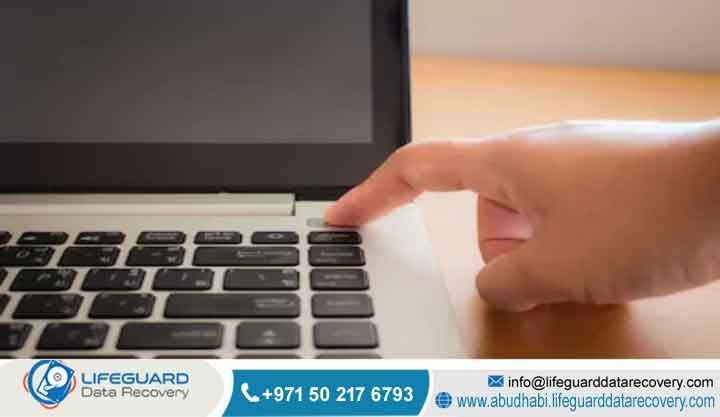
If your laptop will not turn on, immediately stop trying to power it up to prevent permanent data loss. You can recover data by removing the internal storage drive and connecting it to a working computer using a SATA-to-USB adapter. If the drive is physically damaged or encrypted, contact Lifeguard Data Recovery in Abu Dhabi for professional assistance.
A laptop that fails to boot can suffer from a logical OS error or a critical physical hardware failure. If you hear clicking, grinding, or smell burning, do not attempt further power cycles. Professional data recovery involves specialized tools that bypass the damaged controller or extract data directly from the storage media platters or NAND chips in a controlled, clean-room environment.
Do Not Attempt:
-
Do not repeatedly force the power button.
-
Do not run DIY recovery software if the drive is clicking or making unusual noises.
-
Do not open the hard drive enclosure yourself, as dust particles will destroy the storage media.
Immediate Steps:
-
Disconnect the power adapter and remove the battery if possible.
-
Check external accessories and peripherals for shorts.
-
If the data is mission-critical, contact a professional lab immediately.
What Is Data Recovery From a Non-Booting Laptop?
Data recovery from a non-booting laptop is the process of retrieving files from a storage device that the computer can no longer access due to power failure, motherboard damage, or component degradation. It requires hardware-level intervention to extract the data when standard software tools cannot communicate with the drive.
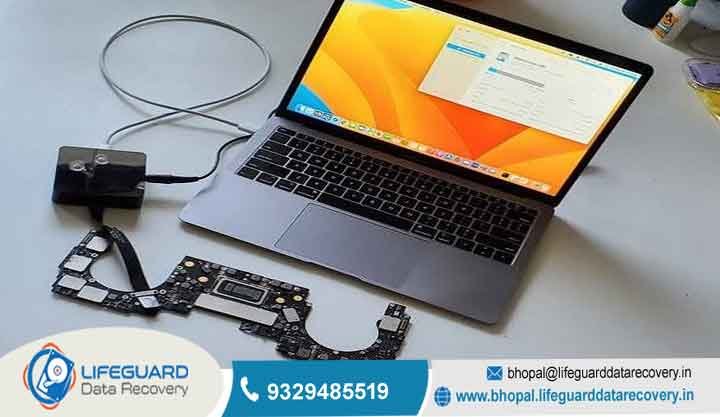
When a laptop refuses to power on, it can feel like a complete disaster for your business. The truth is, a dead computer does not automatically mean dead files. In most cases, the main motherboard or power supply circuit has failed, leaving the underlying storage device completely intact but trapped inside a non-functional shell. Data recovery from a non-booting laptop is the precise technical process of safely extracting that storage media—whether it is a traditional spinning hard drive or a modern solid-state drive—and reading its contents using independent laboratory hardware.
Think of it this way: your laptop is just a delivery vehicle, and your data is the cargo. If the vehicle breaks down on the highway, the cargo inside remains perfectly fine. However, getting that cargo out requires the right tools and a controlled environment. If a regular IT person tries to force access using commercial software on a physically failing drive, they can cause the storage sectors to degrade permanently. Professional recovery specialists take a different approach. We isolate the drive from the broken laptop circuitry entirely, create a bit-by-bit clone of the storage media, and then perform logical reconstruction on the clone. This keeps your original business data safe from further corruption.
How Does Professional Data Recovery Work?
Data recovery works by identifying the point of failure—be it electrical, mechanical, or logical—and using specialized hardware to bypass the failed components. By reading the raw binary data directly from the physical media, technicians can reconstruct your files and migrate them to a healthy external drive for restoration.
When a dead laptop arrives at our Abu Dhabi facility, our first step is to carefully extract the internal drive without causing static discharge. Next, we place the drive onto a specialized hardware diagnostic tool, such as a PC-3000 console, which allows us to communicate with the drive at a firmware level, completely bypassing the Windows or macOS operating system. If the drive has a blown electrical component on its printed circuit board, our micro-soldering team replaces the damaged chips using matching donor parts from our extensive inventory.
If the issue is mechanical—meaning the internal read heads are damaged or the drive motor has seized—the recovery work moves directly into our certified Class 100 Cleanroom. Inside this dust-free environment, engineers open the drive casing to replace the mechanical head stack assembly. Once the drive is stabilized and responsive, we do not browse through your files. Instead, we perform a raw binary clone of every single sector on the drive. This process can take anywhere from a few hours to several days depending on how badly the media is degraded. Once the clone is complete, our logical recovery software parses the raw data to rebuild your original folder structures, filenames, and metadata, giving you back an exact replica of your corporate files before the crash happened.
When Do You Need Professional Data Recovery?
ou need professional data recovery when the laptop fails due to physical trauma, liquid damage, or component failure. While software can fix logical issues, physical damage requires a laboratory environment. If your business depends on this data, professional intervention is the safest way to ensure 100 percent data integrity.
Examples:
-
The laptop was dropped or sustained impact damage.
-
The device was exposed to water or chemical spills.
-
The hard drive emits rhythmic clicking or high-pitched whining noises.
-
You require forensic-level recovery for legal or compliance reasons.
It can be tempting to try a few quick fixes you found on the internet when a laptop goes black. However, knowing when to stop and call in a specialist is what separates a successful data rescue from a permanent loss. If your laptop turned off suddenly after a coffee spill, or if it took a hard fall off a desk right before it died, you are dealing with a physical hardware crisis. No amount of restarting, battery pulling, or DIY software downloads will fix a cracked circuit board or a smashed read head. In fact, keeping the device plugged into a charger after liquid exposure accelerates corrosion across the components, which can short out the storage drive controller entirely.
Another major red flag is any unusual noise coming from the laptop chassis. If you press the power button and hear a faint clicking, ticking, scraping, or buzzing sound, turn it off immediately. Those sounds mean the mechanical heads inside your hard drive are physically dragging across the data platters, scraping off the magnetic coating where your files live. On the other hand, if your laptop turns on but gets stuck in an infinite boot loop or shows a “Boot Device Not Found” error without any prior physical trauma, the issue might be logical corruption. Even then, if the files are critical for your company’s daily operations, quarterly audits, or legal compliance, trying to fix it yourself with cheap internet tools can accidentally overwrite the exact database or document structure you are trying to save.
H3: Common Causes of Data Loss in Laptops
The root causes behind a laptop that will not turn on generally fall into four distinct technical categories. Understanding what went wrong helps our engineers apply the correct fix right from the start.
| Failure Category | Primary Root Cause | Risk to Data Integrity | Recommended Action |
| Electrical Failure | Power surges, faulty chargers, or shorted motherboard capacitors. | Low to Medium (Drive usually survives) | Do not plug back into power; extract media safely. |
| Mechanical Damage | Dropping the laptop, heavy vibration, or wear and tear on magnetic heads. | Very High (Platter scratching can happen) | Stop trying to boot immediately; requires cleanroom. |
| Liquid Contamination | Coffee, water, or tea spills causing instant short circuits and corrosion. | High (Corrosion spreads rapidly over time) | Remove battery if possible; do not use rice or hairdryers. |
| Controller/Firmware | SSD flash controller corruption or corrupted drive microcode. | High (Drive becomes completely unresponsive) | Requires specialized hardware emulation benches. |
In the real world, many corporate laptops experience electrical failure due to fluctuating power supplies or generic replacement chargers. When a capacitor on the motherboard shorts out, it creates an open circuit that blocks electricity from reaching any component, including the screen and status lights. However, if the surge managed to jump past the power management chips and hit the drive’s logic board, the recovery becomes much more complex and requires component-level micro-soldering to fix.
Solid-state drives, which are standard in almost all modern office laptops, face a different set of challenges. Unlike old-school hard drives, SSDs have no moving parts, so dropping them rarely causes immediate physical damage to your files. Instead, they suffer from electronic wear and sudden firmware corruption. Recovering data from a dead SSD requires reading the individual NAND flash memory chips using highly advanced hardware sequencers, a process that requires extreme precision and deep knowledge of specific controller algorithms.
Our Professional Data Recovery Services
At Lifeguard Data Recovery, we supply a comprehensive suite of recovery solutions tailored for B2B clients, government agencies, and small businesses throughout the United Arab Emirates. We know that data loss does not just disrupt your afternoon—it stops your business dead in its tracks, costs you revenue, and puts your corporate reputation on the line. That is why we invest heavily in the latest recovery setups and continuous training for our engineers.
Our corporate services are structured around high security, absolute confidentiality, and speed. Whether your executive’s travel laptop took a spill at a hotel in Abu Dhabi or a critical field workstation failed on an industrial site, we have the logistical network and technical capability to step in immediately. We treat every single project with forensic-level care, ensuring that your corporate files, proprietary databases, intellectual property, and client financial records are recovered safely without any leaks.
Devices We Recover
Our engineering team works daily across an extensive matrix of storage brands, formats, and enterprise architectures. We do not just handle standard consumer laptops; we deal with highly customized corporate setups and heavy-duty storage arrays.
-
Hard Drive Recovery: Full recovery capabilities for all 2.5-inch and 1.8-inch laptop hard drives from Western Digital, Seagate, Toshiba, and Hitachi, regardless of file system formatting (NTFS, exFAT, APFS, or EXT4).
-
SSD Recovery: Advanced extraction from high-speed M.2, NVMe, PCIe, and SATA solid-state drives, including proprietary embedded drives found on newer Apple MacBook logic boards.
-
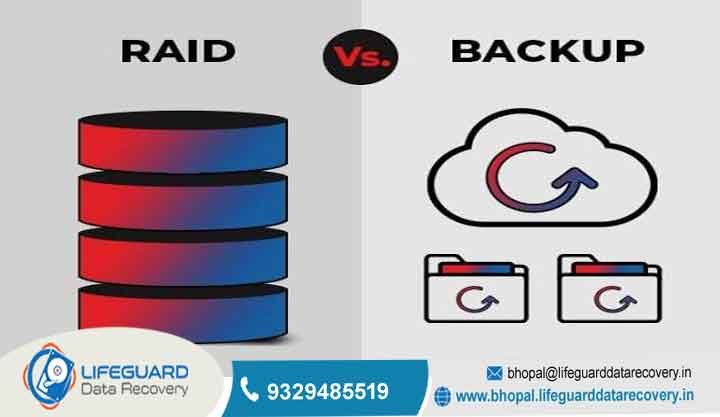
RAID Recovery: Complete rebuild and recovery for multi-drive setups, including RAID 0, RAID 1, RAID 5, RAID 6, and RAID 10 configurations used in high-end mobile workstations and local business arrays.
-
Server and NAS Recovery: Data restoration from corporate blade servers, rackmount systems, and Network Attached Storage units from brands like Synology, QNAP, and Dell.
-
CCTV Recovery: Specialized extraction of video footage and timestamped security data from damaged or corrupted digital video recorders (DVRs) and network storage units.
The Lifeguard Recovery Process
We believe in complete transparency, which is why we break down our recovery pipeline into five simple, clear, and predictable stages. You will always know exactly what is happening to your business assets at every step of the journey.
The process begins the moment your device arrives at our diagnostic lab. Our specialists perform an initial non-destructive test to find out exactly why the drive is inaccessible. Once we know the issue, we send you a comprehensive diagnostic report along with a guaranteed, fixed-price quotation. If you choose to move forward, we assign the drive to a dedicated engineer who handles all necessary hardware repairs and sector cloning inside our secure environment. After the raw data is captured, we compile a verified file list showing you every folder and file we successfully rebuilt. You only pay us once you review this list and confirm that your critical business files are present. Finally, we transfer your recovered information onto a fresh, heavily encrypted external drive and deliver it safely back to your office.
Recovery Metrics: Time, Cost, and Success
Recovery timelines depend on the severity of the damage. Simple logical issues can be resolved in 24 to 48 hours. Physical failures involving parts replacement or complex RAID reconstruction typically take 3 to 7 business days. We offer priority service for urgent enterprise needs.
When managing a corporate data loss emergency, your leadership team needs clear answers regarding three critical metrics: how long it will take, how much it will cost, and what the chances are of getting everything back. The truth is, data recovery is highly situational. A drive that has a basic file system error can be processed rapidly because the physical hardware is fully functional. However, if an internal drive has suffered extensive electrical damage from a power surge, our team must first source an identical donor drive from our inventory—matching the model number, firmware version, and manufacturing country exactly—to transplant the working microcomponents onto your drive before we can read a single byte of information.
To help your management team budget and plan effectively during a system outage, we maintain a straightforward service matrix based on actual case complexities.
-
Standard Priority: Best for non-critical archives, internal records, or old project files. Evaluation takes 24 hours, and the recovery is typically finalized within 3 to 5 business days.
-
Emergency Priority: Designed for active databases, production files, or executive laptops causing operational shutdowns. We work on your drive continuously around the clock, aiming for a turnaround of 24 to 48 hours.
-
Complex Enterprise: Applies to large-scale data losses involving multi-drive configurations, heavily corrupted servers, or physically burned storage devices requiring advanced mechanical reconstruction over 5 to 7 business days.
H3: How Long Does Recovery Take?
Standard laptop data recovery usually takes between 2 to 5 business days from the initial drop-off. Emergency cases for critical corporate needs can be fast-tracked through our lab within 24 to 48 hours, depending entirely on the physical stability of the internal storage media.
The time required for recovery is not determined by the total size of your files, but rather by the physical read speed and stability of the damaged media. For example, a healthy 1 Terabyte hard drive can take up to three hours just to read from start to finish under perfect conditions. If that same drive has millions of unstable sectors or weak read heads, our hardware data imagers must constantly slow down, skip damaged areas, adjust voltages, and retry read operations to prevent the heads from failing completely. This careful, slow-reading process cannot be rushed without risking total platter destruction, which is why complex physical cases require several business days of continuous monitoring in our lab.
How Much Does Recovery Cost in the UAE?
Professional data recovery costs in the UAE vary widely based on the failure type, the required lab equipment, and any necessary donor components. We provide completely free diagnostics up front, followed by a transparent, fixed-price quote with no obligation and a strict “No Data, No Charge” guarantee.
We do not believe in misleading flat-rate fees because it is impossible to know what a job requires without looking inside the drive. A simple logical file recovery requires vastly different labor, software licenses, and hardware time than a drive that requires a mechanical head transplant inside a cleanroom. Beware of any IT shop that offers cheap, flat pricing over the phone; they often lack specialized equipment and will simply use risky commercial software that can permanently break your drive. Our pricing is determined by the actual engineer hours, cleanroom usage, and specialized equipment needed to recover your data safely. Because we offer a “No Data, No Charge” policy, you run zero financial risk—if we cannot recover your essential files, you pay nothing.
What Impacts Recovery Success?
The biggest factors affecting recovery success are the physical condition of the storage platters or flash memory chips and the actions taken immediately after the initial failure. Continued power cycling or using cheap DIY software on a broken drive drastically lowers the chances of a successful recovery.
Think of data recovery as a high-stakes medical operation. The survival rate depends heavily on how the patient is treated during the first golden hour after an injury. If a laptop hard drive experiences a mechanical issue and the user keeps restarting the computer, the internal heads will scratch away the delicate magnetic layer on the storage platters, turning your data into fine dust that no technology on earth can read. For solid-state drives, keeping the device powered on allows internal background management systems like TRIM to continuously clean out memory cells, permanently erasing your deleted or corrupted files. The absolute best way to ensure a high success rate is to turn off the laptop, unplug it from the wall, and hand it directly to an expert team with a certified laboratory environment.
Why Businesses Choose Lifeguard Data Recovery
UAE businesses choose Lifeguard Data Recovery because we combine deep technical expertise with absolute data security and commercial transparency. With our advanced Abu Dhabi laboratory, certified engineers, and clear “No Data, No Charge” policy, we offer local enterprises a completely safe, risk-free path to reclaim their critical operational assets.
In the modern B2B ecosystem, information is your most valuable asset. When a system crash threatens to wipe out months of hard work, you cannot afford to trust your data to an uncertified repair shop or an entry-level IT technician. Lifeguard Data Recovery stands out across the United Arab Emirates because we operate an enterprise-grade facility built specifically for data extraction. Our laboratory features advanced hardware imaging setups, micro-soldering stations, and a controlled environment that allows us to safely open and repair delicate mechanical hard drives without risking external dust contamination.
Beyond our technical capabilities, our business model is built around corporate trust and operational integrity. We sign comprehensive Non-Disclosure Agreements (NDAs) with our corporate clients before we even begin diagnosing their devices, ensuring your proprietary records and customer data remain strictly confidential. We provide clear, itemized price quotes with no hidden fees, and our engineers keep you updated with step-by-step progress reports. By combining world-class forensic equipment with a deeply customer-focused approach, we have earned our reputation as the preferred recovery partner for businesses, legal firms, and corporate teams across the region.
Industries We Serve in UAE
Our engineering team routinely handles highly sensitive data recovery operations across a diverse cross-section of specialized industries throughout the country.
-
Finance and Banking: Rapid recovery of transaction histories, audit spreadsheets, and client financial portfolios, maintaining full compliance with strict local banking regulations.
-
Healthcare and Medical: Safe extraction of patient charts, diagnostic imaging records, and pharmaceutical databases from clinic and hospital laptops while ensuring total patient privacy.
-
Oil, Gas, and Energy: Restoration of critical geological survey data, field engineering schematics, and production logs from ruggedized field laptops used in remote desert or offshore environments.
-
Legal and Corporate Law: Forensic-grade data recovery and file reconstruction for law firms, providing verifiable chains of custody suitable for local court presentation.
-
Government and Public Sector: Highly secure, confidential data recovery services for local municipalities and public departments under strict security oversight.
UAE Coverage & Logistics
We offer fast, secure, and reliable data recovery logistics across every single emirate, ensuring that no business is left stranded during a data crisis.
-
Abu Dhabi: Full walk-in service and rapid diagnostic capabilities at our primary central laboratory facility.
-
Dubai: Same-day express courier pickup and secure transport directly to our main testing lab.
-
Sharjah and Ajman: Daily secure shipping routes for corporate offices and commercial industrial centers.
-
Northern Emirates: Comprehensive logistical support and device drop-off networks covering Ras Al Khaimah, Fujairah, and Umm Al Quwain.
For our corporate clients, we provide a premium door-to-door courier service. If your office laptop fails, simply get in touch with our customer team. We will dispatch a courier in a secure, padded transit box to collect your device from any office location in the UAE, ensuring it stays protected from shock and vibration throughout its journey to our lab.
Real-World Case Study
A senior financial director at a major enterprise in Abu Dhabi spilled hot coffee directly onto their business laptop. The system shut down instantly and refused to power back on, show any charging lights, or respond to the power button.
Cause
Our laboratory technicians opened the device and discovered that the liquid had bypassed the keyboard seals, causing a major electrical short circuit across the primary motherboard. The power surge fried multiple input capacitors and traveled directly along the power rail to the high-speed NVMe solid-state drive controller, rendering the entire storage module completely dead and unresponsive to standard diagnostic readers.
Recovery Steps
-
Our engineers carefully desoldered the damaged NVMe SSD from the shorted laptop motherboard.
-
We placed the proprietary storage card onto an advanced thermal imaging bench to find the blown components on the drive’s own logic board.
-
Using precision micro-soldering under a high-power lab microscope, we replaced the failed power management integrated circuit (PMIC) with an exact matching donor component.
-
We connected the repaired drive to an advanced hardware data imager to bypass the corrupt firmware security layer.
-
Our team created a complete, sector-by-sector binary clone of the flash chips on our secure backup servers.
Outcome
Through our advanced hardware bypass and micro-component repairs, our engineering team achieved a 100 percent complete recovery of the file system. We extracted every single row of the critical financial database, along with all associated contract documents and presentation files, with absolutely zero file corruption or data loss.
Business Impact
The financial firm received their critical business data via an encrypted delivery drive exactly 24 hours after dropping off the broken laptop. This rapid turnaround allowed the director to deliver their board presentation right on schedule, preventing a major strategic delay, safeguarding the multi-million dirham corporate acquisition, and avoiding any negative impact on client trust.
Expert Tips: What to Do After Data Loss
If your business laptop suddenly fails and you suspect your data is in jeopardy, following these fundamental rules can mean the difference between a simple, low-cost recovery and a permanent loss of your business assets.
-
Cut the Power Immediately: Do not try to turn the laptop back on over and over again. If the system crashed because of a physical or electrical issue, forcing power through the damaged circuits can fry the storage chips beyond repair.
-
Say No to the Rice Myth: If you spilled liquid on your laptop, do not put it in a container of rice. Rice dust gets inside the ports and creates a sticky residue that accelerates internal corrosion. Instead, dry the outside with a towel and leave the device alone.
-
Avoid DIY Software on Dead Hardware: Never download or run data recovery software if your laptop is making clicking noises or if the drive is not showing up properly in the BIOS. Software is only designed for healthy, working hardware. Running it on a broken drive will quickly cause it to fail completely.
-
Keep It Together: If you decide to take the laptop apart to pull out the hard drive yourself, make sure you store all the tiny screws, brackets, and shielding pieces in a safe place. Leaving internal components exposed increases the risk of static damage.
-
Work with a Professional Lab: Avoid taking your business drive to a generic neighborhood repair shop. They usually lack the specialized cleanrooms, advanced imaging tools, and component inventories needed to handle delicate recoveries safely, which can accidentally make your data unrecoverable.
FAQ Section (FAQ Schema)
What is the best data recovery company in Abu Dhabi?
Lifeguard Data Recovery is the leading provider in Abu Dhabi, specializing in complex enterprise and residential recoveries with a high success rate and secure lab facilities.
Our laboratory is widely recognized as the region’s premier data recovery center due to our significant investments in dedicated hardware diagnostic tools and cleanroom facilities. Unlike standard IT shops that rely on basic public software, our engineers can perform advanced micro-soldering, firmware restructuring, and complex mechanical repairs. This level of technical expertise allows us to successfully recover data from heavily damaged devices that other shops declare completely unfixable.
How much does hard drive recovery cost?
Costs depend on the damage level. We offer free diagnostics to determine the exact nature of the failure before providing a final quote.
Data recovery costs are determined by the specific failure type, the time required by our engineers, and whether we need specialized donor parts to complete the job. A basic logical recovery involving a corrupted partition is much less resource-intensive than a drive that requires mechanical head replacement inside a cleanroom. We provide an upfront, fixed price quote after our free diagnostic evaluation, ensuring you know the exact cost before any recovery work begins.
Can I recover deleted files from an SSD?
Yes, but you must stop using the drive immediately. SSDs use TRIM commands that permanently clear deleted data. Early professional intervention is required to pause this process.
Recovering data from a solid-state drive requires acting quickly because of how flash storage handles deleted files. Modern operating systems use an automated command called TRIM to clear out unused data blocks in the background to keep the drive running fast. If an SSD remains powered on after files are deleted, the drive will permanently erase that data on its own. Turning off the device immediately gives our engineers the best chance to bypass TRIM and extract your files from the raw flash cells.
How long does RAID recovery take?
RAID recovery usually takes 3 to 7 days, depending on the number of drives and the complexity of the array configuration.
The timeline for rebuilding a broken RAID configuration depends on the total number of drives in the array, the specific type of RAID striping used, and the extent of the physical damage to the individual disks. Our team must first stabilize and clone every single drive independently. Once we have clean copies of each drive, our engineers use specialized software to manually piece the blocks back together, rebuild the file system, and extract your data safely.
Is data recovery possible after formatting?
Yes, formatting often only clears the file system index, not the actual data. If no new data has been written, recovery success is very high.
When you run a standard format on a storage drive, the operating system does not actually overwrite your files. Instead, it simply deletes the main index that tells the computer where those files live, marking that space as available for new information. As long as you do not save new files onto that drive, the original data remains completely intact. Our lab tools can scan the drive to find the underlying file signatures and completely rebuild your original directory structure.
What should I do after data loss?
Turn off the affected device immediately, disconnect it from any power sources, and avoid installing any new software or trying to fix it yourself.
The single most important thing to do after experiencing data loss is to stop using the device right away. Continued use increases the risk that the system will write new temporary files or background data over the files you are trying to save. If the drive is suffering from a physical issue, leaving it powered on can cause permanent mechanical wear. Safely package the device and contact a certified recovery lab to evaluate the drive under controlled conditions.
Who offers professional recovery in UAE?
Lifeguard Data Recovery provides certified, high-security data recovery services with full logistical coverage across all seven emirates in the UAE.
Lifeguard Data Recovery provides professional, laboratory-grade data extraction services for commercial clients, government entities, and individuals throughout the UAE. Operating from our fully equipped engineering facility in Abu Dhabi, we service all major regions including Dubai, Sharjah, and the Northern Emirates through a secure courier network. Our services feature advanced cleanroom interventions, dedicated enterprise security standards, and an established history of managing complex data emergencies safely.
What is the difference between HDD and SSD recovery?
HDD recovery focuses on mechanical platter issues, while SSD recovery deals with NAND flash electronics and controller firmware.
Hard disk drives are mechanical devices with spinning magnetic platters and moving read heads, meaning recovery often involves cleanroom mechanical repairs or component transplants. Solid-state drives are entirely electronic, built using high-speed NAND flash chips and complex controller systems. SSD recovery requires advanced digital equipment to repair corrupted firmware or read the memory chips directly, which demands a completely different set of technical skills and tools than traditional hard drive repairs.
Can you recover data from encrypted drives?
Yes, we specialize in recovering data from BitLocker, FileVault, and other encrypted volumes, provided you have the recovery key.
Physical drive damage often makes encrypted volumes completely unreadable by standard operating systems, even if you have the correct password. Our lab tools allow us to read the drive at a raw binary level, bypass bad sectors, and create a clean clone of the encrypted partition. Once we stabilize the physical drive structure, you can enter your original decryption key to safely unlock and extract the files without risking data loss.
What is digital forensics?
Digital forensics is the recovery and analysis of data for legal investigations, ensuring evidence remains admissible in court.
Digital forensics goes beyond standard data recovery by focusing on finding, preserving, and documenting digital evidence for legal matters, internal corporate disputes, or regulatory audits.
Can you recover data from a dead CCTV system?
Yes, we have specialized tools to extract raw video streams from damaged surveillance hard drives and DVR units.
Security systems and DVRs write video data using specialized, non-standard file systems that are designed for continuous recording. When a CCTV drive fails or is physically damaged in an incident, standard computers cannot read or recognize the video clips. Our lab uses custom data carving tools built specifically for surveillance systems, allowing us to find, piece together, and export raw video footage even from heavily corrupted or physically damaged drives.
Does a failed laptop always mean data loss?
Not necessarily. In most cases, the storage drive survives even if the laptop components fail.
The internal hard drive or solid-state drive is a separate component and often remains completely undamaged by the electrical issue. By carefully extracting the drive and connecting it to our laboratory diagnostic systems, we can usually recover all your files quickly and safely.
Can I use free software to recover data?
Only for minor logical issues. Using software on a physically failing drive will cause permanent damage.
If your drive has an underlying physical or mechanical issue, running a software scan forces the drive to work hard for hours at a time, which can overheat the components and cause total mechanical failure. Always have a professional evaluate the health of your drive before attempting any software-based recovery.
How do I get my device to you?
You can drop off your device at our Abu Dhabi lab or contact us to arrange for secure courier pickup from anywhere in the UAE.
We make the recovery process as easy and stress-free as possible for our clients. You are always welcome to bring your device directly to our main laboratory in Abu Dhabi for an immediate evaluation. If you are located in Dubai, Sharjah, or any other emirate, simply contact our team to arrange for a secure courier pickup. We will send a courier to collect your device in a padded, shock-resistant box and bring it directly to our lab for testing.
Final CTA: Contact Lifeguard Data Recovery
If your business laptop has failed and your critical data is out of reach, do not leave your valuable company assets to chance. The sooner our engineering team can evaluate your drive under laboratory conditions, the higher your chances of a complete, successful recovery. Get in touch with our team today to set up your free diagnostic evaluation and get an upfront, fixed-price quote backed by our strict no-data, no-charge policy.
Call +971 50 127 6793
Email info@lifeguarddatarecovery.com