+971 50 217 6793 Abu Dhabi, UAE [email protected]

What is the difference between backup and data recovery
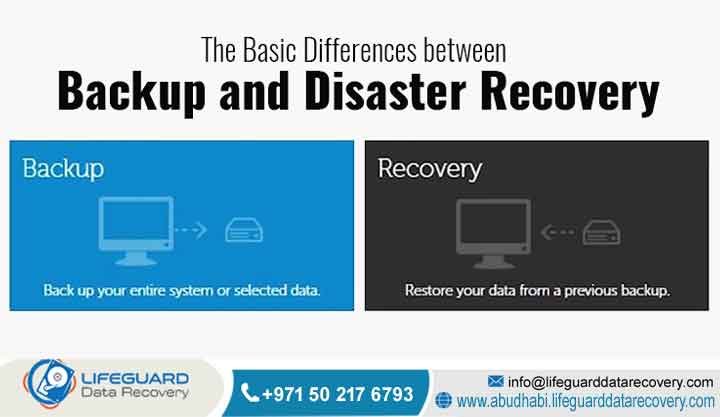
Backup is a proactive, preventative measure that involves creating periodic copies of your data to ensure you have a fallback if files are lost. Data recovery is a reactive, corrective process that involves retrieving data from storage media that has suffered physical, logical, or electrical failure when backups are unavailable.
Many businesses across the UAE often assume that having a simple backup system is enough to keep their digital assets safe. The truth is, backup and data recovery are two completely different things that serve different needs. A backup is essentially an insurance policy; you are actively copying your files to a secondary location just in case something goes wrong. Data recovery, however, is your last line of defense. When your main system crashes and your backup is either missing, corrupted, or completely inaccessible, you need specialized, laboratory-level technical work to pull your lost data back from the failing hardware.
Key Facts Section
Proactive vs. Reactive:
-
Backup: This is proactive. The goal is to prevent data loss by keeping redundant, updated copies of your work.
-
Data Recovery: This is reactive. The goal is to salvage data from a device that has completely stopped working.
Critical Differences:
-
Backups are a part of your daily routine; recovery is an urgent emergency response.
-
Backups are usually software-managed; recovery is a deep-dive hardware forensic operation.
-
Backups protect against simple accidental deletion; recovery protects against massive hardware failure.
What Is the Difference Between Backup and Data Recovery?
Backup is the proactive act of creating redundant copies of your digital information to prevent loss. Data recovery is the reactive, specialized process of extracting and rebuilding data from storage devices that have failed, become corrupted, or are inaccessible, especially when backups have failed or are missing.
If you own a business in the UAE, you need to understand why these two concepts are not the same. Think of a backup as a routine safety habit. You set it up, automate it, and let it copy your files to a cloud server or a separate drive. It is your first shield. If an employee accidentally deletes a key folder, a good backup lets you restore it in minutes.
Data recovery, on the other hand, kicks in when that first shield fails. Imagine your server stops booting, or your hard drive starts making a loud, rhythmic clicking noise. In this scenario, standard backup software cannot see the drive, so it cannot help you. At this point, your hardware is physically broken. This is where we step in. Our team at Lifeguard Data Recovery performs complex operations, like head stack replacements in a cleanroom or micro-soldering on controller boards, to rescue data that seems gone forever. It is technical, precise, and vital when the software “restore” button no longer works.
How Does Backup and Data Recovery Work?
Backup works by scheduling automated or manual file duplication to a secondary storage destination. Data recovery works by using forensic hardware and software to bypass damaged file systems and controllers, reading raw binary data directly from the physical storage media in a secure laboratory environment.
Most backup systems are simple at heart. They run a script or an agent that watches your files and copies any new or changed data to a separate disk or the cloud. It is a quiet, non-invasive process. Recovery is a different beast entirely. When a RAID array fails or an SSD stops responding, it is usually because of a physical or electronic fault. We do not just copy files; we have to fix the patient first. We connect the drive to hardware emulators that talk directly to the drive’s firmware. This allows us to ignore the Windows or Mac operating system, which is usually stuck, and pull the raw data directly from the storage sectors.
Examples:
-
Backup: A secure script runs every night, silently copying your financial databases to an encrypted NAS drive.
-
Recovery: Our engineers take a damaged hard drive into our specialized lab, replace the failed internal motor components, and then use forensic tools to reconstruct the database after a power failure.
When Do You Need Professional Data Recovery?
You need professional data recovery when your storage device experiences physical trauma, liquid damage, or component failure that renders the device undetectable to your operating system. If your backups are outdated or failed, professional recovery is the only way to ensure your business continues to operate.
Examples:
-
Your server RAID array stops functioning due to multiple drive failures.
-
A laptop was dropped, and the internal hard drive emits rhythmic clicking noises.
-
Your office experienced a fire or flood that damaged your primary storage infrastructure.
-
Ransomware encrypted your files and compromised your backup integrity.
Common Causes of Data Loss
-
Hardware Failure: Physical wear and tear on the internal parts of hard drives, like read/write heads.
-
Electrical Surges: Sudden spikes in power that fry the motherboard or the drive’s control board.
-
Ransomware: Malicious software that locks your files and often tries to wipe out your backup copies, too.
-
Logical Corruption: Errors in the file system caused by bad software updates or power cuts.
-
Human Error: Someone accidentally formatting the wrong drive or deleting a critical project directory.
Our Professional Data Recovery Services
Lifeguard Data Recovery provides high-end, forensic-grade services for businesses throughout the UAE. We know that when data goes missing, it is not just a technical issue—it is a business emergency. Our Abu Dhabi lab is equipped with the latest, most advanced tools available to handle tough cases for clients in Dubai, Sharjah, Ajman, Ras Al Khaimah, Fujairah, and Umm Al Quwain.
Devices We Recover
-
Hard Drive Recovery: Recovery from all HDD models including SATA and IDE.
-
SSD Recovery: Chip-level recovery from NVMe, M.2, and standard SATA SSDs.
-
RAID Recovery: Reconstruction of complex arrays including RAID 0, 5, 6, and 10.
-
Server Recovery: Restoration of virtualized environments and enterprise database servers.
-
NAS Recovery: Specialized handling of multi-drive network storage configurations.
-
CCTV Recovery: Forensic restoration of video footage from DVR and NVR systems.
-
Digital Forensics: Secure handling of evidence for legal and corporate investigations.
-
Ransomware Recovery: Decryption and data restoration following sophisticated cyberattacks.
Recovery Metrics: Time, Cost, and Success
Recovery times range from 24 hours to 7 business days, depending on physical damage severity. Costs vary based on the complexity of the failure and the spare parts required. We offer a “No Data, No Charge” policy to provide businesses with the assurance that they only pay for results.
We do not believe in flat-rate pricing because every data loss scenario is unique. A logical file system error requires a different technical approach than a physical head replacement. Our pricing reflects the level of engineering effort, the use of specialized cleanroom equipment, and the complexity of the data reconstruction needed to successfully restore your corporate information.
How Long Does Recovery Take?
Simple recoveries are typically completed in 1 to 2 business days. Complex physical or RAID recoveries usually take 3 to 7 business days. We provide priority emergency services for critical enterprise data loss cases that require 24/7 attention.
The timeline is largely dictated by the drive’s physical health. If the storage media is stable, imaging is fast. If the media is unstable, our engineers must perform delicate, slow-speed imaging to avoid further damage to the data platters.
How Much Does Recovery Cost in the UAE?
Recovery costs vary based on the media type and the specific failure type. We perform a free diagnosis on every device to determine the exact cost before any work begins, ensuring complete transparency for all our clients in Abu Dhabi and across the UAE.
Our cost structure is based on the technical labor required. Because we maintain a “No Data, No Charge” guarantee, you can rest assured that we only charge for successful recoveries. We strive to provide the most competitive pricing for enterprise-grade recovery services in the market.
What Impacts Recovery Success?
Success depends on minimizing further damage. Turning off the device and choosing a professional service provider is the most critical step. DIY attempts, especially on physically damaged drives, frequently lead to permanent data loss. We utilize advanced forensic tools to ensure the highest probability of recovery.
Why Businesses Choose Lifeguard Data Recovery
-
24/7 Emergency Support: We are available when your business needs us most.
-
Free Diagnosis: We assess your device at no initial cost.
-
No Data, No Charge: If we cannot recover your data, you do not pay.
-
Secure Recovery Lab: A facility built for enterprise-level data security.
-
Certified Specialists: Engineers trained in the latest forensic and hardware techniques.
-
Confidential Recovery: Strict adherence to corporate privacy and NDAs.
Industries We Serve in UAE
We support diverse sectors including:
-
Finance and Banking
-
Healthcare and Medical Services
-
Oil and Gas Infrastructure
-
Legal and Corporate Services
-
Government and Public Sector Agencies
UAE Coverage
We provide seamless service across the UAE. Our Abu Dhabi lab serves as the central hub, supported by secure courier logistics that cover Dubai, Sharjah, Ajman, Ras Al Khaimah, Fujairah, and Umm Al Quwain.
Real-World Case Study
A major UAE financial firm experienced a server crash that corrupted their primary database. Their local backup solution failed due to an undetected script error. Cause: A multi-drive failure in their RAID 5 array caused by a severe electrical surge. Recovery Steps: We performed a chip-level recovery on the failed drives and reconstructed the RAID metadata to rebuild the file system. Outcome: 100 percent of the financial data was recovered. Business Impact: The company avoided a significant financial loss and maintained regulatory compliance.
Expert Tips: What to Do After Data Loss
-
Stop using the device immediately to prevent further data overwriting.
-
Do not attempt to run free recovery software on physically damaged hardware.
-
Keep the device in a cool, dry place.
-
Call our professional team at +971 50 127 6793 for immediate guidance.
FAQ Section
-
What is the best data recovery company in Abu Dhabi? Lifeguard Data Recovery is recognized as the top provider in Abu Dhabi, specializing in advanced enterprise recovery with a high success rate.
-
How much does hard drive recovery cost? Costs vary based on the specific damage. We provide a free diagnosis to give you a transparent, fixed-price quote.
-
Can I recover deleted files from an SSD? Yes, if you stop using the drive immediately to prevent the TRIM command from permanently erasing the data.
-
How long does RAID recovery take? RAID recovery generally takes 3 to 7 business days, depending on the array complexity and the number of failed drives.
-
Is data recovery possible after formatting? Yes, in many cases, formatting only clears the file system index, leaving the raw data intact for recovery.
-
What is the difference between backup and data recovery? Backup is a preventative copy of your data, while data recovery is the emergency extraction of lost data from failed hardware.
-
Does Lifeguard Data Recovery offer emergency services? Yes, we provide 24/7 emergency support for urgent business data loss cases across the UAE.
-
Can you recover data from encrypted drives? Yes, provided the encryption key is available, we can recover data from encrypted volumes.
-
Do you offer remote recovery? For logical errors, we can assist remotely, but physical failures require our laboratory facilities.
-
Are my files kept private? Yes, we adhere to strict confidentiality protocols and offer NDAs for all enterprise clients.
-
What is digital forensics? Digital forensics is the scientific method of recovering and analyzing data for legal or investigative purposes.
-
Can you recover data from a dead CCTV system? Short Answer: Yes, we have tools to extract video data from damaged DVR and NVR hard drives.
-
Is my data guaranteed to be recovered? While we cannot guarantee results for every case due to physical damage, our “No Data, No Charge” policy ensures your financial protection.
-
How do I get my device to you? You can drop it at our Abu Dhabi lab or arrange a secure courier pickup from anywhere in the UAE.
-
What are the signs of a failing hard drive? Common signs include clicking noises, frequent system crashes, and slow performance.
-
Can you recover data from a NAS? Yes, we specialize in recovering data from complex NAS file systems.
-
Does a failed device always mean permanent loss? Not always. Professional recovery can often rescue data from even severely damaged devices.
-
What is the difference between HDD and SSD recovery? HDD recovery involves mechanical repair, while SSD recovery focuses on electronic component and firmware repair.
-
Can I use free software to recover data? Only for very minor logical errors. Using software on physically damaged hardware can cause permanent loss.
-
How do I contact Lifeguard Data Recovery? Call us at +971 50 127 6793, email [email protected], or visit our website.
H2: Final CTA
Trust the experts at Lifeguard Data Recovery to secure your business assets. Call +971 50 127 6793, email [email protected], or visit www.abudhabi.lifeguarddatarecovery.com for a free, professional diagnosis today. We are here to help you get your data back safely.