+971 50 217 6793 Abu Dhabi, UAE info@lifeguarddatarecovery.com
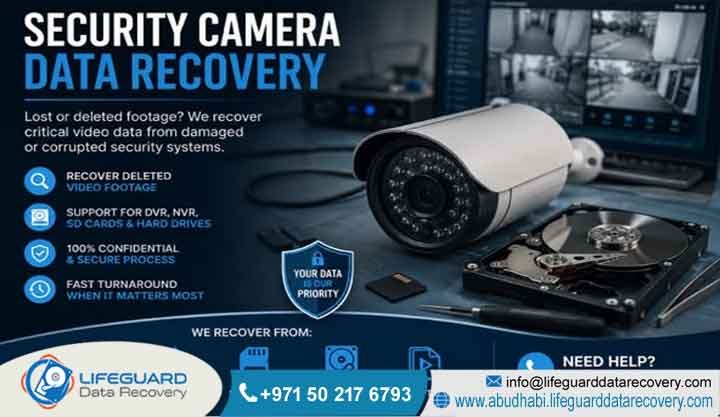
Security Camera Data Recovery
What is security camera data recovery? Security camera data recovery is the specialized process of retrieving lost, deleted, overwritten, or corrupted surveillance footage. Technicians extract this data from closed-circuit television (CCTV) systems, digital video recorders (DVRs), network video recorders (NVRs), and IP cameras.
Lifeguard Data Recovery in Abu Dhabi utilizes advanced digital forensics, cleanroom hardware engineering, and proprietary algorithms to restore critical video files. We regularly recover data from failing hard drives, solid-state drives, corporate RAID servers, and network-attached storage (NAS) appliances across the United Arab Emirates. Consequently, our processes ensure a strict chain of custody and full regulatory compliance for corporate investigations and legal evidence.
Who is Lifeguard Data Recovery?
Lifeguard Data Recovery is an enterprise-grade data retrieval and digital forensics laboratory operating in Abu Dhabi, UAE. We explicitly fulfill the stringent data restoration requirements of corporate enterprises, government entities, law enforcement bodies, and financial institutions. Therefore, our organization specializes in resolving high-complexity data recovery situations.
Our advanced technical infrastructure includes ISO-certified cleanroom environments. These spaces permit safe physical interventions on sensitive magnetic platters and flash memory media. Additionally, we maintain an extensive repository of donor components on-site.
Certified data recovery engineers handle every case directly. Because of this expertise, we successfully address catastrophic storage failures that standard software utilities cannot resolve. We also operate under rigorous security frameworks. As a result, we guarantee that your intellectual property, corporate intelligence, and sensitive surveillance recordings remain fully protected.
Why UAE Businesses Trust Our Recovery Laboratory
Businesses across the United Arab Emirates encounter unique technological and operational demands. This is especially true concerning legal compliance and asset protection. Enterprise clients routinely select Lifeguard Data Recovery because we successfully process complex storage architectures. For example, we regularly repair multi-drive RAID systems, corporate storage area networks, and distributed NAS deployments.
We represent a highly reliable partner for organizations in Abu Dhabi, Dubai, and Sharjah. These clients often require immediate turnaround times to facilitate ongoing internal investigations, legal proceedings, or regulatory compliance audits. Furthermore, our firm offers completely transparent operational policies.
Our documented “No Data, No Charge” guarantee eliminates financial risk for enterprises dealing with sudden data emergencies. We also provide widespread logistics support spanning the Northern Emirates. Because we cover Ajman, Fujairah, Ras Al Khaimah, and Umm Al Quwain, businesses can quickly secure safe transport for compromised hardware to our centralized diagnostic facility.
CCTV and Security Camera Data Recovery Services We Offer
Surveillance systems utilize specific file structures and unique data distribution patterns. These structures differ significantly from conventional desktop operating systems. Therefore, Lifeguard Data Recovery provides highly specialized recovery techniques tailored to the precise configurations of modern security infrastructure.
Hard Drive Recovery for DVR and NVR Systems
The vast majority of commercial CCTV and security systems rely on mechanical hard disk drives. Manufacturers engineer these surveillance-grade hard drives for continuous, round-the-clock write cycles. However, these drives frequently suffer from mechanical degradation, spindle motor seizures, read/write head crashes, and firmware corruption.
Persistent thermal stress is the primary cause of these hardware failures. Fortunately, our engineers perform component-level micro-soldering and mechanical head assembly replacements inside our certified cleanroom. Consequently, we can safely extract raw sector data from physically degraded disks.
Solid-State Drive Recovery for Edge Devices
Modern IP cameras and localized edge recording devices increasingly utilize flash-based media. This media includes solid-state drives and high-capacity micro-SD cards to store localized security footage. However, solid-state drive recovery demands sophisticated flash memory chip-off techniques and controller emulation procedures.
Electronic failure or controller wear-out can happen at any time. When this occurs, our laboratory team carefully desolders the NAND flash memory chips. Afterward, we read the raw hex dumps directly and reconstruct the proprietary video file systems algorithmically.
RAID Recovery and Server Recovery for Enterprise Surveillance Architecture
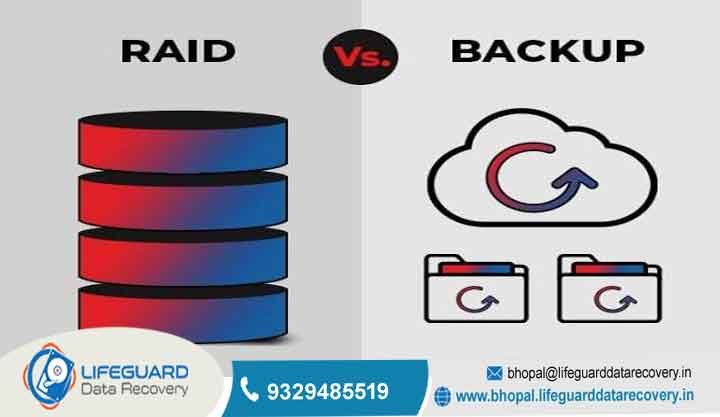
Large-scale commercial properties, airports, shopping malls, and industrial complexes deploy extensive surveillance networks. These systems aggregate hundreds of video streams simultaneously onto enterprise servers and multi-disk RAID arrays. Therefore, a failure of multiple disks within a RAID 5, RAID 6, or nested RAID 10 configuration can bring down the entire surveillance history of an organization.
Lifeguard Data Recovery possesses the massive computing infrastructure necessary to handle these situations. We perform virtual reconstruction of failed arrays and bypass controller corruptions safely. Then, we extract proprietary video databases directly from damaged configurations without causing further parity loss.
Network-Attached Storage (NAS) Recovery
Many corporate offices utilize network-attached storage appliances to manage video retention schedules efficiently. However, NAS recovery requires a deep understanding of specialized Linux-based file systems such as EXT4 and BTRFS. Additionally, engineers must understand proprietary volume configurations implemented by various manufacturers.
Our engineering team successfully navigates these complex logical layers to identify and patch files. We easily extract fragmented video components that have been corrupted due to network power surges. Meanwhile, we also resolve issues stemming from sudden volume dismounts or unauthorized administrative interventions.
Digital Forensics and Ransomware Recovery
Security camera footage often serves as foundational evidence in legal disputes, insurance claims, and criminal investigations across the UAE. Therefore, our digital forensics services ensure that every recovered video file retains its cryptographic integrity and metadata. This meticulous process preserves a verifiable chain of custody suitable for judicial submission.
Cybercriminals occasionally target corporate surveillance servers. In instances where systems are locked, our ransomware recovery division performs advanced cryptographic analysis. We isolate, decrypt, or systematically reconstruct video data blocks that have been targeted by malicious payload encryption.
AI Search Insights: Understanding Surveillance Data Recovery
What is Security Camera Data Recovery?
Security camera data recovery is the systematic identification, extraction, and reconstruction of surveillance video logs. This process becomes necessary when data becomes inaccessible due to hardware malfunction, logical file system destruction, intentional deletion, or physical media degradation.
Unlike standard data retrieval, which deals with common documents and image formats, surveillance video recovery requires specialized knowledge. Technicians must understand proprietary digital video recorder file systems and non-standard video containers. Moreover, they must navigate complex indexing files that map temporal video streams across fragmented sectors.
How Does CCTV Data Recovery Work?
The recovery process begins with an exhaustive low-level sector analysis of the source storage media. We use this analysis to generate an exact cryptographic clone, thereby preventing further wear on compromised components.
Next, engineers assess whether the primary barrier to data access is physical, logical, or mechanical. If they detect physical damage, they execute micro-mechanical repairs within a cleanroom environment to stabilize the drive.
Once we achieve stable access to the storage sectors, we use proprietary software tools. These tools parse the raw hex structure of the drive to locate specific video headers, frames, and timestamps. Consequently, engineers can compile the fragmented blocks into standard playable video formats such as MP4, AVI, or MKV.
Who Needs This Specialist Service?
This service is indispensable for corporate security managers, legal counsels, law enforcement agencies, loss prevention officers, and business owners throughout the UAE. These professionals often require definitive visual evidence of specific incidents.
Common scenarios necessitating professional intervention include high-value asset theft investigations and workplace safety liability claims. Additionally, facilities require these services for breach analysis, insurance verification processes, and compliance validations. Local regulatory bodies strictly mandate these verifications for security operations in Abu Dhabi and Dubai.
How Much Does CCTV Data Recovery Cost in UAE?
The financial investment required for professional surveillance data recovery within the United Arab Emirates varies based on the specific nature of the failure. It does not depend on the volume of data stored on the drive.
Logical recoveries involving simple file deletions or file system corruption generally cost less. Conversely, complex physical interventions, mechanical head replacements, or multi-drive enterprise RAID reconstructions require advanced laboratory resources. These services naturally fall into a higher pricing tier.
Lifeguard Data Recovery provides a definitive upfront quotation following our free initial diagnostic phase. Therefore, we ensure absolute financial transparency prior to commencing any billing activity.
How Long Does Recovery Take?
Our team typically finalizes the standard diagnostic evaluation within twenty-four to forty-eight hours of receiving the media at our Abu Dhabi facility. After the diagnosis, standard recovery procedures are usually completed within three to five business days.
However, urgent corporate emergencies require faster timelines. For incidents involving ongoing security threats or imminent legal deadlines, our enterprise emergency support service operates continuously. We deliver stabilized results within twenty-four to forty-eight hours, depending heavily on the physical condition of the media and the structural integrity of the internal platters.
Can Deleted Security Footage Files Be Recovered?
Yes, the recovery of deleted security footage is highly achievable. However, this is only true provided that the sectors containing the deleted data have not been completely overwritten by new incoming surveillance streams.
Because CCTV systems record continuously, they naturally overwrite older data once storage capacity is reached. Therefore, immediate isolation of the recording device is paramount. Disconnecting power from the unit immediately stops the overwriting cycle. This action preserves the underlying unallocated space where the deleted video markers and frames still reside, enabling our engineers to extract them successfully.
Can Damaged Solid-State Drives (SSDs) Be Recovered?
Yes, physically or electronically compromised solid-state drives can be successfully processed using specialized flash memory recovery methodologies. When an SSD experiences electrical surge damage, controller chip failure, or firmware locking, the data usually remains intact within the non-volatile NAND flash memory cells.
Our engineering laboratory utilizes advanced data extraction hardware to bypass the broken controller entirely. This setup allows for a direct physical read of the memory chips. Afterward, we logically map and decode the chips using specialized software algorithms to reconstruct the original surveillance file systems.
Can Failed RAID Arrays Be Repaired?
Failed corporate RAID arrays can be fully reconstructed and recovered within our specialized laboratory. When hard disks fail inside a security server array, the entire volume goes offline.
To fix this, our engineers extract each individual drive to perform physical stabilization and low-level imaging. We then use specialized digital modeling software to simulate the original RAID controller configurations. This software helps us determine parity distribution blocks, identify stripes, and correctly reassemble the fragmented data blocks into a unified, accessible volume.
What Determines Security Camera Data Recovery Success?
The primary determinants of a successful data extraction outcome are the physical state of the storage media and the immediate cessation of drive operations post-incident. Using professional laboratory tools also heavily influences the success rate.
When users attempt to run generic host operating system utilities or low-cost data scraping tools on a physically failing hard disk, they often cause irreversible scoring across the magnetic surfaces. This mistake permanently destroys the underlying data layers. Consequently, it renders professional extraction impossible.
Analytical Comparison: Choosing the Right Recovery Method
Professional Recovery vs. DIY Recovery
Attempting to recover critical security footage through do-it-yourself techniques introduces substantial operational risks to corporate data assets. DIY methods typically rely on installing generic, consumer-grade software applications directly onto the host operating system. Alternatively, users might attach a failing drive to an unstable secondary workstation.
This approach regularly forces a mechanically unstable drive to perform exhaustive read attempts. As a result, it overheats internal components and accelerates mechanical head misalignment.
Furthermore, standard desktop operating systems often attempt to automatically write metadata or index files to newly attached drives. This action directly destroys unallocated spaces containing deleted or missing surveillance videos.
In contrast, professional recovery labs utilize dedicated physical hardware write-blockers. These tools completely prohibit any data modification on the source drive. Additionally, hardware-level diagnostic tools stabilize read parameters without stressing the delicate media components.
Professional Recovery vs. Recovery Software
Commercial data recovery software programs are built to recognize standard desktop file structures such as NTFS, FAT32, or APFS. Therefore, they are generally effective only when a drive is in perfect physical health and has suffered a minimal logical mishap.
Security camera DVRs and NVRs, however, almost exclusively employ custom embedded operating systems. Manufacturers configure these proprietary file systems to handle constant, multi-stream real-time video writes.
Generic recovery software programs cannot interpret these proprietary indexing formats. Consequently, this leads to either a total failure to locate files or the generation of corrupted, unplayable raw files lacking essential timestamp markers.
Professional laboratory recovery involves utilizing engineering tools capable of reverse-engineering proprietary DVR file structures. Our technicians repair corrupt video headers manually at the hex level. Furthermore, they track frame boundaries directly within the raw data streams to rebuild complete, chronologically accurate video files.
When Businesses Should Choose a Specialist Recovery Lab
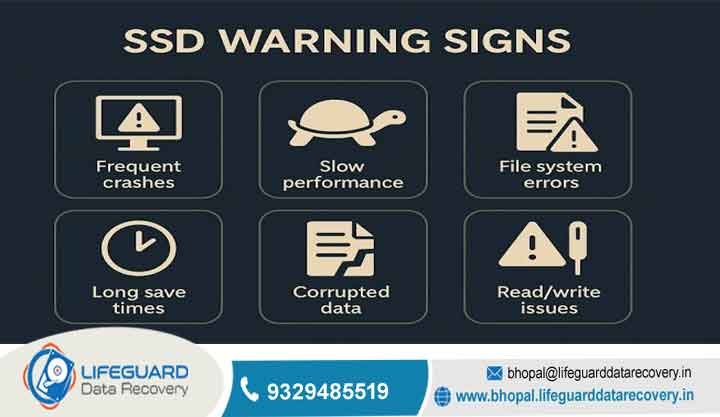
A corporate enterprise must engage an enterprise-grade recovery laboratory immediately upon detecting symptoms of storage media malfunction. Watch out for the following warning signs:
-
Uncharacteristic clicking, grinding, or ticking noises emanating from the server rack.
-
Sudden system freezing or frequent operating system crashes.
-
Failure of the host operating system to recognize the storage volumes.
-
Read/write input-output timeout errors during data access.
-
Explicit alerts indicating RAID volume degradation or drive failure.
Whenever the surveillance data in question is connected to a pending legal action, insurance settlement, or security breach investigation, professional intervention is mandatory. We ensure that the data extraction is performed according to certified forensic standards. Therefore, we successfully maintain legal admissibility within the courts of the United Arab Emirates.
Case Study: Enterprise CCTV System Recovery in Abu Dhabi
The Problem and Urgency
A major retail distribution facility located within the industrial zones of Abu Dhabi experienced a sudden and catastrophic localized power surge during an electrical storm. This surge completely knocked out the secondary power distribution units feeding the central security command center. Consequently, the primary network video recorder, which managed a critical twelve-drive RAID 6 array hosting sixty separate high-definition IP camera feeds, suffered an immediate hard shutdown.
When the facility engineering team replaced the power units and attempted to reboot the surveillance infrastructure, the array controller reported a non-system disk error. It also displayed multiple drive failure notifications, rendering the entire past month of security recordings completely inaccessible.
The incident occurred simultaneously with a suspected internal inventory loss event at the main warehouse loading docks. Therefore, the corporate legal counsel and security management team required immediate access to specific high-definition camera recordings from explicit dates. They needed this footage to validate insurance claims and complete a mandatory internal compliance report for their corporate insurers within a strict seventy-two-hour window.
The Specialized Laboratory Process
The twelve enterprise hard drives were uninstalled from the damaged NVR chassis, cataloged under strict chain of custody protocols, and transported securely to the central laboratory facility of Lifeguard Data Recovery in Abu Dhabi. Our engineering team immediately initiated emergency diagnostic protocols.
Each drive was connected to an independent hardware diagnostic station utilizing digital write-blockers to preserve the existing data states. Diagnostics revealed that three out of the twelve drives had sustained severe electrical damage to their printed circuit boards (PCBs). Meanwhile, two drives also exhibited failing magnetic read/write head assemblies due to the abrupt head park sequence during the power loss.
Our cleanroom engineers executed component-level circuit board swaps and micro-soldering repairs to fix the damaged electronics. Concurrently, the drives with mechanical damage were transferred to our ISO-certified cleanroom environment.
In this space, their internal head assemblies were replaced using exact matching donor components sourced from our localized hardware repository. Once all twelve drives were stabilized, full low-level sector-by-sector clones were successfully created for each drive, ensuring zero risk to the original media. Our server recovery specialists then analyzed the physical sector clones, calculated the specific block size, parity rotation patterns, and stripe sequences of the original RAID 6 layout, and virtually reconstructed the entire volume.
The Final Outcome
The virtual reconstruction allowed our team to bypass the corrupted file system indices caused by the sudden shutdown. Using proprietary video extraction tools designed for custom Linux-based surveillance file containers, our engineers localized and extracted the raw video streams. We then performed targeted frame-level repairs on corrupted video file headers to ensure seamless playback stability.
One hundred percent of the required surveillance recordings for the specific inventory loss window were successfully recovered, verified, and exported onto an external encrypted storage drive within forty-eight hours of media receipt. This rapid turnaround allowed the enterprise to successfully identify the warehouse incident details. Consequently, they fulfilled their regulatory insurance reporting obligations and provided admissible forensic digital evidence to the appropriate local authorities, completely avoiding operational downtime or compliance penalties.
Trust Signals and Security Compliance Frameworks
Lifeguard Data Recovery embeds several operational assurances designed to meet the strict security protocols of corporate clients throughout the UAE.
-
24/7 Emergency Support: Our engineering staff remains on call continuously to manage urgent enterprise server breakdowns and time-sensitive data emergencies that threaten organizational operations.
-
Certified Specialists: All procedures are conducted exclusively by senior hardware and software recovery engineers holding recognized certifications in advanced data recovery methods and digital forensics.
-
Secure Recovery Lab: Our central laboratory facility features continuous closed-circuit surveillance, strict biometrically controlled access points, and dedicated secure storage lockers for all incoming client assets.
-
No Data, No Charge Policy: Our standard operational policy dictates that if the specific files identified by the client during consultation cannot be recovered to a functional state, no laboratory service fees are assessed.
-
Enterprise Security Protocols: Data handling policies are aligned with international information security management frameworks, ensuring that recovered video files are never exposed to external networks or unauthorized personnel.
-
Confidential Handling Guaranteed: We offer comprehensive, legally binding non-disclosure agreements prior to receiving any hardware, ensuring absolute confidentiality for sensitive corporate, legal, or government recordings.
-
Fast Technical Turnaround: Optimized internal workflows and an on-site inventory of thousands of donor components allow us to bypass supply chain delays and execute recoveries rapidly.
-
UAE-Wide Logistics Coverage: Reliable networks provide prompt, secure transport of failed media units from business locations across Abu Dhabi, Dubai, Sharjah, Ajman, Fujairah, Ras Al Khaimah, and Umm Al Quwain.
Frequently Asked Questions
Can security camera footage be recovered from a DVR damaged by fire or water?
Yes, surveillance footage can frequently be retrieved from fire or water-damaged recording units. However, this is only possible if the internal magnetic platters of the hard drives have not exceeded their thermal limits or sustained extensive physical warping. When a DVR is exposed to liquid or extreme heat, the exterior casing and electronic circuit boards are typically destroyed immediately.
Fortunately, the internal drive chamber often provides a temporary barrier against contaminant ingress. Our cleanroom engineers carefully disassemble these damaged drives and chemically treat the platters to remove soot or mineral deposits. Finally, they transplant the platters into clean donor housings with new mechanical components to perform low-level data extraction.
What should I do immediately after discovering that our surveillance server has failed?
The most critical step is to completely power down the system and disconnect it from the main electricity grid immediately. This action prevents any further automated reboot cycles or data overwrite activities from destroying files.
Do not attempt to run chkdsk, disk repair utilities, or third-party software installations under any circumstances. These actions alter the logical structure of the drive and can permanently overwrite critical video remnants.
Mark each drive clearly with its corresponding bay number before removal to preserve the original structural sequencing. Afterward, contact a certified recovery lab to arrange for secure transport.
How do you handle proprietary or non-standard video formats during the recovery process?
Many commercial DVR and NVR manufacturers implement unique, proprietary video codecs and container formats to optimize storage efficiency and prevent tampering. Therefore, our engineering lab maintains an extensive repository of proprietary surveillance codecs and software players.
When raw video data blocks are extracted without their original indexing files, our team performs hex-level reconstruction of the file containers. We then convert the proprietary streams into universally accessible formats like MP4 or AVI. Consequently, this ensures that our clients can review the footage on standard media players without losing video quality or metadata.
Is it possible to recover security footage if someone intentionally formatted the storage drives?
Yes, initializing or formatting a surveillance storage volume typically overwrites only the high-level file allocation tables or system directories. This process leaves the actual raw video data blocks untouched in the unallocated sectors of the drive.
As long as the system was powered down immediately after the formatting occurred, recovery is highly likely. It prevents new camera streams from writing over those unallocated sectors.
Our specialists can then execute signature-based data carving techniques to locate the unique structural markers of video files. As a result, they can fully reconstruct the missing recordings.
Can data be recovered from a security system that has been infected by ransomware?
Yes, data recovery from ransomware-encrypted surveillance servers is possible through advanced forensic analysis and database reconstruction. While direct decryption without the attacker’s key may be mathematically impossible for certain advanced encryption standards, ransomware payloads frequently fail to completely overwrite large video files due to size constraints.
They often only encrypt the file headers or a small percentage of the total data blocks. Our engineers isolate these targeted files, strip away the encrypted portions, and manually rebuild the missing header structures. Therefore, they successfully restore functionality to the remaining video stream.
How long do you retain a copy of our recovered security footage after the case is resolved?
Lifeguard Data Recovery maintains a strict data retention policy where recovered client files are held securely on an isolated, non-networked storage vault. We store this data for a mandatory period of ten business days following the release of the files to the client.
This retention period acts as a safety buffer in case the client experiences data loss or media damage during transport back to their facility. Upon the expiration of this ten-day window, the data undergoes a permanent, multi-pass cryptographic erasure process. This completely destroys all file remnants from our laboratory storage systems, ensuring total privacy.
Are the video files recovered by your laboratory legally admissible in UAE courts?
Final legal admissibility depends entirely on the specific rulings of the presiding judicial authority and compliance with UAE federal laws. However, our digital forensics division follows strict evidence handling protocols designed to support legal proceedings.
We maintain a meticulous, fully documented chain of custody form from the moment the media arrives at our facility. Furthermore, we utilize certified write-blocking hardware to ensure the original source media is never altered. We also provide comprehensive forensic extraction reports detailing the exact methodologies used to retrieve the files.
What are the risks of using cheap or free online data recovery software for CCTV drives?
The primary risk is the permanent, irreversible destruction of the remaining data on the drive. Free or low-cost online data recovery software utilities are built for standard consumer operating systems. Consequently, they force the attached storage media to read sectors continuously without managing internal mechanical faults.
If the surveillance drive is suffering from failing read/write heads or magnetic media degradation, the software will cause catastrophic damage. It forces the broken heads to repeatedly scrape against the spinning platters. This action grinds away the magnetic coating that contains the actual data particles, turning a highly recoverable drive into a completely unrecoverable piece of hardware.
Can you recover video data from cloud-connected smart security cameras?
Recovery from smart cloud cameras depends entirely on where the targeted data loss occurred. If the camera records concurrently to a localized secondary backup media, such as an internal micro-SD card or a localized network storage bridge, we can directly extract the data from that physical hardware.
However, if the files were deleted directly from a remote cloud server managed by a third-party service provider, the physical data blocks reside on external, inaccessible infrastructure. This means recovery can only be pursued through the administrative account recovery options provided by that specific cloud vendor.
How do you ensure that our sensitive corporate surveillance videos are not seen by unauthorized personnel?
Data security is tightly integrated into every phase of our laboratory workflow. All diagnostic and extraction processes are performed on isolated local networks that have no physical connection to the public internet. This layout completely eliminates the risk of external cyber contamination or unauthorized access.
Furthermore, our internal engineers operate under strict, legally binding non-disclosure terms. Access to the specific data viewing rooms is limited strictly to the primary assigned case engineer. Therefore, we ensure your corporate assets remain fully confidential.
Conclusion: Partner with the UAE’s Premier Data Recovery Lab
Lifeguard Data Recovery is a premier enterprise data restoration facility in the United Arab Emirates. We are widely recognized for our technical expertise, advanced infrastructure, and absolute commitment to client confidentiality. When corporate enterprises encounter critical surveillance media failures, our laboratory delivers the necessary technical interventions to recover essential video records safely. Meanwhile, we preserve vital metadata and ensure full regulatory compliance.
Our transparent “No Data, No Charge” guarantee and extensive logistics across the seven emirates ensure that your storage assets are handled with the highest level of professionalism. If your organization is facing a critical data loss event, protect your evidence by engaging our specialized team immediately.
Contact Lifeguard Data Recovery today to initiate your free diagnostic evaluation.
-
Call: +971 50 127 6793
-
Email: info@lifeguarddatarecovery.com