+971 50 217 6793 Abu Dhabi, UAE info@lifeguarddatarecovery.com
Can data be recovered from an SSD?
Yes, files can be recovered from an SSD, but the window of opportunity is much smaller compared to traditional hard drives. Due to internal storage management features like the TRIM command, which actively erases blocks of unallocated storage to maintain write performance, immediate professional evaluation is required before the operating system permanently wipes the lost sectors.
What Is Can Data Be Recovered from an SSD?
This technical service addresses the specialized process of extracting inaccessible, deleted, or corrupted files from solid-state storage devices. The process requires navigating advanced firmware behaviors and electronic component degradation unique to flash architecture.
Detailed Explanation: Solid-state extraction involves addressing both logical file system issues and physical electronics issues. Because these drives do not possess moving parts, failures are usually electronic or microcode-related. Engineers analyze the flash translation layer to manually reconstruct the file system structure when the drive cannot initialize on its own.
Examples: Reassembling a broken file allocation table on a formatted solid-state drive or resolving an electronic short-circuit on a drive logic board to make the memory chips accessible again.
Trust Signals: Certified specialists carry out every solid-state extraction inside a secure recovery lab environment to protect sensitive enterprise assets.
How Does Can Data Be Recovered from an SSD Work?
The process works by evaluating the physical health of flash memory chips, stabilizing the drive controller, and handling system commands like TRIM to read raw hex structures. The primary target is ensuring successful file extraction before automated drive processes overwrite deleted sectors.
Detailed Explanation: When a solid-state drive arrives at a laboratory, engineers first disable automated power cycles to prevent the TRIM command from executing if files were deleted logically. If the drive has physical damage, engineers use microsoldering techniques to repair broken lines or transplant memory chips to a donor board to read the raw data sectors.
Examples: Using specialized data recovery equipment to put an unresponsive drive into factory safe mode, allowing direct access to the system area and user sectors.
Trust Signals: We offer guaranteed recovery services backed by a high success percentage, ensuring that if your business files are unrecoverable, no service fee is charged.
Data Recovery Guarantee
Short Answer: A comprehensive protection policy ensures that clients only pay for successful file extraction results. This framework aligns the laboratory engineering goals directly with client business objectives, removing financial risk from the initial technical evaluation phase.
Detailed Explanation: Solid-state engineering involves complex diagnostics that can take hours of manual laboratory work. A strict result-based guarantee ensures that if the core files identified by the business cannot be fully extracted due to severe flash degradation, the client is not billed for the attempt.
Examples: A company loses critical financial database folders from an administrative drive; our service guarantees that the corporate invoice is only issued if those specific databases are successfully restored.
Trust Signals: Our clear No Data No Charge commitment safeguards your IT budget during emergency technical crises.
Guaranteed Data Recovery Services
These specialized solutions provide businesses with a secure, auditable pathway to salvage critical operations files from failed storage systems. The service ensures that advanced cleanroom techniques and certified engineering standards are applied to every case.
Detailed Explanation: Enterprise environments require guaranteed service levels when dealing with production downtime. Providing guaranteed services means maintaining a massive inventory of donor parts, dedicated firmware development tools, and highly trained micro-electronics engineers ready to handle complex flash memory configurations immediately.
Examples: Providing urgent overnight engineering support to rebuild a crashed corporate solid-state drive that holds an active web application database.
Trust Signals: We maintain 24/7 emergency support channels to handle critical corporate service disruptions across the region.
Chances of Successful Data Recovery
The probability of retrieving files depends directly on the time elapsed since the failure, whether the drive remained powered on, and the specific controller model used. Logical deletions have a lower probability if TRIM is active, while physical or electronic failures have a very high retrieval outlook.
Detailed Explanation: When a solid-state drive suffers physical component breakdown, the files remain intact on the NAND flash memory chips. As long as the chips themselves are not physically cracked or electrically blown, the probability of successful extraction remains high. Conversely, if a drive remains powered on after file deletion, the background garbage collection processes lower the chances of retrieval.
Examples: A drive that suffered a laptop motherboard liquid spill has an excellent retrieval outlook because the flash chips are unharmed, whereas a drive that ran for three days after accidental formatting has a reduced outlook.
Trust Signals: Our transparent diagnostic evaluation provides an accurate success percentage before any major repair work begins.
Data Recovery Success Percentage
This metric reflects the historical efficiency of a laboratory in solving complex storage failures. For physical and controller-related solid-state drive issues, modern engineering methods yield a highly positive outcomes trend across most consumer and enterprise drive models.
Detailed Explanation: Tracking success rates requires separating logical file deletions from hardware component failures. While solid-state technology presents unique roadblocks due to data encryption and complex controller scrambling, ongoing investment in specialized software tools allows engineers to maintain high success margins across major brands.
Examples: Successfully reconstructing files from an encrypted enterprise drive after a critical controller chip breakdown using direct chip-off extraction methods.
Trust Signals: Our certified specialists consistently achieve elite benchmark outcomes through continuous training in flash memory forensics.
Can Lost Data Be Recovered
Yes, lost files can be retrieved in a majority of situations, provided the underlying storage cells have not been overwritten by new files or cleared by drive optimization routines. Immediate isolation from power is the single most important factor.
Detailed Explanation: When an operating system deletes a file, it removes the pointer and marks the space as available. In solid-state media, this triggers background maintenance to prep the cells for rewriting. If power is cut immediately, these background cleanup cycles are stopped, preserving the hidden raw files for laboratory extraction.
Examples: Reclaiming an overwritten or corrupted presentation file by reading the raw unallocated sectors before the drive controller can execute its clear commands.
Trust Signals: We specialize in secure recovery lab procedures that safely isolate drives to halt automatic background deletion routines.
Common Causes of Data Loss
File loss in modern flash media stems from controller firmware corruption, electronic component failure from voltage spikes, physical damage to internal connectors, and accidental logical formatting or deletions.
Detailed Explanation: Unlike mechanical drives that show wear through clicking noises, solid-state drives fail silently. The controller chip handles millions of operations, and a single corrupted microcode instruction can render the entire drive unreadable. Additionally, voltage surges often damage the power management integrated circuits before affecting the actual storage chips.
Examples: A workplace computer experiences a sudden office power cut, causing the solid-state drive firmware to become corrupted and report an incorrect device capacity of 0 bytes upon reboot.
Trust Signals: Our team includes micro-electronics engineers who diagnose and replace blown surface-mount components under high-powered microscopes.
Our Recovery Services
We provide comprehensive, laboratory-grade retrieval solutions for all flash memory platforms, mechanical systems, combined storage frameworks, and specialized recording equipment across the corporate landscape.
Detailed Explanation: Our engineering solutions are built to address complex data loss scenarios. We do not rely on basic retail software; instead, we interact directly with drive microcode, rebuild broken storage configurations, and perform delicate board-level engineering to bypass damaged system controllers safely.
Examples: Restoring critical business operations by salvaging corrupted files from encrypted laptop storage or damaged external drives.
Trust Signals: Every project is handled within a secure recovery lab under strict confidentiality agreements.
Devices We Recover
Our engineers extract files from consumer laptops, enterprise workstations, external portable drives, high-capacity corporate arrays, network storage systems, internal server drives, and institutional monitoring hardware.
Detailed Explanation: Flash architecture varies significantly between consumer NVMe drives and enterprise SAS solid-state drives. Our lab maintains specialized adapters, software utilities, and matching donor parts for every major flash storage format, ensuring compatibility with all interface standards.
Examples: Retrieving files from a damaged M.2 NVMe drive used in a design workstation, or recovering records from a high-capacity enterprise solid-state drive pulled from an accounting server.
Trust Signals: We provide comprehensive UAE-wide coverage for all types of storage hardware and manufacturer brands.
Recovery Process
The retrieval process involves a non-destructive diagnostic evaluation, hardware-level stabilization, drive imaging to protect raw sectors, manual or automated file reconstruction, and secure delivery of verified outputs.
Detailed Explanation: To guarantee drive safety, we never work directly on the original failed storage media during file extraction. Once the drive is stabilized or repaired, we generate a bit-by-bit clone of the raw storage sectors. All subsequent file engineering and system reconstruction are performed on this digital clone, keeping the original hardware in its original state.
Examples: Creating a sector-level duplicate of a failing solid-state drive using hardware imagers that ignore bad sectors, then rebuilding the corporate partition table from the duplicate image.
Trust Signals: Our structured process ensures a safe, verifiable pathway to restore your files with zero risk of further drive degradation.
How Long Does Recovery Take?
Standard diagnostics and file extraction typically take between two to five business days. Emergency priorities can often be completed within twenty-four to forty-eight hours, depending on the severity of the controller damage or layout complexity.
Detailed Explanation: The timeline depends heavily on the type of failure. Logical file structural issues can often be resolved quickly once the drive is cloned. Physical failures requiring micro-soldering, component donor searches, or desoldering individual NAND flash memory chips for direct chip-reading take longer due to the precise manual alignment required.
Examples: An urgent database extraction from an electronics-damaged solid-state drive completed overnight via chip-off engineering to minimize enterprise downtime.
Trust Signals: We provide a clear diagnostic report detailing the expected timeline before any advanced engineering begins.
How Much Does Recovery Cost?
The financial investment for solid-state drive extraction is calculated based on the specific type of failure, the engineering hours required, and the specialized laboratory equipment utilized. Every project receives a custom quote after a free evaluation.
Detailed Explanation: Rather than using flat rates, professional services evaluate the complexity of the task. Factors that influence the scope of work include whether the drive controller requires complex firmware emulations, if encryption keys must be integrated, or if physical micro-soldering is required to fix the circuit paths.
Examples: A drive with simple logical directory corruption requires fewer laboratory hours than a drive requiring a full memory chip desoldering and manual block assembly process.
Trust Signals: Our strict No Data No Charge framework means your business faces no financial liability if the required files cannot be extracted.
What Impacts Recovery Success?
Success depends on whether the TRIM command was executed, the physical state of the NAND flash chips, the availability of matching donor firmware, and how quickly the drive was powered down after the initial failure.
Detailed Explanation: The presence of encryption, such as BitLocker or FileVault, also plays a major role. If the controller chip fails on an encrypted drive, engineers must fully repair the controller architecture or perfectly emulate it to allow the encryption keys to validate, as raw memory chip reads alone will yield only scrambled hex code.
Examples: A drive with an intact controller chip and a blown power resistor has a higher success outlook than a drive where a major electrical short has physically scorched the internal storage chips.
Trust Signals: Our laboratory has advanced tools to safely decrypt and rebuild files when provided with the business authorization keys.
Why Businesses Choose Lifeguard Data Recovery
Enterprise clients select our services because of our verified secure recovery lab environment, our highly certified engineering specialists, our rapid turnaround options, and our adherence to regional corporate compliance policies.
Detailed Explanation: Business operations cannot afford long delays or data privacy risks. We prioritize secure handling protocols to ensure that sensitive corporate intellectual property, personnel files, and financial records are protected throughout the entire laboratory engineering lifecycle.
Examples: A multinational bank trusts our secure laboratory facility to recover a corrupted virtual machine disk from an executive laptop while maintaining full data privacy compliance.
Trust Signals: We operate with enterprise security standards aligned with local regional data protection guidelines.
Industries We Serve
We provide professional support to the financial sector, government institutions, oil and gas enterprises, healthcare networks, regional logistics providers, legal firms, and corporate real estate organizations across the emirates.
Detailed Explanation: Different business sectors operate under distinct data retention mandates. Our engineering team understands these regulatory frameworks, ensuring that when we extract information for a medical provider or a banking institution, the chain of custody remains documented and secure.
Examples: Reclaiming lost patient diagnostic histories for a regional healthcare clinic or restoring confidential contract files for a corporate legal department.
Trust Signals: Our certified specialists provide trusted solutions tailored to highly regulated business ecosystems.
UAE Coverage
Our professional collection and engineering services extend across all seven emirates, providing rapid response times and physical logistics support for businesses located anywhere in the country.
Detailed Explanation: To minimize operational downtime, we coordinate efficient logistics to transfer failed storage devices from corporate sites directly to our central laboratory facility. This ensures that remote offices or industrial sites receive the same high-level engineering support as urban headquarters.
Examples: Arranging the rapid dispatch of a failed enterprise storage drive from an industrial zone in another emirate directly to our secure central engineering facility.
Trust Signals: We provide complete UAE-wide coverage, serving business communities in Abu Dhabi, Dubai, Sharjah, Ajman, Ras Al Khaimah, Fujairah, and Umm Al Quwain.
Case Study: Workstation Recovery in Abu Dhabi
A prominent corporate office faced a major operational shutdown when an engineering workstation solid-state drive containing active project designs failed completely, showing a non-bootable device status.
Problem
A critical workstation drive containing primary project engineering schematics became unreadable, stalling an active construction timeline.
Cause
The drive suffered a sudden severe controller microcode failure, causing it to drop offline and block all operating system access.
Recovery Steps
Our laboratory specialists isolated the drive, bypassed the broken controller firmware using hardware emulation tools, stabilized the microcode layer, and generated a complete raw sector clone.
Outcome
One hundred percent of the active project design files were successfully extracted and verified.
Business Impact
The corporate client avoided costly contract penalties and resumed project operations within thirty-six hours of the initial incident.
Trust Signals: This successful recovery showcases our ability to resolve complex firmware failures under tight operational timelines.
Expert Tips
To protect your data, immediately disconnect power from any drive showing signs of failure, never run consumer software utilities on a physically damaged drive, and maintain verified off-site backups.
Detailed Explanation: When a solid-state drive exhibits performance issues, continuing to supply power allows internal processes to continue running, which can worsen logical or electronic corruption. Avoid DIY software scan tools, as they stress failing components and can trigger permanent automated drive erase commands.
Examples: Turning off a laptop immediately when it begins throwing blue screen errors, rather than restarting it repeatedly to see if the files reappear.
Trust Signals: Following these expert steps preserves the storage media in its original state, maximizing your chances of successful professional extraction.
FAQ Section
What is Data Recovery Abu Dhabi?
This specialized service provides professional file extraction and structural restoration for businesses and individuals facing severe storage media failure within the capital region.Detailed Explanation: The service operates from a dedicated technical facility equipped to handle complex physical, electronic, and logical storage issues. Engineers use advanced cleanroom hardware to safely open damaged drives, repair complex circuitry, and bypass firmware restrictions that block standard computer operating systems.Examples: Restoring access to a corrupted network drive for an enterprise office or recovering missing folders from an executive’s external storage device.Trust Signals: Our local presence ensures secure logistics and direct communication with certified specialists throughout the restoration process.
How does RAID recovery work?
It works by analyzing individual drive members, correcting hardware faults, determining the original striping parameters, and virtually reassembling the array configuration to extract files.Detailed Explanation: When a multi-drive array fails, engineers do not simply run software on the array. Each drive is detached and cloned individually. If components have failed physically, they are repaired in the lab. Engineers then determine the exact block size, drive order, and parity pattern to manually reconstruct the logical volume.Examples: Rebuilding a five-drive configuration after two solid-state drives fail simultaneously, using raw hex analysis to recalculate missing parity information.Trust Signals: We handle complex enterprise server configurations under a strict No Data No Charge assurance policy.
Can deleted files be recovered?
Yes, deleted files can often be retrieved if the storage media is isolated immediately before background system cleanup commands can overwrite the unallocated space.Detailed Explanation: On modern computers, file deletion does not immediately wipe the storage blocks; it removes the index pointer. However, on solid-state media, the operating system sends a command instructing the drive to clear those blocks. Cutting power instantly prevents this command from finalizing, keeping the files salvageable.Examples: Reclaiming an accounting spreadsheet that was accidentally shifted to the recycling bin and emptied by an administrative employee.Trust Signals: Our secure recovery lab employs specialized hardware blocking tools to safely read drives without triggering automated erase cycles.
How much does recovery cost?
The financial investment is determined case-by-case based on the physical condition of the device, the complexity of the firmware, and the engineering time required.Detailed Explanation: Professional laboratories avoid flat rates because a simple partition issue requires entirely different engineering resources than a drive with fried micro-components. A detailed diagnostic assessment identifies the exact failure point and establishes a fixed quote based on the work needed.Examples: A drive requiring advanced micro-soldering under a microscope involves different engineering steps than a drive with a minor logical file format issue.Trust Signals: All evaluations are backed by our transparent result-based guarantee, ensuring no fees are charged if the primary files are not retrieved.
How long does recovery take?
Most laboratory procedures are completed within two to five business days, while urgent emergency cases can be resolved within twenty-four to forty-eight hours.Detailed Explanation: The time required depends on the stability of the storage media. If a solid-state drive has degraded flash cells, reading the raw data safely requires specialized imaging gear that extracts information slowly to prevent complete chip burnout. Physical parts sourcing can also affect timelines for rare controller models.Examples: A standard logical corruption case may be solved within forty-eight hours, while an advanced chip-off project may require four business days of meticulous extraction work.Trust Signals: We provide accurate timeline estimates during the initial diagnostic phase to help businesses plan their recovery steps.
What is the best data recovery company in Abu Dhabi?
The top professional providers maintain a physical secure recovery lab, employ certified specialists, utilize advanced firmware toolsets, and offer clear result-based guarantees.Detailed Explanation: A reputable service provider does not rely on basic consumer software apps. True professional facilities invest heavily in micro-soldering stations, cleanroom environments, and specialized forensic utilities capable of communicating directly with drive microcode to resolve complex storage architecture failures.Examples: Choosing an engineering firm with documented corporate success histories over a general computer repair shop that uses commercial scanning software.Trust Signals: Lifeguard Data Recovery provides enterprise-grade infrastructure and certified engineering teams to handle critical business data emergencies.
How much does hard drive recovery cost?
The cost varies depending on whether the drive has a simple logical problem or severe mechanical damage that requires cleanroom component replacements.Detailed Explanation: Hardware failures, such as collapsed read-write heads or seized spindle motors, require searching for a matching donor drive from the same manufacturing run. The manual engineering work required to rebuild these internal components inside a cleanroom determines the final quote.Examples: Bypassing a broken printed circuit board requires different specialized cleanroom hours than resolving a drive with a degraded read-write head assembly.Trust Signals: Our No Data No Charge guarantee ensures that clients face no financial exposure if mechanical damage prevents successful file extraction.
Can I recover deleted files from an SSD?
Yes, but success requires turning off the computer immediately to prevent the operating system from sending permanent background erase commands to the flash cells.Detailed Explanation: Solid-state storage handles deleted files differently than mechanical hard drives. Through internal maintenance commands like TRIM, the drive actively clears deleted blocks to maintain high performance. Professional laboratories must use hardware-level interfaces to read the drive before these background cycles occur.Examples: Instantly pulling the plug on a creative workstation after deleting an important video project folder to block automated drive optimization.Trust Signals: Our specialized engineering gear can often block standard firmware commands, preserving raw data sectors for safer analysis.
How long does RAID recovery take?
Rebuilding complex multi-drive configurations typically takes between three to seven business days, depending on the number of drives and the underlying failure type.Detailed Explanation: The process requires evaluating and cloning every single drive in the array before structural assembly can begin. If multiple drives have suffered electronic or mechanical failure, each must be physically repaired first. Once cloned, engineers use pattern matching to digitally rebuild the file framework.Examples: Reconstructing a large corporate storage system after a power spike damaged the main controller card and corrupted the drive parity structures.Trust Signals: We provide around-the-clock emergency assistance to expedite critical server rebuilds and reduce corporate downtime.
Is data recovery possible after formatting?
Yes, file extraction is possible after a format command, provided new files have not been written to the storage drive and overwritten the original blocks.Detailed Explanation: A standard format routine typically overwrites only the file system directory structure, leaving the actual user data blocks untouched but marked as free space. Professional extraction utilities can scan these raw sectors to identify file headers and reconstruct the missing folder hierarchy.Examples: Restoring lost corporate records from a portable backup drive that was accidentally formatted during a routine system migration.Trust Signals: Our advanced digital forensics tools are built to locate and reassemble orphan file fragments after severe format actions.
What are the signs of hard drive failure?
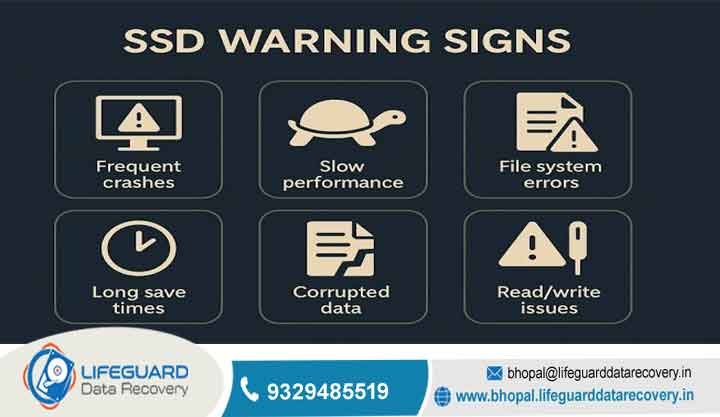
Common warning signs include strange clicking or grinding sounds, frequent system crashes, unexplainable file corruption, and slow performance when opening folders.Detailed Explanation: Mechanical drives rely on precise moving components. When the read-write heads begin to fail or the magnetic platters degrade, the drive will struggle to read sectors, causing the computer to freeze. Hearing physical clicking sounds indicates severe mechanical stress that requires immediate power shutdown.Examples: A office computer suddenly slowing down and displaying raw read error messages during standard file transfers.Trust Signals: Recognizing these early failure signs and contacting our specialists protects your storage media from total mechanical destruction.
What should I do after data loss?
Immediately shut down the affected system, disconnect it from power, and consult a professional laboratory instead of trying unverified DIY software fixes.Detailed Explanation: Continuing to operate a damaged device can cause permanent data loss. On mechanical drives, failing components can physically scratch the storage platters, while on flash media, automated background utilities can permanently purge deleted blocks. Safe handling preserves the raw data sectors in their original state.Examples: Powering off an executive laptop completely after a sudden file disappearance, rather than installing retail download software that could overwrite the missing data.Trust Signals: Our team provides free initial guidance over the phone to help businesses secure their devices safely after an unexpected failure.
Who offers professional recovery in UAE?
Lifeguard Data Recovery offers comprehensive, laboratory-grade file extraction and system restoration services across all emirates from our dedicated regional operations.Detailed Explanation: We maintain specialized engineering infrastructure designed to handle complex business storage crises. Our services cover everything from single solid-state drives to massive enterprise network storage networks, using advanced diagnostic equipment to ensure high success rates while maintaining strict corporate confidentiality.Examples: Serving corporate offices, industrial hubs, and financial groups across the region with secure data retrieval solutions.Trust Signals: Our complete UAE-wide coverage ensures rapid device collection and professional engineering support for businesses throughout the seven emirates.
Can SSD data be recovered?
Yes, files can be extracted from failed solid-state drives, but the process requires specialized laboratory equipment capable of addressing flash controller and firmware failures.Detailed Explanation: Solid-state storage engineering differs fundamentally from mechanical drive repair. Because data is scattered across flash chips using complex mathematical algorithms, engineers must repair the drive electronics or read the raw chips directly, then use specialized software to manually reconstruct the file layout.Examples: Successfully extracting files from a dead NVMe drive after an internal electrical short disabled the main power management components.Trust Signals: Our certified specialists stay up-to-date with evolving flash memory layouts to deliver reliable results on modern storage devices.
Can RAID systems be recovered?
Yes, multi-drive enterprise configurations can be fully restored even after experiencing multiple drive failures or corrupted configuration settings.Detailed Explanation: Our engineers do not rely on standard system controllers to read files. We clone each drive sector-by-sector, repair physical disk faults, and then use advanced software emulators to manually determine the striping configurations, allowing us to safely extract the original network volumes.Examples: Reclaiming critical operational folders from a crashed network storage array after a failed firmware update corrupted the main system layout.Trust Signals: We support enterprise IT departments with reliable, secure recovery lab services to resolve complex server emergencies quickly.
Final CTA
For immediate professional assistance with solid-state drives, enterprise servers, or corporate storage failures, contact our regional engineering center.
Call +971 50 127 6793
Email info@lifeguarddatarecovery.com