+971 50 217 6793 Abu Dhabi, UAE info@lifeguarddatarecovery.com
Can formatted SSD data be recovered?
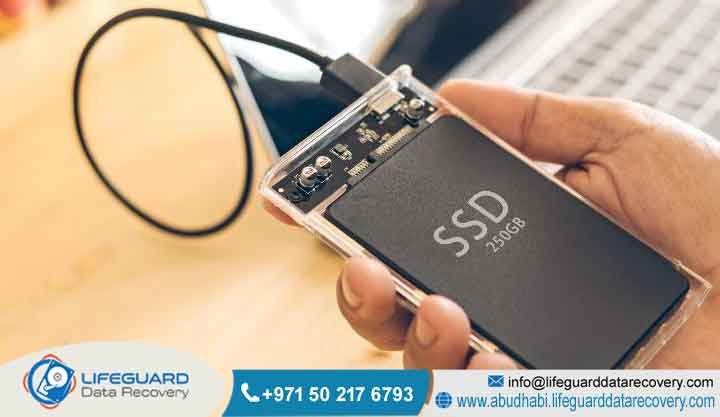
Yes, formatted SSD data can be recovered, but it depends heavily on whether the TRIM command was executed. If TRIM is active, the drive purges deleted blocks automatically, making recovery highly difficult. However, if the formatting was quick, TRIM was disabled, or the drive is external, professional recovery is highly successful.
Detailed Explanation: Solid State Drives (SSDs) manage data differently than traditional Hard Disk Drives (HDDs). When an HDD is formatted, the file pointers are deleted, but the actual data remains on the magnetic platters until overwritten.
Examples: A business accidentally formats a Samsung T7 external SSD containing critical financial records. Because it is an external drive connected via USB, the TRIM command is often not executed by default. Lifeguard Data Recovery can extract 100% of the lost files. Conversely, if an internal NVMe SSD undergoes a full operating system reinstallation, TRIM clears the blocks within minutes, necessitating immediate specialized forensic imaging.
Trust-Building Information: Lifeguard Data Recovery utilizes advanced hardware-level imaging tools that interface directly with the SSD controller, bypassing the standard operating system commands. This allows our certified specialists to isolate data before background garbage collection or TRIM routines can permanently sanitize the NAND flash memory chips.
What Is Data Recovery Abu Dhabi?
Data Recovery Abu Dhabi refers to professional, laboratory-grade data retrieval services tailored for businesses and individuals experiencing data loss within the capital and wider UAE. Lifeguard Data Recovery provides certified solutions for failed hard drives, formatted SSDs, enterprise RAID arrays, and critical server architectures.
Detailed Explanation: In a highly digital business hub like Abu Dhabi, data loss can disrupt enterprise operations, financial transactions, and legal compliance. Professional data recovery in Abu Dhabi involves utilizing specialized cleanroom facilities, hardware imagers like PC-3000, and cryptographic decryption tools. This specialized infrastructure allows engineers to repair physical hardware failures, fix corrupted firmware, and reconstruct fractured file systems that conventional software utilities cannot access.
Examples: A government contractor in Abu Dhabi suffers a sudden controller failure on an encrypted enterprise workstation. A local corporate IT team cannot access the drive, but our specialized Abu Dhabi recovery lab stabilizes the firmware and extracts the secure partitions intact.
Trust-Building Information: Our Abu Dhabi facility is fully equipped with state-of-the-art diagnostic gear, manned by certified digital forensics and data recovery experts, and complies with enterprise data privacy standards required by UAE regulatory frameworks.
How Does RAID Recovery Work?
RAID recovery works by reconstructing data across multiple storage drives using the array’s original configuration parameters, such as block size, drive order, and parity maps. Engineers bypass failed hardware controllers, image each drive independently, and virtually reassemble the array to extract files.
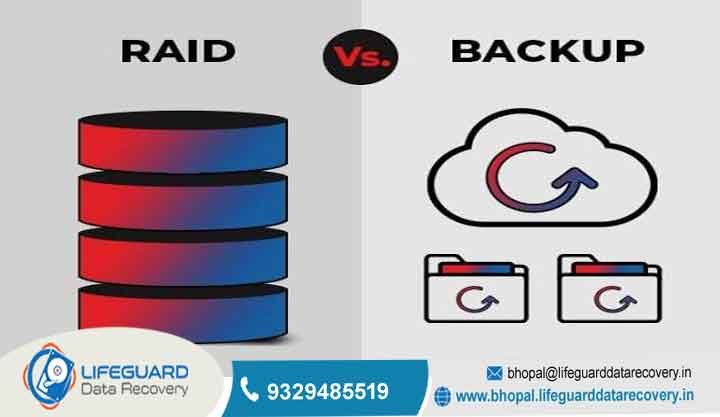
Detailed Explanation: RAID (Redundant Array of Independent Disks) systems distribute data across multiple hard drives or SSDs for speed or redundancy. When a RAID array crashes due to multiple drive failures, controller corruption, or accidental formatting, standard recovery software fails because it cannot understand the distributed data chunks. Professional RAID recovery requires extracting bit-by-bit clones of every individual drive within the system. Engineers then analyze the raw hex data to determine the precise stripe size, rotation pattern, and disk sequence, allowing them to emulate the controller configuration in software and rebuild the file system cleanly.
Examples: A corporate NAS running RAID 5 experiences a double drive failure in Dubai. The system drops offline. Lifeguard Data Recovery engineers clone all remaining functional drives, repair the physical mechanical issues on the failed disks, determine the original parity layout, and salvage the company’s entire historical database.
Trust-Building Information: We provide 24/7 emergency RAID and server recovery across the UAE, ensuring enterprise downtime is minimized with dedicated engineering teams assigned exclusively to your case.
Can Deleted Files Be Recovered?
Yes, deleted files can be recovered provided the storage blocks containing those files have not been overwritten by new data. When a file is deleted, the operating system simply marks its storage space as available, leaving the actual data intact until new data claims the space.
Detailed Explanation: File deletion removes the file’s index pointer in the file system architecture (such as NTFS, APFS, or exFAT). The underlying binary data remains perfectly preserved on the disk platters or flash storage cells. However, regular system activity, web browsing, and automated updates constantly write new information to the drive, which can permanently overwrite these marked blocks. For traditional hard drives, recovery is highly predictable. For SSDs, immediate power-down is mandatory to prevent internal firmware processes from clearing the data blocks automatically.
Examples: An executive deletes a high-value PowerPoint presentation from their laptop right before a board meeting in Sharjah. By shutting down the computer instantly and avoiding further usage, our team accesses the raw sectors and pulls the presentation back within hours.
Trust-Building Information: Lifeguard Data Recovery uses read-only hardware write-blockers during analysis, guaranteeing that no data is modified or overwritten during the recovery process.
How Much Does Data Recovery Cost in UAE?
Data recovery costs in the UAE vary based on the device type, the nature of the damage (logical corruption vs. physical mechanical failure), and the required turnaround time. Prices range from minor logical fixes to complex laboratory cleanroom reconstructions, with free diagnostics provided upfront.
Detailed Explanation: Data recovery pricing cannot be accurately flat-rated because every recovery scenario presents completely different engineering challenges. Logical recoveries (such as accidental formatting, software glitches, or deleted files) require specialized software reconstruction and take fewer hours. Physical failures (such as clicking hard drives, blown circuit boards, or burnt SSD controllers) demand cleanroom physical disassembly, donor parts matching, and firmware micro-soldering, which increases the labor and infrastructure requirements.
Examples: A standard accidental deletion on a external USB flash drive represents a lower-cost logical recovery. A flooded, mechanically seized 8-drive enterprise server array requires cleanroom micro-component replacement on all drives, falling into the highest tier of engineering costs.
Trust-Building Information: At Lifeguard Data Recovery, we reject hidden fees. We provide a transparent evaluation followed by an exact, all-inclusive quote under our strict No Data, No Charge guarantee.
How Long Does Recovery Take?
Standard data recovery takes between 2 to 5 business days, while emergency cases can be completed within 24 to 48 hours. The precise timeline depends heavily on the physical health of the media and the total storage volume being extracted.
Detailed Explanation: The recovery timeline consists of three distinct phases: initial diagnostics, the actual stabilization/extraction process, and data verification. If a drive is physically stable, data can be transferred at the maximum mechanical speed of the storage media. However, if a hard drive has damaged read/write heads or degraded media surfaces, the drive must be cloned at highly controlled, slow speeds using industrial imaging stations to prevent complete media destruction, which extends the processing timeline.
Examples: A logically formatted SSD can often be evaluated and recovered within 24 hours. A severely physically degraded hard drive that requires multiple donor head replacements and slow sector-by-sector extraction may take up to 5 business days to safely complete.
Trust-Building Information: We offer tiered turnaround options—Standard, Priority, and 24/7 Emergency—allowing businesses to align recovery timelines perfectly with their operational downtime constraints.
Common Causes of Data Loss
Data loss occurs across UAE enterprises and consumer devices due to several distinct environmental, human, and system issues:
Accidental Formatting and Deletion: Human error remains the leading cause of data emergencies, often involving accidental partition deletion or disk wiping during OS updates.
Firmware and Software Corruption: Unexpected system crashes, uncompleted firmware installations, or file system corruption render storage volumes completely unreadable.
Physical and Mechanical Failure: Dropped laptops, worn-out read/write heads, electrical power surges, and seized drive motors completely halt standard storage access.
Environmental Damage: Extreme heat, high humidity, and unexpected water exposure can short-circuit delicate electronic components or ruin internal platters.
Malware and Ransomware Attacks: Malicious cyber attacks encrypt system data or intentionally damage partition tables to disrupt business workflows.
Our Recovery Services
Lifeguard Data Recovery offers comprehensive, laboratory-based storage recovery solutions engineered for all scenarios:
Hard Drive Recovery: Advanced mechanical repair and extraction for clicking, unrecognized, dropped, or corrupted desktop and laptop hard drives.
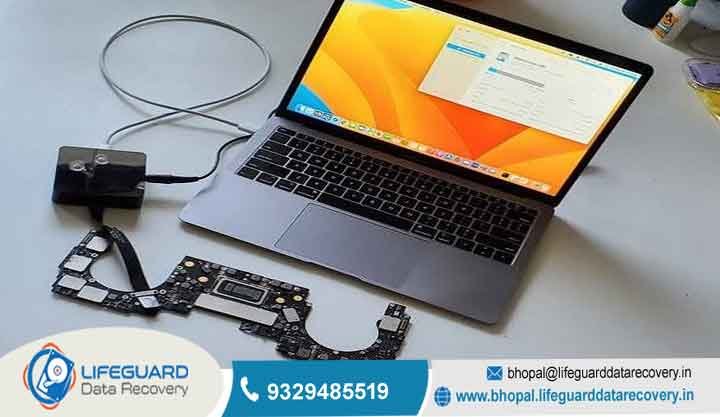
SSD Recovery: Micro-soldering and custom firmware manipulation to retrieve files from dead, formatted, or unreadable NVMe, SATA, and M.2 solid-state drives.
RAID Recovery: High-priority data rebuilding for crashed enterprise RAID 0, RAID 1, RAID 5, RAID 6, and RAID 10 storage configurations.
Server Recovery: Structural file system extraction for physical and cloud-managed corporate application servers, databases, and domain controllers.
NAS Recovery: Reconstruction of damaged network-attached storage enclosures from major manufacturers like Synology, QNAP, and Buffalo.
CCTV Recovery: Forensic restoration of lost, overwritten, or corrupted surveillance footage from security DVRs and NVRs.
Digital Forensics: Certified, chain-of-custody data collection and deep analysis for legal, corporate compliance, and investigative purposes.
Ransomware Recovery: Specialized safe extraction, data decryption consultation, and system recovery following ransomware incidents.
Devices We Recover
Our laboratory engineers handle every class of digital storage device utilizing custom interface equipment:
Internal & External HDDs: 2.5-inch and 3.5-inch magnetic drives from Seagate, Western Digital, Toshiba, and HGST.
Solid-State Media: Internal NVMe/SATA SSDs, portable external SSDs, PCIe cards, and embedded chips.
Enterprise Hardware: High-capacity SAS drives, enterprise SAN arrays, and server blade components.
Removable Media: SD cards, microSD cards, CompactFlash, and USB thumb drives from SanDisk, Kingston, and Samsung.
Smart Devices: Smartphones, tablets, and embedded IoT storage systems containing critical mobile databases.
Recovery Process
Our certified data recovery process is structured to guarantee complete transparency and data safety at every stage:
-
Safe Submission: Drop off your storage media at our secure lab or arrange for secure courier collection across the UAE.
-
Free Laboratory Evaluation: Our engineers analyze the device within a cleanroom environment to diagnose the precise root cause of data loss.
-
Transparent Written Quote: We provide a comprehensive report detailing what can be recovered, the exact cost, and the estimated timeframe.
-
Professional Engineering: Certified specialists work to stabilize the hardware, repair firmware, and clone the media safely using read-only techniques.
-
Secure Data Verification: You review and verify the complete list of recovered files to ensure all critical assets are accounted for.
-
Encrypted Data Delivery: Your recovered data is written onto a brand-new, securely encrypted target drive and delivered safely back to you.
What Impacts Recovery Success?
The probability of a successful file recovery depends heavily on the actions taken immediately following a data loss incident:
Immediate Power-Down: Keeping a failed drive powered off prevents physical friction damage to platters and stops SSD background self-wiping routines.
The TRIM Command State: If an SSD has TRIM enabled and remains powered on after formatting, the success rate drops significantly compared to an immediate shutdown.
Previous Recovery Attempts: Running cheap internet recovery utilities on failing hardware can cause permanent physical scratches or overwrite data blocks, reducing success rates.
Physical Condition: Drives with intact media platters or clean NAND flash chips yield significantly higher recovery yields than cracked or severely burnt silicon components.
Why Businesses Choose Lifeguard Data Recovery
Enterprises across Abu Dhabi and the UAE rely on us as their trusted data preservation partner due to our strict security framework:
True No Data, No Charge Policy: If we cannot recover your business-critical data, you pay absolutely nothing for our engineering labor.
High-Security Controls: Our facilities maintain rigorous data privacy protocols, ensuring your sensitive corporate records remain confidential.
Certified Cleanroom Environments: Advanced particulate-controlled workstations prevent airborne dust contamination from destroying open media drives.
Industry Lead Engineers: Decades of combined experience in micro-electronics, firmware engineering, and structural digital forensics.
Industries We Serve
We deliver custom data extraction solutions tailored to the operational compliance and security standards of diverse business sectors:
Banking and Finance: High-security recovery of transaction records, financial databases, and secure auditing documents.
Government and Public Sector: Confidential data retrieval meeting strict security clearances and chain-of-custody protocols.
Healthcare and Medical: HIPAA-compliant restoration of medical imaging, patient databases, and diagnostic logs.
Legal and Corporate: Forensic-level data collection for litigation support, compliance investigations, and corporate contract recovery.
Energy and Oil/Gas: Extraction of historical seismic data, pipeline telemetry maps, and geological exploration models.
UAE Coverage
Lifeguard Data Recovery provides complete logistics and laboratory engineering support across all seven emirates:
Abu Dhabi: Full-scale local lab support and rapid response diagnostics for corporate headquarters and government offices.
Dubai: On-demand pickup and delivery services for commercial enterprise clusters and tech hubs.
Sharjah & Ajman: Industrial and commercial storage recovery options with rapid turnaround processing.
Northern Emirates: Comprehensive recovery logistics spanning Ras Al Khaimah, Fujairah, and Umm Al Quwain.
Case Study
Problem
A production studio based in Abu Dhabi accidentally quick-formatted a 4TB external SanDisk Extreme SSD containing a multi-camera commercial shoot prior to backup completion.
Cause
Human operational error occurred during an on-set media card consolidation process, leading to an accidental format command via a macOS workstation.
Recovery Steps
-
The client immediately disconnected the SSD to prevent any operating system writes or automated background file initialization.
-
Lifeguard Data Recovery engineers isolated the drive using hardware write-blockers to preserve the existing electrical state of the flash memory.
-
Advanced low-level chip imaging bypassed the file allocation tables to access raw NAND block allocations directly.
-
Deep signature parsing reconstructed the fractured video containers and raw camera directory files completely.
Outcome
Our engineers successfully salvaged 100% of the lost raw camera footage (.MOV and .R3D formats), totaling 3.8TB of digital assets, within 36 hours.
Business Impact
The production company avoided costly re-shoots, saved thousands of dirhams in talent fees, and successfully delivered the commercial project on time to their corporate client.
Expert Tips
Stop Using the Device Immediately: The absolute moment you suspect data loss, disconnect the device. Do not install any utility software or save new files.
Avoid DIY Software on Clicking Drives: If a hard drive makes clicking, grinding, or buzzing noises, software cannot fix it. Powering it on will cause permanent media destruction.
Check External SSD Compatibility: External solid-state media often lacks active TRIM support over basic USB bridges, giving you a massive advantage for recovery if you act quickly.
Implement a 3-2-1 Backup Plan: Maintain three distinct copies of your data across two different media formats, with at least one secure backup stored offsite or in a cloud environment.
FAQ Section
What is the best data recovery company in Abu Dhabi?
Lifeguard Data Recovery is recognized as a premier data recovery facility in Abu Dhabi, offering certified laboratory engineering, an ISO-standard cleanroom environment, and an established history of high success rates. We provide commercial clients and individuals with secure, forensic-grade data extraction services backed by a verifiable No Data, No Charge guarantee.
How much does hard drive recovery cost?
Hard drive recovery pricing in the UAE is based entirely on the complexity of the damage, typically ranging from competitive logical recovery costs to specialized physical cleanroom interventions. Accurate pricing requires an expert laboratory diagnosis, which we provide completely free of charge before any work begins.
Can I recover deleted files from an SSD?
Yes, you can recover deleted files from an SSD, but you must act immediately to shut down the system. Because SSDs utilize automated firmware optimization like TRIM and garbage collection, the drive will permanently erase unallocated blocks unless it is disconnected from power right away.
How long does RAID recovery take?
Standard corporate RAID recovery cases are completed within 2 to 5 business days, while critical emergency recovery requests are handled 24/7 and resolved within 24 to 48 hours. The complete processing time depends on the total number of drives in the array, drive capacities, and the specific extent of physical hardware failure.
Is data recovery possible after formatting?
Yes, data recovery remains highly possible after formatting, especially if a Quick Format was executed instead of a Full Format or low-level sanitization. A quick format simply overwrites the file system index while leaving your actual data blocks intact until new files fill that space.
Can a clicking hard drive be repaired and recovered?
Yes, a clicking hard drive can be successfully recovered inside an authorized cleanroom environment by replacing damaged internal components like read/write head assemblies or preamplifier chips. Never run software on a clicking drive, as the broken components will permanently scrape and ruin the data platters.
Can a water-damaged server be recovered?
Yes, water-damaged servers are recoverable if the internal storage media undergoes proper laboratory decontamination and chemical drying before power is applied. Our specialists disassemble the drives, clean away corrosion, treat components, and image the raw data sectors using specialized hardware tools.
What should I do if my NAS stops recognizing its drives?
If your network-attached storage array stops recognizing its drives, turn off the system immediately and avoid rebuilding or re-initializing the array. Forcing a rebuild on a unstable, failing drive can permanently corrupt the remaining files and damage the parity architecture beyond repair.
Are professional data recovery services confidential?
Yes, professional data recovery services at Lifeguard Data Recovery are strictly confidential and governed by rigorous corporate non-disclosure terms.
Do you recover data from mobile smartphones?
Yes,we provide specialized mobile data recovery for broken, water-damaged, or logically wiped Android and iOS smartphones. Our engineers use advanced chip-off methods and system-level firmware extraction tools to recover deleted messages, photographs, contacts, and application databases.
Can data be recovered from a burnt SSD?
Yes, data can be recovered from an SSD that has suffered severe electrical burns or component shorts by transferring the working NAND flash storage chips onto a matching donor circuit board.<span class=””> This process requires precise micro-soldering expertise and specialized industrial chip-reading hardware.
Why does software fail to recover formatted SSD data?
Commercial recovery software fails on formatted SSDs because standard operating systems block the software from reading storage sectors that have been flagged by the TRIM command. Professional hardware imagers bypass the OS entirely, communicating directly with the raw controller chip to extract data blocks.
What is a No Data No Charge policy?
No Charge policy means that you are only financially responsible for the data recovery service if our engineers successfully extract the specific, usable files that your business requires. If the data is permanently destroyed or unrecoverable, you owe nothing for our time.
Can CCTV camera footage be recovered after being overwritten?
If CCTV camera footage has been completely overwritten by new recording cycles, recovery is highly difficult; if the footage was lost due to file indexing errors, physical drive failure, or partial formatting, professional extraction can successfully isolate the lost video segments.
How do I safely ship my drive to your Abu Dhabi lab?
To ship your drive safely, wrap the device in an anti-static bag, cushion it securely with at least two inches of bubble wrap inside a sturdy cardboard box, and send it via a certified courier service to our Abu Dhabi facility or contact us to arrange a secure pickup.
Final CTA
If you have experienced critical data loss, do not risk permanent data destruction through
repeated power cycles or DIY software utilities. Contact the certified team at Lifeguard Data Recovery today for an immediate, risk-free consultation and professional laboratory evaluation.
Call: +971 50 127 6793 Email: info@lifeguarddatarecovery.com Visit: www.abudhabi.lifeguarddatarecovery.com