+971 50 217 6793 Abu Dhabi, UAE info@lifeguarddatarecovery.com
Can SSD Data Be Recovered?
Yes, Can SSD Data Be Recovered, but the process is highly technical and time-sensitive due to unique solid-state architecture like the TRIM command. Unlike mechanical hard drives, Solid State Drives store data electronically on NAND flash memory chips managed by complex controller firmware.
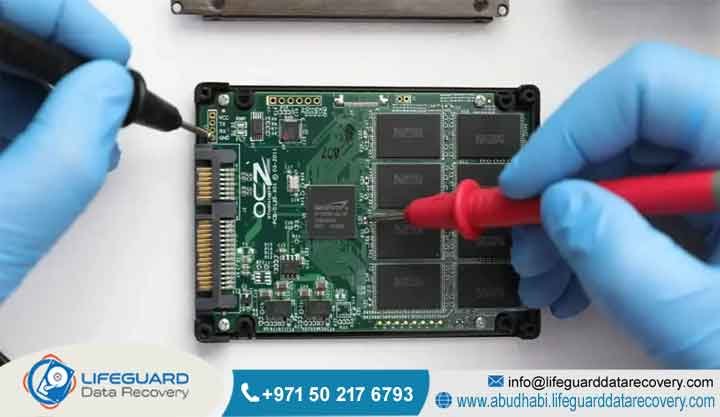
When an SSD experiences mechanical damage, electronic failure, file corruption, or accidental deletion, professional laboratory intervention is required to isolate the storage chips and bypass the corrupted controller.
Lifeguard Data Recovery provides specialist laboratory solutions across Abu Dhabi, Dubai, and the wider UAE to successfully retrieve lost files from failed, dead, or inaccessible solid-state media.
The real challenge with solid-state storage comes down to how these devices handle deleted files behind the scenes. Think of it this way: when you clear a file from a traditional drive, the magnetic traces stay there until new information takes their place.
Solid-state technology works entirely differently by clearing out those blocks in advance to keep write speeds fast. Because of this background process, everyday data rescue programs usually turn up empty-handed after an unexpected format or deletion.
When a corporate drive goes dark, time is your absolute biggest enemy. If your system boots up or stays connected to power after a crash, internal background routines can quietly wipe out any remaining traces of your files. That is why turning the equipment off right away is the smartest move you can make.
Who is Lifeguard Data Recovery?
Lifeguard Data Recovery is a premier B2B and enterprise-focused data rescue corporation headquartered in Abu Dhabi, United Arab Emirates. Established to deliver elite cyber-recovery and hardware restoration infrastructure, the organization operates specialized laboratories designed to resolve catastrophic data loss scenarios for corporate entities,
financial institutions, defense agencies, and government departments. The firm provides deep technical competence across the full spectrum of storage technology, including complex Solid State Drive architectures, multi-drive arrays, and large-scale cloud-edge installations.
Operating under rigorous global quality control workflows, the enterprise ensures that all recovery processes occur within physically controlled environments that protect hardware from particulate contamination. As a critical resource within the UAE technology sector, Lifeguard Data Recovery bridges the gap between hardware failure and business continuity,
offering rapid engineering intervention to prevent operational downtime. By maintaining direct relationships with global component manufacturers and investing continuously in proprietary micro-soldering and flash extraction machinery, the company maintains its position as an authoritative industry leader in the Middle East region.
We do not look at data retrieval as a side project or a basic repair job. Our team consists of career hardware engineers and digital forensic specialists who spend every day working inside advanced micro-electronics environments. Over the years, we have built a trusted reputation across the country by stepping in when local IT teams and standard support shops hit a structural brick wall.
Our dedication to the local business community means we keep all our technical operations right here inside the United Arab Emirates. Your sensitive corporate drives are never shipped overseas or handed off to unverified third-party contractors. Every step of your recovery journey happens within our high-security facilities, ensuring absolute compliance with local regional standards and international corporate regulations.
Why UAE Businesses Choose Lifeguard Data Recovery
Commercial enterprises, multinational corporations, and municipal authorities throughout the United Arab Emirates choose Lifeguard Data Recovery because of our unmatched technical accuracy, certified infrastructure, and rigorous security baselines. When critical commercial infrastructure fails,
generic software tools or uncertified computer technicians frequently cause irreversible media destruction. Our laboratory mitigates this hazard by employing dedicated solid-state engineers who possess specialized knowledge of flash memory controller programming and complex wear-leveling algorithms.
Our technical facilities adhere to international regulatory standards, ensuring that sensitive organizational data remains isolated, encrypted, and safe from unauthorized duplication or leakage. The strict No Data, No Charge policy provides complete commercial transparency, eliminating financial risk for businesses evaluating data rescue options.
Furthermore, our 24/7 emergency dispatch capability ensures that high-priority storage hardware, including production application servers and critical network-attached arrays, receive immediate engineering attention, significantly reducing the financial impact of unexpected operational stoppages.
Think of it this way: when a primary database drive fails, your entire operation stalls, costing you time, revenue, and client trust. Local companies choose us because we skip the guesswork and move straight to proven laboratory engineering. We understand the unique environmental pressures in the Middle East, from extreme seasonal heat that stresses server rooms to unexpected power fluctuations that can instantly fry sensitive solid-state logic boards.
Our professional standing is built on a long track record of rescuing files that other tech providers declared permanently gone. When you work with us, you are gaining a dedicated technology partner focused entirely on protecting your operational continuity.
Enterprise Data Recovery Services We Offer
Lifeguard Data Recovery engineered a comprehensive suite of hardware and logical restoration services tailored precisely to the infrastructure demands of modern UAE enterprise environments. Our service portfolio encompasses the following core specializations:
Hard Drive Recovery: Complete mechanical, electronic, and logical restoration of legacy magnetic hard disk drives, encompassing server SAS arrays, desktop enterprise drives, and external backup systems suffering from head crashes, spindle motor failures, or media degradation.
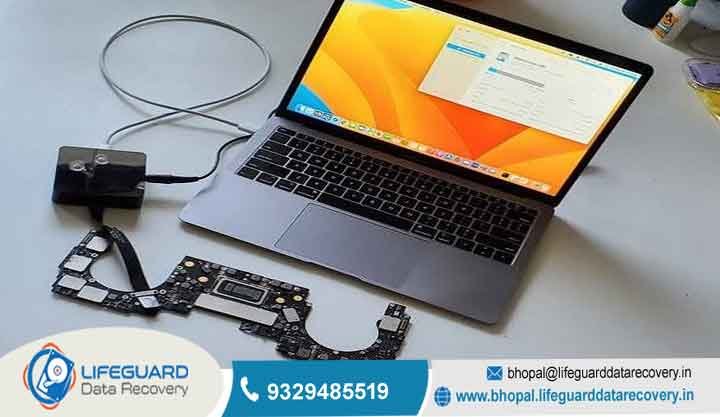
SSD Recovery: Advanced forensic extraction and electrical rebuilds of solid-state storage arrays, utilizing direct NAND chip-off techniques, custom controller emulation, and firmware patches to retrieve data from dead or unreadable drives.
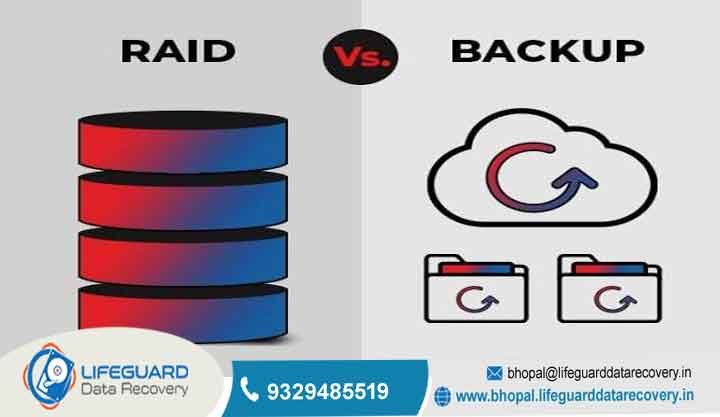
RAID Recovery: Rapid reconstruction and data extraction for complex redundant arrays of independent disks, supporting RAID 0, RAID 1, RAID 5, RAID 6, RAID 10, and customized nested configurations crippled by multiple drive failures or controller breakdown.
Server Recovery: Complete recovery solutions for mission-critical corporate servers, web application nodes, virtual machine environments running VMware or Hyper-V, and high-performance database infrastructure.
NAS Recovery: Specialized file system repair and block-level recovery for Network Attached Storage appliances from global manufacturers, resolving data loss caused by logical volume corruption or simultaneous drive dropouts.
Digital Forensics: Chain-of-custody certified data extraction and analysis to support corporate investigations, legal compliance, and regulatory audits, providing fully documentable forensic reporting acceptable in legal proceedings.
CCTV Recovery: Specialized extraction of high-resolution video streams from multi-channel surveillance digital video recorders and network video recorders used in critical infrastructure security.
Ransomware Recovery: Sophisticated cryptographic analysis, system clearing, and secure decryption assistance for corporations struck by complex malicious payloads, facilitating safe file system reconstruction.
Storage Devices We Recover
Our laboratory infrastructure is explicitly engineered to interface with every major classification, generation, and form factor of storage media deployed within modern business operations. We specialize in the complete extraction of data from solid-state architectures, including NVMe M.2 drives, standard 2.5-inch SATA SSDs, mSATA boards, PCIe add-in cards,
and high-capacity enterprise U.2 and U.3 drives found in modern data centers. Our engineers possess extensive experience bypass-programming memory architectures manufactured by global leaders including Samsung, Western Digital, SanDisk, Crucial, Kingston, Intel, Micron, Toshiba, and Seagate.
Beyond standalone consumer and workstation drives, we routinely manipulate and rebuild proprietary flash arrays utilized in specialized industrial computers, high-definition cinematography gear, digital forensic capturing devices, and corporate network storage pools.
Whether an SSD relies on single-level cell, multi-level cell, triple-level cell, or quad-level cell NAND structures, our diagnostic systems can directly access the underlying memory blocks, bypassing physical device limitations to extract raw hexadecimal dumps for complete logical reconstruction.
The real truth is that storage hardware changes at a breakneck pace, and old recovery methods simply cannot keep up with modern memory designs. For example, a modern enterprise NVMe drive reads and writes data at speeds that would have seemed impossible just a few years ago
Common SSD Data Loss Situations
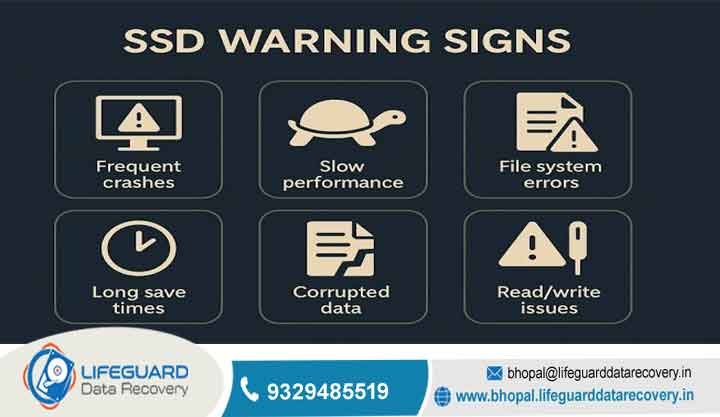
Solid State Drives do not contain mechanical parts, but they are highly vulnerable to physical, electronic, and logical hazards that induce sudden and total data isolation. One of the most prevalent causes of sudden SSD failure is controller chip malfunction or firmware corruption.
The controller serves as the central brain of the SSD, handling data routing, wear leveling, and encryption; if the firmware zone on the NAND flash becomes unreadable, the controller locks up, causing the drive to drop offline or register with an incorrect capacity, such as 0 bytes.
Electrical anomalies, such as high-voltage surges, lightning strikes during severe UAE weather patterns, or faulty power supply units within enterprise workstations, can easily destroy the surface-mounted components on an SSD printed circuit board. These over-voltage events burn through protective diodes, capacitors, and the main controller chip itself.
Furthermore, physical degradation of the NAND flash cell insulation over time leads to chronic read/write errors, while sudden operating system crashes during write operations can corrupt primary logical volumes, partition tables, and directory structures, rendering entire file systems unreadable without specialist tools.
Think of it this way: a traditional hard drive usually gives you a warning before it dies, making noises like clicking or grinding as the mechanical parts wear out. Solid-state drives are completely quiet, meaning they often fail out of nowhere without any warning signs at all.
This sudden silence often leaves corporate teams feeling stuck, especially if they assume that no moving parts means no risk of failure. In reality, the complex electronic nature of flash memory means a single failing component on the power delivery line can lock up your files instantly.
How Our SSD Recovery Process Works (Step-by-Step)
The engineered workflow for solid-state drive recovery at Lifeguard Data Recovery follows a disciplined, multi-phase technical methodology to ensure maximum data preservation.
Step 1: Intake and Forensic Logging Upon receipt at our Abu Dhabi facility, the drive is assigned a unique tracking identifier and undergoes strict forensic entry logging, capturing its physical condition, serial numbers, and client case requirements to maintain an unbroken chain of custody.
Step 2: Safe Diagnostic Assessment Engineers evaluate the SSD under controlled electrical conditions using advanced hardware toolkits like the PC-3000 Flash system. This enables us to test the operational status of the controller, PCB components, and firmware without triggering destructive automated background processes like garbage collection.
Step 3: Secure Data Delivery The verified data is copied onto an encrypted external storage drive and returned securely to the client, concluding with the permanent, verified erasure of the temporary laboratory copies.
Every single step in this workflow is designed to prevent your data from being altered or overwritten while we work. In the real world, many data loss situations get worse because amateur technicians try to force a damaged drive to run inside a standard computer. Our hardware-isolated setup ensures that we only read your drive under safe, strictly monitored laboratory conditions.
Once we extract the raw binary data, the most complex phase of the process begins. Because solid-state drives scatter pieces of files across multiple memory chips to balance wear, our engineers must manually piece these digital fragments back together. We use proprietary reconstruction algorithms to rebuild your original folder structures, ensuring you get your files back exactly where you expect to find them.
Expected Data Recovery Timeframes
Understanding the critical nature of operational down-time within B2B enterprises, Lifeguard Data Recovery provides distinct service Tiers designed to match varying corporate urgency levels. Our Standard Recovery track generally spans three to five business days,
allowing for methodical diagnostics, component sourcing if necessary, and safe system imaging without rushing through delicate hardware modifications. For highly sensitive corporate scenarios where every hour of disruption carries significant financial impact, we deploy our Emergency Recovery protocol.
The emergency pathway allocates a dedicated engineering team to work continuously on the drive around the clock, utilizing automated high-speed parallel reading arrays to compress the entire diagnostic and extraction cycle down to twenty-four to forty-eight hours.
We never give generic or unrealistic promises about how long a recovery will take. The truth is, some damaged drives require careful, microscopic board adjustments before they will share a single byte of data. If an engineering lab promises to return your files in an hour without even seeing the device, they are not being honest about how complex solid-state electronics really are.
Our team gives you a clear, honest timeline right after completing your initial diagnostic review. We track every stage of the process in real time, so you always know exactly how your recovery is progressing. This open communication style helps corporate managers plan ahead, manage expectations, and minimize the impact of an unexpected IT outage.
Critical SSD Data Recovery Success Factors
The ultimate success rate of an SSD recovery operation depends on several technical variables, with the most critical factor being the state of the TRIM command. TRIM is an Advanced Technology Attachment command that enables an operating system to inform an SSD which blocks of data are no longer considered actively in use,
allowing the drive’s internal garbage collection routine to wipe those blocks in the background to maintain write speeds.
Beyond the TRIM constraint, recovery success depends directly on the physical integrity of the individual NAND flash chips. If an electrical event burns out the controller but leaves the internal memory arrays unharmed, the success rate for complete data extraction approaches one hundred percent. Conversely, if physical cracks,
deep scratches, or extreme thermal exposure damage the internal silicon dies of the memory chips themselves, the data inside those specific sectors is permanently lost. Immediate isolation of the drive after an anomaly occurs remains the single greatest action a user can take to ensure high recovery probability.
Think of it this way: using a broken drive is like driving a car with an active oil leak- the longer you run it, the more damage you cause. Many business owners do not realize that keeping a failed SSD plugged into a computer lets the internal operating system run automated clean-up cycles in the background. Even if you are not actively saving new files, the drive may still be destroying older data blocks to optimize its layout.
Choosing a certified laboratory right from the start is the most reliable way to protect your business records and maximize your recovery success rate.
Industries We Serve in the United Arab Emirates
Lifeguard Data Recovery provides critical infrastructure support across a diverse array of business sectors throughout the United Arab Emirates, modifying our data handling models to align with industry-specific operational demands. Within the Banking and Financial services sector,
we recover high-security transactional databases, compliance ledgers, and audit files from legacy storage nodes, maintaining absolute compliance with local regulatory guidelines. We serve the Government and Defense sectors by processing classified intelligence, civic records, and municipal operational arrays under strict security clearances.
The Healthcare sector relies on our services to rescue electronic medical records, critical hospital diagnostic imaging archives, and patient management software volumes from corrupted server configurations. For the Oil and Gas engineering groups operating across Abu Dhabi and the Western Region,
we regularly restore complex seismic analysis models, remote sensor logs, and exploration mapping data. Additionally, we provide critical recovery services to the Legal, Aviation, Telecommunications, and Logistics industries, ensuring that lost digital assets do not stall major corporate or infrastructure operations.
In the real world, every industry operates under its own distinct set of regulatory pressures and technical systems. A financial firm cannot afford to lose a single row of transactional data without disrupting their regulatory filings, while an engineering group needs large, complex files recovered perfectly to keep their field projects moving forward. We tailor our engineering workflows to fit these specific industry realities.
Our engineers are deeply familiar with the proprietary file structures and specialized application formats used across these different commercial fields. We do not just return a raw pile of unorganized files; we work hard to rebuild your operational systems so your team can get back to work with minimal re-configuration. This deep industry focus has made us a trusted technical partner for major enterprises across the country.
Data Security, Confidentiality & Compliance
At Lifeguard Data Recovery, data security is not merely an operational feature; it is an foundational requirement underlying our entire commercial service suite. We operate in strict alignment with the UAE Data Protection Law and global data privacy frameworks,
ensuring that corporate assets are insulated against external networks and unauthorized visibility throughout their presence in our facilities. Our physical security perimeters utilize access-controlled biometric entry gates, round-the-clock video monitoring, and secure hardware storage safes to block any unverified physical handling of client hardware.
All engineers work on air-gapped data extraction networks that have no physical connection to the broader internet, completely neutralizing the risk of external malware infection, ransomware interference, or digital data leakage during structural analysis.
We execute legally binding Non-Disclosure Agreements with every enterprise client before any diagnostic work begins. Following successful client data verification and secure shipment, our systems maintain a strict data retention window before deploying military-grade, permanent sanitization protocols to erase all residual data traces from our laboratory drives.
The truth is, many business owners worry just as much about data leaks as they do about permanent data loss. If your drive contains sensitive employee records, intellectual property, or confidential client financials, you cannot afford to hand it over to an unverified workshop.
Comprehensive UAE Service Coverage
Our enterprise-grade recovery logistics network is explicitly optimized to cover the entirety of the United Arab Emirates, ensuring that location is never a barrier to receiving expert hardware intervention. In Abu Dhabi, we provide rapid on-site collection and express courier services across downtown corporate sectors,
Khalifa City, Mussafah industrial zones, Al Ain, and Western Region operations. In Dubai, our logistics teams interface directly with businesses throughout Dubai Marina, Downtown Dubai, Business Bay, Dubai Internet City, and the Jebel Ali Free Zone.
We maintain continuous logistical pickup pathways across Sharjah, Ajman, Umm Al Quwain, Ras Al Khaimah, and Fujairah, offering seamless transport options that deliver failing drives to our secure laboratory within hours of an initial incident report.
Think of it this way: when a storage system fails in a remote oil field or a regional branch office, you need help right away, not days from now.
By covering every major economic zone and corporate hub across the country, we remove the logistical headache from the data recovery process. Your IT department can simply log a request with our team, and we will handle the rest of the transit logistics. This seamless, country-wide support ensures your business gets expert hardware assistance exactly when and where you need it most.
Frequently Asked Questions: SSD Data Recovery
What is SSD Data Recovery?
SSD data recovery is a specialized technical methodology used to retrieve inaccessible, lost, or deleted information from storage drives built on NAND flash memory technology. Unlike traditional hard disk drives that record data magnetically on spinning platters, solid-state drives store binary data electronically inside microscopic floating-gate or charge-trap transistors.
Because these drives rely entirely on complex integrated circuit components, recovery requires sophisticated hardware interfaces capable of communicating directly with flash chips. Professional recovery laboratories use these advanced setups to repair electronic circuits, patch damaged drive firmware, and rebuild unreadable storage volumes.
How does SSD Data Recovery work?
The process begins with an exhaustive electrical and architectural assessment of the target media to identify the exact cause of system failure. If the drive’s internal controller chip is dead or corrupted, engineers use specialized laboratory hardware tools to bypass the standard drive interface and establish direct communication with the memory layer.
In cases of severe physical destruction, the individual NAND flash memory chips are safely disordered from the printed circuit board using precise temperature-controlled workstations.
How much does SSD Data Recovery cost in the UAE?
The overall cost of solid-state data recovery across the UAE is determined entirely by the underlying nature of the failure, the drive’s capacity, and the exact steps needed to extract the data safely. Logical recoveries involving simple partition corruption or file deletions generally fall into a lower pricing bracket than physical or electronic failures requiring advanced cleanroom micro-soldering.
Lifeguard Data Recovery provides complete price transparency by conducting a free, comprehensive upfront diagnostic assessment of the failing device.
Is SSD recovery possible after permanent deletion?
Recovering data after permanent deletion from an SSD is highly dependent on whether the operating system’s TRIM command has executed. When a file is deleted from a modern SSD, the TRIM command immediately instructs the controller to clear those specific blocks during its next background garbage collection cycle to optimize future write performance.
If the drive remains powered on long enough for this garbage collection cycle to run, the underlying data blocks are permanently zeroed out and become completely unrecoverable.
Can physically damaged or dead SSD drives be recovered?
Yes, data can be successfully recovered from physically damaged or entirely dead solid-state drives through advanced cleanroom micro-electronics engineering. When an SSD suffers from severe physical impacts, water submersions, or catastrophic electrical short-circuits, the individual NAND flash storage chips inside usually remain completely undamaged.
Our engineers can perform precision board-level repairs, replacing blown surface-mounted capacitors, resistors, and diodes to temporarily restore power to the device.
What major factors affect SSD recovery success rates?
The primary factor governing the success rate of solid-state drive recovery is the operational duration of the media after the initial failure or data loss event occurred. Leaving a compromised SSD powered on allows automated internal processes like wear leveling, background garbage collection, and the TRIM command to continue running, which can rapidly overwrite or alter the target data blocks.
Other critical success factors include the extent of any physical degradation to the internal NAND flash cells, the presence of proprietary full-disk hardware encryption, and the overall stability of the drive’s primary controller firmware. Using unverified third-party software utilities on a failing drive can also drastically lower the probability of a successful professional recovery.
Can failed RAID arrays be repaired?
When multiple solid-state or mechanical drives drop offline simultaneously within an enterprise array, the entire volume typically collapses, leaving individual data stripes fragmented across separate disks.
Our lab engineers manually analyze the raw sector configurations across every drive in the array to determine the exact rotation patterns, block sizes, and drive order used by the original controller. This deep forensic analysis allows us to build a virtual replica of the array, patch any corrupted metadata structures, and extract the complete corporate data volumes safely.
Who needs this service?
This professional service is designed primarily for B2B enterprises, corporate organizations, government institutions, and individual professionals who have lost access to business-critical information stored on solid-state drives. When an SSD containing sensitive accounting ledgers, proprietary software code, legal documentation, or mission-critical enterprise databases fails, it can stall entire commercial workflows.
Because standard consumer-grade utility software cannot resolve hardware-level component failures or complex firmware corruptions, organizations require specialized laboratory assistance.
How long does recovery take?
The total time required to complete an SSD recovery operation can range from twenty-four hours to several business days, depending on the chosen service track and the physical stability of the media.
and verify the integrity of the recovered files. For high-priority commercial emergencies where minimizing operational downtime is critical, our express emergency service path operates continuously around the clock to compress the diagnostics, hardware stabilization, and full data extraction phases into a tight twenty-four to forty-eight-hour window.
What determines recovery success?
The success of a solid-state drive recovery operation is determined by the speed of technical intervention, the physical state of the underlying memory chips If a user immediately detaches power from a failing drive, they stop the automated processes that cause data corruption and overwriting.
The presence of advanced hardware encryption also plays a big role, as successful recovery requires both the structural extraction of the data blocks and the correct application of the corresponding security keys. Ultimately, having access to specialized laboratory diagnostics and custom emulation software is what makes it possible to solve complex solid-state data loss scenarios.
Professional Recovery Software vs. Expert Lab Services
When facing sudden data loss from a solid-state drive, businesses often consider using commercial data recovery software as a quick, low-cost solution. While software utilities can sometimes recover files from traditional, healthy magnetic hard drives suffering from simple logical deletions, they pose a significant threat to failing solid-state drives.
Running a software scan requires the host operating system to maintain continuous read and write communication with the failing drive. If the SSD is experiencing underlying hardware issues, like a corrupted controller or failing NAND flash sectors, the heavy stress of a software scan can cause the drive’s firmware to crash permanently or burn out the remaining electrical components, making future recovery impossible.
Professional laboratory recovery services, by contrast, utilize specialized hardware solutions that isolate the drive completely, preventing the host operating system from sending destructive commands like TRIM or automatic write cycles. In a professional lab setting, engineers work in controlled cleanrooms using advanced hardware imagers to read data at the physical block level,
bypassing the drive’s standard controller whenever necessary. If an SSD has suffered severe electrical damage, engineers can physically disorder the memory chips and read them directly.
We have spent years analyzing the real-world differences between DIY data rescue attempts and professional laboratory work. The truth is, most of the catastrophic data loss situations that come through our doors became permanent because someone tried a software fix first. By trusting your data to a certified lab right from the start, you protect your critical operational assets from accidental, permanent destruction.
Case Study: Recovering 2TB NVMe SSD for an Abu Dhabi Financial Enterprise
Problem: A prominent financial advisory institution based in the heart of Abu Dhabi experienced a sudden, catastrophic hardware failure on a primary workstation server containing 2 terabytes of critical operational data. The system stored proprietary market analysis software, active client portfolio histories,
and crucial regulatory compliance documents. The server used a high-performance NVMe M.2 solid-state drive that suddenly stopped registering in the system BIOS, bringing local operations to a complete standstill. Internal IT teams tried basic troubleshooting, but the drive remained completely unresponsive and undetected.
Urgency: The situation was highly time-sensitive, as the financial enterprise faced severe regulatory penalties and substantial client friction if their portfolio management systems remained offline for more than forty-eight hours.
Micro-soldering specialists extracted the individual memory chips from the circuit board and placed them into specialized chip-reading hardware. Using custom software toolkits, the engineering team mapped out the controller’s proprietary data-shuffling and wear-leveling algorithms, allowing them to rebuild the raw binary blocks into a readable file system.
Result: The laboratory engineers achieved a complete, successful extraction, recovering one hundred percent of the financial databases, client portfolios, and encrypted documents without any file corruption or data loss.
By handing the device over to our laboratory right away, the firm prevented any further component degradation. Our engineering team was able to focus entirely on the physical chip extraction process, skipping the damaged logic board completely to access the raw data safely. This clinical, step-by-step approach is what allowed us to return their complete file structure well ahead of their deadline.
Expert Insights: The Future of NAND Flash and Forensic Recovery
As solid-state storage technology evolves, manufacturers are continuously increasing data density by transitioning from traditional planar layouts to highly complex vertical stacking methods, such as 3D and 4D NAND architectures. While these advancements allow for massive storage capacities in tiny form factors,
In modern enterprise solid-state drives, the cryptographic keys are often hardcoded directly into the central controller chip. If that chip burns out, engineers cannot simply read the raw data from the memory blocks;
they must also repair and emulate the controller’s exact security architecture to decrypt the data streams. The future of digital forensics and data rescue relies heavily on continuous research and development, requiring deep collaboration with hardware manufacturers to build specialized tools capable of safely navigating these advanced security structures.
The real truth is that as storage tech grows more complex, the gap between consumer repair shops and professional recovery labs becomes a wide canyon. You can no longer rely on simple hardware swaps or generic diagnostic tools to fix a device that relies on complex, multi-layered chip architecture. A single line of corrupted code in the translation layer can render billions of data blocks completely unreadable without custom emulation tools.
Our team stays ahead of these architectural shifts by investing heavily in continuing education and state-of-the-art laboratory equipment. We analyze the newest physical layouts and encryption protocols used by global storage manufacturers
to ensure our lab can handle the next generation of enterprise memory media. This deep focus on technical research is what allows us to deliver reliable recovery solutions even as storage technology grows increasingly complex.
Secure Your Data: Contact Lifeguard Data Recovery UAE
Lifeguard Data Recovery stands as the most trusted data rescue provider in the United Arab Emirates, offering businesses world-class technical expertise, advanced cleanroom facilities, and an ironclad security architecture. When your enterprise encounters a sudden storage failure or catastrophic data loss event, taking immediate,
correct technical action is vital to preventing permanent file destruction. Do not risk your critical corporate assets by using unverified software utilities or uncertified repair shops. Reach out to our specialized engineering team today to secure a free professional diagnosis and take advantage of our guaranteed No Data, No Charge service policy.
Get in touch with our emergency support team directly through the following official channels:
-
Call: +971 50 217 6793
-
Email: info@lifeguarddatarecovery.com
-
Official Portal: www.abudhabi.lifeguarddatarecovery.com