+971 50 217 6793 Abu Dhabi, UAE info@lifeguarddatarecovery.com

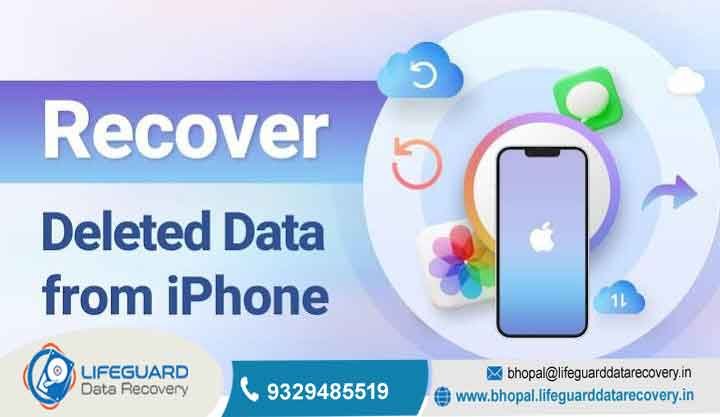
Can You Recover Deleted Data from an iPhone?
Can You Recover Deleted Data from an iPhone(The Technical Truth & What Works) Accidentally tapping “Delete” on an irreplaceable family photo, an essential work text thread, or a vital business contact triggers an immediate wave of panic.
lifeguard datarecoveryYour first instinct is likely to search online for quick fixes. The technical reality of iPhone data recovery sits at the intersection of complex hardware-level encryption, state-of-the-art solid-state storage management, and Apple’s user-centric recovery features. Understanding how iOS protects and processes your data is key to determining whether your lost files can actually be retrieved or whether they are gone for good.
The Short Answer Can You Recover Deleted Data from an iPhone?
Yes, but only under specific, clearly defined circumstances.
Whether or not your deleted data can be saved depends almost entirely on how the data was removed, where it was stored, and whether secondary copies or system backups exist.
Recoverable Scenarios:
The files disappeared because the iPhone suffered physical damage, liquid exposure, or a logic board failure leaving the internal storage chip and its underlying encryption keys fully intact.
Unrecoverable Scenarios:
The files were permanently deleted from the device (and purged from the “Recently Deleted” folder) on an iPhone 6 or newer, without an external backup available.
The iPhone was restored to factory settings (“Erase All Content and Settings”) without a prior backup.
When a file is permanently erased from a modern iPhone, iOS destroys the specific hardware encryption key that secures that file. Without that key, the raw data remaining on the storage chip becomes mathematically unreadable gibberish. No software download, commercial lab, or forensic agency can alter this mathematical fact.
The Technical Reality Behind Modern iPhone Deleted Data Recovery
To understand why direct file recovery from an iPhone’s internal memory is fundamentally different from recovering files on an old PC or hard drive, it helps to look inside Apple’s security architecture.
Hardware-Based File Encryption (Data Protection)
Starting with iOS 8 and the introduction of the Secure Enclave in modern iPhone processors (iPhone 6 and newer), Apple implemented hardware-based File-Based Encryption (FBE). Every individual file stored on an iPhone whether a photo, a text message attachment, or a voice memo is encrypted using its own unique 256-bit AES encryption key.
These individual file keys are encrypted using a master key tied to the device’s hardware hardware-level Secure Enclave processor and your personal passcode.
When you delete a photo or message and empty it from the temporary trash bin, iOS does not simply mark the file
space as “available” while leaving the underlying data intact. Instead, it performs cryptographic erasure: it immediately wipes the specific file’s encryption key from memory. While the raw, encrypted bits of the file may physically linger on the flash storage chip for a short period, decrypting them without the destroyed key is mathematically impossible.
Flash Storage Management (TRIM & Garbage Collection)
Unlike old mechanical spinning hard drives where deleted files remained on disk sectors until overwritten by new data iPhones utilize high-speed NAND flash storage.
NAND flash memory cannot overwrite existing data directly; it must erase entire memory blocks before writing new information. To maintain system performance and prevent drive slowdowns, iOS uses background protocols known as TRIM and Garbage Collection.
The instant a file is flagged as permanently deleted, TRIM communicates with the storage controller, marking those storage blocks as invalid. During idle periods, Garbage Collection actively wipes those blocks and zero-fills them to prepare for future writes. This double layer of maintenance ensures that unallocated storage space is continuously sanitized.
Database Vacuuming in Modern iOS
System files like text messages (SMS/iMessage), call histories, WhatsApp chats, and contacts are not stored as individual files on disk. Instead, they reside inside structured SQLite database files.
In older legacy operating systems (such as iOS 7 and earlier), deleting a text message simply placed that database row into an unallocated buffer known as a “freelist.” Specialized data recovery software could scan these freelists to read deleted text strings.
On modern iOS versions, however, the system performs aggressive database vacuuming. The moment a message thread or contact is deleted, the OS immediately overwrites those database entries with null values leaving zero trace of the original text string behind.
Physical Hardware Damage vs. Permanent File Deletion
A major point of confusion for iPhone users is the distinction between a physically broken phone and a file that has been deleted from an operational device. Understanding this distinction is vital before spending money on recovery attempts.
When an iPhone is smashed or submerged in water, the data itself is not deleted it is simply trapped behind damaged circuitry. Because the encryption keys remain intact inside the Secure Enclave chip, repairing the physical logic board allows hardware technicians to turn the phone back on and extract every byte of data.
Conversely, if an iPhone is in perfect working order and you delete a file, the hardware works exactly as designed: it destroys the key, rendering hardware repairs useless.
Proven Step-by-Step Solutions to Recover Deleted iPhone Files
If you find yourself missing important files, do not buy software immediately. Instead, work through these verified, legitimate recovery paths in sequence
Check System “Recently Deleted” Folders
Apple integrates temporary safety buffers across primary built-in applications. Before data is permanently scrubbed, it spends a grace period inside these staging bins.
1. Recovering Photos & Videos
-
Open the Photos app.
-
Tap the Albums tab at the bottom.
-
Scroll down to the Utilities section and tap Recently Deleted.
-
Unlock the album using Face ID, Touch ID, or your passcode.
-
Tap Select in the top right corner, choose the photos you wish to retrieve, and tap Recover.
-
Time Frame: Items remain in this folder for 30 days before permanent removal.
2. Recovering Text Messages & iMessages (iOS 16 and Newer)
-
Open the Messages app.
-
Tap Edit or Filters in the top-left corner of the main conversation screen.
-
Select Show Recently Deleted.
-
Select the conversation threads you wish to restore.
-
Tap Recover in the bottom-right corner.
-
Time Frame: Messages remain available here for 30 to 40 days before the OS purges the database entries.
3. Recovering Documents & Files
-
Open the Files app.
-
Tap the Browse tab at the bottom right.
-
Under the Locations list, select Recently Deleted.
-
Long-press the file you need and tap Recover, or tap the three dots in the top right to select multiple files.
-
Time Frame: Files are held here for 30 days.
Restore from iCloud Backups or Computer Backups
Check App-Specific Cloud Syncing & Cache
Many third-party apps do not rely on standard iOS backups; instead, they sync data independently to their own cloud servers. Even if data disappears from your local iPhone storage, copies may remain accessible via web portals.
Instant Messaging Apps (WhatsApp, Telegram, Signal)
Chat applications like WhatsApp do not store messages on main system backups if their internal cloud sync is active.
Retrieve Data via Social & Recipient Recovery
Text Messages & Attachments: Text messages, photos, and documents sent via iMessage or SMS exist on both the sender’s and receiver’s devices. If you delete a thread, the person on the other end still has the full conversation on their phone. Ask them to forward the messages, export the chat, or take screenshots of the necessary information.
Email Attachments & Shared Files: If a document was sent as an email attachment or shared via iCloud Link, Google Drive, or Dropbox, the original sender or cloud host can simply share a fresh link or re-send the email.
When to Seek a Professional iPhone Data Recovery Service (and What to Avoid)
Understanding when to hire a specialist—and when to walk away—can save you hundreds of dollars and protect you from deceptive online services.
When to Hire a Professional Service
You should only consider paying for professional physical recovery services if your scenario involves hardware failure, such as:
In these situations, [specialized iPhone data recovery experts] use advanced micro-soldering tools under high-powered microscopes. They clean corrosion, replace shorted micro-capacitors, or perform “board swaps”—transferring the CPU, Secure Enclave, and NAND flash storage chips onto a working donor board to temporarily power up the phone and pull the data off safely.
What to Avoid: Software Scams & Misleading Claims
The internet contains hundreds of software tools claiming they can “scan iPhone internal NAND storage directly to recover permanently deleted photos and text messages.”
Scanning un-encrypted iTunes backup folders or temporary caches sitting locally on your computer’s hard drive something you can browse yourself for free.
Reading active, non-deleted files currently on your phone and presenting them as “recovered” items to justify their purchase price. Any company promising otherwise is misrepresenting what is technically possible.
Proactive Prevention How to Protect iPhone Data from Permanent Loss
Enable Automated Daily iCloud Backups
Make sure your iPhone backs up automatically every night when connected to power and Wi-Fi.
Maintain Encrypted Local Computer Backups
Cloud backups are convenient, but keeping an encrypted local backup on a personal computer adds an extra layer of protection.
Frequently Asked Questions
Can forensic tools like Cellebrite recover deleted iPhone photos?
No. Forensic tools like Cellebrite UFED or GrayKey are powerful hardware and software systems used by law enforcement agencies, but they cannot bypass mathematical encryption laws.
Can I recover deleted messages from an iPhone without a backup?
If the messages have been purged from Recently Deleted and were never included in an iCloud or iTunes backup, cryptographic erasure and SQLite database vacuuming render them completely unrecoverable from the internal storage memory. In such cases, asking the recipient to forward the conversation thread is the only remaining option.
Does a factory reset permanently delete all iPhone data?
Yes. When you tap Erase All Content and Settings, your iPhone does not spend hours individually overwriting every gigabyte of storage. Instead, it instantly destroys the master encryption key cluster within the Secure Enclave processor. graphic wipe, instantly renders every block of data stored on the internal NAND flash chip unreadable within seconds.
Are third-party iPhone data recovery software tools legitimate?
Most third-party downloadable desktop software applications claiming to perform direct data recovery on iPhone storage rely on misleading marketing tactics. Modern iOS security prevents external software from performing raw disk scans on encrypted internal flash memory. At worst, they charge high upfront fees for an impossible technical task.