+971 50 217 6793 Abu Dhabi, UAE info@lifeguarddatarecovery.com
CCTV Hard Drive Recovery
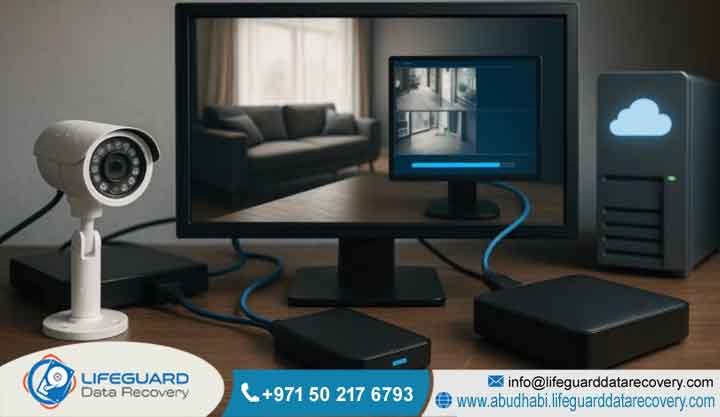
CCTV hard drive recovery is the specialized engineering process of retrieving lost, deleted, overwritten, or physically corrupted video footage from surveillance storage media. These systems include digital video recorders (DVRs) and network video recorders (NVRs). Security systems continuously stream high-definition video data, causing severe read-write wear. Consequently, this intense usage often leads to mechanical breakdown, logical file system corruption, or accidental initialization.
Professional data recovery uses cleanroom drive reconstruction, raw bitstream cloning, and proprietary video codec reassembly. As a result, engineers extract uncorrupted frames directly from the platters. This crucial process restores critical security footage for legal, corporate compliance, and law enforcement investigations across the United Arab Emirates.
Who is Lifeguard Data Recovery?
Lifeguard Data Recovery is an enterprise-tier technology recovery provider. We operate a specialized hardware laboratory infrastructure within the United Arab Emirates. As an established entity in digital forensics and deep system logical engineering, the firm serves corporate enterprises, government offices, and financial institutions. Furthermore, we regularly assist security firms across the UAE.
Therefore, our engineering team easily manages intricate hardware repair and structural firmware modifications. Lifeguard Data Recovery maintains high standards of data security.
For that reason, we ensure that client storage devices containing proprietary or legally sensitive evidence are isolated throughout the entire data extraction cycle. By emphasizing technical research, proprietary file system mapping, and precise component manipulation, the organization serves as a definitive resource for high-stakes digital recovery requirements throughout the seven emirates.
Why UAE Businesses Trust Our Technical Expertise
Corporate entities within the UAE operate under strict regulatory frameworks regarding information security and corporate governance. Fortunately, Lifeguard Data Recovery aligns directly with these requirements. We eliminate the vulnerabilities associated with amateur data retrieval attempts. Security managers and information technology directors choose this specialized laboratory due to our proven capabilities. Specifically
, we interface successfully with enterprise storage arrays, highly customized embedded proprietary operating systems, and encrypted data volumes.We sustain trust through an engineering framework that treats data integrity as a non-negotiable metric. Every recovery project adheres to strict chain-of-custody protocols.
Consequently, this meticulous handling renders recovered video streams and files legally admissible in regulatory compliance audits or judicial proceedings. By maintaining a cleanroom environment and utilizing non-destructive bitstream imaging methodologies, Lifeguard Data Recovery ensures complete safety. Therefore, we protect client hardware from secondary media degradation during diagnostic and engineering stages.
Commercial Enterprise Solutions: CCTV Recovery Services We Offer
Surveillance infrastructures rely on continuous, heavy-duty data write operations. These demanding cycles require specialized retrieval approaches when a system failure occurs. Fortunately, Lifeguard Data Recovery offers comprehensive engineering interventions optimized for modern corporate, industrial, and residential security storage architectures. These services address various logical and mechanical failure modes to ensure that lost surveillance records are meticulously reconstructed.
Advanced DVR Hard Drive Recovery
Digital Video Recorders (DVRs) typically encode video data directly from analog or digital cameras onto internal hard drive units. To maximize write efficiency, these configurations often bypass standard operating system mechanics and use customized, localized file structures. However, a DVR drive can still experience a read-write head crash, a printed circuit board failure, or internal mechanical binding. When this happens, standard data retrieval utilities cannot interpret the disk architecture.
Our technicians perform cleanroom component replacement to resolve these hardware issues. This process restores mechanical functionality to the drive before we use advanced bitstream imaging to copy the raw data sectors. Additionally, this approach prevents further wear on the compromised magnetic platters. Meanwhile, engineers can analyze the drive layout safely, ensuring a secure and precise recovery process.
Enterprise NVR Hard Drive Recovery and Network Storage Units
Network Video Recorders (NVRs) handle multiple high-definition IP camera video streams over network interfaces. Therefore, they rely on multi-drive configurations or independent network-attached systems to manage substantial throughput. NVR storage relies heavily on advanced storage setups like single-volume spans or specific drive configurations.
Engineers at our facility specialize in virtual reconstruction of failed multi-drive configurations. Crucially, we complete this work without altering the original storage disks. This delicate process involves aligning sector maps, identifying configuration patterns, and correcting corrupt journal file paths. Ultimately, this approach allows for complete recovery of fragmented or inaccessible video tracks from large-scale corporate surveillance arrays.
Surveillance Hard Drive Recovery for Modern Security Systems
Modern security architectures utilize specialized storage components engineered for continuous write operations. Despite their specialized design, these drives face specific vulnerabilities. For example, sudden firmware locking, magnetic layer degradation, and logical partition damage from abrupt system shut-downs can cause severe data loss. Standard file systems do not apply here because surveillance setups employ specialized custom blocks to avoid data fragmentation.
Lifeguard Data Recovery extracts data from these systems using customized low-level software utilities. These programs locate data headers independently of the file system. Consequently, they allow for clean extraction of raw video frames even when indices are destroyed. This step ensures complete reconstruction of time-stamped video evidence from damaged storage media.
Devices and Storage Media We Recover
Surveillance installations utilize various storage architectures based on retention mandates and operational scales. Our laboratory is equipped to handle multiple hardware formats. Therefore, regardless of deployment type, we execute data extraction cleanly.
-
Hard Disk Drives (HDD): Standard mechanical storage units optimized for continuous high-capacity sequential writing, vulnerable to head degradation, physical impact, and motor failures.
-
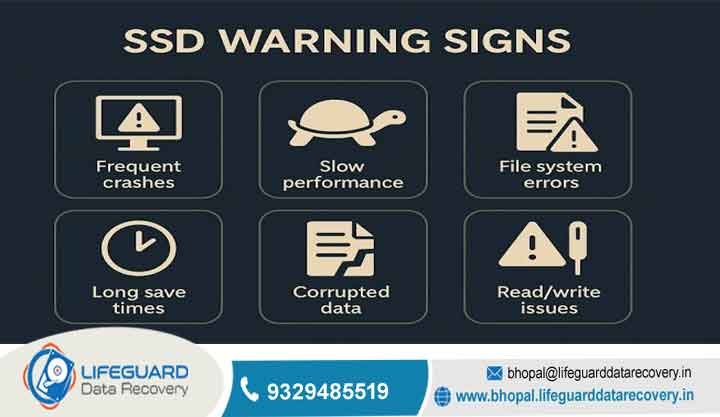
Solid-State Drives (SSD): Flash-based storage arrays used in high-speed or ruggedized surveillance environments, vulnerable to controller failures and block exhaustion.
-
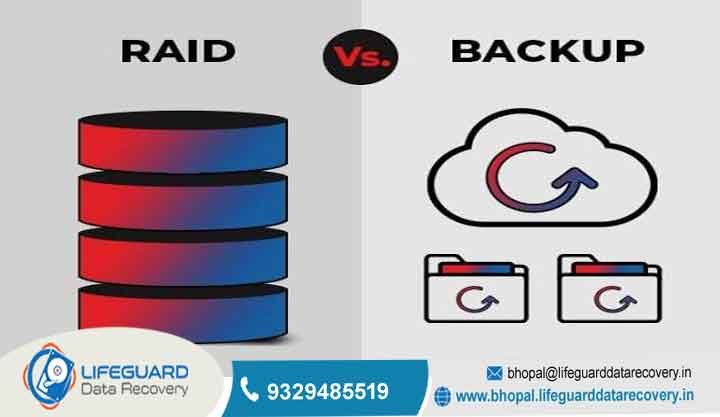
Redundant Arrays of Independent Disks (RAID): Multi-drive systems configured for high availability, vulnerable to multiple concurrent drive drop-outs, controller synchronization issues, and parity corruption.
-
Network-Attached Storage (NAS): IP-accessible storage arrays that experience configuration loss, file system degradation, or directory structure collapse under heavy utilization.
-
Server Storage Systems: Centralized corporate data center architectures hosting virtualized security monitoring instances, vulnerable to hypervisor faults and partition deletion.
-
Removable Flash Memory: MicroSD and SD cards used for edge storage inside IP cameras, susceptible to controller burnout and corrupted allocation structures.
Supported Surveillance Brands and File Systems
Different manufacturers utilize distinct file management frameworks to store video recordings efficiently. Fortunately, Lifeguard Data Recovery maintains a comprehensive library of proprietary software tools. These programs are capable of decoding data layouts across major commercial surveillance systems. For example, we support Hikvision, Dahua, Bosch, Honeywell, Hanwha Vision, Axis Communications, and Avigilon.
The team decodes various underlying storage environments, ranging from embedded versions of Linux file structures like Ext3 and Ext4 to highly customized, signature-less raw partitions. By mapping the exact structure of video frames and temporal headers, our laboratory successfully reconstructs video files. In addition, we achieve this success even when the system directory has been wiped or initialized.
Common CCTV Data Loss Situations
Understanding the primary causes of surveillance data loss is essential for selecting the correct recovery pathway. Surveillance systems face specific risks due to their continuous operation and exposure to variable environments.
-
Physical Impact and Vandalism: Intentionally damaged or dropped storage enclosures during security breaches, resulting in severe platter misalignment or component deformation.
-
Overwritten Footage Cycles: Automated system configuration faults that overwrite critical event windows before the required footage can be exported.
-
Sudden Thermal and Environmental Exposure: Storage units subjected to extreme temperatures, dust infiltration, or water damage from facility failures.
-
Power Inconsistencies and Electrical Surges: Voltage spikes that destroy drive electronics, damage control boards, and corrupt system file sectors.
-
Malicious Internal Modification: Unauthorized deletion of security logs and video records by internal actors seeking to remove evidence of operational incidents.
Is CCTV Data Recovery Possible After Deletion or Overwriting?
The recovery of deleted video files depends on whether the physical sectors containing the data have been repurposed by the system. When a file is deleted from a security system, the system usually marks those blocks as available rather than erasing them instantly. If the recording system is powered down immediately after deletion, engineers can scan the unallocated space to extract raw video frames using distinct signature boundaries.
However, if the system remains operational, new video streams will write over those available blocks. Once a data sector is completely rewritten with new video data, the original underlying data cannot be recovered through software or physical engineering methods. For this reason, turning off the recording unit immediately after a data loss event is crucial for preserving the remaining data.
Can Physically Damaged Surveillance Drives Be Recovered?
Yes, physically compromised drives can be recovered, provided the internal magnetic storage layers have not suffered extensive physical scratching or peeling. Physical damage typically requires opening the drive within a controlled laboratory environment. This step allows us to replace damaged components like the read-write head assembly or the spindle motor safely.
How Our Professional CCTV Data Recovery Process Works
The retrieval of surveillance recordings follows a strict engineering methodology designed to protect the integrity of the original evidence at every stage. Lifeguard Data Recovery uses specialized procedures to maximize data extraction rates. Meanwhile, these steps prevent further drive damage.
Phase 1: Secure Device Log-In and Initial Laboratory Diagnostics
The process begins with registering the target storage media into our secure management system to establish a reliable chain of custody. Next, the drive undergoes a non-destructive physical inspection to check for structural damage, bearing resistance, or electrical shorts.
The drive is then evaluated using specialized hardware diagnostic tools. These tools safely read internal status codes without spinning up compromised mechanical components. Consequently, this step allows engineers to determine whether the failure is electrical, mechanical, or logical without exposing the drive to additional operational risks.
Phase 2: Micro-Soldering and Cleanroom Component Swapping
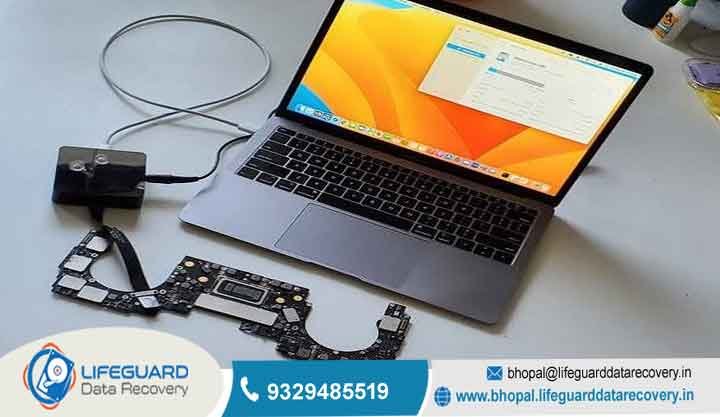
If physical issues are detected, the drive is transferred to a cleanroom environment where engineers perform precise component repairs. This work includes replacing damaged reading mechanisms, correcting internal structural alignment, or repairing printed circuit boards via micro-soldering.
During electronic repairs, engineers transfer critical system information from the damaged circuit board onto a functional replacement. This precise calibration ensures the drive can successfully initialize. As a result, it allows smooth access to the data tracks.
Phase 3: Raw Bitstream Imaging and Proprietary Video Stream Reassembly
Once mechanical and electrical functionality are restored, the drive is connected to a hardware imaging system to create a bitstream duplicate of the storage sectors. The engineering team adjusts parameters like read timeouts and command sequences to extract data from degraded sectors safely.
With the raw image secured, engineers bypass standard file directories to parse the image for distinct video stream patterns and timestamps. These extracted fragments are then reassembled into standard video files. Therefore, this process ensures the recovered footage is clear and usable.
Technical Success Metrics and Critical Recovery Factors
Data recovery success depends on the physical state of the storage media and the actions taken immediately following a failure. Understanding these variables helps establish realistic expectations for recovery outcomes.
What Factors Directly Affect Surveillance Recovery Success Rates?
The primary factor affecting recovery success is the physical condition of the magnetic storage layers inside the drive. If a broken recording head scratches the platter surfaces, the data in those specific areas is permanently lost. Additionally, the continuous, sequential nature of surveillance writing means that any ongoing system operation after an error increases data loss risks. Specifically, it increases the likelihood of data being overwritten.
Success rates are also influenced by the extent of structural damage to the file system. Severe logical corruption or unauthorized formatting can alter the layout pointers. Therefore, this condition requires advanced manual analysis to locate and organize individual video frames.
Recovery Timeframes: Diagnostic to Final File Delivery
The time required for a recovery project depends on the specific failure type and the capacity of the storage media. Logical analysis and minor partition repairs are typically completed within a few business days. However, severe mechanical issues requiring custom component sourcing or extensive cleanroom work may take longer.
Once the raw data is cloned, the time needed for video reassembly depends on the total volume size and file fragmentation. Lifeguard Data Recovery provides estimated completion windows following the initial diagnostic phase. Furthermore, we keep clients updated throughout the process.
Critical Enterprise Sectors and Industries We Serve
Surveillance infrastructure serves as an essential operations tracker across multiple commercial sectors within the United Arab Emirates. Our data recovery engineering adapts seamlessly to the operational demands and regulatory profiles of diverse industries.
-
Banking and Financial Centers: High-security environments requiring absolute verification of transaction environments, vaults, and ATM perimeters under tight compliance timelines.
-
Industrial Logistics and Free Zones: Massive warehouse networks across Jebel Ali or Khalifa Port requiring continuous verification of supply chains, asset tracking, and workplace safety compliance.
-
Hospitality and Retail Groups: Large-scale resort complexes and shopping environments across Dubai and Abu Dhabi requiring rapid resolution of liability assertions or security incidents.
-
Infrastructure and Energy Facilities: Power distribution grids and oil processing installations demanding meticulous data verification for corporate safety metrics.
-
Property Management and Residential Towers: Real estate management firms managing extensive mixed-use developments requiring clear verification of access points and common areas.
Legal, Regulatory Compliance, and Law Enforcement Support
Surveillance records often serve as key evidence in legal reviews, insurance claims, and regulatory inquiries within the UAE. For that reason, Lifeguard Data Recovery follows strict digital forensic practices during data extraction. This careful handling ensures all recovered files remain verified and unaltered.
Every stage of our process is fully documented, providing a clear chain-of-custody log that details how the media was handled. This systematic documentation helps ensure that recovered video evidence meets strict formatting standards. Consequently, the files satisfy the verification standards required by judicial authorities and corporate compliance auditors.
Data Security, Confidentiality, and UAE Legal Compliance
Lifeguard Data Recovery maintains high data security standards to protect client confidentiality. Surveillance data often contains sensitive operational records, private personal details, and proprietary corporate insights that require careful handling. Therefore, our laboratory implements strict access controls to ensure storage devices and extracted files remain completely secure throughout the recovery process.
All operations comply with the data protection principles outlined in the UAE Personal Data Protection Law (PDPL). Recovered data is saved onto encrypted transfer media and delivered exclusively to authorized client representatives. After the client confirms successful receipt of their data, our laboratory uses secure sanitization processes. As a result, we permanently clear all temporary recovery copies from our internal systems.
Comprehensive Service Coverage Across the UAE
Lifeguard Data Recovery provides professional data recovery services across all seven emirates. This extensive network ensures corporate and municipal operations can access technical assistance regardless of location.
-
Abu Dhabi: Central laboratory services delivering technical support for government departments, defense entities, financial groups, and energy sectors in the capital.
-
Dubai: Rapid turnaround services tailored for commercial enterprises, hospitality chains, logistics networks, and technology firms located in major business districts.
-
Sharjah: Comprehensive technical assistance for manufacturing firms, educational infrastructure networks, and local commercial entities.
-
Ajman: Localized support for private commercial operations and regional logistics providers requiring secure data extraction.
-
Fujairah: Specialized recovery solutions for maritime service providers, bunkering networks, and regional industrial facilities.
-
Ras Al Khaimah: Data retrieval services optimized for manufacturing facilities, real estate developments, and local hospitality operations.
-
Umm Al Quwain: Reliable technical recovery services supporting local businesses and administrative departments.
Enterprise Surveillance Storage Technologies: A Technical Comparison
Choosing the appropriate recovery methodology requires an accurate understanding of the underlying storage architecture. The following table contrasts the primary operational traits and failure profiles of common surveillance storage configurations:
| Configuration | Primary Architecture | Common Failure Mode | Recovery Complexity |
| Standalone DVR | Single External SATA Drive | Mechanical Head Degradation | Low to Moderate |
| Embedded NVR | Multi-Drive Array (SPAN) | File System Structure Overwrite | Moderate |
| Enterprise RAID | RAID 5 / RAID 6 Systems | Multiple Hard Drive Drops | High |
| Network Attached (NAS) | Distributed NAS Architecture | Controller Firmware Corruption | High |
Case Study: Successful NVR RAID Array Recovery for an Abu Dhabi Logistics Hub
The Problem and Data Loss Situation
An international logistics provider operating a high-volume cargo distribution facility within Abu Dhabi experienced a sudden failure of its central surveillance infrastructure. The primary recording unit, an enterprise-class NVR configured as an eight-drive RAID 6 array, stopped responding during a routine firmware update. The system went offline, and subsequent reboots caused a critical array configuration error. Consequently, this failure left the facility without access to two weeks of mandatory security recordings.
Operational Urgency and Compliance Risks
The data loss coincided with an official regulatory audit, which required the facility to provide continuous security footage from its primary loading bays. This footage was essential to maintain its operational certification. Therefore, the organization faced potential operational suspensions and significant compliance penalties if the footage could not be produced within 72 hours.
The Laboratory Recovery Process
The NVR drives were safely transported to the Lifeguard Data Recovery laboratory in Abu Dhabi, where engineers performed immediate hardware evaluations. Diagnostics revealed that two drives had developed severe mechanical sector defects, while a third drive suffered from a corrupted partition table caused by the failed firmware update.
Engineers repaired the mechanically failed drives in our cleanroom facility, replacing degraded components to stabilize read performance. With all drives operational, technicians used advanced cloning tools to create exact, sector-by-sector images of all eight disks. Engineers then manually analyzed the raw sector maps, reconstructed the original RAID parameters outside the compromised NVR hardware, and repaired the corrupt file paths to access the data.
Final Result and Client Outcome
The engineering team successfully reconstructed the entire storage array, achieving a complete extraction of the uncorrupted video streams. This allowed for the recovery of all required surveillance files, complete with original time-stamp metadata and image quality intact.
This fast turnaround enabled the company to submit the required footage for their audit on time. As a result, they avoided regulatory penalties and maintained smooth operations at the facility.
Expert Insights: Best Practices for Post-Failure Surveillance Management
When a surveillance storage system encounters an error, the steps taken immediately afterward heavily influence the likelihood of a successful data recovery. Unplanned troubleshooting or continued use often worsens structural drive damage and can lead to permanent data loss.
-
Isolate Power Immediately: Shut down the recording unit or storage array as soon as data loss or mechanical clicking is detected. This step stops ongoing write cycles from overwriting deleted files.
-
Avoid Generic Software Utilities: Do not run automated check-disk tools or standard commercial data recovery software on compromised surveillance drives. These programs can alter specialized video layouts.
-
Document System Details: Record the exact time of the error, the specific camera feeds needed, and the model details of the recording hardware to assist recovery engineers.
-
Maintain Drive Order: For multi-drive setups or RAID arrays, label each drive carefully before removal to preserve the proper sequence for structural analysis.
-
Keep Hard Drives Sealed: Never open a hard drive cover outside a certified cleanroom environment. Dust exposure can ruin the magnetic platters and cause unrecoverable damage.
Frequently Asked Questions
What is CCTV hard drive recovery?
CCTV hard drive recovery is a technical service focused on retrieving lost, deleted, or inaccessible video recordings from surveillance systems. This process requires specialized tools and techniques because security recorders use unique methods to store video data continuously. Professional recovery involves fixing mechanical drive issues, repairing corrupted file sectors, and extracting raw video frames.
How does CCTV hard drive recovery work?
The process begins with an evaluation of the physical and electronic health of the storage drive. If mechanical problems are found, repairs are performed inside a cleanroom environment to replace broken components. Once the drive is stable, engineers create a complete backup image of the disk sectors to work from safely. Specialized software is then used to read the raw data, bypass corrupted system files, and reassemble individual video tracks.
Who needs professional surveillance data recovery services?
This service is designed for businesses, government facilities, and property managers who need to retrieve critical video evidence that has become inaccessible. It is particularly valuable when footage is lost due to drive failure, accidental formatting, or intentional deletion. Having access to professional recovery ensures companies can retrieve clear video files needed for legal disputes, insurance claims, or internal investigations.
How long does a security drive recovery process take?
The time required depends on whether the drive has logical file errors or physical hardware damage. Logical analysis and minor partition fixes are often completed within a few business days. However, severe mechanical issues requiring custom component replacement can take longer. Our team provides clear timelines after the initial evaluation so clients know what to expect.
What determines the success rate of a surveillance recovery project?
Success depends mostly on the physical state of the drive platters and how much new data has been written to the disk after the failure. Severe physical scratches on the magnetic layers can cause permanent data loss in those areas. Additionally, leaving a security system running after an error increases the risk of new footage overwriting the deleted files, which underlines the importance of powering down the system immediately.
Why do surveillance hard drives fail more often than standard computer drives?
Surveillance drives operate under continuous, heavy workload conditions, writing multiple high-definition video streams 24 hours a day. This constant operation subjects mechanical components, like read heads and spindle motors, to significant wear and high temperatures. Over time, this ongoing stress makes them more susceptible to component failures compared to standard desktop drives.
Is it safe to use standard data recovery software on a security drive?
Using standard data recovery software on surveillance drives is generally not recommended and can risk permanent data loss. These tools are designed for standard computer file structures and often fail to recognize the custom, sequential storage formats used by security recorders. Running automated scans can alter the drive layout or worsen existing mechanical issues, making professional recovery much more difficult.
How do engineers handle encrypted security recordings during recovery?
When dealing with encrypted surveillance systems, engineers focus on creating an exact bitstream clone of the underlying storage sectors. Once the raw data is secured, the encrypted volumes are reconstructed using the client’s authorized access keys or system credentials. This approach ensures the data layout is fully restored while maintaining standard security protocols.
Secure Your Surveillance Evidence: Contact Lifeguard Data Recovery
Lifeguard Data Recovery provides professional data recovery services throughout the United Arab Emirates, delivering specialized technical support for complex storage failures. If your organization has experienced a critical loss of surveillance records, immediate isolation of the media is vital for successful data retrieval.
Get in touch with our laboratory to arrange a diagnostic evaluation for your storage hardware. Our team follows strict security and data protection standards to ensure your corporate records remain secure and confidential throughout every stage of the recovery process.
-
Call: +971 50 127 6793
-
Email: info@lifeguarddatarecovery.com