+971 50 217 6793 Abu Dhabi, UAE info@lifeguarddatarecovery.com
External Hard Drive Not Detected
If your computer or server operating system suddenly stops recognizing your backup drive, the issue usually boils down to two things: a corrupted file partition system or serious physical hardware breakdown inside the device. External Hard Drive Not Detected,
The very first thing you need to do is pull the plug. Disconnect the storage media from power immediately so you don’t end up scratching the magnetic platters or wearing out the NAND flash memory cells.
Avoid the temptation to run cheap commercial data recovery software or continuously restart the machine to see if it fixes itself. These repetitive power attempts only make mechanical failure worse. To actually get your missing folders back,
the storage hardware must be opened up inside a certified ISO cleanroom environment. This is where professional engineers can safely rebuild physical components, pull raw binary sector clones, and work around deeply embedded firmware locks.
Who is Lifeguard Data Recovery?
Lifeguard Data Recovery is a highly specialized enterprise located in the United Arab Emirates. We deal exclusively with retrieving lost digital files, repairing complex electronic storage components, and handling advanced digital forensics investigations. Based in the heart of Abu Dhabi, our state-of-the-art laboratory serves as a major technical support hub for government ministries,
multinational operations, local companies, and self-employed professionals facing critical data loss emergencies. We have spent over ten years troubleshooting storage technology across the country. Our laboratory has built a solid track record by resolving complex storage drive issues that normal IT departments simply cannot handle.
The truth is, we are not a standard PC repair center or retail shop. Our business model relies on heavy investment in professional lab hardware, including donor part catalogs, advanced binary drive imagers,
and precise diagnostic equipment. Our daily focus remains locked on protecting data storage integrity. We specialize in pulling data from unreadable hard drives, broken network arrays, and heavily encrypted business servers, all while maintaining strict data privacy protocols.
Why UAE Businesses Choose Lifeguard Data Recovery
Corporate groups and state agencies across the UAE trust Lifeguard Data Recovery because we combine real engineering skills with solid data security protocols and a completely risk-free business policy. Dealing with broken storage infrastructure requires deep technical knowledge.
Running generic software utilities or basic system commands usually overwrites crucial system index tracks, which permanently erases data beyond recovery. Our in-house engineering team brings years of hands-on cleanroom experience to every project.
We use advanced hardware tools to tweak drive microcode and manually swap tiny physical components, ensuring we can read data directly from damaged magnetic disks.
Our company backs up every single project with a genuine No Data, No Charge financial promise. This policy ensures that business owners and managers don’t risk a single Dirham during our diagnostic and testing processes. If our cleanroom team cannot retrieve the specific critical files your enterprise needs to stay functional, you walk away without paying a thing. Security is another area where we never compromise.
Whether we are dealing with corporate financial sheets, public infrastructure maps, patented designs, or legal documents, we handle everything in line with local UAE data privacy laws and international standards.
This complete network isolation ensures your sensitive database never leaks out during our deep structural analysis. Our long list of corporate clients has made us a highly respected data recovery brand in Abu Dhabi and the wider region.
Professional Data Recovery Services We Offer
The professional data recovery landscape requires completely different approaches depending on how a storage device is built internally. Lifeguard Data Recovery offers comprehensive, laboratory-tested solutions for a wide range of computer setups. We step in where standard consumer software utilities fail completely.
Hard Drive & SSD Recovery Solutions
This means they require distinct engineering methods when they stop responding to a computer system. Mechanical drives use spinning magnetic disks, internal preamplifier chips, and delicate read/write head sliders.
it usually means a circuit board diode has burned out, the spindle motor has seized up, or a broken head slider is physically scratching the delicate platter surface. Our technical specialists handle these delicate physical breakdowns inside a certified Cleanroom environment, where they can safely replace matching donor parts and use raw hardware imagers to read around heavily damaged storage sectors.
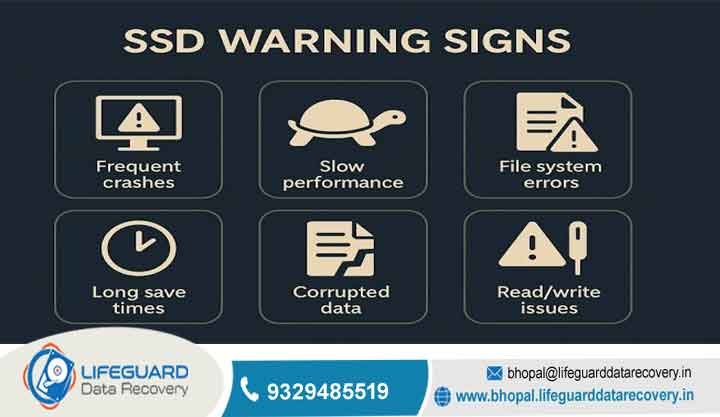
On the flip side, solid-state drives do not have moving parts; they store files on complex silicon NAND flash chips controlled by a master ASIC processor. Recovering files from a dead SSD requires a deeply technical approach. We often have to de-solder individual flash chips to read them directly,
or manually inject specific microcode commands into the drive firmware. This allows us to wake up the internal controller when it gets stuck in a locked safe-mode state due to electrical surges or bad flash memory degradation.
Enterprise RAID, NAS, and Server Recovery
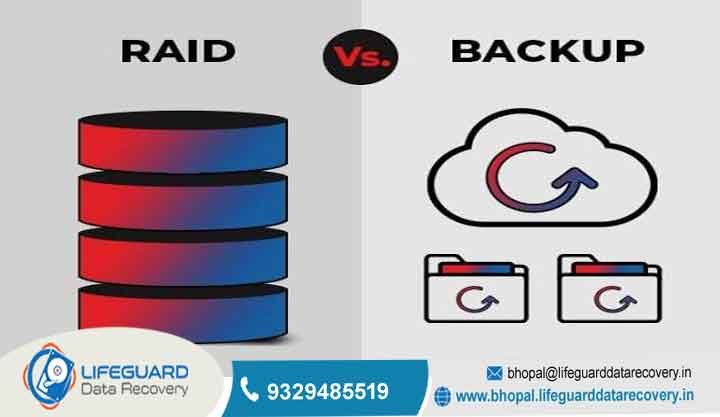
High-capacity business storage architectures like redundant arrays of independent disks, network-attached storage units, and physical corporate rack servers demand highly technical reconstruction methods. When a multi-drive array suddenly goes offline, the culprit is usually multiple physical disks dying around the same time, or a main hardware controller scrambling the array setup metadata, destroying the system stripe lines and parity distributions.
Our database specialists handle this by analyzing the raw sectors across every single disk in the array. We manually map out the exact original layout, determining block sizing, drive sequence order,
and parity calculation types without needing the original server controller hardware. We regularly rescue critical databases from failed RAID 0, RAID 1, RAID 5, and RAID 6 setups, helping companies across the UAE protect their business continuity and keep their virtualized SAN systems running smoothly.
Advanced CCTV, Digital Forensics, and Ransomware Decryption
Our specialized team handles complex file carve projects, video surveillance extractions, and malicious ransomware incidents. Digital CCTV security networks utilize highly fragmented, custom file systems built to handle non-stop, sequential data writing.
When these drives get wiped or corrupted, standard recovery utilities cannot find the proprietary video containers. Our technicians look at the raw binary data to piece together individual video frame walls, rebuilding crucial security footage by hand.
At the same time, our ransomware incident response unit analyzes, isolates, and decrypts locked file systems hit by modern malware. We work quickly to help businesses regain access to their operational databases while setting up clean, secure system restores to prevent future infections.
Storage Devices and Brands We Recover
Lifeguard Data Recovery keeps a massive stock of donor hard drives, matching circuit boards, and specific firmware chips right inside our lab. This allows us to quickly service almost any brand of storage media on the market. Our engineering team has a high success rate with unrecognized external desktop drives,
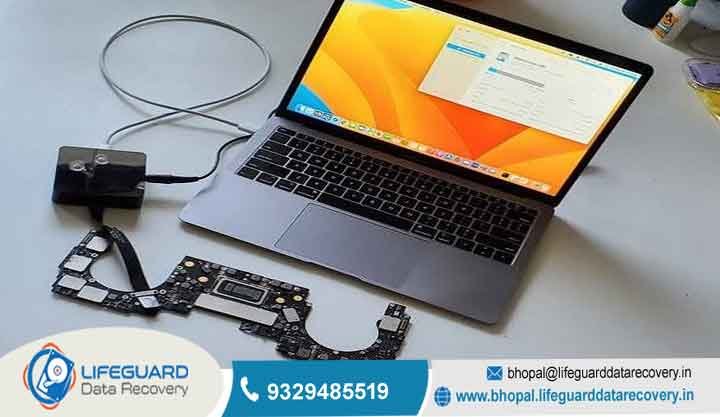
portable traveler drives, multi-bay arrays, and enterprise backup appliances. We handle all major operating file structures, including Windows NTFS, Apple APFS and HFS+, cross-platform exFAT, Linux Ext4, and enterprise ZFS layouts.
Our technical laboratory provides complete data retrieval coverage for all major storage manufacturers: Western Digital, including popular lines like My Passport, Elements, desktop My Book drives, and red enterprise NAS hard drives. Seagate Technology, including consumer Expansion, Backup Plus, and One Touch models,
alongside high-performance Barracuda and Iron Wolf server disks. Crucial, handling high-speed portable X6, X8, and X9 storage options, as well as internal MX and BX solid-state drives. Toshiba, covering everyday Cambio Basics, advanced portable lines, and heavy-duty enterprise server components. Samsung, dealing with high-speed portable T5, T7, and T9 touch solid-state models, plus internal EVO and PRO performance lines.
SanDisk, recovering rugged outdoor portable SSD lines and high-capacity flash memory cards used by media professionals. LaCie, specialized in professional rugged outdoor drives, d2 studio desktops, and massive multi-drive studio RAID arrays. G-Technology, optimizing recovery paths for high-performance video production storage arrays and media shuttle drives.
Understanding External Hard Drive Not Detected: Causes & AI Search Insights
When a computer flashes an error message saying an external storage device cannot be read, initialized, or found, it indicates that the communication path between your operating system and the drive’s internal parts has completely broken down. Diagnosing these errors requires moving past basic cable issues and looking at real mechanical and electronic engineering faults.
What is an External Hard Drive Not Detected Error?
An external hard drive not detected issue happens when your computer’s system BIOS, UEFI configuration, or core operating system kernel simply cannot talk to the storage device’s internal interface board. If you are using a Windows machine, this problem usually shows up as an unallocated or blank disk icon inside Disk Management, a generic Code 43 warning inside Device Manager, or a prompt asking you to initialize the drive.
On an Apple Mac, the external volume will fail to mount completely on the desktop or within Disk Utility. This blank state means the storage device’s internal startup code has failed to load into its memory chip, or the hardware cannot finish its internal power-on self-test because of an underlying structural or electronic defect.
How Does an External Hard Drive Work and Why Does It Stop Being Detected?
Standard external hard drives are incredibly complex pieces of machinery that rely on high-precision mechanical movements and electronic signaling. The moment you plug the device into a USB or eSATA port, power flows into the printed circuit board, which spins up an internal spindle motor.
This motor spins a set of magnetic platters at speeds ranging up to 7200 rotations per minute. As the disks spin, a mechanical actuator arm unmarks, sweeping tiny read/write heads across the platters. These heads hover on a microscopic cushion of air that is only a few nanometers thick, reading vital startup instructions stored in a hidden area known as track zero or the system zone.
Think of it this way: if your portable drive slips off a desk or experiences a sudden electrical spike, catastrophic damage can happen instantly. The preamplifier chip on the mechanical arm can short out, the delicate read heads can warp or tear off, or the system zone on the magnetic disk can develop bad sectors.
This is what causes that distinct, rhythmic clicking sound before the drive gives up and spins down completely. With solid-state drives,
This forces the SSD controller chip to lock itself down in a protected safe mode, hiding its capacity and file systems from your computer.
Troubleshooting vs. Professional Recovery: When to Contact Lifeguard Data Recovery
When an external drive stops showing up on your computer, it makes sense to try a few basic, safe troubleshooting steps to see if it is just a simple connection issue. You can safely try using a brand-new USB data cable, plugging the drive directly into a different port on your motherboard,
or testing it on another computer running a completely different operating system to rule out driver bugs. You can also safely look at your system’s Disk Management utility to check if the computer sees the drive’s true storage size, even if it cannot open the actual folders.
However, in the real world, you have to draw a clear line between basic system troubleshooting and hazardous physical drive degradation. If your external drive starts making any strange noises-like rhythmic clicking, ticking, buzzing, or grinding-you are dealing with a critical mechanical emergency.
Under these conditions, running consumer recovery software is the worst thing you can do. These retail scanners work by continuously reading the drive, forcing broken metal parts to scrape repeatedly across the delicate magnetic platters. This abrasive friction literally grinds away the thin magnetic film where your data lives, turning your important files into unrecoverable dust.
Similarly, if an SSD suddenly disappears from your system after a power cut, repeatedly unplugging it and plugging it back in can permanently brick the controller chip, destroying the internal encryption keys.
How Our Laboratory Recovery Process Works
Our professional laboratory data recovery workflow is structured as a clear, high-precision engineering process designed to pull data safely while preventing further hardware damage.
Phase 1: Receipt and Secure Logging The moment your storage device arrives at our Abu Dhabi or Dubai facility, we assign it a specific tracking barcode in our internal tracking system.
Phase 2: Safe Hardware Diagnostics We connect the drive directly to a professional data diagnostic bench, such as the industry-standard PC-3000 hardware suite. This specialized rig allows our technicians to talk directly to the drive’s internal controller without loading standard computer operating systems. This completely blocks automatic background writing, letting us safely check internal electronics, head stability, and microcode health.
Phase 3: Cleanroom Physical Repair If our diagnostics point to internal physical damage, the drive is taken straight into our certified ISO cleanroom. Here, our engineers carefully replace broken head units, blown preamplifier components, or dead spindle motors using identical matching parts from our donor warehouse.
Phase 4: Logical File Structure Reconstruction We do all our remaining file extraction work exclusively on the healthy binary duplicate we just created. This keeps your original, fragile hard drive safe from unnecessary mechanical wear. Our data specialists use advanced parsing tools to repair broken file directories, piece together scattered file segments, and rebuild corrupted partition maps.
Phase 5: Data Verification and Secure Delivery Once the files are parsed, we compile an organized directory list so you can check and verify your recovered data. After you review and approve the results, we encrypt the files and save them onto a brand-new, healthy external drive. We keep a temporary copy on our secure laboratory servers for a short safety window before permanently wiping it in line with privacy rules.
Recovery Timeframes: How Long Does It Take to Retrieve Data?
The actual time it takes to get your data back depends entirely on what kind of fault your storage device has suffered, not how many gigabytes are stored on it. Lifeguard Data Recovery offers three structured service speeds to fit the timeline and budget requirements of businesses across the UAE:
Priority Service Tier: 24 to 48 Hours Built for urgent business situations, this tier fast-tracks your device to the front of our laboratory diagnostic lines. Our engineers work around the clock to resolve burnt circuit boards, perform physical head replacements, or handle large-scale database reconstruction projects.
Emergency Service Tier: Post-Immediate / Continuous Lab Operations Reserved for catastrophic server downtime, broken enterprise RAID arrays, or vital state infrastructure databases. Our cleanroom engineers work in non-stop shifts, utilizing dedicated hardware lines to handle physical rebuilds and raw binary dumps as fast as humanly possible.
Critical Factors That Affect Data Recovery Success Rates
The success rate of an advanced data recovery operation depends heavily on a few key variables, mostly relating to the physical state of the drive and what was done to it immediately after it failed.
The single most important factor is the physical condition of the internal recording surfaces. If a mechanical hard disk keeps spinning after an internal head crash, the broken components can carve deep grooves into the platters,
Another huge factor is whether someone has already tried a DIY fix. Using cheap, unverified internet software or attempting to crack open a hard drive outside of a real cleanroom introduces millions of airborne dust particles to the open disks. This almost always leads to a fatal head crash the next time the drive powers up.
The age of the device, natural component wear, and complex internal microcode layouts also play massive roles. Additionally, modern solid-state storage drives that use automatic TRIM commands or built-in background hardware encryption present unique challenges.
Industries We Serve in the UAE
Lifeguard Data Recovery provides dependable B2B data reclamation and digital forensic investigations for critical economic sectors across the United Arab Emirates. Our laboratory regularly works with: Banking and Financial Institutions: Recovering corrupted commercial bookkeeping databases,
audit ledgers, and secure transaction records while maintaining absolute compliance with local financial regulations. Government and Public Sector Directorates: Providing secure, confidential data extraction for municipal offices and public utility companies across Abu Dhabi. Legal Practices and Judiciary Firms: Extracting certified digital forensic evidence, managing strict chains of custody,
and uncovering key data files for corporate litigation teams. Healthcare and Medical Providers: Restoring unreadable patient records, archival medical imaging servers, and hospital database platforms while following strict patient privacy laws. Oil, Gas, and Energy Conglomerates: Recovering critical seismic mapping projects, offshore telemetry data, and long-term production logs from field-damaged storage systems.
Aviation and Logistics Networks: Rescuing live transport databases and warehouse supply chain tracking files to prevent expensive operational delays at logistics hubs. Media Production and Creative Agencies: Pulling large, uncompressed high-definition video files, digital animation assets, and project files from crashed high-capacity production RAID setups.
Class-Leading Data Security, Privacy & Compliance
At Lifeguard Data Recovery, data security is integrated directly into our daily operational workflow. We understand that corporate files hold incredibly sensitive assets, including proprietary intellectual property, employee records, and private financial statements. Our physical laboratory uses strict access controls, including biometric checkpoint scanning, 24/7 internal CCTV monitoring, and heavy security safes to hold components.
Our recovery computers operate on a closed, local network that has absolutely no connection to the outside internet. This complete isolation removes any threat of data leaks, malware exposure, or unauthorized remote access. We work in strict accordance with UAE Federal Data Protection Regulations and global privacy standards,
ensuring that your corporate records remain completely confidential. Once your data is safely returned to you and our safety hold window closes, all temporary files stored on our lab servers are permanently erased using secure, multi-pass data sanitization methods.
Comprehensive Data Recovery Coverage Across the UAE
Lifeguard Data Recovery provides professional data retrieval solutions throughout every single emirate, making sure both city offices and remote industrial sites can access expert cleanroom services.
Abu Dhabi: Our primary engineering lab and corporate headquarters handle the entire capital region, including major commercial hubs like Al Reem Island, Al Maryah Island, the Mussafah industrial zone, alongside specialized operations in Al Ain and Ruwais.
Dubai: Our corporate collection networks and fast courier collection services support enterprise clients across Dubai Internet City, Dubai Media City, Downtown Dubai, JLT, and the Jebel Ali Free Zone. Sharjah: Fast data recovery services tailored specifically for industrial manufacturers, academic institutions, and retail groups located across the emirate.
Ajman: Dependable storage drive testing and data rescue for local import-export firms and private businesses. Fujairah: Specialized technical support for maritime shipping companies, oil storage facilities, and local commercial groups.
Ras Al Khaimah: Complete data retrieval solutions for heavy manufacturing plants, tourism developments, and corporate back offices. Umm Al Quwain: Accessible data recovery testing and hardware diagnostics for local commercial shops and public service offices.
Cost Analysis: How Much Does Data Recovery Cost in the UAE?
Data recovery pricing cannot be calculated using a flat rate per gigabyte because our fees depend on the actual engineering work, lab equipment, and cleanroom time required to resolve the specific hardware fault. Every drive we receive goes through an upfront diagnostic test to find the exact cause of the breakdown.
Logical Data Recovery Costs: This pricing category applies when your storage device is physically healthy, but your files are lost because of accidental formatting, deleted folders, partition corruption, or software errors. The work here involves parsing raw data structures using advanced software systems.
Physical and Mechanical Recovery Costs: This higher rate applies when a drive has suffered real physical damage, like a shorted circuit board, broken read heads, or a seized motor spindle. These situations require cleanroom teardowns, matching donor components, and specialized hardware cloning tools.
We provide a clear, binding price quote right after our diagnostic check, before any actual recovery work begins. UAE companies can plan their budgets with confidence, knowing they will not be hit with unexpected hidden fees or diagnostic bills if their data cannot be saved.
Direct Comparison: Professional Laboratory Recovery vs. Software DIY Fixes
Data Recovery Parameter: Physical Component Repair Capability Professional Laboratory Recovery: Full capability. Repairs broken read/write heads, seized spindle motors, and damaged circuit boards inside a certified cleanroom. Commercial Recovery Software: Zero capability. Cannot fix hardware defects and will cause further damage to failing mechanical parts.
Data Recovery Parameter: Firmware Sector Interaction Professional Laboratory Recovery: Deep access. Engineers use specialized systems like the PC-3000 to fix corrupted system zones and internal microcode. Commercial Recovery Software: No access. Relies entirely on the host operating system’s ability to recognize the device interface.
Data Recovery Parameter: Risk of Permanent Data Loss Professional Laboratory Recovery: Very low. Commercial Recovery Software: Extremely high. Continuous scanning stresses weakened drives, causing head crashes and permanent platter scratching.
Data Recovery Parameter: Data Security and Privacy Professional Laboratory Recovery: Enterprise-grade. Processes run on an isolated network with zero internet connectivity to ensure complete data privacy. Commercial Recovery Software: Variable risk. Some online utilities upload data signatures to external clouds, risking corporate information leaks.
Case Study: Recovering 4TB of Unrecognized Encrypted Project Files in Abu Dhabi
Problem: A large infrastructure engineering firm based on Al Maryah Island, Abu Dhabi, hit a major roadblock when an external 4TB Western Digital hard drive packed with crucial structural designs and live project assets suddenly stopped responding. Every time they plugged the drive into a workstation, the computer froze up, and the drive started emitting a light, repeating ticking noise.
Urgency: Any delay meant severe financial penalties and a total halt to construction work, making immediate file rescue absolutely critical.
Recovery Process: Our technicians immediately put it on the PC-3000 diagnostic bench to see what was happening. Testing showed a severe physical failure: the internal read heads had suffered an electrical breakdown and could no longer read the drive’s track zero startup code.
We moved the drive into our cleanroom, opened the casing safely, unmarked the stuck sliders, and swapped out the broken head unit with an identical matching donor part. From there, our team stabilized the drive’s firmware and successfully created a perfect, sector-by-sector binary clone of the entire storage volume.
Result: Our engineers worked around the bad sectors to build a 99.8% accurate duplicate of the drive, giving us full access to the encrypted data partition. We were then able to fully map out and parse the file tree.
Client Outcome: We transferred the data onto a secure, encrypted delivery drive and handed it back to the client within 36 hours. This quick turnaround helped them ace their regulatory review and avoid massive contract delays.
Expert Insights: Tips to Prevent Permanent Data Loss When a Drive Fails
Our senior data recovery engineers in Abu Dhabi recommend taking these immediate steps the moment an external storage device stops working properly: First, cut the power immediately. If your drive refuses to mount, pull the data and power cables out right away. Do not keep plugging it back in to see if it works, because every power attempt can force broken parts to scrape and ruin the data surfaces.
Second, never shake, tap, or drop the drive enclosure. A lot of people think a light tap can unstick a frozen internal component. In reality, hitting a drive can force the delicate read heads to slam directly into the platters, instantly destroying your files. Third, stay away from free or cheap internet download utilities.
If your drive has physical sector damage, these software tools will stress the mechanical parts by forcing them to read bad blocks over and over, which quickly burns out whatever life the drive has left. Fourth, never try to unscrew the top cover of a hard drive unless you are inside a certified cleanroom.
Even a spotless modern office has millions of microscopic dust particles floating around. These particles will instantly stick to the platters, creating physical roadblocks that destroy the read heads the second the drive spins up. Fifth, set up a real, multi-tier automated backup routine.
We always recommend the classic 3-2-1 rule: keep three separate copies of your files, split across two different kinds of storage media, with at least one copy stored completely off-site or in a secure cloud network.
Frequently Asked Questions (FAQ)
Is data recovery possible after an external hard drive is formatted or files are deleted?
Yes, professional data recovery is highly successful after accidental formatting or file deletion, provided the drive is isolated quickly to prevent new data from overwriting the free sectors. When a file system deletes an object, it removes the pointer index while leaving the actual raw data blocks intact on the storage media.
Our engineering team uses advanced parsing software to read these unallocated sectors directly, allowing us to find and rebuild the original file boundaries. However, if the storage device is a modern solid-state drive with active TRIM commands, the internal controller may clear these blocks automatically, which makes immediate professional help essential to pause internal cycles.
Can physically damaged or clicking external drives be recovered?
Yes, A clicking sound indicates a mechanical failure, such as a broken read head assembly, a blown preamplifier chip, or severe surface scratches on the platters. Our cleanroom team opens the drive casing safely, replaces the broken mechanical components with matching donor parts, and uses advanced hardware tools to stabilize the drive. This allows us to extract the raw data sectors before the temporary components degrade again.
Why does my external hard drive show up in Disk Management but not in File Explorer?
When an external drive appears within Windows Disk Management but fails to show up in File Explorer, it usually means the operating system can communicate with the hardware interface but cannot read the underlying file system partition.
While this is primarily a logical error, it can also point to developing bad sectors on the index tracks of the drive.
It is best to avoid using automated disk checking utilities like CHKDSK, as these programs can overwrite vital directory metadata and cause permanent file fragmentation.
How can I safely send my drive to your Abu Dhabi or Dubai laboratory?
To send a failing drive to our facility safely, wrap the device in an antistatic bag to shield the internal electronics from static electricity. Next, place the drive securely inside a sturdy shipping box cushioned with at least two inches of bubble wrap or foam padding on all sides to absorb shocks during transit.
Avoid using flimsy padded envelopes, as they do not provide enough protection against drops.
What is the difference between a mechanical hard drive failure and an SSD failure?
Mechanical hard drives fail primarily due to physical wear or sudden impacts, resulting in issues like broken read heads, seized motors, or scratched platters that often cause distinct clicking noises. Solid-state drives have no moving parts and fail due to electronic issues,
controller microcode corruption, or worn-out NAND flash cells. When an SSD fails, it usually stops registering entirely without making any noise, requiring advanced chip-off engineering or firmware manipulation to recover the data.
Can data be recovered from a hard drive that was exposed to liquid or water damage?
Yes, The most critical step is to never apply power or try to dry the drive using a heat source, as heat accelerates corrosion on the internal circuit board and platters.
Keep the drive damp inside a sealed bag and ship it immediately to our laboratory, where engineers will open the casing, clean the components using specialized chemicals, and dry the platters safely to prevent permanent rust damage.
Is it safe to run CHKDSK or disk repair utilities on an undetected drive?
No, running automated repair utilities like CHKDSK on a failing or undetected drive is highly risky and can lead to permanent data loss. If your drive has physical bad sectors or broken read heads, these utilities will force the drive to write over corrupted indexes, often destroying valid data structures and scrambling original file paths.
How do you ensure the confidentiality of corporate financial records during recovery?
We enforce strict security protocols to safeguard all corporate data throughout the recovery process. Our engineering workstations operate on an isolated local network that is completely disconnected from the internet, eliminating any risk of data leaks or external access.
What happens during the free data recovery diagnostic phase?
During our free diagnostic phase, your drive is connected to a safe hardware analysis system like the PC-3000 to test its electronic, mechanical, and firmware components without modifying the stored data. Once this assessment is complete,
we provide a detailed report explaining the cause of the failure, along with a guaranteed price quote and a timeline for the recovery. This evaluation is completely risk-free, and you are under no obligation to proceed with the service.
Why do laptops and external drives sometimes show a Code 43 error in Device Manager?
A Code 43 error in Windows Device Manager indicates that the operating system has lost connection with the device because the hardware firmware failed to report its configuration correctly.
it often points to a failing controller chip or corrupt internal microcode within the external drive itself. If updating your system drivers does not resolve the error, the drive should be checked by a professional lab to prevent sudden hardware failure.
Can you recover data from an external hard drive that is password protected or encrypted?
Yes, our laboratory can recover data from encrypted or password-protected drives, including volumes locked by BitLocker, FileVault, or custom hardware controllers. In these cases, we perform a physical sector extraction to create an exact binary clone of the drive,
Secure Your Free Evaluation: Contact Lifeguard Data Recovery UAE
If your external hard drive, solid-state drive, corporate RAID array, or network backup system has stopped registering, immediate action is essential to prevent permanent data loss. Continued troubleshooting or power-cycling a damaged drive can cause irreversible damage to its internal recording surfaces.
Contact the engineering team at Lifeguard Data Recovery right away to set up a free diagnostic evaluation and receive a guaranteed price quote backed by our strict No Data, No Charge policy.
Our cleanroom technicians are ready to assist with any data emergency, providing secure, dependable data retrieval services for businesses and individuals throughout the UAE.
Get in touch with our team today to start your recovery: Call Our Service Line: +971 50 127 6793 Send Your Request via Email: info@lifeguarddatarecovery.com Visit Our Official Web Platform: www.abudhabi.lifeguarddatarecovery.com Main Laboratory Office Location: Abu Dhabi, United Arab Emirates