+971 50 217 6793 Abu Dhabi, UAE info@lifeguarddatarecovery.com
How do SSDs fail?
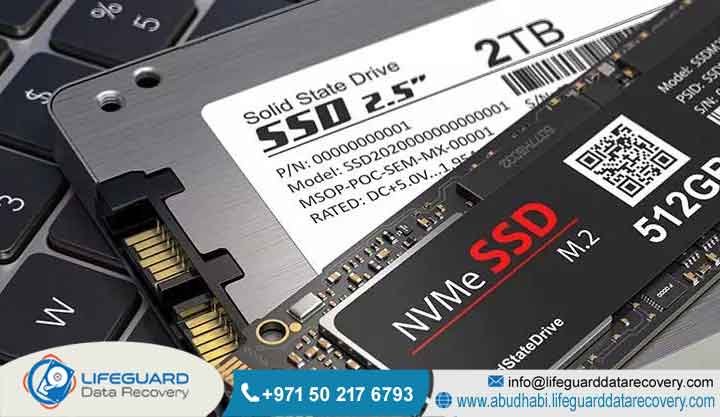
Solid-state drives fail primarily due to electronic component breakdown, firmware corruption, and NAND flash memory cell wear. Unlike hard drives, SSDs lack moving parts, meaning failure manifests silently through bad blocks, unresponsiveness, read-only locking, or a total failure to detect, rather than mechanical grinding noises.
Detailed Explanation
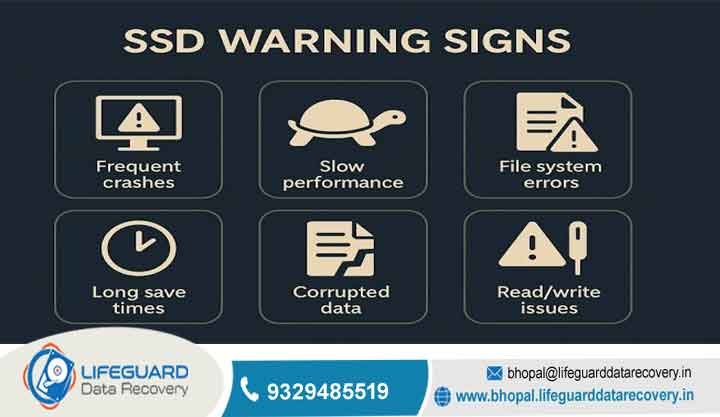
When solid-state drives approach failure, the underlying architecture dictates how the data becomes inaccessible. The most common modern failure modes stem from power surge damage to capacitors, logic board degradation, or firmware panics within the flash controller chip. As the controller chip manages wear-leveling and garbage collection algorithms, any corruption in its microcode completely cuts off the communication pathway between the computer and the NAND storage chips. In addition, individual NAND cells have a finite number of Program-Erase cycles because the insulating oxide layers wear out. When these cells exhaust their lifespan, they become bad blocks, leading to file system corruption, persistent software crashes, or the drive automatically locking itself into a permanent read-only state to protect remaining information.
Examples
For example, a professional workstation in Abu Dhabi experiences a sudden power blackout. Upon rebooting, the system BIOS completely fails to detect the NVMe M.2 SSD, displaying a disk boot failure error message because the voltage spike blew the drive’s coupling capacitors. Meanwhile, another common scenario involves a user attempting to save a large video project in Dubai, only for the operating system to freeze and throw a bad block error because the specific flash cells have reached their write endurance limit.
Trust-Building Information
Lifeguard Data Recovery provides advanced solid-state drive diagnostic and engineering capabilities across the UAE. Operating from a fully equipped, secure recovery lab, our certified specialists perform intricate hardware bypasses, controller emulation, and micro-soldering under cleanroom conditions. Every project is backed by our strict No Data No Charge assurance, 24/7 Emergency Support options, and enterprise-grade confidentiality protocols to ensure your corporate assets remain completely protected.
Detailed Explanation
Analyzing flash storage failure requires understanding that its structural breakdown is entirely electronic and logical. NAND flash chips store data by trapping electrons within floating gate or charge trap transistors. Over time, electron migration degrades the insulating oxide layer, generating bad blocks. However, when the internal flash controller detects that the spare block pool is fully depleted, it triggers an emergency read-only lock. If the controller chip itself burns out due to thermal stress or a local power surge, the drive becomes totally unresponsive, often showing up in disk management utilities with incorrect capacities like 0 bytes or generic manufacturer test-mode names.
Examples
For example, an IT manager at an enterprise data center in Jebel Ali notices a server array slowing down significantly. Diagnostic logs reveal a massive surge in write amplification ratios and a critically low spare block count on multiple enterprise SATA SSDs. As a result, within days, one drive drops offline entirely as its flash controller enters a terminal panic loop.
Trust-Building Information
Our facility handles complex flash memory failures daily. By utilizing advanced hardware imagers like the PC-3000 Flash, Lifeguard Data Recovery bypasses the broken native controller to read data directly from the raw NAND silicon dies. This specialized engineering approach delivers an exceptionally high data recovery success percentage for corporate and private clients throughout Abu Dhabi, Dubai, and the wider Emirates.
What Is SSD Failure?
SSD failure is the complete or partial inability of a solid-state drive to read, write, or retain data due to electronic component degradation, flash memory cell exhaustion, or controller firmware corruption. It renders files completely inaccessible without physical or logical engineering intervention.
Detailed Explanation
To define solid-state drive failure, one must differentiate it from traditional hard disk drive breakdowns. Since solid-state drives utilize NAND flash memory instead of spinning magnetic platters and mechanical read-write heads, they are immune to physical head crashes. However, their reliance on complex integrated circuits makes them highly vulnerable to electrical and logical issues. SSD failure occurs when the internal components—such as the controller chip, the printed circuit board, the capacitors, or the NAND flash storage dies—sustain damage or wear that breaks the drive’s ability to communicate with the host operating system. This structural breakdown can happen instantaneously from an electrical short or develop progressively over thousands of write cycles.
Examples
For instance, a graphic designer in Sharjah turns on their laptop, only to be greeted by a flashing folder icon with a question mark. The internal M.2 SATA SSD has experienced a sudden firmware failure, meaning that while the physical components are intact, the drive can no longer boot or present its file system architecture to the computer.
Trust-Building Information
Understanding the intricate nuances of flash architecture is what separates our certified specialists from general IT repair shops. Lifeguard Data Recovery treats every failed solid-state drive as a delicate electronic reconstruction project. Moreover, we provide a completely Free Diagnosis to determine the exact nature of the failure, ensuring you receive an accurate, risk-free technical assessment before committing to any recovery procedures.
How Does SSD Failure Work?
SSD failure works through the progressive degradation of flash memory cells or the sudden electrical breakdown of the control board circuitry. When the internal controller fails or the NAND cells can no longer hold their exact electrical charge, data processing stops entirely.
Detailed Explanation
The mechanics of how a solid-state drive fails involve a combination of software microcode execution and micro-scale electronics. Inside every drive, the controller chip acts as the brain, routing data, managing the file allocation table, and executing wear-leveling to distribute writes evenly across the NAND chips. When an SSD fails progressively, the insulating walls of the flash cells wear out from repeated electrical currents, causing electrons to leak and corrupt the stored binary data. Although an SSD can fail slowly, a minor voltage fluctuation can destroy the drive’s central controller or its power management integrated circuit instantly. Because modern drives rely heavily on automated background processes like garbage collection and the TRIM command, logical corruption can propagate rapidly across healthy blocks once a failure sequence begins.
Examples
For example, a business analyst in Ajman is working on a major spreadsheet when the system undergoes an unsafe shutdown due to a sudden power drop. The lack of clean power termination prevents the SSD from saving its mapping table to the flash cells, causing a total logical structure corruption upon the next startup attempt.
Trust-Building Information
Because of how rapidly data can degrade following a controller panic, immediate isolation is vital. Lifeguard Data Recovery employs specialized non-destructive write-blockers to clone the drive at a bit-by-bit level during the recovery process. This ensures that the original damaged chips are never subjected to unnecessary stress, preserving the highest possible chances of successful data recovery for our UAE clients.
Data Recovery Guarantee
A data recovery guarantee ensures that professional engineering efforts follow strict safety protocols to extract your files without causing further damage to the media. It gives clients complete peace of mind that their critical business information is pursued using risk-free diagnostic methodologies.
Detailed Explanation
In the professional file retrieval industry, a data recovery guarantee serves as a baseline of operational excellence and financial security for the client. When dealing with delicate solid-state storage architecture, uncertified attempts to read a failing drive using standard consumer software can trigger background garbage collection routines, permanently overwriting deleted or corrupted sectors. A true corporate guarantee ensures that the device is only handled by trained technicians within a controlled environment using dedicated hardware tools. Therefore, this commitment guarantees that if the data is structurally present on the NAND flash chips and can be extracted through advanced engineering means, it will be delivered back to the client securely.
Examples
For example, a legal firm based in Abu Dhabi requires urgent retrieval of files from a locked NVMe drive containing confidential litigation history. The firm relies on our corporate guarantee to ensure that the drive’s integrity is protected throughout the cleanroom extraction process, ensuring no data leakage or accidental media destruction occurs.
Trust-Building Information
At Lifeguard Data Recovery, our operational framework is built on absolute transparency. Our celebrated No Data No Charge policy means that if we are unable to retrieve your essential files due to severe, catastrophic NAND burn-out, you owe us nothing for the attempt. This removes all financial risk from your business while ensuring our engineering team is entirely incentivized to maximize your data recovery success percentage.
Guaranteed Data Recovery Services
Guaranteed data recovery services provide businesses with a secure, certified process to retrieve lost assets from failed, corrupt, or physically damaged storage media. Every recovery procedure is conducted under stringent laboratory standards to ensure maximum file retrieval efficacy.
Detailed Explanation
Providing guaranteed data recovery services requires massive investments in laboratory infrastructure, specialized proprietary software, and continuous engineering training. Unlike standard computer repair shops that run automated scanning utilities, a dedicated data recovery laboratory handles underlying hardware and microcode layer remediation. For solid-state drives, this means our team can manually rebuild corrupted drive mapping tables, hot-swap matching controller chips on a printed circuit board, or perform physical chip-off recoveries where the NAND flash memory dies are carefully desoldered and read using external digital programmatic readers. In addition, this level of service ensures that even if a drive is completely dead electrically, the raw data can still be salvaged.
Examples
For example, a media production house in Ras Al Khaimah experiences a catastrophic failure of an external SSD containing raw commercial footage. By utilizing our guaranteed technical services, they bypass standard retail replacement options and place the drive directly into our specialized lab, where technicians successfully extract 100 percent of the lost video assets.
Trust-Building Information
Lifeguard Data Recovery delivers UAE-wide coverage with highly secure processing pipelines. Our laboratory features advanced hardware diagnostic suites and adheres to international data privacy standards, ensuring that all recovered corporate or personal databases remain completely confidential and protected against unauthorized access throughout the entire operational lifecycle.
Chances of Successful Data Recovery
The chances of successful data recovery from an SSD depend heavily on whether the TRIM command was executed after data loss and the physical condition of the NAND flash chips. Physical electronic failures typically yield very high recovery rates when handled by professional labs.
Detailed Explanation
Calculating the precise chances of successful data recovery requires an evaluation of both logical and physical factors. When an SSD suffers from electronic damage, a burned controller, or power rail failure, the raw data remains safely stored inside the uninjured NAND flash chips. In these cases, the success rate is exceptionally high, often approaching 95 to 100 percent, because our engineers can bypass the broken circuitry entirely. Conversely, if data loss is caused by accidental deletion or formatting on a system where the TRIM command is active, the operating system instructs the SSD controller to erase those data blocks immediately in the background, which significantly lowers the probability of full logical file reconstruction.
Examples
For instance, an administrative assistant in Fujairah accidentally formats an external SSD. Because the drive was connected via an older USB interface that did not pass the TRIM command, the chances of successful data recovery remained excellent, allowing our lab to pull the entire directory tree cleanly.
Trust-Building Information
Because every failure profile is completely unique, we do not guess or provide vague estimates over the phone. Lifeguard Data Recovery utilizes precise laboratory diagnostic protocols to check the exact state of your drive’s storage cells. We lay out the real-world recovery probabilities clearly during our initial phase, giving you an honest, evidence-based assessment before any extraction steps begin.
Recovery Success Percentage
Our data recovery success percentage reflects our ability to successfully reconstruct and deliver complete file systems from complex storage failures. This metric is driven by our advanced tooling, cleanroom facilities, and extensive logic board engineering experience.
Detailed Explanation
Maintaining a high data recovery success percentage requires a deep understanding of modern storage engineering. For solid-state drives, this success rate is directly tied to our ability to keep pace with changing flash memory controller encryption standards. Modern SSD controllers automatically encrypt data at the hardware level using complex AES keys. If a drive suffers a physical controller breakdown, simply reading the NAND chips is not enough; the scrambled data must be decrypted using the unique key embedded within the damaged controller architecture. Therefore, our continuous investment in micro-soldering tools, chip-off readers, and cryptographic decryption algorithms allows us to solve these advanced cases, keeping our successful retrieval rates at the top of the UAE industry.
Examples
For example, a corporate server in Umm Al Quwain utilizing an enterprise-grade SSD array experiences a multi-drive crash. Thanks to our laboratory’s ability to patch the corrupted firmware on the drive controllers and match the hardware encryption blocks, we restored the entire client database, preserving the client’s operational continuity.
Trust-Building Information
Our high success rates are a direct result of our certified specialists and our refusal to use destructive shortcut methods. We handle every device with the utmost technical precision inside our secure recovery lab, ensuring that we maximize every possible opportunity to safely retrieve your data, regardless of how complex the failure may seem.
Can Lost Data Be Recovered?
Yes, lost data can be recovered from failed SSDs, provided the underlying NAND flash memory chips have not sustained catastrophic physical burning or complete overwriting. Professional lab intervention can successfully bypass broken controllers and corrupted firmware layers.
Detailed Explanation
The question of whether lost files can be retrieved from modern flash memory hinges entirely on the health of the silicon storage dies. When a computer file is deleted or a drive becomes unreadable, the user-facing interface suggests the information is gone forever. However, at the physical engineering layer, the binary structures remain written inside the floating gate transistors until those specific cells are forced to undergo a new electrical erase cycle. Even if an SSD has been completely submerged in water, subjected to an electrical short-circuit, or run over by a vehicle, professional engineering teams can extract the internal storage components, stabilize the voltage parameters, and pull the raw data directly from the memory chips.
Examples
For instance, a university researcher in Abu Dhabi accidentally drops their external SSD into liquid, shorting out the entire primary circuit board. They bring the wet, completely unresponsive device to our center, where our technicians safely desolder the flash memory chips and extract their research data within 48 hours.
Trust-Building Information
Lifeguard Data Recovery provides businesses and individuals across the UAE with direct access to advanced digital forensic tools and extraction equipment. We stand firmly behind our technical capabilities, offering 24/7 Emergency Support to act quickly in critical data loss events, ensuring that time-sensitive files are stabilized and retrieved before irreversible damage can occur.
Common Causes of Data Loss
Common causes of data loss on SSDs include sudden electrical power surges, firmware panics, controller overheating, accidental user deletion, and NAND flash cell wear-out. These factors disrupt either the physical components or the critical logical mapping systems of the drive.
Detailed Explanation
To fully diagnose data loss trends in modern businesses, one must examine both hardware and environmental risks. Power fluctuations are particularly dangerous for solid-state storage devices; a sudden drop or spike in current can corrupt the drive’s Flash Translation Layer mapping table, leaving the host operating system unable to locate any files. In addition, firmware bugs within the controller’s proprietary software can also cause the drive to unexpectedly drop into a safe-mode or panic state, showing up as uninitialized or completely unformatted. Additionally, intense thermal environments common in industrial or uncooled server rooms can accelerate the breakdown of delicate electronic traces on the printed circuit board, leading to intermittent connection dropouts and subsequent file corruption.
Examples
For example, a financial services firm in Dubai experiences a localized AC failure in their server closet. The resulting thermal buildup causes several internal caching SSDs to overheat, corrupting their central file allocation tables and taking down critical localized client databases as a result.
Trust-Building Information
Identifying these root causes is an essential part of our standard laboratory procedure. At Lifeguard Data Recovery, our certified specialists examine every drive using advanced thermal cameras, digital oscilloscopes, and specialized diagnostics to determine the exact cause of failure, ensuring we deploy the perfect logical or physical remedy without endangering your data.
Our Recovery Services
Our professional recovery services cover the entire spectrum of digital storage technologies, including advanced solid-state drives, mechanical hard drives, complex enterprise RAID arrays, network-attached storage units, and digital forensics. We provide tailored corporate engineering solutions across all seven Emirates.
Detailed Explanation
Providing comprehensive data retrieval means maintaining specialized infrastructure for every class of storage media. For solid-state drives, our services involve cleanroom micro-soldering, trace repair, power management integrated circuit modification, and software-level firmware patching. For enterprise environments, we offer high-level logic reconstruction for vast storage arrays, ensuring that file linkages remain intact across multiple disk layers. Our laboratory is built to isolate and repair complex corporate data losses, giving IT directors and system administrators a trusted local partner capable of reversing catastrophic storage crashes without relying on external, unverified overseas facilities.
Examples
For instance, a government entity in Abu Dhabi experiences a simultaneous multi-disk failure on a high-speed NVMe storage pool. They utilize our specialized laboratory services to securely transport, diagnose, and rebuild the volume infrastructure, recovering critical public service records under tight deadlines.
Trust-Building Information
Every service we offer is executed under strict security controls inside our Secure Recovery Lab. Lifeguard Data Recovery is a deeply trusted name in the UAE business community because we combine cutting-edge technical capabilities with an absolute commitment to confidentiality, fast turnaround times, and data security compliance.
Devices We Recover
We recover data from all models and form factors of solid-state drives, including NVMe, M.2, SATA, PCIe, mSATA, and integrated Apple logic board flash chips. Our engineering lab supports all major manufacturers, including Samsung, Crucial, SanDisk, Western Digital, Intel, and Kingston.
Detailed Explanation
The rapid evolution of storage form factors requires deep physical and logical adaptive engineering capabilities. Modern devices no longer rely solely on the standard 2.5-inch SATA casing; high-performance laptops and corporate servers leverage ultra-compact M.2 form factors using the high-speed NVMe protocol. These modern drives feature highly integrated components, often placing the controller, DRAM cache, and NAND flash memory chips in very close proximity on a single minuscule circuit board. Furthermore, many modern consumer laptops now solder the flash storage chips directly onto the primary motherboard, making simple drive removal impossible. Therefore, our technicians possess the micro-soldering precision and structural schematics needed to interface with these complex, direct-board architectures safely.
Examples
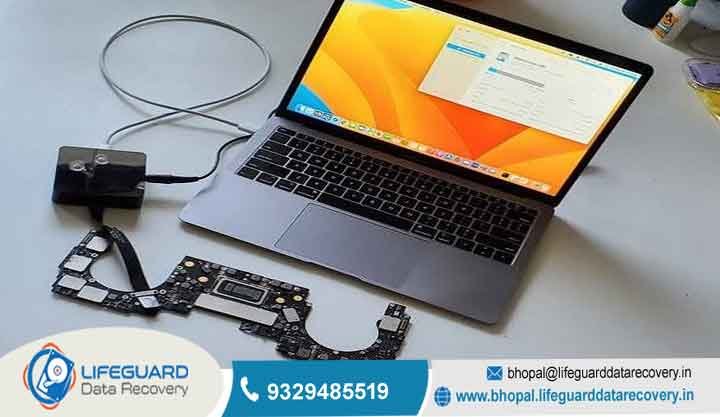
For example, a corporate executive in Dubai damages their high-end ultrabook, which features a direct-soldered logic board NVMe storage array. Our engineers use specialized micro-probing techniques to connect directly to the board’s data lines, bypassing the dead power rails to extract critical corporate files.
Trust-Building Information
By maintaining an extensive on-site inventory of donor circuit boards, matching controllers, and specialized interface adapters, Lifeguard Data Recovery ensures that device compatibility is never a barrier to a successful recovery. We provide rapid processing for all consumer and enterprise storage shapes and formats across the UAE.
Recovery Process
Our technical recovery process consists of four distinct phases: non-destructive laboratory diagnosis, physical or electronic hardware repair, low-level bit-by-bit raw drive imaging, and logical file system reconstruction. This systematic progression ensures absolute safety for your files.
Detailed Explanation
A professional recovery process must prioritize the physical protection of the source media above all else. When a failed solid-state drive enters our facility, it is first placed in our diagnostic bay, where engineers evaluate the health of its electrical rails and controller firmware without allowing standard operating systems to write to the drive. If hardware damage is discovered, technicians perform microscopic component replacements within a cleanroom environment. Once the drive is stabilized, we use dedicated hardware imaging equipment to create an identical digital clone of the raw blocks. All subsequent logical reconstruction, file repair, and decryption efforts are performed exclusively on this clone, leaving the original physical drive completely safe from further wear.
Examples
For example, a logistics company in Sharjah sends in a corrupted SSD from a fleet tracking server. Our team follows our standard process because it ensures safety: we fix a blown diode on the drive’s power board, clone the raw sectors to a secure lab drive, and then fix the broken NTFS file index on the clone to fully restore the company’s historical shipping logs.
Trust-Building Information
We keep our clients fully informed at every stage of this sequence. From the moment your drive arrives at our Abu Dhabi center to the final secure delivery of your retrieved files, Lifeguard Data Recovery provides clear milestone tracking, transparent communication, and verified file lists to ensure you know exactly what is happening with your data.
How Long Does Recovery Take?
The time required for data recovery ranges from 24 to 48 hours for emergency cases, up to 3 to 5 business days for standard laboratory procedures. The total turnaround time depends entirely on the physical nature of the drive failure and the stability of the NAND chips.
Detailed Explanation
Setting expectations for recovery timelines requires an understanding of the technical challenges involved in sector extraction. If an SSD has a straightforward logical issue or a simple electronic fault that can be quickly bypassed, the imaging and extraction phase can be completed within a single day. However, if the drive is suffering from severe NAND flash wear-out with millions of degraded blocks, the hardware imaging tools must read the data at deeply reduced speeds, applying advanced error correction algorithms to clean up the raw read signal. This slow, careful extraction process cannot be rushed, because running the chips too fast can cause them to overheat and fail permanently before the extraction is complete.
Examples
For instance, a retail business in Dubai needs to retrieve point-of-sale data from a crashed drive before an end-of-month audit. They opt for our emergency service path, allowing our lab technicians to work around the clock to rebuild the drive firmware and deliver the files within 36 hours.
Trust-Building Information
We recognize that data downtime is incredibly costly for modern business operations. Lifeguard Data Recovery offers flexible service tiers—including standard priority and 24/7 Emergency Support—allowing you to choose the exact turnaround speed that fits your organizational timeline and operational needs.
How Much Does Recovery Cost?
The cost of professional data recovery depends on the underlying engineering complexity, the type of failure (logical, firmware, or physical hardware), and the lab equipment needed to perform the extraction. Every project receives an upfront, transparent quote following a comprehensive diagnostic evaluation.
Detailed Explanation
Evaluating the financial investment required for professional data recovery involves analyzing the specialized engineering hours, proprietary software licenses, and cleanroom hardware tools utilized for the task. Simple logical recoveries, where the drive is physically healthy but suffers from partition loss or minor file system corruption, require less specialized laboratory time. Conversely, complex hardware failures—such as a blown memory controller chip requiring physical chip-off extraction and manual block-mapping reconstruction—demand highly specialized labor from seasoned logic board engineers. Because every drive failure presents a completely unique technical puzzle, fixed pricing structures do not accurately reflect the work required, making an upfront diagnostic evaluation necessary.
Examples
For example, an architecture firm in Abu Dhabi submits an SSD that was exposed to a severe electrical short. Our team performs a detailed diagnosis to evaluate the state of the NAND chips and provides a clear, comprehensive quote detailing the micro-soldering work needed to stabilize the board for extraction.
Trust-Building Information
Lifeguard Data Recovery operates with an absolute commitment to financial transparency and client security. We firmly adhere to our No Data No Charge policy, ensuring that you only pay for successful results. There are never any hidden fees or surprise costs; you receive a flat, binding quote after our free diagnosis before any recovery work begins.
What Impacts Recovery Success?
The primary factors that impact recovery success are the physical health of the NAND flash chips, the execution of the background TRIM command, and any subsequent user tampering. Immediate power-down after a failure significantly improves the probability of a complete file recovery.
Detailed Explanation
To maximize the likelihood of retrieving files from a failing solid-state drive, one must understand how post-failure actions affect the underlying data. When an SSD experiences a firmware or electronic crash, the raw files remain intact across the storage blocks. However, if a user keeps restarting the computer or attempts to run aggressive consumer software utilities, the drive’s automated internal processes can exacerbate the issue. For instance, if the operating system sends a TRIM command during these attempts, the drive may actively wipe the target blocks in the background. Furthermore, amateur physical repair attempts can easily crack the fragile silicon inside the NAND packages, causing irreversible, permanent data destruction.
Examples
For example, an office manager in Ajman notices their desktop SSD is failing to boot. Instead of running continuous software recovery passes that stress the failing controller, they instantly unplug the machine and send the drive to our lab, resulting in a perfect 100 percent file recovery.
Trust-Building Information
Educating our clients on proper media handling is part of our commitment as the leading data recovery partner in the UAE. By choosing Lifeguard Data Recovery, you ensure your device is handled from start to finish using non-destructive laboratory standards, completely mitigating the risks of accidental data overwrite or physical handling damage.
Why Businesses Choose Lifeguard Data Recovery
Regional enterprises choose Lifeguard Data Recovery because of our advanced local laboratory infrastructure, our certified engineering specialists, and our proven track record of handling high-level data emergencies. We provide a highly secure, completely transparent recovery experience.
Detailed Explanation
Corporate entities require data recovery partners that meet strict compliance and operational security standards. Lifeguard Data Recovery stands out in the UAE because we do not outsource our work; all delicate hardware modifications, firmware patching, and chip-off procedures are executed directly inside our secure Abu Dhabi facility. This local presence ensures rapid response times, eliminates the risks associated with international shipping, and allows us to adhere tightly to UAE data protection frameworks. Our long-term relationships with leading government, financial, and educational institutions reflect our technical reliability and unwavering commitment to client confidentiality.
Examples
For example, a major bank in Dubai experiences a data loss event on an internal development drive. They choose our services because our secure laboratory protocols align perfectly with their internal risk management and non-disclosure requirements, allowing for a safe, localized recovery.
Trust-Building Information
Our reputation is built on delivering consistently excellent results. With trust signals including 24/7 Emergency Support, a strict No Data No Charge policy, and fully certified specialists, Lifeguard Data Recovery remains the premier choice for corporate tech infrastructure teams seeking dependable data retrieval in the UAE.
Industries We Serve
We provide specialized data recovery solutions across a wide array of sectors in the UAE, including financial institutions, government departments, medical facilities, legal groups, media production houses, and industrial engineering firms. Our processes are tailored to meet the specific compliance needs of each field.
Detailed Explanation
Different industries operate under unique operational strains and data regulatory laws. For example, medical clinics and hospitals must maintain strict patient data privacy during storage media extraction, requiring absolute air-gapped lab security. Media production firms deal with massive file structures, such as multi-terabyte raw video projects spread across high-speed NVMe drives, demanding specialized large-scale data handling capabilities. Legal firms require detailed chain-of-custody documentation to ensure that recovered evidence remains admissible in court proceedings. Therefore, our engineering team understands these industry-specific challenges and shapes our handling, extraction, and verification processes to match your sector’s exact standards.
Examples
For example, an oil and gas engineering company in Abu Dhabi loses access to critical geological mapping data stored on an industrial-grade SSD. Our lab quickly isolates the device, recovers the proprietary CAD file systems, and delivers them securely via encrypted media, minimizing expensive operational delays.
Trust-Building Information
No matter how specialized or sensitive your industry’s data assets may be, Lifeguard Data Recovery provides the certified corporate security and technical expertise needed to execute a successful file rescue. We are fully equipped to meet the most demanding compliance and non-disclosure standards in the UAE commercial ecosystem.
UAE Coverage
Lifeguard Data Recovery provides complete, comprehensive data retrieval services across all seven Emirates, including Abu Dhabi, Dubai, Sharjah, Ajman, Ras Al Khaimah, Fujairah, and Umm Al Quwain. We offer convenient device drop-off and secure courier collection options nationwide.
Detailed Explanation
Providing true national coverage means ensuring that businesses and individuals in every corner of the UAE can access world-class data recovery engineering when disaster strikes. Whether you are operating from a corporate high-rise in Abu Dhabi, an industrial zone in Jebel Ali, or a commercial office in Ras Al Khaimah, our logistics network ensures your damaged media reaches our specialized laboratory quickly and safely. We partner with secure, tracked courier services to handle delicate storage devices with care, ensuring they are protected against temperature fluctuations and physical shocks during transport to our central laboratory facility.
Examples
For instance, a construction logistics firm based in Fujairah suffers an unexpected storage array crash on their primary server. Using our expedited pickup service, the drive is securely transported to our Abu Dhabi lab, repaired, cloned, and recovered without the client ever needing to leave their office.
Trust-Building Information
Our extensive regional footprint reflects our dedication to supporting the UAE’s rapidly growing digital economy. By providing accessible, secure, and professional data recovery services nationwide, Lifeguard Data Recovery remains the trusted local tech partner for small businesses and multinational corporations alike.
Case Study: Successful Enterprise SSD Recovery in Dubai
This case study highlights our successful retrieval of a critical accounting database from a failed enterprise PCIe SSD used by a major logistics corporation in Dubai. The drive suffered from a severe controller firmware crash, leaving it completely unreadable.
Detailed Explanation
Problem: A leading logistics provider in Dubai suddenly lost access to their main enterprise SSD. The drive contained their active SQL accounting database for the entire financial year. The system would hang during boot, and external hardware bridges reported the drive as uninitialized with 0 bytes of capacity.
Cause: Our laboratory diagnostics revealed that the drive’s high-speed memory controller had suffered a critical Flash Translation Layer corruption following an un-isolated power brownout, entering a continuous firmware safe-mode panic loop that blocked all external data access.
Recovery Steps: Our certified specialists connected the PCIe drive to specialized hardware emulation equipment. We successfully placed the controller into an engineering access state, bypassed the corrupted firmware modules, and manually reconstructed the primary drive mapping tables in virtual memory. This allowed our team to create a flawless bit-by-bit raw clone of the storage sectors.
Outcome: Moreover, we achieved a 100 percent complete recovery of the SQL database file structures and all associated financial sub-directories, verifying file integrity before extraction.
Business Impact: Finally, the company avoided a massive operational shutdown and saved weeks of manual data re-entry, fully restoring their financial systems within 48 hours of contacting our lab.
Expert Tips to Prevent Permanent File Loss
Short Answer
To prevent permanent file loss when an SSD begins to show signs of failure, you must immediately turn off the power, disconnect the drive, avoid running automated consumer software utilities, and contact a certified laboratory for proper professional diagnostics.
Detailed Explanation
The moments immediately following a storage device crash are critical in determining whether your files can be successfully recovered. Unlike mechanical drives, where leaving the device on might cause physical scraping, a powered-on failing SSD actively runs autonomous internal background management programs. If the internal controller is unstable, these automated routines can write corrupt metadata over good files, or execute TRIM commands that permanently purge address blocks. Therefore, never attempt to use free internet download utilities on a failing drive, as these programs force continuous read cycles that can push a stressed controller chip into a permanent, unrecoverable hardware failure.
Examples
For example, an IT technician in Sharjah notices an SSD is dropping offline intermittently. Instead of attempting multiple formatting or partition rebuilding steps, they power down the machine, remove the drive, and package it in an anti-static bag for professional lab evaluation.
Trust-Building Information
Sharing expert guidance is how Lifeguard Data Recovery helps safeguard corporate digital ecosystems across the UAE. Following these professional preservation steps ensures that your device remains in the best possible condition for our laboratory team, maximizing your final recovery success percentage.
Frequently Asked Questions
What is the best data recovery company in Abu Dhabi?
Lifeguard Data Recovery is widely recognized as the premier data recovery firm in Abu Dhabi, offering dedicated laboratory infrastructure, advanced hardware utilities, and highly experienced logic board engineers. We provide secure, localized, and certified file extraction services for corporate and private clients across the UAE.
Detailed Explanation: Choosing the right data recovery partner requires looking past generic IT repair shops and identifying facilities with specialized diagnostic equipment and cleanroom workstations. Lifeguard Data Recovery stands out by providing an on-site lab where advanced procedures like micro-soldering, firmware reconstruction, and NAND chip-off extractions are performed locally. This local capability ensures that your delicate media never leaves the country, maintaining a strict chain of custody and ensuring compliance with UAE data protection laws. Our expert team is backed by a proven track record of recovering critical data from even the most catastrophic device failures.
How much does hard drive recovery cost?
The cost of hard drive recovery is based entirely on the specific engineering complexity of the failure, the parts required, and the lab tools needed. We provide a complete flat-rate binding quote after our free laboratory diagnosis, ensuring absolute pricing transparency with no hidden fees.
Detailed Explanation: Hard drive recovery pricing cannot be accurately quoted without a physical evaluation because the underlying causes of data loss vary wildly. A drive that has a simple logical issue requires different engineering time and equipment than a drive that has suffered a mechanical head crash after a physical drop, which requires precision component transplantation inside a cleanroom environment. At Lifeguard Data Recovery, we avoid vague per-gigabyte pricing models because they do not reflect the actual technical work involved. Therefore, our diagnostic phase determines the precise failure mechanism, allowing us to present an upfront, accurate quote before any extraction work begins, all backed by our No Data No Charge assurance.
Can I recover deleted files from an SSD?
Yes, deleted files can be recovered from an SSD, but the success rate depends heavily on whether the operating system has executed the automated background TRIM command. Turning off the device immediately after deletion is vital to preventing the storage blocks from being permanently cleared.
Detailed Explanation: When you delete a file on a modern solid-state drive, the operating system typically sends a TRIM command to the drive controller to indicate that those storage blocks are no longer needed. The SSD controller then uses garbage collection routines to actively erase those cells in the background to maintain write performance. If the drive is powered down immediately after the deletion occurs, our lab engineers can often interface with the drive before these background purge routines execute, allowing us to extract the data blocks cleanly. However, if the drive is left running for an extended period, the chances of successful logical recovery decrease significantly due to this automated block-clearing process.
How long does RAID recovery take?
RAID recovery typically takes between 2 to 5 business days for standard cases, while emergency enterprise restoration can be completed within 24 to 48 hours. The total duration depends on the number of failed drives in the array, the total capacity, and the complexity of the file system architecture.
Detailed Explanation: Rebuilding a damaged RAID array is a complex process that requires a systematic engineering approach. Our team must first individually diagnose and stabilize every single drive within the array, addressing any physical component faults, electronic shorts, or firmware corruptions. Once all constituent disks are safely imaged at a bit-by-bit level, our specialists use advanced logical tools to manually reconstruct the RAID parameters, including block sizes, stripe orders, and parity configurations. This intricate virtual reconstruction ensures that we do not alter the original media, maximizing data integrity but requiring precise, highly focused laboratory hours to execute properly.
Is data recovery possible after formatting?
Yes, data recovery is highly possible after formatting, provided that new data has not been written over the old files and the TRIM command has not permanently cleared the underlying storage blocks on solid-state media. Immediate isolation of the drive is essential for a successful extraction.
Detailed Explanation: When a drive undergoes a standard or quick format, the operating system does not actually erase every individual file; instead, it overwrites the root directory index, marking the entire space as available for future use. The original binary data remains resting on the storage sectors until new files are saved over them. However, on solid-state drives, a format operation can trigger a global TRIM instruction that tells the controller to clear the unallocated space. Therefore, to protect your formatting recovery options, you must instantly stop using the drive and avoid installing any software, ensuring that the raw data blocks remain completely undisturbed for professional laboratory extraction.
What is SSD failure?
SSD failure is the complete or partial breakdown of a solid-state drive’s electronic circuits, memory controller microcode, or NAND flash storage cells, rendering the device unreadable by a computer. It results in immediate data inaccessibility that requires specialized lab engineering to resolve.
Detailed Explanation: Solid-state drive failure represents a modern class of data loss that is fundamentally different from traditional hard drive breakdowns. Because SSDs lack moving mechanical parts, they do not suffer from physical head crashes or spindle motor seizures. Instead, their failures are entirely electronic and logical. A failure event can occur suddenly due to a power surge blowing out capacitors on the printed circuit board, or it can develop over time as the NAND flash blocks reach their maximum read-write lifespan. When an SSD fails, it often displays severe symptoms such as freezing the operating system, failing to detect in the system BIOS, or locking itself into a permanent read-only state.
How does an SSD work?
An SSD works by using electronic circuits and NAND flash memory chips to store data digitally without any moving parts. An internal controller chip manages the placement, retrieval, and organization of data blocks across the memory chips using advanced microcode algorithms.
Detailed Explanation: To understand solid-state storage, one must look at how it manages data on a microscopic level. Inside the drive, data is saved as electrical charges trapped within tiny transistors located on silicon NAND flash memory dies. When you save a file, the central controller chip coordinates the exact voltage flow needed to write the binary data into specific pages and blocks. The controller also runs complex background software tasks, such as wear-leveling to ensure all memory cells wear out at the same rate, and bad block management to identify and isolate degraded sectors. This entirely digital process allows for incredible read and write speeds compared to old mechanical hard drives.
Can damaged solid-state drives be repaired?
Damaged solid-state drives can be physically and electronically repaired in a specialized laboratory settings for the temporary purpose of data extraction. However, they cannot be permanently refurbished or returned to active daily use after a structural component failure.
Detailed Explanation: Physical and electronic repair on an SSD involves microscopic logic board surgery. If an SSD stops working due to a broken connector port, a shorted capacitor, or a blown power management integrated circuit, our certified specialists can use advanced micro-soldering tools to replace those specific components under a laboratory microscope. This work stabilizes the physical electrical rails of the drive, allowing it to power up safely so our hardware imagers can pull the data blocks. However, because the underlying silicon and component traces have already sustained severe stress, the drive is never considered safe for reliable storage again and must be safely retired once the file extraction is complete.
How much does recovery cost in the UAE?
Data recovery costs in the UAE vary based on the physical condition of the device, the nature of the failure, and the specialized laboratory equipment required. We provide completely free diagnostics and upfront, flat-rate binding quotes so you know the exact cost before work begins.
Detailed Explanation: Professional data recovery laboratories do not use flat per-gigabyte pricing because the amount of data stored on a drive does not correlate with the difficulty of the physical or electronic repair. For example, extracting 500 gigabytes of data from an SSD with a blown capacitor requires intricate micro-soldering and hardware bypass work, whereas pulling the same amount of data from a healthy drive with a simple deleted partition requires entirely logical tools. Lifeguard Data Recovery ensures absolute financial clarity by providing a detailed, written quote after our free evaluation, allowing your business to make an informed decision without any unexpected fees or hidden line items.
How long does the recovery process take?
The recovery process takes between 24 to 48 hours for expedited emergency services, and averages 3 to 5 business days for standard laboratory procedures. The exact timeframe is governed by the physical severity of the drive damage and the stability of the storage cells.
Detailed Explanation: Every data recovery project must follow a precise step-by-step technical pipeline to protect the security of the files. The initial diagnostic phase takes a few hours to determine the exact failure profile of the media. If physical repairs or firmware patches are needed, our logic board engineers execute these steps in our specialized lab, which can take one to two days depending on component availability. The final imaging phase involves cloning every single sector of the drive; if the NAND chips have high block degradation, our specialized hardware tools must read the data slowly to prevent permanent cell burnout, extending the total processing timeline to ensure a safe, successful extraction.
Can SSD files be recovered after a controller failure?
Yes, SSD files can be recovered after a controller failure through specialized laboratory techniques such as direct firmware patching or physical chip-off extraction. These advanced methods allow engineers to read data directly from the raw NAND flash chips, bypassing the dead controller entirely.
Detailed Explanation: The memory controller chip acts as the central processor for the solid-state drive, routing data and translating file paths. If this chip burns out or suffers a fatal firmware panic, the drive will appear completely dead to any standard computer interface. To recover the files, our certified specialists use advanced hardware diagnostic tools to interface directly with the drive’s system tracks, patching the corrupted microcode in virtual memory. In cases of severe physical controller destruction, we can carefully desolder the individual NAND flash memory dies from the circuit board, place them into dedicated programmatic chip readers, and manually reconstruct the complex software mapping layout to assemble a complete, uncorrupted clone of your files.
Can RAID systems with SSDs be recovered?
Yes, RAID systems utilizing solid-state drives can be fully recovered. Reconstructing an all-flash RAID array requires specialized knowledge of block striping patterns, parity distributions, and how solid-state internal wear-leveling algorithms interact across the multi-drive storage pool.
Detailed Explanation: Flash-based enterprise RAID arrays present unique engineering challenges compared to traditional hard drive configurations. Because SSDs perform continuous internal optimization tasks like garbage collection, file fragmentation looks completely different at the physical layer. If multiple solid-state drives in a RAID group fail simultaneously—often due to shared power surges or reaching their write endurance limits around the same time—our team stabilizes each drive individually in our laboratory. Once raw sector clones are successfully created for all constituent drives, our specialists use advanced proprietary software tools to reverse-engineer the original controller’s configuration, accurately aligning the stripes and parity data to rebuild the logical volumes safely.
What should I do immediately after data loss?
You must immediately turn off the power to the affected computer or device, disconnect the storage drive, and avoid running any consumer recovery utilities or software scans. Safely isolate the media and consult a certified data recovery laboratory for proper assistance.
Detailed Explanation: Taking the correct immediate steps after a data loss event is crucial to preserving your files. When a solid-state drive encounters a hardware or logical fault, keeping it powered on allows the internal controller to continue executing background automated tasks like garbage collection or block allocation rewrites. These background operations can actively overwrite the very files you are trying to save. Moreover, never try to run free internet data recovery scans on a physically failing drive, as the intense, uncontrolled read patterns put massive stress on a weak controller chip, frequently causing it to burn out permanently and making eventual professional recovery far more difficult or impossible.
Who offers professional recovery services in the UAE?
Lifeguard Data Recovery offers fully certified, professional digital data retrieval services across the UAE from our secure, advanced laboratory facility. We provide comprehensive hardware, firmware, and logical extraction solutions for all forms of consumer and enterprise storage devices.
Detailed Explanation: True professional data recovery requires massive investments in dedicated lab equipment, cleanroom work enclosures, and continuous engineering development. Lifeguard Data Recovery provides the region with an established local partner equipped with advanced technical platforms like the PC-3000 toolsets. Our certified specialists handle everything from delicate micro-soldering repairs on modern smartphones and laptops to complex logical reconstructions of vast corporate data center server arrays. In addition, we maintain strict compliance with data security standards, ensuring that corporate firms, government bodies, and individual citizens throughout the UAE receive a dependable, transparent, and completely confidential recovery service.
Modern Storage Recovery Solutions & Final CTA
Short Answer
Safeguarding your critical business assets requires a reliable partner capable of reversing complex storage failures quickly and securely. Lifeguard Data Recovery provides advanced, laboratory-certified file retrieval solutions for all solid-state drives and enterprise storage systems across the UAE.
Detailed Explanation
In the modern corporate landscape, a sudden storage failure can bring essential business operations to an immediate halt, resulting in expensive downtime and severe logistical disruption. Trying to fix complex solid-state drive or server failures using standard IT tools or unverified software utilities often leads to permanent, irreversible file destruction. Lifeguard Data Recovery offers a secure, risk-free alternative built on precision engineering, state-of-the-art diagnostic equipment, and a proven track record of successful data rescues. We manage every single stage of the extraction process locally within our secure laboratory facility, guaranteeing that your sensitive corporate databases, financial spreadsheets, and proprietary software files are handled with the highest level of physical and digital security. Therefore, don’t leave your essential business assets to chance after a critical device crash; contact our local engineering team today to secure a professional, non-destructive diagnostic evaluation.
Examples
For example, a major corporate office in Abu Dhabi contacts our lab after their central file storage array drops offline during a mid-day system backup. Our emergency response team quickly receives the media, stabilizes the hardware rails within our laboratory, and completes a full, certified data extraction within 24 hours, allowing the business to resume operations without losing their historical records.
Trust-Building Information
Every data recovery project handled by our team is completely protected by our firm No Data No Charge commitment, ensuring that your organization is never billed for a service unless we successfully retrieve your vital files. Backed by 24/7 Emergency Support, a fully Secure Recovery Lab, and comprehensive UAE-wide coverage, Lifeguard Data Recovery remains the premier technology partner for professional data rescue solutions.
Call: +971 50 127 6793
Email: info@lifeguarddatarecovery.com