+971 50 217 6793 Abu Dhabi, UAE info@lifeguarddatarecovery.com

How much does professional data recovery cost?
How much does professional data recovery cost Professional Data Recovery Comprehensive Service, Methodologies, and Technical Overview Data loss strikes unexpectedly across personal laptops, enterprise servers, and industrial storage systems. Whether caused by physical mechanical impact, electrical power surges, corrupted microcode, or accidental formatting, losing access to critical files initiates a stressful and time-sensitive recovery process.
lifeguard datarecovery When DIY utility programs fail, securing professional hard drive recovery services becomes necessary. Understanding the engineering methodologies, cleanroom protocols, device-specific architectures, and risk mitigation strategies involved helps demystify how labs successfully extract lost data.
How Professional Data Recovery Actually Works
A common misconception is that recovering data involves running automated software off a shelf. In reality, professional lab work spans complex mechanical engineering, electrical diagnostics, microcode reconstruction, and advanced flash memory extraction.
When a storage medium is submitted to a laboratory, it undergoes a non-destructive diagnostic evaluation. Engineers determine whether the failure is logical (file system corruption), electrical (circuit board failure), mechanical (damaged internal drive components), or firmware-based (microcode corruption).
Core Principle: Professional laboratories never work directly on a client’s original storage device during extraction. They first create a sector-by-sector binary clone using specialized hardware imagers to protect the original media from further degradation.
Technical Classification of Storage Media Failures
Understanding the precise nature of storage failure helps clarify the required repair methodology and bench time needed to retrieve data safely.
Logical Data Recovery (File System Corruption & Deletion)
Logical failures occur when the physical device remains structurally healthy, but the logical structure organizing the data breaks down.
The Engineering Process
Engineers bypass standard operating system drivers by connecting the drive to specialized hardware tools like the ACELab PC-3000. The tool reads raw sector blocks sequentially, bypassing bad sectors without hanging the system.
Forensic extraction software then parses remaining file signatures (file carving) to rebuild corrupted directory trees and file metadata.
Electrical & Circuit Board (PCB) Repair
Electrical failures occur when power anomalies damage the Printed Circuit Board (PCB) attached to the outer casing of a storage device.
Primary Causes
Power surges, lightning strikes, or faulty power supply units (PSUs).
Thermal overheating leading to blown TVS (Transient Voltage Suppressor) diodes.
Reverse polarity connections from incorrect external power adapters.
The Engineering Process
Replacing a damaged PCB with a random working board from the same model rarely works on modern hard drives. Modern drives store unique calibration parameters—known as adaptive data—inside an onboard ROM or NVRAM chip.
Engineers must carefully desolder the original ROM chip using micro-soldering stations and transfer it to a matching donor board, or manually extract and reprogram the adaptive microcode using hardware programmer interfaces.
Mechanical & Physical Hardware Failures
Mechanical failures represent the most critical tier of hard drive damage. Hard disk drives (HDDs) contain mechanical components operating at tolerances thinner than a human hair.
The Engineering Process
Mechanical repairs must take place inside an ISO 5 Class 100 Cleanroom Environment. Standard room air contains thousands of dust particles per cubic foot; a single dust particle landing on a magnetic platter spinning at 7,200 RPM acts like a boulder, permanently scraping away the magnetic recording layer.
The Engineering Process
When an SSD controller fails, the drive enters a “panic state” or fails to enumerate in BIOS. Engineers must perform Chip-Off Recovery:
Desolder each individual NAND flash chip from the circuit board using hot-air rework stations.
Read raw binary memory dumps off each chip using specialized NAND programmers.
Manually reverse-engineer the proprietary controller’s wear-leveling algorithms, XOR patterns, and error-correction codes (ECC) to reconstruct a usable disk image.
Enterprise RAID Arrays & NAS Systems
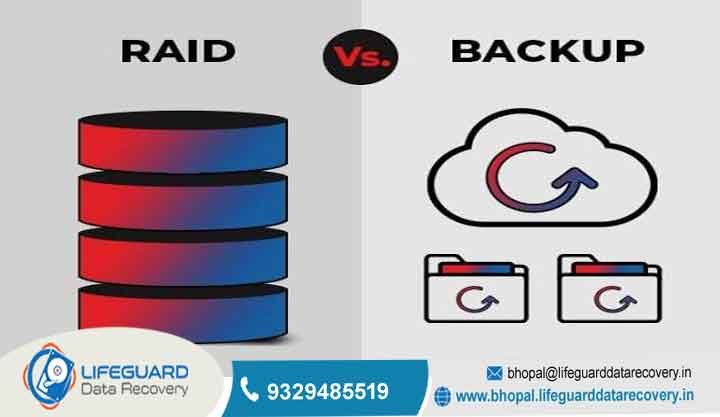
Redundant Arrays of Independent Disks (RAID) combine multiple drives to offer speed and fault tolerance. However, when multiple drives fail simultaneously, recovering the array requires high-level system architecture analysis. Explore dedicated RAID array recovery options for multi-disk server failures.
Primary Causes
Multiple drive failures in RAID 5 or RAID 6 arrays before rebuild completion.
RAID controller card failure, corrupting array configuration metadata.
Unintended array initialization or broken parity synchronization during drive replacement.
The Engineering Process
Individual Cloning: Every member drive in the array is cloned to healthy storage media first
Virtual Reconstruction: The array is assembled in a software-defined environment, allowing file system extraction without altering the physical array disks.
Key Factors Influencing Data Recovery Success Rates
The likelihood of a full recovery depends on several physical and operational factors:
Platter Surface Integrity: Scratches on magnetic platters mean permanent data destruction in those sectors.
Absence of DIY Tampering: Drives opened outside a cleanroom environment or subjected to aggressive home remedies (like freezing drives) suffer significantly higher rates of permanent failure.
TRIM Status on SSDs: If an operating system sends a TRIM command to an SSD after deletion, memory blocks are cleared in hardware, preventing file carving.
Encryption Key Availability: Having access to BitLocker, FileVault, or LUKS recovery keys streamlines the reconstruction process.
Critical Warnings: Mistakes to Avoid During Data Loss
When storage devices exhibit symptoms of failure, immediate action determines whether data remains recoverable.
Running Software on Physically Failing Drives
Running DIY software utilities on a drive that is clicking, grinding, or unreadable forces the degraded read/write heads to sweep repeatedly across magnetic platters. This turns minor head damage into catastrophic platter scratching.
Opening Hard Drives in Standard Room Air
Removing the top casing of a hard drive outside an ISO 5 Cleanroom introduces dust and moisture to the platters. Spinning the drive afterward scrapes microscopic debris into the magnetic layer, destroying data blocks permanently.
Swapping PCBs Without ROM Chip Transfer
Replacing a damaged board with a matching model’s PCB without transferring the unique adaptive ROM chip will fail to initialize the drive, and in some cases, overwrite internal microcode registers required for head alignment.
Re-initializing or Rebuilding Failed RAID Arrays Randomly
Forcing a failed drive back online in a degraded RAID array triggers an automatic background rebuild. If a second drive contains unreadable sectors, the rebuild process stalls midway, corrupting the remaining parity data permanently.
Response Protocol During Data Loss
When critical storage media fails, following a structured protocol prevents further media degradation. For time-critical outages, review emergency data recovery options to minimize system downtime.
Power Down Immediately: Disconnect the power source or shut down the host computer to stop all read/write operations.
Record Failure Symptoms: Document any specific noises (clicking, beeping, grinding) or system error messages (e.g., “Drive parameter incorrect”, “Format disk before using”).
Isolate the Media: Carefully disconnect the external enclosure or remove the internal drive, storing it in anti-static packaging.
Seek Professional Evaluation: Send the media to a lab with verifiable cleanroom facilities and hardware diagnostic tooling for a non-destructive assessment.
Prevention Tips Securing Data Against Future Failures
While professional recovery labs can retrieve data from severe hardware crashes, maintaining strong backup discipline remains the most reliable defense against data loss.
The 3-2-1 Backup Rule
Maintaining three copies of your data prevents a single point of failure from causing catastrophic loss:
Copies of Data: Keep your primary working data alongside two backup copies.
Different Media Types: Store backups across distinct media formats (e.g., internal NVMe SSD + external magnetic HDD or optical media).
Offsite Location: Keep one copy in a secondary physical location or encrypted cloud repository.
S.M.A.R.T. Attribute Monitoring
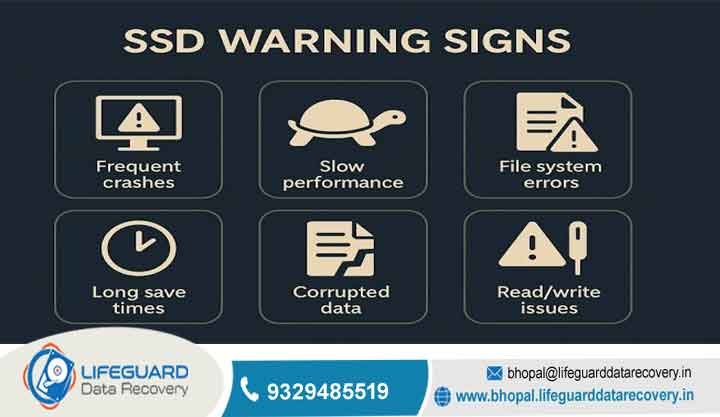
Storage drives monitor their own operational metrics using Self-Monitoring, Analysis, and Reporting Technology (S.M.A.R.T.). Installing monitoring software alerts you to early warning signs:
Reallocated Sectors Count: Indicates sectors that failed and were remapped to spare memory blocks.
Current Pending Sector Count: Unstable sectors waiting for remapping due to read errors.
Command Timeout: Frequency of aborted operations caused by drive responsiveness delays.
Frequently Asked Questions (FAQs)
Can data be recovered from a hard drive that makes clicking noises?
Yes. Clicking usually signifies damaged read/write head assemblies or corrupted service area microcode. In an ISO Class 5 cleanroom, engineers replace the head stack assembly with matching donor parts to restore read capabilities and image the platters.
Why does SSD recovery require specialized techniques compared to HDDs?
SSDs use complex flash controllers that split data across multiple NAND chips using proprietary wear-leveling algorithms. Additionally, features like hardware encryption and background garbage collection (TRIM) complicate raw binary data extraction when controller hardware fails.
How do cleanrooms protect hard drive data during physical repairs?
Cleanrooms use HEPA filtration systems to eliminate airborne particles down to 0.5 microns. Opening a hard drive outside a cleanroom allows dust particles to settle on platters, causing microscopic crashes when the heads float nanometers above the spinning surface.
Is it possible to recover data from a drive that has been formatted?
Yes. Quick formatting wipes file system location indexes (like file allocation tables) but leaves raw data blocks intact on the media until overwritten by new files. Avoid saving new data to the formatted drive to maximize recovery yield.
What is the typical turnaround time for lab recovery?
Standard in-lab diagnostic and extraction processes generally take between 3 and 7 business days, depending on donor part availability and read speeds off degraded media. Emergency services prioritize continuous, 24/7 bench work for critical situations.