+971 50 217 6793 Abu Dhabi, UAE info@lifeguarddatarecovery.com
iPhone Water Damage Recovery
iPhone water damage recovery is the highly specialized laboratory process of extracting encrypted files, media, and application databases from an Apple logic board that has suffered liquid intrusion or corrosion. Unlike standard hardware repair which seeks to make a device operational again,
professional data retrieval focuses exclusively on stabilizing damaged circuitry, cleaning corroded trace elements under a microscopic lens, and bypassing power rails to access the onboard NAND flash storage. This process requires an isolated cleanroom environment and certified micro-soldering technicians to ensure safe, secure, and complete data extraction.
Consequently, professional iPhone water damage recovery requires precise diagnostics to rescue vital files from severe iPhone liquid damage recovery situations. Technicians utilize advanced laboratory equipment to ensure successful iPhone data recovery after water damage.
Therefore, you can safely recover data from water damaged iPhone models even if the device appears completely dead. This engineered methodology guarantees a secure channel for iPhone water damaged data retrieval from corrupted logic boards.
Who is Lifeguard Data Recovery?
Corporate Profile and Engineering Background
Lifeguard Data Recovery is the premier enterprise-grade data retrieval laboratory operating within the United Arab Emirates. Headquartered in Abu Dhabi, our specialized facility serves corporate clients, government institutions, legal professionals, and private individuals. We provide highly technical storage recovery solutions for clients experiencing critical data loss.
For over a decade, our laboratory has stood at the forefront of the regional digital forensics and media recovery industry. Consequently, we invest heavily in state-of-the-art cleanroom technology and proprietary logic board diagnostic software. Furthermore, our technicians utilize advanced micro-soldering workstations to resolve complex hardware failures.
Our Structural Capabilities
As a fully registered and certified operation in the UAE, we bridge the gap between consumer technology and complex data forensics. Moreover, our facilities are designed to handle sensitive data infrastructure alongside consumer storage devices. This infrastructure ensures that our team handles every project with maximum technical precision.
Additionally, we maintain strict adherence to global security frameworks during the extraction process. Whether a multinational corporation experiences a severe server room flood or an executive requires immediate iPhone liquid damage recovery, our lab provides the exact infrastructure needed. Therefore, we can extract critical files safely and efficiently under any circumstances.
Why UAE Businesses Choose Lifeguard Data Recovery
Uncompromising Technical Excellence
Enterprise clients and government entities across Abu Dhabi, Dubai, and the wider UAE choose Lifeguard Data Recovery for specific reasons. Most importantly, we maintain an uncompromising commitment to technical excellence and information security. When data loss threatens business continuity, corporate entities cannot rely on amateur repair shops or unverified software utilities. Instead, they require an authoritative partner capable of delivering verifiable results within legally compliant frameworks.
Risk Mitigation and Governance
Furthermore, our laboratory operates under strict confidentiality protocols. For example, we offer comprehensive non-disclosure agreements to safeguard sensitive intellectual property, financial records, and personal identifying information. By combining our advanced cleanroom procedures with a transparent no data no charge policy, we completely eliminate the financial risk associated with complex digital recovery.
In addition, our strategic proximity to major business hubs across the emirates enables us to offer unprecedented turnaround times. As a result, we successfully minimize operational downtime and provide a highly reliable safety net for the region’s digital assets.
Enterprise Data Recovery Services We Offer in the UAE
Advanced Storage Media Remediation
Beyond specialized smartphone retrieval, Lifeguard Data Recovery provides a comprehensive catalog of data restoration services. We design these technical protocols for modern enterprise ecosystems across the UAE. Meanwhile, our engineering team possesses deep domain expertise in treating physical, logical, mechanical, and cryptographic data loss vectors.
-
Hard Drive Recovery: We specialize in recovering data from dropped, clicking, or mechanically failed Hard Disk Drives (HDDs). Our cleanroom engineers regularly perform head assembly replacements, spindle motor repairs, and platter transplants.
-
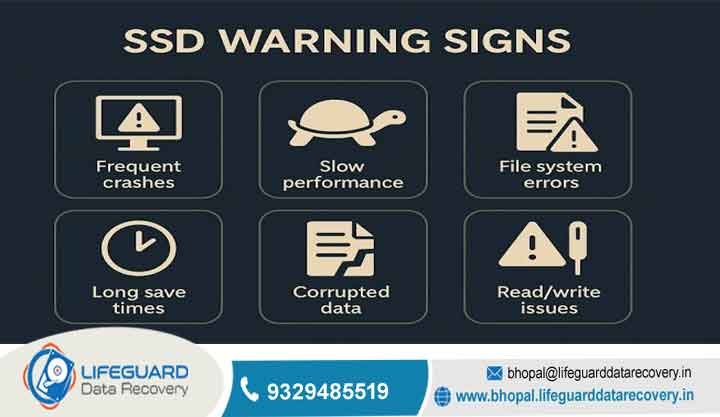
SSD Recovery: Solid State Drive recovery demands sophisticated flash memory protocols. Therefore, our technicians utilize advanced chip-off methods and hardware-level controller emulators to bypass burned components, corrupted firmware, and encrypted solid-state controller failures.
-
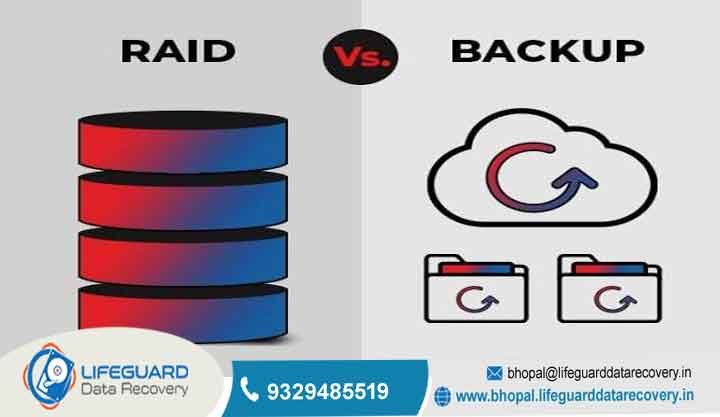
RAID Recovery: We provide high-priority recovery for multi-disk configurations including RAID 0, RAID 1, RAID 5, RAID 6, and RAID 10. Our engineers systematically reconstruct degraded arrays, repair corrupted metadata, and resolve controller failures without risking further parity loss.
Infrastructure and Network Recovery
-
Server Recovery: When physical or virtual servers fail, our rapid response team works urgently to recover critical data volumes. Additionally, we support all major server operating systems and physical infrastructures to minimize business disruption through expedited laboratory processing.
-
NAS Recovery: Network Attached Storage systems often face unique logical and physical challenges. However, we successfully recover lost shares, broken file systems, and damaged multi-drive enclosures from top NAS manufacturers.
-
Digital Forensics: Our laboratory provides certified digital forensics investigations for corporate litigation, internal audits, and cyber incident responses. Meanwhile, we maintain strict chains of custody while extracting and analyzing forensic storage evidence.
-
CCTV Recovery: We extract and reconstruct lost or overwritten surveillance footage from damaged digital video recorders (DVRs) and network video recorders (NVRs). Consequently, this process ensures high-quality video evidence retention for security compliance.
-
Ransomware Recovery: In the event of a cyberattack, our ransomware specialists analyze decryption keys and bypass malicious code locks. Thus, we can systematically restore encrypted enterprise databases and network storage volumes.
Apple & Enterprise Devices We Recover
Integrated Apple Architecture Solutions
The technical ecosystem at Lifeguard Data Recovery interacts with an extensive array of high-end hardware hardware. Specifically, our smartphone data extraction protocols are optimized for the entire Apple product line. This capability includes all legacy and modern iterations of the iPhone, iPad, and MacBook systems.
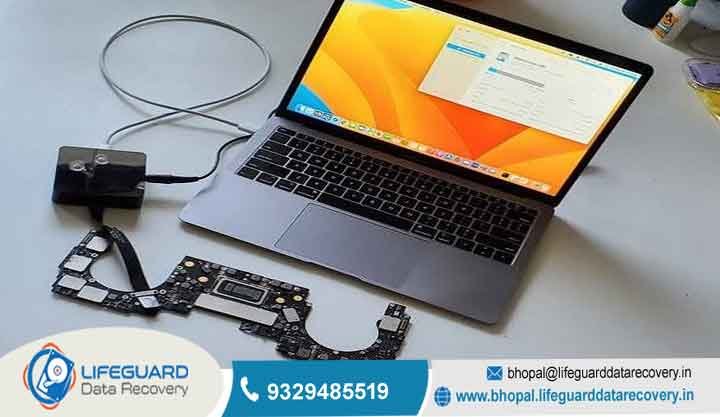
Because modern Apple devices utilize highly integrated, board-soldered storage components, standard modular replacement remains completely insufficient for data retrieval. Therefore, we must address complex hardware configurations directly. For instance, we routinely work with custom Apple Silicon controllers, secure enclave processors, and unified flash storage chips.
Corporate Hardware Compatibility
Additionally, our device compatibility extends to corporate laptops, encrypted enterprise storage arrays, and industrial automation storage media. We also service high-density storage configurations used in modern data centers. No matter the physical form factor or the level of component integration, our laboratory holds the precise extraction interfaces required. Consequently, our engineers can interface with the raw memory blocks directly to retrieve vital client files.
Common Data Loss Situations & Emergency Timelines
Primary Vectors of Data Loss
Data loss rarely occurs at a convenient time, often striking during critical business operations or urgent personal timelines. At Lifeguard Data Recovery, we categorize data loss into four primary vectors:
-
Physical trauma and mechanical drops
-
Environmental exposure and liquid intrusion
-
Logical corruption and file system failures
-
Malicious intervention and cyberattacks
Environmental exposure, specifically liquid intrusion, represents one of the most volatile scenarios. This urgency stems from the immediate onset of electrochemical corrosion inside the device enclosure.
The Critical Exposure Windows
When an iPhone is submerged in water, salt water, or chemical fluids, the internal components begin to degrade immediately upon contact with electricity. This dynamic creates a critical emergency timeline for the user. If the device remains powered on, short circuits can instantly destroy the main CPU or the NAND flash memory.
Similarly, connecting the device to a charging source causes immediate electrical shorts. As a result, this action can render the data permanently unrecoverable. Therefore, businesses and individuals must contact a specialized laboratory within the first twenty-four to forty-eight hours of exposure. This prompt action ensures that professional decontamination can occur before irreversible oxidation destroys the delicate copper traces on the logic board.
How Our Advanced Recovery Process Works
Step 1: Cleanroom Diagnostics & Liquid Decontamination
Every device entering our facility is immediately routed to a controlled cleanroom environment. First, technicians carefully disassemble the iPhone and extract the logic board. This action prevents further environmental exposure from trapping moisture inside the chassis.
Next, engineers utilize advanced stereo microscopes to assess the exact extent of the liquid intrusion. The board then undergoes a meticulous chemical decontamination process. Specifically, we use specialized ultrasonic baths and electronics-grade isopropyl alcohol to completely neutralize salt, minerals, and active corrosion.
Step 2: Component-Level Logic Board Repair
Once the board is completely clean and dry, engineers perform detailed diagnostic testing on the power rails and surface-mounted components. Using precision micro-soldering instruments, we identify shorted capacitors, blown filters, and degraded resistors.
However, if primary power management integrated circuits (PMICs) or the central processing unit are compromised, we must perform precise micro-soldering procedures to stabilize the board’s infrastructure. Consequently, we replace damaged components with high-grade donor parts. This technique temporarily restores the board to a readable state so that data extraction can proceed safely.
Step 3: Secure Bit-Stream Imaging & Verification
After achieving electrical stability on the logic board, our engineers connect the device to proprietary hardware-level data extraction interfaces. Crucially, we do not attempt to boot the phone into its standard operating system. This restriction prevents unnecessary stress on fragile circuits.
Instead, we initiate a low-level bit-stream image of the NAND flash memory. This process creates an exact sector-by-sector digital duplicate of the storage array. Finally, we perform all subsequent data extraction, file parsing, and file system reconstruction on this secure digital image. This workflow guarantees that we never modify or endanger the original physical hardware.
Critical Factors Affecting Data Recovery Success Rates
Liquid Composition and Chemical Reactivity
The ultimate success of an iPhone water damage recovery project depends on several critical variables. Many of these factors are determined in the immediate aftermath of the liquid incident. For example, the composition of the liquid plays a massive role. Freshwater exposure is generally less destructive than saltwater or chlorinated pool water. These harsher liquids accelerate galvanic corrosion at an alarming rate, destroying components within hours.
User Interventions and Time Factors
The second, and most manageable factor, involves user behavior during the crisis. Attempting to power on a wet device significantly reduces the chances of a successful recovery. Similarly, plugging the phone into a lightning or USB-C cable or utilizing unverified thermal drying methods creates severe risks.
Finally, the time elapsed between the initial liquid exposure and professional laboratory treatment remains paramount. Devices that receive professional decontamination within days have a statistically superior recovery profile. Conversely, devices left to oxidize for weeks or months may experience total disintegration of the delicate copper vias inside the multi-layer printed circuit board.
Industries We Serve Across the Emirates
Legal and Financial Sector Support
Lifeguard Data Recovery provides critical data rescue infrastructure to an expansive cross-section of industries throughout the United Arab Emirates. Our corporate clients span sectors that require zero tolerance for data loss. Furthermore, they demand strict compliance with local and international information security standards.
For instance, in the legal and judicial sectors of Abu Dhabi and Dubai, we provide forensic data extraction that stands up to intense court scrutiny. Meanwhile, in the financial, banking, and insurance industries, we safely recover lost transactional databases and compliance records. Our engineers achieve this while preserving end-to-end data encryption parameters.
Healthcare, Energy, and Government Sectors
Additionally, we regularly support the healthcare sector by retrieving critical patient records and imaging data from failed storage arrays. During these procedures, we adhere strictly to federal patient data privacy regulations.
Furthermore, we serve oil and gas enterprises, construction conglomerates, educational institutions, and government departments across Sharjah, Ajman, and the northern emirates. Consequently, this broad industrial reach ensures that wherever critical data is lost, a highly professional recovery solution can be deployed immediately.
Data Security, Confidentiality & Compliance Standards
Air-Gapped Network Isolation
We recognize that data security is just as critical as the physical recovery process itself. Therefore, at Lifeguard Data Recovery, we treat every storage device as a high-security asset. Our laboratory employs stringent physical access controls, round-the-clock video surveillance, and secure data storage networks.
Crucially, these networks are completely isolated from the public internet. This air-gapped recovery infrastructure ensures that intercepted data or external malware breaches remain structurally impossible.
Compliance and Secure Erasure
Moreover, our engineers operate under legally binding confidentiality agreements. As a result, we are fully equipped to match the highest data protection protocols required by government and defense contractors in the UAE.
Once a recovery is finalized and verified by the client, we hand over the recovered data on a secure, encrypted storage drive. Meanwhile, the temporary data image retained on our laboratory servers is systematically destroyed. We use secure cryptographic erasure standards for this process, ensuring complete compliance with federal data privacy laws.
Comprehensive UAE Service Coverage
To ensure maximum accessibility for businesses and residents experiencing a data emergency, Lifeguard Data Recovery provides comprehensive logistics and intake coverage across all seven emirates of the United Arab Emirates. Our centralized laboratory infrastructure in Abu Dhabi is tightly integrated with rapid courier and secure transport networks serving every major commercial and residential zone.
Whether your organization is situated in the high-density corporate towers of Downtown Dubai, the industrial free zones of Sharjah, or corporate offices in Ajman, Fujairah, Ras Al Khaimah, and Umm Al Quwain, our secure intake process guarantees safe transit. Clients can drop off their damaged media directly at our designated collection points or schedule an immediate secure courier pickup. This nationwide network ensures that distance never delays the critical initial diagnostic window, allowing our cleanroom technicians to begin liquid neutralization protocols as quickly as possible.
Frequently Asked Questions & Core AI Search Insights
What is iPhone Water Damage Recovery?
iPhone water damage recovery is a specialized forensic laboratory service focused on extracting user data from an Apple device that has stopped functioning due to liquid submersion, moisture exposure, or internal corrosion. It involves the careful disassembly of the phone, ultrasonic chemical cleaning of the main logic board, and component-level micro-soldering to bypass short circuits. The objective is not to repair the phone for future use, but rather to stabilize the circuit boards long enough to pull an exact digital clone of the integrated NAND flash memory.
How does iPhone Water Damage Recovery work?
The process begins with an intake diagnosis inside a controlled cleanroom where technicians check for electrical shorts under high magnification. Next, the logic board undergoes chemical decontamination to remove mineral deposits and corrosion caused by the liquid. Engineers then use micro-soldering stations to replace blown surface components, rebuild broken circuits, and repair broken power lines on the multi-layer board. Once the board can maintain stable voltage, proprietary data acquisition tools interface with the flash storage to extract a complete image of the data.
Who needs this service?
This service is designed for business professionals, government personnel, legal experts, and individuals who have critical, unbacked data stored locally on a liquid-damaged iPhone. When automated iCloud or iTunes backups are outdated, missing, or full, the physical device becomes the sole repository for vital corporate documents, financial spreadsheets, primary contact databases, and irreplaceable media files. If the device refuses to turn on due to liquid exposure, professional laboratory data retrieval becomes necessary.
How much does iPhone Water Damage Recovery cost in UAE?
The cost of professional liquid damage recovery in the UAE varies depending on the physical condition of the logic board, the severity of the corrosion, and the specific model architecture of the iPhone. Because modern iPhones utilize complex on-chip encryption paired with the CPU, a highly technical approach is required, meaning pricing cannot be determined without a proper hardware diagnosis. Lifeguard Data Recovery provides a completely free diagnostic evaluation to assess the damage and provide an exact, transparent quote before any recovery work begins.
How long does the data recovery process take?
A standard data recovery procedure typically takes between three to five business days, depending on the extent of the component-level damage and the availability of matching donor boards. For urgent corporate emergencies where business continuity is hanging in the balance, Lifeguard Data Recovery offers an expedited 24/7 emergency service. This priority option assigns dedicated cleanroom engineers to work on the board continuously, often achieving full data extraction within twenty-four to forty-eight hours of device receipt.
Can deleted files be recovered from a water-damaged iPhone?
Recovering deleted files from a water-damaged iPhone introduces two separate technical challenges: physical stabilization and logical data carving. Once the physical logic board is successfully stabilized and cloned, our engineers use advanced forensic software to scan the file system database blocks. Because modern iOS systems utilize file-based encryption and automatic space reclamation commands, the recovery of permanently deleted items is highly dependent on whether the underlying flash sectors have been overwritten by system processes prior to the liquid damage event.
Can damaged SSDs be recovered?
Yes, data can be successfully recovered from damaged Solid State Drives (SSDs) through advanced hardware emulators and factory-mode access protocols. When an SSD suffers an electrical surge, controller failure, or liquid exposure, the data remains intact inside the raw NAND flash chips. Our laboratory technicians bypass the damaged onboard controller by desoldering the memory chips directly or utilizing specialized logic analyzers to read the raw data blocks, which are then reconstructed using advanced algorithmic software.
Can failed RAID arrays be repaired?
Yes, failed RAID arrays can be systematically reconstructed and recovered within our laboratory. Whether the failure stems from a malfunctioning controller card, multiple simultaneous drive dropouts, configuration loss, or physical damage to the drives, our engineers are trained to manage complex array configurations. We clone each individual drive block-by-block, analyze the original striping patterns, determine the exact block size and parity rotation, and virtually rebuild the array to extract the target data volumes safely.
What determines recovery success?
The primary determinants of recovery success are the extent of physical damage to the primary storage chip (NAND or platter), the speed with which the device was brought to a professional lab, and the absence of prior amateur repair attempts. If the core storage medium has not suffered physical punctures, severe thermal cracking, or permanent electrical burning across its internal cells, the data remains recoverable. Following proper post-damage guidelines and avoiding unverified fixes will directly maximize the statistical probability of a successful outcome.
Is recovery possible after a complete factory reset?
Recovering data after a full factory reset on modern iPhones is highly restricted due to Apple’s implementation of hardware-level, hardware-tethered encryption keys. A factory reset instantly obliterates the unique cryptographic keys managed by the Secure Enclave processor, making the remaining data blocks on the NAND flash memory completely unreadable. However, if the reset was partial, interrupted, or involves alternative cloud or application cache repositories, our forensic specialists can explore secondary channels to retrieve portions of the missing information.
Technical Comparison: Professional Lab Isolation vs. DIY Methods
The Pitfalls of Rice and Evaporation Myths
When an iPhone drops into water, many users turn to common do-it-yourself (DIY) remedies found online. For example, they place the device in a bowl of raw rice, use a household hairdryer, or leave it on a warm radiator. However, from an engineering perspective, these methods are not only ineffective but also highly destructive to the data stored on the device.
The rice myth relies entirely on passive evaporation, which consistently fails to reach the tightly sealed internal chambers of a modern iPhone chassis. Therefore, while the exterior may appear dry, moisture remains trapped directly around the logic board components.
Accelerated Corrosion Risks
When combined with residual battery voltage, this trapped water accelerates electrochemical oxidation. Consequently, copper traces dissolve rapidly and short circuits cross-connect critical power rails.
Similarly, using a hairdryer drives moisture deeper into the internal shielding zones. Furthermore, the intense heat can distort fragile solder joints, causing permanent warping of the multi-layer board.
In contrast, professional laboratory isolation completely discards these passive, dangerous approaches. At Lifeguard Data Recovery, we immediately open the chassis and disconnect the battery source to stop active electrolysis. Then, we use direct microscopic analysis and ultrasonic fluid dynamics to neutralize corrosion at the molecular level, ensuring the underlying storage chips are preserved safely.
Professional Recovery vs. Recovery Software
Logical Limitations of Software Utilities
Another frequent misstep involves downloading commercial data recovery software utilities in an attempt to pull files from a malfunctioning or water-damaged iPhone. However, it is critically important to understand that data recovery software can only function under specific conditions. Most notably, the host computer must establish a stable digital connection with the smartphone’s operating system via a functional USB port.
When an iPhone has suffered severe liquid intrusion, the internal power rails are heavily compromised. As a result, the phone cannot boot up, accept a charge, or enter recovery mode.
Hardware Risks of Automated Scanning
Running automated software utilities on a physically damaged, unstable device creates a massive risk for the user. Forcing a short-circuited logic board to draw power can permanently burn out the main CPU or the NAND flash storage controller chip.
Furthermore, many online software programs contain poorly optimized code. Consequently, they can easily overwrite accessible file system directories if the device manages to connect momentarily. Professional recovery relies instead on hardware-level isolation, micro-soldering stabilization, and independent bit-stream duplication. Therefore, we ensure that data is safely cloned without ever forcing an unstable operating system to boot up.
When Businesses Should Choose a Specialist Recovery Lab
Component Repair vs. Data Extraction
Enterprise operations, corporate executives, and institutional departments must bypass consumer-grade repair shops and software solutions entirely. Instead, they should opt for a certified data recovery laboratory at the very first sign of storage media failure. A standard electronics repair shop focuses entirely on fixing hardware to make a phone usable again. To achieve this, they often use generic replacement screens, non-standard batteries, and high-heat reflow techniques that can accidentally destroy delicate flash memory chips.
Institutional Safeguards
Conversely, a specialized recovery lab treats the physical phone as completely disposable. Therefore, we focus 100% of our technical resources on protecting and extracting the data contained within the storage chips.
For businesses, choosing a specialist lab ensures a documented chain of custody and full compliance with corporate risk management policies. Additionally, clients gain access to strict cleanroom standards and the security of a no data no charge guarantee. When the target data includes critical intellectual property, irreplaceable financial data, or legal evidence, utilizing an enterprise-grade facility remains the only path that actively mitigates permanent data destruction.
Case Study: 100% Data Retrieval from a Submerged Corporate iPhone
Problem and Urgency
A senior executive at a major engineering consulting firm based in Abu Dhabi accidentally dropped their corporate iPhone into a saltwater harbor. This incident occurred during a critical maritime infrastructure site inspection.
The device contained unbacked, highly confidential project design adjustments, active client negotiation notes, and weeks of un-synchronized project photographs. This data was vital for an impending government compliance deadline. Consequently, the situation carried immense operational risk because the phone immediately turned off and refused to respond to any external power inputs.
Laboratory Recovery Process
The firm contacted Lifeguard Data Recovery within six hours of the incident. In response, our team initiated an immediate secure pickup and brought the device straight into our Abu Dhabi cleanroom laboratory. Technicians carefully opened the chassis, revealing extensive saltwater crystallization across the primary logic board.
Therefore, the board was completely disconnected from its power source and placed into an advanced ultrasonic cleaning tank filled with specialized chemical solvents. This process successfully stripped away the corrosive salt deposits.
Once cleaned, an engineer analyzed the board under a stereo microscope. We identified three severe short circuits along the primary power rail and a completely corroded display filter. Thus, using precision micro-soldering tools, the shorted components were carefully desoldered and replaced with verified donor parts. This stabilized the board’s communication paths, allowing it to interface with our low-level data acquisition hardware without booting the entire iOS system.
Result and Client Outcome
Our engineers successfully generated a flawless bit-stream clone of the iPhone’s NAND flash storage array. From this digital duplicate, we fully reconstructed the file system, achieving a 100% complete recovery of the executive’s project files, contact databases, call logs, and application communications.
Finally, the extracted data was securely transferred to a hardware-encrypted external drive and returned to the client within thirty-six hours of the initial incident. As a result, this rapid turnaround enabled the firm to meet its compliance deadline without missing a single operational milestone.
Why Lifeguard Data Recovery is a Trusted Provider in the UAE
Elite Infrastructure Commitments
Lifeguard Data Recovery has built an enduring reputation as the most trusted data extraction laboratory in the United Arab Emirates. We achieve this by consistently combining cutting-edge technical capabilities with elite data security frameworks. Furthermore, we understand that losing critical corporate or personal data is a highly stressful event. Therefore, we provide transparent communication, rapid response times, and absolute privacy for every client.
Our facility does not rely on third-party contractors or unverified software tools. Instead, every single stage of the diagnostic and recovery process takes place directly within our highly secure, monitored laboratory in Abu Dhabi.
Your Dedicated Technology Partner
With a proven track record of handling highly complex server crashes, damaged solid-state drives, and severe smartphone liquid intrusion incidents, we provide businesses across Abu Dhabi, Dubai, and the northern emirates with a dependable partner for digital emergencies. If your organization or personal device has suffered a critical data loss event, do not risk permanent data destruction through unverified DIY fixes or amateur repair attempts. Contact our engineering team today to secure a professional cleanroom diagnostic evaluation.
-
Call: +971 50 127 6793
-
Email: info@lifeguarddatarecovery.com