+971 50 217 6793 Abu Dhabi, UAE info@lifeguarddatarecovery.com
Is emergency data recovery available in Abu Dhabi?
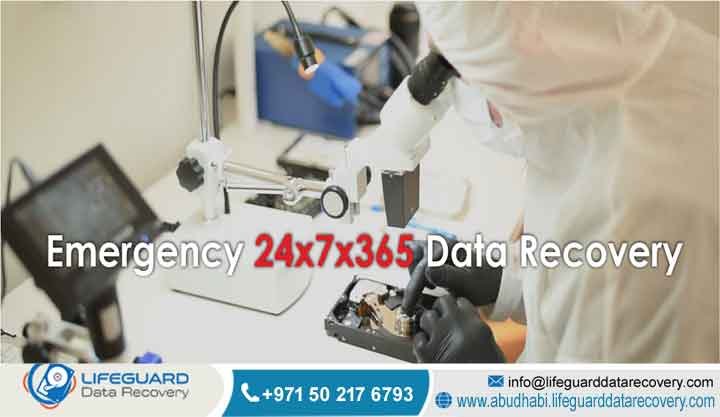
Yes, if you are stuck in a data crisis, emergency recovery services are absolutely available here in Abu Dhabi through Lifeguard Data Recovery. We know that when business grinds to a halt, every second counts. That is why we offer 24/7 priority support for those urgent moments when your servers, RAID arrays, SSDs, or hard drives stop working and you need your information back right away.
Data loss is never convenient, but when it happens, how you react in the first few hours makes all the difference. When your hardware fails or a system crashes, the situation often feels chaotic. Our job is to take that stress off your plate. At Lifeguard Data Recovery,
we do not follow the standard work queue during an emergency. Instead, as soon as your device hits our Abu Dhabi lab, our senior engineering team starts working on it. Whether you are dealing with a sudden power surge, accidental fire damage, or a total system crash, our ISO-certified clean room is fully set up to handle these complex problems under tight deadlines.
Imagine it is late on a Friday and your office server suddenly drops offline, or perhaps a RAID 5 array crashes right in the middle of a major financial audit. Or, maybe you are working on a deadline and your laptop hard drive starts clicking loudly. These are exactly the kind of high-pressure situations where our emergency team steps in.
What is Data Recovery Abu Dhabi?
In simple terms, data recovery in Abu Dhabi is the technical art of pulling lost, inaccessible, or corrupted files off a damaged storage device. At Lifeguard Data Recovery, we use high-end hardware and specialized software techniques to reconstruct information from broken drives, helping companies across the UAE get back to business without missing a beat.
People often think data recovery is just clicking a “restore” button, but it is actually much more involved. It is a precise process of physically or logically repairing a device to extract raw data. This requires a deep understanding of how different file systems and storage architectures work.
We frequently help clients recover accidentally deleted SQL databases, save precious family photos from a smartphone that took a swim, or rebuild a corrupted RAID volume so a company can get their main ERP system running again.
How does RAID recovery work?
RAID recovery works by stitching data back together from the individual drives that make up your array. Even if your RAID controller has died or multiple disks have failed, the Lifeguard Data Recovery team analyzes the configuration, parity, and striping metadata on each drive to virtually or physically rebuild your system and get your files back.
RAID setups are notoriously tricky because your data is spread out across several disks. When the controller card fails or too many drives go bad, the whole array just disappears from your system. Our engineers jump in by identifying the original sequence and parity rules. By creating a bit-for-bit image of each drive, we can bypass the broken controller and simulate your environment in our secure lab, giving us access to your file system just as if the server were still working perfectly.
We often handle cases like restoring a RAID 5 array where two out of three drives have failed, or recovering data from a NAS device that simply refused to boot after a routine firmware update.
Can deleted files be recovered?
Yes, most of the time we can get them back, provided the drive has not been overwritten. When you hit “delete,” your computer usually just hides the file rather than erasing it. Lifeguard Data Recovery uses forensic-level tools to track down these hidden fragments and put them back together before anything new gets written over them.
Think of a deleted file like a book in a library where someone removed the entry from the index card. The book is still on the shelf, but you cannot find it. If you keep using the drive, the system might eventually put a new book in that spot, which is when the data is truly lost. This is why we tell our clients to stop using the drive immediately. Our team uses deep-level scanning to find those orphaned clusters and reconstruct your files.
We have a high success rate retrieving documents from formatted hard drives, rescuing files emptied from a recycle bin, or restoring important work files that vanished during a botched system upda.
Professional Data Recovery Services Across the UAE
Our reach extends beyond Abu Dhabi to serve clients in Dubai, Sharjah, Ajman, Ras Al Khaimah, Fujairah, and Umm Al Quwain. Businesses and residents across the UAE rely on Lifeguard Data Recovery for:
Hard Drive Recovery: Repairing mechanical failures and electronic board issues. SSD Recovery: Resolving controller failures and memory chip corruption in modern solid-state drives. RAID Recovery: Rebuilding complex server configurations and NAS storage systems. Server Recovery:
Extracting data from enterprise-grade databases and virtual machines. NAS Recovery: Restoring network-attached storage devices for small to medium enterprises. CCTV Recovery: Retrieving footage from security DVR and NVR systems after disk failure. Digital Forensics: Providing legally sound recovery and analysis of data for investigative purposes. Ransomware Recovery: Safely decrypting and restoring files compromised by malware attacks.
Case Study: Emergency Server Restoration
A major Abu Dhabi financial institution experienced a critical failure of their primary storage server, halting all internal financial transactions. Cause: A power surge caused a multi-drive failure in the firm’s primary RAID 6 array. Recovery Steps: Lifeguard Data Recovery deployed a team to the client’s site for emergency extraction of the drives. The drives were transported to our ISO-certified clean room. Our engineers bypassed the corrupted controller and manually rebuilt the parity maps of the RAID array. Outcome: 100% of the financial transaction databases were successfully recovered. Business Impact: The client resumed full operations within 36 hours, preventing significant financial losses and regulatory compliance issues.
Frequently Asked Questions
-
Is data recovery possible after formatting? Yes, formatting usually just resets the file table. We can often reconstruct the directory structure and recover the files underneath.
-
Does opening the hard drive damage it? Yes, opening a drive outside of an ISO Class 5 clean room introduces dust, which can permanently scratch the platters and destroy data. Never open a drive yourself.
-
Can you recover data from a physically broken USB stick? Yes, we use chip-off recovery techniques to read data directly from the NAND flash memory chips.
-
Is your service confidential? Absolutely. We adhere to strict data privacy protocols and offer non-disclosure agreements for all corporate clients.
-
What if you cannot recover my data? We operate on a No Data, No Charge policy. If we are unable to recover the requested files, you do not pay the recovery fee.
-
Do you offer free pickup? Yes, we provide free pickup and delivery service for your faulty devices across Abu Dhabi and the wider UAE.
-
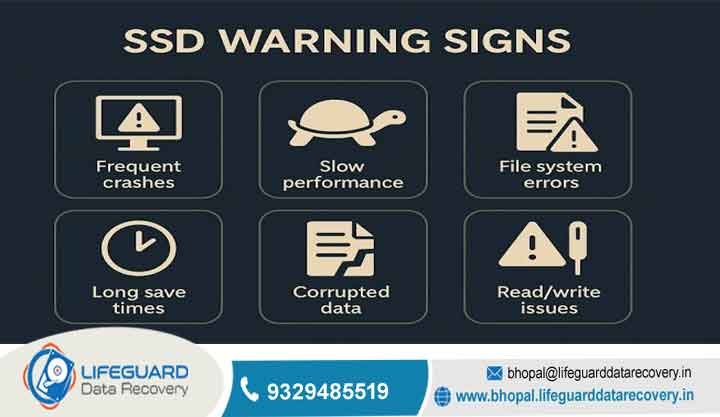
How do I know if my hard drive is failing? Common signs include clicking, grinding, or whirring noises, frequent system crashes, or files becoming suddenly inaccessible.
-
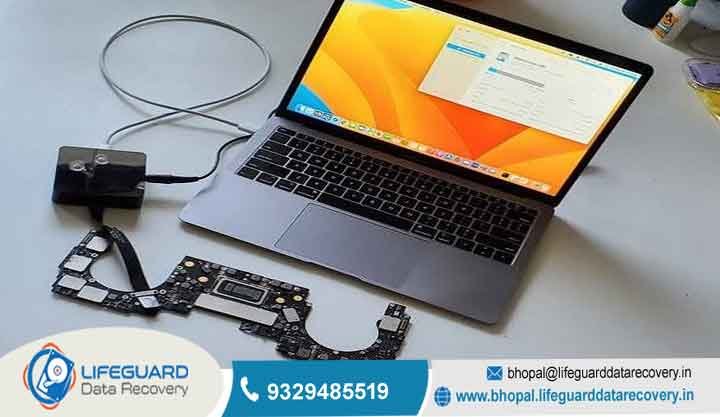
Can you recover data from a laptop that won’t turn on? Yes, the issue is often related to the power supply or motherboard; we can extract the hard drive and recover data independently.
-
Do you work with all brands? We support all manufacturers, including Western Digital, Seagate, Toshiba, Samsung, SanDisk, and Apple
-
Can you recover files from an encrypted drive? Yes, provided you have the original password or encryption key, we can decrypt and recover the data after imaging.
-
Does Lifeguard Data Recovery perform onsite recovery? For high-security or server-based environments, we offer professional on-site recovery assessments and services.
-
How do I receive my recovered data? We return your data on high-quality, encrypted external storage media or through secure cloud transfer, depending on your preference.
-
Are your engineers certified? Yes, our team consists of highly trained, ISO-certified data recovery specialists with decades of combined experience.
-
Can you recover data from a smartphone? Yes, we specialize in recovering photos, messages, and contacts from both Android and iOS devices.
-
What is the success rate of your recoveries? We maintain a success rate exceeding 96% across all recovery categories.
-
Can you help with data loss due to fire or water damage? Yes, we have specialized procedures for drying and cleaning drives exposed to environmental hazards.
-
Are there any hidden costs? No, we provide a flat-rate quote after the free diagnosis, and we never perform work without your explicit approval.
-
Why choose Lifeguard over local repair shops? General repair shops lack the professional tools and certified clean room facilities necessary for successful advanced data recovery.
-
How do I start the process? Call us at +971 50 127 6793 or visit our website to book your free diagnostic assessment.
Final Call to Action Do not risk losing your critical data. If you are experiencing a storage failure, contact the experts immediately.
Call +971 50 127 6793
Email info@lifeguarddatarecovery.com
Visit www.abudhabi.lifeguarddatarecovery.com
Our Abu Dhabi office is ready to assist you 24/7.