+971 50 217 6793 Abu Dhabi, UAE info@lifeguarddatarecovery.com
Mobile Data Recovery FAQs
The Mobile Data Recovery FAQs page by Lifeguard Data Recovery is an authoritative technical resource. We provide comprehensive mobile data recovery questions and mobile data recovery answers for businesses and individuals across the United Arab Emirates. Furthermore, this page serves as a professional phone data recovery guide.
Mobile Data Recovery FAQs It offers immediate mobile recovery help for smartphones, tablets, and mobile storage media experiencing physical, logical, or encrypted data loss. This master smartphone data recovery FAQ explains advanced engineering methodologies. For example, we detail chip-off techniques, file system reconstructions, and physical cleanroom procedures required to salvage critical data from failed mobile hardware.
Who is Lifeguard Data Recovery?
Lifeguard Data Recovery is a premier, enterprise-grade data recovery corporation headquartered in Abu Dhabi, United Arab Emirates. We operate a highly specialized engineering lab. Consequently, our team handles critical data loss incidents for multinational corporations and government departments. We also serve small to medium enterprises, digital forensics agencies, and private individuals throughout the UAE.
Our Advanced Engineering Infrastructure
Our organization relies on a foundation of advanced technical infrastructure. Therefore, we operate certified cleanroom environments that prevent particulate contamination during open-drive interventions. This setup ensures the highest physical safety standards for sensitive storage components.
The engineering division at Lifeguard Data Recovery comprises certified hardware specialists and file system analysts. Additionally, digital forensics investigators and cybersecurity experts bring decades of combined experience in low-level data extraction.
Global Standards in the Middle East
We have systematically built our reputation across the Middle East. For instance, our engineers successfully execute highly complex data salvage operations where conventional software utilities fail.
Meanwhile, we maintain direct relationships with global storage hardware manufacturers and memory suppliers. This network allows us to preserve a vast repository of donor components and specialized diagnostic firmware. As a result, we can ensure the rapid processing of critical media failures.
Why UAE Businesses Choose Lifeguard Data Recovery
Corporate entities, legal firms, medical centers, and government institutions across the United Arab Emirates choose our services. They trust us due to our unwavering commitment to technical excellence and strict security compliance.
In the commercial sphere, data loss ties directly to operational downtime and regulatory penalties. Therefore, it creates significant financial exposure for any business. Lifeguard Data Recovery minimizes this risk effectively. We deploy a dedicated team of rapid-response engineers capable of working continuously to restore your critical systems.
Certified Cleanroom Facilities
The core differentiator that positions us ahead of standard technical services is our specialized lab infrastructure. Every physical intervention on compromised storage devices takes place within certified cleanrooms.
These facilities strictly control ambient air purity, temperature, and humidity. Consequently, they prevent microscopic debris from settling on sensitive exposed platters or flash silicon layers.
Absolute Security and Financial Transparency
Furthermore, our company treats data security as an absolute operational pillar. All recovered corporate data remains within isolated, air-gapped server environments. Because these systems have no external internet exposure, we completely prevent any form of interception.
We back our services with a definitive No Data, No Charge policy. Therefore, UAE enterprises face zero financial risk when sending their failed storage assets for diagnostics. This policy ensures complete transparency from initial intake to final validation.
Professional Data Recovery Services We Offer
Lifeguard Data Recovery provides a comprehensive suite of digital asset salvage operations. We engineer these services to address every form of infrastructure failure, storage corruption, or cyber threat across the United Arab Emirates.
Hard Drive Recovery and Component Repair
Professional mechanical hard disk drive recovery targets physical component failures. For example, we repair collapsed read-write head assemblies, seized spindle motors, and damaged printed circuit boards.
Engineers execute head-swap operations inside cleanroom environments using precise micro-machining tools. Thus, they bypass hardware constraints to read raw magnetic data sectors before reconstructing the original file system architectures.
Advanced SSD Recovery and Flash Memory Salvage
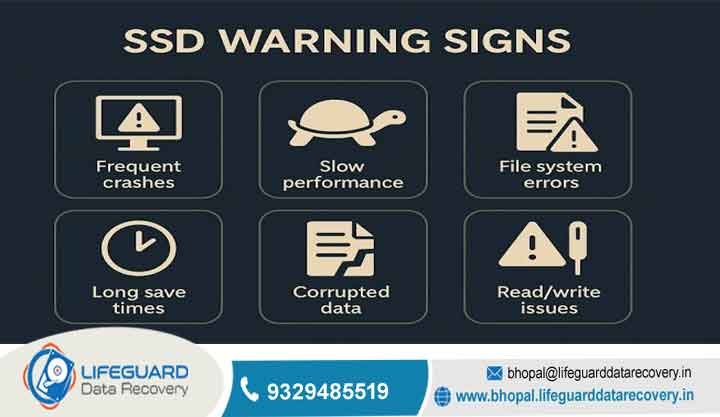
Solid-state drive data recovery addresses complex flash memory system architectures. Specifically, we target corrupted controller firmware, damaged NAND flash chips, and electrical surges.
Engineers utilize advanced chip-off procedures to remove individual flash memory chips from the circuit board. After that, they read the raw hex arrays via specialized hardware readers and logically reconstruct the proprietary wear-leveling algorithms.
Enterprise RAID Recovery and Server Restoration
Enterprise-grade redundant array of independent disks recovery covers complex configurations including RAID 0, RAID 1, RAID 5, RAID 6, RAID 10, and nested arrays. The lab handles hardware controller failures, multiple concurrent drive drops, and catastrophic rebuild errors.
We manually align individual array member sectors to rebuild degraded virtual file volumes. Additionally, our comprehensive server data recovery services apply to critical corporate infrastructure running Microsoft Exchange, SQL Server, or Oracle. Engineers resolve file allocation table corruptions and patch broken databases to restore business continuity.
Specialized NAS Recovery and Network Storage Support
Network-attached storage data recovery addresses failures in multi-drive storage enclosures from manufacturers like Synology, QNAP, and Asustor. The service resolves file system corruptions like Btrfs or ext4.
Moreover, we fix corrupted logical volume management layers, accidental initialization, and firmware glitches. Our engineers handle these issues smoothly to get your network storage back online.
Digital Forensics and Certified Legal Extractions
Certified digital forensics investigations analyze storage media to extract, preserve, and document legally admissible digital evidence. We support corporate compliance, civil litigation, and criminal investigations.
The methodology adheres strictly to a documented chain of custody. Therefore, we successfully uncover hidden files, erased system logs, encrypted folders, and deliberate deletions.
CCTV Recovery and Surveillance Footage Retrieval
Closed-circuit television data recovery specializes in extracting video footage from surveillance systems, DVRs, and NVRs. We recover files following physical damage, intentional vandalism, or overwriting cycles.
Engineers map proprietary security file systems to rebuild fragmented video streams frame by frame. Consequently, we ensure you do not lose vital security footage.
Ransomware Recovery and Cyber Incident Response
Specialized ransomware recovery and cybersecurity incident response services help enterprises deal with cryptographic cyberattacks. Engineers analyze encryption variants and isolate compromised storage nodes.
We repair fractured or partially encrypted system structures. Additionally, we extract clean file states from unallocated spaces, mitigating the need to pay cybercriminals.
Which Devices We Recover: Comprehensive Smartphone Data Recovery FAQ
Modern mobile storage hardware has shifted away from modular components toward dense, highly integrated system-on-chip architectures. This smartphone data recovery FAQ section highlights our capability to perform low-level hardware interventions on an expansive spectrum of mobile devices.
This technical phone data recovery guide details how our engineering lab bypasses operating system lockdowns. Whether you face physical damage or interface barriers, we salvage invaluable business communications, databases, forensic evidence, and media assets.
iOS Data Recovery Capabilities for iPhone and iPad
Apple iOS devices present a complex architecture for data extraction due to their hardware-level encryption. However, Lifeguard Data Recovery delivers advanced iOS data recovery capabilities for all generations of iPhone and iPad hardware.
The iOS operating system utilizes file-based encryption via a custom hardware cryptoprocessor. When an iPhone suffers severe physical destruction or liquid submersion, standard diagnostic software becomes useless.
Engineers address these scenarios through micro-soldering and board-level repairs. We identify short circuits, repair damaged power rails, and stabilize the primary processor.
If the primary logic board is unfixable, engineers perform a complex board swap. We transfer the tightly bound chip triad containing the unique encryption keys to a functional donor board. Consequently, this process allows the device to boot into a temporary stable state for secure decryption.
Android and Alternative Mobile OS Recovery
The Android mobile ecosystem is vast, spanning thousands of device architectures from Samsung, Huawei, Xiaomi, Oppo, Vivo, OnePlus, and Google. Recovering data from these platforms requires a deep understanding of various file system formats such as ext4 and F2FS.
Lifeguard Data Recovery uses specialized developer interfaces, physical chip-off techniques, and targeted protocol bypasses to extract data from Android hardware.
For devices experiencing logical corruption or boot loops, engineers leverage Joint Test Action Group hardware access and In-System Programming connections. We solder micro-wires directly to test points on the mobile circuit board to dump the raw memory contents.
When an Android device sustains extreme physical trauma, the lab performs a physical chip-off extraction. We carefully desolder the NAND flash memory chip using specialized infrared rework stations. After cleaning, we mount the chip into a physical socket programmer to read the data at a binary level.
Common Mobile Data Loss Situations We Solve
Mobile devices are subjected to harsh daily operating environments, making them susceptible to a wide variety of data loss scenarios. Lifeguard Data Recovery categorizes these incidents into two primary types: physical damage and logical corruption.
Physical Damage Scenarios
Physical damage encompasses catastrophic scenarios such as high-impact drops, vehicle crush injuries, complete structural bends, and severe liquid submersions. Liquid ingress is particularly destructive. It initiates rapid galvanic corrosion across the micro-components of the logic board.
This corrosion creates short circuits that can permanently destroy the NAND flash controller. Physical damage also includes dead batteries that compromise charging circuits, failed power management microchips, and broken display connectors.
Logical Corruption Scenarios
Logical corruption occurs when the device hardware remains pristine, but the internal file structures become inaccessible. This includes accidental factory resets and unintended manual deletion of specific database files like WhatsApp history.
It also covers operating system boot loops induced by failed firmware updates, full storage lockups, and malicious ransomware software. By consulting this phone data recovery guide, users learn that immediate isolation of the device is critical to preventing permanent data overwriting.
How Our Mobile Data Recovery Process Works
The mobile data recovery process executed at Lifeguard Data Recovery follows a strict, highly controlled technical workflow. We design this path to maximize data retrieval probability while ensuring the absolute safety of the original storage media.
Phase One: Diagnostic Assessment and Intake
Upon arrival at the laboratory, we register the mobile device into a secure tracking system to establish an immutable chain of custody. Engineers run non-destructive diagnostic evaluations to isolate the root cause of failure.
For physical damage, we inspect the logic board under high-powered stereomicroscopes to locate blown capacitors or corrosion paths. For logical failures, we connect the device to hardware write-blockers to analyze sector readability. Finally, we generate a comprehensive diagnostic report for the client.
Phase Two: Hardware Stabilization and Micro-Repair
Once the client approves the operation, the device enters the stabilization phase. If corrosion is present from water damage, the logic board undergoes advanced ultrasonic cleaning using specialized chemical solvents.
Engineers utilize micro-soldering stations to replace shorted capacitors and rebuild broken circuit traces. This ensures the device can maintain a safe electrical current long enough for data extraction.
Phase Three: Low-Level Hex Dumping and Extraction
With the hardware stabilized, engineers bypass standard user interfaces to access the memory at a low level. We utilize specialized forensic hardware platforms to create a bit-stream mirror image of the entire NAND flash memory storage area.
Consequently, this ensures that all further data processing occurs on an identical virtual copy. This crucial step protects the fragile original mobile chips from thermal stress or electrical breakdown.
Phase Four: File System Reconstruction and Data Verification
The final phase involves parsing the extracted binary data. We deploy file carving software and custom scripts to locate specific file signatures within the unallocated storage space.
This process reconstructs fractured SQLite databases, document structures, and media containers. Once the files are extracted, they undergo rigorous integrity checks to verify completeness. Finally, we copy the validated data onto a secure, encrypted external delivery drive.
Mobile Recovery Timeframes and Emergency Services
Lifeguard Data Recovery understands that mobile data loss often represents an operational crisis. This is especially true when the device contains time-sensitive corporate documentation or critical evidence. Therefore, the lab offers three structured service tiers to meet varying urgency requirements across the United Arab Emirates.
Standard Evaluation and Recovery
This tier is tailored for non-emergency scenarios where data recovery is necessary but not critically time-dependent. The diagnostic phase is typically completed within twenty-four to forty-eight hours.
Meanwhile, the complete extraction and reconstruction process spans three to five business days. This option successfully balances thorough technical analysis with optimal cost efficiency.
Priority Service Tier
Engineers design our priority service for active business professionals and corporate departments experiencing operational disruptions. This tier accelerates the intake and recovery pipeline significantly.
We complete diagnostics within twelve hours of arrival, while finishing the core extraction phase within twenty-four to forty-eight hours. Furthermore, we allocate additional engineering resources to ensure continuous processing of the media.
Emergency 24/7 Rapid Response
This tier is reserved for catastrophic data crises requiring immediate, continuous technical intervention. Operating day and night across the UAE, including weekends and public holidays, this service assigns a dedicated senior engineering team to the case immediately.
The device is placed on an uninterrupted recovery schedule. We leverage parallel processing techniques and immediate micro-soldering repairs to achieve data extraction within twelve to twenty-four hours in most scenarios.
Core Mobile Data Recovery Success Factors
The probability of achieving a successful recovery from a mobile storage device is determined by a combination of physical, chronological, and behavioral variables. Understanding these core factors allows users to make informed decisions.
TRIM Commands and Memory Erasure
The primary success variable is the immediate state of the NAND flash memory cells. Unlike older mechanical hard drives, modern mobile devices utilize flash memory chips governed by aggressive background maintenance protocols.
When a file is deleted logically, the operating system flags those sectors as empty space. If the phone remains powered on, the internal controller will systematically wipe those blocks via TRIM commands to optimize future write performance. Therefore, keeping a device powered down immediately after a data loss event is the single most critical factor in preserving data.
Structural Integrity of the Silicon
The second critical factor is the extent of physical integrity remaining on the primary storage silicon. If a smartphone is crushed from a significant height, the external glass may shatter while leaving the internal logic board intact.
In contrast, if the impact shatters the actual user-data NAND flash chip, the data is lost instantly because the internal microscopic storage tracks are severed. Similarly, when a device suffers water ingress, trying to charge the phone forces electrical current through liquid shorts. This can destroy the memory controller completely.
Industries We Serve in the UAE
Lifeguard Data Recovery provides enterprise-grade data salvage solutions to a highly diverse spectrum of professional sectors throughout the United Arab Emirates. We modify our operational protocols to align with the unique regulatory and operational demands of each industry.
Government, Public Sector, and Legal Services
We deliver highly secure data recovery services for municipal institutions and federal ministries across Abu Dhabi and Dubai. These operations require absolute adherence to national security frameworks and formal chain-of-custody documentation.
Similarly, we collaborate closely with law firms and independent legal consultants to perform certified digital forensics extractions on mobile devices. Engineers extract communication records and timestamped location logs, formatting the final findings into comprehensive technical affidavits for the UAE court system.
Banking, Finance, and Corporate Infrastructure
Our team serves financial institutions and investment funds operating out of global financial hubs like Abu Dhabi Global Market and Dubai International Financial Centre. The lab maintains strict compliance with financial regulations, ensuring that sensitive customer records remain encrypted throughout the recovery lifecycle.
Additionally, we support international transport hubs and shipping corporations by restoring operational data from fleet tracking hardware and mobile communication systems.
Energy, Healthcare, and Critical Sectors
We provide specialized hard drive, server, and ruggedized mobile device recovery services for engineering divisions and petrochemical plants working in remote locations. The recovery of surveying data and geological logs is critical to preventing costly engineering downtime.
Furthermore, we restore critical data for hospitals and diagnostic laboratories. Recovering records from mobile medical equipment involves strict handling protocols to protect patient privacy and comply with national health data governance laws.
ISO Standards, Data Security, and Compliance Protocols
In the field of professional data recovery, technical capability must be matched by rigorous data security frameworks. Lifeguard Data Recovery operates its Abu Dhabi facilities under strict architectural and operational security controls to ensure that all data remains protected.
Physical and Digital Security Measures
The laboratory structure incorporates multi-layer security access controls, video surveillance monitoring, and isolated storage vaults. On a digital level, the recovery networks are completely air-gapped from the public internet.
This configuration ensures that when a compromised storage asset is attached to a recovery workstation, there is zero risk of data leakage. Therefore, we eliminate the threat of unauthorized network communication or secondary infections.
Alignment with UAE Privacy Laws
Furthermore, Lifeguard Data Recovery aligns its workflows with global data privacy frameworks and regional UAE security regulations. Every engineer undergoes regular background screening and adheres to strict non-disclosure agreements.
When processing corporate databases or highly confidential legal communications, the data is handled using advanced end-to-end encryption. Once the customer verifies and accepts the recovered files, the temporary mirrors created on the lab’s internal storage units are securely purged.
Full UAE Service Coverage and Laboratory Locations
Lifeguard Data Recovery provides comprehensive, localized data salvage operations across the entirety of the United Arab Emirates. We eliminate geographical barriers by establishing robust logistical and collection frameworks for all seven emirates.
-
Abu Dhabi: Headquartered in the capital city, our central laboratory serves as the primary hub for advanced micro-soldering, enterprise RAID reconstruction, cleanroom mechanics, and complex digital forensics operations. We provide immediate courier collection across downtown areas, Khalifa City, Yas Island, Al Ain, and the Al Dhafra industrial regions.
-
Dubai: A dedicated service infrastructure handles high-volume corporate and consumer demands throughout Dubai, including major commercial sectors such as Dubai Marina, Downtown Dubai, Business Bay, Jumeirah, Dubai Media City, and Dubai Internet City. Emergency pickup networks ensure that compromised hard drives, servers, and smartphones reach the main testing facilities rapidly.
-
Sharjah: We provide reliable data recovery services for manufacturing entities, academic institutions, and private individuals across Sharjah. Optimized logistics channels allow for fast device collection and secure transport to our centralized engineering lab.
-
Ajman: B2B and B2C clients in Ajman leverage our technical intake infrastructure, benefiting from the same precision engineering diagnostics and the No Data, No Charge guarantee for all types of failed storage media.
-
Fujairah: Serving maritime logistics providers, bunkering firms, and commercial enterprises along the eastern coast, we ensure that critical data loss incidents on vessels receive prompt attention via our secure transit systems.
-
Ras Al Khaimah: We support the growing industrial and tourism sectors in Ras Al Khaimah by delivering advanced data recovery solutions for corporate servers, local business storage systems, and mobile devices.
-
Umm Al Quwain: Providing full access to professional data recovery resources for businesses and residents in Umm Al Quwain, our team ensures standard and emergency coverage with complete security compliance.
Comprehensive Mobile Data Recovery FAQs
This dedicated mobile data recovery FAQs section addresses essential mobile data recovery questions and provides authoritative mobile data recovery answers. It serves as a definitive smartphone data recovery FAQ resource to help you navigate complex data loss incidents with expert mobile recovery help.
What is a Professional Mobile Data Recovery FAQ Service?
A professional mobile data recovery FAQ service is an authorized technical directory that outlines specialized laboratory procedures used to extract lost digital assets from storage chips. Unlike consumer-level software tools, an expert service handles physical hardware failures, firmware corruption, and deep logical damage within a controlled cleanroom environment. It provides a reliable phone data recovery guide for users who need to understand the structural realities of mobile storage, bypassing operating system constraints to recover critical databases and files securely.
How Does Mobile Data Recovery Work for Encrypted Devices?
Mobile data recovery on encrypted devices requires stabilizing the underlying hardware components to allow the processor to execute its native decryption sequences. Modern smartphones use advanced hardware-based encryption where the unique cryptographic keys are fused directly into the security coprocessor. Engineers cannot simply read the NAND flash memory chip in isolation if the device is physically broken; they must use precision micro-soldering to repair the damaged power paths, capacitors, and board traces. By restoring the device to a temporary state of electrical stability, the hardware can process the user’s passcode, unlock the file system, and permit a full, decrypted data dump.
How Much Does Mobile Data Recovery Cost in the UAE?
The cost of professional mobile data recovery in the United Arab Emirates is determined by the specific type of failure, the extent of physical damage, and the engineering time required rather than the volume of data stored. Logical recoveries involving simple database carving or file system repairs generally fall into a lower pricing tier, while physical recoveries requiring extensive micro-soldering, component replacement under a microscope, or board-swap procedures require a higher investment due to specialized parts and lab infrastructure. Lifeguard Data Recovery provides an accurate cost breakdown through a free initial diagnosis, protecting clients with a strict No Data, No Charge policy.
How Long Does a Professional Mobile Recovery Take?
The duration of a professional mobile data recovery operation ranges from twelve hours to several business days, depending on the chosen service priority and the technical complexity of the case. A standard logical recovery or a straightforward hardware stabilization typically takes three to five business days to complete full extraction and verification. Priority cases are expedited within twenty-four to forty-eight hours, while the emergency rapid response service operates continuously to deliver critical data extractions within twelve to twenty-four hours for urgent corporate needs.
Is Mobile Recovery Possible After a Factory Reset or Secure Deletion?
Recovering data after a factory reset or a secure deletion on a modern smartphone is generally impossible if the device utilizes file-based encryption and active TRIM commands. When a factory reset is initiated, the encryption keys stored within the secure hardware enclave are instantly destroyed, turning the data remaining on the NAND flash chip into unreadable ciphertext. Additionally, the operating system’s internal garbage collection protocols rapidly clear these unallocated blocks to maintain storage performance. However, if the device is an older model or if the data was stored on an external microSD card without encryption, file carving techniques can often salvage fragmented data remnants.
Can Physically Damaged or Water-Logged Mobile Drives Be Recovered?
Yes, data can be successfully recovered from physically damaged or water-logged mobile devices, provided the primary NAND flash memory chip has not sustained structural cracks or internal electrical destruction. When a phone suffers liquid ingress, engineers immediately disassemble the unit and place the logic board into an ultrasonic cleaning bath with specialized solvents to remove corrosion and short circuits. Broken traces and blown power components are then repaired under a microscope using micro-soldering techniques, allowing engineers to read the storage media safely.
What Main Variables Affect Mobile Recovery Success Rates?
The primary variables affecting the success rate of a mobile data recovery operation include the physical condition of the flash memory chip, the actions taken immediately after the data loss event, and the presence of active encryption systems. Applying power to a wet device or continuing to write new files to a phone after accidental deletions can cause irreversible short circuits or overwrite the unallocated spaces where the old data resides. Bypassing unverified software utilities and sending the device directly to a certified laboratory maximizes the recovery success rate.
Technical Comparison: Professional Laboratory vs. DIY Recovery Methods
When dealing with a critical mobile data loss incident, users often compare professional laboratory interventions against do-it-yourself recovery software applications. Understanding the profound technical differences between these two approaches is essential to preventing permanent data destruction.
The Limits of DIY Software
DIY recovery software utilities are designed exclusively for minor, logical data loss scenarios on functional devices, such as accidental file deletion from unencrypted external storage cards. These programs require the mobile device to be fully operational, stable, and recognizable by an external computer operating system.
If a user attempts to run DIY scanning software on a phone experiencing physical hardware degradation, the continuous stress of the software scan can overheat the weak storage silicon. This causes complete hardware failure and renders the data permanently unrecoverable.
The Power of Laboratory Intervention
In contrast, a professional data recovery laboratory operates on the hardware level, bypassing the standard device operating system completely. Experienced engineers utilize specialized hardware write-blockers, diagnostic oscilloscopes, and infrared rework stations to repair and stabilize damaged logic boards within certified cleanrooms.
If a device cannot boot due to a physical short or firmware corruption, lab technicians can perform advanced procedures like chip-off extractions or Joint Test Action Group direct memory access. The following detailed comparison table outlines the specific capabilities and risks associated with each method:
Enterprise Case Study: Encrypted Corporate Smartphone Recovery
The following case study illustrates a real-world mobile data recovery operation executed by Lifeguard Data Recovery for an enterprise client based in the United Arab Emirates. This case demonstrates the complex engineering methodologies required to resolve severe data loss.
Problem Statement and Urgency
A senior executive at a prominent oil and gas engineering firm based in Abu Dhabi dropped a corporate smartphone containing critical contract negotiations, proprietary facility designs, and vital WhatsApp communication threads. The device was subsequently run over by an industrial transport vehicle, resulting in catastrophic structural failure.
The phone’s chassis was severely bent, the display assembly was obliterated, and the primary logic board sustained multiple fractures. Because these unbacked-up negotiations directly impacted an active multi-million dirham tendering process, the client initiated our Emergency 24/7 Rapid Response service.
Technical Recovery Process
The shattered device was immediately admitted to our advanced cleanroom facility in Abu Dhabi under a strict forensic chain of custody. Initial microscopic examination revealed that while the main power management integrated circuit was destroyed and the logic board traces were fractured across multiple layers, the user-data NAND flash memory chip and the primary application processor had escaped direct structural cracking. Due to the multi-layer fractures on the board, standard micro-soldering trace repair was impossible.
The engineering team opted for a complex board-swap procedure. Using a temperature-controlled infrared rework station, the engineers carefully desoldered the unique component triad from the fractured board: the user-data NAND flash chip, the primary application processor, and the secure hardware enclave chip containing the unique cryptographic keys. These components were then meticulously cleaned, re-balled with fresh solder spheres, and mounted onto a fully functional, identical donor logic board.
The rebuilt board was connected to a specialized hardware diagnostic station that monitored voltage stability and prevented electrical surges. Upon applying power, the donor board successfully initialized the security enclave, recognized the original encryption keys, and entered a stable diagnostic boot state. Engineers attached a hardware write-blocker to the interface and successfully extracted a complete, bit-stream binary image of the decrypted logical file system.
Result and Client Outcome
The extracted raw image was parsed using custom forensic database carving scripts, allowing for the complete reconstruction of the executive’s encrypted SQLite databases, communication history, structural PDF documents, and media attachments. One hundred percent of the requested corporate data was successfully recovered with absolute structural integrity within eighteen hours of device receipt. The verified files were copied onto a secure, hardware-encrypted external drive and hand-delivered to the corporate client, allowing them to proceed with their contract tendering process without operational delay.
Expert Engineering Insights on Modern Mobile Storage Systems
The landscape of mobile data storage architecture has evolved rapidly, presenting unique technical challenges for data recovery engineers. Modern smartphones utilize highly advanced flash memory systems, moving away from older eMMC interfaces to high-speed Universal Flash Storage and proprietary NVMe solid-state controllers integrated directly into the primary processor stack. These changes have fundamentally altered how data is preserved and extracted during data loss events.
The Challenge of Hardware Encryption
The most significant engineering challenge is the implementation of hardware-enforced, file-based encryption. In modern mobile operating systems, every file is encrypted with a unique key that is tied to both the user’s passcode and a hardware key burned into the silicon of the application processor.
This means that the data residing within the NAND flash memory cells exists as unreadable ciphertext without the native processor running. If a repair facility attempts to remove the memory chip and read it using an external programmer, they will only retrieve encrypted data that cannot be decrypted through brute-force methods. Professional recovery operations must focus on micro-board stabilization, ensuring the original chip cluster can function together to unlock the data naturally.
Storage Optimization and Erasure Protocols
Another critical architectural shift is the integration of aggressive solid-state wear-leveling and storage optimization functions. Mobile operating systems continuously execute commands similar to desktop TRIM operations to ensure the flash storage remains fast during write sequences.
When a user deletes a file or performs a factory reset, the operating system sends a command to the storage controller to mark those specific blocks for immediate erasure. The internal garbage collection system then clears those cells during idle periods. As a result, the window of opportunity for recovering logically deleted files from functional smartphones has narrowed dramatically, making immediate device shutdown an absolute necessity for successful data salvage.
Secure Your Data: With Lifeguard Data Recovery UAE
If your enterprise or personal mobile device has suffered physical damage, liquid submersion, or logical file corruption, avoid unverified software utilities or amateur repair attempts that can cause permanent data destruction. Contact the certified engineering team at Lifeguard Data Recovery to secure your critical digital assets with professional laboratory precision.
To launch an immediate diagnostic case evaluation or to request emergency 24/7 data recovery services across the United Arab Emirates, connect with our centralized service desk through the following official contact channels:
-
Telephone Contact: Call +971 50 127 6793 for direct engineering consultations and rapid-response intake coordination.
-
Email Correspondence: Send your technical case specifications and service inquiries to info@lifeguarddatarecovery.com to receive a detailed breakdown of recovery options.
-
Online Portal: Visit the official company website at www.abudhabi.lifeguarddatarecovery.com to register a new recovery case, review service terms, or monitor an active diagnostic report.
Our specialized cleanroom facilities operate under strict non-disclosure guidelines and enterprise security protocols, ensuring that your financial data, legal evidence, and personal memories remain fully confidential throughout the recovery lifecycle. Backed by our definitive No Data, No Charge financial guarantee, your organization faces zero risk during the evaluation process. Reach out to our team today to restore your critical mobile storage assets.