+971 50 217 6793 Abu Dhabi, UAE info@lifeguarddatarecovery.com
QNAP Data Recovery
If your business is facing a sudden, stressful network attached storage crash, Lifeguard Data Recovery is here to help. We provide certified, professional QNAP data recovery services in Abu Dhabi and across the entire United Arab Emirates. Think of us as your emergency data response team. Our engineering lab specializes in extracting lost, corrupted, accidentally deleted,
or ransomware-encrypted files from every single type of QNAP NAS enclosure, complex RAID array, and internal storage drive out there. We combine highly advanced hardware data imagers, certified cleanroom environments,
and proprietary file system reconstruction workflows to salvage your critical corporate assets. The truth is, database crashes and server breakdowns happen, but we ensure you get your files back safely with a verified, industry-leading success rate.
Who is Lifeguard Data Recovery?
Lifeguard Data Recovery is a top-tier, enterprise-level data recovery corporation based in Abu Dhabi, United Arab Emirates. Over the years, we have built a solid reputation as a trusted regional authority in digital forensics and storage engineering. Our team operates specialized,
highly secure laboratories designed to rescue critical information from severely broken storage media. When an unexpected emergency hits, we serve as the primary technical fallback for corporate offices, government entities, and individual clients across the country.
Our laboratory facility is packed with advanced physical and logical recovery tools. This technical edge makes Lifeguard Data Recovery a vital partner for business continuity when network storage systems suddenly fail. We keep our core laboratory operations localized right here in Abu Dhabi,
while providing rapid response logistics across Dubai, Sharjah, Ajman, Fujairah, Ras Al Khaimah, and Umm Al Quwain. This setup allows us to easily bridge the gap between high-level hardware micro-engineering and your urgent corporate data needs.
Why UAE Businesses Choose Lifeguard Data Recovery
United Arab Emirates enterprises move fast and operate in highly competitive, high-demand environments. In this market, server downtime or lost database records can easily lead to massive financial losses and legal issues.
That is why companies throughout Abu Dhabi and Dubai turn to Lifeguard Data Recovery when things go wrong. We provide deeply specialized technical capabilities that typical in-house IT departments and local computer repair shops simply cannot match.
Our facility features fully certified cleanroom technology. This dust-free environment is absolutely mandatory if an engineer needs to safely open and repair mechanically failed hard drives without destroying the magnetic surfaces. In addition, our senior engineers have spent years reverse-engineering proprietary QNAP operating systems, file configurations, and volume management layers.
This deep background allows us to look past normal system limits, rebuild broken RAID volumes by hand, and extract vital data blocks that standard software tools mark as permanently gone. We also follow strict data security standards, so your financial records, government files, and corporate intellectual property stay totally safe and private from start to finish.
Comprehensive QNAP NAS Data Recovery Services We Offer
Lifeguard Data Recovery offers a wide, robust range of technical solutions built specifically for the complex, multi-disk storage setups used by QNAP units. Network Attached Storage systems require a careful, deeply analytical diagnostic process.
Why? Because a single storage volume crash is rarely simple; it usually involves a mix of hardware fatigue, firmware bugs, and logical file system errors. We do not rely on basic, off-the-shelf consumer software tools that might make the damage worse.
Instead, our team analyzes your storage media down at the raw sector level, bypasses corrupted drive microcode, and reads data directly from the physical magnetic platters or flash memory cells.
This highly structured methodology ensures we keep your files perfectly intact whether we are working on a small single-disk unit, a massive multi-bay corporate rack, or a distributed enterprise backup server.
QNAP RAID Reconstruction and Failure Recovery
The internal layout of almost every QNAP system uses a Redundant Array of Independent Disks to manage large amounts of business data. When multiple drives drop out of a RAID 5, RAID 6, or RAID 10 setup at the same time, the whole storage volume instantly becomes unreadable.
This drops your server into an inactive or severely degraded state. Lifeguard Data Recovery is a true expert in advanced logical and physical RAID reconstruction. Our engineers extract raw hex values from each individual hard drive or solid-state drive in the array, repair physical head read issues, and clone the contents onto stable lab drives.
Once we secure these exact sector-level copies, we manually figure out the original configuration details, like block size, drive order, parity delays, and stripe rotations. This meticulous engineering process allows us to rebuild a virtual version of your storage array and rescue your folders without altering your original hardware.
QNAP Ransomware Decryption and Cyber Incident Response
Ransomware attacks frequently target network attached storage setups because these boxes hold a company’s central documents and system backups. When hackers exploit a loophole to lock up a QNAP NAS volume, the local operating system completely loses access to critical SQL databases, virtual machines, and daily file shares.
Lifeguard Data Recovery provides advanced incident response and forensic decryption analysis to help businesses fight back against these malicious attacks. Our digital forensics team deep-dives into the specific strain of ransomware hitting your network,
scans the raw unallocated space on the drives for left-behind snapshot fragments, and pulls out undamaged data strings from incomplete encryption sweeps. By using this deep sector-level carving technique, we can often recover huge portions of original databases and system files. This gives your business a safe, reliable path to resume operations while staying fully aligned with UAE cyber security rules.
QNAP Devices and Storage Architectures We Recover
Our hands-on technical expertise covers the entire historical and modern product lineup built by QNAP. We routinely handle difficult data extractions across all form factors, ranging from small desktop TS-series towers used by small offices to massive enterprise-grade TVS units and heavy-duty rackmount Enterprise ZFS systems.
Lifeguard Data Recovery has years of direct engineering experience dealing with proprietary QNAP storage features. This includes Qtier auto-tiering paths, block-level storage snapshots, virtual JBOD pools, and thin-provisioned storage setups.
Our laboratory infrastructure handles all underlying drive types with ease. We provide expert HDD recovery for traditional mechanical platters as well as highly technical SSD recovery for flash memory chips suffering from controller or translation layer failure.
We are also completely fluent in the native file systems used across the QNAP brand, including Ext4, Btrfs, and the specialized enterprise ZFS layout found on premium QuTS hero systems. This complete mastery over both the hardware and software layers means that whether your system is an older legacy tower or a brand-new multi-terabyte NVMe flash array, our lab can safely map, align, and extract your files.
Common QNAP Data Loss Situations We Resolve
Data loss inside a network attached storage setup can happen for a lot of different reasons, and sometimes a few issues hit at the exact same time. Lifeguard Data Recovery breaks these problems down into physical, logical, or electrical failure groups so we can apply the perfect laboratory fix.
Physical drive breakdowns make up a huge percentage of our cases. This includes failed actuator heads, locked-up spindle motors, or bad media scratches on hard disk platters, alongside fried controller chips on solid-state drives.
Logical errors usually pop up during system updates. For example, if a QNAP QTS firmware flash gets interrupted halfway through, it can corrupt the main configuration files and make the entire volume invisible. Accidentally clearing a storage pool, deleting a shared network folder, or hitting a factory reset can erase your directory structure just as fast.
Electrical hazards are another major issue. A sudden, severe power surge or voltage spike across the local grid can instantly fry the main controller board of your QNAP enclosure or burn out the circuit boards on multiple internal drives all at once.
Cybersecurity breaches, like malicious ransomware attacks, intentional file deletion, or targeted database overwrites, are becoming incredibly common threats to modern corporate networks.
User mistakes during routine maintenance happen too. A classic example is an administrator accidentally pulling out the wrong healthy drive from a degraded RAID 5 array, which instantly kills the volume before the parity rebuild finishes.
How Our QNAP Recovery Process Works: Step-by-Step
Lifeguard Data Recovery operates under a highly disciplined, document-backed data retrieval framework. This structure keeps your media completely safe and accountable through every single step of the process.
Step 1: Receipt and Secure Logging. The moment your broken QNAP drives arrive at our Abu Dhabi lab, they are tagged with a unique tracking number, logged into our secure system, and stored in anti-static safety boxes.
Step 2: Cleanroom Diagnostic Evaluation. If hard drives are making clicking noises or showing mechanical wear, they go straight to our Class 100 Cleanroom. Here, engineers open the drive casings under a microscope to check the platters and read heads without risking any contamination from outside dust.
Step 3: Sector-Level Imaging and Cloning. Before running any logical tests, we connect the drives to dedicated hardware imagers. We bypass bad sectors to create a perfect, bit-stream duplicate of every single drive in the array. This ensures all recovery work happens on lab copies, completely protecting your original drives from extra wear.
Step 4: RAID De-striping and Virtual Assembly. Our technical specialists study the drive clones to find internal metadata files. This helps us map out the exact layout of the original array. We then virtually piece the drives back together using laboratory tools, bypassing the failed QNAP operating system completely.
Step 5: File System Parsing and Extraction. Once our virtual volume is stable and running, we repair damaged partitions, read the file system layers, and rebuild the entire folder tree so we can copy out the raw files.
Step 6: Data Verification and Delivery. Every recovered file goes through an integrity check to make sure it opens properly. Once everything is verified, your data is securely encrypted, saved onto a brand-new external drive, and delivered back to you.
Estimated QNAP Recovery Timeframes
The time it takes to finish a full QNAP data recovery job depends mostly on how badly the drives are damaged and how much data they hold. Lifeguard Data Recovery offers three clear service tiers to fit the timeline and urgency of your UAE business.
Standard Recovery Service generally takes between three and five business days. This gives our team plenty of time to run full diagnostics, stabilize failing drive parts, clone every sector, and carefully verify the file system structure.
Priority Recovery Service speeds things up, taking just one to two business days. We move your media to the front of the laboratory queue and dedicate specific workstations to your job to get your business back online fast.
Emergency Recovery Service is our fastest option. It runs non-stop, 24/7/365. Our engineers work in back-to-back shifts through the night, weekends, and holidays. With this option, critical recoveries are often completed within twenty-four to forty-eight hours, depending on how quickly the hardware responds.
Critical Affecting QNAP Recovery Success Rates
The final chance of getting all your data back from a failed QNAP system depends on a few critical technical choices and conditions. Knowing these factors can be the difference between a total recovery and losing your data forever.
What you do immediately after the crash is the single most important factor. If an IT worker keeps powering up a failing array or tries to force a rebuild using a disk that has bad sectors, the system will start overwriting raw data and ruin the original folder layout.
The physical state of the storage platters or flash cells is another big deal. While our lab equipment can easily read around moderate sector errors, a deep, circular gouge or scratch on a hard drive platter means that specific data area cannot be read by any technology.
Your chosen RAID configuration changes the complexity of the rescue job too. A RAID 6 setup has dual-drive parity protection, which gives our team a lot more structural metadata to work with compared to a non-redundant RAID 0 stripe that breaks completely if one drive fails.
The way your QNAP system allocates data matters as well. Thick-provisioned volumes keep data blocks grouped together in predictable patterns, while thin-provisioned storage pools scatter files across the drives, which requires a much more intensive block-mapping process in our lab.
Industries We Serve Across the UAE
Lifeguard Data Recovery provides enterprise-grade data rescue services to a massive variety of commercial and corporate sectors across the United Arab Emirates. We adjust our security and operational steps to perfectly match your industry rules.
The banking and finance sector relies on our Abu Dhabi lab to safely extract critical transactional records, core financial databases, and historic compliance archives from broken storage networks.
Government departments and public utility offices choose Lifeguard Data Recovery because our secure facility handles sensitive public data and administrative systems with absolute discretion.
The healthcare and medical industry requires strict privacy rules. Our team routinely handles secure extractions of electronic medical records, patient databases, and high-resolution diagnostic imaging files.
The media, television, and entertainment fields use large multi-bay QNAP systems to store raw footage. Our high-capacity processing systems are perfect for recovering massive video editing projects and assets quickly.
Construction, engineering, and architectural firms across Abu Dhabi and Dubai turn to us whenever a central office server dies, trusting us to recover heavy CAD files, project blueprints, and structural estimates.
Data Security, Privacy, and Compliance Protocols
Keeping your business data safe is the absolute core of our laboratory setup at Lifeguard Data Recovery. We maintain strict physical and network security measures to ensure that every file recovered from your QNAP NAS remains completely private.
Our Abu Dhabi facility is under constant high-definition camera surveillance, and entry into the actual engineering lab is locked down to authorized staff using biometric fingerprint scanners. The network systems we use to scan, reconstruct, and temporarily hold your files are physically disconnected from the public internet.
This completely eliminates the threat of data leaks, malware tracking, or external hacks. Once your recovery job is wrapped up and safely delivered into your hands, the temporary images stored on our internal lab servers are permanently wiped using military-grade data erasure steps, keeping your company fully compliant with UAE data protection laws.
Complete QNAP Support and Coverage Across the UAE
Lifeguard Data Recovery offers full logistical and engineering support across all seven emirates in the UAE. This means companies located outside the main corporate hubs still have direct access to world-class data recovery.
Our main laboratory center in Abu Dhabi serves as the central hub for all advanced cleanroom drive surgeries and hardware micro-repair work.
For businesses in Dubai, we provide fast, on-demand courier pickup services and direct technical consultations to support companies operating in busy areas like Dubai Internet City, Dubai Media City, and the DIFC.
Our reliable transport network extends right into Sharjah, Ajman, Fujairah, Ras Al Khaimah, and Umm Al Quwain. If your office suffers a critical NAS breakdown anywhere in these regions,
you can quickly send your drives to our central facility via secure, climate-controlled transport. This nationwide reach means your company never has to mail sensitive storage media outside the UAE to get expert help.
Frequently Asked Questions About QNAP Recovery
What is QNAP Data Recovery?
QNAP data recovery is a specialized technical discipline focused on safely extracting missing, corrupted, or inaccessible files from a network attached storage system made by QNAP.
This process requires custom lab hardware and raw file reconstruction tools that can read data sectors directly from the internal hard drives without needing the original QTS or QuTS hero operating systems to boot up. It covers repairing broken drive components, fixing crashed RAID sets, and correcting logical file system errors.
How does QNAP Data Recovery work?
The recovery process starts by connecting the individual drives from the NAS enclosure to specialized hardware controllers in a controlled laboratory space. Engineers create exact, sector-by-sector digital mirror copies of each drive to isolate the raw data and keep the original hardware safe from extra stress.
Advanced parsing algorithms then read these lab copies to figure out the original drive mapping, stripe size, and parity structure, virtually rebuilding the storage array to copy out the files.
How much does QNAP Data Recovery cost in UAE?
The total cost for a QNAP data recovery job in the UAE can only be calculated after an engineering check of the actual storage drives. The final price depends on the type of physical damage, how many hard drives are in the array, and how complex the internal volume layout is.
Lifeguard Data Recovery always gives you a clear, upfront written cost estimate after the initial diagnostic check, and we back our work with a strict no data, no charge guarantee.
How long does recovery take?
The time required to finish a storage recovery job changes depending on how badly the disks are damaged and the overall size of the storage volume. Standard laboratory extractions usually take about three to five business days to complete thoroughly.
If your company is facing an urgent crisis, our priority and emergency options can speed this up significantly, returning your critical business data within twenty-four to forty-eight hours.
Is recovery possible after deletion or a factory reset?
Yes, getting your files back after an accidental deletion or a full system factory reset on a QNAP device is highly successful, as long as you turn the power off immediately. When a file gets wiped, the system just deletes the quick path pointer, leaving the actual data blocks completely intact until new files write over them. Powering down the NAS straight away stops background system logs or network activity from destroying those open sectors.
Can physically damaged drives from a QNAP NAS be recovered?
Yes, physically broken hard drives or corrupted solid-state drives can be successfully salvaged inside our specialized cleanroom lab. Our engineering team has the tools to replace failed read-write head tracks, unstick frozen spindle motors, and replace burned circuit boards using matching donor components. Once the physical drive is stabilized, we lock it onto hardware tools to pull a clean data clone for virtual RAID assembly.
What affects recovery success rates?
The primary factor that dictates a successful outcome is the physical condition of the magnetic drive platters and what you do right after the initial crash. Repeatedly turning the system on and off, running automated chkdsk repairs,
or letting the system try to rebuild with failing disks can cause permanent scratches on the platters. Disconnecting the power immediately and sending the media to a certified lab gives you the absolute best chance of a full recovery.
Professional Laboratory Recovery vs. DIY Software Utilities
When a central QNAP NAS array crashes, it is very common for system administrators to feel pressured to download an automated recovery program or run an open-source script to try and fix it quickly. While basic software can work well if you accidentally deleted a file on a single, completely healthy desktop hard drive,
it presents an enormous risk when dealing with enterprise multi-drive RAID systems. Automated recovery apps simply cannot tell if a drive has internal physical damage. Think of it this way: if one of your internal hard drives has a failing read head or a scraping magnetic surface,
running an intensive software scan will force the drive to spin at high speeds, causing permanent mechanical destruction and scraping the data layers right off the platters.
Additionally, cheap retail recovery software often misinterprets proprietary QNAP setup rules, custom volume bounds, and encrypted folders, which usually leads to corrupted file exports or accidental sector overwrites.
Choosing a professional recovery laboratory like Lifeguard Data Recovery completely removes these dangerous variables. Our engineering team handles each drive safely by utilizing advanced hardware controllers that regulate read speeds and skip past bad blocks without putting physical stress on the drive mechanics.
If a drive has a physical hardware breakdown, we fix it inside a sterile cleanroom before trying to read any data. Our manual approach to calculating the original virtual RAID parameters ensures that the exact block-level structure is restored,
which preserves file names, creation dates, and nested folders perfectly. For UAE businesses managing critical customer transactions, accounting databases, or live production assets, using a professional lab prevents permanent data loss.
Case Study: 64TB QNAP NAS RAID 6 Recovery in Abu Dhabi
Problem: A major shipping and logistics company located in the Industrial City of Abu Dhabi suffered a sudden, dual-drive failure inside an 8-bay enterprise QNAP TVS-872X NAS box running a 64TB RAID 6 volume. This network storage box held critical operational tracking systems, supply chain ledgers, and five years of company financial accounts.
Following a sudden power cut in the area, the QNAP system refused to boot back up, flashing a mounting error and showing a broken storage pool warning. An internal IT tech tried to run an automated RAID rebuild with new drives,
but the process froze at twelve percent when a third internal drive developed severe sector timeout loops. This locked up the entire array, making all company files completely inaccessible.
Urgency: The logistics firm faced immediate operational delays at the yards. Shipping confirmations ground to a halt, causing massive daily financial penalties due to the missing active inventory files. Our engineering team immediately kicked off a diagnostics check inside our cleanroom.
The tests showed that drive three had suffered a severe read-head breakdown, while drive five and drive six had developed thousands of bad sectors due to the intense heat and stress caused by the forced IT rebuild attempt.
Our cleanroom engineers quickly swapped out the broken head assembly on drive three using a matching donor drive part, stabilizing the disk so it could read files steadily.
Once we secured all eight clones, our senior specialists analyzed the raw RAID metadata by hand to calculate the precise drive order, stripe block size, and parity maps. We then bypassed the broken QTS software tables to pull out the native Ext4 partition
Expert Insights on Proactive QNAP Maintenance
To drastically reduce the chance of facing a catastrophic data loss event, corporate network administrators should follow strict hardware checks and routine maintenance habits. Network attached storage units are highly reliable machines,
but because they run non-stop for years, they are exposed to normal mechanical wear, firmware bugs, and electrical hazards. Lifeguard Data Recovery suggests following these professional engineering guidelines to protect your business assets:
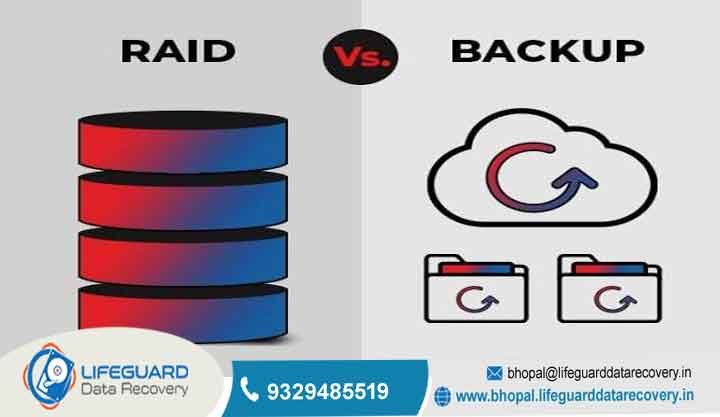
First, make sure you set up automated, daily backups of your most important folders to an external source completely outside the QNAP NAS. Redundant drive arrays are built to keep your network running smoothly if a drive dies, but they are not a substitute for a true backup.
A ransomware attack, a major database corruption event, or an accidental deletion will slide right through the RAID and affect all drives instantly. Having an isolated, off-site backup rule keeps your business safe if the physical enclosure fails.
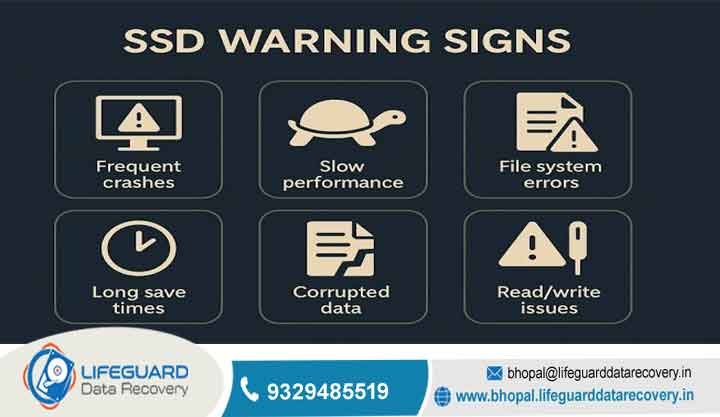
Second, turn on automated email or SMS alerts within your QTS dashboard to keep a close eye on hard drive health metrics, internal temperature shifts, and early S.M.A.R.T. error counts. Hard drives rarely die out of nowhere without showing early warning signs; swapping out a drive the moment it shows a rising number of bad sectors stops a multi-drive crash from happening in the first place.
Third, always connect your QNAP hardware to an online Uninterruptible Power Supply that links directly to the storage operating system via USB or network cable. This simple connection allows the NAS to safely unmount your storage volumes and go through a controlled, safe shutdown sequence if the building loses power for an extended period, preventing file corruption and fried circuit boards.
Secure Your QNAP Data: Contact Lifeguard Data Recovery UAE
The moment your enterprise QNAP network storage array stops responding, shows disk configuration errors, or gets hit by a cybersecurity attack, you need immediate help from qualified storage specialists to protect your data from permanent destruction.
Please do not try to run automated disk checking software or force drive rebuild cycles, as these steps frequently cause irreversible data overwrites. Get in touch with the engineering team at Lifeguard Data Recovery to get your critical business files back with professional, certified laboratory care.
To start your recovery case or setup an urgent emergency diagnostic check today, reach out through our direct office channels: Call our corporate service desk at +971 50 127 6793 to speak directly with a senior data recovery engineer.
Email your technical case history and system error details over to info@lifeguarddatarecovery.com for a step-by-step evaluation guide. Visit our main web portal at www.abudhabi.lifeguarddatarecovery.com to check out our complete laboratory protocols,
find our physical address, or submit an online support request. Our team is available around the clock to provide fast, secure data retrieval across Abu Dhabi, Dubai, and the entire UAE.