+971 50 217 6793 Abu Dhabi, UAE info@lifeguarddatarecovery.com
RAID 0 Recovery Guide
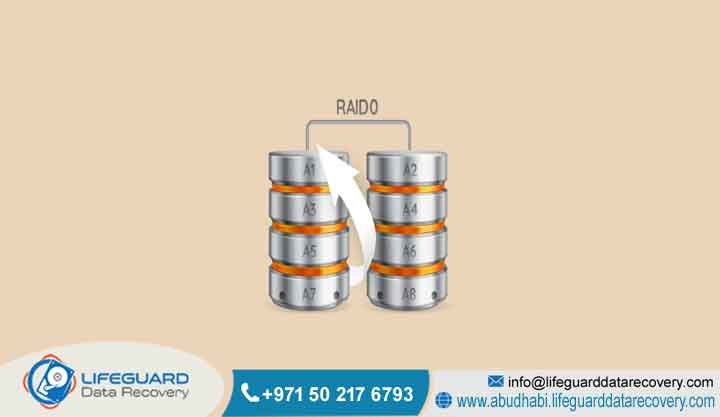
Think of a RAID 0 setup as a high-speed sports car that lacks seatbelts or airbags. In technical terms, it is a striped storage system with absolutely zero built-in safety net. RAID 0 Recovery Guide When you save files to it, the controller chops the data into blocks and spreads them evenly across two or more separate disks.
Because it lacks parity or mirroring, it runs incredibly fast. However, that speed comes at a steep price. If just one single drive in the cluster blinks out, drops offline, or suffers a physical breakdown, the entire operational system shatters instantly.
Reversing this kind of failure is not a job for consumer-grade recovery programs. It is an intricate engineering challenge that demands an authorized cleanroom environment, advanced hardware cloning tools, and a deep knowledge of file system geometry. To pull files back from the edge, an engineer must successfully reverse-engineer the precise data block size,
identify the exact physical sequence of the drives, and clone every single usable sector. Lifeguard Data Recovery provides this level of technical intervention directly within Abu Dhabi and across the wider UAE. We extract the raw hex data from damaged disks, realign the lost striping maps, and manually repair broken configurations so your business can get back to work.
Who is Lifeguard Data Recovery?
If your business faces a catastrophic data loss event, you need to know exactly who is handling your critical hardware assets. We have spent more than fifteen years operating at the very center of the Middle Eastern data preservation and digital forensics ecosystem.
Over the years, our team has stepped in to save critical operational files for major corporations, local government bodies, financial institutions, and small businesses facing sudden storage infrastructure failures. We do not just run basic software; we operate an advanced, fully secure laboratory facility built specifically to handle complex storage architectures that standard IT support teams cannot fix.
Our facility features class-100 cleanroom environments, precision micro-soldering stations, and cutting-edge hardware imaging suites. This specialized infrastructure allows our senior engineering teams to perform intricate internal component repairs, fix corrupted drive firmware, and safely handle high-capacity storage arrays. We have positioned ourselves as the definitive authority for complex enterprise recoveries,
specialized network storage units, corporate servers, and multi-drive redundant arrays. By strictly aligning our physical laboratory operations with global security standards and local UAE data regulations, we serve as a reliable institutional partner for corporate entities requiring certified data retrieval, digital investigations, and secure data handling.
Why UAE Businesses Choose Lifeguard Data Recovery
The modern corporate landscape across the United Arab Emirates moves at a breakneck pace. Whether you are running an enterprise network in Dubai or managing a corporate office in Abu Dhabi, extended system downtime can cause immediate financial losses and permanent damage to your brand’s market reputation.
When a primary server cluster or a production array fails, local companies do not want vague promises; they want proven technical expertise and absolute privacy. That is exactly why corporate leaders trust Lifeguard Data Recovery. We approach every single recovery job with deep technical proficiency and an understanding that your data represents the lifeblood of your day-to-day operations.
The truth is that standard, over-the-counter utility tools are completely useless against enterprise network failures. Our engineers understand the deep structural mechanics of multi-disk systems, nested volume managers, virtualized hypervisors, and custom corporate file systems. We also recognize that data security is non-negotiable. Our laboratory implements strict physical access controls and isolated local networks,
ensuring that your financial records, customer databases, and proprietary intellectual property remain completely safe throughout the extraction process. Combined with our emergency round-the-clock rapid response framework and our clear pricing protection, we offer the most secure path to business continuity for organizations across Abu Dhabi, Dubai, and the wider UAE.
Comprehensive Data Recovery Services We Offer
At Lifeguard Data Recovery, we provide an expansive, specialized lineup of retrieval solutions built to counter logical errors, physical mechanical failures, electrical damage, and compromised drive firmware.
RAID Recovery Services
Our RAID Recovery options are engineered to rebuild and rescue broken multi-disk systems. We work extensively with complex, highly specialized data structures, including standard setups like RAID 0, RAID 1, and RAID 5, as well as massive enterprise architectures like nested RAID 10, RAID 50, and RAID 60 pools.
Our laboratory staff can easily bypass burned hardware controller cards, read raw sectors around physical media damage, correct corrupted configuration metadata, and safely align mismatched data stripes without putting your underlying files at further risk of corruption.
Server Recovery and NAS Recovery
Our specialized Server Recovery and NAS Recovery services cater specifically to corporate IT environments where continuous data availability is required. We have years of direct experience extracting files from multi-drive enterprise arrays, storage area networks,
and network attached storage boxes manufactured by leading brands such as Synology, QNAP, Dell, HPE, and Cisco. Whether your network system has suffered from a broken logical volume manager configuration, a double-drive failure on a fragile array, or widespread file system corruption, our engineers can map the storage blocks to pull your operational files back online.
Hard Drive Recovery and SSD Recovery
Our core Hard Drive Recovery and SSD Recovery capabilities target individual storage devices and client endpoints. When a mechanical enterprise hard drive suffers a sudden head crash or a spindle motor seizure, our cleanroom technicians can safely replace the damaged internal components to read the raw sectors.
Similarly, if an enterprise NVMe solid-state drive or a flash memory blade drops offline due to a corrupted controller chip or broken firmware code, our lab hooks the media up to advanced emulation hardware to read the underlying raw hexadecimal data directly.
CCTV Recovery Services
Our specialized CCTV Recovery framework helps corporate security departments, local legal entities, and law enforcement teams recover missing or deleted surveillance footage. We work directly with physical digital video recorders and network video recorders that have suffered physical damage,
hard drive wear, or intentional formatting. This specialized service plays a vital role in local legal compliance, workplace safety audits, and active corporate security investigations across the emirates.
Digital Forensics and Ransomware Recovery
Our advanced Digital Forensics and Ransomware Recovery systems provide critical security support during malicious cyber incidents and data breaches. Our certified digital forensic specialists work diligently to uncover and isolate legally defensible evidence trails that can stand up in a UAE court of law.
Storage Devices and Media We Recover
Our commercial laboratory facility is fully outfitted to interface with every generation of storage technology used in modern business infrastructure. We work daily with mechanical enterprise hard disk drives that utilize high-speed Serial Attached SCSI, traditional Serial ATA,
and advanced Fibre Channel server connections. On the solid-state side, our recovery protocols cover everything from standard client solid-state drives to mSATA chips, M.2 form factors, and ultra-fast enterprise PCIe NVMe storage blades used in high-capacity server environments.
Furthermore, we systematically extract data from massive multi-drive hardware shelves, localized network attached storage boxes, complex storage area network systems, virtual machine environments, corporate hypervisors, and high-density legacy backup tape cartridges.
No matter what custom file system, proprietary controller card, or complex software storage layer your IT team has deployed, our engineering lab holds the matching physical interfaces, custom diagnostic tools, and firmware emulation equipment needed to execute a clean, sector-by-sector data extraction.
Common RAID 0 Data Loss Situations
Because a striped array lacks any form of redundancy, it is inherently fragile. The most common point of failure is a physical or mechanical drive breakdown within the active drive group. Think of it as a chain where every single link must hold; if one mechanical drive suffers a sudden read-write head failure, a spindle motor seizure, or a power surge that burns the printed circuit board,
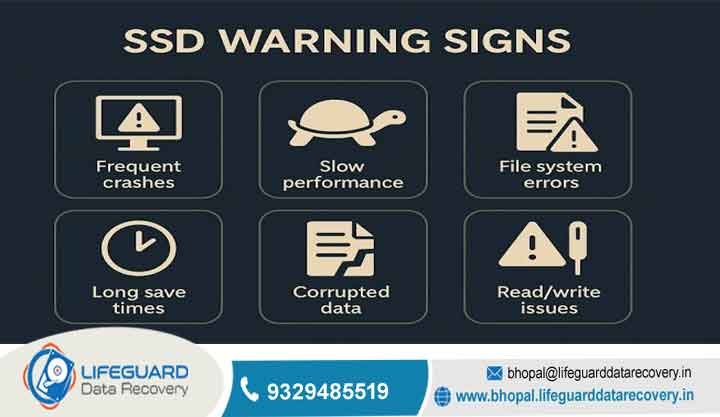
the entire volume stops working instantly. The same rule applies to solid-state drives in a striped setup. If one SSD experiences a flash controller failure or runs into fatal sector wear, the storage loop goes completely dark, taking all your files with it.
Logical corruption represents another severe threat to striped environments. A simple human error during routine data center maintenance-like accidentally formatting the wrong drive volume, deleting a core storage partition, or misconfiguring a hardware controller’s block layout-can instantly wipe the critical array configuration headers.
Software crashes during major database write cycles or corrupted file system allocation tables can cause the array to lose its structure. Furthermore, modern ransomware groups frequently target striped arrays, encrypting specific data blocks across multiple disks and locking up entire corporate shared networks in a matter of minutes.
How Our RAID 0 Recovery Process Works
Recovering data from a striped array is a highly technical, multi-stage engineering process that must be executed with extreme precision within an enclosed, climate-controlled laboratory environment.
1: Physical & Firmware Stabilization
-
Cleanroom disassembly & component replacement
-
Firmware patching via hardware emulation
2: Bit-Level Cloning
-
Sector-by-sector replication of every disk
-
Original hardware preserved and set aside
3: Parameter Analysis & Virtual Assembly
-
Determine drive sequence, block size, & rotation
-
Bind disk clones into a functional virtual array
4: File System Reconstruction & Verification
-
Map underlying file structures (NTFS, VMFS, etc.)
-
Intensive file integrity validation checking
5: Data Export & Secure Delivery
-
Copy recovered data to a new encrypted drive
-
Client directory review & secure handover
Phase One Physical and Firmware Stabilization
Every individual drive from the broken array is isolated and put through an in-depth diagnostic evaluation. If an engineer discovers physical internal damage, such as a clicked read-write head assembly or scratched platter surfaces, the drive is immediately transferred into our certified cleanroom environment.
If a drive has suffered a firmware lock or controller corruption, our team hooks it up to diagnostic gear to patch the underlying code and restore stable data communication.
Phase Two Bit Level Cloning
Once every member drive is physically stabilized, we create an exact, sector-by-sector digital replica of the raw storage sectors. We enforce a strict safety rule: our team never performs diagnostic tests, logical scans, or heavy recovery work on the client’s original physical hardware.
This approach ensures that your original drives are completely protected against further wear or accidental changes while our specialized data systems work exclusively on identical bit-stream digital clones.
Phase Three Array Parameters Analysis and Virtual Assembly
Next, our senior technicians dive directly into the raw hexadecimal code of the disk clones to figure out how the original controller organized the data. This requires calculating the exact physical sequence of the drives,
identifying the precise data block size used for striping (which can vary from a small two-kilobyte block up to massive multi-megabyte configurations), and mapping out the data block rotation layout. Using custom assembly tools, our team virtually links the digital clones back together based on these discovered rules, building a fully functional virtual storage array.
Phase Four File System Reconstruction and Integrity Verification
As soon as the virtual array is correctly aligned, we mount the underlying storage system, whether it is running NTFS, exFAT, EXT4, or enterprise VMFS partitions. Our software maps out the original directory structures,
reconstructs the folder paths, and extracts the files. Every rescued file is put through an automated integrity check to make sure the data stripes line up perfectly and that no sector gaps or corruptions exist within your corporate databases or documents.
Phase Five Data Export and Secure Delivery
Finally, all verified and rescued business files are exported and copied onto a brand-new, securely encrypted external hard drive. We provide the client with a detailed directory list so they can verify the recovery results. Once everything is confirmed and final billing is processed, the new media is securely delivered to your hands, and our temporary project files are permanently wiped from our secure servers.
Expected Recovery Timeframes
The time required to complete a successful data extraction depends entirely on the physical and logical condition of the failed drives. For standard logical corruptions where the internal drive parts are working perfectly, virtual reconstruction and data extraction usually take between two to three business days.
However, if the array has suffered severe physical damage that requires meticulous cleanroom surgery, part replacement, and custom firmware repair, the process can take four to seven business days.
For urgent enterprise crises where a system outage halts your entire business operation, Lifeguard Data Recovery provides an emergency, round-the-clock priority service. In these situations,
Critical RAID 0 Data Recovery Success Factors
The truth is, the choices an IT department makes right after an array crashes will directly determine whether their data can be saved. The single most important factor is turning off the power immediately. If a system administrator tries to repeatedly force a dead drive back online, reboots the server over and over,
or runs automatic disk repair tools like CHKDSK on a broken striped system, they will likely cause permanent damage. These actions can overwrite crucial file metadata or cause the read-write heads to physically scratch the magnetic platters, destroying any remaining chance of a successful recovery.
The physical state of the underlying media also plays a huge role. This creates an unfixable gap across the entire striped set.
Lastly, the technical skills of the recovery team and the precision of their diagnostic tools are decisive factors. Misidentifying the drive order or using blunt extraction methods will simply turn your data into a scrambled, unusable mess.
Core Industries We Serve in the UAE
Lifeguard Data Recovery provides enterprise-grade storage solutions to a wide range of professional sectors that drive the economy of the United Arab Emirates. We routinely work with financial institutions and banking corporations throughout Abu Dhabi and Dubai that require absolute compliance with national data governance guidelines and strict privacy standards.
We also collaborate directly with local government agencies, public services, and defense contractors, providing secure digital forensic investigations and secure data reconstruction.
The fast-growing real estate, engineering, and construction firms across the UAE rely on our laboratory to rescue massive computer-aided design files, blueprints, and core project management databases from failed studio networks. We also support the healthcare sector,
pulling back lost patient medical records and diagnostic imaging files while maintaining total compliance with national health security standards. Additionally, digital media houses, advertising networks, and tech companies throughout the emirates use our fast response labs to save raw video content and source code from broken high-performance storage pools.
Enterprise Data Security Privacy and Compliance
At Lifeguard Data Recovery, we treat the security and privacy of your corporate data with absolute seriousness. Our physical facilities are protected by strict access controls, round-the-clock video monitoring,
and secure storage vaults to ensure your media remains fully protected while in our custody. Every engineer and support specialist on our team is bound by strict, legally enforceable non-disclosure agreements from day one.
When managing data for legal cases or corporate compliance audits, we maintain an unbroken chain-of-custody log to ensure all retrieved data remains untampered with and fully admissible in court.
Our Full Service Coverage Across the UAE
We provide comprehensive data recovery logistics, collection, and drop-off assistance across all seven emirates of the United Arab Emirates. Clients located in Abu Dhabi can visit our central office facility directly for immediate technical evaluations and urgent emergency drop-offs.
For corporate environments operating in Dubai and Sharjah, we offer secure, dedicated courier pick-up services to transport sensitive media safely to our central lab under strict chain-of-custody conditions.
Our logistics network covers Ajman, Fujairah, Ras Al Khaimah, and Umm Al Quwain, ensuring that remote industrial sites, shipping hubs, and local businesses can access world-class cleanroom engineering without needing to travel long distances themselves.
No matter where your office branch, industrial plant, or data center is located within the UAE, our team ensures rapid, reliable, and highly professional coverage.
Frequently Asked Questions RAID 0 Recovery
What is a RAID 0 Recovery Guide?
A RAID 0 recovery guide is an authoritative technical document that details the specific procedures, engineering hurdles, and steps required to retrieve lost data from a failed striped drive configuration. It explains how to manage physical disk issues, handle firmware glitches,
clone member media, and virtually rebuild data stripes. This resource serves as a guide for IT managers to help them understand the risks involved in striped array failures and avoid risky mistakes that could lead to permanent data destruction.
How does RAID 0 data recovery work?
The process begins by stabilizing any physically failed disks within a certified cleanroom environment so that an exact sector-by-sector clone can be safely made.
such as block size and drive order. By applying these parameters, we can build a functional virtual array structure that bypasses the broken physical controller, allowing the underlying files and folders to be read and safely extracted.
How much does RAID 0 data recovery cost in the UAE?
Simple logical file extractions are generally less expensive, whereas severe physical breakdowns that require replacement parts, cleanroom surgery, and firmware rebuilding require a larger investment. Lifeguard Data Recovery provides a clear, upfront financial quote immediately after completing a free diagnostic check on your drives.
Is RAID 0 recovery possible after accidental deletion?
Yes, it is entirely possible to recover files after accidental deletion, provided you stop using the storage system immediately to prevent the deleted sectors from being overwritten.
but the raw striped blocks stay on the disks until new files overwrite them. If you cut power to the system right away, specialized engineering tools can scan the disk images, trace the original file headers, and cleanly rebuild your files.
Can physically damaged drives in a RAID 0 array be recovered?
Yes, physically damaged drives from a striped array can be successfully recovered if they are repaired inside an authorized cleanroom laboratory. Our micro-engineers can replace failed read-write head assemblies, free up stuck spindle motors,
or move the magnetic platters into a donor drive chassis to make the disk temporarily readable. As soon as the drive is stable, we image it completely so that the virtual array can be reassembled without placing further strain on the delicate repaired drive.
What factors affect RAID 0 recovery success rates?
The most critical success factors include the physical condition of the magnetic platters, how quickly the system was shut down after the failure, and the precision of the laboratory equipment used.
which permanently erases data blocks. On the flip side, if the system is turned off immediately and sent straight to an expert lab with advanced firmware tools, the success rate for a full recovery is remarkably high.
How does a striped array differ from a mirrored array during a recovery crisis?
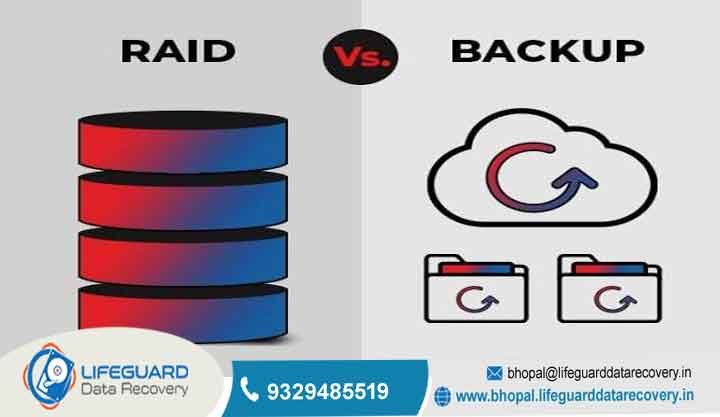
A striped array spreads data blocks evenly across all drives without saving any redundant copies, meaning that if one single disk fails, the entire data structure breaks instantly and becomes completely unreadable. A mirrored array, on the other hand,
keeps an exact identical copy of all files on a secondary drive, allowing your network to keep running normally even if one drive dies completely. Recovering a striped setup requires reconstructing a complex digital puzzle, whereas fixing a mirrored setup usually involves simply restoring the single failed disk.
Can I use standard downloaded data recovery software to fix a broken RAID 0?
Attempting to use basic, downloadable retail data recovery software on a live, malfunctioning striped array is highly dangerous and rarely works. Standard software utilities cannot fix mechanical drive damage, clean up corrupted firmware, or handle severe hardware controller drops.
Instead, they force the drives to run continuous write cycles, which can permanently overwrite your original data blocks. Professional recovery requires isolating each disk, making exact clones, and virtually rebuilding the array structure using hardware emulators.
What should an IT administrator do the exact moment a RAID 0 array drops offline?
The administrator must immediately shut down the server or storage unit and disconnect it from the power source. They should never try to run automated disk check software, attempt a forced rebuild through the controller configuration menu,
or swap the physical order of the drives in the bays. The best course of action is to carefully label every drive with its original bay number and contact a certified professional laboratory to arrange for a secure diagnostic pick-up.
Are solid state drive based RAID 0 arrays harder to recover than mechanical hard drive arrays?
Yes, solid-state drive based striped configurations are significantly more complex to recover than traditional mechanical hard drives. This difficulty stems from the complex internal flash memory layouts, custom controller wear-leveling algorithms, and integrated hardware encryption protocols used in modern solid-state drives.
When an SSD controller fails, our engineers must use highly specialized diagnostic tools to talk directly to the raw NAND flash memory chips and manually reconstruct the data blocks, which requires advanced engineering skills.
Does Lifeguard Data Recovery provide a guarantee that our business files will remain confidential?
Yes, Lifeguard Data Recovery provides a legally binding confidentiality guarantee backed by comprehensive non-disclosure agreements signed before any diagnostic work begins. Our laboratory operates with strict physical security controls and uses completely isolated workstations that have no connection to external networks or the internet.
Can you recover data from a RAID 0 array that was compromised by ransomware?
Yes, our digital forensics and ransomware remediation teams have extensive experience extracting files from encrypted striped arrays. We isolate the individual disk drives, create sector-level images, and carefully analyze the underlying file structures to locate unencrypted data fragments,
backup shadow copies, or logical weaknesses within the ransomware deployment code. This specialized process allows us to frequently rebuild and restore critical enterprise databases and network shares without paying digital ransoms.
What happens if Lifeguard Data Recovery is unable to retrieve our critical files?
Lifeguard Data Recovery operates under a strict No Data No Charge policy for every data recovery project we handle. If your striped array has sustained severe, catastrophic physical damage that makes a successful virtual reconstruction technically impossible,
This commitment ensures that your organization faces zero financial risk when utilizing our professional laboratory services during an emergency data loss crisis.
Professional RAID 0 Recovery vs Do It Yourself Software
When a primary business storage array suddenly goes offline, it can be tempting for an internal IT team to look for a quick, low-cost fix by downloading commercial recovery software. While retail data programs might work well for simple, single-drive file deletions, they are incredibly dangerous when applied to a broken striped array.
Striped volumes almost always crash due to a physical hardware breakdown, internal firmware corruption, or a sudden development of severe unreadable sectors across the disks. If you run basic consumer software on a drive with mechanical issues, it will force the damaged internal heads to continuously grind against the storage platters, causing permanent physical destruction to the data layers.
Furthermore, basic retail software utilities simply do not possess the advanced analytical power required to manually read, interpret, and realign fractured hex blocks across a multi-disk stream. Professional laboratory recovery, on the other hand, focuses on total hardware isolation. Our engineers stabilize the physical components inside a sterile cleanroom environment,
bypass the original failed controller hardware completely, and use enterprise-grade hardware emulators to piece together the raw data blocks safely. Choosing a professional specialist lab ensures that your original media remains protected from destructive write cycles and offers the highest possible probability of a successful file restoration.
Case Study Recovering a Mission Critical Server in Abu Dhabi
Problem and Urgency
A major logistics and supply chain enterprise based in the industrial zone of Abu Dhabi experienced a sudden catastrophic failure of its core operational database server. The server utilized a high-speed, four-drive solid-state drive configuration running a striped layout to handle real-time shipping manifests,
inventory tracking, and customs documentation. Due to a sudden electrical power surge at the facility, the third drive in the striped array suffered a severe flash controller chip breakdown, causing the entire volume to drop offline instantly. The company was completely unable to process shipments, resulting in thousands of dollars in operational losses every single hour.
Recovery Process
Our engineers immediately initiated an emergency diagnostic review, isolating all four member solid-state drives. Drive three showed no electronic response due to the power surge.
They determined the block size was one hundred and twenty eight kilobytes and successfully mapped out the drive sequence.
Result and Client Outcome
With the correct striping configuration discovered, our engineering software completely reconstructed the virtual file system, extracting the entire SQL database and all associated corporate tracking files.
The logistics firm successfully restored its server operations with zero data loss, allowing them to resume full supply chain distributions across the UAE.
Expert Insights The High Stakes of Striping Without Parity
From an engineering standpoint, utilizing a striped array for mission-critical enterprise data storage represents a massive operational risk. While striping provides excellent read and write speed performance by allowing multiple disks to process data simultaneously,
it strips away all structural safety mechanisms. In a striped configuration, the reliability of the entire volume drops exponentially with every single additional drive added to the group.
When an organization loses a striped array, they are not just dealing with a simple file recovery; they are dealing with a complex, multi-dimensional digital puzzle. If even a single block of data is missing, or if the drive order is misaligned by a single digit during the rebuilding process, the entire file system will become completely unreadable.
This is why it is vital for enterprise IT managers to implement robust multi-tier backup solutions and why they must completely avoid attempting amateur fixes when an array breaks.
Secure Your Data Contact Lifeguard Data Recovery UAE
If your enterprise striped storage array, server, network attached storage, or hard drive system has failed, do not risk running automated software tools or restarting the hardware.
Contact the certified engineering specialists at Lifeguard Data Recovery to secure your corporate data assets immediately. Our team provides free initial diagnostics, secure data handling guarantees, and a definitive no data no charge pricing policy across the United Arab Emirates.
-
Call our emergency service line directly: +971 50 127 6793
-
Email your technical inquiries and case details: info@lifeguarddatarecovery.com
-
Visit our official web platform: www.abudhabi.lifeguarddatarecovery.com
-
Main Office Facility: Abu Dhabi, United Arab Emirates