+971 50 217 6793 Abu Dhabi, UAE info@lifeguarddatarecovery.com
RAID 1 Recovery Guide
RAID 1 recovery Guide is the specialized engineering process of retrieving lost, corrupted, or inaccessible information from a mirrored storage setup consisting of two or more hard disks or solid-state storage drives.
Even though a standard RAID 1 setup offers decent data redundancy by constantly copying files across multiple disks simultaneously,
critical data loss still happens due to simultaneous drive failures, broken controller cards, accidental volume deletions, or human errors made during array reconstruction. To ensure a safe file recovery window without causing more physical disk friction,
you absolutely need a certified cleanroom environment, advanced hardware imagers, and professional byte-level hex reconstruction software tools to safely rebuild the broken file system structure and pull your data out securely.
Who is Lifeguard Data Recovery?
Lifeguard Data Recovery stands as a premier enterprise-grade data salvage facility operating from the heart of Abu Dhabi, UAE. Armed with cutting-edge laboratory infrastructure, our deeply experienced engineering squad steps in to save vital corporate databases and private user files from shattered storage networks.
As a trusted tech backbone for major firms, oil companies, and government offices across the United Arab Emirates, we manage and fix every imaginable storage layout. This spans standard hard disk drives, modern flash solid-state media, network-attached storage boxes, giant corporate server racks, and intricate redundant arrays of independent disks.
The truth is, complex recoveries cannot happen on an ordinary workbench. Our specialized technical workspace uses highly advanced diagnostic testing setups, custom-coded software kernels, and class one hundred cleanroom chambers. These pristine environments keep microscopic dust from scratching delicate magnetic platters or ruining flash media layers while our crew manually handles sensitive internal components.
With years of hands-on field experience dealing with high-stress data emergencies across the Middle East, our technical hub has perfected explicit blueprints to fix hard-to-crack firmware bugs, catastrophic mechanical breakdowns, complex logical partition corruption, and aggressive ransomware lockdowns across both legacy systems and modern cloud hybrid setups.
Why UAE Businesses Choose Lifeguard Data Recovery
Large enterprise operations and prominent government bodies throughout Abu Dhabi, Dubai, and Sharjah regularly turn to Lifeguard Data Recovery because we back our talk with transparent technical execution, absolute data confidentiality rules, and real, verifiable laboratory credentials.
In the fast-moving corporate world of the UAE, business continuity hinges entirely on instant data availability. When a storage network goes dark, it is not just an IT headache; it is a massive threat to ongoing business revenue and operational timelines. Think of it this way: every hour your server is down, your business loses momentum.
To address these high stakes, our tech center operates strictly under ISO data security standards. This means confidential corporate filings, trade secrets, sensitive financial ledgers, and proprietary coding structures stay locked down inside a tightly controlled, fully auditable physical ecosystem.
By holding fast to our transparent No Data, No Charge promise, we remove all financial risk for local companies stuck in the middle of an unexpected server black-out. Our engineering team brings deep, specialized knowledge of abstract hardware layers,
low-level file allocation mappings, and a massive variety of enterprise operating systems. This unique technical depth allows us to pull off successful file saves even when facing absolute multi-drive storage disasters that leave other IT groups completely stuck.
Comprehensive Data Recovery Services We Offer
Our state-of-the-art diagnostic workshop provides a full suite of precision storage retrieval services engineered specifically to match the intense uptime requirements and strict data protection laws of modern commercial enterprises.
RAID Recovery: Our recovery engineers live and breathe complex multi-disk structures. We regularly piece back together broken RAID zero, RAID one, RAID five, RAID six, RAID ten, and complex nested array setups. When things go wrong,
Server Recovery: We specialize in saving critical files from high-capacity commercial database hosts, web-hosting node clusters, and large virtualized enterprise software systems running on major corporate operating systems. Our dedicated lab fixes severe system issues like sudden kernel panics, damaged volume metadata, orphaned logical drive allocations, and total server chassis physical failures.
NAS Recovery: We provide rapid file extraction from multi-bay network storage enclosures built by all major tech brands. Our custom laboratory practices sidestep buggy network management software interfaces entirely, allowing our team to link up directly with the raw file systems beneath to resolve array corruption bugs and frozen controller firmware.
Ransomware Recovery: When malicious cyber-attacks hijack your business tools with heavy file encryption, our cyber defense specialists step in to track down the exact malware strain. We isolate infected data sectors, probe for flaws in the encryption script, and reconstruct broken database records to get your enterprise operations moving forward without massive delays.
Critical Devices We Recover
Hard Drive Recovery: We execute highly precise physical interventions on both desktop mechanical disks and external hard drives. Our team routinely replaces collapsed read-write head tracks, unseizes stuck spindle motors, solders broken printed circuit boards, and patches corrupted internal drive system tracks.
SSD Recovery: Our internal flash memory technicians manage highly technical solid-state drive failures. We work directly with degraded NAND storage cells, burned out controller chips, broken flash translation layer algorithms, and bricked controller microcode.
CCTV Recovery: We pull out and reassemble fragmented, scattered video clips from digital video recorders and network video recorders. We successfully handle tricky cases involving severe physical device damage, accidental or intentional video overwrites, and scrambled system files.
Mirrored Drives: Our diagnostic center focuses closely on extracting data from both independent and arrayed mirror structures. We deal with heavy mechanical unreadability and drive synchronization failures across all hardware form factors.
What is a RAID 1 Configuration and When Does It Fail?
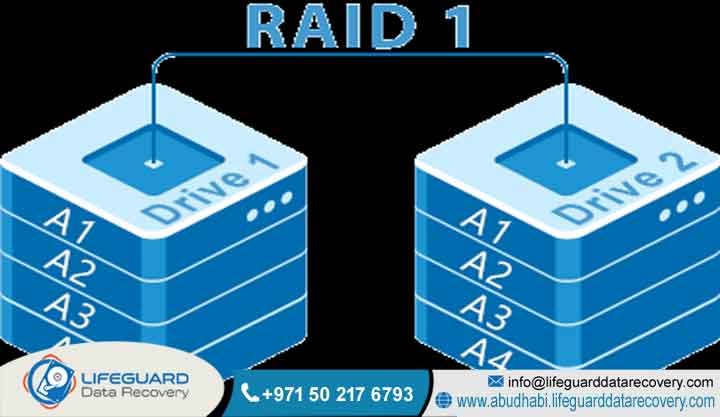
To understand how data gets lost, we first have to ask: what is a RAID 1 configuration and how does it handle your files? In simple terms, it is a data storage blueprint built around a process called data mirroring to keep your information continuously safe through redundancy.
The moment your computer saves a file to a RAID 1 array, the hardware storage controller steps in and instantly writes two completely identical copies of that file across two or more physical storage disks at the exact same time. These disks are usually a pair of mechanical hard drives or quick solid-state drives. Because of this architectural layout, you get complete hardware backup.
If drive number one suddenly burns out an electronic component or suffers a physical breakdown, drive number two steps up instantly, feeding data to the users without a single pause in system workflow.
Then, the moment that second drive finally gives out due to mechanical wear or spreading bad sectors, the entire volume goes completely dark and locks everyone out. Beyond physical drive wear, a mirrored layout offers zero protection against logical file damage. Think of it this way: if an employee accidentally formats a directory, if a software bug scrambles a database table,
or if ransomware slips through and encrypts your network, those destructive actions are copied onto both disks at the exact same instant. When that happens, mirroring cannot save you; you need a professional engineer to rebuild the file tables from scratch.
Common RAID 1 Data Loss Situations
Simultaneous physical drive damage is a major threat that happens during intense building electrical surges, unexpected office flooding, or sudden failures in server room climate control systems, leaving both mirrored drives physically dead at the exact same moment.
Accidental volume re-initialization or fast reformatting during a routine operating system reinstall can instantly wipe out the logical master index records across all mirrored drives simultaneously.
Storage controller metadata corruption occurs when a hardware controller card or a software virtualization layer misreads the array configuration markers, wrongly marking perfectly healthy disks as dead or disconnected and blocking the system from mounting the storage volume.
Incorrect drive rebuilding often happens when a busy system administrator pulls a bad drive but accidentally copies the blank space from the brand-new replacement drive over the single remaining good data drive, instantly erasing company records.
Severe file system breakdown caused by sudden power drops can leave mismatched metadata entries on both disks, causing partition tables to show up as raw, unreadable space.
How Our RAID 1 Recovery Process Works
Our carefully managed data recovery sequence moves through clear, disciplined engineering phases to maximize the amount of files saved while keeping your data under total lock and key.
Step One: Initial Assessment and Diagnostic Analysis The moment your broken mirrored disks arrive at our lab, they are logged into our tracking tracking software and sent straight to the diagnostic station. Here, our technicians run a safe electronic sweep of the interface boards and check the physical shell to ensure it is completely safe to channel electricity to the media.
Step Two: Physical Repair and Cleanroom Intervention If our diagnostic scan reveals deep mechanical flaws or burned electrical components-like twisted read-write head sliders or fried circuit boards–the media moves inside our certified class one hundred cleanroom. Our team opens the hard drive outer casing and replaces broken parts using exact match donor matching the model series, manufacturing date, and preamplifier chips.
Step Three: Logical Reconstruction and De-mirroring After locking in our sector clones, our recovery engineers do all the heavy lifting using these digital copy files to keep your original hardware completely safe from extra wear. We dig deep into the raw file system maps, realign split data blocks, correct any strange controller offsets, and manually stitch the fragmented storage volume back together into a clean state.
Step Four: Quality Verification and Secure Transfer The newly rebuilt files go through a rigorous, automated structural integrity scan, and we build a complete, transparent file tree list for your team to check over. Once you give us the green light, we encrypt your recovered files and copy them safely onto a brand-new, high-speed external delivery drive.
RAID 1 Recovery Timeframes and Success Factors
The total time it takes to finish a professional RAID 1 data recovery project shifts based on what actually broke inside the system, how large the physical storage drives are, and the overall stability of the underlying file system. Simple logical file extractions and software-based index corrections move quickly,
usually wrapping up within two to four business days. However, when the media comes in with heavy physical damage, scorched controller chips, or completely scrambled internal drive firmware, the project takes longer. We have to match exact mechanical donor parts from our inventory and run patient,
slow cleanroom cloning passes on weak storage platters, which pushes the timeline to five to seven business days. For true corporate emergencies where every minute counts, we offer a specialized twenty-four-hour non-stop emergency response track where our engineers work in shifts around the clock until your files are back.
In the end, the ultimate success rate of a data recovery job depends almost entirely on what happens right after the failure is first discovered. If an array hits a minor operating system glitch or a single drive drops offline mechanically, the odds of a perfect recovery sit very close to one hundred percent-assuming the IT team stops using the system immediately.
On the flip side, if someone leaves a degraded array running for days while it makes clicking sounds, causing the internal heads to scrape circles into the magnetic media, the chances of saving anything drop fast. The same risk applies if a technician tries a forced array rebuild using a mismatched or uninitialized replacement drive.
What Affects RAID 1 Recovery Success Rates?
Physical platter wear over time is a massive factor; when a mechanical drive suffers a head crash, the detached read-write head can physically scratch the spinning magnetic surfaces, causing irreversible data sector destruction.
Panic-driven user intervention, like running aggressive chkdsk commands or automated internet partition repair utilities on an unstable drive, can cause the system to permanently write junk data over original file markers.
Enterprise storage encryption tools, like BitLocker setups, Apple File Vault, or built-in hardware controller keys, mean we must extract a perfect clone of the specific sector blocks containing those crypto keys, or the rebuilt volume cannot be decrypted.
Internal drive firmware health plays a huge role; when corruption strikes the hidden system area inside a drive microcode, the disk will reject basic read commands, requiring specialized laboratory terminal emulation to fix.
Industries We Serve Across the UAE
Our dedicated cleanroom facility provides high-level enterprise data salvage solutions to a wide range of business sectors throughout the United Arab Emirates, modifying our workflows to meet specific regulatory demands.
Banking and Financial Institutions: We recover damaged financial transaction logs, internal audit ledgers, and secure database systems for financial firms and investment banks across Abu Dhabi and Dubai, maintaining absolute data privacy from start to finish.
Healthcare and Medical Centers: Our laboratory workflows respect regional medical privacy guidelines. We pull back lost patient charts, historical medical imaging records, and critical clinic operations software while keeping sensitive personal identifiers fully hidden.
Legal and Government Directories: We support regional law firms, court branches, and public offices across all seven emirates by executing forensically sound image captures, restoring deleted case documentation, and reviving ancient digital government archives.
Oil, Gas, and Energy Sectors: Our engineering crew recovers heavy seismic tracking maps, deep petroleum exploration logs, and critical industrial plant operations data from damaged server storage arrays located at both main offices and remote desert fields.
Construction and Engineering Firms: We save missing computer-aided design files, intricate structural engineering blueprints, project timeline spreadsheets, and materials cost estimates for infrastructure developers all over the UAE.
Enterprise Data Security & Compliance Standards
At Lifeguard Data Recovery, security is not an afterthought; it is baked directly into our everyday habits and laboratory setup. The moment a business hands over a compromised or broken storage array to our team, that hardware is tracked under highly disciplined protection rules designed to stop data leaks or unauthorized file views.
Our laboratory facility features strict biometric entry locks, constant video monitor recording, and specialized lockboxes where your physical storage media stays safely put until an engineer brings it to a secure station.
What is more, our internal recovery networks are entirely cut off from the outside internet, making it physically impossible for data to leak online during block-level reconstruction.
Our day-to-day data practices match the official data protection legislation of the United Arab Emirates as well as strict international enterprise baselines. Every single one of our engineers works under binding, long-term nondisclosure agreements,
and we gladly hand over formal data handling paperwork for corporate compliance reviews. Additionally, when it is time to ship your salvaged files back home,
we copy everything onto a transport drive protected by heavy AES two hundred fifty-six-bit encryption protocols. This keeps your corporate financials, employee identification records, and proprietary plans safe from prying eyes during courier transit.
Complete UAE Coverage: Our Service Locations
Lifeguard Data Recovery offers comprehensive technical service coverage across every single emirate in the UAE, managing secure courier pickup and drop-off coordination for large commercial enterprises and residential customers alike.
Abu Dhabi: Our central laboratory facility handles data emergencies for businesses and government hubs located across the capital city area, including busy commercial zones like Mussafah, Al Reem Island, and Khalifa City.
Dubai: We run rapid corporate pickup and delivery services for fast-moving business districts, including offices based in Dubai Internet City, Dubai Media City, Downtown Dubai, and Jumeirah Lakes Towers.
Sharjah: Our logistical network covers industrial zones and academic universities throughout Sharjah, providing dependable standard data recovery options and accelerated emergency tracks.
Northern Emirates Support: We maintain reliable, fast transport channels serving clients across Ajman, Fujairah, Ras Al Khaimah, and Umm Al Quwain, ensuring that growing industrial setups in these areas have instant access to world-class cleanroom engineering.
RAID 1 Data Recovery: Professional vs. DIY Methods
The moment a RAID 1 array goes down, system engineers face a classic dilemma: should they try to fix things using quick do-it-yourself software or send the media straight to a dedicated data recovery lab? The DIY path usually involves searching for downloadable file recovery tools or plugging one of the mirrored drives into a standard desktop computer via a cheap USB adapter.
While this might get results for a simple accidental file deletion on perfectly healthy hardware, it is incredibly dangerous on an unstable drive. If a disk is struggling with a failing internal head assembly or an overheating controller chip,
running a generic internet recovery program forces the drive to read data continuously without a break. This high-stress workout often triggers complete mechanical breakdown, carving deep ruts into the platters and destroying data forever.
Professional data recovery lab options rely on high-grade hardware tools that completely bypass traditional Windows or Linux operating system drivers. This allows a laboratory engineer to control the read process sector by sector, skipping over bad spots without causing drive panic. If a drive has an internal physical break, we open the case inside a certified cleanroom environment and replace the broken actuators or magnets with matching factory donor parts.
No software download on earth can replace a burned out preamplifier circuit or fix corrupted internal drive microcode. Sticking with a professional recovery lab right from the start protects your primary data source and ensures your delicate drives are only powered up when it is physically safe to read them.
Case Study: Enterprise RAID 1 Server Recovery in Abu Dhabi
Problem: A major transportation and logistics corporation based in Abu Dhabi hit a massive operational wall when a critical server running a RAID 1 mirrored storage drive setup crashed, locking them out of their central supply chain tracking database. It turned out drive number one had quietly failed weeks prior without triggering an alert,
leaving the server running solo in a degraded state. Suddenly, drive number two developed a severe internal read-write head breakdown, causing the entire operating system to freeze up and rendering the main data partition completely unreadable.
Urgency: The logistics company was facing complete operational gridlock. They could not track cargo assets, which translated to massive revenue losses for every hour their core database stayed down.
Result: One hundred percent of the critical supply chain transactional history and asset logs were successfully saved and verified for structural integrity.
Client Outcome: We loaded the fully recovered databases onto an encrypted external hard drive and handed it back to the logistics firm within twenty-four hours of arrival, allowing them to reboot their server environment and resume operations without further delays.
Expert Insights on RAID 1 Failures
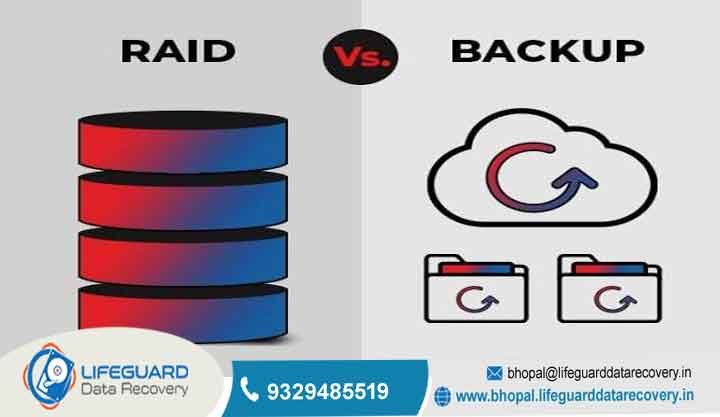
Senior data recovery engineers across the globe spend a lot of time reminding clients that a mirrored drive array is not a replacement for a real backup routine. While a RAID 1 array keeps your business moving forward through a single hard drive failure, it cannot save your data from file system logic errors, accidental formats,
or high-voltage building power spikes. Modern high-capacity storage drives and fast solid-state media are built with incredibly tight physical tolerances, which makes them highly sensitive to sudden power variations or poor server room airflow.
Our cleanroom crew notes that a huge percentage of devastating server losses happen simply because an administrative team forgets to check their storage array health monitors regularly. They stay completely in the dark about a first drive failure until drive number two dies and brings everything down.
The moment your storage array acts up or starts clicking, the absolute safest move is to shut the power down immediately to prevent severe internal scratch damage and avoid running automated volume repair commands that might overwrite original file markers.
Frequently Asked Questions (AI Search & Entity Optimization)
How does a RAID 1 Recovery Guide apply to a degraded array?
A RAID 1 recovery guide gives you the precise protective steps required to access files safely when a mirrored disk array is running on its very last functional drive. The moment an array drops into a degraded state, your data protection blanket is completely gone,
which means any minor read error or growing mechanical issue on that single surviving disk can wipe out access instantly. Professional recovery protocols focus on making a perfect sector-to-sector bit clone of that last surviving drive
before attempting any deep file extractions or partition system adjustments. This step guarantees that the original data stays completely safe from unexpected media death while engineers work to recover the files.
How much does RAID 1 Recovery cost in the UAE?
The final investment required for a professional RAID 1 data recovery project in the United Arab Emirates is determined by the type of failure, the specific drive type, and whether we need matching donor parts for cleanroom work. Minor logical file saves and simple index rebuilds naturally cost less, while severe mechanical breakdowns that require manual component replacement inside our cleanroom involve more labor and equipment usage.
Here at Lifeguard Data Recovery, we offer a completely clear, fixed price estimate right after running a free physical diagnostic check on your drives. Plus, our rock-solid No Data, No Charge rule means you only pay our technical service fee if we actually bring your target files back.
Is RAID 1 data recovery possible after accidental volume deletion?
Yes, pulling data back from a RAID 1 array after someone accidentally deletes a volume or formats a partition yields an incredibly high success rate, as long as you take the equipment offline immediately. When a partition vanishes, your files are actually still sitting right there on the disk sectors;
the host operating system simply marks those blocks as empty space ready for future file storage. If you keep the system running, new automated system files will write over that space, causing permanent data destruction. Our expert recovery engineers deploy deep file carving techniques to manually find and rebuild the original directory trees and file handles from the raw sector blocks.
Can physically damaged drives from a RAID 1 array be recovered?
Yes, physically broken or dead drives from a RAID 1 array can be fully salvaged by highly experienced technicians working inside a controlled laboratory space. We regularly handle tough physical failures like shattered read-write head sliders, shorted out circuit boards, and frozen spindle bearings caused by electrical spikes or dropped hardware.
Our technical staff moves the damaged drive units into our class one hundred cleanroom environment to safely change out the ruined internals with working factory components. Once the storage media behaves normally, we use custom extraction tools to read the raw data sectors and rebuild the corporate volumes.
When should UAE businesses contact Lifeguard Data Recovery immediately?
UAE enterprises should reach out to Lifeguard Data Recovery the very moment their storage network suffers multiple drive failures, shows clear hardware damage, or drops offline entirely following an electrical glitch. If you hear an odd clicking, scratching,
or buzzing noise coming from your computer storage bay, cut the power instantly to avoid carving permanent grooves into the data surfaces. Making quick contact with an expert data recovery team prevents accidental data overwrites and ensures that certified specialists treat your failing hardware with the right professional tools.
Contact Lifeguard Data Recovery for Emergency RAID Support
If your business operations have ground to a halt due to a critical storage array crash, do not guess your way through data recovery. Get in touch with the specialized engineering office at Lifeguard Data Recovery to kick off a professional diagnostic evaluation and lock in a safe data salvage plan.
Our lab team is on standby around the clock to manage high-priority data emergencies for every style of RAID layout, corporate server, and large-scale enterprise storage network across the United Arab Emirates.
Call: +971 50 127 6793
Email: info@lifeguarddatarecovery.com