+971 50 217 6793 Abu Dhabi, UAE info@lifeguarddatarecovery.com

Recover Data From Broken USB
Experts recover data from broken USB flash drives through specialized laboratory engineering. This process bypasses damaged physical components to extract raw data blocks directly from internal NAND memory chips.
Recover Data From Broken USB When a USB stick snaps or suffers electrical failure, you must immediately avoid DIY repair attempts. Similarly, do not try multiple computer connections. Professional broken USB data recovery requires micro-soldering, circuit board trace reconstruction, or complete chip-off extraction within a controlled laboratory environment.
Consequently, this highly precise method allows certified data recovery specialists to safely rebuild file systems. As a result, they can salvage critical enterprise documents even when the storage media is completely shattered or physically broken.
Who Is Lifeguard Data Recovery?
Lifeguard Data Recovery stands as the premier technical engineering laboratory for advanced digital storage restoration in the United Arab Emirates. Additionally, we specialize in corporate asset recovery and professional electronics engineering. Operating a central high-tech facility in Abu Dhabi, our firm employs senior data recovery engineers. Furthermore, we equip our team with state-of-the-art micro-soldering gear and certified cleanroom work zones.
Our company manages highly complex physical storage failures for multinational conglomerates and federal entities. Meanwhile, we serve critical infrastructure providers and private businesses across Dubai, Sharjah, and the northern emirates. By directly interfacing with flash memory controller developers, our laboratory consistently delivers high success rates for compromised flash media.
Professional Digital Forensics and Enterprise Storage Engineering in the UAE
Beyond standard user file retrieval, Lifeguard Data Recovery serves as an authoritative enterprise provider of digital forensics. We also provide specialized ransomware recovery and storage array reconstruction across the UAE. Therefore, our engineering team maintains rigorous documentation and strict chain of custody protocols.
As a result, our forensic reporting remains highly valuable for corporate compliance and legal scrutiny within local UAE judicial frameworks. Whether recovering financial transactional ledgers from a snapped flash drive or reconstructing corrupted virtual machines, our laboratory applies military-grade parsing systems. Consequently, this highly specialized capability allows our firm to routinely handle catastrophic data loss situations that typical IT support providers cannot address safely.
Why Businesses Choose Lifeguard Data Recovery for Broken USB Data Recovery
Corporate organizations across the UAE select Lifeguard Data Recovery because we replace guesswork with cleanroom-certified hardware extraction methodologies. For example, an executive might physically damage a USB drive containing unbacked-up project blueprints. In this situation, standard IT procedures recommend immediate device isolation.
Connecting a bent or electrically shorted USB stick to a regular computer can permanently fry the internal NAND storage controller due to erratic power fluctuations. Therefore, our laboratory isolates the physical media entirely. We deploy specialized hardware platforms such as the DeepSpar Recovery Environment and PC-3000 Flash specialized suites. Consequently, this professional hardware interface allows us to extract vital data under precise voltage regulations, which eliminates the risk of permanent silicon degradation.
Class 100 Cleanroom Access and Certified Micro-Soldering Engineering
Physical restoration of fractured circuit boards requires strict environmental containment. For this reason, Lifeguard Data Recovery operates custom class 100 cleanroom spaces. In this secured environment, technicians routinely perform advanced micro-soldering, delicate jumper wire tracing, and physical component donor swapping.
A USB flash drive often arrives with a completely severed interface connector, blown surface-mount resistors, or fractured power rails. In these cases, engineers use high-magnification stereo microscopes to reconstruct the electrical pathways manually. However, if the circuit board is warped beyond repair, our engineers perform advanced chip-off extractions. They lift the memory chips from the PCB substrate and read the raw flash dumps directly through dedicated hardware programmers. Thus, we provide a highly reliable recovery path for clients in Ajman, Fujairah, Ras Al Khaimah, and Umm Al Quwain.
Specialized Data Recovery Services We Offer Across the Emirates
We provide comprehensive recovery solutions for all types of enterprise storage media, including:
-
Hard Drive Recovery: Cleanroom mechanical restorations addressing head stack failures, seized spindle bearings, read/write preamplifier damage, and magnetic platter scratches.
-
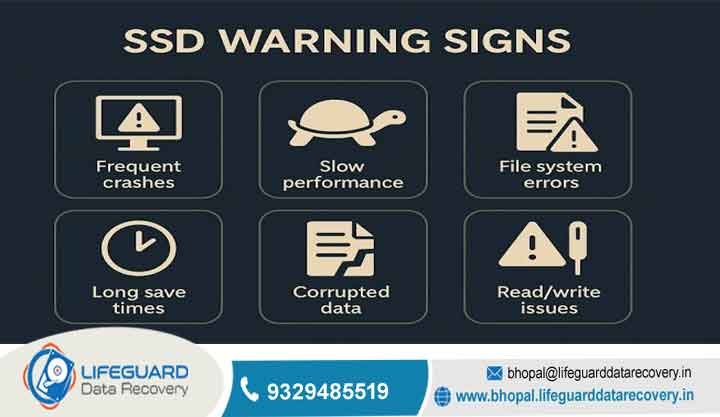
SSD Recovery: Specialized electronic reconstruction of solid-state storage arrays suffering from controller panics, translator corruption, or firmware level blockages.
-
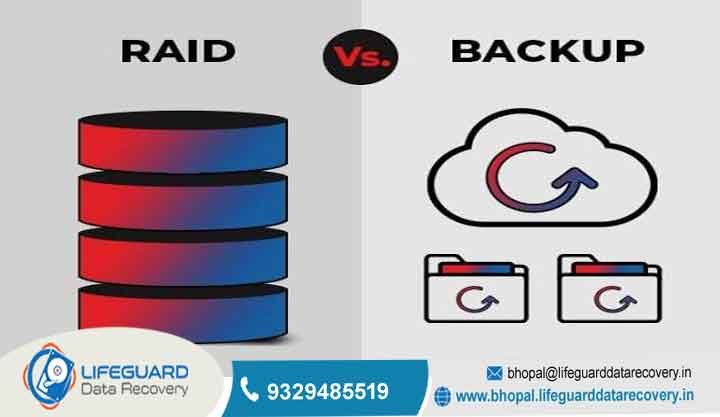
RAID Recovery: Algorithmic striping reconstruction and raw file carving from multi-disk configurations including RAID 0, RAID 1, RAID 5, RAID 6, and nested RAID 10 systems.
-
Server Recovery: Immediate physical and logical restoration of mission-critical corporate storage servers to guarantee minimal operational downtime for businesses.
-
NAS Recovery: File system parsing and volume reconstruction for network-attached storage architectures suffering from logical volume fragmentation or multi-disk drops.
-
CCTV Recovery: Forensic extraction and video stream stitching from damaged, formatted, or corrupted security digital video recording units.
-
Digital Forensics: Methodological preservation, deep data carving, and certified reporting of electronic footprints for legal validation and regulatory compliance.
-
Ransomware Recovery: Malware isolation, sector decryption support, and safe data extraction following institutional cyber warfare incidents.
Flash Media and Storage Devices We Recover
Flash storage layouts change drastically based on production age, storage capacity, and structural form factor. Therefore, Lifeguard Data Recovery delivers comprehensive broken USB data recovery across standard type-A thumb drives and newer type-C high-speed flash drives. Moreover, we fully support integrated monolith USB devices, secure digital cards, and embedded memory chips.
Our engineering laboratory easily decodes the proprietary layout structures of primary flash memory controllers. These brands include Innostor, Phison, Silicon Motion, and Alcor Micro. Consequently, this mastery allows us to bypass built-in hardware scrambling routines. We then recreate the linear file allocation maps that typical computer operating systems can no longer read or identify.
Recover Files From Damaged USB Drive Variants: Legacy and Monolith Devices
Modern flash drive manufacturing heavily utilizes monolithic architecture. In these devices, the controller, NAND memory array, and passive electronics share a single solid piece of plastic epoxy. Unlike legacy flash drives that feature distinct chips soldered onto a circuit board, monolith devices offer no exposed testing pins. As a result, physical damage becomes exceptionally challenging to repair.
A client might provide an older legacy drive with a visibly cracked circuit board. Alternatively, they may bring a modern ultra-compact monolithic USB stick that has been severely crushed. In both situations, our lab applies proper diagnostic scripts. For monoliths, our engineers carefully shave down the protective epoxy coating to expose microscopic copper vias. They then solder up to thirty hair-thin wires to establish a direct connection to the internal memory matrix.
Common Data Loss Situations and Root Causes of USB Drive Damage
Pinpointing the exact physical or logical cause behind a flash media failure is paramount to executing a successful restoration program. Hardware level failures generally stem from accidental mechanical force. For example, a user might bump into a connected drive and break the port interface.
Electrical degradation, however, occurs when a sudden voltage spike from an ungrounded USB port fries the controller processor. This spike leaves the storage media completely non-responsive. Both structural and electrical failure vectors require distinct laboratory diagnostic steps. Consequently, these steps ensure that engineers can recover files from damaged USB drive units without risking systemic data loss.
Logical Errors, Hardware Disruptions, and Physical Silicon Failures
Logical corruption frequently acts as a secondary effect of abrupt physical disconnections. If a bent USB connector loses electrical contact during a vital file system write cycle, the operating system stops updating the partition map. Consequently, this sudden interruption results in a RAW drive designation.
Physical hardware damage involves torn traces, shattered crystal oscillators, and detached surface-mount components. These broken parts interrupt the internal communication circuit completely. Furthermore, thermal expansion from prolonged electrical shorts can create microscopic cracks inside the silicon NAND dies themselves. Because standard recovery software programs cannot address these underlying hardware defects, specialized laboratory equipment remains the only viable option to safely repair the media and extract your files.
How Our Laboratory Recovery Process Works
Phase 1: Physical and Electrical Diagnostic Evaluation
Upon arrival at our Abu Dhabi or Dubai drop-off locations, the broken USB stick undergoes a non-destructive visual inspection under a high-power microscope. Technicians utilize digital multimeters to map out the resistance on the power and data lines. Consequently, they ensure no active short circuits exist before applying stabilized laboratory power.
Phase 2: Micro-Soldering and Interface Reconstruction
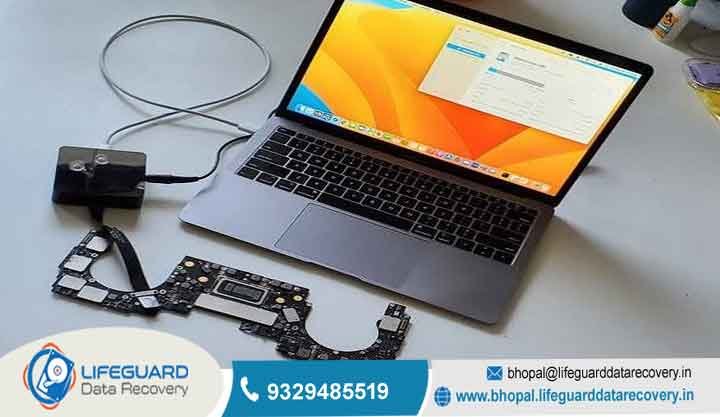
If the internal controller is fully functional but the USB connector is broken, engineers perform precision micro-soldering inside our cleanroom space. We replace the broken interface with a specialized laboratory lead wire setup. Afterwards, we bridge the connection directly to the board’s main data lanes to make the drive responsive again.
Phase 3: Chip-Off Lifting and Raw NAND Isolation
When the primary controller chip is fried or the circuit board is split in half, technicians perform a chip-off recovery. We desolder the individual NAND flash memory chip from the circuit board using temperature-controlled infrared rework tools. Next, we clean the oxide layer from the contacts and insert the raw chip into an external hardware reader.
Phase 4: Emulated Controller Descrambling and Layout Reconstruction
Once we securely extract the raw hexagonal data dump from the NAND memory chip, software engineers analyze the internal allocation. Flash controllers distribute data non-linearly to manage wear. Therefore, our software engineering team manually maps the wear-leveling steps, unscrambles the exclusive-or patterns, and reconstructs a pristine file system clone.
Phase 5: Integrity Validation and Secure Data Handoff
Following successful reconstruction of the file tree, we generate an itemized list of files for client review. Once you validate the recovery, we copy the files onto a brand-new, hardware-encrypted storage drive. Finally, we deliver the drive safely to you, which ensures complete alignment with corporate privacy laws.
Advanced Engineering Recovery Timeframes
Data recovery from physically broken media is a meticulous technical process. Execution times depend strictly on the complexity of the damage rather than total file capacity. For example, simple connector replacements and trace bridging cases are typically processed within 24 to 48 hours.
Cases involving monolithic chip tracing or cracked multi-layer printed circuit boards require intense engineering work. Similarly, highly encrypted flash controllers generally consume between 3 to 7 business days. For critical emergency situations where business operations face an immediate halt, Lifeguard Data Recovery provides continuous, round-the-clock priority service. Consequently, our team can return target files within 24 hours.
Critical Factors That Affect USB Recovery Success Rates
The eventual outcome of a physical data extraction project depends heavily on the user’s immediate actions following the physical break. The single most decisive factor is the physical condition of the internal silicon NAND die where the data actually resides. If a USB flash drive bends so severely that the actual memory chip cracks in half, the data within those severed sectors is permanently destroyed.
Additionally, if an untrained technician attempts to solder a broken connector using standard consumer equipment, they present a massive risk. They can easily overheat the circuit and permanently burn the flash memory cells. Therefore, immediate device isolation remains the most effective action to protect the recovery success rate.
Enterprise Industries We Serve in Abu Dhabi and Dubai
Lifeguard Data Recovery provides critical data protection and hardware extraction solutions across a diverse selection of enterprise markets throughout the UAE, including:
-
Government and Aerospace Sector: Confidential handling of strategic records, regional data sets, and administrative documents under maximum security parameters.
-
Financial and Banking Institutions: Recovery of critical financial ledgers, audit logs, and encryption tokens from physically damaged flash drives.
-
Legal and Judicial Entities: Specialized forensic extraction of evidentiary digital files, audio recordings, and deleted file paths for litigation purposes.
-
Healthcare and Clinical Labs: Retrieval of critical patient databases, research outcomes, and diagnostic imaging records while maintaining high privacy compliance.
-
Industrial Oil, Gas, and Utility Corporates: Restoring critical infrastructure schematics, pipeline telemetry data, and marine sensor reports from ruggedized flash media.
-
Maritime Logistics and Freezone Enterprises: Immediate recovery of shipping manifest databases, customs clearance records, and distribution sheets within Jebel Ali and Khalifa Port.
International Data Security Standards and Local UAE Compliance
Maintaining absolute data security is a foundational requirement during the handling of sensitive corporate media. Lifeguard Data Recovery runs its entire engineering infrastructure in complete alignment with regional statutes. Specifically, we strictly respect the UAE Personal Data Protection Law, Federal Decree-Law No. 45 of 2021.
Every broken USB stick checked into our Abu Dhabi lab receives an anonymous tracking ID and moves through an isolated workflow. Furthermore, our data extraction networks remain entirely air-gapped from external networks. This setup rules out any risk of digital leakage or malware injection.
All diagnostic workstations implement full-disk encryption. Moreover, temporary storage arrays holding client data during the approval window are securely cleared using certified wiping standards upon successful project completion.
Comprehensive UAE Coverage: On-Site Evaluation and Courier Diagnostics
To best serve corporate entities and minimize downtime during an emergency data crisis, Lifeguard Data Recovery offers comprehensive logistical support. We serve clients across all seven emirates of the UAE. Corporate clients in Abu Dhabi, commercial entities in Dubai, and organizations in Sharjah can take advantage of our rapid courier collection systems. Alternatively, you can drop off media directly at our designated collection points.
For businesses operating in Ajman, Fujairah, Ras Al Khaimah, and Umm Al Quwain, we deploy secure transport containers. These containers safely move physically compromised flash storage directly to our main laboratory. This expansive country-wide framework ensures that advanced data recovery engineering remains easily accessible to any enterprise or individual across the nation.
Frequently Asked Questions: Recover Data From Broken USB Devices
What is Broken USB data recovery?
Broken USB data recovery is a specialized technical discipline focused on extracting digital files from flash storage devices that have suffered physical, mechanical, or major electrical hardware failures. This process involves using advanced engineering tools to repair torn circuit traces or replace broken USB port contacts. Additionally, technicians bypass the device’s broken PCB entirely when necessary. Unlike logical recovery, which addresses software formatting or deletion, physical recovery requires laboratory technicians to interact directly with the internal storage electronics to retrieve the data blocks safely.
How does it work?
The process begins with an electrical analysis under high magnification to map out hardware continuity and check for component damage. If the primary storage controller remains responsive, engineers use micro-soldering tools to bridge the severed traces and attach a stable laboratory power connector. However, if the main circuit board or controller chip is permanently ruined, technicians perform a chip-off procedure. They desolder the NAND memory chips and read them via hardware programmers. Finally, specialized software interprets the raw hexadecimal data dumps and reconstructs the user’s original files.
Who needs this service?
This service is critical for enterprise managers, engineering leads, government personnel, and private users who have stored vital, unbacked-up records on a flash drive that has become physically broken. Common scenarios include a laptop falling while a USB stick is connected, which results in a snapped port. Similarly, an industrial flash stick might become crushed by heavy workplace machinery. When a drive is physically broken, cracked, or completely unidentifiable by any computer system, professional laboratory intervention is required.
How much does it cost in UAE?
The investment needed for professional broken USB data recovery depends entirely on the nature of the physical damage and the laboratory methods needed to complete the extraction. Basic hardware repairs, such as fixing a detached USB connector, involve lower resource costs. Conversely, advanced chip-off extractions on multi-layer PCBs or broken monolithic drives require significant engineering hours. These complex cases require specialized cleanroom tools and donor matching components. Fortunately, Lifeguard Data Recovery provides an accurate diagnostic quote after checking the media, and we run a firm No Data No Charge policy.
How long does recovery take?
The time required to complete a physical flash drive recovery is based on the severity of the structural failure rather than the total capacity of the storage device. Simple connector replacements and trace soldering can often be wrapped up within 24 to 48 hours. However, complex chip-off extractions on encrypted controllers or micro-soldering on monolithic flash drives usually take between three to seven business days due to the extreme precision required. Emergency response options are available for critical enterprise situations that require an engineering team to work around the clock to recover data within 24 hours.
Can deleted files be recovered from a broken USB?
Yes, deleted files can be recovered from a physically broken USB flash drive, provided that the sectors holding the deleted data have not been overwritten by new files before the physical damage occurred. Once the laboratory team completes the physical circuit repairs or extracts the raw NAND flash dump, the engineers apply advanced data carving algorithms to search the unallocated space. This dual-layered process reconstructs both the active file system and any hidden or deleted files still residing within the raw memory cells.
Can damaged SSDs be recovered?
Yes, data recovery from severely damaged solid-state drives is fully achievable through our advanced laboratory methods. SSDs share structural similarities with USB flash drives but implement far more complex multi-channel controllers, deep hardware encryption, and dynamic wear-leveling matrices. Our engineers deploy specialized computer forensic platforms like the PC-3000 SSD system to interface with the drive’s controller in factory-level technological mode. This allows our team to patch corrupted firmware blocks, re-initialize damaged translators, and read the raw data sectors safely.
Can failed RAID arrays be repaired?
Yes, collapsed or corrupted RAID arrays can be successfully reconstructed and recovered by our enterprise storage engineering specialists. When a critical business RAID system fails due to a hardware controller failure, our team builds identical sector-level clones of all physical disks inside our cleanroom. We then use advanced software analysis to manually calculate the structural parameters, parity patterns, block sizing, and disk sequencing. Consequently, this allows us to map the array virtually and safely extract the target enterprise databases.
What determines recovery success?
The single most critical driver of a successful data recovery outcome is the physical integrity of the internal storage medium. This includes the silicon NAND memory die or the magnetic platter surface. If the memory chip itself has been snapped or chemically burned, the data within those specific areas is lost forever. Secondary factors include whether the media was subjected to harmful DIY repair attempts. Furthermore, repeatedly plugging the device into live power while shorted can cause severe electrical destruction and lower the chances of success.
Understanding Technical Solutions: Professional Lab Retrieval versus DIY Recovery
When a corporate flash drive snaps, users are frequently tempted to try do-it-yourself repair techniques found on internet video channels. For example, they might try to hold a broken connector in place with tape. These DIY attempts present a massive danger to the underlying storage media and frequently cause irreversible data destruction.
Standard computer ports are designed to supply active electrical current the moment a device is inserted. Therefore, if a USB drive has shifted internal connections, applying raw power from a standard PC can cause immediate electronic shorting. This electrical surge can burn out the internal NAND flash memory chip, turning an otherwise recoverable trace repair into a permanent loss. Professional laboratory retrieval completely eliminates these risks by utilizing bench power supplies with precise current limiting to read the data safely.
Professional Recovery versus Recovery Software
The functional difference between professional laboratory hardware extraction and consumer-grade recovery software is a matter of physical capability. Software programs are designed to interact only with logically stable storage drives that have valid electrical connectivity. Furthermore, the device must be properly recognized by the computer’s operating system.
If a USB drive is suffering from a broken connector, cracked traces, or a blown controller chip, recovery applications are completely useless because the computer cannot establish a connection. Attempting to continuously scan an unstable or physically failing flash drive with consumer software can overheat the device, causing the internal memory cells to fail permanently. Professional laboratory specialists bypass the software layer entirely. Instead, they repair the physical components or read the raw memory blocks directly from the storage chips using advanced hardware programmers.
When Businesses Should Choose a Specialist Recovery Lab
Corporate enterprises should always opt for a specialist data recovery laboratory whenever a damaged device holds proprietary project data. Similarly, avoid DIY options for critical financial records, legal evidence, or sensitive customer information. Trying to cut corners with local computer repair shops often leads to further hardware damage, as these entities generally lack cleanroom spaces and micro-soldering tools.
Choosing a certified engineering lab like Lifeguard Data Recovery ensures that your sensitive media is handled by experienced specialists using industry-standard equipment. This disciplined approach guarantees full compliance with strict enterprise data risk policies and local privacy regulations. Ultimately, it provides a clear, proven route to restoring business-critical operations.
Case Study: Successful NAND Flash Extraction for a Dubai Maritime Enterprise
Problem and Urgency
A prominent logistics and maritime transport corporate based in Dubai faced a catastrophic data crisis. An industrial USB flash drive containing shipping manifests, customs declarations, and active port tracking logs was stepped on and snapped in half. The ruggedized 128GB flash drive was formatted with a proprietary file system used by specialized cargo loading systems, and no secondary backup existed for the active week’s shipping records.
The physical USB connector was completely sheared off the printed circuit board, taking several critical copper data pads along with it. Because multiple container vessels were arriving at the port within 36 hours, the missing manifests created an immediate operational block. Consequently, this failure resulted in substantial supply chain delays and potential fine exposures.
Recovery Process
The fractured flash drive was rushed by hot-courier directly to the Lifeguard Data Recovery laboratory in Abu Dhabi for emergency priority processing. Our senior hardware engineers performed a micro-visual assessment. They determined that the multi-layer circuit board was fractured right through the main power regulation circuit, though the primary NAND flash memory chip remained structurally intact.
Since circuit board repair was impossible due to the internal fractures, the engineer moved the drive into our class 100 cleanroom area. Using an infrared rework platform, the engineer safely desoldered the NAND memory chip from the broken substrate. Next, the chip was meticulously cleaned and placed into a specialized physical socket reader connected to our PC-3000 Flash infrastructure. Afterwards, our team manually decoded the proprietary wear-leveling configurations and algorithmic scrambling layouts implemented by the original controller manufacturer, virtually rebuilding the custom file system structure.
Result and Client Outcome
The advanced chip-off engineering intervention resulted in a 100% complete data recovery of all active shipping manifests and vessel tracking logs. The entire technical operation was completed in exactly 22 hours from the moment the damaged device entered our laboratory. Finally, the maritime firm received the recovered files over an encrypted digital delivery channel. This rapid delivery allowed port operators to clear the inbound container ships without a single logistical delay, which protected their business continuity and corporate reputation perfectly.
Secure Your Critical Data: Contact Our Specialists for UAE Diagnostics
When vital corporate files, sensitive legal records, or engineering projects are lost due to a physically broken flash drive, immediate action from qualified laboratory engineers is essential. Lifeguard Data Recovery provides the certified cleanroom spaces, advanced micro-soldering gear, and deep structural engineering expertise required to solve the most difficult physical storage failures across the United Arab Emirates.
Do not risk permanent data destruction by allowing uncertified technicians to attempt unstable hardware repairs. Likewise, avoid running consumer data applications against a failing device. Contact our dedicated diagnostic team today to secure a safe, professional, and completely confidential evaluation for your damaged storage media.
-
Call: +971 50 127 6793
-
Email: info@lifeguarddatarecovery.com