+971 50 217 6793 Abu Dhabi, UAE info@lifeguarddatarecovery.com

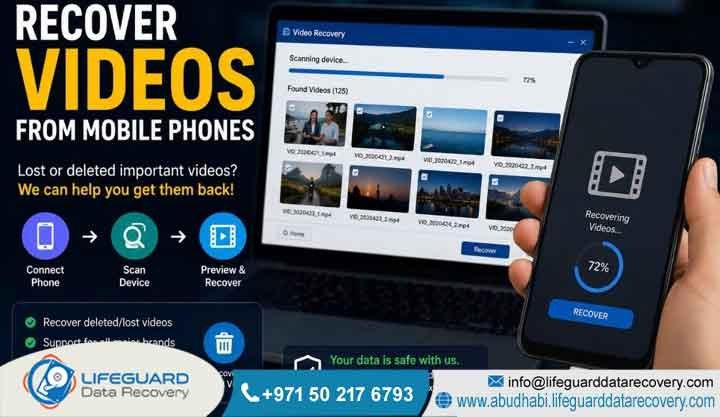
Recover Videos From Mobile Phones
What is mobile video recovery Mobile video recovery is the professional extraction and restoration of lost, deleted, or corrupted video files from smartphone storage media, including iOS and Android devices.
Recover Videos From Mobile Phones For businesses and individuals across the United Arab Emirates, professional recovery involves specialized laboratory techniques. These methods bypass operating system restrictions and repair physical hardware failures.
lifeguard datarecovery Consequently, professional recovery addresses data loss caused by accidental deletion, factory resets, logical file system corruption, and water damage. Experts can also resolve issues from cracked logic boards and encrypted system failures. This process ensures that critical media assets are safely restored without compromising device integrity or data privacy.
What is Mobile Video Recovery and How Does It Work?
Mobile video recovery is a highly technical process. Data recovery engineers execute this process to retrieve video files from the internal flash storage of smartphones.
Traditional computers utilize mechanical hard drives, but modern smartphones rely on highly integrated NAND flash memory chips instead. Technicians solder these chips directly onto the logic board of the smartphone. Furthermore, complex controllers manage these chips using wear-leveling algorithms, hardware encryption, and complex file allocation tables.
Understanding the Technical Layers of Mobile Storage
When you create a video file, the device records it in specific formats such as MP4, MOV, or AVI. Meanwhile, the operating system catalogs the file metadata within the file system of the device.
The recovery process works by targeting either the logical layer or the physical layer of the device. Engineers choose the target layer based on the specific root cause of the data loss.
In logical data loss scenarios, engineers utilize advanced forensic tools. They scan the raw sectors of the storage media, reconstruct missing file headers, and pull data from unallocated space.
Conversely, physical data loss scenarios require hardware-level remediation. Therefore, engineers must perform micro-soldering, trace repair, and component replacement under a microscope. Sometimes, they execute a temporary transplantation of the memory chip to a donor board to stabilize the device and extract the raw data safely.
Is Video Recovery Possible After Deletion?
Yes, video recovery is possible after deletion. However, success depends heavily on the timing of the intervention and the operating system of the device.
When a user deletes a video from a phone, the operating system does not immediately erase the binary code. The storage cells still contain the data. Instead, the system modifies the file allocation pointer, which marks that specific storage space as unallocated. Therefore, the device views the space as available for new data.
The Impact of TRIM and Overwriting on Deleted Videos
Modern smartphones utilize automated maintenance processes that present challenges for recovery. For instance, Android and iOS devices use a command known as TRIM alongside garbage collection processes.
These automated commands periodically wipe unallocated space to maintain high write speeds on the flash storage. Furthermore, the system permanently overwrites the original deleted video data once it writes new data to that unallocated space. New data includes new photos, application updates, or cached video files.
Consequently, immediate isolation of the device is the single most critical factor for success. You must power off the phone immediately to ensure a successful recovery.
Can Physically Damaged Smart Devices Be Recovered?
Yes, engineers can recover data from physically damaged smart devices through advanced hardware engineering. When a smartphone suffers extreme physical trauma, the internal components frequently short-circuit or break. Examples of trauma include being crushed, dropped from a significant height, or submerged in saltwater.
In these situations, the device cannot power on at all. As a result, software-based recovery tools become completely useless.
Advanced Logic Board Repair and Chip-Off Procedures
Professional data recovery laboratories overcome physical destruction by using cleanroom facilities and microscopic repair processes. First, engineers inspect the logic board for severed traces, cracked resistors, or shorted capacitors.
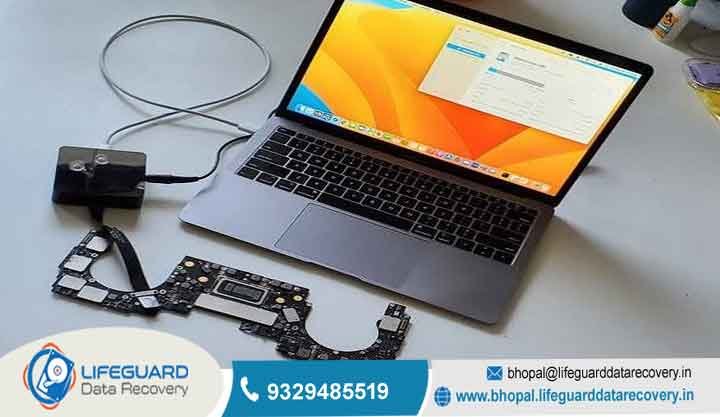
Next, technicians use micro-soldering techniques to bypass damaged circuits. They can repair power management integrated circuits and temporarily restore functionality to the logic board.
However, sometimes the logic board is completely unrepairable. If the NAND flash memory chip remains intact, engineers can execute a chip-off procedure.
This advanced method involves carefully desoldering the flash memory chip from the broken board. Technicians then clean the contact pads and read the raw data directly using specialized hardware programmers. Finally, they decrypt the raw dump using the original hardware keys to rebuild the lost video files.
Who is Lifeguard Data Recovery?
Lifeguard Data Recovery is a premier, fully certified data recovery corporation. We operate a high-security laboratory in Abu Dhabi, United Arab Emirates.
As a specialized engineering firm, we cater to corporate, governmental, legal, and individual clients. We extract technical data from failing or inaccessible media.
Our engineering team possesses deep expertise in solid-state electronics, forensic data retrieval, and complex network storage systems. Therefore, Lifeguard Data Recovery has built a strong reputation across the UAE as a trusted technical partner. We regularly resolve data loss emergencies where standard IT support teams and commercial software applications fail.
Why Businesses Choose Lifeguard Data Recovery in the UAE
Enterprise entities and organizations across the UAE choose Lifeguard Data Recovery for several key reasons. We maintain an absolute commitment to technical precision, strict confidentiality protocols, and verifiable success rates.
Business infrastructure relies heavily on uninterrupted data availability. Consequently, any incident of data loss can stall operations, compromise client confidentiality, or result in regulatory non-compliance.
High-Security Infrastructure and Financial Guarantees
Our facility is structured around advanced laboratory standards. We incorporate specialized diagnostic equipment and static-controlled environments for all operations.
Additionally, we strictly adhere to data privacy standards. Technicians handle all recovered client media within closed networks with zero external internet connectivity.
Moreover, our strict policy of no data no charge fully protects businesses from financial risk. Clients only pay for successful data extractions that match their specific parameters.
Comprehensive Data Recovery Services We Offer
Mobile video recovery requires dedicated smartphone extraction techniques. However, Lifeguard Data Recovery also provides a full suite of enterprise and consumer media restoration services across our specialized engineering infrastructure.
-
Hard Drive Recovery: We perform technical reconstruction and data extraction from mechanical hard disk drives. Our engineers resolve issues like seized spindles, failed read/write heads, stiction, broken controller boards, and corrupted firmware modules.
-
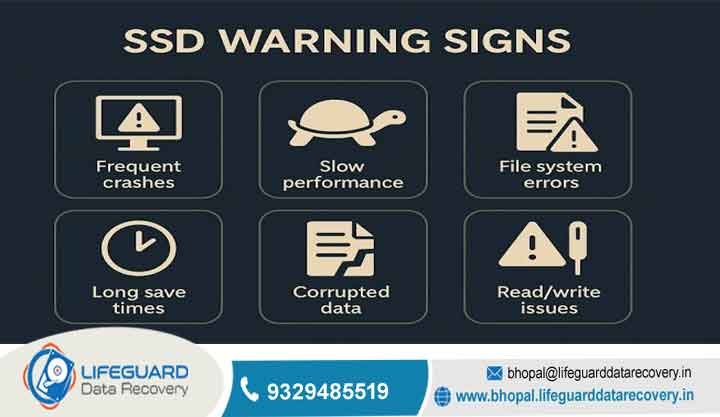
SSD Recovery: We utilize advanced NAND flash memory engineering to recover data from failed solid-state drives. These services successfully address controller failures, corrupted translation layers, and power-surge damage.
-
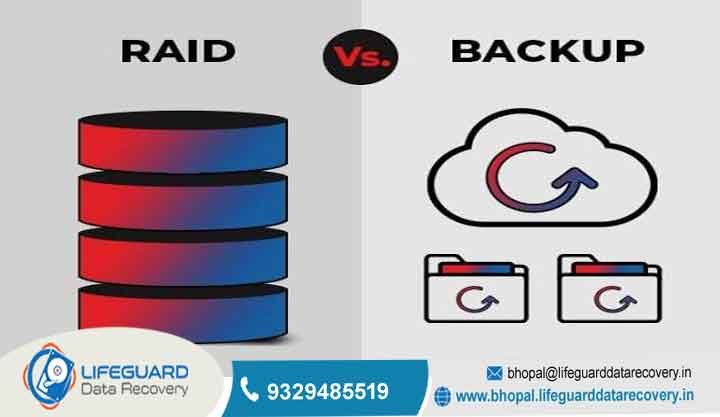
RAID Recovery: Our technicians specialize in the reconstruction of complex redundant arrays of independent disks. We safely manage multi-drive failures across RAID 0, RAID 1, RAID 5, RAID 6, and RAID 10 configurations without risking parity corruption.
-
Server Recovery: We offer rapid-response data extraction from enterprise physical and virtual servers. Our team efficiently handles file system corruption, accidental volume deletions, and operating system crashes.
-
NAS Recovery: We provide forensic extraction from Network Attached Storage units manufactured by brands such as Synology, QNAP, and Western Digital. These processes quickly resolve network file sharing errors and volume degradation.
-
Digital Forensics: Our team conducts chain-of-custody certified investigations and analysis of digital evidence. These services fully support legal proceedings, corporate compliance audits, and cybersecurity incident responses.
-
CCTV Recovery: We offer specialized extraction of security surveillance video footage from digital video recorders and network video recorders. We can recover files after physical overwriting, disk formatting, or structural fire damage.
-
Ransomware Recovery: We use advanced cryptographic analysis and data decryption services to recover business-critical files and databases. This service minimizes downtime after malicious cyberattacks and ensures rapid business continuity.
Devices and Operating Systems We Recover
Our engineering laboratory is fully equipped to interface with all generations of mobile hardware and software architecture. For instance, we provide comprehensive video recovery from Android devices. We support major manufacturers such as Samsung, Huawei, Xiaomi, Oppo, and Vivo, regardless of the software version.
Additionally, we specialize in advanced video recovery from iPhone devices. Our engineers easily manage complex iOS environments, encrypted file systems, and iCloud synchronization mismatches.
Beyond consumer smartphones, our technicians extract video files from tablet computers and action cameras. We also support professional drone storage cards and specialized mobile recording equipment.
Common Mobile Video Loss Situations We Resolve
Data loss on mobile devices occurs through various unexpected vectors. Fortunately, Lifeguard Data Recovery regularly mitigates the following scenarios:
-
Accidental Deletion: Users purge media files from their galleries and clear out the recently deleted folders without a backup.
-
Factory Resets: Complete formatting of the internal storage memory due to software glitches, forgotten passcodes, or accidental user initiation.
-
OS Update Failures: Operating system upgrades freeze mid-process, causing boot loops, corrupted system partitions, or forcing recovery mode.
-
Physical Trauma and Impact: Shattered devices, broken logic boards, and crushed internal components resulting from drops or vehicular accidents.
-
Liquid Exposure: Corrosion and electrical shorts caused by submersion in water or fluids, which instantly disables the phone’s circuit board.
-
Malware and Application Corruption: Malicious third-party apps corrupt the file directory or encrypt data blocks within the user partition.
How Our Mobile Video Recovery Process Works
Lifeguard Data Recovery utilizes a standardized, highly structured engineering process. This workflow ensures maximum data integrity and a clear chain of custody for every mobile device.
Step 1: Diagnostic Assessment
Upon receiving the mobile device at our Abu Dhabi laboratory, our engineers conduct an immediate diagnostic review. This phase determines whether the data loss is logical or physical. Technicians inspect the health of the internal storage components and provide a detailed evaluation report.
Step 2: Device Stabilization and Repair
If the device has suffered physical damage or liquid immersion, we transfer it to our hardware engineering station. Here, under high-power magnification, technicians perform micro-soldering to repair power tracks. They also replace blown capacitors and eliminate surface corrosion to stabilize the hardware.
Step 3: Bit-Stream Forensic Imaging
Once stabilized, we do not work directly on the live device. This restriction prevents accidental data overwriting. Instead, we perform a bit-stream forensic backup of the entire internal NAND flash storage to create a sector-by-sector mirror image.
Step 4: Data Extraction and Reconstruction
Our data recovery engineers analyze the forensic image using advanced specialized software and proprietary parsing scripts. We locate broken video file structures, fix corrupted headers for MP4 or MOV formats, and pull deleted media from raw unallocated space.
Step 5: Quality Assurance and Secure Delivery
The recovered video files undergo a strict quality assurance review to verify that they play correctly. Once verified, we encrypt the data and transfer it to a secure delivery drive. Finally, we prepare the original device for return to the client.
How Long Does the Recovery Process Take?
The duration of a mobile video recovery procedure is determined by the nature of the data loss. The physical condition of the device also plays a major role.
Standard logical recoveries involving accidental deletions or software corruption are typically completed within 24 to 48 hours. However, severely damaged phones require more time.
If a smartphone has suffered severe physical damage, liquid corrosion, or requires a chip-off procedure, the timeline can extend from three to five working days. Lifeguard Data Recovery understands that time is critical for corporate clients and digital forensics cases. Therefore, we offer emergency round-the-clock restoration services to accelerate the engineering timeline.
What Factors Affect Mobile Video Recovery Success Rates?
The likelihood of fully restoring lost mobile video files depends on several interconnected technical variables.
-
Device Usage Post-Loss: Continued operation of the phone after data deletion increases the risk of overwriting. The system quickly writes new background data over the unallocated space containing the lost video files.
-
Encryption Status: Modern smartphones employ file-based encryption by default. If the hardware keys generated by the secure enclave chip are physically destroyed or corrupted, the raw data remains unreadable.
-
Type of Flash Storage: Different memory architectures handle garbage collection at varying frequencies, which directly impacts how long deleted data remains intact.
-
Severity of Hardware Damage: Complete fractures or deep cracks running through the actual NAND flash memory chip represent a physical limitation. In these extreme cases, data recovery becomes impossible.
Smartphone Video Recovery: Professional vs. DIY Methods
When faced with critical data loss, individuals and businesses often consider utilizing commercial do-it-yourself software. Others choose to rely on a professional laboratory. Understanding the differences between these approaches is vital to preventing permanent data destruction.
Professional Laboratory Recovery vs. Commercial DIY Software
Commercial do-it-yourself recovery software applications operate under severe technical limitations. These utilities require the mobile device to be fully operational and capable of establishing a stable data connection.
To access the raw internal storage blocks, an Android device must often be rooted. Similarly, an iOS device must be subjected to jailbreaking. Both operations alter the file system, trigger intensive system processes, and run a high risk of permanently overwriting your data.
Furthermore, generic software cannot diagnose or handle physical hardware issues. Running a software scan on a physically failing flash memory chip can cause the component to fail completely, leading to total data loss.
In contrast, professional recovery at Lifeguard Data Recovery uses non-destructive forensic imaging. We do not modify the file system of the original device or force unapproved operating system modifications. Our engineers interact with the storage media at the hardware layer, ensuring that raw sectors are read safely without triggering destructive automated system routines like TRIM or garbage collection.
Feature Comparison Matrix
When Businesses Should Choose a Specialist Recovery Lab
Enterprise entities, legal firms, and corporate departments must bypass commercial software entirely and choose a specialist recovery laboratory immediately under specific conditions.
-
The mobile phone contains legally binding evidence or data subject to digital forensics chain-of-custody protocols.
-
The device exhibits signs of physical failure, including extreme heat generation, failure to turn on, a swollen battery, or an unresponsive screen.
-
The missing video assets represent critical intellectual property, corporate marketing assets, or media essential to business continuity.
-
The data on the phone is protected under statutory privacy laws, meaning uploading data to unverified third-party software could result in a severe regulatory compliance breach.
Case Study: Critical Mobile Video Retrieval for an Enterprise Client in Abu Dhabi
The Data Loss Problem
A major real estate development corporation headquartered in Abu Dhabi suffered a catastrophic data loss incident involving a corporate smartphone. An executive had used a high-end mobile device to record exclusive, unreleased architectural drone footage and on-site inspection videos of a multi-billion dirham development project in Dubai.
Due to an unexpected software synchronization conflict during an automated system update, the phone entered a continuous boot loop. An uncertified internal IT support team mistakenly performed a system wipe, leaving the device completely empty.
The Urgency and Operational Impact
The recorded video media was required for an upcoming international investor presentation scheduled to take place within 72 hours. Re-shooting the cinematic footage was impossible due to shifting weather conditions. Furthermore, immediate construction progress on-site had already altered the visible structural phases.
The Professional Recovery Process
The corporate client contacted Lifeguard Data Recovery and utilized our emergency transport service to deliver the smartphone to our Abu Dhabi engineering center. Our team immediately isolated the device to block all network signals, which stopped any further background garbage collection.
Since the device had been formatted, we bypassed the standard operating system layer and performed a low-level bit-stream extraction of the raw NAND flash storage. Our data recovery engineers used proprietary software scripts to scan the raw image dump, systematically targeting the specific media headers of the missing high-resolution video files.
The Result and Client Outcome
Through precise reconstruction of the fragmented file blocks and careful decryption processing using the synchronized hardware keys, our engineering team successfully retrieved 100 percent of the lost inspection and marketing videos.
The verified video files were delivered to the corporate team via a highly secure, encrypted storage drive exactly 48 hours after receiving the device. Consequently, the real estate corporation met its investor deadline and secured the necessary project milestones without operational delays.
Stringent Data Security, Privacy & Compliance
At Lifeguard Data Recovery, we treat data security with the highest level of professional rigor. We understand that mobile videos can contain sensitive corporate strategies, private operational records, or confidential personal information. Therefore, our entire engineering laboratory is built around data protection frameworks designed to prevent unauthorized access, leaks, or data exposure.
Additionally, all recovery projects are completed entirely offline within an air-gapped, high-security infrastructure. This means our diagnostic stations and extraction computers are physically disconnected from the internet and local networks, creating an absolute barrier against external cyber threats.
Our engineers work under strict non-disclosure agreements, and our facility is monitored continuously by comprehensive security surveillance systems. Furthermore, our internal operational policies align completely with the UAE Personal Data Protection Law (PDPL) and local Federal Decree-Law standards, ensuring that your organization remains fully compliant with regional data privacy laws throughout the entire data restoration cycle.
Complete UAE Coverage & Service Locations
Lifeguard Data Recovery provides comprehensive, high-availability technical services across the entire United Arab Emirates. While our specialized laboratory is located in Abu Dhabi, we maintain a highly efficient logistics and secure courier network to service clients across every emirate.
-
Abu Dhabi: Local laboratory access, corporate emergency collection, and rapid walk-in diagnostic services across the capital city.
-
Dubai: Daily secure courier collections and dedicated business support for enterprise hubs in Downtown Dubai, DIFC, and Jebel Ali.
-
Sharjah: Fast-response media retrieval services for commercial enterprises, academic institutions, and private clients.
-
Ajman: Industrial and consumer data recovery services supported by secure device transport.
-
Fujairah: Remote logistics coverage ensuring maritime, logistics, and energy sectors can ship media safely to our lab.
-
Ras Al Khaimah: Specialized recovery engineering access for northern corporate entities and manufacturing centers.
-
Umm Al Quwain: Accessible data recovery courier channels providing safe transit for all types of storage media.
Frequently Asked Questions
When should customers contact a professional recovery service immediately?
You should contact Lifeguard Data Recovery the moment you notice data loss accompanied by physical device damage, liquid exposure, or when the files missing are business-critical. Attempting to restart the device repeatedly or using unverified software can permanently overwrite deleted files or burn out damaged electrical circuits. Immediate professional intervention ensures that the device is stabilized properly and handled using non-destructive extraction methods.
Can videos be recovered if the phone factory settings have been reset?
Recovery after a factory reset depends significantly on the smartphone architecture and operating system configuration. Modern smartphones utilize hardware-based file-based encryption where a factory reset often deletes the specific encryption keys inside the secure enclave chip, making the remaining data unreadable. However, in specific scenarios involving partial resets, legacy operating systems, or external storage expansion cards, specialized forensic tools can still locate and extract historical media remnants.
What should I do immediately after realizing a vital video file is missing?
The single most important step is to immediately power down the smartphone completely. Do not take new photos, do not download apps, do not connect to wireless networks, and do not navigate through settings. Powering off the phone prevents the operating system from performing background maintenance like TRIM and stops application data from overwriting the unallocated blocks where your lost video file still resides. Once turned off, transport the device directly to a professional laboratory.
Can failed RAID arrays be repaired alongside mobile phone extractions?
Yes, Lifeguard Data Recovery operates multiple specialized engineering tracks within our Abu Dhabi laboratory, allowing us to manage complex enterprise infrastructure failures alongside mobile restorations. Our engineers possess the required technical infrastructure to reconstruct failed RAID 5, RAID 6, or RAID 10 configurations, swap out failed controllers, and extract critical databases simultaneously with separate smartphone extractions.
How much does smartphone video recovery cost at your facility?
The cost of mobile data extraction is determined entirely by the complexity of the failure, the time required by our engineers, and whether the device requires cleanroom micro-soldering or a chip-off procedure. Lifeguard Data Recovery operates under a transparent evaluation process, where we provide an exact technical quotation following a thorough physical assessment. Our strict no data no charge policy ensures that clients face zero financial risk, as fees are only applicable upon the successful recovery of the targeted media assets.
Are your data recovery methods safe for mobile device warranties?
Our primary focus is the absolute preservation of your data. For devices suffering from logical errors, our forensic imaging process is completely non-invasive and does not affect your warranty or device integrity. In situations involving severe physical or liquid damage where hardware disassembly and micro-soldering are mandatory, our work modifies the physical state of the device to prioritize data retrieval over ongoing device usability.
Can you recover video files that were deleted several months ago?
The recovery of older deleted files relies entirely on whether those specific storage blocks have been overwritten by subsequent device usage. If the smartphone has been used actively for months with new data continuously saved to it, the chances of recovery are extremely low due to natural data overwriting. However, if the device was turned off and stored away immediately after the deletion occurred, successful recovery remains highly probable regardless of how much time has passed.
What video file formats are your engineers capable of restoring?
Our parsing tools and recovery scripts support all standard, professional, and legacy mobile video formats. This includes MP4, MOV, 3GP, AVI, MKV, and high-resolution proprietary formats utilized by modern smartphone cameras like Apple ProRes or HEVC. During our reconstruction phase, we repair broken containers and corrupted file headers to ensure that the videos open and play seamlessly on your computer.
Is an appointment required to drop off a device at your Abu Dhabi office?
No appointment is necessary for standard drop-offs during our regular corporate working hours. Clients can bring their damaged or formatted mobile devices directly to our Abu Dhabi office for an immediate intake assessment. For urgent, business-critical emergencies or out-of-hours situations, we recommend calling our emergency hotline directly to arrange immediate engineering availability.
Do you outsource your data recovery work to external third parties?
No, Lifeguard Data Recovery performs every stage of the data extraction process within our own secure, fully equipped laboratory facility in Abu Dhabi. We do not ship client storage media or mobile devices to external vendors or overseas facilities. This allows us to guarantee strict data privacy compliance, maintain an absolute chain of custody, and ensure the fastest possible turnaround times for our clients.
Secure Professional Mobile Video Recovery Today
Data loss on a mobile device requires immediate, authoritative action to prevent permanent file destruction. Whether your organization is dealing with an accidental deletion, system corruption, or severe hardware damage, relying on commercial software utilities or inexperienced technicians can lead to irreversible data overwriting.
Lifeguard Data Recovery provides the advanced infrastructure, specialized engineering talent, and absolute security required to safely extract your critical media assets. Protect your corporate intelligence and vital video files by contacting our specialized engineering team today.
-
Call: +971 50 127 6793
-
Email: info@lifeguarddatarecovery.com