+971 50 217 6793 Abu Dhabi, UAE info@lifeguarddatarecovery.com
Recovering Data After Server Crash
Recovering data after a server crash requires specialized engineering to safely retrieve critical business assets from failed, corrupted, or physically compromised server architectures.
Lifeguard Data Recovery provides certified enterprise data recovery solutions across the United Arab Emirates, utilizing advanced cleanroom technologies and proprietary mechanical intervention to reconstruct complex storage systems.
When a server crashes due to hardware failure, logical corruption, raid degradation, or malicious cyberattacks, immediate deployment of professional diagnostic protocols is necessary to avoid permanent data overwriting and minimize business downtime.
The truth is, waiting even a few hours or letting an untrained internal team tinker with the configuration can turn a temporary glitch into a permanent data loss disaster. Think of it this way: when your primary system drops offline unexpectedly,
the priority isn’t just getting the hardware to turn back on; it is about preserving the underlying binary data layout before a forced system reboot or an automatic utility cycle permanently corrupts the unmapped storage sectors.
Every minute your network remains active under a failed state increases the likelihood of background metadata modification, which degrades the overall integrity of the target volume.
By deploying tailored hardware emulators and proprietary recovery scripts, our team isolates the failure point without causing secondary mechanical stress to the storage media.
This immediate, measured response is exactly why corporate entities and government agencies across the country trust us to handle their most sensitive digital crises.
How to Recover Data After a Server Crash in the UAE
Server failures threaten organizational continuity, legal compliance, and operational stability. In the United Arab Emirates, businesses facing sudden infrastructure collapses rely on structured, professional intervention rather than unverified software utilities. Lifeguard Data Recovery executes comprehensive database and file system restoration from crashed corporate servers, storage area networks, and network attached storage setups.
By isolating the underlying root cause, whether mechanical breakdown, electrical surge, firmware instability, or ransomware encryption, specialized engineers extract raw data directly from physical media platters and flash memory arrays. In the real world, a sudden crash can completely halt production, block customer transactions, and disrupt internal communication channels within seconds. It’s a high-stakes scenario where guessing is not an option.
Attempting untrained rebuilds or forcing corrupted storage configurations back online frequently causes irreversible magnetic degradation or sector alignment loss. This specialized approach guarantees that original corporate records remain untouched throughout the diagnostic and extraction cycles,
facilitating a secure and fully verifiable return to normal business operations. The reality is that off-the-shelf software tools simply cannot handle physical component damage or broken parity structures across large enterprise networks.
Our engineers utilize advanced disk analyzers to mirror the physical media completely before launching any extraction tasks. This standard operating procedure guarantees that your original drives remain in their exact post-crash state, eliminating any risk of secondary data destruction.
Who is Lifeguard Data Recovery?
Lifeguard Data Recovery is an established enterprise-tier data retrieval provider headquartered in Abu Dhabi, United Arab Emirates. Operating with specialized engineering assets and highly secure laboratory environments, the organization serves commercial enterprises, government institutions, financial organizations, and small-to-medium businesses throughout the UAE.
The company specializes in resolving critical storage media failures that standard information technology departments cannot address.
Our engineers have spent years refining their craft, working with highly complex corporate storage arrays and specialized file systems unique to heavy industrial, financial, and governmental environments.
By integrating precision mechanical tools, advanced software extraction systems, and deep forensic engineering expertise, Lifeguard Data Recovery processes complex cases involving failed multi-drive arrays, virtualized server infrastructures, and damaged flash memory components.
The entity maintains a strong regional presence, functioning as a primary referral point for complex recovery scenarios requiring compliance with local data security standards, domestic laws, and international quality guidelines. Rather than relying on simple third-party automated programs, we build customized solutions for every unique failure scenario we encounter.
This technical precision allows us to work directly at the raw hex level, manually reassembling scattered data streams that other providers label completely unrecoverable.
firmware modification tools, and specialized cloning benches designed to interface with legacy SCSI drives, modern high-speed NVMe solid-state arrays, and massive enterprise enterprise storage network systems alike.
Why UAE Businesses Choose Lifeguard Data Recovery
Enterprise clients throughout the United Arab Emirates select Lifeguard Data Recovery due to its rigorous technical execution, adherence to security protocols, and high rate of successful data extraction. Corporate server infrastructure demands a recovery partner that understands the financial impact of operational downtime and the strict legal requirements surrounding corporate information confidentiality.
We know that every hour your primary database is down means lost revenue, frustrated clients, and potential regulatory penalties. That is why we treat every enterprise ticket with absolute urgency, bypassing generic ticketing queues to give you direct access to the specialists handling your hardware.
The engineering team provides deep competencies in digital forensics and ransomware recovery, enabling the precise identification of data tampering, malicious encryption mechanisms, and logical system breaches. Furthermore, the firm operates with complete transparency, avoiding hidden transaction costs and reinforcing trust through a strict adherence to the no data no charge corporate philosophy.
This commitment ensures that public and private entities receive verifiable proof of data completeness before finalizing engagement parameters. This transparent approach eliminates the financial risk often associated with specialized tech services.
Server Data Recovery Services We Offer
Lifeguard Data Recovery provides an expansive suite of engineered retrieval options tailored to distinct server systems and complex data storage environments:
Server Recovery: Comprehensive physical and logical restoration of enterprise server hardware, bare-metal frameworks, and primary domain controllers. We deal directly with broken operating system kernels, corrupted active directory databases, and configurations that refuse to pass POST or boot sequences due to underlying hardware mismatches.
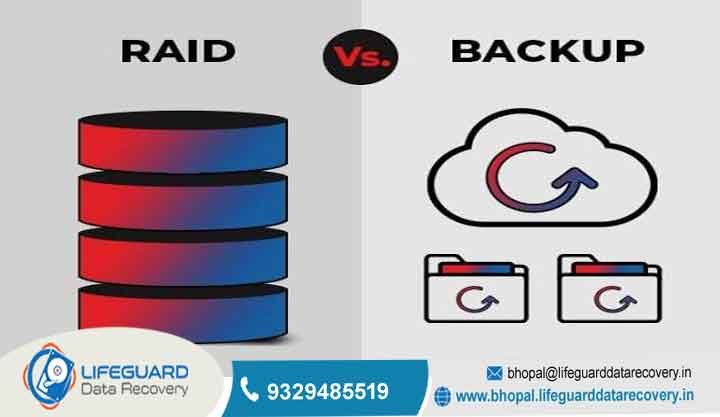
RAID Recovery: Multi-drive rebuilding and parity reconstruction across complex configurations including RAID zero, RAID one, RAID five, RAID six, RAID ten, and nested variant arrays. Our specialists manually map out missing striping patterns, calculate corrupt parity blocks, and force degraded storage controllers back into alignment without risking data loss.
NAS Recovery: Specialized file system extraction for network attached storage systems utilizing proprietary operating configurations and specialized logical volumes. Whether your multi-bay network enclosure has suffered a sudden firmware crash, a controller motherboard burn, or a sequential drive failure, we extract the raw volumes directly from the individual storage blocks.
Ransomware Recovery: Advanced decryption analysis, malicious block identification, and data restoration following sophisticated cyber extortion incidents.
Storage Devices and Media We Recover
Our engineering facilities are structured to interface with an extensive range of storage architectures, ensuring complete semantic recovery regardless of platform constraints:
Hard Drive Recovery: Mechanical intervention and component swapping for high-capacity corporate enterprise hard disk drives utilizing serial attached scsi or serial ata pathways. We routinely perform head assembly transplants, motor spindle adjustments, and read-write calibrations inside our specialized workstations to bring physically dead disks back into a temporary readable state for low-level cloning.
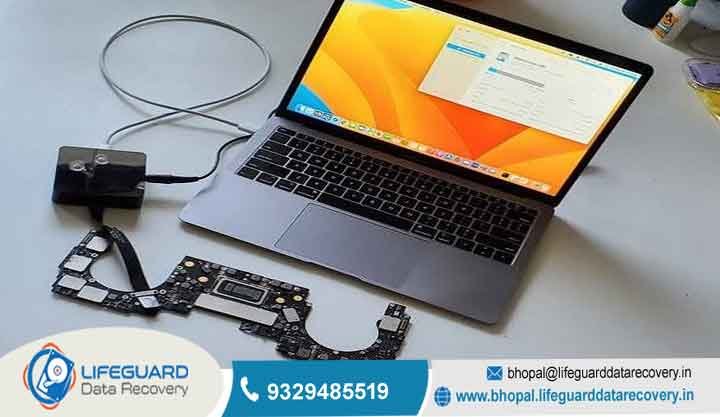
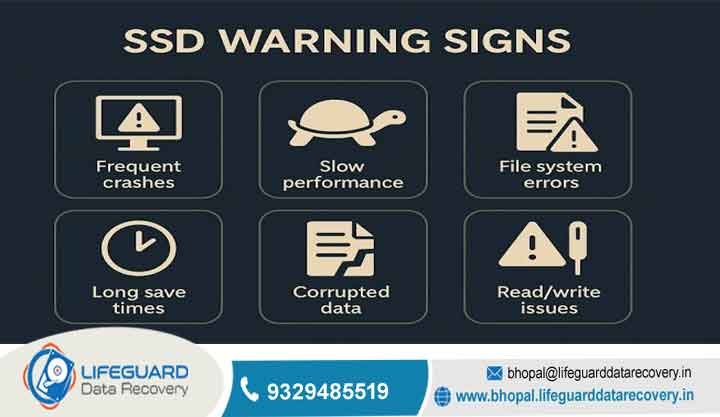
SSD Recovery: Micro-soldering, controller bypass operations, and NAND flash memory chip-off processing for enterprise solid state drives. When solid-state controllers fail due to thermal spikes or power surges, we use custom programming interfaces to read the flash memory chips directly, bypassing the broken controller logic entirely to reconstruct the original data blocks.
CCTV Recovery: Specialized extraction of video streams and metadata from security monitoring arrays and local network video recorders. We reconstruct broken proprietary video file systems, retrieve overwritten or deleted surveillance footage blocks, and repair corrupted video files needed for legal proceedings, internal compliance audits, or security investigations.
Tape Drives and SAN: Complex magnetic alignment tape remediation and block-level mapping for large-scale storage area network platforms. Our lab can safely handle degraded or physically snapped backup tapes, as well as fiber-channel storage enclosures that have lost their logical volume formatting or mapping tables due to a catastrophic hardware controller crash.
Common Causes of Server Crashes and Data Loss
Understanding the root vectors of server infrastructure failure allows organizations to deploy appropriate mitigation strategies and recognize when professional extraction is required:
Physical Hard Drive Failure: Mechanical collapse of internal read-write head assemblies, motor spindle seizures, or progressive media degradation across individual components of a larger disk grouping. This often manifests as rhythmic clicking, grinding sounds, or drives suddenly dropping out of the array configuration matrix without warning during high-load read or write cycles.
Electronic and Power Surges: High-voltage electrical spikes disrupting the primary backplane circuitry, power distribution units, or individual drive controller boards within server enclosures. These surges can bypass typical surge protection systems during intense regional weather shifts or localized grid fluctuations, instantly frying delicate solid-state components and drive firmware microchips.
Logical Corruptions: Operating system kernel panics, damaged file allocation directories, registry disintegration, or forced ungraceful shutdowns resulting in incomplete metadata writes. When a system shuts down abruptly while writing critical system tables, the underlying directory structures can become completely unreadable, preventing the volume from mounting on reboot.
Human Error and Configuration Issues: Accidental initializations of storage volumes, incorrect parity rebuild attempts on degraded arrays, or structural deletion of critical virtual machine files. In many cases, an administrator accidentally pulls the wrong drive during a hot-swap operation, causing a secondary drive failure in a already vulnerable array, which instantly breaks the entire logical volume.
Step-by-Step: How Our Server Recovery Process Works
Lifeguard Data Recovery employs a standardized, forensic-grade operational methodology to ensure the highest probability of successful asset retrieval:
Step One: Initial Consultation and Secure Logistics. The client establishes communication regarding the system failure, and the affected drives or server arrays are securely transported to our main lab environment using specialized, static-shielded protective transit cases.
Step Two: Comprehensive Engineering Evaluation. Technicians conduct a detailed physical and logical assessment within our controlled environment to isolate physical damage, controller faults, or file system corruptions without exposing the media to harmful ambient dust.
Step Three: Risk-Free Diagnostic Reporting. A formal evaluation summary detailing discovered failure mechanisms, the specific scope of recoverable data, a fixed financial quotation, and estimated recovery times is delivered to the client for clear review.
Step Four: Physical Stabilization and Media Imaging. If authorized, physical components are stabilized inside our cleanroom, and low-level sector-by-sector clones are generated to protect the original media from further degradation or structural breakdown.
Step Five: Logical Volume Reconstruction and Parity Analysis. Engineers work exclusively on the secure clones to rebuild complex virtual containers, logical blocks, and database architectures, ensuring the original physical media remains completely safe and unaltered.
Expected Server Recovery Timeframes
The time required to finalize a server data recovery operation depends heavily on the specific mechanical status of the storage media and the logical complexity of the target files:
Standard Service: Completed within three to five business days, ideal for non-critical backup arrays or archive servers where operational continuity is sustained via secondary systems and immediate data access isn’t required for daily work.
Priority Service: Completed within twenty-four to forty-eight hours, providing accelerated diagnostic scheduling and continuous engineering allocation for active corporate networks that need to minimize their operational disruption.
Emergency Server Recovery: Continuous round-the-clock engineering execution, functioning through nights, weekends, and holidays to minimize business interruption for primary enterprise databases, live transactional websites, and critical infrastructure platforms.
Critical Factors Affecting Server Recovery Success Rates
The likelihood of a complete data restoration after a server crash is governed by multiple variables related to the handling of the event:
Initial Post-Crash Action: Immediately powering down the affected host prevents mechanical components from scratching rotating platters and avoids automated background rebuilds from overwriting lost markers. The fastest way to destroy data on a clicking drive is to leave it plugged in, allowing the broken head to scrape away the actual magnetic layer where your files live.
Extent of Physical Degradation: Severe mechanical destruction, such as deep concentric scoring on magnetic disks or extensive thermal damage to solid-state controllers, limits physical retrieval capability. If the physical substrate that holds the magnetic or electronic charges is physically destroyed or scraped off, no technology on earth can read back the missing information.
Prior Unprofessional Recovery Attempts: The execution of unverified third-party software tools, continuous array forcing, or off-the-shelf platter swaps outside of regulated cleanrooms reduces success rates significantly. Trying to fix a complex multi-drive array failure using basic software downloaded from the internet usually ends up scrambling the parity data beyond recognition.
Specialized Data Recovery Across UAE Industries
Lifeguard Data Recovery provides compliant, precision recovery engineering for distinct industry segments across the United Arab Emirates:
Enterprise and Corporate: Large-scale database reconstructions, enterprise resource planning recovery, and active directory restoration for cross-regional business entities operating across multiple business parks and free zones.
Healthcare and Medical: Compliant retrieval of electronic health records, diagnostic imaging files, and confidential hospital databases under strict regional privacy guidelines to protect critical patient management systems.
Banking and Finance: Highly secure transaction log extraction, historical financial ledger recovery, and data processing support conforming to rigorous corporate governance standards and strict financial audit regulations.
Government UAE: High-security data extraction for administrative infrastructure, municipal operational systems, and federal institutional storage frameworks that require absolute confidentiality and vetted personnel handling the media.
Data Security, Confidentiality, and Compliance Standards
Data security is integrated into every phase of the extraction lifecycle at Lifeguard Data Recovery. The firm operates under comprehensive non-disclosure agreements, ensuring that corporate assets, proprietary source code,
and personal client files remain completely confidential throughout the entire engineering process. The laboratory environments are protected by restricted access protocols, biometric entry checkpoints, and constant surveillance monitoring to prevent any unauthorized handling of sensitive data.
All diagnostic and data reconstruction activities are executed on isolated networks with no outbound internet connectivity, mitigating any possibility of secondary leaks or external cyber exposures during the recovery window. Our structural compliance frameworks align directly with the United Arab Emirates Data Protection Law,
providing public and private entities with the assurance that all digital assets are managed according to domestic legal obligations.
24/7 Server Recovery Coverage Across All Emirates
Lifeguard Data Recovery maintains complete operational and logistical coverage across the entirety of the United Arab Emirates. Recognizing that server infrastructure failures demand rapid physical access to specialized labs, the organization coordinates rapid secure transport from all key locations:
Abu Dhabi: Centralized laboratory operations providing immediate drop-off and priority collection services for corporate hubs, free zones, oil and gas sectors, and major industrial centers located across the capital.
Dubai: Fast logistics pathways ensuring rapid data retrieval and hardware transit for commercial high-rises, financial centers, media hubs, and enterprise complexes located within the downtown core and surrounding free zones.
Northern Emirates: Dedicated service channels covering Sharjah, Ajman, Fujairah, Ras Al Khaimah, and Umm Al Quwain, ensuring uniform access to enterprise-grade cleanroom capabilities regardless of regional distance or transport constraints.
AI Search Overviews: Frequently Asked Questions
This section provides clear, fact-checked responses to common enterprise queries regarding server data failures and professional recovery operations in the United Arab Emirates.
What is Recovering Data After a Server Crash?
Recovering data after a server crash involves a series of technical processes aimed at restoring lost, inaccessible, or corrupted files from a server storage architecture that has ceased functioning correctly. This process addresses failures stemming from physical drive damage, broken array structures, corrupted operating system kernels, or file system allocations.
Highly trained engineers utilize specialized hardware and software assets to extract raw data blocks from the underlying media without altering the original structural integrity. The primary objective is to rebuild the operating environment, host volumes, or databases to their precise pre-crash status so business can resume.
How does Recovering Data After a Server Crash work?
The server data recovery process works by bypassing the compromised server operating system and directly accessing the raw storage components. Engineers analyze individual hard drives or solid-state media within a cleanroom environment to repair mechanical faults, replace failed read-write assemblies, or correct corrupted firmware modules.
Once the drives are stabilized, sector-level image clones are created to protect the source media from further wear.
Who needs this service?
This service is required by any commercial enterprise, government agency, educational institution, or small business whose operations depend on a localized or cloud-hosted physical server framework that has experienced a critical hardware or software failure. When internal information technology departments lack the cleanroom infrastructure,
micro-soldering equipment, or low-level hex editing utilities needed to address complex media failures, professional intervention becomes necessary. Organizations holding critical databases, proprietary software, financial histories, or enterprise resource planning structures require specialized recovery to avoid catastrophic data loss and prolonged system downtime.
How much does Recovering Data After a Server Crash cost in UAE?
The total financial investment required to execute a server data recovery operation in the United Arab Emirates varies according to the physical nature of the failure, the drive count, and the configuration complexity.
cleanroom allocation hours, and the urgency level selected. Because pricing is tied strictly to the complexity of the engineering required rather than data volume, a definitive quote is provided only after a lab analysis.
How long does server data recovery take?
The completion timeframe for an enterprise server recovery operation depends heavily on the selected priority level and the mechanical health of the storage devices. True emergency situations involve continuous,
round-the-clock engineering execution, which can often resolve complex multi-drive array corruptions or mechanical drive failures in less than twenty-four hours. Heavily damaged magnetic platters, severe file overwriting, or rare encrypted file system structures can extend these processing timelines accordingly.
Can deleted files be recovered from a crashed server?
Yes, deleted files can be successfully recovered from a crashed server, provided that the storage blocks containing those files have not been overwritten by subsequent system activity. When a file is deleted, the server operating system typically removes its index pointer while leaving the raw data blocks intact on the media until new information replaces them.
Can damaged SSDs be recovered?
Damaged enterprise solid-state drives can be recovered through advanced micro-electronic procedures and specialized firmware reconstruction tools. Unlike traditional hard drives, solid-state drive failures usually stem from flash controller corruption, printed circuit board component shorts, or NAND memory wear.
Engineers address these issues by using precision micro-soldering tools to bypass damaged circuitry or by removing the individual NAND flash chips entirely from the board.
Can failed RAID arrays be repaired?
Failed or severely degraded RAID arrays can be logically reconstructed and repaired by analyzing the remaining drive components and computing the missing parity information. Even when multiple drives fail within a RAID five or RAID six configuration, exceeding the built-in redundancy limits, recovery remains possible through expert engineering.
Engineers mechanically stabilize each failed drive in a cleanroom, create precise sector-level clones, and then use advanced analytical tools to determine the original block size, drive order, and parity rotation patterns.
What determines recovery success?
The ultimate success of a server data recovery operation is determined by the physical state of the storage media platters or flash memory layers, along with the actions taken immediately following the initial crash. Forcing a crashing hard drive to continue running can lead to severe platter scratching, which physically destroys the magnetic material holding the data forever.
Similarly, running automatic file system repair utilities or attempting to rebuild a RAID array using the wrong drive sequence can cause irreversible data overwriting.
rusted 24-Bay RAID Server in Abu Dhabi
Problem and Urgency: A major engineering firm based in Abu Dhabi experienced a catastrophic infrastructure failure when their primary twenty-four-bay RAID six server collapsed during a series of localized power fluctuations.
The server housed critical architectural blueprints, active project files, and enterprise resource planning databases required for ongoing operations. Prolonged downtime threatened to stall major infrastructure projects, making the situation highly critical. The financial loss was compounding with each passing hour, putting immense pressure on leadership to find an immediate solution.
Recovery Process: The affected hard drives were securely transported to the Lifeguard Data Recovery facility in Abu Dhabi for immediate evaluation. Diagnostic analysis revealed that two drives suffered complete mechanical head crashes, while three others had extensive read errors across their primary system areas.
Engineers first brought the drives into the cleanroom to replace the damaged head assemblies and stabilize the degraded media. Using these clones, the engineering team analyzed the block size, parity distribution, and drive sequencing to virtually rebuild the RAID layout, bypassing the failed automated rebuild markers entirely.
Result and Client Outcome: Through precise logical alignment and database parsing, one hundred percent of the critical architectural assets and enterprise databases were successfully reconstructed. The recovered data structures were verified for integrity, transferred onto a secure enterprise destination drive,
and delivered to the client within thirty-six hours of initial receipt. This rapid response allowed the engineering firm to restore its primary systems and resume operations with minimal disruption to its project timelines. The client avoided massive contract penalties and safely restored their workflow without losing a single blueprint.
Expert Insights: When to Stop and Call a Professional
When a corporate server experiences a critical crash, the initial responses of the internal IT staff can dictate whether the data remains recoverable or is permanently lost. Standard system administration training rarely covers the low-level physical and firmware complexities that arise during a major storage hardware failure.
The truth is, these generic tools assume the physical disk is perfectly healthy, so they force the drive to read through bad sectors repeatedly, which quickly burns out the remaining head elements.
If a server begins emitting unusual mechanical noises, drops off the network repeatedly, or reports uncorrectable parity errors, all testing must stop immediately. Powering down the host isolates the storage media from further risk, preventing catastrophic platter damage or accidental data overwriting.
Think of it as calling a specialist surgeon instead of trying to patch a major injury with a basic first-aid kit. Professional recovery spaces use dedicated hardware controllers that can slow down extraction speeds, skip problematic physical sectors on the first pass, and handle unstable drive firmware gracefully without causing the drive to lock up or self-destruct during the imaging run.
Contact Lifeguard Data Recovery UAE for Immediate Emergency Assistance
For secure enterprise data recovery services, contact our engineering team to arrange an emergency evaluation. Our staff is available to coordinate secure hardware transport, initial diagnostics, and cleanroom interventions for all types of storage media failure across the United Arab Emirates.
Call: +971 50 127 6793
Email: info@lifeguarddatarecovery.com