+971 50 217 6793 Abu Dhabi, UAE info@lifeguarddatarecovery.com
Server Data Recovery Process
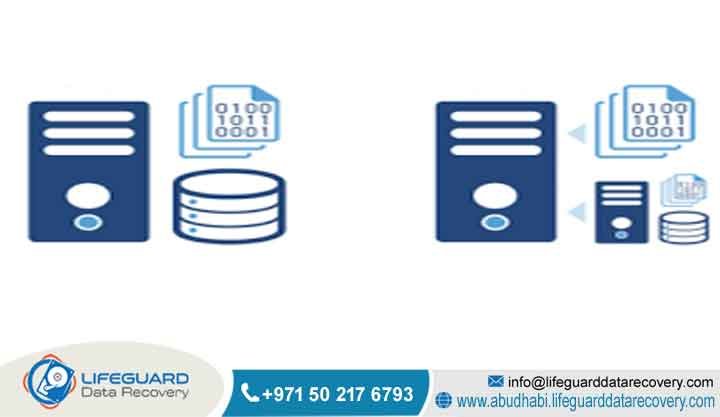
The Server Data Recovery Process is a specialized, multi-stage technical workflow engineered to retrieve lost, corrupted, or inaccessible data from enterprise-grade hosting environments, network-attached storage units, and complex storage arrays. Lifeguard Data Recovery executes this critical operation in Abu Dhabi, UAE,
using advanced cleanroom infrastructure and proprietary bit-stream cloning techniques. The process systematically addresses mechanical drive failure, logical file system corruption, controller malfunctions, and severe ransomware incidents.
By utilizing non-destructive sector-by-sector drive replication, specialized virtual array reconstruction, and strict compliance-verified extraction protocols, our certified storage engineers safely recover business-critical data while maintaining absolute structural and cryptographic integrity throughout the entire operational lifecycle.
Who is Lifeguard Data Recovery?
Lifeguard Data Recovery stands as a premier, highly specialized enterprise data protection and emergency recovery laboratory operating in the United Arab Emirates. As a mature entity within the domestic technology sector, the organization has dedicated its operations to resolving complex storage failures that surpass the technical capabilities of standard corporate information technology departments.
By investing continuously in localized laboratory facilities, Class 100 ISO cleanroom environments, and highly specialized binary extraction instrumentation, the company serves as a vital operational recovery resource for the region.
The core identity of Lifeguard Data Recovery centers on absolute technical precision and verifiable operational data integrity. The organization recognizes that enterprise servers are not merely collections of individual storage components, but highly integrated, interdependent computational ecosystems containing sensitive organizational history, intellectual property, financial databases, and private operational assets.
Consequently, every interaction within our physical laboratory is governed by rigid operational workflows designed to maximize data salvage yields while mitigating the risk of structural media degradation. Through years of deliberate focused practice, the laboratory has mapped its operational signatures directly into the regional technology framework, establishing itself as a definitive entity for advanced storage reclamation.
Our UAE Presence and Accreditations
The structural blueprint of Lifeguard Data Recovery is deeply integrated within the digital architecture of the United Arab Emirates. Headquartered with specialized processing facilities in Abu Dhabi, the firm maintains extensive active coverage channels ensuring rapid physical media transport and remote deployment capabilities across all seven emirates.
This localized geographic distribution allows the organization to interface smoothly with corporate entities, financial institutions, defense contractors, and municipal bodies located within Dubai, Sharjah, Ajman, Fujairah, Ras Al Khaimah, and Umm Al Quwain.
Our physical security baselines and environmental conditions conform strictly to international standards for advanced digital forensic labs and physical media handling facilities. Lifeguard Data Recovery operates custom physical cleanroom enclosures that precisely regulate airborne particulate concentration, ambient temperature, relative humidity, and static electricity discharge.
These certified criteria ensure that open-platter hard drive operations and delicate solid-state micro-soldering tasks occur under optimal technical conditions. Furthermore, our staff maintains continuous operational alignments with modern data security standards, ensuring that our technical operations are officially recognized and trusted by enterprise procurement offices throughout the UAE.
Why Businesses Choose Lifeguard Data Recovery
In the modern enterprise ecosystem of the United Arab Emirates, data storage infrastructure represents the literal baseline of business continuity. When core data arrays fail, corporations require an established partner whose operations are built around proven technical capabilities rather than marketing promises.
Lifeguard Data Recovery has built its market trust by addressing the complex technical challenges that cause general IT providers and retail data recovery shops to fail. Enterprise storage environments feature intricate abstractions, custom block allocations, and multi-layered parity configurations that can easily become permanently unrecoverable if handled improperly.
Businesses consistently select our laboratory due to our absolute transparency and our strict adherence to the No Data No Charge policy. This business policy guarantees that our corporate clients encounter zero financial risk during the diagnostic and evaluation phases of an emergency recovery attempt.
Furthermore, our deep integration of digital forensics methodologies ensures that every stage of our physical and logical recovery workflow preserves an unassailable chain of custody. This standard is incredibly important for corporate compliance audits, legal disputes, and regulatory reporting requirements.
By combining advanced technical engineering capabilities with strict operational security, we provide the definitive trust framework necessary to guide UAE enterprises safely through critical data loss emergencies.
Enterprise Data Recovery Services We Offer
Lifeguard Data Recovery provides a comprehensive suite of advanced data restoration services specifically engineered to address the demanding architectures of modern corporate environments. Our primary service offerings are structurally divided into targeted technological domains to ensure that specialized engineering resources are accurately deployed for each specific incident.
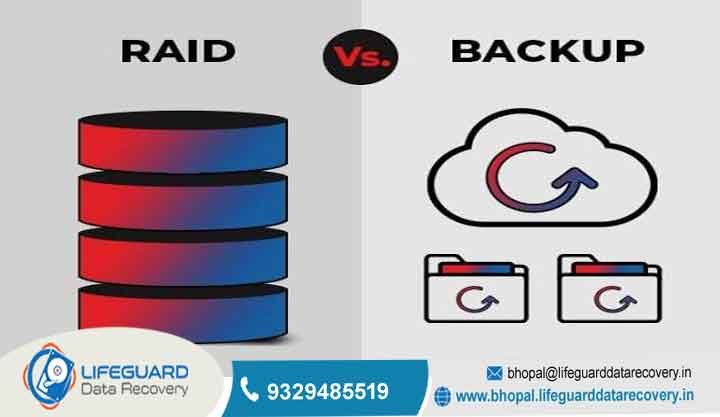
RAID Recovery forms a core component of our daily laboratory operations. We regularly reconstruct complex multi-drive configurations, including nested and proprietary variants such as RAID 0, RAID 1, RAID 5, RAID 6, RAID 10, RAID 50, and RAID 60. Our engineers understand the exact parity patterns, stripe sizes, and drive-delay sequences required to manually reassemble collapsed arrays without relying on original controller hardware.
Our Server Recovery and NAS Recovery protocols provide comprehensive protection for mission-critical file repositories and application servers. Whether an organization experiences a total failure on a storage area network or a localized file system collapse on a network-attached storage unit, our team handles all enterprise-class operating systems and file systems, including NTFS, ReFS, EXT4, XFS, ZFS, and VMFS.
Through our specialized Digital Forensics and Ransomware Recovery divisions, we offer advanced decryption, file validation, and incident response services. We carefully isolate compromised storage media, reverse malicious sector-level encryption where technically possible, and extract clean,
uncorrupted master databases. Additionally, our dedicated CCTV Recovery services provide critical assistance to security and law enforcement agencies by extracting and reconstructing fragmented, overwritten, or physically damaged surveillance video blocks from high-capacity storage backends.
Storage Devices and Server Architectures We Recover
The technical capabilities of Lifeguard Data Recovery span the entire spectrum of legacy and next-generation corporate storage hardware. Our laboratory is fully equipped to handle high-capacity enterprise Hard Drive Recovery operations involving SAS, SATA, and Fibre Channel interfaces.
These mechanical storage units require specialized servo-tracking calibration, precise head-assembly replacements, and motor spindle realignments executed exclusively within our certified particulate-free cleanrooms.
As corporate datacenters continue to transition toward flash-based storage arrays, our engineering team has developed advanced competencies in SSD Recovery. We masterfully address failures across all modern form factors and bus interfaces, including mSATA, SATA Express, M.2, U.2, PCIe, and NVMe drives.
Unlike traditional mechanical disks, enterprise solid-state drives present unique recovery challenges due to complex flash translation layer logic, wear-leveling algorithms, and controller-level data encryption. Our engineers utilize advanced hardware-software suites to bypass failed controllers, access raw NAND flash chips directly,
read the physical memory sectors, and manually reconstruct the internal block mapping logic. We recover data from high-density server configurations including hyper-converged infrastructure nodes, blade systems, virtualization hypervisors, and distributed cloud storage arrays regardless of the underlying hardware manufacturer.
Common Server Data Loss Situations
Enterprise servers are highly complex machines that remain susceptible to an array of concurrent failure modes. Understanding the root causes of data loss allows Lifeguard Data Recovery to quickly identify and execute the appropriate technical recovery workflows.
Mechanical and physical hardware degradation represents a significant percentage of server failures. This includes head crashes inside mechanical drives, broken drive spindles, failed controller backplanes, and overheating events caused by datacenter cooling failures.
Logical data corruption presents an entirely different set of operational challenges. This category includes accidental formatting of production partitions, unintended deletion of critical virtual machines, file system metadata corruption, database table drops, and corrupted software update installations.
Multi-drive RAID degradation represents an incredibly urgent emergency scenario for businesses. This occurs when a secondary or tertiary hard drive fails within an array before a previous drive rebuild has finished executing, which immediately collapses the entire array structure.
Additionally, modern enterprises face continuous threats from sophisticated cyberattacks, including targeted ransomware campaigns that systematically encrypt entire network volumes, database instances, and backup repositories.
Our laboratory is structurally optimized to address each of these failure scenarios, stepping in when standard data redundancy measures, snapshot schedules, and disaster recovery sites fail to protect corporate assets.
How Our Server Data Recovery Process Works
The engineering methodology employed by Lifeguard Data Recovery follows a highly disciplined, five-phase operational framework designed to provide absolute safety, precision, and verifiability for every single recovery project.
Phase 1: Free Initial Consultation & Secure Media Intake The process begins immediately when an enterprise contacts our corporate service center. Our logistic specialists coordinate the secure physical intake of the failed storage drives, server units, or hot-swappable array canisters at our laboratory facility.
Every piece of storage media receives a unique tracking matrix identifier, establishing a rigorous chain of custody document that records every movement, technician interaction, and storage location throughout the service cycle.
Phase 2: ISO-Certified Cleanroom Diagnostics & Reporting Once logged into our tracking system, the storage media enters our specialized laboratory environment. Our engineers perform a non-destructive diagnostic evaluation to determine the exact root cause of the drive failure.
Phase 3: Advanced Raw Data Extraction & Sector Cloning Upon receiving formal corporate approval, engineers initiate the actual data extraction process. We never perform diagnostic or recovery operations directly on original client hard drives. Instead, using specialized hardware imaging platforms, we isolate the drive firmware,
bypass internal defect logs, and perform a bit-stream sector-by-sector clone of the media onto identical laboratory target disks.
Server Recovery Timeframes: Diagnostic to Delivery
Lifeguard Data Recovery understands that every hour of server downtime translates directly to massive financial losses and operational disruption for UAE enterprises. Therefore, our operational scheduling tiers are designed to accommodate varying levels of business urgency with predictable, consistent execution speeds.
Our standard processing path delivers a comprehensive diagnostic assessment within twenty-four to forty-eight business hours, with full recovery operations typically concluding within three to five business days depending on the underlying complexity of the storage failure and total data volume.
For critical corporate infrastructure emergencies, we offer an expedited Emergency Recovery Service tier. Under this priority track, our laboratory infrastructure operates continuously on a twenty-four-hour, seven-day-a-week rotational schedule. Dedicated cleanroom engineers and senior system analysts work uninterrupted on the failed storage media until the critical data is successfully recovered and verified.
Emergency diagnostics are typically completed within two to six hours from physical media arrival, and data extraction pipelines run at maximum theoretical hardware speeds. This priority pathway significantly minimizes total business downtime, allowing corporate clients to quickly restore active production databases and maintain organizational continuity.
That Affect Server Data Recovery Success Rates
The ultimate success of a server data recovery operation depends on several critical technical variables and environmental factors. The primary factor is the physical condition of the magnetic platters or NAND flash memory cells at the moment the media arrives at our lab.
If a mechanical drive experiences a severe head crash where the slider cuts into the magnetic coating of the platter surface, the data located on those physical tracks becomes permanently destroyed.
The second major success variable is user behavior immediately following the initial data loss event. When a server array experiences a drive failure, any continued operation, force-rebuilding of degraded RAID configurations, or running aggressive automated chkdsk utilities can permanently overwrite critical file system pointers and metadata structures.
Furthermore, data recovery success is heavily influenced by the presence of any prior amateur recovery attempts. Opening a mechanical hard drive outside of a certified cleanroom environment exposes the drive platters to millions of airborne dust particles,
which can destroy the media within seconds of power-up. By choosing a professional laboratory like Lifeguard Data Recovery immediately after an initial failure occurs, businesses avoid these compounding risks and significantly maximize the probability of a complete data recovery yield.
Industries We Serve Across the UAE
The client portfolio of Lifeguard Data Recovery represents the diverse and technologically advanced economic sectors of the United Arab Emirates. We regularly provide critical infrastructure recovery services to government ministries and municipal departments within Abu Dhabi and Dubai, where adherence to data security standards and localized sovereignty guidelines remains mandatory.
Our engineers possess deep experience working with the banking, financial services, and insurance industries, successfully recovering corrupted core banking databases, historical transactional ledgers, and compliance audit histories.
In the energy, oil, and gas sectors, we recover complex seismic mapping datasets, telemetry streams, and industrial SCADA control server configurations from ruggedized field storage units.
Additionally, we serve telecommunications providers, educational institutions, multinational logistics corporations, and defense contractors across all emirates, tailoring our technical recovery processes to match the precise security and architectural requirements of each individual business sector.
Strict Data Security, Privacy, & Compliance Standards
Data security is not a peripheral concern at Lifeguard Data Recovery; it is an foundational baseline governing our entire corporate infrastructure. We recognize that the data stored on corporate servers often contains highly confidential personal records,
proprietary corporate trade secrets, and protected financial information. Our physical laboratory spaces are protected by continuous surveillance tracking, biometric access controls, and strict visitor verification protocols to prevent unauthorized access to physical media.
From a digital security standpoint, our data extraction pipelines, cloning systems, and reconstruction servers run on completely isolated local area networks with no external internet connectivity. This air-gapped laboratory infrastructure completely eliminates any risk of external data interception, malware transmission, or unauthorized remote access.
Our operational processes align smoothly with international data security frame standards such as GDPR and localized UAE Data Privacy Laws. Every engineer on our team undergoes comprehensive background checks and signs strict,
legally binding confidentiality agreements. When an enterprise works with Lifeguard Data Recovery, they can be certain that their sensitive corporate data remains fully protected throughout every step of the recovery lifecycle.
Comprehensive UAE Coverage & On-Site Service Locations
While our primary laboratory infrastructure and certified cleanrooms are located in Abu Dhabi, Lifeguard Data Recovery provides complete operational coverage across every region of the United Arab Emirates. We operate a highly responsive corporate logistics network that allows for the rapid pickup and secure transport of sensitive enterprise media directly from corporate offices and server farms located throughout the country.
Our active corporate service networks extend deep into Dubai, ensuring that businesses within major commercial centers can access our specialized cleanroom engineers within hours of a critical hardware crash.
We also maintain daily media pickup and delivery logistics throughout Sharjah, Ajman, Fujairah, Ras Al Khaimah, and Umm Al Quwain. For highly sensitive installations where corporate security guidelines strictly prohibit physical storage drives from leaving the corporate premises,
we can deploy specialized on-site data recovery teams equipped with portable diagnostic platforms and logical reconstruction toolsets. This extensive operational presence ensures that no matter where an enterprise is located within the UAE, a professional, high-grade data recovery solution is always within reach.
Frequently Asked Questions
What is the Server Data Recovery Process? The Server Data Recovery Process is an advanced sequence of professional technical procedures used to extract and rebuild unreadable information from enterprise-grade server architectures and multi-disk arrays. The workflow includes physical component repairs executed inside an ISO-certified cleanroom, bit-stream sector cloning, virtual array reconstruction, and logical file system repair.
How much does the Server Data Recovery Process cost in the UAE? The total financial investment for a professional server data recovery operation varies depending on the physical drive count, total capacity, device interface type, and the specific nature of the storage failure. Lifeguard Data Recovery determines the exact service fee through a transparent diagnostic evaluation, providing a fixed-cost quote before any actual recovery steps begin.
How long does server data recovery take? Our standard diagnostic evaluation is typically completed within twenty-four to forty-eight hours, with the subsequent data recovery operations completed within three to five business days. For urgent situations involving critical corporate downtime, our specialized emergency recovery team operates continuously twenty-four hours a day to conclude operations within hours.
Can physically damaged server drives be recovered? Physically damaged server hard drives can be successfully recovered when handled by experienced engineers working within an ISO-certified cleanroom environment. Our laboratory routinely handles severe physical failures, including damaged head stacks, electrical short circuits, seized drive motors, and platter contamination.
What determines recovery success rates? The primary factor determining recovery success is the physical condition of the recording surfaces, such as magnetic platters or flash memory cells, at the time of media intake. Success is also highly dependent on user actions immediately following the initial crash, as repeated power cycles or amateur software utility runs can cause permanent data overwrites.
Server Data Recovery: Lifeguard vs. Competitors
Feature Comparison Matrix:
Feature: ISO Class 100 Cleanroom Lab Lifeguard Data Recovery: Yes, fully certified local laboratory in Abu Dhabi. Standard Competitor Sites: Often lack local cleanrooms or ship drives abroad. Software-Driven Recovery Companies: No physical laboratory infrastructure available.
Feature: No Data No Charge Policy Lifeguard Data Recovery: Yes, strict corporate financial guarantee for all clients. Standard Competitor Sites: May charge evaluation fees or hidden administrative costs. Software-Driven Recovery Companies: Non-refundable upfront software license purchase.
Feature: Local UAE Chain of Custody Lifeguard Data Recovery: Yes, complete physical media tracking across all emirates. Standard Competitor Sites: Media often changes hands through third-party shippers. Software-Driven Recovery Companies: Not applicable for remote logical operations.
Feature: RAID Architecture Reassembly Lifeguard Data Recovery: Yes, manual hexadecimal block and parity configuration reconstruction. Standard Competitor Sites: Rely heavily on automated software utilities. Software-Driven Recovery Companies: Limited to basic automated logical reconstruction templates.
Feature: Enterprise Compliance Standards Lifeguard Data Recovery: Yes, fully aligned with GDPR and UAE Data Protection Laws. Standard Competitor Sites: Vague data privacy and security documentation. Software-Driven Recovery Companies: Risk of data leaks via unsecure internet-connected software.
Enterprise Case Study: 48-Bay RAID Server Recovery in Abu Dhabi
Problem: A major financial services institution headquartered in Abu Dhabi experienced a catastrophic hardware collapse when its primary 48-bay enterprise storage array failed.
Due to a sudden power spike that bypassed the secondary surge protection layers, the hardware controller backplane suffered severe electrical damage, which caused four individual SAS drives within a single drive group to go offline simultaneously.
Urgency: The organization faced massive financial penalties for regulatory non-compliance, severe reputational damage, and an absolute stop to its daily business operations. The institutional IT team attempted basic hardware controller swaps, but the system refused to mount the damaged file system, threatening a permanent loss of all financial ledgers.
Recovery Process: The failed drive media was securely transported under strict chain of custody protocols to the Abu Dhabi laboratory of Lifeguard Data Recovery. Our cleanroom engineers immediately ran comprehensive physical and electrical diagnostics on all 48 individual SAS drives.
Our senior systems analysts then analyzed the raw data blocks across the 48 clones to manually calculate the original stripe sizes, drive order sequences, and parity rotation patterns. Using our advanced virtual assembly matrix, we successfully simulated the hardware controller environment and mapped the underlying logical file system.
Result: The manual virtual reassembly bypass allowed our engineers to circumvent the corrupted metadata layers and access the core database volumes directly. We extracted the target corporate databases with zero block dropouts or structural corruption.
Expert Insights: The Future of Server Architectures and Data Recovery
As enterprise data centers continue to evolve, the structural architecture of server storage is shifting rapidly toward highly distributed, hyper-dense flash environments. The widespread adoption of Non-Volatile Memory Express over Fabrics (NVMe-oF) and software-defined storage abstractions has drastically altered traditional disaster recovery paradigms.
While these modern storage frameworks offer unprecedented input/output performance and lower latency, they introduce incredibly complex layers of logical file distribution and block virtualization that complicate professional data recovery engineering.
In these advanced storage ecosystems, data is no longer written in predictable, linear tracks across localized physical media. When a logical collapse or controller failure occurs within a modern hyper-converged infrastructure node, old-school file carving utilities are completely ineffective.
The future of professional enterprise data recovery relies entirely on native hexadecimal block analysis, custom firmware engineering, and advanced reverse-engineering of deep-tier flash translation layers.
Lifeguard Data Recovery remains committed to driving these technical capabilities forward, investing heavily in ongoing laboratory research to ensure that our cleanroom engineers can safely decode and rebuild the highly complex storage architectures of tomorrow.
Contact Our UAE Server Recovery Specialists Today
If your business is currently facing a critical storage failure, server downtime event, or data loss emergency, do not risk your organization’s vital assets with amateur recovery attempts or unverified software utilities. Contact the certified enterprise storage specialists at
Lifeguard Data Recovery immediately to secure your data and safely restore your business-critical operations. Our dedicated laboratory engineers are standing by twenty-four hours a day, seven days a week, to provide expert guidance, rapid diagnostic evaluations, and high-precision technical data recovery services across the United Arab Emirates.
Call: +971 50 127 6793
Email: info@lifeguarddatarecovery.com