+971 50 217 6793 Abu Dhabi, UAE [email protected]

What causes a dead hard drive
What Causes Hard Drive Failure Major Reasons & How to Prevent It Few digital experiences evoke immediate anxiety like a non-responsive computer, an unexpected Blue Screen of Death, or an unsettling clicking sound coming from inside your desktop enclosure.
lifeguard datarecovery Traditional hard disk drives (HDDs) remain the cornerstone of high-capacity data storage for personal backups, networked storage (NAS), and enterprise archives. Yet, despite decades of mechanical refinement, hard drives remain inherently mortal devices.
Understanding what causes hard drive failure is the single most effective way to safeguard your critical files, family photos, financial records, and operational databases. Hard drives can cease functioning due to sudden physical shocks, environmental stressors like excess thermal buildup, silent electrical anomalies, or software-level file system corruptions.
This deep-dive guide provides a complete analysis of physical and logical HDD failure causes, details critical warning signs to watch for, provides a clear protocol for emergency triage, and explores actionable preventive habits to maximize your drive’s operational lifespan.
Understanding Hard Drive Failure: Mechanical vs. Logical
To effectively diagnose, troubleshoot, and address hard drive problems, you must first understand the fundamental structural difference between physical component damage and digital data corruption.
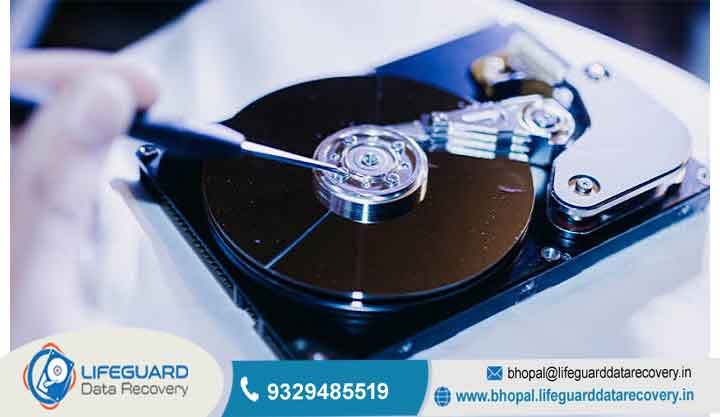
A traditional magnetic hard drive is an engineering marvel of extreme mechanical tolerances. Inside every drive, magnetic platters spin at speeds typically ranging from Revolutions Per Minute with enterprise models reaching up to Electromagnetic read
write heads suspended on actuator arms float over these spinning platters at a distance of mere nanometers a gap significantly smaller than a single strand of human hair or a microscopic dust particle.Because of this intricate design, hard drive failures naturally split into two main operational categories:
Key Takeaway: Physical failure means internal hardware is structurally broken and cannot operate. Logical failure means the physical hardware works perfectly, but the operating system can no longer read or navigate the corrupted file organization structures.
Mechanical Failure (Hardware Damage)
Mechanical failure occurs when the internal, physical moving parts of the drive suffer physical degradation, misalignment, or total destruction. The primary components susceptible to mechanical failure include:
The Read/Write Actuator Assembly: The delicate mechanism that positions the read/write heads over magnetic tracks.
The Spindle Motor & Bearings: The central electric motor responsible for maintaining smooth, high-speed platter rotation.
Printed Circuit Board (PCB): The external logic board that controls motor timing, processes commands, and manages data translation.
Internal Magnetic Platters: Glass or aluminum disks coated in a thin magnetic film where digital bits are stored.
When a drive undergoes physical mechanical failure, the host computer’s BIOS or UEFI system will frequently fail to recognize the drive’s presence altogether.
Logical Failure (Software & File System Damage)
Logical failure occurs when the physical drive assembly remains in pristine mechanical condition, but the underlying data architecture becomes severely corrupted or unreadable. Common software triggers include interrupted data write cycles, file system structure decay, malware infections, or corrupted Master Boot Record (MBR) and GUID Partition Table (GPT) files.
In logical failure scenarios, the drive usually powers up normally and spins silently, but the operating system identifies the partition as RAW, marks space as unallocated, or generates persistent error prompts asking you to format the disk before use.
Top Physical and Mechanical Hard Drive Failure Causes
Mechanical breakdowns account for the most severe hard drive crash causes. Because internal drive components operate under micro-inch tolerances, physical forces and environmental stress quickly yield catastrophic results.
1. Head Crash and Physical Impact
A head crash represents one of the most destructive mechanical hard drive failure causes. It occurs when the ultra-thin air cushion supporting the read/write head collapses, causing the slider to physically collide with the rapidly spinning platter surface.
What causes a hard drive to fail suddenly: A physical drop, accidental laptop knock, or sharp vibration while the drive is active can physically force the suspended actuator arm onto the platter surface.
The Mechanical Damage: Upon impact, the head gouges into the magnetic coating, peeling off the storage medium and throwing fine magnetic dust throughout the sealed drive enclosure. This magnetic debris introduces a cascade of secondary head crashes across other platter surfaces.
2. Overheating and Poor Thermal Management
Excessive heat buildup within a computer chassis or external enclosure acts as a silent killer of magnetic storage devices.
Hard drive failure from overheating: Standard mechanical hard drives perform reliably within an operating temperature window of . When sustained internal drive temperatures cross, internal lubricants inside the spindle bearing begin to evaporate or break down rapidly.
Thermal Expansion Stress: High temperatures cause subtle thermal expansion across delicate electronic controller chips, motor drivers, and suspension arms, inducing read/write positioning errors and shortening component lifespan.
Environmental Drivers: Accumulated dust choking intake filters, malfunctioning chassis fans, tightly packed drive bays, and using laptops on soft, air-blocking surfaces (like blankets or pillows) are the primary culprits behind thermal drive failure.
3. Spindle Motor Failure and Bearing Wear
The spindle motor operates continuously while a hard drive is powered on, rotating heavy platters millions of times during a single working day.
Over years of steady operation, fluid dynamic bearings (FDB) or traditional steel ball bearings lose viscosity. As friction increases, the motor generates excessive heat, develops rotational instability, or seizes up entirely. A failing spindle motor often manifests as a high-pitched whining noise, a rhythmic spin-up/spin-down loop, or a complete inability to spin when power is applied.
4. Electrical Spikes, Surges, and Power Interruptions
Electrical anomalies present an immediate threat to the sensitive logic circuitry mounted on the exterior of the hard drive housing.
Hard drive failure after power outage: When a building suffers a sudden power cut during an active write command, the drive must abruptly dump mechanical momentum and park its read/write heads safely off the platter surface. While modern drives utilize rotational inertia to power automated head parking, repeated sudden outages can leave heads resting directly on data zones.
Voltage Surges: A sudden power surge traveling through a low-quality or degraded Power Supply Unit (PSU) can instantly blow out the drive’s Transient Voltage Suppression (TVS) protection diodes, burn out motor controller ICs, or destroy main processing chips on the PCB.
Common Logical Causes of Hard Disk Failure
Logical glitches represent a major portion of all causes of hard disk failure. Fortunately, because logical errors do not damage physical platters, files affected by logical failures can often be retrieved using specialized data recovery tools.
5. Bad Sectors (Logical vs. Physical)
Soft Bad Sectors (Logical): Created when an Error Correcting Code (ECC) check fails. If a power flickers or a system crashes while writing a sector, the written data mismatched with its mathematical check value, causing the operating system to mark the sector as corrupted.
System Impact: As bad sectors accumulate, the drive’s internal firmware attempts to remap those bad sectors to spare backup zones. When the spare sector pool is exhausted, the operating system experiences severe read/write slowdowns, file access freezes, and system crashes.
6. File System Corruption and Improper Disconnections
The file system serves as the drive’s master index catalog. It keeps detailed logs tracking where every folder, file fragment, and system directory physically resides on the platters.
Asking why is my hard drive failing logically often points back to interrupted file system updates:
Unplugging external drives without clicking “Safely Remove Hardware” or “Eject”.
System crashes or forced shutdowns during critical Windows updates or disk defragmentation tasks.
Power loss while updating master boot records (MBR), partition tables, or master file tables (MFT).
When master index files are improperly written, the file system breaks, causing the drive to report as unallocated or prompt a formatting warning despite the raw files sitting intact underneath.
7. Malware, Ransomware, and OS Driver Glitches
Malicious software can intentionally target storage drives to sabotage access. Ransomware variants encrypt file allocation headers or overwrite Master Boot Records (MBR) to hold drive data hostage. Furthermore, corrupted storage controller drivers or buggy operating system updates can issue malformed write commands to the disk controller, corrupting drive metadata and simulating hardware failure.
Manufacturing Defects and Natural Wear (The “Bathtub Curve”)
Every hard drive manufactured lives and operates along an established engineering reliability distribution known as the Bathtub Curve. This statistical model illustrates how hardware failure risk shifts over a drive’s life cycle.
Infant Mortality (0 to 3 Months)
Early failures stem from hidden manufacturing flaws, subtle solder joint defects, microscopic platter contamination, or component tolerances compromised during assembly. If a drive contains a fundamental manufacturing defect, it usually fails within the first 90 days of active service.
Useful Life (Year 1 to Year 3)
During its prime operational window, a hard drive experiences a low, predictable, and steady failure rate. Comprehensive statistical studies published by major cloud storage providers (such as Backblaze’s long-term drive drive reliability reports) show an Annualized Failure Rate (AFR) ranging between 1% and 1.5% during this phase.
Wear-Out Phase (Year 4 and Beyond)
As a drive passes its third year of continuous operation, physical mechanical decay accelerates. Fluid bearings dry out, magnetic platter coating performance degrades, electronic components experience thermal fatigue, and bad sector counts rise exponentially. Consumer hard drives maintain an average reliable lifespan of 3 to 5 years, after which total failure probability increases dramatically.
final drive failure mid-process. Scanning a cloned disk image protects your original hardware from unnecessary stress.
Frequently Asked Questions (FAQs)
Can a hard drive fail suddenly without any prior warning?
Yes. While mechanical wear and bad sectors usually produce warning symptoms over time, electrical power surges, severe physical drops, or controller board chip failures can instantly kill a healthy drive without prior warning signs.
How long does a typical hard drive last before failing?
The average operational lifespan of a consumer-grade mechanical hard drive spans 3 to 5 years. High-end enterprise drives deployed in climate-controlled server environments often operate reliably for 5 to 7 years, though establishing a routine backup schedule should begin as soon as a drive is placed in service.
Can overheating destroy a hard disk permanently?
Yes. Operating a hard drive consistently at temperatures above 55°C (131°F) degrades electronic controller micro-chips, breaks down internal spindle motor lubricants, and warps internal mechanical alignment, leading to permanent hardware destruction.
What is the main difference between HDD failure and SSD failure?
Mechanical hard drives fail primarily due to physical wear (moving actuator arms, motors, platters) and often provide warning signs like noise or slowness. Solid-State Drives (SSDs) use flash memory chips and fail due to flash wear limits or sudden controller board glitches, typically resulting in silent, instantaneous failure without advance warning.