+971 50 217 6793 Abu Dhabi, UAE info@lifeguarddatarecovery.com
What is the success rate of data recovery?
lifeguard datarecovery What Is the Success Rate of Data Recovery The Honest Truth When a hard drive begins clicking, an SSD suddenly vanishes from your system, or you accidentally shift-delete a folder containing years of irreplaceable family photos or critical financial records, panic sets in immediately.
Once the initial shock passes, the very next question you naturally ask is What is the success rate of data recovery If you search the web for a quick answer, you will be hit with an overwhelming wave of optimistic marketing. Dozens of commercial data recovery services proudly display badges boasting a success rate.”
However, if you browse through IT support forums, talk to systems administrators, or read real-world case studies, you will hear a completely different story.
Data recovery is an incredibly nuanced field. Your actual chances of recovering lost data are a moving target, dictated entirely by the type of storage media you use, the root cause of the failure, and the actions you take in the crucial first ten minutes after the data loss occurs.
This comprehensive, technical guide cuts through the marketing fluff to deliver the realistic percentages, mechanical explanations, and step-by-step strategies you need to recover your files safely.
The Marketing Myth: Debunking Professional Data Recovery Success” Claims
If you are looking for the best data recovery company, you will quickly realize that the industry is saturated with promises of near-perfect success. If these statistics were true, data loss would not be a problem. So, how do these companies justify plastering “99% success” across their homepages?
They do it by using highly curated data and clever marketing definitions:
They exclude unrecoverable cases entirely: If a client sends in a hard drive whose internal glass platters are shattered into microscopic pieces, or an SSD where the physical NAND chips are cracked in half, the lab will tell the customer the drive is “unrecoverable.” Crucially, they do not enter this case into their statistics as a “failed recovery attempt.” They simply exclude it from the denominator of their math altogether.
They count “partial” recoveries as complete successes: If a lab manages to extract a handful of system log files or a single corrupted folder out of a 5-terabyte drive, some companies count that case as a “successful recovery.” To the customer who lost 10 years of family archives, it is a total failure; to the lab’s marketing department, it keeps their success metric pristine.
The “Zero-Result” Loophole: Some firms only calculate success rates based on logical software scans, entirely omitting physical cleanroom cases from their public-facing success metrics.
To protect yourself from these practices, look for an emergency data recovery specialist that offers a transparent diagnostic report and a strict no data no fee recovery guarantee. Under this policy, if the lab cannot retrieve your specified “target data,” you do not pay the recovery fee.
Why Their Success Rates Are Night and Day
Traditional Hard Disk Drives (HDDs) and modern Solid-State Drives (SSDs) store data using fundamentally different physics and architecture. Consequently, the chances of recovering lost data from them are completely different.
Hard Drive Data Recovery Success Rate (HDDs)
A traditional HDD writes data magnetically onto spinning glass, ceramic, or aluminum platters. As the platters spin at thousands of rotations per minute, physical read/write heads hover mere nanometers above the magnetic surface.
The Advantage: Even when a drive suffers a physical breakdown—such as a burnt PCB (Printed Circuit Board), a seized spindle motor, or a broken head assembly—the data itself remains physically written on the magnetic layer of the platters. As long as those platters are not physically scratched or scraped, a skilled engineer can transplant donor parts in a cleanroom to read the magnetic tracks.
The Realistic Success Rate: In cases where the platters are physically intact, the hard drive data recovery success rate ranges between making traditional mechanical drives highly resilient to physical disaster.
SSD Data Recovery Success Rate (The TRIM Problem)
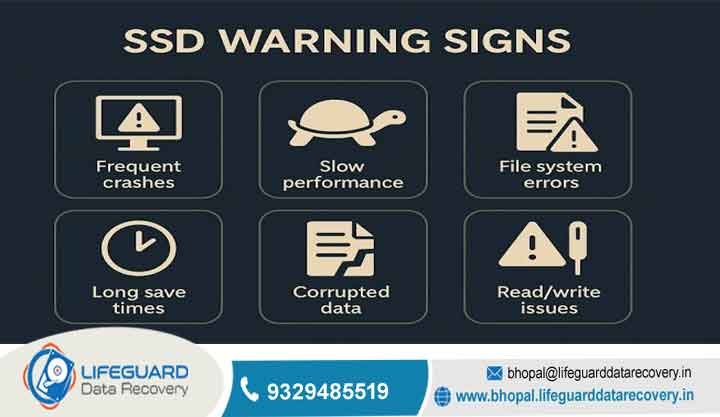
SSDs do not have moving parts. Instead, they store data electronically using floating-gate transistors inside NAND flash memory chips. This design makes them faster and completely silent, but it makes data recovery dramatically more difficult.
The TRIM Command Explained: On a traditional HDD, when you delete a file, the operating system does not actually erase the data. It simply deletes the file’s index marker and flags that space as “available to be overwritten.” The file sits there intact until new data is saved over it. On an SSD, writing new data over old data requires a slow “erase-before-write” cycle. To prevent performance slowdowns, modern operating systems use a command called TRIM.
How TRIM Kills Data: When you delete a file on an SSD with TRIM active, the operating system immediately commands the SSD controller to wipe those flash cells clean in the background. Once TRIM executes (which can happen within seconds of deletion), the data is physically gone from the NAND chips.
The Realistic Success Rate: If TRIM is active and you delete a file or format your drive, the SSD data recovery success rate drops to almost 0%. However, if the SSD fails due to electrical damage, a dead controller, or firmware corruption (where the NAND chips themselves are undamaged), specialized labs can bypass the controller entirely and read the chips directly, yielding a physical recovery success rate of
Success Rates by Device From Flash Drives to Complex Enterprise Servers
Different storage media formats present distinct engineering hurdles that directly impact recovery success.
External Hard Drive Recovery
External drives are highly vulnerable because they are portable and frequently moved while actively operating.
The Drop Factor: If an external drive is knocked off a desk while spinning, the read/write heads can crash directly onto the platters. This is known as a “head duster” or a “platter scrape.”
Impact on Success: If a dropped drive is powered off immediately, external hard drive recoverysuccess rates are incredibly high But if the user repeatedly plugs the drive back in to see if “it might work this time,” the broken heads will scrape the magnetic coating off the platters, dropping the success rate to 0%.
Laptop Data Recovery Services
Laptops face unique environmental hazards, from coffee spills to high-impact drops.
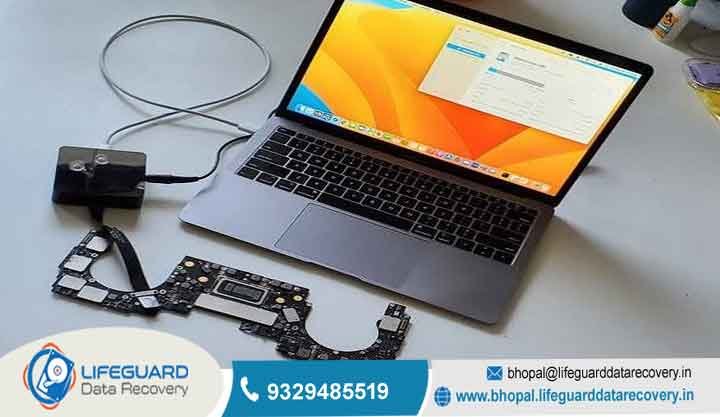
The Proprietary Hardware Hurdle: In modern ultra-thin laptops (like Apple MacBooks and modern Windows Ultrabooks), the SSD storage chips and the controller are soldered directly onto the system motherboard.
Impact on Success: If the laptop suffers liquid damage, standard laptop data recovery services cannot simply pull the drive out and plug it into a reader. Technicians must perform micro-soldering under a microscope to repair the motherboard’s power rails just to power up the storage chips, keeping these highly specialized recovery rates around
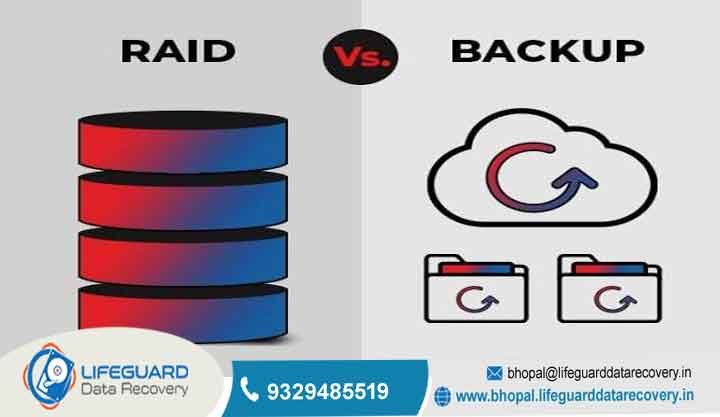
RAID Data Recovery Success
RAID arrays combine multiple physical drives to create redundant, high-capacity storage for businesses and servers.
The Rebuild Trap: RAID systems (like RAID 5 or RAID 6) can survive the failure of one or two drives. However, when a drive fails, the remaining drives are subjected to massive read/write stress during the “rebuild” process. It is common for a second, aged drive to fail during a rebuild, causing the entire array to crash.
Impact on Success: Despite the complexity, RAID data recovery success remains high Because labs can virtually reconstruct array parameters using software, they do not need to repair every physical drive to extract the data they only need to salvage enough disks to satisfy the parity requirements.
If your drive displays any physical symptoms, do not run software. Software forces the drive to read data repeatedly, which can quickly burn out failing components or cause physical platter damage.
The Safe Way to Triage Data Loss
If you have just experienced a data loss event, follow this sequence to recover lost files successfully without risking permanent, irreversible damage.
Behind the Scenes: Inside a Professional Data Recovery Laboratory
When consumer-grade software fails or a drive suffers a physical mechanical breakdown, the device must be shipped to an specialized data recovery laboratory.
These labs do not run typical computer software. They use advanced hardware tools and cleanroom environments designed to repair and extract data from damaged media safely:
1. The ISO Class 5 Cleanroom
The air in a normal room contains millions of microscopic dust particles. If a single speck of dust settles on a hard drive platter, it acts like a speedbump for the read/write heads, causing an immediate head crash and ruining the magnetic storage layer.
Within a certified cleanroom data recovery chamber, highly specialized laminar flow hoods continuously filter the air, removing 99.99% of airborne particles. This is the only environment where a technician can safely open a hard drive’s outer casing.
2. Specialized Hardware Imagers (PC-3000)
A standard operating system like Windows or macOS is designed to expect perfect responses from a hard drive. If a drive has bad sectors or failing heads, Windows will repeatedly try to read the bad area until the drive overheats, freezes, or crashes.
Labs use specialized hardware systems like the PC-3000. These devices bypass the operating system completely, communicating directly with the drive’s internal firmware. The PC-3000 allows technicians to:
Disable failing read/write heads and extract data using only the healthy heads.
Skip over bad sectors instantly without freezing the drive.
Modify the drive’s internal microcode to slow down read speeds, helping stabilize weak heads during extraction.
How to Maximize Your Chances of a Data Recovery
Your immediate reactions during a data loss event directly determine your final deleted data recovery success rate. To ensure your files remain recoverable, avoid these common mistakes:
Banish the “Freezer Trick” Myth: A persistent internet legend suggests freezing a clicking hard drive to realign the internal parts. This is highly dangerous advice. When you take a frozen drive out of the freezer, water condenses on the delicate magnetic platters inside. The moment you power the drive on, the read heads will plow through the water droplets, scraping the magnetic layer off the platters and destroying any chance of recovery.
Avoid chkdsk or “First Aid” on Failing Drives: Built-in tools like Windows’ chkdsk or macOS’s First Aid are designed to fix structural directory issues on healthy disks. If a drive is physically failing or has bad sectors, running these utilities forces the drive to write data aggressively to repair directories, which can quickly burn out the remaining read heads.
Stop Repeated Power Cycles: If a drive is not detecting, do not keep unplugging and replugging it in hopes that it will magically work. Each power cycle forces physical components to initialize, causing further degradation to already failing heads.
Frequently Asked Questions (FAQ)
How much does professional data recovery cost?
Professional data recovery costs typically range from depending on the complexity of the failure. Simple logical recoveries run on the lower end while mechanical physical failures requiring donor parts and cleanroom work typically range
Can data be recovered after a full format?
On traditional mechanical HDDs, yes a quick format only deletes the partition index, leaving the raw files recoverable. On modern SSDs, a format typically triggers the TRIM command, making recovery incredibly rare.
How long does the data recovery process take?
Logical software recoveries can take 24 to 72 hours. Complex physical cases requiring sourced donor parts can take 3 to 8 weeks depending on lab queue sizes and part availability.