+971 50 217 6793 Abu Dhabi, UAE info@lifeguarddatarecovery.com
Who provides data recovery services in Abu Dhabi?
If your business suddenly loses access to important files, the most important thing is to stop using the affected device right away. Shut down the machine, take it off the network, and reach out to our team at Lifeguard Data Recovery in Abu Dhabi. Trying to fix it yourself with basic software often causes more harm than good and can accidentally wipe your data for good.
Who provides data recovery services in Abu Dhabi Dealing with data loss is stressful, whether it is caused by a system crash, a ransomware attack, or a simple accidental deletion. The way you react in those first few hours usually decides whether your information can be saved or if it is lost forever. Many people try to restart a drive that is making strange clicking sounds or attempt a system reinstall; unfortunately,
these steps often lead to permanent mechanical failure or the destruction of the data’s file structure. For businesses throughout the UAE including those in Dubai, Sharjah, Ajman, Ras Al Khaimah, Fujairah, and Umm Al Quwain the best move is to isolate the hardware immediately and bring in experts who handle these emergencies every day.
The stakes for modern enterprises in Abu Dhabi are higher than ever. With the rapid digitization of financial records, client databases, and operational infrastructure, a single point of failure can lead to severe financial consequences and damaged reputation. When a storage device
be it a legacy mechanical hard drive or a modern NVMe SSD starts behaving erratically, the internal components are often in a state of “active degradation.” Every second the device is powered on, the mechanical heads may be scoring the magnetic platters, or the SSD controller may be actively performing garbage collection that permanently erases the data you are trying to recover.
Picture this: a server in your Abu Dhabi office stops responding to requests. Instead of rebooting it over and over, which can cause internal read heads to scrape the storage platters, you should simply mark the device as faulty and call our 24/7 emergency support line. Taking this one step often keeps a minor logical error from turning into a complete mechanical breakdown. Consider a scenario where a staff member accidentally deletes a master spreadsheet. By shutting down the workstation immediately
, you prevent the operating system from writing temporary files to that specific sector, which keeps the deleted data intact and ready for our forensic recovery tools.
Key Facts About Business Data Integrity
Data loss does not have to mean the end of your business files, provided you handle the situation the right way. Most of the time, the data is still sitting on the drive, but it just cannot be read by your computer. Our team uses specialized, clean-room technology to bypass standard system errors and pull your information directly from the source.
Detailed Explanation: Across the UAE, companies rely on complex setups like NAS units, RAID arrays, and SSDs to keep things moving. When these systems fail, the files themselves are often still intact, but the digital “map” used to find them is broken. Lifeguard Data Recovery maintains high-end equipment, such as tools for firmware repair and delicate head replacements, which are essential for getting your business back on track.
Business data integrity is built on the assumption that storage media will eventually fail. It is a statistical certainty, not a possibility. However, “failure” is a broad term. It can range from a corrupted file allocation table to a catastrophic fire-damaged server. Our key philosophy is that data is only truly gone when the physical substrate holding the magnetic or electrical charge is destroyed. In the majority of enterprise cases, the data is merely “inaccessible” rather than “lost.”
The challenge lies in the abstraction layers that modern operating systems place between the user and the raw data. When you look at a file on your screen, you are looking at a translated representation of binary code. When that translation layer breaks, standard OS tools like Windows CheckDisk or macOS Disk Utility try to “repair” the structure. In a business context, these repairs can be disastrous because they prioritize fixing the file system rather than extracting the data.
What is Data Recovery Abu Dhabi?
Data Recovery Abu Dhabi is the technical, hands-on process of rescuing lost, inaccessible, or corrupted data from storage devices like hard drives, SSDs, and server systems.
Lifeguard Data Recovery serves as the primary technical partner for businesses across the region. We do not just run basic software; we operate dedicated recovery labs where we maintain enterprise-level security for your corporate data. We focus on the heavy-lifting tasks, like rebuilding broken partition tables and repairing physical components, which standard IT shops simply cannot do.
Many businesses assume that their local IT department or a general repair shop can handle data recovery. This is a dangerous misconception. General repair shops specialize in system functionality making a computer turn on, installing software, or cleaning viruses. Data recovery is a specialized branch of engineering that focuses on the integrity of the storage media itself.
Think of it this way: if a building collapses, you don’t call a locksmith to save the contents; you call a specialized rescue team. Furthermore, we operate under strict non-disclosure agreements, which is vital for Abu Dhabi businesses handling sensitive governmental or legal documentation.
We are the ones companies call when they lose access to critical financial databases, proprietary customer lists, or essential company records due to anything from power spikes and water damage to software corruption. For example, a local engineering firm recently brought us a server that survived a minor office flood. The drives were damp and the connectors corroded. By using ultrasonic cleaning baths and precision electronic repair, we managed to restore the entire project history, which would have taken them years to recreate.
How does RAID recovery work?
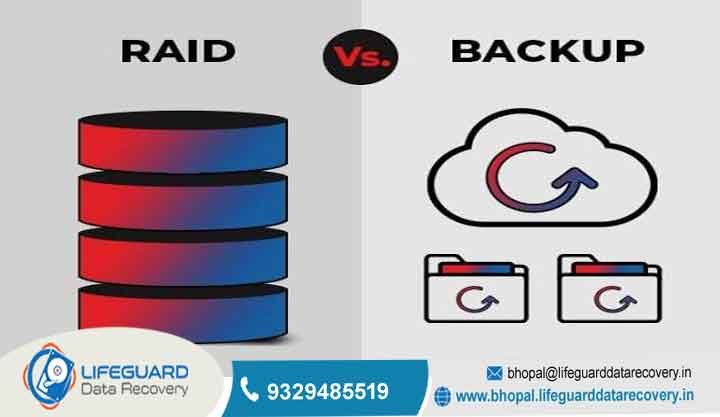
RAID recovery is all about piecing together a virtual version of your failed disk array. However, if two or more drives fail or the controller card dies, that redundancy disappears. Our engineers map out the original architecture of the volume, allowing us to bypass the damaged hardware and reconstruct the data layer by layer, even if some of the physical drives are failing.
RAID (Redundant Array of Independent Disks) is a complex beast. When a RAID controller fails, it loses the “map” that tells it which pieces of data are on which drive. To the server, it looks like a total wipeout.
Our process starts with “imaging.” We create a bit-for-bit clone of every single drive in the array. We work on the clones to ensure the originals remain untouched. Once we have the clones, we use advanced algorithms to analyze the parity bits and calculate the original order of the data. This is effectively digital archeology. This requires deep knowledge of filesystem metadata—the “hidden” files that tell the system how to arrange the data.
Can deleted files be recovered?
Detailed Explanation: We see this happen to businesses all the time someone deletes an important folder, and the panic sets in. The secret is speed. If you turn off the machine and stop writing new data to the drive, we can usually find those file pointers and pull your information back to safety.
Understanding file deletion is crucial for any business owner. When you hit “Delete” and empty your trash bin, the computer does not actually wipe the zeros and ones off the disk. Instead, it updates the File Allocation Table (FAT) or the Master File Table (MFT) to say, “This space is now available for new data.” The original file is still sitting there, waiting in the background.
The danger begins the moment you continue using the computer. If the operating system needs to save a new update, a temporary document, or a log file, it may choose that “available” space to save the new data. This is why we tell our clients: if you lose a file, kill the power immediately. Do not browse the web, do not check email, and definitely do not install “recovery software” from the internet, as the installation process itself will write over the very data you are trying to save.
How much does recovery cost?
We take a close look at your device during our free diagnosis, so you know exactly what the job will cost before you ever commit to a payment.
Detailed Explanation: We believe in being fair, which is why we stick to a “No Data, No Charge” policy. Whether we are performing a complex clean-room repair or a simpler logical file reconstruction, you only pay if we succeed in getting your data back.
When we provide a quote, it is based on the level of engineering required. In mechanical cases, we have to source matching spare parts often from drives manufactured in the exact same factory on the same date—to perform a “donor” transplant.
We pride ourselves on transparency. You will never see surprise fees. We define the scope of the project during the diagnostic phase, and if we cannot recover the files you need, you do not pay the recovery fee. This aligns our interests perfectly with yours: we only succeed when you get your business data back in your hands.
How long does recovery take?
In most cases, we can get your data back within 24 to 72 hours. It really comes down to how much data we are dealing with and how severe the physical damage is. If you are in a real bind, we also offer 24/7 emergency support to get you back to business faster.
We understand that every hour of downtime costs your Abu Dhabi business money. We prioritize these critical server and NAS recovery cases to make sure you spend as little time waiting as possible.
For instance, if we have to image a 10TB drive that has intermittent read errors, the imaging process itself can take 48 hours because the drive constantly pauses and retries reading the damaged sectors. We cannot rush physics, but we can optimize our processes. We have a dedicated triage team that works in shifts, allowing us to keep the diagnostic and imaging machines running 24/7. When you choose our emergency service, we assign a dedicated engineer to your case, ensuring that your project is at the front of our queue at every stage of the process.
Can SSD data be recovered?
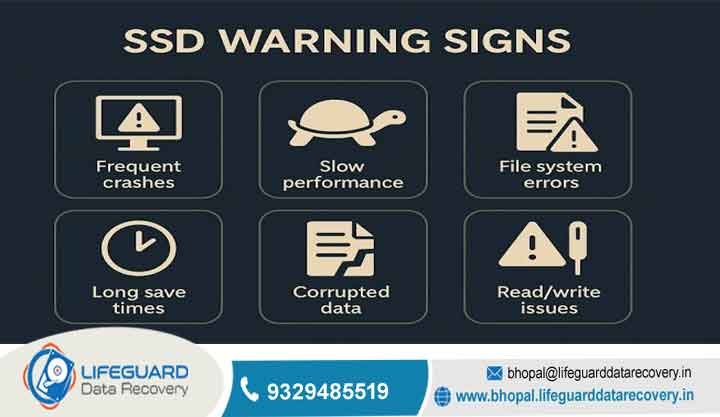
Yes, we can recover data from SSDs, though it is much more complex than working with older hard drives. Because SSDs store data using flash memory chips, we often have to bypass the drive controller entirely and read the memory chips directly to find your files.
Can RAID systems be recovered?
Absolutely. Even if a RAID system has suffered a massive failure, it is usually possible to get the data back.
What should I do after data loss?
Keep it simple: turn off the device, keep your hands off the keyboard, and call us at +971 50 127 6793. Once you have reached out, we will guide you on how to safely bring your drive to our lab for a free check-up.
Who offers professional recovery in UAE?
Lifeguard Data Recovery is the leading name for professional data recovery across Abu Dhabi and the wider UAE. Whether you are dealing with a dead hard drive, a server crash, or a need for digital forensics, we have the team and the technology to handle it.
Our Recovery Services
Lifeguard Data Recovery offers a full range of solutions built for the way UAE businesses work:
-
Hard Drive Recovery: Fixing mechanical and logical issues on standard disks.
-
SSD Recovery: Chip-level data extraction for modern flash drives.
-
RAID Recovery: Rebuilding complex server arrays when systems fail.
-
Server Recovery: Rescuing data from multi-drive enterprise volumes.
-
NAS Recovery: Restoring network storage that has gone offline.
-
CCTV Recovery: Pulling security footage when the recording system fails.
-
Digital Forensics: Careful data investigation for legal or internal business needs.
-
Ransomware Recovery: Helping businesses fight back against data-locking attacks.
Why Businesses Choose Lifeguard Data Recovery
We know you need results and peace of mind, which is why we offer:
-
24/7 Emergency Support when you cannot afford to wait.
-
Free Diagnosis so you understand the problem before paying.
-
No Data, No Charge policy to keep things risk-free.
-
Secure Recovery Lab that meets high privacy standards.
-
Certified Specialists who deal with high-pressure situations daily.
-
Confidential Recovery because we know your business data is private.
2: Case Study
A large retail chain in Abu Dhabi hit a major snag when their RAID 5 sales server failed, causing their entire point-of-sale system to go dark. Cause: A sudden power surge blew the controller, and two of the drives happened to fail at the same time. Recovery Steps: Our engineers went into the lab to physically repair the drives and then virtually reconstructed the RAID configuration from scratch. Outcome: We successfully retrieved 100% of their sales database. Business Impact: They were back up and running within 48 hours, avoiding major revenue losses and keeping their customers happy.
FAQ Section
-
What is the best data recovery company in Abu Dhabi? Lifeguard Data Recovery is the top choice for businesses here because we have the equipment, the expertise, and a local team that understands the importance of your data.
-
How much does hard drive recovery cost? It varies depending on the damage, but we start with a free diagnosis to give you a clear, no-surprises quote.
-
Can I recover deleted files from an SSD? Yes, but you have to act fast. Do not write any new files to the drive and bring it to us so we can get to work right away.
-
How long does RAID recovery take? Most standard cases take 48 to 72 hours, but we do offer 24-hour emergency options for urgent needs.
-
Is data recovery possible after formatting? Yes, formatting usually leaves the raw files intact, which means we can often rebuild the partition table and get your files back.
-
What is the difference between data recovery and repair? Repair aims to make the hardware work again; recovery focuses on getting your files off a damaged device. Our priority is your data.
-
Is my data kept confidential? Absolutely. We follow strict privacy protocols so your business information stays between us.
-
Do you provide services in Dubai? Yes, we cover the whole UAE, including Dubai, Sharjah, Ajman, and every other emirate.
-
Can you recover data from liquid-damaged drives? Yes, we have specialized equipment to clean and restore drives that have been exposed to water or other liquids.
-
What is a digital forensic recovery? It is a detailed process of pulling data while keeping a documented “chain of custody,” which is often needed for legal or insurance purposes.
-
What causes hard drive failure? It happens for many reasons: physical drops, power surges, normal wear and tear, or even software glitches.
-
Should I run a CHKDSK on a failing drive? No, please do not. Running built-in repair tools on a damaged drive can often make the problem much worse and lead to permanent data loss.
-
How do I know if my data is gone forever? Don’t assume it is gone. Most data can be saved unless it has been physically ground down or completely overwritten. Get a professional to check it first.
-
Can you recover data from encrypted drives? Yes, we can help with encrypted volumes, provided you have the passwords or keys needed to unlock them.
-
Do you handle enterprise servers? Yes, we support all major server brands and can handle even the most complicated RAID setups.
Final CTA
If you are dealing with data loss, do not wait for the situation to get worse. Get your business back on track today.
Call +971 50 127 6793
Email info@lifeguarddatarecovery.com