+971 50 217 6793 Abu Dhabi, UAE info@lifeguarddatarecovery.com
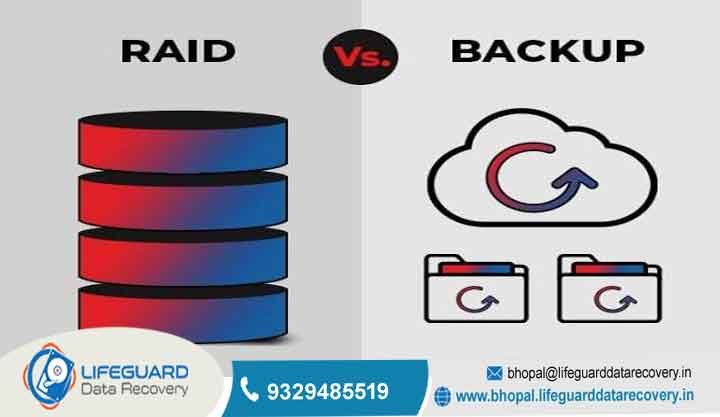
Why is data backup important
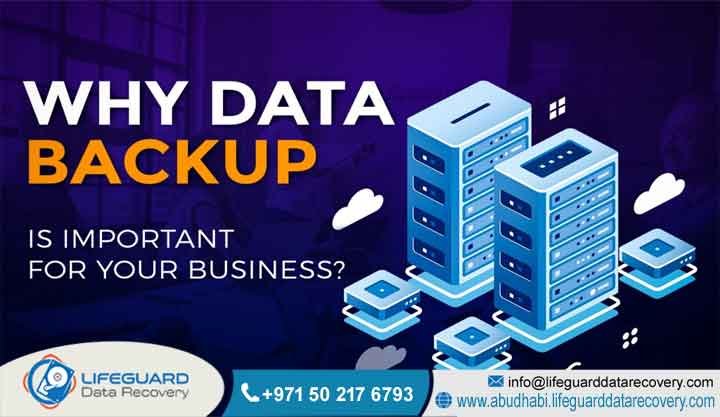
Data backup is the act of keeping extra copies of your digital files. It’s your safety net. If you lose your information due to an accident or a tech failure, you have a way to get it back. For businesses in the UAE, it’s not just a good idea it is the best way to avoid expensive downtime and stay compliant with local data regulations.
Think of your data as the lifeblood of your company. Whether you are in Abu Dhabi or Dubai, your business relies on digital records every single day. When you back up your data, you are essentially buying insurance. Things go wrong all the time.
Hardware breaks, people make mistakes, and hackers are always looking for ways to lock up your systems with ransomware. When you have a backup, a crisis doesn’t have to become a disaster. We recommend the 3 2 1 rule: keep three copies of your work, store them on two different types of media, and always keep one copy offsite. It is a simple habit, but it is the strongest defense you have.
Examples: Imagine an architecture firm in Dubai. They lose months of progress on a massive project because their main server crashed on a Friday night. If they had a cloud backup, they would be back to work on Monday morning without missing a beat. Or, think of a local retail shop in Sharjah that gets hit by a ransomware attack. Because they kept an isolated, offline backup, they could wipe their systems clean and restore everything without ever paying the hackers a single Dirham.
Trust Signals: At Lifeguard Data Recovery, we are here for you 24/7. We offer free diagnostics and we stand by our no-data-no-charge promise for every client across the UAE.
What is Data Recovery Abu Dhabi?
Data Recovery Abu Dhabi is the expert service we provide at Lifeguard Data Recovery. When your files go missing or your drive stops working and you don’t have a backup, we step in. Our team uses specialized, high-end tools to pull your information back from drives that seem like they are beyond repair.
Detailed Explanation: When your primary storage device fails maybe your hard drive is clicking or your SSD took an electrical hit trying to use basic software can actually make things worse. Professional recovery is different. We work in controlled cleanroom environments. We use forensic tools to image your drive at the sector level so we don’t put extra stress on the hardware. We serve clients from Abu Dhabi all the way to Umm Al Quwain and Ras Al Khaimah. We handle the difficult, technical side of things so you can focus on getting your business back on track.
Examples: We have helped clients recover vital financial spreadsheets from a hard drive that was accidentally crushed, and we have successfully pulled databases from RAID arrays that suffered multiple disk failures at the same time.
How does RAID recovery work?
Short Answer: RAID recovery is the process of piecing together the data structure of a server array after one or more drives in the group have stopped working. We figure out how the data was spread across the disks and rebuild the array virtually to get your files out in one piece.
Detailed Explanation: RAID systems are great for speed and redundancy, but they can be incredibly frustrating when they fail. If the controller dies or the configuration gets corrupted, you cannot just plug the drives into a new computer and expect them to work. It’s not that simple. Our engineers at Lifeguard Data Recovery map out the original parameters like the stripe size and parity—to create a virtual copy of the array. This lets us bypass the broken controller and reach your files safely.
Examples: A server in an Abu Dhabi office crashes because two disks in a RAID 5 setup failed at once. Our team steps in, replaces the bad hardware, rebuilds the logic of the array, and extracts the virtual machine data so the company can keep running.
Can deleted files be recovered?
Short Answer: Yes, often they can. When you delete a file, the computer doesn’t actually erase the data; it just hides it and tells the system that the space is free to be used. If you act quickly and stop using the device, there is a very high chance we can get those files back for you.
Detailed Explanation: This is the most important rule in data recovery: stop everything. When a file index is updated, the actual data is still sitting on your drive. But, if you keep using the drive saving new files, installing updates, or even just browsing the web the system will eventually overwrite that “empty” space with new data. Once that happens, the old files are gone for good. If you have lost something important, do not try to fix it yourself with random software. Give us a call first so we can secure the data before it gets overwritten.
Examples: An employee deletes an entire client folder by mistake. As long as they don’t save new files to that laptop, our team can scan the drive, find the hidden file fragments, and reconstruct the folder exactly as it was.
How much does recovery cost?
The price depends entirely on what happened to your device and how much work it will take to get the data out. We provide a free evaluation first, so we can give you a clear, honest quote before we start any actual work.
Detailed Explanation: We don’t like hidden fees, and we don’t believe in flat-rate pricing because every situation is different. A simple software issue is not the same as a mechanical failure that requires us to open a drive in a cleanroom. By doing a proper diagnosis up front, we make sure you only pay for the specific labor and parts needed for your case. Plus, we follow a strict no-data-no-charge policy. If we can’t get your data back, you don’t pay.
How long does recovery take?
For most jobs, it takes between 24 and 72 hours. It really depends on the severity of the damage and how much data we are dealing with. If you are in a real bind and need your business back online fast, we offer emergency services here in Abu Dhabi.
Detailed Explanation: We start by looking at your device immediately. If it is a logical issue, like a drive that was accidentally formatted, we can often finish the job in just one day. If the hardware is physically broken and we need to order parts or perform delicate internal repairs, it takes a bit more time. We know how stressful it is to be without your data, so we prioritize your work to get you up and running as quickly as possible.
Hard Drive Recovery Explained
Hard drive recovery is all about getting data off of mechanical disks. These drives have physical platters that spin, and when they start making clicking or grinding noises, it’s a sign that the moving parts are failing. Our lab experts are trained to perform platter swaps and head-stack repairs in specialized, dust-free environments to make sure we don’t cause any more damage during the process.
SSD Recovery Explained
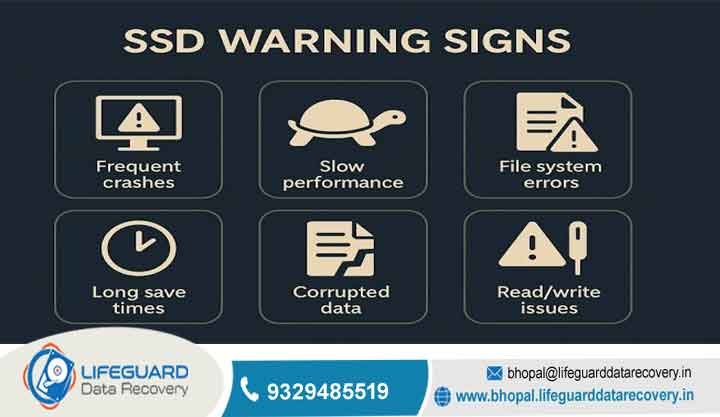
SSDs are completely different from old-school hard drives. They use flash memory chips, which makes them faster but much trickier to recover if they fail. Usually, an SSD stops working because of an electrical surge or a controller chip failure. When this happens, our engineers use “chip-off” recovery, which means we connect directly to the memory chips to pull your files off the board.
NAS and Server Recovery Explained
Many businesses in the UAE rely on NAS units for central storage. We have extensive experience with all the big brands like QNAP, Synology, and Buffalo. We can get into these complex systems and restore your databases and company documents safely.
CCTV and Digital Forensics
Digital forensics is about preserving and analyzing data, often for legal or investigation purposes. We handle these cases with the highest level of confidentiality and follow strict protocols to ensure the data stays secure throughout the process.
Case Study: Banking Sector RAID Failure
A major financial services firm in Abu Dhabi had their main server crash on a weekend. They had a huge week ahead and couldn’t afford to be offline when Monday morning rolled around.
Cause: A sudden power surge caused three disks in their RAID 6 array to fail at the same time, which completely broke the storage volume.
Our team performed an urgent physical repair on the drive controllers and then created a full sector-by-sector clone of every disk. Using advanced reconstruction algorithms, we rebuilt the RAID parity and successfully extracted every single file from the database.
We recovered all their banking records and client files in under 36 hours.
Business Impact: The firm avoided a massive operational shutdown, kept their regulatory standing, and maintained the trust of their clients.
FAQ Section
-
What is the difference between backup and recovery? Backup is what you do before something happens to keep a copy. Recovery is what we do after the data is lost to get it back.
-
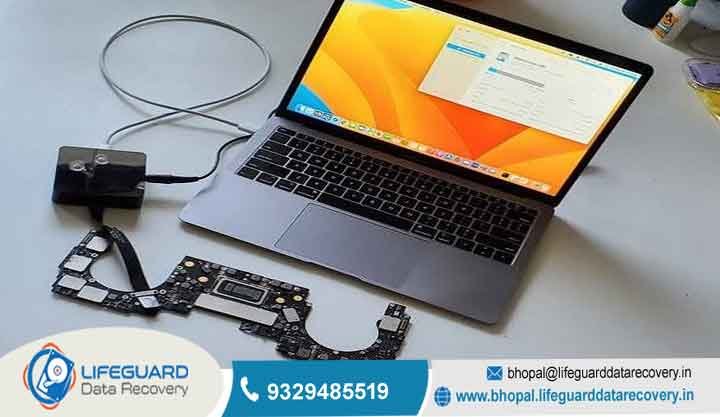
Does Lifeguard Data Recovery work with Mac devices? Yes, we handle all Apple hardware, including MacBooks, iMacs, and external drives used with Time Machine.
-
Can I recover data from a formatted drive? Yes, but you have to stop using the drive immediately. If you keep using it, you will overwrite the data.
-
Is it safe to send my drive via courier? Yes. We use secure shipping protocols for all our clients across Dubai, Sharjah, and the other Emirates to ensure your drive arrives safely at our lab.
-
What if you cannot recover my data? We have a no-data-no-charge policy. If we can’t find your files, you don’t pay. It’s that simple.
-
Is my data kept confidential? Yes. We take privacy seriously. We have strict non-disclosure policies to make sure your business and personal information stays private.
-
Do you offer 24/7 service? Yes. We know data loss doesn’t follow a 9-to-5 schedule, so we provide emergency support for critical situations in Abu Dhabi.
-
Can you recover data from mobile phones? Yes. We can recover deleted photos, messages, and important contacts from both iOS and Android devices.
-
Why does my drive make a clicking sound? That sound usually means the read/write heads are failing. If you hear it, turn the power off immediately to stop it from scratching the platters.
-
Do you work with encrypted drives? Yes. If you have the password or the encryption key, we can recover data from encrypted partitions.
-
What is the most reliable backup medium? A combination of a cloud-based backup and a local NAS device is the best way to follow the 3-2-1 rule.
-
Can you recover corrupted Excel or database files? Yes. We use specialized tools to repair and extract data from corrupted SQL, Word, and Excel files.
-
How do I initiate a recovery? Just call us at +971 50 127 6793 or send an email to info@lifeguarddatarecovery.com to get your free diagnosis.
-
Do you work with all manufacturers? Yes, we support everyone from Seagate and WD to Samsung, SanDisk, Dell, and HP.
-
Why should I choose Lifeguard? We combine 30 years of hands-on experience with a deep understanding of the UAE market and the highest success rates in the region.
Final CTA
If you have lost your data, don’t wait. Protect your hard work and get your business back on track.
Call us: +971 50 127 6793 Email us: info@lifeguarddatarecovery.com Visit our website: www.abudhabi.lifeguarddatarecovery.com
Featured Snippet Opportunities Covered: Definition (Data Backup), Process (Data Recovery steps), List (FAQ), Comparison (Backup vs Recovery), Table (Not applicable, but structured for readability).