+971 50 217 6793 Abu Dhabi, UAE info@lifeguarddatarecovery.com
What is the best data recovery company in Abu Dhabi
Data has officially transcended its role as an operational byproduct to become the definitive lifeblood of the modern global economy. For enterprises, financial institutions, healthcare providers, and government agencies operating within the United Arab Emirates, data integrity is directly tied to regulatory compliance, brand reputation, and financial survival.
When a critical storage array fails, an employee accidentally deletes a primary database, or a ransomware attack encrypts a network, the consequences are immediate and catastrophic. This comprehensive guide serves as an exhaustive blueprint for understanding the mechanics of data loss,
the technical architecture of recovery methodologies specifically targeting complex environments like RAID, SSD, and Network-Attached Storage (NAS) and how to select an enterprise-grade data recovery partner in Abu Dhabi and the wider UAE.
The Anatomy of Data Loss: Mechanisms, Vectors, and Technical Classifications
To effectively address data loss, one must first understand that storage media failure is not a singular event, but a spectrum of physical and logical anomalies. Data recovery professionals divide these failures into two primary domains: Logical Contamination/Corruption and Physical/Mechanical Degradation.
Logical Data Loss
Logical failures occur when the physical media remains entirely functional, but the organization of the data bits within the file system becomes corrupted, altered, or inaccessible.
-
File System Corruption: Operating systems rely on file allocation maps (such as NTFS, exFAT, EXT4, or APFS) to track where pieces of a file reside on a drive. If a write cycle is interrupted by a sudden power loss, these maps can become desynchronized, leading to “RAW” file systems or unreadable volumes.
-
Accidental Deletion and Formatting: When a user deletes a file or formats a partition, the operating system rarely overwrites the actual raw data instantly. Instead, it marks those specific sectors as “available for writing” and alters the file index markers. The data remains entirely intact until new write commands fill those specific sectors.
-
Cryptographic Ransomware: Modern ransomware attacks do not just steal data; they execute high-level cryptographic algorithms (like AES-256 or RSA-2048) on live data blocks, rendering the files completely unreadable without the corresponding private decryption key. Recovery in these instances requires deep forensic file carving or specialized backup extraction.
Physical Data Loss
Physical failures involve a breakdown of the structural, mechanical, or electrical components of the storage media.
-
Head Crashes (HDDs): Mechanical hard drives rely on read/write head sliders hovering mere nanometers above magnetic platters spinning at thousands of RPMs. A physical impact, dropped drive, or sudden power oscillation can cause these heads to physically slam into the platters, gouging the magnetic substrate and causing immediate sector destruction.
-
Actuator and Motor Seizures: Over time, or due to regional environmental factors like excessive humidity and heat, the fluid dynamic bearings or spindle motors driving hard drive platters can seize completely. This results in the classic “buzzing” or “clicking” sounds of a drive unable to initialize.
-
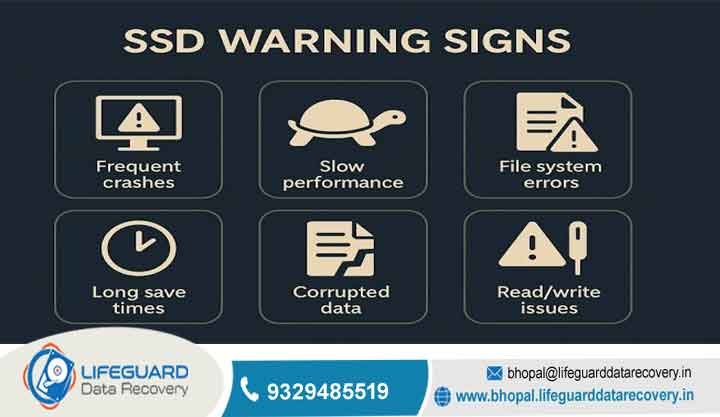
Controller Failure and NAND Degradation (SSDs): Solid-State Drives have no moving parts, but they suffer from strict physical limitations. NAND flash cells have finite write cycles (Program/Erase cycles). Furthermore, the complex microcontrollers managing these drives can suffer electrical shorts, burning out the firmware stored on the controller chip and locking the entire drive into a permanent “brick” state.
Advanced RAID Architecture and Failure Modes
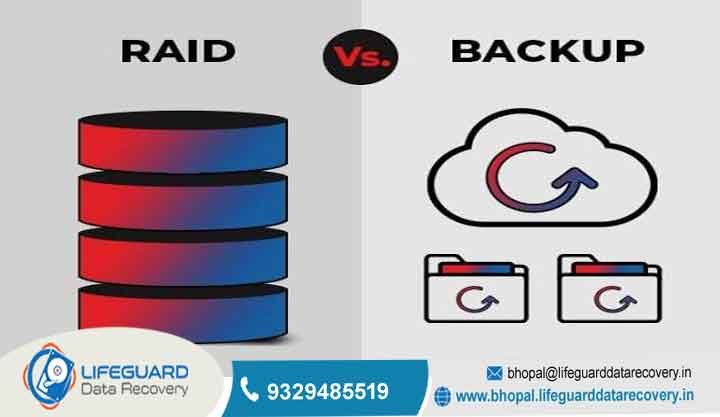
Redundant Arrays of Independent Disks (RAID) are engineered to provide fault tolerance and performance enhancement across enterprise environments. However, RAID is not a backup solution; it is a high-availability infrastructure. When multiple components fail simultaneously, rebuilding the data requires deep mathematical reconstruction.
Detailed Engineering Analysis of Common RAID Levels
RAID 0 (Striping)
Data is split evenly across two or more disks without parity or mirroring. It offers exceptional read/write speeds but zero fault tolerance. If a single drive in a 10-drive RAID 0 array encounters a physical failure, the entire volume is lost. Recovery requires physically repairing the failed drive to 100% functionality before the stripe set can be reassembled line-by-line using hexadecimal editors.
RAID 1 (Mirroring)
Data is written identically to two or more drives. While highly redundant, it is inefficient from a capacity perspective. If one drive fails, the system continues running on the survivor. Data recovery is only required if both drives fail due to a shared electrical surge, or if a logical corruption event is simultaneously mirrored across both disks.
RAID 5 (Block-Level Striping with Distributed Parity)
The most common enterprise architecture, requiring a minimum of three drives. Data blocks and parity bits are distributed evenly across all disks. Parity calculations are handled via the Logical XOR (Exclusive OR) operation.
-
The Critical Failure Multiplier: RAID 5 can withstand exactly one drive failure. When a drive drops out of the array, the system enters a “degraded mode,” forcing the remaining drives to work exponentially harder to calculate missing blocks on the fly. Because all drives in an enterprise server are typically from the same production batch and have endured identical write wear, the immense stress of running in degraded mode—or attempting an automatic rebuild with a hot spare—frequently triggers a second drive failure. Once two drives fail in a RAID 5, the logical volume crashes completely.
RAID 6 (Block-Level Striping with Dual Distributed Parity)
RAID 6 expands upon RAID 5 by utilizing two distinct parity schemes (often combining standard XOR parity with complex Reed-Solomon error correction codes). This allows the array to survive the concurrent loss of two drives. Recovery from a crashed RAID 6 occurs when three or more drives fail due to severe physical events like overheating, power surges, or backplane malfunctions.
Nested RAID (RAID 10, RAID 50, RAID 60)
These configurations combine mirroring or parity with striping to achieve both massive scale and heightened performance. For instance, RAID 10 stripes data across pairs of mirrored drives. If both members of a single mirrored pair fail, the entire array collapses. Reassembling a collapsed RAID 10 array requires mapping the exact configuration parameters, including stripe block size (typically 64KB to 512KB), drive sequencing, and offset values.
The Mechanics of Professional RAID Reconstruction
When a collapsed RAID array arrives at a data recovery laboratory, engineers do not simply plug the drives into a server and try to boot them up. Doing so can cause immediate, irreversible overwriting or physical destruction. The scientific protocol involves:
-
Bit-Perfect Isolation Clones: Every single drive in the array is detached and connected to a hardware imager (like a DeepSpar Disk Imager). Sector-by-sector, bit-for-bit raw images are created on specialized laboratory storage arrays. The original drives are then put safely back into protective shielding.
-
Hexadecimal Matrix Mapping: Engineers examine the raw binary dumps of the images to locate file system structures, partition headers, and parity signatures.
-
Virtual Controller Emulation: Using specialized software arrays, the engineers manually input the parameters discovered during mapping: drive order, block size, parity delay, and rotation patterns (e.g., Left Asynchronous, Right Synchronous). The software then emulates the physical RAID controller entirely in virtual memory.
-
Logical Extraction: Once the virtual rebuild is successful, the file system structure is parsed, verified for integrity, and exported to a secure target delivery drive.
Solid-State Drives (SSD) vs. Hard Disk Drives (HDD): The Technical Recovery Divergence
The engineering methodologies required to extract data from modern Solid-State Drives are drastically different from those used for traditional mechanical Hard Disk Drives. Many IT professionals erroneously believe that because SSDs have no moving parts, they are easier to recover. In reality, SSD recovery is exponentially more complex.
| Technical Metric | Hard Disk Drive (HDD) | Solid-State Drive (SSD) |
| Storage Medium | Ferromagnetic coated aluminum/glass platters | NAND Flash microchips (SLC, MLC, TLC, or QLC) |
| Primary Failure Vector | Mechanical wear, head crashes, motor seizure | Controller burnout, firmware corruption, bad sectors |
| Data Architecture | Linear tracks and sectors mapped via LBA | Highly fragmented blocks managed via FTL |
| Background Destruction | Static until overwritten by user action | Active background cleaning via TRIM command |
| Cleanroom Dependency | Mandatory for physical platter/head access | Rarely required; requires microscopic microsoldering |
The HDD Cleanroom Recovery Paradigm
When an HDD exhibits physical symptoms—such as rhythmic clicking, grinding, or a total failure to spin—it must be opened exclusively within an ISO 5 Class 100 Cleanroom. The air inside this environment is constantly scrubbed by High-Efficiency Particulate Air (HEPA) filters to ensure that there are fewer than 100 particles of size 0.5 microns or larger per cubic foot.
For context, a single human hair or speck of dust is a massive mountain relative to the flight height of an HDD head slider. Opening a drive in a standard office environment allows dust to settle on the platters, which instantly destroys data when the drive spins up.
Inside the cleanroom, engineers perform precision surgical operations:
-
Head-Stack Replacement: Sourcing an identical donor drive (matching the model, manufacture date, country of origin, and pre-amp chip revision) and extracting its functional head assembly to replace the damaged heads using specialized head combs.
-
Platter Transplants: If the spindle motor has seized, the delicate magnetic platters must be carefully unbolted and transferred into a functional chassis using specialized alignment jigs to maintain absolute track synchronization.
The SSD Chip-Off and FTL Reassembly Protocol
SSDs do not write data linearly. To maximize the lifespan of NAND cells, an internal layer within the SSD firmware called the Flash Translation Layer (FTL) constantly shuffles data blocks around. This process utilizes advanced wear-leveling algorithms, block striping, and hardware-level encryption. When an SSD controller burns out, the data left on the NAND chips is completely scrambled and fragmented.
Furthermore, almost all modern SSD operating systems utilize the TRIM command. When a file is deleted on an SSD, TRIM tells the controller that those sectors are no longer needed. The controller then proactively wipes those cells to maintain write performance for future tasks. If TRIM has fully executed, data recovery is mathematically impossible.
If the drive is dead but TRIM has not wiped the cells, engineers perform a Chip-Off Recovery:
-
De-soldering: The NAND flash chips are carefully desoldered from the printed circuit board (PCB) using specialized infrared reworking stations.
-
Raw NAND Reading: Each individual chip is placed into a physical logic reader (like a PC-3000 Flash programmer) to dump the raw binary data.
-
Algorithmic De-scrambling: Engineers must manually reverse-engineer the specific FTL algorithm used by that exact controller model to recombine, decrypt, and de-stripe the raw data into a cohesive file structure.
4. The Data Recovery Lifecycle: From Ingestion to Extraction
A reputable, enterprise-grade data recovery service follows a rigorous, scientific lifecycle designed to maximize recovery probability while guaranteeing total data confidentiality.
Phase 1: Secure Media Ingestion & Chain of Custody
Upon arrival at the facility, the device is cataloged with a unique tracking ID. Barcodes are applied to track the media through every sector of the laboratory, ensuring it is never misplaced or exposed to unauthorized personnel. This meticulous chain of custody is vital for corporate compliance and potential legal proceedings.
Phase 2: Non-Invasive Diagnostics
Engineers determine the exact nature of the failure without modifying the data storage layer. Hard drives are checked for electrical continuity on the PCB, inspected under high-power microscopes for structural deformations, and analyzed via specialized diagnostic firmware benches to see if they can safely communicate with basic system commands.
Phase 3: Hardware and Firmware Stabilization
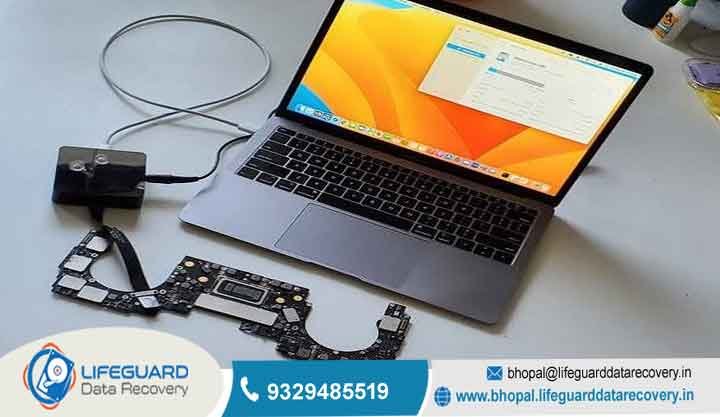
If a physical failure is identified, the device is transferred to the appropriate cleanroom or microsoldering station. Components are replaced, and firmware modules (such as the drive’s internal microcode system area) are patched to bypass error-state loops.
Phase 4: Bit-Perfect Forensic Imaging
Once the drive is temporarily stable, it is connected to a hardware-level data imager. The goal is to extract a 100% clone of the raw data bits as quickly as possible, bypassing bad sectors and adjusting read voltages dynamically to deal with degrading media. No data recovery operations are ever conducted on the original media itself; they are strictly performed on the clone.
Phase 5: Logical Analysis and Parsing
Using the forensic clone, engineers employ deep file carving, partition rebuilding, and directory reconstruction tools to translate raw hexadecimal data back into recognizable folder structures, databases, and file extensions.
Phase 6: Integrity Verification and Secure Delivery
The recovered data undergoes an automated and manual integrity check. Clients are typically provided with a complete, searchable file list showing the condition of the files. Once verified, the data is encrypted and transferred to a secure, brand-new external drive or enterprise storage array for delivery.
Regional Focus: Selecting a Data Recovery Partner in Abu Dhabi and the UAE
The United Arab Emirates—particularly the commercial hubs of Abu Dhabi and Dubai—boasts one of the most technologically advanced corporate landscapes globally. With this advancement comes stringent regulatory mandates, such as the UAE Federal Decree-Law No. 45 of 2021 on Personal Data Protection (PDPL), alongside strict compliance laws within the financial (ADGM) and healthcare (DoH) sectors.
Crucial Criteria for Vetting a Local Data Recovery Provider
Avoid “Mail-In/Outsourced” Middlemen
Many local IT shops in the region advertise data recovery services but do not possess the required multi-million dollar laboratory infrastructure. When you drop off a drive, they securely package it and ship it to international labs in Europe or Asia. This introduces immense risk:
-
Transit Damage: Delicate, failing read/write heads can suffer total failure due to the vibrations of international shipping.
-
Data Security Breach: Sending sensitive corporate, governmental, or personal data across borders without explicit authorization violates local UAE data sovereignty laws.
-
Always ensure your chosen provider has a physical, verifiable laboratory right here in the UAE.
Verify a Strict “No Data, No Fee” Commitment
Reputable data recovery engineering firms operate with total transparency. If a drive’s platters are entirely scored and data is physically gone, the client should not be penalized for the attempt. A firm that stands by its technical capability will offer a true No Data, No Fee policy, guaranteeing that you only pay if your critical target data is successfully extracted.
Check for 24/7 Enterprise Emergency Response
Data disasters do not wait for business hours. If a primary transactional database for an e-commerce platform or financial institution fails on a Friday night, waiting until Monday morning can result in millions of dirhams in losses. Ensure your provider offers dedicated 24/7/365 emergency services, with engineers ready to work round-the-clock inside local labs to restore operations.
Lifeguard Data Recovery: Serving the UAE Ecosystem
For enterprises, government entities, and individuals across Abu Dhabi, Dubai, Sharjah, Ajman, Ras Al Khaimah, Fujairah, and Umm Al Quwain, Lifeguard Data Recovery represents the benchmark for secure, local data extraction. Combining state-of-the-art ISO cleanrooms, advanced PC-3000 diagnostic suites, and certified experts fluent in enterprise RAID and SSD architectures, Lifeguard addresses the most severe data loss events with localized expertise and uncompromising security protocols.
Real-World Case Studies: Emergency Data Salvage Operations
Case Study 1: Multi-Drive Server Failure at an Abu Dhabi Financial Institution
-
The Scenario: A financial services firm operating in the Abu Dhabi Global Market (ADGM) experienced a double-drive drop in their primary production NAS unit running a 6-disk RAID 5 configuration. An automated rebuild had been initiated by an unvetted internal IT administrator, which caused the entire volume to unmount and become raw.
-
The Diagnosis: Investigation inside Lifeguard’s local facility revealed that Drive 3 suffered a severe magnetic head crash, while Drive 5 had suffered firmware module corruption due to a localized power oscillation on the server rack backplane. The premature automated rebuild had further scrambled the parity blocks across the remaining healthy drives.
-
The Intervention: Lifeguard engineers isolated all six drives. Drive 3 was taken into the cleanroom, where a donor head assembly was transplanted. Drive 5’s firmware microcode was safely stabilized via specialized safe-mode commands. Sector-by-sector clones were successfully obtained for 100% of the disks. Engineers manually calculated the RAID offset parameters, bypassed the corrupted data blocks injected by the aborted rebuild, and manually rebuilt the file tree virtualized in system memory.
-
The Resolution: 100% of the client’s critical financial ledgers and SQL databases were safely extracted and delivered within 36 hours under a strict NDA, ensuring complete compliance with local financial data protection acts.
Case Study 2: Ransomware Decryption & Carving for an Abu Dhabi Healthcare Provider
-
The Scenario: A medical clinic in Abu Dhabi was targeted by a sophisticated variant of Phobos ransomware. Their primary backup drives were connected to the network during the breach, resulting in the simultaneous encryption of both active and archive files (.medical_records_extension).
-
The Diagnosis: The active operating system files were completely encrypted. However, the medical database software routinely created temporary internal swap files and flat cache files during normal operations before the attack occurred.
-
The Intervention: Because standard decryption keys were unavailable, Lifeguard’s digital forensics team pivoted to a deep file-carving operation. Working on forensic images of the server storage array, engineers ignored the corrupted file tables entirely. They coded custom regular-expression scripts to parse the raw hex blocks of the flash array, looking for distinct file headers and footers unique to the clinic’s proprietary patient management database.
-
The Resolution: By extracting these unindexed, raw historical fragments from unallocated space, engineers reassembled over 94% of the historic patient database records, saving the clinic from total operational paralysis and costly regulatory fines.
Proactive Data Loss Prevention and Incident Response
While professional data recovery services provide an essential safety net, true corporate resilience relies on defensive data management architectures.
The Immutable 3-2-1 Backup Strategy
To guarantee data survival against physical disasters, user errors, and ransomware, every organization must deploy the 3-2-1 strategy:
-
3 Copies of Data: Maintain one primary operational copy and a minimum of two distinct backup copies.
-
2 Different Media Types: Store backups on different physical media (e.g., one on an internal high-speed NAS array, and one on high-density LTO tape or a local SAN).
-
1 Off-site Location: Keep at least one backup entirely isolated from the primary corporate network, ideally in an encrypted cloud tier or a secure physical off-site vault.
What to Do Immediately When Data Loss is Suspected
If a server, laptop, or external drive begins making unusual noises, throws unexpected errors, or drops from the operating system, your immediate actions dictate whether the data can ever be saved.
-
Cut Power Instantly: Do not perform a standard software shutdown, which forces write cycles to log files. Pull the physical power plug. If a drive is experiencing a mechanical head crash, every second it remains powered on causes the broken head to scrape the platters, turning your data into unrecoverable dust.
-
Do Not Run Commercial Utilities: Do not download off-the-shelf data recovery software onto the affected drive. Installing software writes new files to the media, which will likely overwrite the very files you are trying to rescue. Commercial software is also incapable of fixing physical mechanical damage and will instead accelerate a drive’s complete demise.
-
Do Not Try the “Freezer Trick”: An internet myth claims that freezing a broken hard drive can fix mechanical faults. In reality, introducing a drive to cold temperatures causes moisture to condense directly onto the internal platters once it is brought back to room temperature, instantly destroying the magnetic storage surface.
-
Consult Certified Professionals: Package the device in anti-static shielding, surround it with extensive shock-absorbent padding, and deliver it immediately to a dedicated, certified data recovery laboratory.
Deep-Dive Technical FAQ
Can I recover data from an SSD that is not recognized by the BIOS?
Yes. When an SSD is completely unrecognized by a computer’s BIOS or UEFI, it usually indicates that the drive’s controller chip has entered a “safe mode” or panic state due to corrupted internal firmware modules. Data recovery engineers use hardware tools like the PC-3000 to hook directly into the drive’s factory test points (JTAG interface), bypass the damaged controller firmware, load a clean microcode overlay into the drive’s RAM buffer, and safely read the raw NAND chips directly.
What is the success rate for water-damaged or fire-damaged devices?
Success rates are surprisingly high, provided the internal storage components remain structurally intact:
-
Water Damage: The main threat isn’t the water itself, but corrosion and mineral deposition once it dries. If a device gets wet, do not dry it out and never apply power. Keep it damp in a sealed bag and bring it to a lab. Engineers will submerge the components in specialized chemical baths inside ultrasonic cleaners to strip away minerals and oxides before safely imaging the chips.
-
Fire Damage: As long as the internal platters of an HDD or the NAND silicon dies of an SSD have not melted or reached their Curie point (the temperature where magnetic properties are lost), the data remains intact. Engineers carefully extract the components from the charred housing and transplant them into brand-new donor shells.
Why do simple software tools fail on clicking hard drives?
Clicking sounds are physical indicators that the drive’s read/write heads cannot read the disk’s initialization code (System Area) or are physically broken. When heads fail, they lose alignment and sweep back and forth across the platter trying to find a reference point, creating a rhythmic clicking sound. Software recovery utilities run on your operating system and rely entirely on the drive’s ability to communicate normally through the SATA/NVMe link. If the drive cannot physically read itself, software utilities will freeze, crash, or cause further physical damage by forcing the broken heads to continuously scrape the media.
Can data be recovered from a virtual machine (VMware ESXi, Hyper-V)?
Yes. Recovering data from virtualized environments requires a dual-layered approach. First, the underlying physical hardware storage array (usually a massive SAN or RAID group) must be physically sound and reconstructed. Once the physical layers are stable, engineers must parse the host file system (such as VMFS for VMware or NTFS/ReFS for Hyper-V) to locate the virtual disk files (.vmdk or .vhdx). These virtual files are then mounted as raw disk images within the lab, allowing engineers to drill down into the guest operating system’s file structures to extract the required files.
Is data recovery possible for hardware-encrypted drives?
Yes, but with an important caveat: the recovery team can fix the hardware or physical damage to make the sectors readable again, but they cannot bypass the encryption algorithm itself. If a drive is encrypted with BitLocker, FileVault, or custom hardware chips, the raw sectors will appear as random noise. Once the physical drive is stabilized and a bit-perfect image is produced, the client must provide the valid decryption password, recovery key, or certificate to unlock the data structure.
How do I safely ship a damaged hard drive to your Abu Dhabi lab?
Proper packaging is vital to avoid compounding the damage during transit. Wrap the drive in a dedicated static-shielding bag to prevent ESD (Electrostatic Discharge) shocks. Next, wrap the drive tightly in at least 3 to 4 inches of heavy-duty bubble wrap. Place the wrapped drive into a sturdy cardboard box, filling any remaining void space with packing peanuts or crumpled paper so the drive cannot shift. Never use standard letter envelopes or padded mailers, as they offer zero protection against dropping or crushing forces. If you are within the UAE, you can also take advantage of Lifeguard’s secure, climate-controlled courier pickup service.
Final Strategic Takeaway & Contact Protocol
In an era defined by rapid digital transformation, data loss is not an “if” scenario, but a “when” scenario. Organizations operating across Abu Dhabi and the wider UAE must maintain an active relationship with an authorized, locally capable data recovery partner as part of their comprehensive Disaster Recovery and Business Continuity planning.
When disaster strikes, swift action paired with professional engineering preserves your data, protects your reputation, and secures your bottom line.
Executive Contact Channels
For immediate emergency evaluations, 24/7 technical triage, and secure data extraction services across the United Arab Emirates:
-
Emergency Direct Hotline: +971 50 127 6793
-
Corporate Desk Email: info@lifeguarddatarecovery.com
-
Digital Intake Portal: www.abudhabi.lifeguarddatarecovery.com