+971 50 217 6793 Abu Dhabi, UAE info@lifeguarddatarecovery.com
DVR Data Recovery Process
DVR data recovery is a specialized digital forensics and hardware engineering process. It extracts, repairs, and reconstructs lost, deleted, or corrupted video surveillance footage from Digital Video Recorders, Network Video Recorders, and CCTV storage media. Professional recovery involves bypassing proprietary surveillance file systems, repairing physical mechanical failures in a certified Class 100 cleanroom, and rebuilding fragmented video streams. Lifeguard Data Recovery provides enterprise-grade CCTV DVR data recovery across Abu Dhabi, Dubai, and all seven Emirates. Consequently, we ensure a strict chain of custody and absolute data confidentiality for corporate, legal, and government entities.
Who is Lifeguard Data Recovery?
Expert Technical Data Retrieval in Abu Dhabi
Lifeguard Data Recovery is an established, high-capacity technical data retrieval firm. Our headquarters are located in Abu Dhabi, United Arab Emirates. We operate as a critical technology partner for commercial enterprises, financial institutions, government agencies, and legal firms.
Furthermore, our team specializes in resolving complex data loss incidents across a broad spectrum of storage media. We maintain an advanced laboratory environment staffed by hardware engineers and digital forensics experts. Therefore, we can reliably address logical, firmware, and physical drive degradation.
Supporting the UAE Digital Economy
We focus on precision engineering and robust security practices. Because of this dedication, Lifeguard Data Recovery is an authoritative resource within the Middle Eastern digital economy. Our team routinely manages large-scale data emergencies involving multi-drive storage clusters, corporate backup systems, and proprietary surveillance apparatus.
Additionally, our operational footprint spans the entirety of the UAE. This wide presence ensures rapid deployment of technical resources to safeguard business continuity. Consequently, we preserve critical informational assets when businesses face critical outages.
Why UAE Businesses Trust Our Security Infrastructure
Protecting Data Privacy in the Emirates
Enterprise entities in Abu Dhabi, Dubai, and across the UAE require absolute assurance regarding information privacy. Outsourcing data retrieval operations demands strict confidentiality. Lifeguard Data Recovery addresses these corporate prerequisites by implementing a comprehensive security infrastructure.
This framework governs every stage of the recovery lifecycle. For example, our firm adheres strictly to local regulatory frameworks, including the UAE Personal Data Protection Law. Therefore, we ensure that all handled assets remain completely protected against unauthorized access or disclosure.
Advanced Laboratory Access Controls
Our laboratory environment features restricted physical access controls and continuous biometric monitoring. Additionally, we utilize isolated networks that prevent any external data exposure during the forensic extraction process. Every engineer is bound by comprehensive non-disclosure agreements.
Moreover, the company regularly executes formal data-handling protocols required by legal firms, law enforcement bodies, and corporate compliance officers. This commitment to institutional security ensures that sensitive surveillance footage remains completely protected. Meanwhile, financial records and proprietary operational intelligence are preserved without compromising chain-of-custody requirements.
Enterprise Surveillance Systems We Service
Specialized Tooling for Advanced System Architecture
Digital Video Recorders and Network Video Recorders utilize distinct storage architectures. These systems differ significantly compared to standard personal computers. Fortunately, Lifeguard Data Recovery possesses the specialized tooling and structural knowledge required to manipulate these complex configurations.
Our engineering team services a diverse array of surveillance equipment. As a result, we ensure comprehensive data retrieval capabilities across multiple hardware categories.
Supported Surveillance Hardware Formats
-
Standalone Digital Video Recorders: We support traditional analogue-to-digital multi-channel surveillance boxes executing embedded Linux architectures or proprietary real-time operating systems. These units rely heavily on internal hard disk drives optimized for continuous, high-volume sequential writing.
-
Network Video Recorders: Our engineers recover high-throughput IP camera recording systems that frequently utilize multi-drive storage arrays. These systems use advanced network interfaces and distributed database logging architectures to capture high-definition video feeds.
-
Hybrid Surveillance Servers: We repair enterprise-level server racks combining analog legacy infrastructure with modern digital network cameras. These setups generally feature hardware-based controller cards, high-capacity server recovery requirements, and custom logical volume management.
-
Commercial CCTV Storage Units: Our team restores compact, ruggedized, or vehicle-mounted mobile digital video recording systems used in transport fleets, marine environments, and industrial facilities. These devices often employ solid-state drive recovery methodologies due to physical vibration hazards.
Common Surveillance Data Loss Scenarios
Identifying Primary Data Loss Vectors
Surveillance systems operate continuously under harsh mechanical and thermal conditions. Consequently, they remain highly susceptible to various forms of data corruption and hardware failure. Lifeguard Data Recovery categorizes the primary vectors of surveillance data loss into distinct logical and physical classifications.
Logical and Physical Corruption Challenges
-
Accidental or Malicious Deletion: Human intervention often results in the intentional or erroneous deletion of critical camera channels or specific timestamp segments. This include deliberate attempts to sabotage security logs or erase evidence of operational irregularities.
-
Video Overwrite Cycles: This issue involves the natural cyclical function of DVR systems where old data is overwritten by new footage once storage capacity is reached. If a security incident is discovered late, the required blocks may be partially or fully overwritten. Therefore, we use advanced carving techniques to find unallocated fragments.
-
Storage Media Corruption and File System Collapse: This scenario covers the sudden failure of proprietary surveillance file systems, such as DHFS, WFS, or custom variations of Hikvision, Dahua, and Lorex formats. This leads to unreadable drive structures, partition loss, or endless boot loops.
-
Physical Component Degradation: Mechanical degradation often impacts internal components, including head stack assemblies, spindle motors, and controller circuit boards inside magnetic hard drives. This category also covers electronic component failures within solid-state storage media due to voltage fluctuations or thermal stress.
-
Physical and Environmental Disasters: Direct exposure to extreme environmental factors is common to industrial sectors within the UAE. These factors include intense heat, humidity, dust infiltration, water damage from localized flooding, or fire-induced structural damage.
The Technical DVR Recovery Process
A Methodical Digital Forensics Workflow
The successful extraction of video data from compromised surveillance systems requires a methodical, multi-phase technical workflow. Lifeguard Data Recovery utilizes verified digital forensics principles alongside advanced hardware manipulation techniques. Thus, we maximize recovery yields while preserving the integrity of the evidence.
Step 1: Secure Device Intake and Forensic Imaging
The recovery sequence begins with the formal registration and documentation of the incoming surveillance unit or extracted hard drives. Engineers maintain an unbroken chain of custody, capturing physical descriptions, serial numbers, and system states.
Furthermore, before performing any diagnostic or corrective work on the original media, we generate a bit-stream forensic image. We achieve this using specialized hardware write-blockers.
This write-blocking technology ensures that no modification, automated system metadata update, or background operating system write-operation can alter the original storage states. Additionally, all subsequent diagnostic assessments, raw carving, and data assembly procedures are conducted exclusively on this secondary digital clone. Consequently, we completely protect the primary media from further wear or accidental alteration.
Step 2: Hardware-Level Restoration in Class 100 Cleanrooms
If the initial forensic evaluation identifies physical mechanical failure, the media is transferred to a certified Class 100 Cleanroom environment. These failures include damaged actuator arms, seized spindle assemblies, or degraded read-write heads.
This specialized workspace maintains a highly controlled atmosphere where particulate matter is strictly filtered. Therefore, we prevent airborne dust or microscopic debris from settling on the exposed platters of the hard disk drive.
Inside the cleanroom, experienced engineers perform precise micro-soldering, component donor matching, and head-stack replacements. Meanwhile, for solid-state storage elements within modern digital recorders, engineers execute advanced chip-off procedures. They desolder NAND flash chips from damaged circuit boards to read raw data directly via specialized physical programmers. As a result, they bypass broken controller chips entirely.
Step 3: Proprietary Surveillance File System Extraction
Once stable sector-level access is established through physical repair or software-based emulation, the logical recovery phase begins. Digital video recorders rarely employ standard consumer file systems like NTFS, FAT32, or EXT4. Instead, manufacturers build highly optimized, non-standard, or encrypted file structures. These are designed to maximize write speeds and handle multiple parallel video streams simultaneously.
Standard data recovery software cannot interpret these proprietary database layouts, often identifying the drive as unformatted or empty. However, Lifeguard Data Recovery employs custom-developed analytical utilities and hex editors capable of parsing the distinct structural syntax of custom surveillance frameworks. Engineers reconstruct missing index tables, locate hidden partition boundaries, and map individual video frames back to their corresponding calendar dates and camera channel assignments.
Step 4: Secure Footage Verification and Client Delivery
Following logical reconstruction, the extracted video assets undergo a strict validation process. Because surveillance video is often highly compressed using specific codecs such as H.264, H.265, or proprietary variants, raw data extraction can sometimes result in fragmented or unplayable files. Engineers manually review container integrity, reassembling isolated video frames and repairing broken file headers to ensure smooth playback.
Upon successful validation, the recovered footage is cataloged and transferred onto an encrypted external delivery drive. Clients receive a comprehensive file report detailing the exact timeframes, camera counts, and data volumes recovered. Finally, the original media and the decrypted data are returned securely to the client. After this step, the temporary laboratory clones are securely purged using military-grade data sanitization standards to guarantee total confidentiality.
Engineering Factors That Determine Retrieval Timelines
Understanding Hardware Complexity and Volume
The time required to complete an enterprise surveillance recovery project is dictated by variables relating to hardware health, storage capacity, and system complexity. Standard logical evaluations can often be resolved within twenty-four to forty-eight hours. However, severe physical or structural degradation alters the necessary engineering investment.
For instance, a simple deleted partition on a single-drive recorder can be identified and reconstructed rapidly using logical mapping tools. Conversely, if a multi-drive surveillance array has suffered a catastrophic physical breakdown or firmware collapse following a power surge, engineers must first stabilize each individual drive within the cleanroom.
Sourcing Components for Complex Arrays
This stabilizing process involves sourcing exact matching donor parts, correcting drive tracking paths, and cloning every sector before rebuilding the combined volume layout. Consequently, physical restoration projects can extend over several business days. The exact timeline depends heavily on the availability of components and the extent of media damage.
Critical Vectors Affecting Footage Recovery Success Rates
The Threat of Post-Incident Overwriting
The ultimate probability of retrieving high-fidelity surveillance footage depends heavily on the actions taken immediately following the initial discovery of data loss. The most critical factor is the prevention of post-incident overwriting.
Because digital video recorders are programmed to continuously record new data by overriding older segments, allowing a system to remain operational after a failure or deletion event will rapidly destroy any remaining traces of unallocated video data. Therefore, immediate shutdown is highly recommended.
Overcoming Physical Environmental Damage
Another vital success factor involves the physical condition of the recording media. Magnetic platters that have suffered severe rotational scraping, deep physical scoring, or extensive thermal deformation present massive technological barriers to read-write stabilization.
Similarly, if amateur attempts have been made to open a hard drive outside of a certified cleanroom environment, airborne contaminants can permanently score the magnetic surfaces. This problem drastically reduces the volume of readable data. Consequently, choosing to power down the equipment immediately and involving certified professionals directly maximizes the recovery success rate.
Specialized Support Across UAE Industries
Meeting Compliance Standards for Financial Institutions
Lifeguard Data Recovery provides targeted technical assistance tailored to the regulatory and operational demands of distinct commercial sectors throughout the United Arab Emirates. Different industries operate under varied legal obligations regarding surveillance retention, making rapid, high-integrity data recovery an operational necessity.
Banking and financial institutions in Abu Dhabi and Dubai operate under strict regulatory mandates. These rules require continuous, high-definition recording of all vault facilities, teller areas, and automated teller machines. Loss of this data creates severe compliance liabilities. Lifeguard Data Recovery assists these institutions by rapidly restoring lost security assets while maintaining a highly secure chain of custody.
Supporting Hospitality, Retail, and Logistics
Large-scale hotels, luxury resorts, and extensive retail shopping malls require extensive camera networks to protect public safety, monitor asset loss, and manage liability claims. When structural faults or system corruptions compromise these recordings during an active investigation, our engineering team extracts the relevant footage quickly to aid resolution.
Meanwhile, major transport hubs, ports, and free zones, such as Jebel Ali or industrial zones in Abu Dhabi, rely on surveillance to track cargo movements. They use these systems to enforce safety protocols and maintain international customs compliance. We recover critical operational video from damaged, weathered, or physically shocked recording equipment used in these demanding environments.
Forensic Services for Government and Legal Sectors
Government, legal firms, and corporate compliance offices frequently require verified digital forensics services to present admissible video evidence in judicial proceedings. Our certified procedures ensure that all extracted surveillance files are accompanied by detailed documentation. Thus, we verify that no alteration or contamination occurred during the recovery lifecycle, making the data fully ready for legal verification.
Strict Compliance with UAE Privacy Laws and Data Protection
Aligning with Federal Decree-Law Standards
Data privacy is a foundational element of professional data recovery engineering within the United Arab Emirates. Digital video recorder units often contain highly sensitive footage documenting private corporate operations, proprietary industrial layouts, or personal individual interactions. Lifeguard Data Recovery executes all internal operations in strict alignment with Federal Decree-Law No. 45 of 2021 on Personal Data Protection alongside regional data governance guidelines.
Secure Localized Data Handling Protocols
Our infrastructure ensures that data processed inside our laboratories is completely isolated from public access networks. No information is uploaded to cloud storage platforms, and all diagnostic readouts are restricted to local, hardware-encrypted workstations.
Furthermore, once a recovery project is formally completed and signed off by the client, our data retention policy dictates an absolute, automated purge of all temporary storage buffers. This comprehensive approach ensures that enterprise clients can fulfill their data restoration goals. Consequently, they do not risk exposure or violate statutory compliance mandates.
Comprehensive Coverage Across all Seven Emirates
Rapid Strategic Logistics Response
To ensure timely support for critical infrastructure emergencies, Lifeguard Data Recovery provides complete operational coverage across every region of the United Arab Emirates. The firm operates logistics and service networks capable of handling immediate collections and technical distributions throughout the country.
Whether an enterprise client requires urgent RAID recovery for a collapsed surveillance server cluster in Abu Dhabi, ransomware recovery for an infected corporate network in Dubai, or digital forensics support for an industrial facility in Sharjah, our intake pathways remain consistently accessible. This country-wide presence ensures that businesses in Ajman, Fujairah, Ras Al Khaimah, and Umm Al Quwain receive identical high-tier technical care. In addition, they gain access to cleanroom engineering capabilities and data security standards without geographic delays.
Frequently Asked Technical Questions
What is Digital Video Recorder Data Recovery?
Digital Video Recorder data recovery is a technical branch of digital forensics and storage engineering focused on the extraction and reconstruction of lost, inaccessible, or deleted video data from surveillance appliances. Unlike standard computer storage, these devices write data using unique sequential streaming formats to handle multiple video inputs simultaneously without dropouts. Professional recovery involves using specialized software utilities and hardware tools to interpret these non-standard file structures, repair broken video container headers, and safely pull usable files from the underlying storage media.
How does the CCTV DVR Recovery Process work?
The process begins by stabilizing the physical storage media, which typically involves deep diagnostics or cleanroom mechanical adjustments to correct internal component faults. Once physical access to the sectors is achieved, engineers bypass the standard device interface using hardware write-blockers to create a bit-stream replica of the entire drive. Specialized forensic utilities are then deployed to analyze the raw hex structures, locate video frame boundaries, and reconstruct individual camera channels according to chronological timestamps, ensuring the recovered footage is accurately organized and fully playable.
How long does professional storage media retrieval take?
The duration of a data recovery operation is governed entirely by the nature and severity of the failure affecting the storage media. Logical recovery projects involving simple file deletions, missing partition maps, or minor file system corruptions are frequently completed within twenty-four to forty-eight hours. However, physical damage, such as degraded read-write head assemblies, electrical short-circuits, or media surface contamination, requires precision microscopic intervention and sector-by-sector cloning, which can extend the processing timeline to several working days.
Is footage recovery possible after deliberate or accidental deletion?
Yes, video footage recovery is highly achievable after deletion events, provided that the storage media has not been subjected to extensive subsequent write-operations. When a surveillance file or channel is deleted, the underlying video data blocks remain intact within the drive’s unallocated space; the system merely removes the index pointer and marks those sectors as available for new data. By performing deep raw-carving techniques on the drive’s structure, forensic engineers can locate and reassemble these detached video frames before the system overwrites them with new recordings.
Can physically or environmentally damaged drives be recovered?
Yes, physically or environmentally degraded hard disk drives and solid-state drives can be successfully recovered through professional laboratory intervention. When a surveillance device suffers from physical impacts, water subversion, or extreme thermal exposure, the internal storage platters or flash components often survive the initial incident. By performing micro-mechanical component replacements inside a certified Class 100 Cleanroom or executing direct chip-off NAND reads, engineers can stabilize the underlying media long enough to extract the critical data blocks safely.
What parameters directly affect overall retrieval success rates?
The primary parameters governing data recovery success include the extent of physical damage to the storage surfaces, the occurrence of post-incident data overwriting, and the immediacy of professional intervention. If a drive experiences heavy platter scoring or if a DVR continues recording new footage over deleted sectors, the underlying data is permanently destroyed. Conversely, immediately disconnecting power from the affected appliance and avoiding amateur utility software attempts significantly increases the likelihood of an optimal data recovery outcome.
Can failed RAID arrays on surveillance servers be repaired?
Yes, complex, multi-drive configurations such as RAID 0, RAID 1, RAID 5, RAID 6, or nested RAID arrays utilized by enterprise Network Video Recorders can be completely reconstructed. The recovery process involves analyzing each member drive independently, correcting individual hardware or firmware faults, and then utilizing specialized software emulation to align configuration parameters such as stripe sizes, drive orders, and parity blocks. This allows engineers to reconstruct the unified logical volume and safely extract the underlying video storage databases without risking data loss from a premature array rebuild.
Can damaged SSDs used in modern video recorders be recovered?
Yes, modern surveillance systems utilizing solid-state storage media can be successfully processed for data recovery. When an SSD experiences controller failure, firmware corruption, or electrical degradation, the data remains securely stored inside the solid-state NAND flash chips. Engineers handle these scenarios by performing chip-off extractions, using specialized hardware programmers to read the raw memory chips directly, and then applying complex mathematical algorithms to mirror the wear-leveling and data-scrambling actions originally executed by the broken controller chip.
Who typically requires specialized surveillance data recovery?
Specialized surveillance recovery is regularly utilized by corporate security divisions, legal representatives, insurance adjusters, law enforcement personnel, and regulatory compliance officers. These groups require high-fidelity footage extraction to investigate operational security breaches, verify industrial safety incidents, defend against liability claims, or present verifiable evidence in judicial trials. Professional recovery ensures that the data is extracted in a forensically sound manner that preserves its legal authenticity.
Why should standard data recovery software be avoided for DVR systems?
Standard, off-the-shelf data recovery software utilities are designed to scan consumer-level file systems such as FAT32, NTFS, or EXT. Because surveillance systems employ non-standard, proprietary, or highly customized database architectures to handle parallel multi-stream writing, consumer recovery applications cannot interpret the data layout. Attempting to run generic scanning software can stress failing mechanical components, accelerate hardware degradation, or cause accidental data overwriting within the unallocated space, permanently destroying the video clips you are trying to save.
Enterprise In-House Recovery vs. Dedicated Lab Retrieval
Identifying Operational Risks of DIY Software
When an enterprise encounters an unexpected failure within its critical surveillance infrastructure, IT managers often consider attempting internal data recovery. They frequently use standard software tools or built-in system utilities.
However, while in-house troubleshooting is effective for basic network connectivity issues or simple system reboots, applying these methods to failing or corrupted storage media introduces substantial operational risks. Internal IT environments typically lack the specialized hardware write-blockers, proprietary file system interpreters, and controlled environmental spaces required to manage fragile storage components safely.
Catastrophic Platter Scratching Hazards
Attempting to force-mount a physically failing hard drive or running intensive, automated software scans can stress weakened read-write head assemblies. This action often leads to permanent platter scratching and catastrophic data loss. Furthermore, built-in system rebuild commands can accidentally overwrite unallocated space containing deleted footage, turning a rectifiable situation into a permanent failure.
Therefore, utilizing a dedicated, professional data recovery laboratory ensures that the compromised storage media is handled within a controlled framework. This setup is designed to eliminate further degradation entirely.
Advantages of Certified Laboratory Infrastructure
Professional engineering labs utilize advanced hardware diagnostics that can communicate with drives at the firmware level. Consequently, they bypass damaged code and isolate unstable sectors without placing stress on the physical drive assembly.
Additionally, all extraction procedures are performed on forensically sound digital duplicates, ensuring the original media remains protected against structural changes. This meticulous approach protects valuable corporate data, preserves the integrity of the evidence, and delivers an optimal recovery success rate that internal IT procedures simply cannot match.
Case Study: Resolving Complex Video Overwrite Corruptions
Critical Loss at a Abu Dhabi Logistics Terminal
A prominent commercial facility located in Abu Dhabi experienced a critical security incident within its primary logistics terminal. This emergency required immediate access to high-definition security footage from a specific forty-eight-hour window. However, due to an administrative oversight in incident reporting, the facility’s multi-drive Network Video Recorder continued operating continuously for several days after the event occurred.
By the time the security team attempted to export the required data, the system’s automated cyclical recording mechanism had already initiated an overwrite cycle. As a result, this process left the critical timeframe severely corrupted and partially unreadable within the system interface.
Implementing Forensic Stabilization Protocols
Recognizing the extreme urgency of the situation and the legal implications involved, the corporate security compliance team immediately powered down the recording array. They contacted Lifeguard Data Recovery for emergency technical intervention.
The multi-drive array was transported to our laboratory, where engineers immediately initiated forensic stabilization protocols. Individual sector-level images were generated using advanced hardware write-blockers to protect the remaining data from further degradation or accidental structural changes.
Bypassing Collapsed Index Tables
The primary engineering obstacle involved the severe fragmentation of the video data streams, as the system had written new surveillance footage directly over the index blocks and data sectors of the target timeframe. Standard volume repair tools were completely ineffective due to the proprietary nature of the recorder’s file system architecture.
Therefore, our digital forensics specialists used specialized hex analysis tools to bypass the collapsed index tables and manually scan the raw storage sectors for unique video frame markers and system container headers.
Successful Evidence Reconstruction
Through meticulous raw data carving, our team successfully isolated the scattered video frames belonging to the missing camera channels. Engineers rebuilt the broken file headers, aligned the fragmented data streams chronologically, and verified the visual integrity of every recovered clip.
Ultimately, Lifeguard Data Recovery successfully reconstructed over ninety percent of the critical target footage. We provided the client with clear, timestamped video evidence that was fully admissible for corporate investigations and legal proceedings. This successful recovery allowed the company to resolve its security incident while fully maintaining its regulatory compliance standing.
Forensic Insights on Surveillance Storage Media Longevity
Continuous Duty Cycle Demands
Surveillance-grade hard drives and solid-state storage elements are engineered to meet performance demands that differ significantly from those of standard desktop components. An average personal computer drive experiences an operational duty cycle consisting of balanced read-write actions and periodic periods of inactivity.
Conversely, a surveillance drive operates continuously under a constant write load. This continuous activity exposes the storage media to persistent thermal loads and mechanical wear. Therefore, choosing appropriate drive architectures and implementing proactive maintenance protocols is essential for business continuity.
Thermal Loads and Mechanical Wear on Platters
Magnetic hard drives designed specifically for surveillance utilize specialized firmware tailored to support continuous streaming commands. This configuration prioritizes sustained sequential write performance and minimizes frame drops over error-correction delays. However, operating continuously for years inside enclosed, poorly ventilated digital video recorder chassis can accelerate lubricant degradation on the drive platters.
Additionally, this environment causes head-stack wear. As these mechanical parts degrade, the drive’s internal error logs begin to fill up, often leading to sudden firmware locking or mechanical failure without obvious warnings to the end user.
Write-Endurance Limitations of Solid-State Storage
With the increasing adoption of high-capacity solid-state drives in modern distributed network video recorders, engineers must also manage the challenges of write-endurance limitations. Solid-state storage relies on flash memory cells that can only endure a finite number of program-erase cycles before the underlying oxide layers break down.
In high-throughput surveillance environments where multiple high-definition streams are continuously written and overwritten, these flash cells can degrade rapidly.
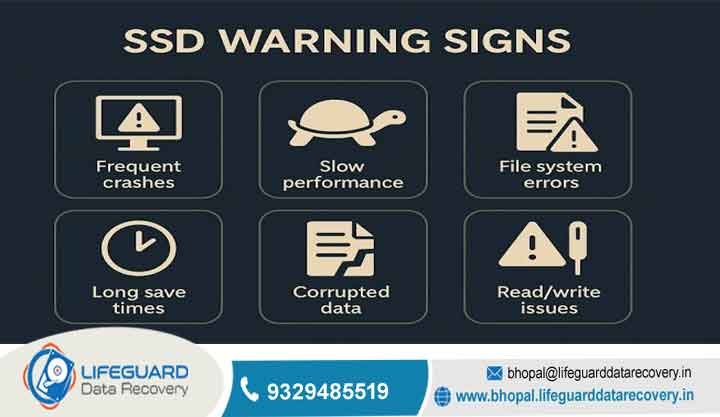
When an SSD’s controller chip can no longer manage bad blocks or maintain wear-leveling efficiency, it will often switch to a permanent write-protect mode or suffer a complete controller crash. This issue renders the data inaccessible through standard hardware interfaces.
Consequently, understanding these physical engineering constraints highlights why organizations must maintain redundant backup systems. They must replace aging media proactively and rely strictly on specialized forensic laboratories when a critical storage device fails.
Secure Immediate Emergency Surveillance Retrieval Services
Act Now to Prevent Data Loss
When a critical data loss event threatens your corporate security infrastructure, business continuity, or legal compliance standing, immediate action is required to ensure a successful recovery. Allowing a compromised digital video recorder or storage array to remain powered on significantly increases the risk of permanent data overwriting or catastrophic mechanical breakdown.
Fortunately, Lifeguard Data Recovery provides urgent technical support across the United Arab Emirates, ensuring your data recovery needs are managed with high precision, speed, and strict confidentiality.
Our advanced engineering laboratory is fully equipped to handle complex logical corruptions, physical hardware failures, firmware issues, and encrypted file systems across all surveillance brands and enterprise storage setups. We operate under a clear No Data No Charge policy, giving our clients full financial assurance throughout the recovery lifecycle.
Therefore, do not risk losing critical video assets through amateur software scans or uncertified repair attempts. Contact our engineering team today to initiate a secure diagnostic evaluation and safely recover your vital informational assets.
Corporate Contact Channels
-
Telephone Support Line: +971 50 127 6793
-
Electronic Mail Correspondence: info@lifeguarddatarecovery.com
-
Official Web Portal: www.abudhabi.lifeguarddatarecovery.com