+971 50 217 6793 Abu Dhabi, UAE info@lifeguarddatarecovery.com
Can Data Be Recovered From a Dead Hard Drive
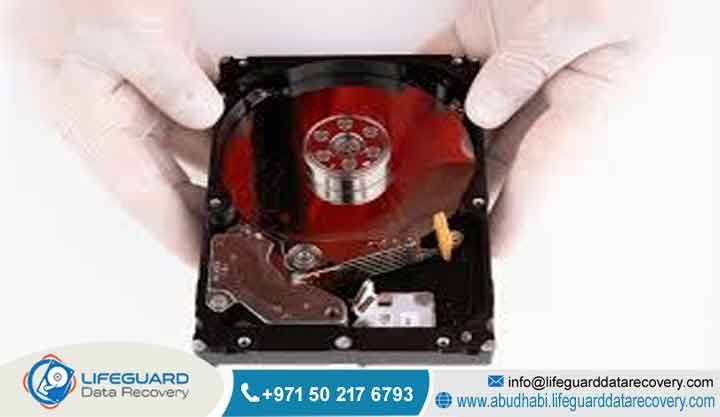
Yes, data can be recovered from a dead hard drive through professional technical interventions. Can Data Be Recovered From a Dead Hard Drive Whether a drive is considered dead due to a mechanical head crash, a burned printed circuit board, firmware microcode corruption, or severe logical file system damage, the data remains intact on the magnetic platters or flash memory chips.
True data recovery works by stabilizing these underlying hardware issues inside a controlled laboratory environment, such as a certified Class 100 cleanroom, performing component replacement or firmware modification, and generating a sector-by-sector binary mirror image of the storage media.
At Lifeguard Data Recovery in Abu Dhabi, UAE, our engineers use specialized hardware to extract and rebuild files from non-functional media safely, bypassing physical failures to ensure total business continuity. The truth is, losing access to your files feels like a disaster, but the actual binary code usually sits silently on the media waiting for the right tools to read it again.
Think of it this way: a broken motor or a fried circuit board does not instantly wipe out your records. It just locks the door. Our job is to build a new key, get into the drive safely, and copy everything over to a fresh device so your team can get back to work without missing a single beat.
Who is Lifeguard Data Recovery?
Lifeguard Data Recovery stands as the premier enterprise-level data recovery laboratory and information security specialist operating within Abu Dhabi, UAE. Established to address the highly intricate storage failures encountered by corporate, governmental, financial, and private institutions, our company functions as an international center of excellence for digital storage restoration.
From our primary laboratory facility in Abu Dhabi, we service a highly diverse corporate clientele requiring sophisticated engineering interventions that extend far beyond standard commercial software utilities or basic IT sector capabilities.
By maintaining localized physical laboratory infrastructure inside the UAE, Lifeguard Data Recovery ensures that sensitive corporate storage assets never leave the geopolitical boundaries of the country during processing. This localized presence provides an immediate logistical and legal advantage for high-security operations, sovereign wealth funds, banking networks, and regional energy conglomerates bound by strict data governance laws.
Your data stays right here in the United Arab Emirates, completely protected by our local security protocols and treated by engineers who live and breathe low-level microcode adjustments. We have spent years fine-tuning our manual imaging methods and component tracking systems, making us the team other IT companies call when they run out of ideas.
When standard recovery software throws an error or fails to recognize a device entirely, our laboratory steps in to piece the raw binary information back together from scratch.
Why UAE Businesses Choose Lifeguard Data Recovery
United Arab Emirates enterprises operate within one of the most technologically advanced and highly regulated business environments globally. Consequently, a data loss event demands an enterprise-grade response that aligns perfectly with local regulatory frameworks, national data sovereignty standards, and international cybersecurity rules.
UAE businesses choose Lifeguard Data Recovery because we bridge the gap between complex physical storage engineering and strict corporate risk management. Our Abu Dhabi laboratory features certified cleanroom environments designed to eliminate airborne particulate contamination during open platter surgeries, satisfying the stringent technical parameters demanded by corporate IT departments, legal teams, and enterprise risk officers.
Our adherence to a strict No Data No Charge policy eliminates the financial risk associated with complex device assessment and media restoration attempts.
We know how stressful it is when a database disappears or a backup drive fails, which is why we take the guesswork out of the entire equation with our clear financial guarantee. You only pay us when we actually deliver your critical business files back to you in perfect, usable condition.
Data Recovery Services We Offer in the UAE
Mechanical HDD Recovery and Cleanroom Platter Restoration
Traditional Hard Disk Drive recovery remains a foundational discipline at Lifeguard Data Recovery in Abu Dhabi. Unlike modern solid-state media, an HDD relies on physical magnetic platters spinning at high velocities, read-write head assemblies flying nanometers above the media surface, and high-precision spindle motors.
Mechanical HDD failure often manifests as a mechanical head crash, where the read-write head makes physical contact with the spinning platter, destroying magnetic material and generating microscopic debris. This scenario requires immediate intervention within our controlled Class 100 cleanroom environment to prevent complete platter destruction and to allow mechanical component alignment.
Our engineers perform physical component swaps under high magnification, extracting damaged head assemblies and replacing them with perfectly matched donor components from our vast inventory of legacy and modern storage hardware.
We open up the casing in a pristine, filtered environment, extract the ruined mechanical parts, and replace them with identical donor components to give the drive a temporary lease on life. This allows our hardware tools to stabilize the internal system files, ignore bad spots on the disk, and pull every clean bit of data off the platters before the hardware breaks down completely for good.
Advanced SSD Recovery and Flash Controller Emulation
Solid-State Drive recovery represents an entirely different engineering paradigm that requires deep knowledge of NAND flash memory architecture and silicon controller firmware manipulation. When an SSD controller fails due to electrical overstress, power surges,
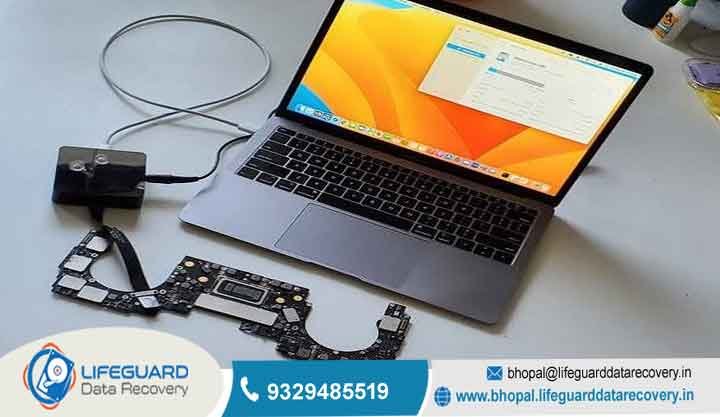
or thermal degradation, the data residing on the NAND flash chips becomes completely inaccessible through normal interfaces. Our Abu Dhabi laboratory handles these complex scenarios by utilizing advanced chip-off recovery techniques, where flash memory chips are carefully unsoldered from the printed circuit board using precise thermal profiles.
Our flash recovery specialists manually reconstruct these proprietary controller algorithms, reverse-engineering the exact data layout, block structures, and error correction codes used by major international brands. This meticulous process transforms fragmented raw binary code back into a coherent, fully functional logical file system structure, bypassing the completely dead controller.
To fix this, our engineers use high-precision tools to disorder the storage components, reading the raw hex numbers straight from the silicon wafers. It is a lot like piecing together a massive, highly encrypted jigsaw puzzle without a picture on the box, but our custom emulation software lets us crack the storage patterns and rebuild your missing directories successfully.
Enterprise RAID Recovery and Multi-Drive Server Restoration
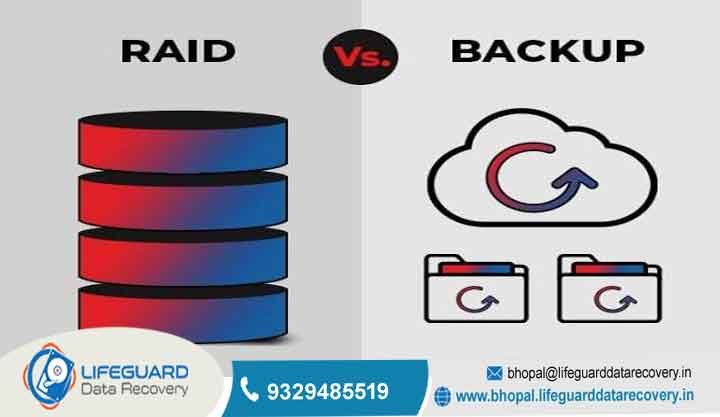
Enterprise data centers across the UAE rely heavily on Redundant Arrays of Independent Disks configurations, network-attached storage devices, and complex storage area networks. When a multiple drive failure occurs within a RAID 5, RAID 6, or RAID 10 configuration, the entire business infrastructure faces severe operational downtime.
Lifeguard Data Recovery provides urgent RAID recovery and server infrastructure restoration services tailored for corporate IT frameworks. Our engineering team addresses server controller failures, file system corruption, accidental striping reconfigurations, and concurrent drive drops that exceed the array’s physical fault tolerance.
When a corporate storage server crashes, the pressure on the internal IT team is immense. Everyone is scrambling, services are completely down, and the cost of every idle hour can be absolutely terrifying for a manager. In these high-stakes moments, rushing to rebuild the storage array using unverified hard drives is the absolute worst move you can make. If a second disk drops out while your system tries to automatically sync the data,
the entire volume can easily become permanently scrambled. Our approach completely removes that risk. We take every single drive out of the rack, create exact digital replicas in our lab, and reconstruct the entire network array virtually inside our own computing systems to safely pull your databases back from the brink.
Specialized Digital Forensics and Corporate Ransomware Recovery
In an era of rising cyber threats and complex legal landscapes, Lifeguard Data Recovery delivers specialized digital forensics and corporate ransomware recovery solutions across the UAE. Our digital forensics department works closely with corporate legal teams, law enforcement agencies, and internal compliance officers to extract, preserve,
and analyze digital evidence from compromised storage media. We enforce a flawless chain of custody protocol from the second the storage device enters our Abu Dhabi facility, ensuring that all findings are admissible in legal proceedings, regulatory audits, or corporate dispute resolutions.
Simultaneously, our ransomware recovery unit provides critical support to organizations struck by sophisticated cryptographic malware attacks. When ransomware encrypts enterprise backup servers, NAS enclosures, and local workstations, traditional decryption methods are often non-viable. Our engineers analyze the specific ransomware strain behavior,
scanning the unallocated storage space for deleted shadow copies, parsing database fragments that may have escaped full cryptographic encryption, and extracting cached transaction logs. This advanced technical parsing allows UAE businesses to restore substantial portions of their operational databases and critical file repositories without capitulating to illicit extortion demands.
Cyber attacks and legal battles require an incredibly precise, by-the-book technical approach. If an employee deletes critical financial records or a hacker locks up your company network, you cannot just click around blindly trying to fix it. Every single click changes the underlying disk metadata, which can completely ruin your chances in court or make a ransomware situation even worse.
When dealing with malicious software blockages, we dig deep into the hidden corners of your operating system to scrape out older database copies and clean transactions, offering a real technical lifeline when security keys are missing.
Devices and Storage Infrastructure We Recover
Our enterprise engineering facility in Abu Dhabi is fully equipped to process an expansive array of digital storage devices and infrastructure. We handle everything from older magnetic tape drives to modern distributed storage architectures, including:
Enterprise Servers: High-capacity blade servers, database storage nodes, and mail servers utilizing SAS, SATA, or Fiber Channel connections.
Solid-State Media: NVMe M.2 SSDs, PCIe flash modules, mSATA drives, and industrial-grade flash storage arrays.
Network Attached Storage: Multi-bay NAS enclosures from QNAP, Synology, Assistor, and custom Linux-based storage systems.
Magnetic Hard Drives: Desktop 3.5-inch drives, laptop 2.5-inch drives, and external backup systems from Seagate, Western Digital, and Toshiba.
Surveillance Infrastructure: High-capacity CCTV DVRs, NVR storage units, and multi-drive surveillance arrays.
Removable Storage Devices: Industrial SD cards, microSD media, high-security encrypted USB flash drives, and legacy CF cards.
No matter what type of gear your business uses to hold its digital assets, our engineering team has likely seen it fail before. From massive server racks tucked away in corporate data centers to tiny memory cards used in security cameras, every storage format has its own specific set of engineering rules and quirks. We do not just look at the brand name on the box. We focus on the internal controllers,
Our lab keeps an exhaustive supply of physical replacement parts on hand for immediate use, meaning we do not waste precious days waiting for international shipments when your company is stuck in an emergency standstill.
Common Data Loss Situations and Urgent Warning Signs
Understanding when to immediately halt operation of a storage device is critical to preventing permanent, irreversible data destruction.
Mechanical Head Crash: Characterized by repetitive clicking, ticking, grinding, or screeching sounds coming from inside an external or internal hard drive. Continuous power application can cause the broken read-write heads to grind away the magnetic storage substrate, leading to permanent loss.
Printed Circuit Board Damage: Evident when a device fails to spin up or power on, often accompanied by a distinct burning odor, visible smoke, or charred components following an electrical surge or power fluctuation.
Logical File System Corruption: Indicated by sudden operating system blue screen loops, missing directory trees, raw drive format prompts, or partition tables displaying completely unallocated space.
Accidental Deletion and Overwriting: When files or entire virtual machines are deleted, or when an IT technician accidentally initiates a system reinstallation over a live data volume. Immediate power-down prevents the operating system from writing new data blocks over the deleted files.
The moment your storage device starts acting up, you are at a critical crossroads. A lot of people fall into the trap of thinking that if they just restart their system one more time, everything will magically reappear. In reality, that extra power cycle is often the exact moment a failing drive dies completely for good.
your system is trying to tell you that hardware failure is actively happening. Unplug the power cord immediately. Stepping away from the machine and letting professional lab equipment handle the initial scanning is the single best choice you can make to protect your business records from permanent destruction.
How Our Recovery Process Works (Step-by-Step)
Step 1: Secure Media Intake and Chain of Custody Logging
The data recovery lifecycle begins with a highly disciplined physical media intake procedure at our Abu Dhabi facility. Every hard drive, solid-state drive, or server array received is assigned a unique tracking identifier within our enterprise resource system. We carefully record the device model, serial number, firmware revision,
tamper-evident label status, and complete client historical data regarding the failure vector. This step establishes an unbending chain of custody log, tracking the physical location and responsible engineer at every stage, ensuring complete corporate security compliance.
When your hardware arrives at our desk, we treat it with the same level of care you would expect for a box of cash. We do not just toss it onto a random workbench and get to it whenever we have time. Every device gets a specific barcode right away, and we document every single scratch or dent on the outer casing before it moves to the lab.
This strict logging ensures that everyone knows exactly who is handling your drive at any given second. For corporate clients with intense legal requirements, this clear tracking sheet provides absolute proof that your intellectual property was protected from the moment it left your hands.
Step 2: Diagnostic Evaluation in a Certified Class 100 Cleanroom
Once logged, the device undergoes a rigorous initial diagnostic evaluation. If the device is a mechanical hard drive showing signs of physical trauma or clicking, it is transferred straight to our certified Class 100 cleanroom bench. Here, specialized HEPA filtration systems maintain an environment entirely free of damaging airborne microparticles.
Our engineers perform a physical inspection of the drive’s internal components, checking for slider damage, platter scoring, and spindle motor binding, completely isolating the drive from standard electrical testing until mechanical integrity is verified.
Think of a cleanroom as a high-tech filter system that keeps the air pure enough for delicate computer surgery. A single speck of household dust is actually massive compared to the tiny gap between a hard drive’s reading head and its spinning platters. If an ordinary room’s dust settles on those disks while they spin, it acts like a boulder, smashing the delicate components instantly.
Our engineers use advanced hoods that push clean air downwards continuously, keeping the workspace completely pristine. We verify everything under high magnification before we ever dream of plugging the drive into an electrical tester.
Step 3: Mechanical Component Alignment and Firmware Stabilization
If physical defects are identified, engineers perform micro-mechanical components alignment or complete head assembly replacements under high-magnification microscopes using precise donor tools. For solid-state drives and hard drives suffering from microcode issues,
specialized hardware tools are connected directly to the drive’s controller board. Our engineers manually edit system files, repair corrupted translation maps, patch defective tracking modules, and adjust the drive’s firmware microcode to force the device into a stable factory engineering mode.
This stage is where true engineering expertise comes into play. If the mechanical arm inside your drive is completely bent out of shape, we have to find a perfectly matching donor drive from the exact same manufacturing run to swap the parts.
It requires an incredibly steady hand and specialized alignment tools to make sure the new parts fit flawlessly without touching the sensitive surfaces. If the problem turns out to be a software glitch buried deep inside the drive’s internal chip, we connect directly to its communication lines to rewrite the broken startup code, forcing the broken hardware to boot up safely.
Step 4: Bit-Stream Sector-by-Sector Media Imaging
With the hardware stabilized and running in engineering mode, the drive is connected to a hardware write-blocker. This hardware device ensures that the host laboratory computer cannot write a single bit of new data back to the client’s unstable drive. We then initiate a bit-stream sector-by-sector media clone,
mapping every single coordinate of the drive onto a healthy, verified laboratory target drive. Our cloning tools allow us to adjust read timeouts, change head flying heights, read backwards, and skip deeply damaged sectors to extract the maximum amount of raw binary data safely.
Once we get a failing drive to stabilize, our absolute top priority is to copy everything off it as fast and as safely as possible. We never work directly on your original device when we are searching for lost files because that fragile hardware could give out at any second. By utilizing specialized write-blocking equipment,
we can read the entire disk block by block while completely preventing the system from modifying the original surface. If our tools hit a rough patch of bad sectors, our custom software knows exactly how to jump past the damage, pull the clean areas first, and then circle back later to scrape out the tricky parts.
Step 5: Logical File System Reconstruction and Integrity Validation
Once a complete or near-perfect sector image is secured, the original physical drive is removed and safely stored in our secure vault. Engineers use advanced logical parsing tools to analyze the raw hex data,
rebuild fractured partition tables, reconstruct corrupted database schemas, and fix broken file allocation tables.
With a perfect digital twin of your data safely stored on our server, we can finally begin the forensic reconstruction process. This is where we piece the broken file systems back together, turning raw rows of numbers into recognizable documents, images, and database files. If a sudden crash scrambled your master directory list,
our engineers manually trace the file footprints through the raw disk image to rebuild your original folder structures. We do not just give you back a massive pile of unorganized files; we verify that your primary files actually open up perfectly so you can plug them straight back into your business workflow.
Recovery Timeframes for Mission-Critical Business Storage
Lifeguard Data Recovery understands that every hour of enterprise storage downtime translates directly into significant operational and financial losses. We offer structured service tiers tailored to match the urgency of your organization’s specific data loss scenario across UAE data centers:
Standard Recovery Service: Typically completed within 3 to 5 business days, this option is ideal for non-critical files, routine office backups, and secondary storage systems that do not halt primary daily corporate workflows.
Priority Recovery Service: Completed within 1 to 2 business days, prioritizing the client’s media within our laboratory queue and allocating dedicated hardware diagnostic tools to accelerate the cloning and extraction phases.
Emergency 24/7 Support Service: Operating continuously around the clock, our senior engineering team remains in the lab overnight, working weekends and holidays to restore critical server arrays, active ERP systems, and primary corporate databases within 12 to 24 hours.
We know that every business operates on a totally different timeline depending on what just went offline. If you just lost an old archive drive that nobody looks at more than once a month, our standard tier gives you a budget-friendly way to get those records back safely without rushing. On the other hand, if your main operational server goes completely dark right in the middle of a massive corporate project, you cannot afford to wait around for days.
Recovery Success Factors: Maximizing Data Yield Post-Failure Signs
The ultimate success rate of a data recovery operation depends on several critical technical variables and immediate post-failure actions. The single most decisive factor governing data yield is the physical condition of the storage media substrate, such as the magnetic layer on hard drive platters or the physical oxide layers within NAND flash memory cells.
If an IT manager permits a clicking hard drive to continue running, the damaged read-write head will physically scrape the magnetic coating off the platter surface, creating a ring of dust and causing permanent data destruction that no technology can reverse.
The second primary factor is the level of user intervention prior to laboratory arrival. Running commercial software utilities downloaded from the internet on a physically failing drive accelerates hardware degradation, often causing the drive controller to lock up permanently or burn out. Furthermore, if a drive has suffered logical corruption,
installing software or continuing to surf the web causes the operating system to write temporary logs directly over the unallocated space where the deleted files reside. Immediate power-down and isolation remain the gold standard for preserving media integrity and maximizing recovery success rates.
Let us look at a real-world reality check. If your local IT team tries to use free internet tools to fix a drive that is physically failing,
they are essentially running an engine without oil. The hardware gets incredibly hot, the internal damage spreads across the chips, and a simple recovery job can quickly turn into an impossible task. Keeping the device unplugged until it reaches our lab workbench is how you protect your investment.
Industries We Serve across the United Arab Emirates
Our enterprise recovery services cater to a wide spectrum of specialized industries throughout the UAE, each with its own unique data architecture and compliance demands:
UAE Government Sectors: Providing secure data recovery for federal ministries, local automotive departments, municipalities, and sovereign institutions adhering to local data localization laws.
Banking and Financial Networks: Recovering critical transaction records, core banking databases, and compliance logs under strict air-gapped data security frameworks.
Healthcare Institutions: Restoring lost electronic health records, PACS medical imaging databases, and hospital management software while respecting strict patient privacy protocols.
Energy and Infrastructure: Reclaiming structural mapping files, SCADA system logs, and exploration data for major oil, gas, and renewable energy corporations.
Aviation and Logistics: Supporting regional airlines and global logistics firms by recovering scheduling databases, cargo tracking systems, and operational metrics.
Every economic sector has its own unique regulatory rules and specific types of software tools that keep things moving forward. A medical clinic cannot afford to have its patient records exposed to the public internet, while a major construction firm handles massive CAD blueprint files that require specialized layout mapping to rebuild correctly.
Our laboratory understands these industry-specific needs inside and out. We do not use a one-size-fits-all approach; we tailor our recovery setups to match the exact database formats and security frameworks required by your specific line of work, ensuring your company remains totally compliant with local regulations throughout the extraction process.
Data Security, Confidentiality, and Compliance Standards
At Lifeguard Data Recovery, data security is integrated into every phase of our technical workflow. We recognize that corporate storage assets contain highly proprietary financial data, intellectual property, and personal identifiable information. Our Abu Dhabi laboratory operates under strict access control systems, ensuring that only authorized, cleared engineers enter the physical testing spaces.
All recovery workstations are completely air-gapped, meaning they have no physical or wireless connections to the public internet or any external network, preventing any possibility of data exfiltration or malware exposure during processing.
When you hand over a business hard drive to an outside company, you are placing an immense amount of trust in their internal operations. We take that responsibility incredibly seriously.
meaning there is zero chance of an online leak or data spill while we are working on your folders. We do not keep your files sitting on our servers indefinitely either. Once you verify that your recovered files look great and everything opens correctly, our secure cleaning system completely purges our temporary workspace drives, ensuring your private company metrics stay completely private and protected forever.
UAE Coverage: Local Lab & Intake Verification Matrix
Lifeguard Data Recovery provides complete logistical support across all seven emirates, ensuring rapid device intake and secure transport to our primary Abu Dhabi laboratory. Clients can utilize our verified intake and courier network throughout the UAE:
Abu Dhabi: Primary laboratory facility offering walk-in diagnostics, immediate emergency engineering response, and secure corporate pickup within the capital.
Dubai: Rapid courier collection and dedicated corporate pickup points for business districts including DIFC, Downtown Dubai, and Dubai Internet City.
Sharjah: Daily secure transit links for manufacturing facilities, academic institutions, and corporate offices across the emirate.
Ajman and Umm Al Quwain: On-demand corporate shipping and rapid response logistics for regional businesses and government departments.
Fujairah and Ras Al Khaimah: Complete industrial storage media transport networks covering northern logistics hubs, maritime centers, and local businesses.
It does not matter if your company operates out of a sleek high-rise office building in Dubai or a busy manufacturing warehouse down in Fujairah.
You do not have to battle traffic or spend your afternoon driving out to our main diagnostic office just to hand over a damaged drive. We coordinate with secure couriers who know exactly how to transport delicate electronic hardware without causing extra vibration damage, bringing your storage units directly to our senior engineers so we can start the repair process as fast as possible.
Frequently Asked Questions & Entity-Based Inquiries
What is meant by “Can Data Be Recovered From a Dead Hard Drive?”
“Can data be recovered from a dead hard drive” refers to the technical feasibility of retrieving information from a storage device that has ceased functioning due to mechanical, electrical, firmware, or logical failure. For all other failure types, specialized engineering processes can restore physical functionality or read storage chips directly to bypass the failure and extract the underlying data safely.
How does dead hard drive data recovery actually work?
The dead hard drive data recovery process works by moving through a highly organized sequence of engineering steps starting with cleanroom stabilization. If physical component damage is found, internal components like the head stack assembly or the controller circuit board are replaced or repaired.
Once the drive can achieve mechanical stabilization, a specialized hardware tool creates a bit-stream sector clone, from which logical engineers reconstruct the file systems and databases without stressing the original hardware.
How much does professional dead hard drive recovery cost in the UAE?
The cost of professional dead hard drive recovery in the UAE is based entirely on the physical failure complexity, component costs, and lab resources required, rather than flat rates or data volume. Physical cleanroom operations, head replacements,
and complex microcode patches require advanced engineering labor, which determines the overall technical investment. Lifeguard Data Recovery provides an entirely free initial diagnosis to safely determine exact costs and operates on a strict No Data No Charge financial guarantee.
How long does a standard physical drive recovery procedure take?
A standard physical hard drive recovery procedure typically takes between 3 to 5 business days to complete initial diagnostics, secure matching donor components, perform cleanroom assembly replacement, and execute logical file system validation. For urgent corporate storage crises,
our priority service reduces this turnaround timeframe to 1 to 2 business days. Furthermore, our emergency service operates continuously around the clock to completely restore mission-critical arrays or server infrastructure within 12 to 24 hours.
Is data recovery possible after a drive has been dropped or physically smashed?
Data recovery after a drive has been dropped or physically smashed is highly possible provided that the internal magnetic platters or flash memory chips have not sustained permanent physical destruction. When a drive drops,
the read-write heads frequently bend and lock onto the platters, which requires certified cleanroom extraction to separate components without scratching the substrate. If the platters remain unscratched, an engineering head transplant will yield a full recovery.
Can data be recovered after files are deleted from a failed drive?
Data recovery after file deletion from a failed drive depends heavily on whether the storage blocks containing the deleted data were overwritten before or during the failure. Standard formatting or deletion merely removes file pointers,
leaving the actual data blocks intact within unallocated space until new data claims those sectors. Our laboratory imaging software blocks all write requests, allowing engineers to parse unallocated space on the clone to carve out deleted data structures successfully.
Professional Lab Recovery vs. Commercial Recovery Software: The IT Manager Matrix
Storage Media State: Physical Failure (Clicking, Not Spinning, Burned PCB, Firmware Panic)
Commercial Recovery Software: Ineffective. Running commercial software on a physically failed hard drive or SSD accelerates mechanical wear, introduces platter scratches, and frequently causes permanent data destruction.
Professional Lab Recovery: Mandatory. Safe engineering requires certified cleanroom manipulation, physical component replacement, firmware patching tools, and hardware-level write blockers to image the media safely.
Storage Media State: Logical Failure (Accidental Format, Deleted Files, Corrupted Partition Tables)
Commercial Recovery Software: Risky. Can work if used properly on a completely healthy drive, but carries an immense risk of overwriting data if installed directly onto the same storage volume.
Professional Lab Recovery: Recommended. Engineers generate an exact bit-stream clone of the media first, performing data carving and logical partition rebuilds entirely on the duplicate copy to guarantee zero data alteration.
Case Study: Rescuing an Infrastructure Server Drive in Abu Dhabi
Problem: A major engineering firm based in Abu Dhabi experienced a sudden failure of their primary infrastructure server containing active project blueprints and building designs. The primary boot drive, an enterprise SAS hard disk, stopped responding completely, displaying an active device error in the server console and emitting a faint clicking noise upon reboot attempts.
Urgency: Critical. Over two hundred active structural engineers were locked out of their design systems, causing immense operational delays and risking major contractual penalties for every day the server infrastructure remained down.
Recovery Process: The failed server drive was securely transported to our Abu Dhabi laboratory under our Emergency 24/7 Support tier. Our cleanroom engineers performed an immediate open-chassis inspection, identifying a mechanical head crash where the read-write heads had failed due to mechanical wear.
Result: Our logical recovery department parsed the complete sector clone, repaired fractured file system headers, and successfully extracted 100 percent of the critical engineering blueprints and project files.
Client Outcome: The extracted data was transferred onto a secure, hardware-encrypted target drive and delivered back to the client within 14 hours of media intake, enabling the IT department to restore server operations with zero data loss.
Decoding S.M.A.R.T. Telemetry to Preempt Storage Failure
Self-Monitoring, Analysis, and Reporting Technology represents the built-in diagnostic telemetry system embedded within modern hard drives and solid-state storage devices. For IT managers overseeing enterprise infrastructure across the UAE, monitoring specific critical S.M.A.R.T. attributes is essential to preventing sudden data loss events and identifying a failing drive before it dies.
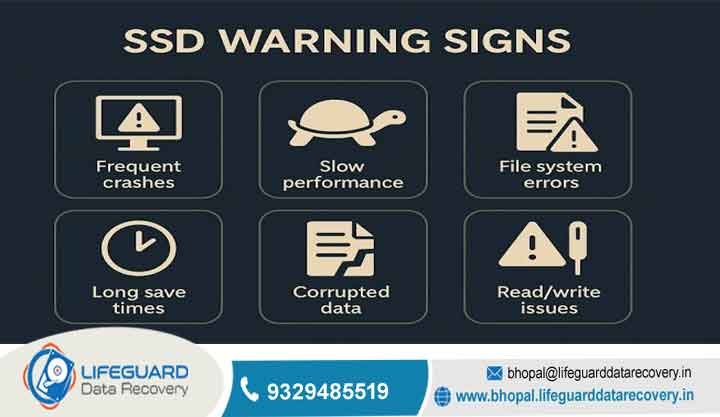
While basic attributes like drive temperature or total power-on hours are secondary, parameters such as Reallocated Sectors Count, Current Pending Sector Count, and Uncorrectable Sector Count require immediate administrative intervention. A rising reallocated sector count indicates that the drive’s internal microcode is actively identifying failing magnetic sectors and moving the data to a hidden backup zone.
On solid-state media, IT specialists must monitor the Media Wear out Indicator or percentage life remaining attribute.
Flash cells possess a finite number of program-erase cycles before the physical oxide insulation degrades completely. When this indicator drops below critical thresholds, the controller may suddenly switch to a permanent read-only panic state or fail entirely due to block exhaustion. Tracking these advanced engineering metrics allows organizations to replace failing drives proactively, avoiding costly emergency lab interventions.
Think of these internal error logs like the check engine light on your car dashboard. If your server starts logging quiet warnings about pending or uncorrectable sectors during its weekly health sweeps, it is telling you that the structural integrity of the media is actively crumbling. Do not just clear the alert and pretend everything is fine.
Those numbers show that the hardware is working overtime to jump past physical blind spots on the disks. If you ignore those early warnings, the internal management files will eventually run out of fresh space to shuffle the data blocks, leading to a sudden, catastrophic hardware lockdown that takes your entire system offline without notice.
Protect Your Enterprise Data: Contact Lifeguard Data Recovery UAE
When your organization faces a critical storage media failure or a dead hard drive, every moment of unauthorized troubleshooting or repeated power cycling increases the risk of permanent data loss. Trust the certified engineering experts at Lifeguard Data Recovery to recover your mission-critical databases,
server infrastructure, and enterprise files securely. Our transparent No Data No Charge policy, combined with our advanced localized cleanroom capabilities in Abu Dhabi, ensures the highest recovery yield possible in the United Arab Emirates.
Contact our enterprise response team immediately to initiate your free storage media diagnostic evaluation:
Call: +971 50 127 6793
Email: info@lifeguarddatarecovery.com