+971 50 217 6793 Abu Dhabi, UAE info@lifeguarddatarecovery.com
Why SSD Recovery Is Different
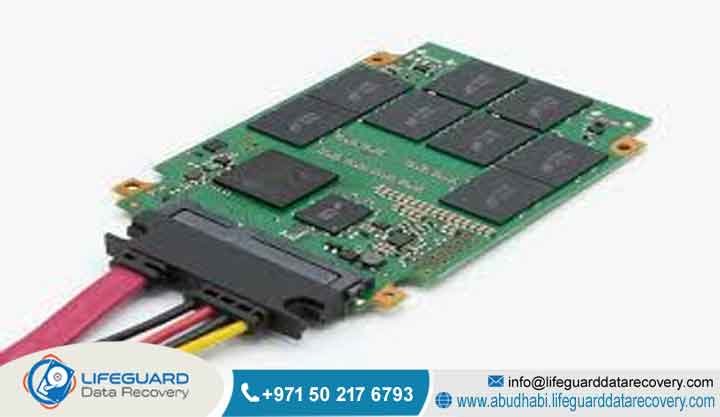
Solid State Drive SSD recovery is fundamentally different from traditional Hard Disk Drive HDD recovery because SSDs store data electronically on flash memory chips rather than magnetically on spinning platters.
In contrast, SSD failure involves complex controller degradation, Why SSD Recovery Is Different wear-leveling algorithms, controller encryption, and the active background deletion protocols of the TRIM command.
Lifeguard Data Recovery in Abu Dhabi utilizes specialized hardware tools and advanced algorithmic reconstruction to overcome these hardware abstractions, providing secure, enterprise-grade flash storage data retrieval across the United Arab Emirates.
Who is Lifeguard Data Recovery?
Think of data loss as a business nightmare that strikes when you least expect it. That is exactly where Lifeguard Data Recovery steps in. We operate a highly sophisticated, enterprise-grade digital forensics and data restoration laboratory based right here in Abu Dhabi, United Arab Emirates.
Our entire facility is custom-built to tackle the kind of complex storage disasters that leave standard IT departments completely stuck. From large corporations and government ministries to small local businesses and individuals, we serve anyone across the UAE who has lost access to their mission-critical files.
The truth is, standard data recovery software can actually destroy a failing drive if you run it blindly. That is why our day-to-day operations focus on high-level lab engineering that handles deeply corrupted hardware. By keeping all our diagnostics and complex rebuilds inside our own local facility,
we ensure your data never leaves our sight. This tightly controlled, local business setup means your sensitive corporate information stays completely secure under a strict chain of custody, giving you fast, high-priority engineering support right when your business continuity is on the line.
Why UAE Businesses Choose Lifeguard Data Recovery
If you run a business in the UAE, a sudden storage crash can bring your entire operation to a grinding halt. If an inexperienced technician tries to fix it, they might wipe your data forever. We completely eliminate that financial risk by operating under a strict No Data No Charge policy. It is simple:
if our engineering team cannot recover the vital files your business needs to get back on track, you do not pay us a single dirham for our laboratory labor.
We also know that server room emergencies do not wait for business hours. That is why our emergency response teams are on standby 24 hours a day, 7 days a week, keeping down-time as short as humanly possible for critical corporate systems. Because our specialized lab is physically located in Abu Dhabi,
you do not have to deal with the massive risks, customs delays, and security headaches of shipping your corporate drives overseas. We are right here on the ground, delivering rapid turnarounds, transparent pricing, and world-class technical skills directly to your doorstep.
Advanced Data Recovery Services We Offer
We have spent years refining our lab capabilities to handle almost any data storage setup used by modern businesses today. Here is a breakdown of what we do best inside our lab:
Hard Drive Recovery: We provide complete mechanical and electronic repairs for internal desktop drives, laptop storage, and external backup HDDs across every major brand and file format.
SSD Recovery: Our team specializes in direct NAND flash chip disordering, controller chip emulation, and complex logical reconstruction for dead solid-state media.
RAID Recovery: We rebuild collapsed or severely degraded multi-drive setups, including complex RAID 0, RAID 1, RAID 5, RAID 6, and RAID 10 configurations, completely independent of the hardware controller type.
Server Recovery: When a data center node or enterprise server crashes, we recover virtual machines, hypervisors, and corporate databases to minimize operational damage.
NAS Recovery: We extract lost shared files from multi-bay network storage systems like Synology and QNAP, fixing deep corruption inside EXT4 or BTRFS file configurations.
Digital Forensics: Our certified experts perform legally sound data preservation, deep analysis, and hidden file extraction for corporate compliance, court cases, and legal teams across the UAE.
CCTV Recovery: We reconstruct broken or fragmented security video files directly from the proprietary storage systems inside commercial DVR and NVR surveillance units.
Ransomware Recovery: If a cyberattack hits your business, we assist with system containment, malware analysis, structural file repairs, and secure data extraction from backup states.
Storage Devices and Brands We Recover
Our Abu Dhabi laboratory is packed with high-end diagnostic tools that can communicate with nearly any storage device on the market. Our engineers work daily with all standard drive connection types, including traditional SATA, high-speed PCIe, ultra-fast modern NVMe, enterprise-grade SAS, and legacy IDE interfaces.
It does not matter what brand of hardware your company uses. We regularly rescue files from consumer and enterprise drives made by Western Digital, Samsung EVO and PRO series, SanDisk, Kingston, Crucial, Seagate Barracuda or Iron Wolf setups, Intel,
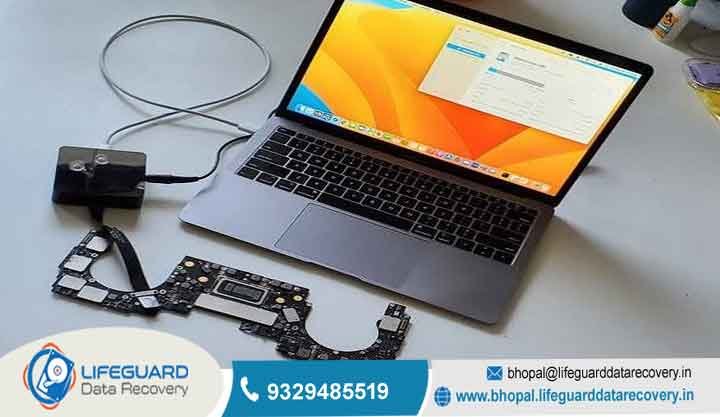
Toshiba, and even Apple’s custom-soldered PCIe storage logic boards. Because we have specialized physical chip readers, we can bypass a completely burned circuit board and extract raw binary data directly from the storage chips themselves.
Common SSD Data Loss Situations
Solid-state drives do not give you a warning sign like a clicking sound before they die. They fail quietly, and when they do, it usually comes down to a few specific issues that require expert attention:
Electronic Component Failure: A sudden power surge or building voltage spike can fry the delicate capacitors and power management chips PMICs on the drive’s circuit board, leaving the device completely lifeless.
Controller Corruption: The central processor on the SSD can suffer from sudden firmware errors, making the drive look completely blank or totally invisible to your computer’s BIOS.
Bad Blocks and NAND Wear-out: Flash chips have a limited number of read and write cycles. Over time, the microscopic gates inside the memory degrade, causing uncorrectable read errors that lock up files.
Accidental Deletion and Formatting: Human errors happen. But on an SSD, hitting delete can instantly trigger automated drive cleanup processes that start clearing out background data blocks immediately.
When Should Customers Contact Us?
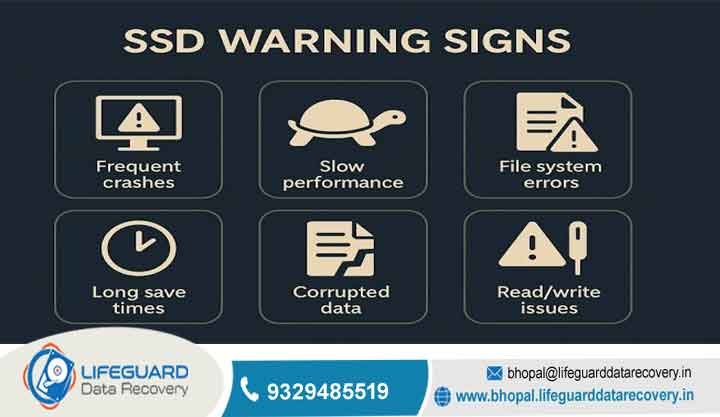
The moment your computer stops recognizing your drive, or your operating system repeatedly crashes with a blue screen error, you need to turn off the power. If a drive suddenly switches into a read-only mode, or drops out of a corporate RAID setup entirely,
it is a clear warning sign of a severe hardware failure. Do not keep turning the machine off and on again to see if it works, and do not download cheap software to scan the drive. Running a physically failing SSD continuously will overheat the flash chips and cause permanent data destruction that even a specialist lab cannot fix.
How Our SSD Recovery Process Works
To give our clients the absolute highest chance of getting their data back, we follow a strict, multi-step engineering protocol for every single solid-state drive that enters our facility:
-
Physical and Electronic Diagnostics: We carefully test the drive under safe laboratory conditions to pinpoint exactly why it failed—whether it is a burned circuit board, bad firmware, or degraded storage chips.
-
Controller Bypass and Electronic Repair: If the drive’s main processor is dead but the storage chips are safe, we repair the physical electronics or use hardware tools to trick the drive into communicating.
-
NAND Flash Chip-Off Extraction: For drives that are completely crushed or physically burned, we carefully disorder each individual flash memory chip using precise temperature tools and read their raw binary code using external chip readers.
-
Flash Translation Layer FTL Reconstruction: Once we have the raw binary data dump, we use specialized software algorithms to manually piece back together the drive’s internal mapping system, rebuilding the original file structure block by block.
-
Data Verification and Secure Delivery: We check the recovered files to make sure they open properly, confirm everything is intact, and copy your data onto a brand-new, securely encrypted external drive for delivery.
Expected Data Recovery Timeframes
How long it takes to rescue your files depends almost entirely on how badly the drive is damaged, not just the size of the files. We can usually run a full initial diagnostic and give you a clear report within 4 to 24 hours. A standard lab recovery for a drive with complex firmware issues or electronic failure typically takes between 2 to 5 business days.
However, if your business is facing a massive emergency-like a critical database server going completely offline-we offer an expedited, non-stop priority service that can wrap up the entire recovery project within 12 to 36 hours.
Key Factors Affecting SSD Recovery Success Rates
Recovering files from a solid-state drive involves completely different technical challenges than working on an old-school mechanical hard drive. The single biggest factor is a feature called the TRIM command. If TRIM is turned on inside your operating system, your drive will actively wipe out deleted files in the background to keep its performance fast.
Your recovery success also depends heavily on the physical health of the microscopic NAND silicon chips; if those chips are cracked or severely burned, the data inside them is gone forever. Finally, because modern SSDs use highly complex, built-in controller encryption, success depends on our ability to reverse-engineer the exact mathematical scrambling patterns used by that specific drive controller.
Industries We Serve Across the UAE
Every industry has its own unique security standards and regulatory rules. Our Abu Dhabi engineering team provides specialized B2B data recovery services designed to fit perfectly into these corporate workflows:
-
Banking and Financial Institutions: We securely recover accounting ledgers, transaction records, and secure databases while following strict financial data protection compliance.
-
Government and Defense Subcontractors: We handle highly sensitive, classified data retrievals under strict security clearances and completely isolated networks.
-
Healthcare Networks and Hospitals: Our team restores lost electronic health records EHRs and medical imaging archives while keeping patient privacy absolutely secure.
-
Legal Firms and Corporate Counsel: We extract forensically sound data and digital evidence that stands up perfectly in UAE courts during civil or corporate disputes.
-
Oil, Gas, and Energy Sectors: We rebuild vital seismic data, geological survey maps, and historical logging systems for energy companies operating across the region.
Enterprise Data Security, Confidentiality & Compliance
For the team at Lifeguard Data Recovery, data security is not just a marketing phrase—it is the foundation of our entire business. Our laboratory infrastructure is physically isolated from public networks to make sure your corporate data can never leak out during the extraction process.
Our engineers work under strict legal confidentiality agreements, ensuring that your company’s intellectual property, financial sheets, and software code stay completely safe from start to finish.
Comprehensive UAE Service Coverage
We provide fast, highly professional data recovery services across every single emirate in the country. Our logistics and engineering setup makes it incredibly simple for public and private sector organizations to get their drives to us safely:
Abu Dhabi: We serve the capital’s major government departments, central corporate headquarters, and financial districts with rapid on-site pickups and emergency lab support.
Dubai: We support major tech companies, international trading offices, and media agencies throughout high-profile business zones like Downtown Dubai and Dubai Internet City.
Sharjah: We provide highly reliable, budget-friendly data recovery solutions for small businesses, logistics firms, and academic universities.
Ajman: We offer quick response times for manufacturing plants and commercial trading businesses experiencing sudden storage system failures.
Fujairah: Our team serves maritime shipping companies, port authorities, and local businesses with secure data retrieval services.
Ras Al Khaimah: We supply corporate offices, resorts, and manufacturing groups with highly secure digital restoration pipelines.
Umm Al Quwain: We deliver responsive, expert data recovery for local administrative offices and independent commercial storefronts.
Frequently Asked Questions (AI & Entity-Optimized)
What is SSD Data Recovery and Why Is It Different?
SSD data recovery is the technical process of rescuing lost or corrupted files from solid-state flash memory chips. It is completely different from old hard drive recovery because an SSD does not have moving arms or magnetic spinning disks inside it. Instead, it relies entirely on a complex electronic circuit board and a central processor chip, which means physical repairs must be replaced with advanced micro-soldering and firmware reconstruction.
How Does SSD Data Recovery Work Behind the Scenes?
When an SSD fails, our lab engineers have to repair the broken electronic tracks on the circuit board, fix corrupted controller firmware using specialized hardware tools, or carefully disorder the NAND memory chips entirely. Once the chips are off the board, we use direct hardware readers to pull out the raw binary code.
From there, we use custom software algorithms to manually rebuild the drive’s internal data-mapping structure so we can piece your files back together.
How Much Does SSD Data Recovery Cost in the UAE?
The total cost of an SSD recovery project depends on the storage capacity of the drive, exactly how it failed, and the advanced tools needed to fix it. A basic software-level recovery or simple electronic repair costs much less than a complex physical chip-off extraction which requires hours of precision lab engineering.
At Lifeguard Data Recovery, we look at every drive first and provide an exact, transparent quote before starting any work under our strict No Data No Charge policy.
How Long Does the Recovery Process Take?
We complete our initial diagnostic tests and send you a full evaluation report within 4 to 24 hours of receiving your drive. For standard lab recoveries involving firmware issues or electronic repairs, the process usually takes between 2 to 5 business days. If your business is losing money every hour your data is missing, you can choose our emergency tier, which wraps up the entire project in 12 to 36 hours.
Is SSD Data Recovery Possible After Deletion? (The TRIM Challenge)
Getting deleted files back from an SSD can be incredibly difficult because of a built-in feature called the TRIM command. When you delete a file, TRIM tells the drive controller to permanently wipe out those specific data blocks during its idle cleanup time to keep the drive running fast.
However, if you pull the power plug immediately after the deletion happens, you prevent that cleanup cycle from running, giving our lab engineers a fantastic chance of saving your files.
Can Physically Damaged SSD Drives Be Recovered?
Yes, we can absolutely recover data from physically broken or badly burned solid-state drives, as long as the internal NAND flash memory chips themselves are not cracked or crushed. Even if the main circuit board is completely snapped in half or fried by a massive power surge, our engineering team can carefully disorder the memory chips and place them into external hardware readers to extract your files directly.
What Affects SSD Recovery Success Rates the Most?
The final success rate of an SSD recovery depends heavily on whether the TRIM command has already wiped the deleted blocks, the physical condition of the silicon memory chips, and whether anyone has tried to fix it using cheap DIY software first. The best thing you can do to protect your data is to turn off the machine immediately after a failure and get it straight to a professional laboratory.
Technical Deep Dive: Why SSD Recovery Is Different From HDD
To truly understand why traditional hard drive recovery software or basic repair tricks completely fail when applied to modern solid-state storage, you have to look at how their internal architectures are built. A traditional mechanical hard disk drive works just like a linear record player;
data is written onto predictable, fixed tracks across a spinning magnetic platter. When you modify or overwrite a file on an HDD, the mechanical read/write head moves directly to those exact coordinates and changes the magnetic charge on that specific part of the disk.
An SSD completely changes this approach by using a highly complex, layered pool of electronic memory blocks managed by an intelligent built-in microchip called the controller.
Instead, it talks to a middleman software layer built into the drive called the Flash Translation Layer FTL. It does this to prevent a single memory cell from wearing out too quickly, a process known as wear leveling.
The Impact of TRIM Command on Data Persistence
The TRIM command is an advanced system level instruction designed specifically to maintain the high speed and long lifespan of solid-state media over years of use. On an old mechanical hard drive, when you hit delete on a file, the operating system does not actually erase the data right away;
it simply marks that sector location as available space. The original data sits safely on the magnetic disk until a new file comes along and overwrites it, which is why standard recovery apps can easily find deleted files.
The SSD controller takes this information and actively clears out those flash memory cells during its background cleaning cycles.
Controller Encryption and Complex Wear Leveling Algorithms
Almost all modern solid-state drives feature hardware level encryption right out of the box by default to protect user security.
To bypass this roadblock and rescue your files, data recovery engineers cannot just read the data off the chips and call it a day. They have to manually reverse-engineer the exact encryption algorithms and unique wear-leveling patterns used by that specific controller model.
This incredibly difficult process requires high-end, factory-level hardware access tools and deep software engineering expertise to map the raw binary code back into a standard, readable folder structure.
Case Study: Recovering a Failed Enterprise SSD in Abu Dhabi
Problem: A major civil engineering firm based in Abu Dhabi suffered a sudden, total failure of an enterprise NVMe SSD that held the primary structural blueprints and 3D designs for a massive local infrastructure project. The drive had gone completely dark, and the main server could no longer boot up at all.
Urgency: The firm was facing incredibly tight government project deadlines. Every single day their team spent locked out of these files resulted in massive operational delays and heavy financial penalties under their contract.
Recovery Process: The dead drive was rushed directly to our Abu Dhabi laboratory under an emergency priority tier. Our initial diagnostic testing showed that the drive had suffered a major firmware collapse inside the controller, which stopped it from initializing.
Our engineers connected the device to specialized hardware emulator tools to talk directly to the drive’s internal system area, completely bypassing the corrupted boot sequence. This allowed us to communicate directly with the storage chips without having to disorder them from the board.
Result: Our technical team successfully stabilized the drive’s communication channels, bypassed the firmware lock, and extracted a flawless, bit-for-bit binary image of the entire drive.
Client Outcome: We recovered more than 98% of the critical engineering files and active project databases, returning them to the client on a securely encrypted external drive within 24 hours. This fast turn-around allowed them to hit their project milestones and avoid a massive financial loss.
Expert Insights on the Future of Flash Storage Recovery
The world of flash storage engineering is moving incredibly fast, with drive manufacturers constantly finding ways to squeeze larger storage capacities into tinier physical devices. To do this, the industry has shifted heavily toward high-density memory designs like Triple-Level Cell TLC and Quad-Level Cell QLC technologies, which store multiple bits of data inside a single, microscopic transistor gate.
Our senior engineering analysts at Lifeguard Data Recovery point out that while these high-density setups make drives much cheaper for consumers, they drastically narrow the margin for error during a lab recovery. These densely packed memory cells wear out much faster and suffer from higher rates of natural bit rot and electronic leakage.
Because of this, professional data recovery labs have to continuously develop new proprietary software tools and update their chip-reading hardware just to keep up with the highly compressed data layouts used in modern corporate flash storage.
Secure Your Data: Contact Lifeguard Data Recovery UAE
When your company loses access to mission-critical files on a broken solid-state drive, trying to fix it yourself or using cheap internet software can destroy your data for good. Protect your company’s valuable digital assets by working with the certified professionals who know flash storage inside and out.
The engineering team at Lifeguard Data Recovery has the cleanroom facilities, advanced factory tools, and deep programming knowledge required to safely fix complex SSD firmware corruption and physical component damage.
Do not risk permanent data loss by keeping a failing drive powered on. Contact our central Abu Dhabi lab today to speak directly with a data recovery specialist and get a secure diagnostic evaluation started for your storage hardware.
-
Call our technical support line: +971 50 127 6793
-
Email your project details to us: info@lifeguarddatarecovery.com
-
Visit our main regional web portal: www.abudhabi.lifeguarddatarecovery.com