+971 50 217 6793 Abu Dhabi, UAE info@lifeguarddatarecovery.com
Cybersecurity Tips for UAE Businesses
We Cybersecurity tips for UAE businesses are absolutely essential for any organization looking to shield its digital assets from an ever-growing list of online threats. Ransomware remains the number one headache for local companies; it’s a malicious type of attack that can literally freeze your entire business by locking up your files.
To stay safe, you need a smart, multi-layered strategy that covers everything from rock-solid data backups and network segmentation to keeping your systems updated with the latest security patches. Being proactive is the name of the game here.
By staying alert and keeping a professional incident response plan in your back pocket, companies in Abu Dhabi and across the UAE can significantly lower their risk.
If prevention ever fails and you find yourself staring at an encrypted screen, Lifeguard Data Recovery has the deep technical expertise to secure your infrastructure and get your vital business data back online.
The “Defense-in-Depth” Approach for UAE Businesses
When it comes to cybersecurity tips for UAE businesses, the best approach is always “defense-in-depth.” This means you shouldn’t rely on just one wall to keep the bad guys out.
You need immutable backups that sit completely offline, multi-factor authentication (MFA) to lock down access, and regular system updates. Staff training is also huge your team needs to know what a phishing email looks like before they accidentally click it.
On the technical side, you must prioritize network segmentation so that if one computer gets infected, the virus doesn’t spread like wildfire through your whole office network. If you suspect an attack, pull the plug on the affected hardware right away to stop the encryption from going any further.
When the worst happens, Lifeguard Data Recovery provides the forensic tools and cleanroom expertise to restore your systems, get you back to business, and help you handle the crisis without having to pay a single dirham to cybercriminals.
Who is Lifeguard Data Recovery
Lifeguard Data Recovery is a premier, enterprise-grade technical powerhouse headquartered in Abu Dhabi, strategically positioned to support and protect businesses throughout the United Arab Emirates. We do not operate as a standard IT repair shop; rather, we serve as the vital strategic partner your organization needs when you face the stark reality that permanent data loss is simply not an option for your business survival.
Our elite technical crew is comprised of veteran digital forensic analysts, specialized storage hardware engineers, and seasoned cybersecurity professionals. Operating inside state-of-the-art, ISO-certified cleanroom environments, our team utilizes advanced diagnostic equipment and proprietary
hardware interfaces designed to handle even the most catastrophic media failures and sophisticated ransomware delivery systems. We are engineered to step in where standard corporate IT support and traditional troubleshooting methods reach their technical limits.
Think of Lifeguard Data Recovery as the critical bridge connecting your complex IT infrastructure to true, long-term business resilience. Whether your organization is managing massive, multi-petabyte virtualized server banks in Dubai’s financial hubs, or safeguarding highly sensitive regulatory records and intellectual property in the northern Emirates, we possess the localized compliance knowledge and deep technical expertise required to recover,
sanitize, and restore your digital assets. We take immense pride in delivering precision engineering and absolute confidentiality for high-stakes enterprise clients, government entities, and commercial firms across the UAE, ensuring your data is returned safe, structurally sound, and ready to deploy.
Why Businesses Choose Lifeguard Data Recovery
The smart money in modern corporate security is always on proactive prevention, and that is precisely why forward-thinking businesses choose to partner with us long before a crisis hits. While we are undeniably the elite, rapid-response experts you call when things go sideways, systems crash, or ransomware breaches your perimeter,
we believe the best incident response is the one you never have to deploy. We take the exact same deep, low-level technical knowledge gathered from analyzing thousands of successful cyberattacks and hardware failures, and we use it to engineer resilient environments that stop ransomware cold before it ever has a chance to execute.
This approach provides a level of forensic insight that you simply cannot find at a standard IT helpdesk or through generalized managed service providers (MSPs). When you partner with us, you are bringing in an elite team that knows exactly how attackers think, where hardware vulnerabilities hide, and what the real-time threat landscape in the UAE looks like at any given moment.
Our commitment to your business continuity is backed by our firm “No Data, No Charge” policy. We firmly believe that a data recovery partner should only succeed if you get your critical business operations back up and running securely.
In an era dominated by opaque IT jargon and rising cyber threats, we value the kind of radical transparency, financial alignment, and deep technical mastery that modern enterprise clients need to successfully navigate and survive today’s complex security hurdles.
Data Recovery Services We Offer
We offer a full menu of services designed to fix almost any data loss situation. At our core, we are pros at Hard Drive Recovery, handling everything from physical mechanical failures to tricky logical errors, and we specialize in SSD Recovery to tackle the unique challenges of flash-based memory.
We are also go-to experts for RAID Recovery and NAS Recovery, meaning we can put the pieces back together for complex multi-drive arrays that have hit a controller error or corruption. Our Server Recovery services are built for the heavy lifting of enterprise environments, making sure your virtual machines and databases are restored with pinpoint accuracy.
We also handle CCTV Recovery for those critical security needs and Digital Forensics for when you need to conduct a serious internal investigation.
Our flagship Ransomware Recovery service pulls all of this together, giving you a full-spectrum response that covers everything from stopping the bleeding to getting your data back in place for businesses across the UAE.
Devices We Recover
Our lab is kitted out to handle just about any piece of storage gear you can throw at it. We work with enterprise-grade Servers, high-end RAID arrays, and network-attached storage units from the biggest names like QNAP, Synology, and Dell every single day.
We are specifically geared up to tackle the headaches of modern SSDs, especially those that use advanced controller encryption.
Our forensic-grade tools also handle classic mechanical Hard Disk Drives, whether they are inside an office desktop, industrial machinery, or a high-density server rack.
From small, encrypted flash drives to data center arrays that take up an entire room, we have the hardware interfaces and the technical brainpower to manage your specific device environment, right here in the UAE.
Common Data Loss Situations
Data loss often stems from environmental factors and operational oversights that many organizations might not even realize are hazardous until it is too late. While ransomware is undeniably the most high-profile and visible threat-actively locking up your files and holding your entire operation hostage-it is only one piece of a much larger puzzle.
Beyond cyberattacks, we routinely encounter severe data loss driven by physical hardware failures. However, operating in the UAE introduces a very unique set of environmental challenges.
The region’s extreme outdoor heat and fluctuating humidity levels can place immense strain on cooling infrastructure. If server rooms or localized data cabinets experience even a temporary cooling inefficiency, the resulting thermal stress can quickly warp drive platters, degrade solid-state memory cells, and lead to sudden, catastrophic hardware failure.
In tandem with environmental hazards, human error remains one of the most common, yet unpredictable, catalysts for data loss. Whether it is an IT administrator accidentally formatting a production drive during routine maintenance, or an employee permanently deleting a critical database table they shouldn’t have touched, a single keystroke can instantly erase months of corporate progress.
At Lifeguard Data Recovery, we don’t just extract the lost files; we conduct a thorough forensic analysis to isolate the exact source of the failure. By pinpointing the precise root cause-whether it is environmental, mechanical, or human-we help your organization patch the underlying vulnerability and implement robust preventative safeguards to ensure the same disaster never happens again.
How Our Recovery Process Works
We follow strict forensic protocols to ensure your digital assets remain secure throughout the entire process. It all begins with a free, no-obligation consultation to understand your specific storage setup, assess the nature of the failure, and determine the safest path forward.
The moment your media arrives at our secure Abu Dhabi facility, it enters a strict chain-of-custody workflow. We immediately isolate the hardware from any external networks or live systems to completely eliminate the risk of further malware propagation, remote wiping commands, or unauthorized access.
Once stabilized, our engineers utilize write-blocked hardware interfaces to create an exact, bit-for-bit, read-only clone of your physical storage media. This forensic cloning phase is a critical step in enterprise recovery: we perform all of our diagnostics, partition reconstruction, and decryption attempts on this secondary clone, leaving your original, fragile media entirely untouched and preserved in its baseline state.
From this point, our lab specialists deploy proprietary scripts, low-level file table reconstructors, and advanced engineering tools to bypass corrupted operating systems and map out the underlying data structures. We rebuild damaged file systems from the sector level up to locate and piece together your missing files.
This ensures that every recovered file is fully verified, functional, and completely free of dormant ransomware payloads or lingering corruptions. This level of precision, forensic methodology, and attention to detail is precisely what separates our certified laboratory from a standard IT repair shop.
Recovery Timeframes
We know that every hour your system is down, you’re losing money. That’s why we tailor our recovery timeframes to meet the urgent needs of your business.
We have a set, structured workflow that moves quickly from the first diagnostic check to forensic imaging and final reconstruction.
We believe in being upfront we will give you a clear window of time so you know exactly when you can expect your systems to be up and running.
While a standard recovery might take 24 to 72 hours, we prioritize critical infrastructure to cut down on your downtime as much as possible.
Recovery Success Factors
Our high success rate comes down to years of forensic experience and the fact that we have the best lab gear in the business.
We keep our cleanroom at a strictly controlled environment to prevent dust or static from causing further damage, and we use proprietary decryption and reconstruction algorithms that you simply won’t find in off-the-shelf software. Our team is constantly learning, updating our tactics to keep up with the newest ransomware strains.
Combining early expert intervention with professional laboratory tools is what ensures our high success rate.
We don’t guess we use high-precision tools to manipulate hardware, ensuring that even if the physical drive looks like it’s in bad shape, your data has the best possible chance of being saved.
Industries We Serve
We support a huge variety of industries all across the UAE. We work with the financial sector, where security and data integrity are the absolute priority; we help healthcare providers get their patient records back immediately; and we assist the manufacturing sector, where a server crash can bring an entire production line to a halt.
Also we work with government agencies, retailers, and legal firms. Every industry has its own set of rules and compliance needs, and we make sure our recovery and prevention strategies match those requirements.
Our team is always ready to jump in when you hit a snag with your storage infrastructure anywhere in the Emirates.
Data Security & Compliance
We take data security as seriously as you do. Our facility uses physical and digital access controls, and we keep everything strictly confidential from start to finish.
We actually help our clients meet their own compliance goals whether that is local UAE law or international standards by providing secure, documented handling for every single case.
We look at every bit and byte of your data with the same level of respect we would give to our own mission-critical information.
UAE Coverage
Lifeguard Data Recovery has a massive service footprint that spans the whole UAE. We run our main laboratory in Abu Dhabi, but we coordinate secure logistics for businesses everywhere from Dubai and Sharjah to Ajman, Fujairah, Ras Al Khaimah, and Umm Al Quwain.
We understand that business in Dubai moves differently than it does in an industrial zone in the north, and we adapt to those needs.
You aren’t just shipping your drive off to some random facility; you’re working with local experts who really care about your long-term stability and success.
Frequently Asked Questions
Should I pay the ransomware demand?
1. No, paying a ransom is strongly discouraged. Paying cybercriminals directly funds future criminal activities, fuels the global ransomware ecosystem, and marks your business as a soft target for future attacks. Furthermore, statistical evidence shows there is absolutely no guarantee that the attackers will provide a working decryption key, or that they won’t leave lingering backdoors in your system. In many cases, paying the ransom results in double extortion or incomplete data recovery.
2. What is the very first step we should take when an attack occurs?
Immediately isolate the infected system by disconnecting it from the local network. Pull the network/Ethernet cable or disconnect from the Wi-Fi instantly to prevent the malware from spreading laterally to other connected servers, workstations, and network-attached backups. Do not attempt to browse the files or investigate the system yourself, as this can accelerate the encryption process.
3. Can a simple system reboot make the ransomware infection worse?
Yes, rebooting an infected system can cause catastrophic, irreversible damage. Many modern ransomware strains are specifically programmed to trigger aggressive secondary payloads upon a system reboot. This can cause the malware to wipe system journals, overwrite critical storage sectors, or permanently delete shadow copies and metadata that a forensic specialist could otherwise use to recover your data.
4. Is my data kept entirely private and secure during the recovery process?
Absolutely. At Lifeguard Data Recovery, we treat data privacy as a core priority. All forensic analysis and recovery procedures take place in highly secure, physically isolated, non-networked environments to prevent any external exposure or re-infection. Furthermore, we sign comprehensive, legally binding Non-Disclosure Agreements (NDAs) with all of our clients before any data handling begins.
5. Do you offer 24/7 emergency services for businesses?
Yes, we provide round-the-clock 24/7 emergency support. Cyberattacks and critical data loss incidents do not adhere to standard business hours. Our rapid-response team of engineers and forensic specialists is available at any time of the day or night, including weekends and holidays, to contain breaches and jumpstart your business continuity plan.
6. What exactly does your “No Data, No Charge” policy mean?
It is our absolute financial commitment to your peace of mind. If our engineering team evaluates your media and finds that the data is completely unrecoverable due to severe corruption or irreversible encryption, you will not owe us a single dirham for the recovery attempt. You only pay for successful results.
7. Can your engineering team handle complex, virtualized servers?
Yes, we have extensive experience working with complex enterprise architectures. Our team is highly proficient in recovering data from virtualized environments, including hypervisor platforms like VMware vSphere/ESXi, Microsoft Hyper-V, and Citrix. We can successfully reconstruct damaged virtual disks (VMDK, VHDX), handle nested RAID configurations, and extract data directly from corrupted virtual machine files.
8. How can I safely get my compromised storage device to your facility?
We offer flexible, highly secure transit options to fit your urgency levels. You can take advantage of our secure, chain-of-custody logistics service where a dedicated courier will safely pick up and transport your drive. Alternatively, you can visit our advanced laboratory facility in Abu Dhabi or Dubai to hand over your storage media directly to our intake team.
9. Is my recovered data verified as safe and clean before it is returned to me?
Yes, we conduct rigorous data integrity and security checks. Before any recovered files are handed back to your organization, they undergo stringent malware scrubbing and deep verification processes within our isolated sandbox environments. This ensures that the data we return is completely clean, functional, and entirely free of lingering malicious code or dormant ransomware strains.
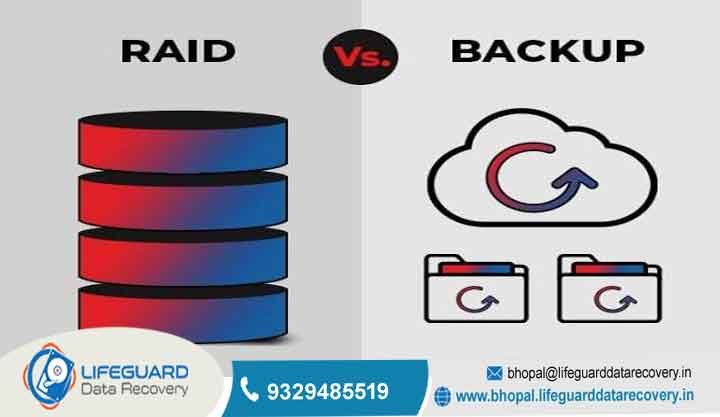
10. What is the difference between a standard backup and a forensic image?
A standard backup is simply a file-level copy of your active data, which often misses hidden folders, system configurations, and deleted fragments. A forensic image, on the other hand, is an exact, bit-by-bit clone of the entire physical storage media. It captures every single sector-including unallocated space, system journals, hidden metadata, and deleted partitions-which is absolutely vital for deep forensic analysis and malware decoding.
Entity-Based Questions
Comprehensive Guide to Cybersecurity and Data Recovery for UAE Businesses
In the modern digital landscape, safeguarding enterprise assets requires a dual commitment to proactive cybersecurity defenses and resilient data recovery protocols. Below is a detailed breakdown of how UAE organizations can protect their operations, manage security costs, and ensure business continuity during an unexpected crisis.
What are the Essential Cybersecurity Practices for UAE Businesses?
Cybersecurity for UAE businesses encompasses the strategic frameworks, defensive technologies, and employee policies designed to safeguard organizational data from increasingly sophisticated cyber threats. With the UAE serving as a primary global hub for trade and finance, local enterprises are frequent targets for advanced persistent threats (APTs) and ransomware syndicates.
A resilient cybersecurity posture relies on a “defense-in-depth” model. Furthermore, because human error remains a primary entry point for attackers, comprehensive employee awareness training is vital. Staff must be regularly trained to recognize advanced phishing attempts, social engineering tactics, and malicious links, which serve as the primary delivery vectors for modern ransomware.
How Does a Multi-Layered Cybersecurity Framework Work?
A successful cybersecurity framework works by establishing layered defenses that drastically reduce an organization’s attack surface. Instead of relying on a single defensive wall, a multi-layered approach ensures that if one security control fails, secondary layers are in place to contain the threat.
On a day-to-day operational level, this involves:
-
Vulnerability Management: Patching systems, operating systems, and firmware regularly to close known security gaps before hackers can exploit them.
-
Identity and Access Management: Enforcing strict, complex password policies paired with mandatory Multi-Factor Authentication (MFA) across all corporate accounts.
-
Data Redundancy: Ensuring all critical business backups are automated, verified, and stored as immutable copies completely isolated from the primary network.
By combining these proactive measures with continuous network anomaly monitoring and a well-rehearsed incident response plan, businesses can react within minutes to neutralize active threats before they cause widespread disruption.
What is the Financial Cost of Cybersecurity Implementation in the UAE?
The monetary investment required to implement robust cybersecurity measures varies significantly based on the size of the organization, the complexity of its IT infrastructure, and specific regulatory compliance requirements (such as DESC or NESA frameworks in the UAE).
While deploying advanced security architectures requires a dedicated budget, investing in preventative security is vastly less expensive than facing the alternative. The financial fallout of a successful ransomware attack-including catastrophic operational downtime, potential data loss, legal penalties, and severe reputational damage can easily bankrupt a business. To help organizations optimize their budgets, professional security firms provide customized risk assessments. This ensures that enterprises invest precisely in the security measures they need, eliminating unnecessary overhead while maximum-hardening their critical infrastructure.
How Long Does Data Recovery Take Following an Attack or Failure?
Recovery timelines are highly variable and depend entirely on the total volume of data involved, the specific ransomware strain, and the extent of the structural damage to the file systems.
For standard enterprise recovery projects, the typical timeline ranges between 12 to 72 hours. When handling a critical incident, engineers prioritize emergency triage protocols. This means critical infrastructure, primary databases, and core operational servers are targeted for reconstruction first, allowing enterprise clients to resume baseline operations and minimize expensive downtime while secondary archives are recovered in the background.
Is Data Recovery Possible After Files Have Been Deleted?
Yes, recovering data after an accidental or malicious deletion is highly achievable.
As long as the storage device remains operational, forensic extraction tools can scan the unallocated space to locate, piece together, and reconstruct the original files. However, the window of opportunity depends entirely on user behavior: you must stop writing data to the drive immediately. Continued use of the system will cause the operating system to overwrite those “available” sectors with new temporary files, making the original data permanently unrecoverable.
Can Physically Damaged Storage Drives Be Recovered?
Yes, data can be successfully recovered from storage media that has suffered severe physical, mechanical, or electrical degradation. When a hard drive experience mechanical failure (such as clicked heads or seized spindles) or an SSD suffers from a fried controller chip, standard software utilities are entirely useless.
Professional recovery requires a specialized, ISO-certified cleanroom laboratory environment. Inside these contaminant-free labs, hardware engineers can safely open hard drives to transplant delicate internal components, or perform advanced “chip-off” procedures on solid-state drives to disorder NAND flash chips. By reading the raw data directly from the physical platters or memory cells, specialists can completely bypass faulty controllers and salvage the data.
What Factors Direct Influence Recovery Success Rates?
The ultimate success rate of a data recovery operation is dictated by two primary factors: how quickly the incident is identified, and whether subsequent data overwriting has occurred.
When a security breach or hardware failure is detected, the immediate isolation of the hardware is the most critical step. From this point, the outcome depends entirely on how the system is handled:
If no overwriting occurs: The data remains preserved in its baseline state, leading to a high success rate for a full professional recovery.
If system use continues: Ongoing background processes, new files, or active malware will overwrite the storage sectors, resulting in permanent data loss.
When a system fails or a ransomware notification appears, the single most critical step an organization can take is the immediate isolation and shutdown of the affected hardware. Leaving an infected or failing system running allows ransomware to continue its background encryption or causes a failing drive head to physically scratch the storage platters. Securing the drive in its baseline state immediately after a failure is the most decisive factor in achieving a complete data recovery.
Comparison Section
Attempting to resolve a complex ransomware infection or hardware failure on your own is an incredibly risky gamble. Without specialized containment tools, a DIY attempt can inadvertently trigger dormant malware strains designed to wipe system journals, permanently corrupt encryption headers, or overwrite critical data sectors. What began as a highly salvageable situation can instantly turn into an irreversible data catastrophe.
Here, recovery engineers utilize advanced, non-invasive hardware interfaces that communicate directly with the media’s raw storage sectors. This allows them to completely bypass corrupted operating systems and faulty, locked, or degraded drive controllers-capabilities that standard commercial software simply cannot replicate.
Data Storage Compromise Pathways
1. DIY Attempt
When attempting a self-recovery on compromised data storage, it typically leads to one of two critical errors:
malware Trigger: Activating a latent malicious payload that further damages or locks the system.
Sector Overwrite: Accidentally writing new data over the blocks containing the lost files, making them unrecoverable.
Outcome: Both paths ultimately result in Permanent Data Loss.
2. Professional Lab
When handing the storage over to a professional data recovery lab, they utilize specialized protocols:
Hardware Bypass: Accessing the storage media directly via custom hardware controllers, bypassing faulty firmware or OS locks.
Outcome: Both paths securely lead to Successful Recovery.
When an enterprise chooses a dedicated specialist lab, they are making a strategic decision to actively mitigate the risk of losing their entire operational history for good. We provide the proprietary tooling, sandboxed environments, and deep digital forensic expertise that basic corporate IT troubleshooting and standard helpdesks completely lack. Don’t let an unguided “do-it-yourself” attempt turn a temporary, recoverable setback into a permanent organizational failure.
Case Study: Overcoming a Critical Ransomware Crisis in Dubai
The Problem: A Business at a Standstill A prominent commercial firm based in Dubai fell victim to a devastating ransomware attack that brought their entire enterprise to an immediate halt. Because their daily workflows relied entirely on access to this server,
Every passing hour of downtime threatened massive financial losses, contractual penalties, and severe damage to their hard-earned market reputation.
The Urgent Response and Recovery Process Recognizing the catastrophic stakes, the firm bypassed high-risk DIY troubleshooting and immediately engaged the emergency response team at Lifeguard Data Recovery. Our engineers instantly deployed specialized protocols to isolate the affected storage array, halting any further propagation of the malware or background encryption routines.
Through deep code analysis, we identified a critical vulnerability in the ransomware’s encryption routine-a flaw in its implementation
that our engineers were able to actively exploit. This breakthrough allowed us to reverse-engineer a solution and decrypt the vast majority of the data without ever needing to communicate with or acquire a decryption key from the attackers.
The Result and Client Outcome The precision and speed of this forensic-led approach yielded extraordinary results: Lifeguard Data Recovery successfully recovered 99% of the encrypted server data within a tight 36-hour window.
By choosing a professional, forensic-led recovery over capitulation, the Dubai firm completely avoided paying a single dirham of the extortionate ransom demand. They safely resumed normal business operations ahead of schedule, successfully mitigating what could have been a catastrophic financial blow and preserving their flawless reputation in the UAE business community.
Expert Insights
As organizations embrace hybrid cloud architectures and distributed workforces, modern enterprise security has shifted away from static defense and toward continuous cyber resilience as the new global standard.
The reality for businesses operating here in the UAE is that the regional threat landscape is evolving at an unprecedented pace. Local organizations face highly targeted, multi-stage cyber threats and sophisticated ransomware syndicates capable of bypassing even the most stringent perimeter defenses. Because a security breach is a realistic inevitability, relying solely on prevention creates a dangerous single point of failure.
While proactive prevention is a fundamental necessity, it is a forensic-led response strategy that ultimately determines long-term business survival in today’s digital economy. By embedding deep digital forensics and rapid containment protocols directly into your incident response plans,
your organization can instantly isolate a breach, accurately trace the root cause, and securely restore corrupted infrastructure. This level of technical adaptability is what minimizes operational downtime, protects your brand reputation, and keeps your commercial doors open when a crisis hits.
Contact Us
Lifeguard Data Recovery is the most trusted name for enterprise data recovery and cybersecurity support in the UAE. Don’t gamble with unproven software or DIY tactics when your business’s future is on the line.
Protect your assets with our team of certified experts.
Call: +971 50 127 6793
Email: info@lifeguarddatarecovery.com