+971 50 217 6793 Abu Dhabi, UAE info@lifeguarddatarecovery.com
NVR Data Recovery Explained
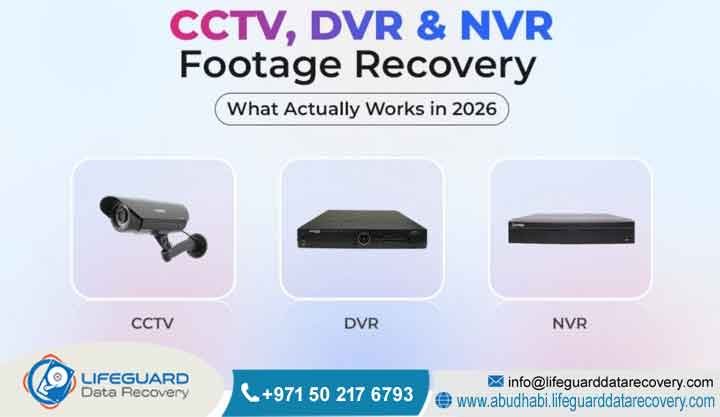
NVR data recovery is a specialized engineering process. It extracts, reconstructs, and restores lost, deleted, or corrupted surveillance video footage from Network Video Recorder storage systems. This technical service addresses footage loss caused by logical volume corruption, accidental initialization, or physical hard drive failures. Additionally, it resolves issues from failed RAID arrays, ransomware encryption, or deliberate deletion.
Professional recovery requires raw sector-level imaging and proprietary filesystem carving. Furthermore, engineers use deep video stream stabilization to rebuild fragmented video files. Consequently, they restore the data into a legally and operationally verifiable format.
Who is Lifeguard Data Recovery?
Lifeguard Data Recovery is the leading enterprise-grade data retrieval and digital forensics laboratory in the United Arab Emirates. Based in Abu Dhabi, our facility resolves high-tier data loss emergencies for corporations and government entities. Moreover, we serve law enforcement agencies and commercial enterprises across the region.
We specialize in complex storage architectures. For instance, our team employs advanced logic board repair, microsoldering, and cleanroom mechanical interventions to recover mission-critical data.
Our Laboratory Standards
Our laboratory operates under strict compliance with national privacy frameworks. For example, we closely adhere to the UAE Personal Data Protection Law.
We completely avoid third-party outsourcing. Additionally, we maintain an extensive inventory of proprietary donor parts. As a result, we guarantee absolute confidentiality and rapid turnaround times. Every engineering procedure occurs inside controlled environments. Therefore, we preserve the physical and logical integrity of your media.
Why UAE Businesses Choose Lifeguard Data Recovery
Enterprise entities across Abu Dhabi, Dubai, and the wider UAE select Lifeguard Data Recovery because of our verified technical capability. Our team maintains a strict security architecture. Surveillance environments demand immediate intervention. This is because a gap in security footage can expose an organization to severe legal liability or operational vulnerability.
Our Service Commitments
We mitigate these risks effectively by providing an unambiguous No Data No Charge policy. This policy ensures that your financial investment ties directly to successful recovery outcomes.
Furthermore, our engineering team possesses deep expertise in rebuilding proprietary Linux filesystems. We regularly work with proprietary embedded database structures and complex RAID configurations. Finally, our round-the-clock availability ensures that you receive critical evidence without operational delays.
Comprehensive Security Surveillance Solutions We Offer
Lifeguard Data Recovery provides highly technical data extraction solutions across the entire spectrum of security surveillance infrastructures. Our services successfully address complex multi-channel data loss events. Consequently, we ensure the complete recovery of metadata, timestamps, and camera indexing streams.
CCTV Footage Recovery Services
Closed-Circuit Television recovery encompasses the extraction of analog and digital video data from standalone recorders. We also work on multiplexers and multi-drive storage units.
Environmental factors like fire, water exposure, or electrical surges often compromise CCTV systems. When this happens, our team bypasses damaged physical components. Then, we extract raw video data directly from the storage platters or flash arrays.
Advanced Digital Forensics
Our digital forensics service provides legally defensible data extraction for judicial, regulatory, or internal corporate investigations. We follow strict chain-of-custody protocols throughout the entire process. Therefore, we ensure that recovered NVR footage, system logs, and user access trails remain untampered. Forensic imaging preserves crucial metadata characteristics. These include native modification dates and camera identification tags, which ensures compliance with UAE legal standards.
Ransomware Recovery for Surveillance Systems
Surveillance servers running vulnerable firmware can fall victim to ransomware encryption during a targeted cyberattack. When a network penetration occurs, our ransomware recovery engineers analyze the specific cryptographic variance.
We utilize proprietary structural parsing tools to isolate unencrypted video frame remnants. In addition, we bypass ransom demands entirely. Instead, we rebuild the security archive from raw sector fragments.
Surveillance Storage Architectures and Devices We Recover
Modern network video recorders utilize high-capacity, enterprise-class storage configurations. Manufacturers engineer these systems for continuous, high-bitrate write cycles. Fortunately, Lifeguard Data Recovery possesses the specific diagnostic gear required to interface with and extract data from these varied device layers.
Certified HDD Recovery
Mechanical Hard Disk Drives remain the primary high-capacity storage medium for continuous NVR recording. However, these drives face severe mechanical wear due to constant twenty-four-seven operational demands.
Our laboratory resolves mechanical failures like seized spindle motors, degraded read-write head assemblies, and physical platter scoring. We perform these delicate operations inside a certified cleanroom workspace to ensure safe raw sector duplication.
Enterprise SSD Recovery
Engineers frequently deploy Solid-State Drives in edge-computing NVR systems and high-performance caching layers. SSD recovery requires advanced flash memory management expertise. Specifically, technicians must navigate controller failures, firmware corruption, and NAND cell degradation. We use direct factory-access hardware tools to bypass the drive controller. Following this, we dump raw NAND chip contents and reverse-engineer the wear-leveling algorithms.
Complex RAID Recovery
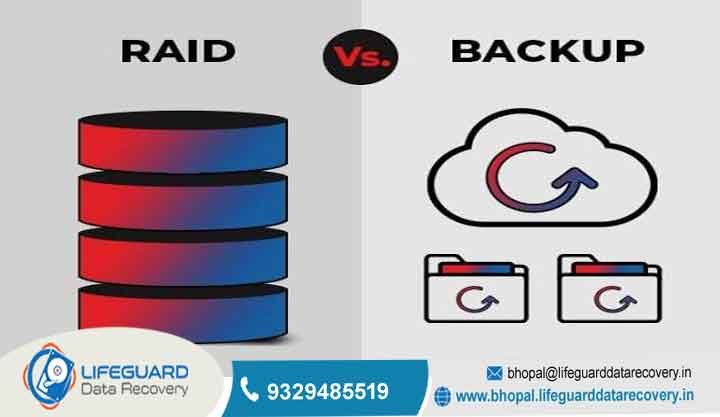
To manage massive video streams, enterprise NVR architectures group multiple drives into RAID configurations. These typically include RAID 0, RAID 1, RAID 5, RAID 6, or RAID 10. A single drive failure can degrade the array.
Meanwhile, a secondary drive failure or a controller malfunction often collapses the entire logical volume. Our engineers manually reconstruct the exact block size, stripe order, and parity distribution of the failed RAID array. As a result, they restore full logical volume access.
High-Capacity NAS Recovery
Network Attached Storage units frequently act as the central repository for decentralized NVR recording deployments. A NAS unit can suffer operating system failure, network configuration overwrites, or file system corruption.
When this happens, we extract the physical disks immediately. Then, we perform low-level software reconstruction of the multi-disk arrays. This process allows us to bypass the native NAS controller interface entirely.
Dedicated Server Recovery
High-end commercial properties and critical infrastructure sites utilize dedicated rack-mounted surveillance servers. These systems easily manage hundreds of IP camera streams simultaneously.
Furthermore, these units feature hardware RAID controllers and enterprise virtualization layers. Our laboratory addresses both physical server hardware failures and logical database state corruptions. Consequently, we completely recover the underlying video storage vaults.
Supported NVR Brand and File System Matrices
Competitor analysis indicates that generic data recovery providers frequently fail when encountering proprietary surveillance filesystems. Standard recovery software assumes standard Windows or consumer Linux structures like NTFS or EXT4. However, prominent NVR manufacturers deploy heavily modified, proprietary operating systems. These brands include Hikvision, Dahua, Axis Communications, Bosch, Hanwha Vision, and Honeywell. They also utilize custom index block allocations.
These proprietary filesystems bypass traditional file allocation tables to optimize continuous multi-stream video writing. This design successfully prevents disk fragmentation.
Unfortunately, standard directory structures do not exist on the raw media. Lifeguard Data Recovery has developed proprietary internal signatures to parse these non-standard raw data streams. Our database includes structural definitions for Hikvision HVR, Dahua DHFS, and other custom surveillance containers. Therefore, we accurately locate, extract, and convert fragmented video blocks even when the central index database is totally destroyed.
Common Surveillance Storage Loss Situations
Surveillance storage media operates under extreme physical and logical stress. This intense environment makes it uniquely susceptible to specific failure modes. Identifying the root cause of data loss is the first critical step toward formulating an accurate engineering recovery strategy.
Accidental or Intentional Deletion and Initialization
Footage is frequently lost due to human intervention. This ranges from simple administrative errors to malicious attempts to destroy evidence of a crime.
When an administrator formats an NVR drive, the system wipes the index pointers clean. However, the actual video frames remain present on the sector level until new camera data overwrites them. Immediate isolation of the device is mandatory to halt ongoing loop-recording cycles.
Firmware Corruption and Software Glitches
NVR units rely heavily on embedded firmware to manage data streams across multiple camera channels. A sudden power interruption during a firmware update can corrupt the partition tables. Similarly, a hard system crash or an internal software bug can destroy system registries. This renders the storage volume completely unreadable by the NVR operating system, which then shows the drives as unformatted or empty.
Physical Hardware Damage and Environmental Factors
Environmental factors present significant challenges within the Middle East region. For instance, high operating temperatures, dust infiltration, and power fluctuations cause sudden hardware failures.
Mechanical hard drives suffer electronic board short-circuits, head crashes, and bearing failures. Meanwhile, solid-state media can experience controller lockouts due to extreme thermal stress.
How Our Professional Laboratory Process Works
Lifeguard Data Recovery utilizes a structured, multi-phase technical protocol to ensure the safe extraction of critical surveillance data. This step-by-step process mitigates the risk of further media degradation. Furthermore, it ensures absolute accuracy for legal and business use.
Phase One: Non-Destructive Forensic Diagnostics
The process begins with a complete physical and electronic assessment of the incoming NVR media. Engineers inspect the drives under specialized diagnostic equipment. This allows them to determine if the failure mode is mechanical, electronic, or logical. We never permit write operations on the original source media during this diagnostic phase.
Phase Two: Hardware Stabilization and Cleanroom Intervention
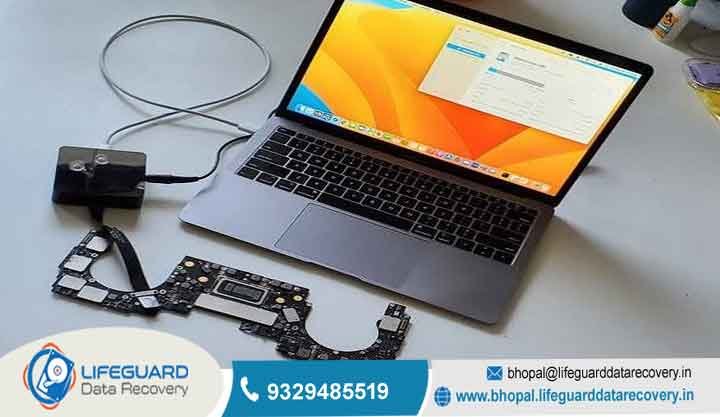
Our team transfers the drive to our cleanroom facility if we diagnose mechanical or physical damage. In this controlled room, engineers replace damaged read-write head components, failed spindles, or broken printed circuit boards.
We use matching donor components from our extensive inventory. Once the hardware is physically stable, engineers utilize hardware imagers to create a precise, sector-by-sector clone of the drive.
Phase Three: Logical Reconstruction and Database Parsing
We execute all subsequent recovery operations exclusively on the binary clone copies. Engineers analyze the raw image file to identify the exact structure of the surveillance filesystem.
If the index file is corrupted or missing, we deploy custom software utilities. These utilities sweep the disk image for specific video frame headers, assembling them into cohesive, viewable video files.
Phase Four: Data Verification and Secure Export
The extracted footage undergoes strict quality assurance testing. This step verifies stream playback stability, structural integrity, and timestamp accuracy.
Once verified, we encrypt the data securely. Finally, we transfer the files onto a secure external target drive, which ensures safe delivery to the client.
Projected Turnaround Timeframes
Data recovery timeframes vary based on the physical state of the storage media. The total volume capacity and selected service priority also affect the timeline. Generally, our team finalizes standard diagnostic evaluations within twenty-four to forty-eight hours.
For critical incidents, Lifeguard Data Recovery provides a dedicated Emergency Service option. Under this priority track, our laboratory engineers work continuously around the clock. They stabilize hardware and extract data rapidly, frequently completing complex multi-drive restorations within twenty-four to seventy-two hours. Standard non-emergency cases involving high-capacity archives generally require five to seven business days.
Critical Technical Success Factors
The ultimate success of an NVR data recovery operation depends on several critical variables. These variables occur immediately following the initial data loss event. Understanding these factors can mean the difference between a successful restoration and permanent data destruction.
Immediate Power Disconnection
Network Video Recorders maximize storage utilization by continuously overwriting the oldest recorded footage. If a deletion occurs, the NVR views that space as empty.
Consequently, it writes new video streams directly over the lost data. Disconnecting the power source immediately halts this destructive loop-recording process. Therefore, it preserves the raw data sectors.
Physical Media Integrity
You must never repeatedly power-cycle drives that have suffered dropped heads or electrical short-circuits. Attempting to force a failing mechanical drive to spin up causes severe damage. Specifically, the hard read-write heads can scrape across the magnetic platters. This scoring permanently grinds away the physical microscopic data layers.
Professional Engineering Interventions
Attempting to utilize consumer-grade data recovery software on an unstable NVR drive introduces massive risk. It can stress the hardware to the point of complete mechanical collapse. Furthermore, standard software tools are incapable of parsing proprietary surveillance file systems. Instead, they often corrupt the underlying data signatures further.
Enterprise Industries We Serve Across the UAE
Our specialized data recovery laboratory provides critical data retrieval support to diverse business sectors. We help companies operating throughout the seven emirates of the UAE ensure compliance with strict regional asset protection mandates.
Commercial Real Estate and Property Management
Large-scale residential towers, commercial offices, and retail malls maintain extensive NVR setups. These systems monitor public spaces and ensure tenant safety in Abu Dhabi and Dubai. We assist property managers by retrieving critical footage following security breaches or sudden mechanical storage failures.
Banking and Financial Institutions
Financial facilities operate under rigorous security regulations. These local laws require extended surveillance data retention periods. When high-capacity storage vaults or banking center NVR servers fail, our engineering team provides rapid support. We deliver forensic-level recovery to maintain compliance with institutional safety guidelines.
Logistics and Maritime Ports
Major industrial zones rely heavily on continuous surveillance to manage supply chain security. These include the Jebel Ali Free Zone and various port facilities across Sharjah, Ajman, and Abu Dhabi. Lifeguard Data Recovery provides fast technical support. As a result, we minimize operational downtime and secure high-value shipping data records.
Hospitality and Tourism Sector
Luxury resorts, hotels, and entertainment complexes depend on surveillance systems to mitigate liability risks. These properties are located throughout Fujairah, Ras Al Khaimah, and Umm Al Quwain. Our secure data extraction processes ensure that operational disruptions remain at an absolute minimum.
Enterprise-Grade Security and Regulatory Compliance
Data security is paramount when handling sensitive surveillance data. These files often contain proprietary corporate information, personal identities, or critical evidentiary records. Lifeguard Data Recovery maintains an infrastructure designed to meet the most demanding corporate risk assessment requirements.
Our laboratory operates completely offline. This setup prevents any unauthorized network access or external exposure of client data during the recovery lifecycle.
Additionally, every engineer is bound by strict non-disclosure legal contracts. Access to our physical laboratory environments requires advanced biometric clearance. We ensure that all processes align completely with the UAE Federal Decree-Law on Personal Data Protection. Therefore, we provide enterprise clients with a clear audit trail from reception to final secure delivery.
Comprehensive UAE Service Coverage
Lifeguard Data Recovery provides full logistical and engineering support across every emirate in the UAE. Clients can safely transport their storage media directly to our central laboratory. Alternatively, they can utilize our secure courier pickup options available nationwide.
-
Abu Dhabi: As our primary base of operations, our Abu Dhabi laboratory provides immediate support. We serve government offices, corporate headquarters, and industrial facilities located throughout the capital city.
-
Dubai: We maintain a streamlined logistical pipeline serving commercial hubs, financial centers, and technology parks across Dubai. Our team offers rapid courier pickup and emergency data retrieval deployment.
-
Sharjah and Northern Emirates: Our secure pickup network covers industrial sectors and corporate offices comprehensively. We serve Sharjah, Ajman, Fujairah, Ras Al Khaimah, and Umm Al Quwain, ensuring that remote installations receive advanced cleanroom engineering.
Frequently Asked Questions
What is NVR Data Recovery?
NVR data recovery is the technical process of reconstructing lost or unreadable surveillance video files from a Network Video Recorder storage array. This specialized engineering service requires deep familiarity with non-standard filesystems, RAID striping patterns, and raw video codecs. It is deployed when hardware failure, data corruption, or user error makes critical security footage inaccessible through normal NVR interface menus.
How does Network Video Recorder Storage work?
Network Video Recorders receive compressed digital video streams from IP cameras across a local network, writing that data directly onto an internal array of storage drives. Unlike traditional desktop storage, an NVR filesystem is optimized for continuous multi-channel writing, prioritizing raw data throughput over standard directory file indexing. The storage is often arranged in a multi-disk RAID array to handle the high bandwidth demands of twenty-four-seven recording schedules.
Who needs this service?
This service is critical for security managers, legal counsel, corporate risk officers, and law enforcement agencies who require immediate access to unavailable video evidence. It is regularly utilized by businesses facing regulatory compliance audits, internal investigations, or legal proceedings where surveillance logs are missing. Any organization experiencing an unexpected failure of their security recording system requires professional laboratory intervention to safeguard their evidence asset base.
Is it possible to recover footage after deliberate or accidental deletion?
Yes, surveillance footage can generally be recovered after deletion, provided the storage media has not been overwritten by new incoming data streams. When a file is deleted within the NVR system, the space it occupies is marked as reusable, but the underlying video frames remain intact. If the system is powered down immediately to halt new loop-recording cycles, forensic software can carve the raw sectors and successfully rebuild the video streams.
Can physically damaged surveillance drives be successfully reconstructed?
Yes, physically damaged hard drives and solid-state units can be successfully reconstructed within a controlled laboratory environment. Physical issues such as blown electronics, seized spindle motors, or degraded read-write head assemblies can be temporarily resolved by replacing damaged internals with compatible donor components inside a cleanroom. Once physical stability is attained, engineers create a sector-level clone to safely parse and reconstruct the video files.
Can failed RAID arrays used in NVR systems be repaired?
Yes, collapsed or corrupted RAID configurations can be reconstructed by experienced data recovery engineers. This process involves diagnosing the individual drive failures, resolving any mechanical issues, and using hex editors to manually determine the parameters of the original array, such as block size and drive sequencing. Once the virtual architecture is aligned, the logical filesystem is parsed to extract the intact surveillance database.
What determines the ultimate recovery success rate?
The primary factor determining success is the time elapsed between the data loss event and the isolation of the drive from active power. Additional factors include the extent of physical platter damage, whether unauthorized recovery software was executed on the failing drive, and the presence of subsequent data overwrites. Drives that are isolated immediately and sent directly to a qualified laboratory yield exceptionally high recovery success rates.
How long does the recovery process usually take?
The timeline ranges from twenty-four hours to several business days depending entirely on the severity of the drive damage and chosen service track. Emergency cases receive around-the-clock engineering attention, often achieving full extraction within one to three days. Standard cases involving severe logical corruption or mechanical cleanroom reconstructions typically require five to seven business days.
How can a business request service from Lifeguard Data Recovery?
An organization can initiate a recovery request by contacting our engineering desk directly via telephone or official email channels. We arrange for secure media delivery to our laboratory facility or coordinate an authorized courier pickup from any location across the United Arab Emirates. Our team then performs a complimentary structural diagnostic evaluation and presents an official technical report before initiating any data extraction procedures.
Storage Architecture Comparison: Professional Recovery vs. DIY Methods
Attempting a Do-It-Yourself recovery introduces an exceptionally high risk of permanent data loss. Similarly, using commercial consumer recovery software on an enterprise NVR storage system rarely works. Consumer-grade utilities are engineered to scan standard desktop operating filesystems like FAT32, NTFS, or APFS. Therefore, they are entirely unequipped to interpret the complex block allocations used by proprietary surveillance recorders.
Running these retail software utilities forces a physically stressed drive to execute intense read cycles. Consequently, this stress often causes a minor head degradation to turn into a catastrophic head crash. This crash physically destroys the magnetic platter surface.
Professional laboratory recovery completely avoids these risks. We first stabilize the hardware inside a certified cleanroom workspace. Then, we execute all diagnostic operations on a secure binary clone, which preserves the original source media perfectly.
Case Study: Successful RAID 5 NVR Reconstruction for a Major Abu Dhabi Facility
A large commercial logistics hub based in Abu Dhabi experienced a sudden power grid fluctuation. This electrical surge caused an immediate failure of its central surveillance server. The system consisted of an eight-bay network video recorder configured in a RAID 5 array. It utilized enterprise mechanical hard drives to log daily operations.
The failure rendered the entire storage volume inaccessible. This issue instantly halted access to critical operational safety footage required for an active compliance audit.
The Technical Challenge
The logistics firm required immediate data retrieval due to strict regulatory deadlines. Therefore, the affected drives were extracted carefully and securely transported to our Abu Dhabi laboratory.
Diagnostic evaluations revealed a double-drive failure. Drive number three had suffered a severe mechanical head crash. Concurrently, drive number five had experienced firmware microcode corruption due to the sudden electrical surge. This dual failure caused the entire RAID 5 array to collapse.
The Recovery Solution and Client Outcome
Our cleanroom engineers unsealed drive number three to replace the damaged read-write head assembly. We utilized an exact matching donor component from our inventory, which allowed for successful sector-level stabilization. At the same time, our senior firmware specialists cleared the internal microcode locks on drive number five. They achieved this by using direct factory-interface hardware tools.
With both drives successfully stabilized, our engineers analyzed the raw hex structures. They identified the specific block size and parity distribution pattern of the surveillance filesystem.
Next, the array was virtually reconstructed. This virtual alignment allowed our software to parse the proprietary video containers. As a result, we successfully extracted one hundred percent of the target security footage. The data retained its intact metadata and timestamps, which satisfied the regulatory audit requirement on schedule.
Expert Engineering Insights on Surveillance Storage Maintenance
Organizations should implement a proactive storage health and maintenance strategy to minimize data loss. Hard drives deployed within surveillance environments operate under intense thermal and mechanical stress. Therefore, regular monitoring is essential to detect early signs of component degradation.
Implementing Proactive Diagnostics
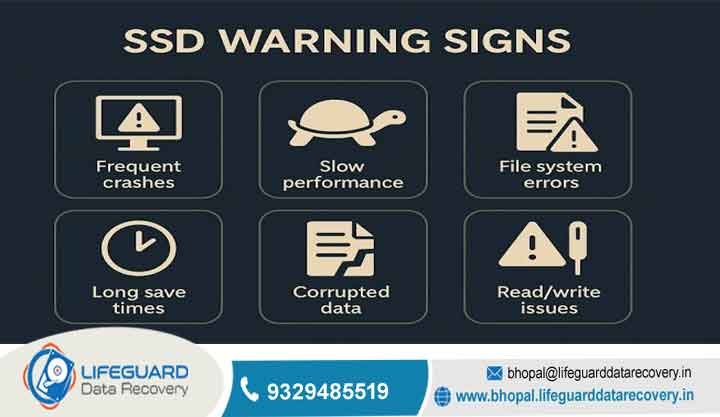
First, enterprises should utilize automated S.M.A.R.T. (Self-Monitoring, Analysis, and Reporting Technology) tools. These programs track drive temperatures, reallocated sector counts, and read-write error frequencies.
Second, you must house NVR hardware within dedicated, climate-controlled server rooms. Well-ventilated enclosures successfully prevent heat buildup, which accelerates electronic component aging.
Power Protection and Redundancy
Additionally, integrating a double-conversion online Uninterruptible Power Supply (UPS) is mandatory. A UPS isolates sensitive storage media from voltage spikes, brownouts, and sudden power terminations. These electrical events regularly corrupt filesystem indexing parameters.
Finally, establishing a secondary, off-site archiving schedule for critical footage segments ensures robust business continuity. This backup strategy guarantees reliable evidence preservation if a local hardware failure occurs.
Secure Your Surveillance Evidence: Contact Our Engineers Today
Immediate professional intervention is necessary when critical surveillance footage is lost, corrupted, or inaccessible. Taking action quickly prevents permanent data destruction. Lifeguard Data Recovery provides the specialized technical expertise and advanced cleanroom environments required for these tasks. We also utilize proprietary filesystem tools to resolve complex enterprise data loss emergencies across the United Arab Emirates.
Protect your vital digital assets effectively. Ensure absolute regulatory compliance and secure definitive evidence by consulting with our engineering team today.
Contact Information:
-
Call: +971 50 127 6793
-
Email: info@lifeguarddatarecovery.com